La Salle University’s well-renowned Nonprofit Center is a hidden gem amongst the students at La Salle. Despite being a beacon in the professional world of nonprofits in the Greater Philadelphia area and beyond since 1981, the students at La Salle know little about the Nonprofit Center, its offerings, and discounted rates for students.
According to their website, the mission of the Nonprofit Center at La Salle University is “to build the capacity of the nonprofit sector.” While their primary focus has been the Greater Philadelphia region, they have a reputation in nonprofits throughout the country.
The Nonprofit Center strives to enhance the “management, operations, and governance of nonprofit organization” through services including educational programs, consulting, leadership development and information sharing, with “the ultimate goal of enabling nonprofits to meet fully the needs of their communities.”
In accordance with their mission, the Nonprofit Center offers educational courses and certification programs. These certification programs include a certificate in Nonprofit Management and a certificate in Fundraising. Professionals can receive discounted certificate package prices by becoming a member of the Nonprofit Center. Undergraduate and graduate students receive a larger discounted rate on courses and certification programs.
The Nonprofit Center’s web page on the Certificate in Nonprofit Management says it “provides…a diverse and well-balanced knowledge of nonprofit administration and operation.” The broad curriculum looks at the entire nonprofit ecosystem as a whole and in its individual components including board development, communications, financial management, fundraising, human resources, supervision, program evaluation, and strategic planning. The certification program aims to prepare “the leaders of our region’s nonprofit sector to be strategic, efficient and effective,” as stated on their webpage.
They are offering the certificate in their traditional format (ten, full-day, in-person*, week day classes), as well as the option of online classes, both as a full-day and as evening sessions during the 2022-23 session. Participants can pick and choose from these options to complete the certificate over 5 months, 8 months or the 3 years given to attend all the classes. The center will also continue their partnership with Bucks County Community College, who will offer classes in a full-day and in-person option. The Nonprofit Center recommends this program to new executive directors, senior management on the leadership track, or anyone in the nonprofit sector looking to refresh their skills.
The Nonprofit Center’s website describes the Certificate in Fundraising as being designed for anyone who wants to advance in the field of fundraising, even if they have no formal training in fundraising, but seek instruction in the basic skills and methods of resource development.
The courses in this certificate provide a “foundation in the critical fundamentals of fundraising” and a continuation of “skills development in all the key areas of resource development.” The Nonprofit Center webpage on the Certificate in Fundraising says the program also gives participants a “strong grounding in the concepts, trends and practices that guide successful and ethical fundraising.”
The courses needed to complete the program look at the importance of a strong mission, program strategy, management practices, and board and staff leadership in the more introductory classes, while the advanced courses focus on the major fundraising vehicles, where participants gain practical knowledge that will enable them to design and execute each activity.
The Nonprofit Center recommends this certificate program to executive directors and board members looking to “gain increased confidence and knowledge to support their essential roles as fundraisers for their causes”. The 2022-23 session of the Certificate of Fundraising is offered fully online.
While directed at professionals working in the nonprofit sector, with discounts for those who become members of the Nonprofit Center, the courses and certifications are available to undergraduate and graduate students at discounted rates as well.
The cost per course for undergraduate students is $20, and when paid for as a package, $200. They discounted the programs for graduate students as well, 50% off their member rate, costing $77.50 per course, $775 as a package. This compares greatly to $1,850, the total cost of the courses needed to complete a certification program for a non-member, as well as $1,395, the discounted rate for members, or even the program package rate, when the price for members drops to $1,188. Undergraduate and graduate students at La Salle can take advantage of these discounted rates and receive Certificates in Nonprofit Management or Fundraising while getting their degree.
Welcome back to Bagel Reviews with Claire and Luke. This week, we took a trip just outside of city limits to the ‘burbs. Our bagel quest took us to Horsham. Just wanna give a quick shoutout to Joanna, weekly reader, and my sister, for treating us to the bagels.
This new spot, Bagels and Bread House, was a quaint little spot with such a cool vibe. We really enjoyed it. The everything bagel in particular was quite nice, and a little different than usual. Most everything bagels don’t include salt, this one did. I liked that a lot. I wish they had seasoned the bagels a bit more though. I, of course, got a bacon egg and cheese on an everything bagel. Claire got a sausage egg and cheese on a poppy bagel, as usual. The filling of the sandwich was quite nice compared to others we’ve reviewed, but the bagel itself could have been just a little bit more seeded. Overall, we’re gonna give it a 3.75/5 Gritty’s. Comparing it to Trops, we enjoyed the filling here more, as well as the choices of bagels. Our best review yet!
Tune in next week for our review of La Salle’s local breakfast place and fan favorite, Pauline’s Deli.
This week, Claire and I got bagels at the place closest to home: the Dining Hall. During Breakfast for Dinner Week, we were blessed with a night of build-your-own breakfast sandwiches, and we couldn’t turn it down. It was practically BEGGING us to review. It derailed our original plans for the upcoming weekend, a trip to Pauline’s which will be reviewed soon!
Now, keep in mind we only rate things in terms of Gritty’s, the wackiest Philadelphia mascot. Our choices were bacon AND sausage (big points from Claire), eggs, and a few different cheeses that I don’t remember the name of. Anyway, I chose a bacon, egg, and cheese, OBVIOUSLY. They only had plain bagels though. SO sad. Claire got a sausage, egg, and cheese, and she loved it. We both added some maple syrup to the bagel, which is an homage to her favorite bagel place, which sadly is outside of the Greater Philadelphia Area, and won’t be reviewed (yet!). An honest review, from Luke, a 2 out of 5. The bagel itself was nothing to write about, but the filling was honestly delish, better than I expected. Claire gave it a 2.5! out of 5. She was ecstatic about the addition of sausage to the menu, and that bumped up the score for her. Overall, we’d rate it a 2.25/5 Gritties. Tune in next week for our review on Bagel and Bread House in Horsham, PA.
On Thursday Sept. 14, La Salle’s National Society of Leadership and Success had their Orientation night for new members. For those who haven’t heard of NSLS, it is a national chapter playing host to 1,675,341 members across 771 chapters. La Salle’s chapter was created in June of 2021 by Azaria Soto, Dr. Elizabeth Schroeder, and Dr. Patrick Coyle. The chapter vision is simple but one that shows what is to gain from becoming a member. “Our vision is to help members achieve personal growth, cultivate lasting relationships, and obtain career success”. At their orientation the organization was able to welcome 13 new members to add to their 493 total.
NSLS helps provide students with the opportunity to gain excellent experience from a career and personal development standpoint. Not only do students get to network and meet new people at the beginning of their professional careers, but they can also get involved to develop habits that will transfer over into the real world. There are many executive board positions that allow students to run meetings, plan events, and create a plan for growing the organization throughout the year. This is not limited to just one major either. It is open to anyone who wants to join and grow and develop transferable leadership skills. There will be one more orientation night for any students that either missed the first or are interested in joining. The date for the make-up session is Monday Sept. 19. Anyone who may be interested in this should attend this session to learn more about NSLS and begin the process of joining the organization.
In a new series for the Collegian, Claire and I look to peruse and rank the BEST bagel places in the Greater Philadelphia Area. Why bagels do you ask? I just really enjoy bagels. Top tier breakfast food.
Today, we visited Philly Style Bagels in Fishtown. A measly 45-minute train commute to Fishtown brought us to this small hole in the wall bagel place. Now, keep in mind I only rate things in terms of Gritties, the wackiest Philadelphia mascot. Back to bagels. As always, I ordered a bacon, egg, and cheese on a toasted everything bagel. Simply my favorite. Claire, begrudgingly, also ordered a bacon, egg, and cheese, due to it being the only type of breakfast sandwich on the menu. MAJOR red flag.
The first thing we noticed about these bagels was the size of them, and not in a good way. These had to be the smallest bagels in the history of bagels. They were nice and doughy though, with a nice crust. Props for that. The next issue that arose was the filling of the breakfast sandwich. An exact quote describing it:
“You know the square scrambled eggs you would get at a high school cafeteria?”-Claire
Lots of issues with this bagel place. Not much to rank positively in this list, but it did just enough to avoid the bottom of the barrel ranking. We would give it 2/5 Gritties.
Shayna Mercier, class of ‘22, studied full time in La Salle’s psychology program. After joining the nursing department during her sophomore year, she began to find another passion leading her towards psychology. This is her story of her life, obstacles she overcame and the path that La Salle University offered her to catapult her into the next chapter of her life.
Mercier was born in Miami, Florida, the middle child of eight siblings. After conflict between her parents arose, her father left when she was eight years old. When Mercier was around 11 years old, her mother then moved to Philadelphia taking her and two of her siblings with her. She was going through family dysfunction and began to deal with trauma and harassment from her mother. Mercier said her mom would tell her things like “Your dad left us because of you.” She said those moments caused her to shut down. “I didn’t have a voice, and even now in relationships with friends, significant partners etc. I still struggle with this,” said Mercier.
“Words mean more than what is set down on paper. It takes the human voice to infuse them with shades of deeper meaning.”
– Maya Angelou
La Salle University stood out to Mercier when applying to colleges because of her getting a scholarship, as well as the colorful, serene atmosphere on campus. Mercier shared that she was once a “troubled” kid that needed support and wants to be that support system for future and present children and adolescents who find their voices unheard and are getting into trouble because an environment of chaos and violence is all they know. Mercier has that experience with lashing out, and after shoplifting and getting arrested as a juvenile, she realized that’s not the path she wanted to go down. She wants to give back to those who are stuck in situations similar to her’s and help those in need using what she learned here at La Salle.
Now, a senior in psychology, she has surpassed multiple obstacles and has made a difference in her own life and is on a path to change others’. Her nieces and nephews are her inspiration for wanting to become a child psychologist or work in speech pathology. What also inspired her was negativity from outsiders, and her wanting to prove their narratives wrong.
Graduating will be one of many great accomplishments for Mercier and her family. It has shown her strength, willingness, tenacity and grace to continue on through life and overcome those trials and tribulations that she came across. “I want to be a speech pathologist to help those in need who can’t express themselves and feel that their voice is unheard,” Mercier added.
She has inspired her siblings and friends and hopes that one day her story will touch the children that she’ll work with and help to propel her legacy. “I want to be a boss lady who devotes her life to better other people’s lives, even those who have hurt me,” Mercier said. She ultimately overcame her family struggles, and communicating with her mother is more positive now.
Mercier is now excited to walk across the stage with her diploma on Saturday. “It would have been easy to give up, and to give in to everything around, but I knew I had to continue to go forward and now I made it,” Mercier said. Mercier is a doer, and she has shown people that through hard times comes motivation and that troubles don’t last always. She has truly been a light, and her strength and resilience have bolstered her into a world full of possibilities and her future endeavors will create more success in a world that has many rooms to fill.
The Germantown community looks to redevelopment with equal parts apprehension and optimism
Jakob Eiseman, Editor-in-Chief
Header Image: Image courtesy of Jakob Eiseman These modern apartments on Queen Lane sit where an affordable housing high rise once stood. The rent for the townhouses on the right is a minimum of 30 percent of a tenant’s monthly income even after receiving a Philadelphia HUD Rental Assistance grant.
In 2013, seven cities in the United States accounted for half of the nation’s gentrification. Philadelphia, which was listed as the fourth most gentrified city, has not changed dramatically in the last eight years. According to 2019 census data, between 85 and 88 percent of low-income households were cost-burdened prior to the COVID-19 pandemic, meaning they contributed at least 30 percent of their annual income toward rent or housing expenses, which is only one percent lower than a similar study conducted six years prior. Housing costs have gone up and income levels have dropped lower since the pandemic, and while the city is experimenting with plans to alleviate this burden, the financial situation still persists.
Citizens of Germantown, a historic neighborhood in Philadelphia’s Northwest region, are no exception. One fourth of all Germantown households contribute 35 percent or more of their monthly income toward housing costs according to the 2019 Census American Community Survey, the most recent data on the subject. While the economic effects of gentrification can be unavoidable in low-income neighborhoods, gentrification also changes and dilutes the culture of neighborhoods by bringing in people who do not respect the traditions or local businesses. Germantown has experienced these cultural trends greatly in the last decade.
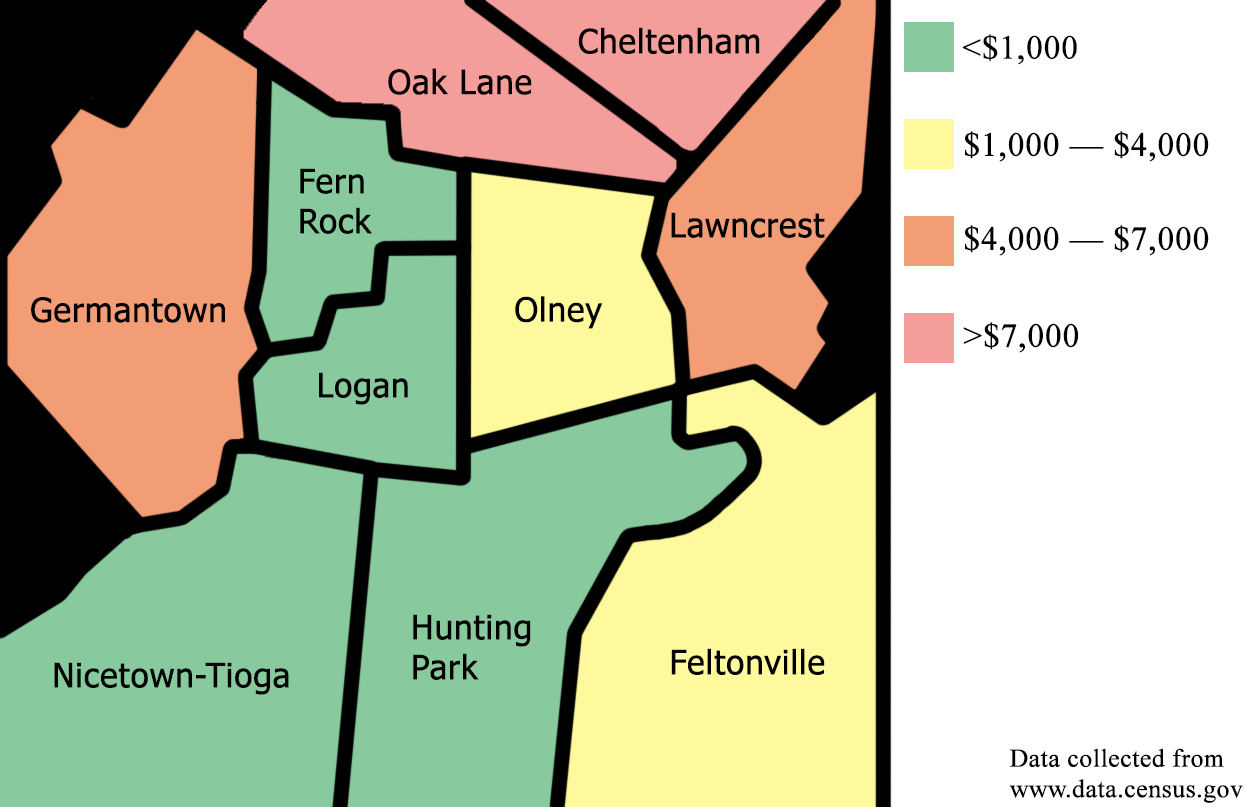
Infographic showing the rise in median household income in Germantown and surrounding neighborhoods.
Largely, gentrification is caused by wealthier individuals or groups of people who purchase land in areas with a low property value to further grow their income. These wealthy “investors” tend to go into adverse neighborhoods, buy up store fronts, buildings and houses among other properties under the guise of bringing in better opportunities for the neighborhood. In reality, this often forces people who live in these neighborhoods out of their homes and jobs as houses and businesses are bought up, property taxes rise and the cost of living and shopping locally increases. As families are displaced, the history that they, and their neighbors, carried with them leaves the neighborhood, often erasing cultural landmarks that once held sentimental value such as parks, schools or churches.
There are several organizations that are giving people from Germantown and its surrounding areas a chance to become developers, moving into the community to build it up on their terms. Some members of the community endorse this as it is allowing them to redevelop and clear up some of its blight or deteriorated properties, but others deny that this is helpful and claim the bottom line is that new developments are rarely affordable for Germantowners and almost exclusively welcome outsiders with a higher budget into the area.
Other community efforts have started, but require large numbers or consistent, long term effort from local non-profits — many of which simply do not have the time or manpower to succeed. The city of Philadelphia has also implemented some programs to help those suffering from the effects of Gentrification, but community members and developers alike often agree that these programs only act as a temporary bandage for the deep cuts of displacement and cultural deterioration.
Beyond just physical and cultural displacement, gentrification can also lead to increases in crime and homelessess as people are forced into worse living situations or take to the streets to pay their increasingly larger bills. Working with all of these problems in mind, there is a select group of community minded individuals who are actively working to keep Germantown’s culture, connection, style and most avidly, affordability and livability the same as they have been for decades through community meetings, non-profit and economic solutions, and staying aware of new developers moving into the area.
Chew and Chelten: What once was
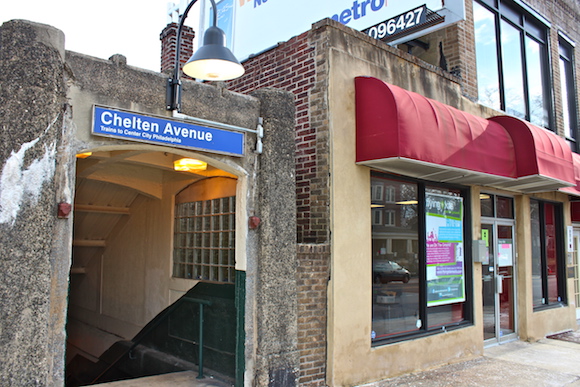
“Germantown used to be a beautiful mix of people,” said Douglas Rucker, who has lived in the area for most of his life, “integration helped people come into the area and get out of bad situations.” Rucker, who works with the Chew and Chelten Community Development Corporation (CDC) recalls a time when Northwest Philadelphia was not only racially integrated, but culturally as well. The predominantly African American neighborhood is now seeing a movement of racial integration in many ways, but also a lack of cultural integration.
Flying Kite
“We came, we saw, we conquered,” said Rucker referring to typically white developers who buy up land in the area without considering cultural displacement. Over the last decade, the population of Germantown has been slowly rising, but the number of new white people coming into the neighborhood is nearly double the number of people of color. Meanwhile, over the same period of time, the average household income in the area has risen.
According to their Federation of Neighborhood Community Centers page, the Chew and Chelten CDC is an organization operating out of the East Germantown area that looks to engage “youth and young adults through arts, culture and entrepreneurship programs for non-profit leadership development and career success.” Rucker says his team’s goal is to revitalize the immediate community around the Chew Avenue and Chelten Avenue intersection with a business district that is owned and operated by members of the Germantown community and their families.
Through intervention and prevention of negative gentrification effects, Rucker hopes to, “see this area as it used to be: one that welcomes a sense of friendliness and community.”
Wayne Avenue: A look into Germantown life
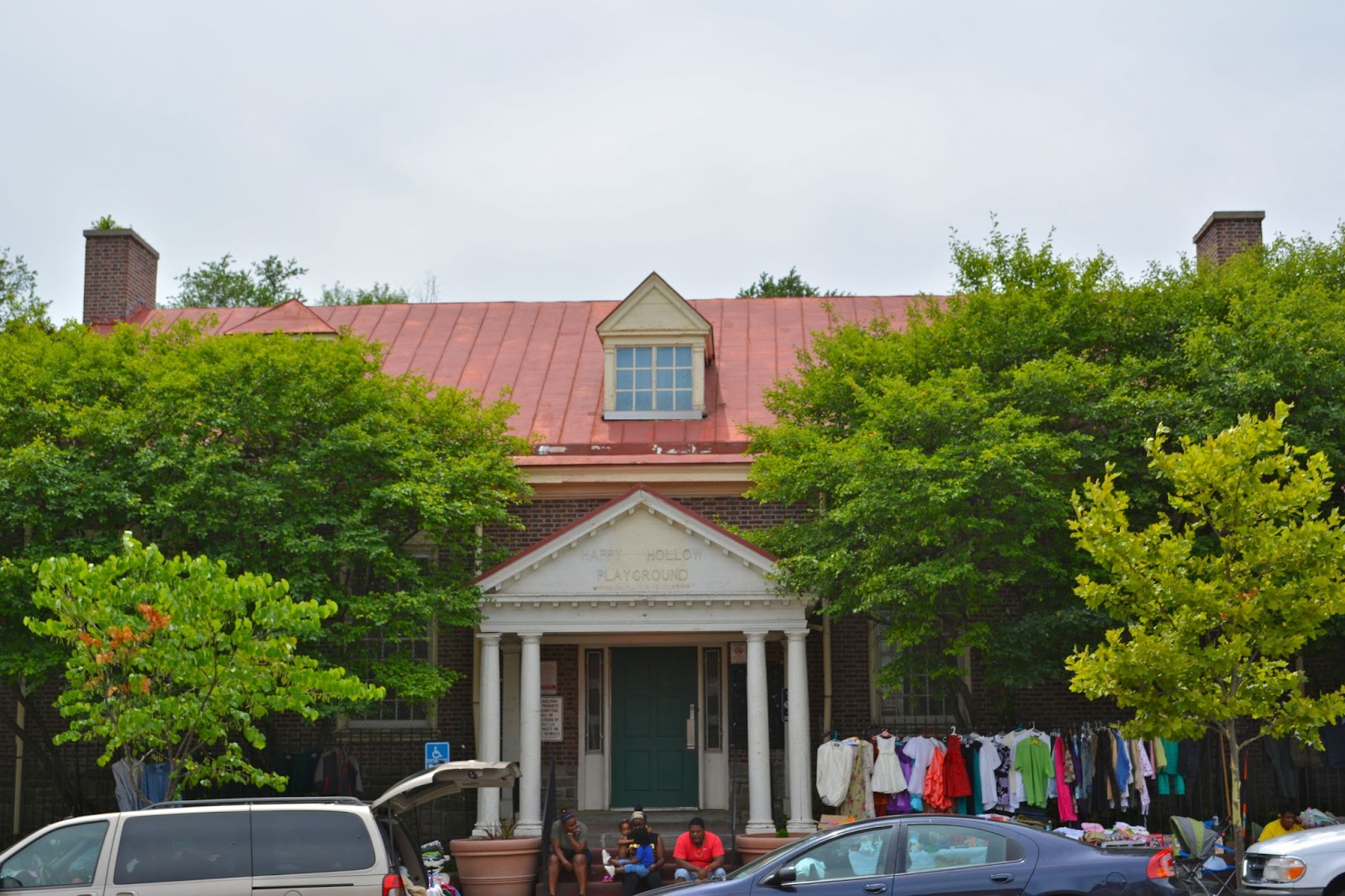
West of Chew and Chelten is Wayne Avenue, which cuts through the center of Germantown. Traveling through the neighborhoods here, there is a sense that the people coming and going, sitting on their porches or frequenting local businesses are connected by their shared appreciation of this section of the city of brotherly love. Just one block off of Wayne at any stretch of the road there are similar but unique subsections of Germantown such as the houses neighboring the Happy Hollow Recreation Center. Here men and women clad in business attire wait for a SEPTA bus while young people play basketball in the nearby courts.
WikiMedia Commons
A flea market takes place in front of the Happy Hollow Recreation Center on Wayne Avenue.
A short trip up the road, the homes have a similar style, architecturally, and feature signs that read “Peace,” “Integrity,” “Black Lives Matter” and “Respect for All,” as well as being home to the first front yard barbecues of the spring thaw. These places are home for their residents, and they shouldn’t have to leave because they cannot afford to live in the place they’ve lived for decades.
Germantown has many of these culturally distinct subsections that share an overall connection to the neighborhood, but diversify and create unique subcultures. They may be hidden from Wayne Avenue, but to their residents, these subsections are communities worth persevering.
Renewal with respect
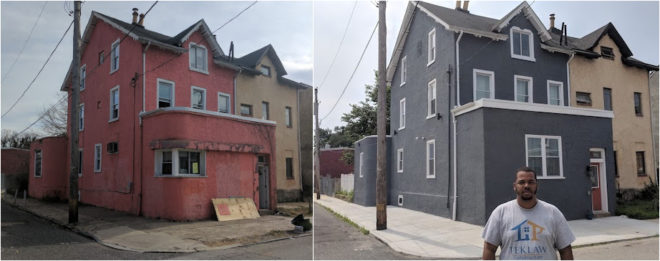
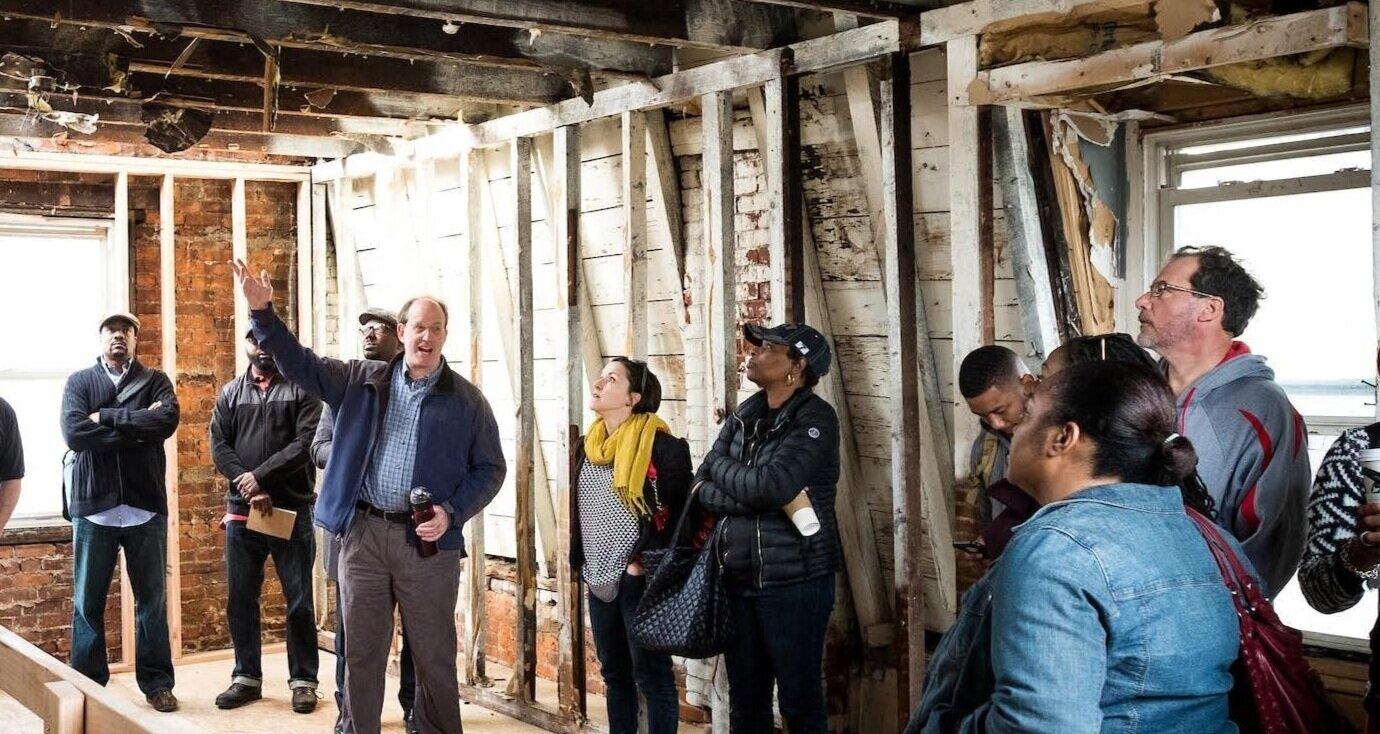
Bruce McCall of TekLaw Properties is working in these small communities to renovate decaying properties while maintaining what makes each property and area unique. A Mount Airy resident and IT worker by trade, McCall took up real estate development in 2005 and has been working in North Philadelphia neighborhoods including Germantown since. With a majority of McCall’s renovation properties being located in Germantown, he has gotten to know the local culture and style well over the years.
“The more that Germantown’s history and classic look is followed, the more well received the project is,” said McCall commenting on his work in Germantown.
“TekLaw prides itself on responsible development with care. We are more socially based as we like to get input from neighbors instead of just throwing something out there and just stick whatever we want to the community,” said McCall.
One of the key arguments against gentrifying an area, besides raising costs and lowering livability for residents, is that it fundamentally changes the appearance and general feel of an area. When working in Germantown, McCall seeks to avoid this by consulting local community organizations and Facebook groups, which McCall said “gives the neighbors a chance to have some say so on what their neighboring property will look like.”
Hidden City Philadelphia
Even if many community members work together to analyze incoming developments, not all developers will consult the community and some may end up taking advantage. Jumpstart Germantown looks to, “revitalize the Germantown section of Philadelphia, and surrounding communities through training, mentoring, networking and providing financial resources to local aspiring developers,” according to their website. The group helps developers get in touch with the community and learn how to preserve the cultural integrity of their properties while also renovating and raising the value of them.
“Culturally responsible development is taking into consideration community needs and wants where redevelopment is happening,” Jumpstart Germantown director Angie Williamson said.
Jumpstart Germantown
Jumpstart teaches residents how to physically redevelop a home and how to do so in a culturally responsible manner.
“Jumpstart Germantown focuses on blight removal — ensuring that homes in the area are returned to livable conditions and provide naturally occurring affordable housing in the community,” Williamson said. Jumpstart consults with and teaches local real estate developers from the Philadelphia area, allowing them to earn a profit by working in their neighborhoods.
“The impact is huge, and growing. And the Jumpstart model is providing education, mentorship and financing to groups historically denied access to capital and the real estate development profession. More than 85 percent of our participants are women or people of color, which is reflective of the communities in which they are improving,” Williamson said.
Philly Office Retail
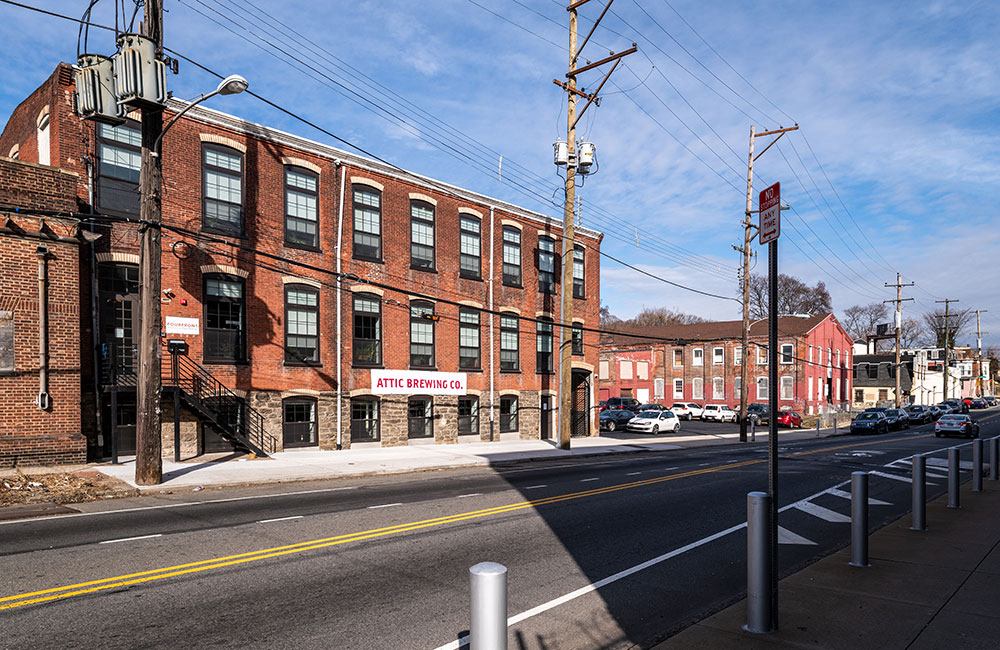
The Attic Brewing Company is a project developed in the heart of Germantown that attracts a major college crowd just off of Wayne Avenue.
“As Germantown’s popularity grows and more people realize its many benefits, the demand for, and price of real estate also grows,” said Williamson.
Livability and affordability
Naturally Occurring Affordable Housing (NOAH) is defined by researchers at the Reinvestment Fund as “housing units that are affordable to modest-income families without subsidy such as the Low-Income Housing Tax Credit.” As NOAH housing continues to develop in the area, Germantown has also lost several low-income housing options to decay and lost cultural landmarks to redevelopers refusing to be transparent with the community, raising concerns that the Germantown community may be losing its history.
It took an active group of over 250 residents raising their concerns to a State Representative and State Senator to keep the Germantown High School building, which is over 100 years old, from becoming a shopping center. As of February 2022, Germantown High is not being demolished, but is being repurposed as apartments by developer Jack Azran, the same person who was planning to turn it into a mall, which has neighbors concerned for Germantown’s true heritage being preserved. Buildings like this are being taken advantage of all over Germantown, but 250 protestors cannot show up every time a culturally or historically significant home or business is bought up.
Marthol, a Germantown resident since 2007 and transplant from New York City, says that, “real estate access for working-class to poor people, whether you are renting or plan to be a homeowner, has diminished significantly since 2007.” Mathol says that her neighbors and her receive daily phone calls, text messages and letters from developers requesting to purchase their homes for what she calls “the absolute lowest price.”
“They are like sharks circling who detect a little blood in the water,” said Marthol.
GREAT via Facebook
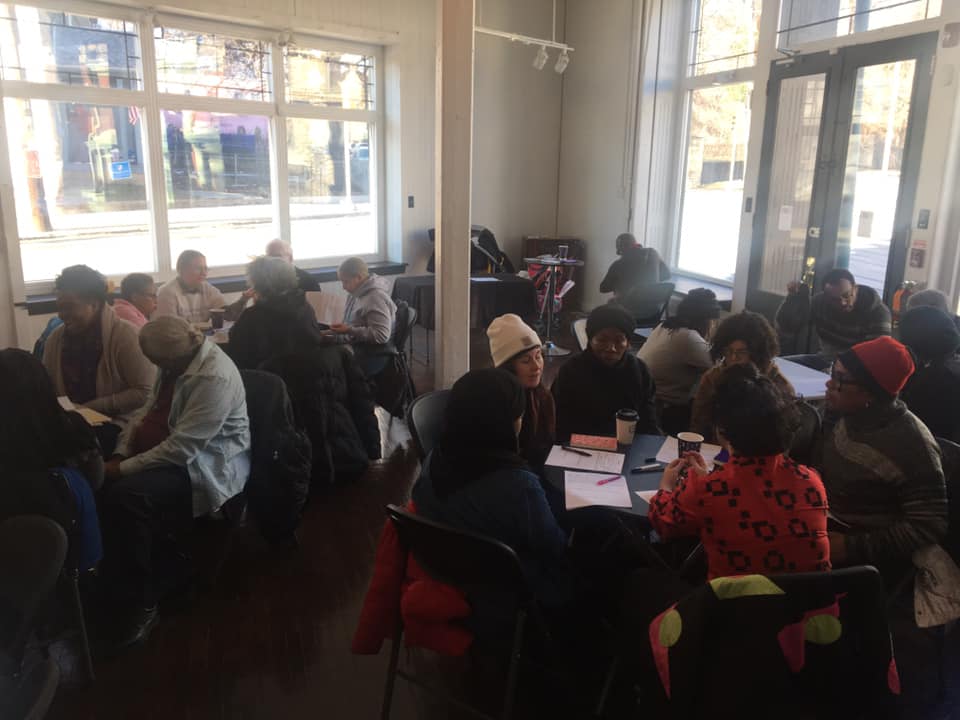
Members of the Germantown community gather pre-pandemic for a Dr. Martin Luther King, Jr. day celebration featuring a discussion of Dr. King’s concept of the “beloved community.”
When questioned about local development groups like Jumpstart, Marthol responded “I personally haven’t seen any development that doesn’t lead to displacement or a change in the economic mix.”
Taking a different approach to redevelopment, GREAT has several programs that are trying to preserve Germantown’s community and culture through economic and community assistance. The group’s main counter to the effects of gentrification are Community Land Trusts, sections of property owned and operated by a non-profit that is influenced by members of the community to keep the rates affordable and housing or commercial land in the hands of longtime Germantowners.
Citizens take action
Marthol, who says she moved from New York due to rising housing costs caused by gentrification there, was attracted to Germantown because of its community efforts, architectural style and historic value to the city. Although she has learned and experienced much of Germantown’s history, she, like many moving to the neighborhood every year, was not there to see the community build itself up after it experienced major divestment in the latter half of the 20th century — what Marthol refers to as “the lean times.”
“When you remove the people who lived through it, you remove that history… the holders of history are more important to culture than the architecture,” said Mathol.
Freedom’s Backyard
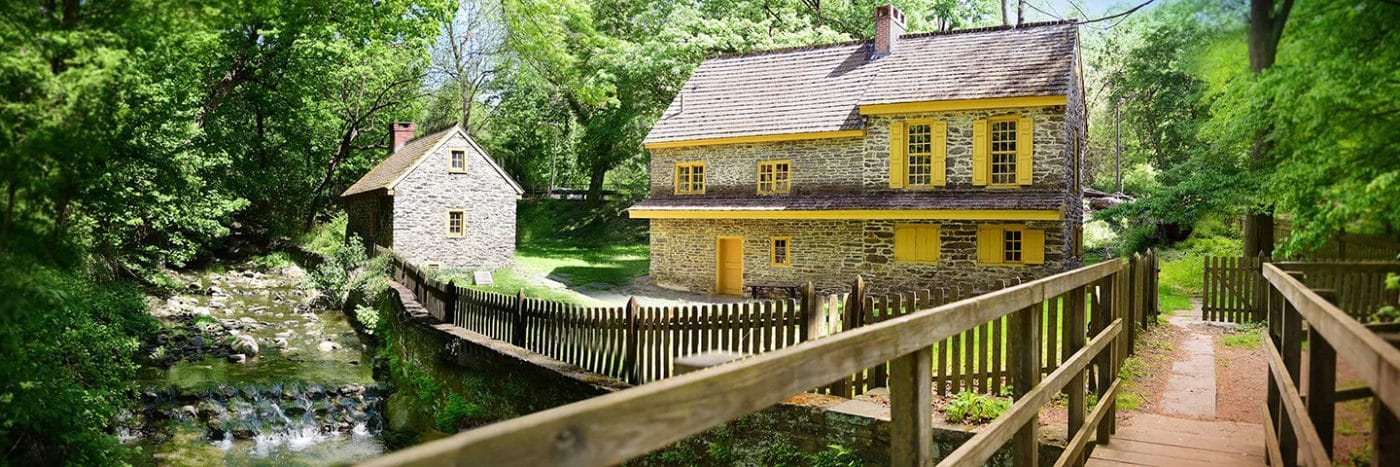
Rittenhouse Town is a historic site in the Germantown area that was built in the 1600s when the neighborhood was first being formed. It is home to one of the oldest paper mills in the United States.
A way that Germantown citizens like Marthol can be proactive when it comes to protecting their homes and community culture is by participating in government exemptions such as the Real Estate Homestead Tax Relief Program or the Longtime Owner Occupants Program (LOOP). The Homestead Program is a simple application that homeowners can fill out and send to the City of Philadelphia’s Department of Revenue. According to the city’s website, to qualify, one must only own a home in Philadelphia in which they live as their primary residence. Once accepted, the property gains the Homestead Exemption leading to a reduction in assessed property value of up to $45,000.
LOOP is the most direct counter force homeowners in areas like Germantown have against gentrification, as it directly assists those whose assessed property value (after applying for a Homestead Exemption) has risen by at least 50 percent in one calendar year. This can occur for a variety of reasons, but the most common and obvious reason is that when a developer moves into a low-income area and builds up high property value locations, the property tax of the surrounding area rises with it. LOOP limits a property’s tax increase to 50 percent, and while an increase of that size can still result in financial complications for some, the ability to limit the financial effects that gentrifying developers have on an area is currently the best way to preserve affordability.
Some members of the community such as Rucker see these governmental programs as beneficial to the community, but also as just the first step.
“City officials do not do as much as they could, and they have the legislative power to help communities like ours,” said Rucker. He sees community redevelopment as a positive in many ways, especially when new developments such as high-end apartments bring talented individuals and diverse populations into the community, bringing back the integration he spoke of from the area’s past.
Workers World
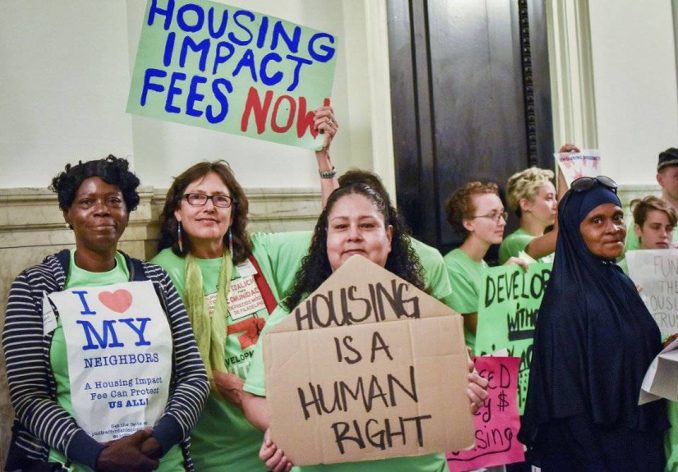
This demonstration at a city council meeting is one of many that have demonstrated Philadelphia’s citizens’ desire for policy change and fixes in the city to help people resist the effects of gentrification.
According to Rucker, if the city government will not intervene when developers try to take advantage of lower-income neighborhoods, then “it is up to the individual to become educated on how to protect their community, to protect the future of their children and families.”
When developing in culturally rich areas like Germantown that also have abandoned or deteriorating properties, there is a fine line to walk between improvement and cultural displacement.
Williamson says that when developing in the area, it is important to remember that “projects can be profitable and remain affordable,” and to “listen to the neighbors and pay attention to what the community wants and needs.” While even the leading industry executives are still somewhat unclear as to how development and culture can get along, and local organizations are doing their best to preserve their communities, there is still more that citizens of gentrifying neighborhoods can do, and plenty that those looking in from other neighborhoods can do to help.
“If the locals rise up, come together and create what they’d like to see in their neighborhood, it would offset some of the negative impacts of new development,” said McCall, “I think it can be done but it would take some collaboration for sure.” When moving to an area like Germantown, supporting culturally responsible development and avoiding obviously gentrified developments is a practical way to add to and experience another culture without displacing those that built it.
As was voiced by several Germantown citizens though, the city of Philadelphia is ultimately the place Germantown citizens should turn their criticisms toward, as more stringent policy changes could lead to the help that this community needs.
Editor’s Note: This article is a modified version of a story written as part of my upcoming indie publication Finding Philadelphia, and owes credit for some contributions to Myles Williams.
Student experiencing housing insecurity and treating disabled mother is awarded the inaugural Diversity Scholarship worth $40,000 toward his final undergraduate semester.
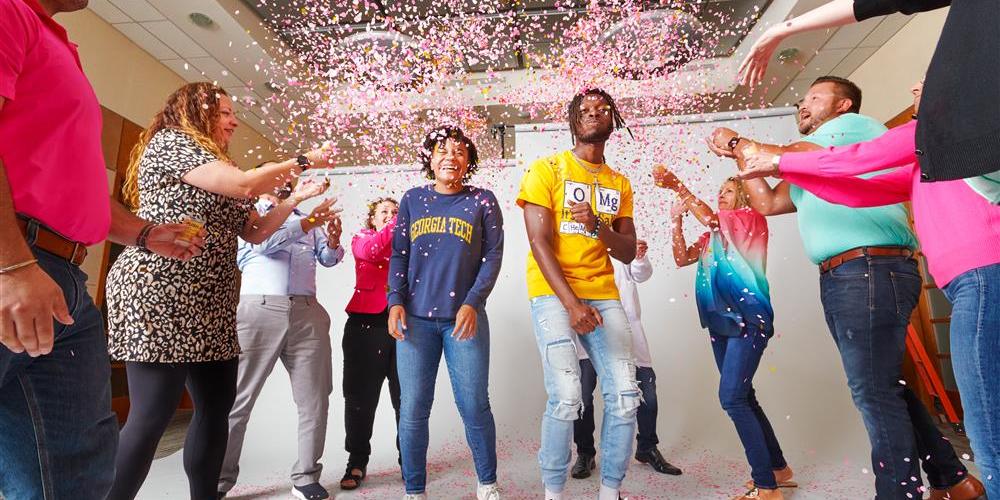
PHILADELPHIA, PA — La Salle University chemistry student, Jonathan Jonassaint, is one of two in the nation to be awarded the first annual Diversity Scholarship of $40,000 toward his final undergraduate semester provided by the biomedical engineering company, PeproTech, in East Windsor, New Jersey as they rollout their new heightened diversity, equity and inclusion initiatives seeking to make the scientific community a more inclusive one.
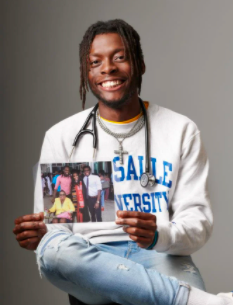
The Philadelphian student awardee, Jonassaint, is known by La Salle University professors and peers as simply J-Jay, but J-Jay’s story is far from simple. He spent his younger years in Haiti until moving to Reading, Pennsylvania. At 13, J-Jay’s mother, Marie, suffered a knee injury and further malpractice upon treatment that dealt her permanent nerve damage. J-Jay has since been his mother’s caretaker. With his mother wheelchair-ridden and unable to work, the family experienced a period of homelessness.
After high school, J-Jay enrolled at his closest college option, La Salle University. “I did not really choose La Salle, but after reflecting on my experiences here, I believe La Salle chose me,” J-Jay said. He chose the pre-medical school path, chemistry and biology, because of his passion toward rehabilitating his mother. “I don’t want another child to see their mom deteriorate like I had to. I feel like it’s my personal responsibility to become a resource for others to rehabilitate themselves.”
J-Jay, who will walk for graduation in May aspires to become a rehabilitative sports physician. The senior La Salle student believes that through his Professor’s efforts and their belief in him, he was able to continually succeed and grow in his courses. “My professors let me be unapologetically myself, they believe in me and I am eternally grateful for my relationships with each of them,” he said. Apart from his support, J-Jay gave back to La Salle during COVID-19 through hours of volunteer work at the on-campus testing site and student wellness center under his mentor Dr. Scott Cook. He also became a Resident Assistant and acted as a student leader to unify student communities at school.
PeproTech
J-Jay applied for the PeproTech Diversity Scholarship and won over the summer, allowing him to enroll in his final semester at La Salle University this year. PeproTech launched this scholarship to demonstrate commitment to a more equitable and inclusive future for life sciences. The scholarship aims to foster an inclusive future and sought self-identified minority student applicants. Out of 400 applicants, PeproTech said to have chosen J-Jay upon his story “demonstrating great passion, drive and unique hardships,” and have since published an article on their website with J-Jay’s story. For more information on PeproTech, visit their website or send them a message through their contact page.
For a transcript of the interview with J-Jay refer here. To keep up with J-Jay’s journey, connect with him via linkedin or personal email at jonassaintj1@lasalle.edu.
About PeproTech PeproTech is a biomedical engineering company located in East Windsor, New Jersey, that researches cell signaling proteins, cytokines, and manufactures over 2,000 high-quality supplies to the global health industry. The company was started by three visionary scientists in 1988 and has developed into a competent and widely trusted brand. PeproTech has over 100 employees and several offices around the world. Most importantly, the company is newly developing diversity, equity and inclusion initiatives to encourage diversification and inclusion in the larger scientific community. For more information on PeproTech, visit their website or send them a message through their contact page.
Happy Foreign Language Awareness Week, La Salle! There are countless benefits to studying a foreign language, far too many to put into one article, but we tried our best. Hear from students, alumni and professors on why they’ve learned multiple languages.
Margot Santos, ‘22 — Political science and international relations major, LGU minor
Spanish, Portuguese and English; learning French, Italian and Russian
“I speak Spanish, Portuguese and English fluently as I grew up trilingual. I have an intermediate level of French, I can read and write and speak but I wouldn’t say I’m fluent yet. Italian I can understand a lot due to the Spanish language and when I studied it I could grasp it quite easily but I would say I have a good foundation of the language. I am currently studying Russian. This is my second semester taking the language and it is quite different from the other ones I know. It is a great challenge but I am fascinated and enjoy learning. I hope to add more languages to the list after I graduate.
I am very passionate about languages. I find it fascinating how much you can learn about not just the culture, but the people who speak that language. Communication is so important and is a tool used for everything in life. It makes a massive difference when you are able to speak to someone in their mother tongue. That feeling of trust, comfort and familiarity is instantly there. Not only this, but it is a great challenge and humbling experience as the learner to go out of your comfort zone and into someone else’s common ground. Language is what connects us and allows us to understand one another. It also makes traveling easier.”
Kashish Patel, ‘25 — Finance and international business major
English and Gujrati; learning Spanish and Japanese
“I wanted to learn these languages because I want to visit Japan as well as Spanish speaking countries. I also used to teach at a tutoring center, which mainly worked with foreign kids who spoke little to no English, so it helped me a lot to have some knowledge of other languages. I think it’s super helpful to know several languages, especially living in the United States because of how many different languages people speak today. It’s helped me communicate with international friends that I’ve made as well.”
Dr. Barbara C. Allen, professor of history
English and Russian; studied French, Spanish and German
“I enjoyed taking French and Spanish courses in high school and wanted to try learning a different language in college. I chose Russian because the U.S. State Department considers it a critical language for international diplomacy and because the Cyrillic alphabet looked interesting. I found the alphabet was the easiest thing to learn. Russian grammar was much harder, because it is so different from English. But it was a very intellectually engaging subject to study. I decided to teach and research the history of Russia and the Soviet Union, so proficiency in the Russian language was obligatory. I need to read primary sources in Russian and read the work of Russian and Soviet historians, much of which has not been translated into English. It is important to study another language to have insight into another culture and a richer perspective about one’s own culture and society.”
Ciara Ledgard, ‘22 — Spanish major, Latin American studies and human services minor
Spanish and English; learning Italian and French
“I have been studying Spanish for several years, and learning Spanish helped me at my summer job when a lot of my fellow employees spoke Spanish as their native language. It helped to be able to communicate with them more clearly.”
Stephen Walton, administrative assistant for the departments of global languages, economics and political science
French and English, learning Japanese
“I speak French, as I took it in school since seventh grade and was a French Studies major when I was a student at Arcadia University. I’m currently trying to learn Japanese, but it’s far more difficult and different than French.
I learned French since my great-grandmother is French and came to America after WWII after marrying my great-grandfather, an American soldier. My mom was actually raised by my great-grandmother, so her upbringing was influenced by French culture. My mom embraced this part of her heritage and passed it on to me and my two younger brothers. French is one of the biggest and most widespread languages in the world, so you can never go wrong learning French. Even many of our next door neighbors, the Canadians, speak French. Many of the departments I’ve worked in at universities involve language or study abroad, so it’s always been a huge benefit for me to be able to speak a foreign language.
As for Japanese, I’ve always been a fan of traditional Japanese culture as well as its pop culture. I’m a huge fan of anime, Japanese video games and the subcultures surrounding them, so it only makes sense that I learn Japanese with all the Japanese media I consume. Japan is also the country I dream most of visiting, so it would be great to be able to speak Japanese at least somewhat with native speakers.”
Oksana Chubok, professor of Russian
Ukrainian, Russian and English
“I am Ukrainian and my native language is Ukrainian, but by education I am a teacher of Russian language and literature. I fell in love with the Russian language at school, when I got acquainted with the works of Russian writers: Pushkin, Lermontov and Chekhov. I am a graduate of La Salle University; in 2010 I completed the program of Central and Eastern European Studies and received a master’s degree. Since 2010 I have been teaching Russian at the University. I love my students and my job!
Now, knowing the Russian language, I can use it in the fight against Russian propaganda. I try to reach out to those Russian-speaking people who to this day justify the actions of Vladimir Putin, who turn a blind eye (who close their eyes) to the genocide of the Ukrainian people. There is no excuse for war!”
Elena Tzivekis, ‘21 — Communication major
English and Greek; learning Russian
“I learned Greek while growing up, and knowing the language of my ancestors helps connect me to my roots and also communicate with my family in the states and overseas as well. I decided to take Russian in college, because it is spoken by a handful of relatives on my mom’s side and I have always been fascinated by the language itself. While at La Salle, I had the privilege of learning Russian from one of my favorite professors at La Salle, Professor Chubok. It has helped me personally because it has brought me closer to some of my Russian-speaking family members, and I hope to one day visit Russia and develop my Russian even further.”
Danielle O’Brien ’24, — International relations major, Spanish minor
Spanish and English; learning Mandarin
“At first I took Spanish throughout high school because, like most American students, it is required for graduation. But there is a fine line between simply learning a language to pass and learning it to learn it. I started getting discouraged when I noticed my peers around me were retaining the material faster than myself, so I dropped my upcoming Spanish class and decided to take up peer ESL tutoring instead as I thought that was a good way to still practice the language. I was astonished at how much more quickly I could pick up the language speaking with actual native speakers than simply sitting in a classroom. But aside from the opportunity allowing me to learn a second language better, it gave me the opportunity to see first-hand the effect on peers my age as a result of their status in the United States. It consequently inspired me to advocate for change. My experience as a peer ESL tutor for that program in my high school led me to major in international relations and minor in Spanish here at La Salle University, where I am still tutoring peers of an immigrant background in English through the BUSCA program. Thankfully, in my high school, beginners’ Mandarin was offered, which I took for two semesters. However, I’ve been unable to learn more in my higher education as it is not taught here at La Salle. Nevertheless, I can definitively say there is importance in learning languages as the peer tutoring demonstrated to me; language can help people of all backgrounds come to a common ground and thus it is the most essential thing one can learn.”
Dr. Mark Thomas, professor of political science
Russian, German and English; reading proficiency in Polish, Ukrainian, Dutch, Spanish and French
“I learned languages because it increased my marketability when I was looking for work, either in business or government work. Knowing a language removed barriers to communication with my non-U.S. colleagues and opened up topics of discussion in which my business partners did not know the English vocabulary. More speaking in their language built incredible rapport with my professional colleagues in government and business. It showed I cared enough about them and their traditions that I would learn their language. It also enabled me to get insights from listening to their news and reading their newspapers which eluded my monolingual mammal U.S. colleagues. It also allowed me to avoid cultural blunders, which hurt marketing efforts. The classic example of this is the Chevy Nova car. It did not sell well in Spanish-speaking countries. “Nova” means “it does not go” in Spanish. Oops! By the way, Americans are one of few people in the world who are arrogant enough to think they do not need to learn another language. Almost every country around the world teaches a second language throughout school.”
Bianca Abbate, ‘21 — International relations major
Russian, Italian and English; studied German
“Studying foreign languages, especially Russian, opened doors for me. In 2019, I was able to spend a summer in Russia through a State Department scholarship. More importantly, now is an especially critical time to have a knowledge of Eastern European languages and cultures, given the devastating war in Ukraine. I think that my education in foreign languages has deepened and personalized my understanding of the ongoing tragedies overseas. I feel a special duty to educate myself on the issues. Studying Russian has also brought many Russian and Ukrainian people into my life — people I now think about every day. I’ve been keeping in touch with a few friends in Russia on social media, one of whom sends me pictures of protests in the major cities. While I don’t currently use Russian in my professional life, I expect to see more opportunities to do so in the future. It is weird to think that, if I had not gone to Russia when I did (just before the pandemic and before wartime), I may never have seen Russia in my lifetime.”
Alina Snopkowski, ‘22 — Economics and international studies and criminal justice major, history minor
English and Russian; learning Polish
“I have always been interested in languages and writing, and being able to understand more than one language means you are able to learn from so many more people. You also have access to more information than you would’ve had otherwise. I have been learning Russian at La Salle and while I can’t claim to be even close to fluent, I understand it well enough to be able to read the news from other countries — for example, I am interested in international relations and international politics, so sometimes I read the official state media from Belarus because I think it’s interesting and important to see how the government there presents situations and talks about things. Also, speaking a fair bit of Russian helped me communicate with people I worked with who didn’t speak much English.
People see my name and think I speak Polish; I’ve been on Zoom meetings with people who see my name pop up and then they start speaking Polish with me. It’s pretty embarrassing when I can’t say much. The only Polish I know is the basics through Duolingo and bad words through my family, but one of my goals is to learn Polish and go to Poland someday (with my grandmother). I would love to travel, and speaking more than just English would help me better communicate with people in different places and learn about them and their countries.”
Liz McLaughlin, ‘22 — PPE and finance major, Spanish minor
English and Spanish
Think about how much more connected the world would be if each person spoke, on average, three languages. I know that’s a lot, and I can only claim two — English and Spanish — but what a world that’d be! A big reason why I’ve enjoyed learning Spanish since I started taking classes in eighth grade is because it enables me to connect with people from other cultures in a more challenging way than if I only ever interacted with those who only speak English. Some of my favorite travel memories include traveling to places where I can communicate in Spanish; sometimes it’s nerve-wracking, especially when you’re talking to someone who speaks very quickly. But on the flip side, it’s a confidence booster to be able to adequately express yourself in another language. I firmly believe we should amp up our focus on foreign languages in American schools; I learn about how money varies from country to country, so why shouldn’t we also emphasize how people communicate those transactions? In an increasingly global and connected world, we shouldn’t fall behind on the most basic thing that unites us all: communication.”
Dr. Vicki Ketz, professor of Spanish, chairperson of the department of global languages, literature and perspectives
“I grew up in a multilingual household, so speaking foreign languages was normal for me. My father was in international business, and this is why my family lived in different countries all over the world. Wherever we would move, I would learn the language of that country.
Studying a global language is really more than learning words and grammar. You learn to communicate with other people from other countries. More importantly, you learn about different cultures: their history, their art, their political structures, their religion and their values. It opens your eyes to different perspectives; not everyone sees the world the way you do. Understanding the way people think is very important in any field that you may work. Maybe if humans were better at it, there would not be as much conflict in the world.
For me, learning a foreign language is like deciphering a puzzle with multiple variables, and I love breaking a code. I can remember being in Greece one time and using the knowledge that I had learned in my ancient Greek class to decrypt the signs. (Columbia required Latin and ancient Greek for PhD coursework, but I never thought I would use it.) But yet, there I was reading the Euclidean alphabet to understand what was written. That was pretty cool!”
The Renfrew Center for Eating Disorders launched the “Live Your Real Life” campaign, which addresses social media and body image, as part of National Eating Disorders Awareness Week, which runs from Feb. 21-27.
According to The Renfrew Center’s website, the campaign was developed to “reflect on the impact social media has on your body image and mental health. You deserve to empower yourself and embrace the real you.”
In a press release about the campaign, the organization described how the “Live Your Real Life” campaign will push against some common social media practices, saying “social media is often referred to as a highlight reel. Posts on platforms with a photo-sharing component tend to depict only the perfect moments of people’s lives rather than the full picture. This National Eating Disorders Awareness Week, The Renfrew Center is encouraging people to reverse this trend by taking pictures of their real-life selves — photos that aren’t perfectly curated for a highlight reel — and sharing them using the hashtag #LiveRealWithRenfrew.”
On social media, the hashtag #LiveRealWithRenfrew has been used to spark conversation about eating disorders and to give those in recovery a platform to share their stories. One community account on Instagram, @boycottthebefore, has partnered with the Renfrew Center to encourage women to share their “authentic” selves. A post from Feb. 16 reads, “The Renfrew Center is a place I hold near and dear to my heart as it was a safe place for me to recover and find community… Many of us get caught up in highlight reels and perfectionism. When we see how we all lead perfectly imperfect lives, we can better embrace our true selves… Together, let’s celebrate the real and the now.”
The social-media-focused effort coincides with the release of a new study from the Renfrew Center. The nationwide survey asked college students about body image, isolation, depression and social media. According to the Renfrew Center, the survey found:
93 percent of respondents have felt alone or isolated at least sometimes during the current school year. One in four said in the 2021-2022 academic year, they have always felt alone or isolated.
100 percent of surveyed students have felt depressed at some point during the current school year. Fifty-five percent said they felt that way sometimes, while 27 percent said always.
72 percent of respondents agreed with the statement, “I feel alone or isolated more often now than I did before the pandemic (prior to March 2020).” 70 percent reported feeling depressed more often now than pre-pandemic.
Two-thirds (67 percent) of surveyed students said their body image has gotten worse since before the pandemic.
When given a series of adjectives to describe how they typically feel after scrolling through social media — happy, sad, inspired, depressed, loved and lonely — the most common response was “lonely” at 39 percent, followed by “depressed” at 24 percent. 15 percent of respondents selected “inspired.”
In addition to the “Live Your Real Life” campaign, the Renfrew Center will host free, virtual events. Registration for the events, which include a yoga class and online webinars, is available at the Renfrew Center’s website.




 The La Salle Collegian