A New Era for Tech-Curious Explorers

News

Claire Herquet, Editor-In-Chief 

La Salle University’s Association for Architectural Computing Machinery (ACM) is officially back – and this time, it’s aiming to become one of the most active and curiosity-driven student organizations on campus.

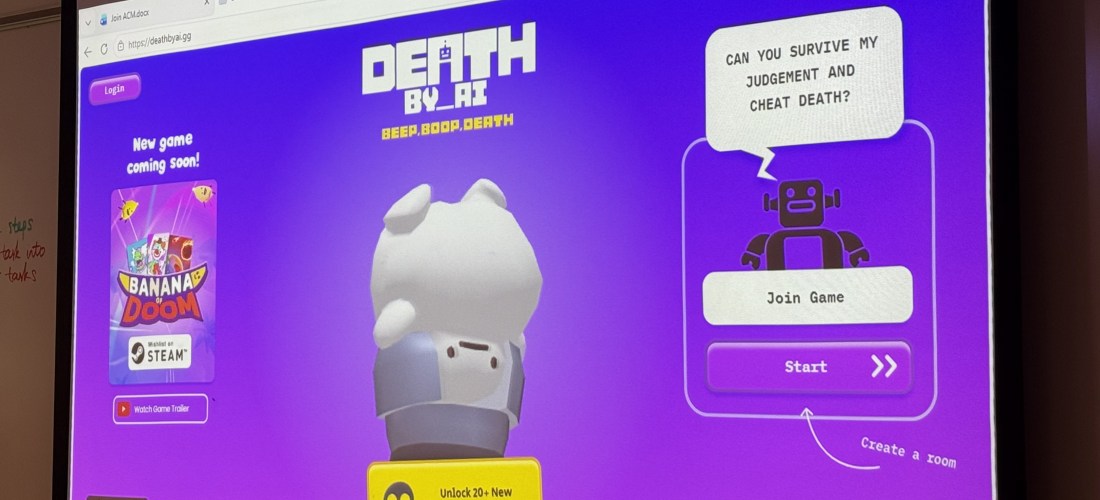
After several quiet years, our chapter of ACM’s new executive board has relaunched the club with a mission to make computer science accessible, social, and fun for students across all majors. The group kicked off the semester with its first event on Tuesday, Sept 15: a gaming free period in Holroyd Hall featuring the game Death by AI, an interactive strategy game that had students laughing, focused, and bonding over the quirks and nuances of artificial intelligence.

This collaborative game had students and players try to outsmart fictional AI systems before they “take over” the scenario. Think: chaotic prompts and unexpected outcomes all powered by AI. For many attendees, it was their first time meeting other students interested in computing and coding. The event doubled as a mixer, giving students a chance to connect with ACM’s board, learn about upcoming events, and see what the club’s revival entails.

This semester, ACM is rolling out a new series of eight events, roughly one major get-together every two weeks. Programming, cybersecurity, mathematics and problem-solving, IT, career development and more will be only some of the topics covered by the organization this upcoming year.

Vice President of ACM, MyrrhJessica Okwara ‘28, had a few words to say as a leader of the chapter: “These professors truly have a passion for computer science over here in Holroyd. Being able to promote someone else’s passion that aligns with mine makes me feel a strong sense of serenity and confidence as a student. I hope in the production of this organization, we can allow students to experience computer science in a more fun and engaging way.”

Holroyd Room 151, the Mathematics & Computer Science Student Lab, is also getting a makeover. ACM hopes to transform it from a last-minute homework bunker into a space for experimentation, community and collaboration.

ACM’s revival is coming at a time when students across disciplines are increasingly interested in tech and AI – whether for career preparation, creative projects or curiosity. The organization’s leadership hopes ACM will continue to become a place for students who want to challenge themselves, meet new people, and be in a welcoming, educational environment.

La Salle’s chapter of ACM is open to all majors. Students can join by attending any ACM event, reaching out to their faculty advisors (Dr. Highley at highley@lasalle.edu and Dr. Wang at wang@lasalle.edu). Our chapter members also encourage students to follow ACM’s Instagram account, and explore the national ACM at acm.org.

Beyond the Body: Root 2 Fruit Redefines Wellness at Cira Green

News

Rosalind Holloway, Staff Writer

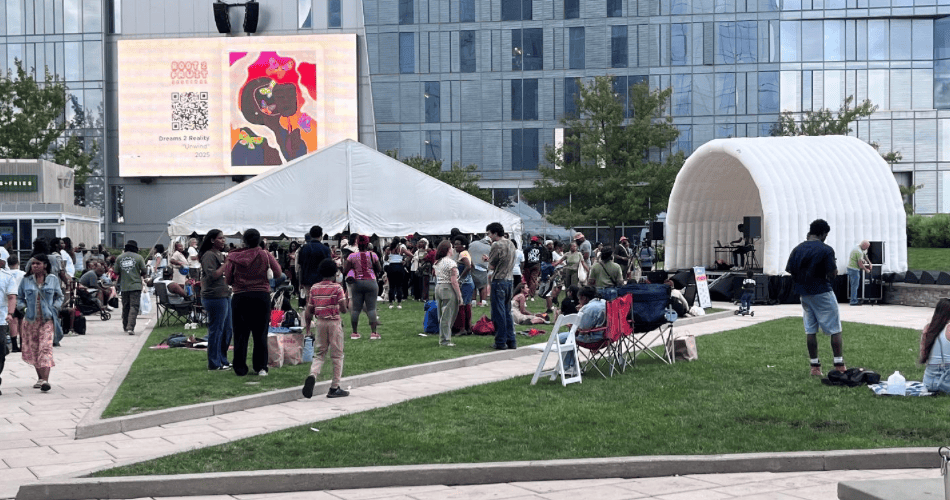
Neo-soul music floated across Cira Green Saturday afternoon as festivalgoers moved between food vendors, wellness practitioners and live performances with the Philadelphia skyline in the background. Erykah Badu was playing when I arrived, followed by Jill Scott, and almost immediately the atmosphere felt different from what someone might expect from a traditional health and wellness event.

After my ticket was scanned and I received my wristband, I was welcomed and free to explore. My first stop was for fresh fruit and water, but it did not take long to realize that Root 2 Fruit was offering much more than something to eat or another Saturday festival.

Presented by Forbidden Fruit, the free, all-ages Root 2 Fruit Festival took place on Sept. 12 at Sunset Social Cira Green. Yoga, massages, meditation, plant-based food, music, arts and crafts, dance and live performances all shared the same space. On paper, those activities might seem unrelated. At Root 2 Fruit, they came together around a much broader idea of what it means to take care of yourself.

For Stones Jones, Co-Founder of Forbidden Fruit, that combination was intentional.

Jones described the concept as “creative wellness,” explaining that creativity and wellness are connected and that the festival was designed to give both rooms to exist together. Just as important to Jones was making these experiences accessible to people who might not ordinarily have access to different wellness practitioners and services.

That accessibility could be seen throughout the festival. People could participate as much or as little as they wanted. Some listened to live music. Others practiced yoga, explored vendors, ate, created art, or waited for a massage. Children and adults shared the same space.

For Mariah of Little Yoga Squad, wellness begins with something as simple as caring for yourself. Her organization brings yoga and mindfulness activities to children and families through preschools, libraries, recreation centers and other community spaces.

“I knew that taking care of myself would allow me to help take care of others,” Mariah said. “And if I take care of others, then they can take care of others. And now we are building community.”

She also emphasized the importance of the way people speak to themselves.

“I think it’s important to say positive things to yourself because even if you aren’t feeling that way now, it will become you,” she said. “It will become you.”

Of everything I experienced at the festival, however, the sound bowls surprised me the most.

After interviewing meditation DJ Carly Simone, I had the opportunity to play three different sound bowls. Each produced a different sound and vibration, but the medium bowl stood out.

As I played it, I suddenly felt emotional, almost as though I wanted to cry. I explained what I was feeling to Simone, and only afterward did she explain the meanings she associates with each bowl in her practice. She associated the large bowl with the sacral chakra, the medium bowl with the heart chakra, and the small bowl with the third eye.

The bowl that had made me emotional was the one she associated with the heart.

Whether someone approaches sound bowls from a spiritual perspective, as a form of meditation, or simply out of curiosity, the experience connected with something Simone had told me during our conversation.

“I just want people to not feel separated from healing,” Simone said.

She added that she wants people to “give themselves permission to heal anywhere.”

Food offered another interpretation of wellness at Root 2 Fruit. Aura, a manager at Nourish Plant-Based Café & Juice Bar, said this was the restaurant’s second time participating in the festival.

Nourish offered plant-based versions of familiar comfort foods, including vegan fried chicken made in-house from enoki mushrooms, mac and cheese, kale salad, wraps, desserts and natural juices.

“There’s just so many options that people don’t know about besides…the animal-based products,” Aura said.

I went for the sweeter side of the menu, trying a cinnamon roll and strawberry-pineapple drink. Beyond what was on my own plate, Nourish demonstrated how plant-based eating can still include familiar flavors and comfort foods.

Perhaps one of the clearest examples of the festival’s broader message came from Abdul, an attendee who regularly works out and goes to the gym. He arrived expecting Root 2 Fruit to be considerably more fitness focused. Instead, his day included massages, meditation, vegan soul food and activities with his daughter, including face painting and arts and crafts.

His answer when I asked what he was leaving with was that he had not expected to sum up much of what I had observed throughout the afternoon.

“I came here thinking that I was going to, you know, be in like a gym-type, workout-type atmosphere,” Abdul said. “But the fact that this was actually more focused—it wasn’t just focused on the body, but it was focused on the mind as well—really gave me a different outlook on how I feel about health and wellness as a whole.”

His experience was not far from my own.

Root 2 Fruit did not try to give everyone one definition of wellness. Instead, it created a space where a child doing yoga, someone waiting for a massage, a person enjoying a plant-based meal, an artist performing onstage and a woman unexpectedly becoming emotional over the vibration of a sound bowl could all be participating in wellness in their own way.

I arrived expecting to cover a health and wellness festival. I left with a broader understanding of what wellness could actually look like.

Pi Sigma Alpha to Host Political Awareness Week

News

Claire Herquet, Editor

Pi Sigma Alpha, La Salle University’s political science honor society, will host Political Awareness Week from April 13–17, bringing together various student organizations across the political spectrum to encourage engagement, voter education, and informed participation in voting.

The week‑long initiative will feature a voter registration drive alongside informational programming focused on federal, state and district candidates for the upcoming 2026 midterm elections, with special attention given to the approaching primary elections. The goal of the event is not only to provide students with access to reliable, nonpartisan information, but also to promote respectful dialogue surrounding politics.

Political Awareness Week at La Salle is a collaborative effort among several of La Salle’s student-run political organizations, including La Salle Democrats, La Salle Republicans, La Salle Socialists and Democracy Matters. By bringing together groups of differing perspectives, student leaders hope to strengthen our campus with healthy discussion and mutual respect.

“We hope Political Awareness Week promotes a continuation of Lasallian values when discussing politics on and off campus,” said Madi Smoley ‘27, vice president of Pi Sigma Alpha.

Throughout the week, students can expect interactive and educational events designed to help them better understand candidates, political platforms and the roles elected officials play once in office. Organizers emphasize that these events are intended to inform rather than persuade, giving students the tools they need to form their own opinions.

The week will begin with an ice cream social event on Monday, April 13th, allowing students the opportunity to hear about different political organizations on campus. Democracy Matters will lead the voter registration effort during the events occurring on both Tuesday, April 14th and Thursday, April 16th, encouraging students to register and participate in upcoming elections. Meanwhile, La Salle Democrats and La Salle Republicans will provide candidate information unique to Pennsylvania on Tuesday during free period, as well as resources for students who are registered to vote in other states.

“There’s nothing more powerful and meaningful than seeing a community come together to exercise democracy,” said Jose Bruno ‘27, president of Pi Sigma Alpha. “Political Awareness Week is a great way for Explorers to kickstart that process as this election season begins.”

Specific dates, times and locations for events are still being finalized. Students are encouraged to look out for flyers around campus and follow the participating organizations on Instagram for updates.

Organizers hope the week will reflect Lasallian values both on and off campus, reminding students that civic participation is not only a right, but a responsibility.

La Salle Democrats (@lasalledemocrats)

La Salle Republicans (@crlasalle)

La Salle Socialists (@the_youngsocialists)

Democracy Matters (@democracymatterslasalle)

La Salle gears up for its biggest Greek Week ever

News

Claire Herquet, Editor

La Salle’s Greek organizations will come together Mar. 23–27 for “Greek Week,” marking the largest turnout in the event’s history as 10 fraternities and sororities compete in a week of campus-wide events and fundraising.

This annual tradition blends friendly competition, creativity and campus-wide philanthropy. 

Throughout the week, chapters will compete in a series of nightly events designed to build community while earning points toward an overall winner announced at the end of the week.

Events include penny wars, Greek Olympics, trivia and other team challenges. While competition fuels enthusiasm, students in the Greek organizations say the true focus of Greek Week is collaboration and campus engagement.

“Greek Week is my favorite event for Greek life of the entire year,” said ‘26 Kirsten Dunn who has participated for several years. “It’s really exciting to see everyone working together and preparing their dances to show everyone at the end of the week.”

One of the most anticipated aspects of Greek Week is performance night, where each organization presents a choreographed dance they have spent weeks preparing. The performances serve as both a creative outlet and a showcase of teamwork.

“I’ve had the opportunity to choreograph a few of the dances over the past few years, and it’s so incredible to watch my sisters in a completely new space, dedicating themselves to learning and performing these routines,” Dunn said. “It’s special to see how much effort everyone puts in.”

Performance night also features the Greek God and Goddess competition, during which representatives from each organization answer questions about their chapters, philanthropic values and personal growth through their fraternity/sorority life.

There is a section where the Greek gods and goddesses talk about what drew them to their organization, why their philanthropy matters and how Greek life has shaped them. Riley Kavchok ‘27 said the Greek God and Goddess competition is her favorite part of the week. 

“It’s always a fun way to wrap up the week and see who wins,” Kavchok shared.

Beyond competition, Greek Week also centers on service. This year’s official philanthropy is the Jed Foundation, a nonprofit dedicated to supporting college student mental health and preventing suicide among young adults.

Hannah Benson ‘26, a member of the Greek Week committee representing Alpha Theta Alpha, said fundraising efforts are built into each event. “From Mar. 23-27, each Greek organization will be participating in events to help raise money and win points for their team,” Benson said.

For many students, Greek Week stands out as a rare moment when all Greek organizations come together around a shared purpose.

“My favorite part about Greek Week is the opportunity to have all of the Greek organizations come together to support something bigger than ourselves,” Benson said. “It’s a time to have fun, but also support a really meaningful cause.”

As Greek Week approaches, students say the tradition reflects the values of the Lasallian community–connection, creativity and service. To help support the wonderful La Salle fraternity and sorority members for Greek Week, visit @lasallepanhellenic on Instagram, browse the events they are hosting each night and come out to show some love! Lastly, consider donating to the Jed Foundation to support their efforts in providing to a greater cause.

Record Snowfall Halts La Salle Operations for 48 Hours

News

Claire Herquet, Editor-in-Chief

PHILADELPHIA – A major snowstorm that buried Philadelphia last week forced La Salle University to shut down on‑campus operations on Jan. 26 and 27. NBC10 reported that “neighbors, mass transit providers, school districts and entire municipalities have been left to dig out and deal with the tons of accumulated snow.”

This was a record-breaking year for Philadelphia; according to 6ABC, the city recorded 9.1 inches of snow between Saturday and Sunday, surpassing the previous snowfall record of 8.5 inches during the winter of 2000.

In response to hazardous travel conditions and limited city services on Monday morning, La Salle University suspended all on‑campus operations on Monday and Tuesday, shifting classes and administrative functions to remote formats where possible. Essential personnel continued to report as scheduled, while non‑essential staff were instructed to work remotely.

The closure aligned with widespread disruptions across the region, as many Philadelphia‑area schools also announced shutdowns or virtual learning days due to the storm’s impact.

Some students were overjoyed to have a break from attending classes, especially our commuter population; however, others missed having the true hands-on guidance of in person classes and the ability to participate in extracurricular activities. Gia Lorenzo, ‘27, expressed her thoughts about the temporary switch, stating, “I honestly thought I would like being remote and it would’ve given me a break, but it threw my entire week off and I felt like I was back in the pandemic again. However, it was very needed for those who commute to school because the conditions outside were so dangerous.”

EmmaGrace McSorley, ‘27, echoed the sentiment, expressing, “I did not like how we held remote classes because it felt like I took a trip down memory lane to March 2020. It is harder for me to learn remotely compared to in person lectures. I am glad that our campus was closed for safety reasons, as I would not have wanted my professors and faculty to be risking their lives on the roads. But, I find that interacting in the classroom is more effective than asking students to turn on their cameras and mics while stuck at home.”

In a message to the entire La Salle community on the morning of Jan. 28, President Daniel J. Allen penned a message extending his gratitude to all campus personnel who endured the snowstorm and its implications for the sake of keeping our campus safe and in line to continue its operations. He shared, “I want to offer special thanks to our colleagues in Public Safety, Facilities, Dining Services, Athletics, and Residence Life. You showed up when conditions were challenging, when travel was difficult, and when staying home would have been the easier choice. This includes our student workers who stepped in to ensure certain buildings and services were open and available to serve their fellow students when professional staff could not get to campus. Your commitment ensured that students who remained on campus were safe, supported, and cared for.”

As temperatures are gradually rising and crews continue clearing Philadelphia’s roads and sidewalks, La Salle is expected to resume normal campus operations for the remainder of the spring semester. The storm served as a reminder of how quickly winter weather can disrupt life in Philadelphia – and how essential personnel coordinated cleanup efforts are for the city moving forward.

Recognizing first generation students at La Salle

News

Claire Herquet, Editor

For many first generation college students, earning their bachelor’s degree is not just about education–it’s about setting a new standard for their future children and being privileged enough to benefit from new opportunities. 

In recognition of National First-Generation Day on Nov. 8, La Salle hosted a week’s worth of activities throughout Nov. 4 through Nov. 14 to celebrate those who are “First to Explore.” According to the official La Salle website, “33.2% of currently enrolled, full-time, day-students identify as proud first-generation college students.”

With the celebrations kicking off on Nov. 4 in the Student Union during free period, students gathered to discuss their stories and pick up resources and a “My First-Gen Vote Matters” sticker. This past Saturday, they were also recognized during the men’s basketball homecoming game on center court, as the crowd of 2,000+ cheered. 

The week continued with an information session in the McShain Boardroom all about the Tri-Alpha Honor Society, a fun and creative Build-a-Bear event, and a “Write it Forward: Inspiring Notes from First-Gens” event where our current first-gen students can feel connected to those who came before them and guide those who come after them.

Sean Musial, a sophomore first-generation student, will graduate with his bachelor’s degree in Communication (Media/Journalism track) in 2028. Musial has been an active member of the La Salle Collegian and the Philadelphia Student Press Association since his very first semester.

“The more I get involved with different things, the more I understand the ups and downs that come with being a college student,” said Sean. “Doing it at La Salle makes it even better. My little sister, a senior now, has been telling me how much she looks up to me lately. She’ll be attending La Salle next year, and I can’t wait to see what she accomplishes. This is a school you can thrive at no matter the field you choose.”

Leysha Espiritusanto, a 4th year student from Lawrence, Massachusetts, echoed a similar point. “Being a first-gen means carrying my children’s future on my back. My parents gave up everything to move to an entirely different country with different cultures and perspectives, so that I could strive and work towards a higher education. That decision will reflect on my kids too. Everything I’ve learned in my experiences while in college will one day be the words that nurture my kids’ paths and beliefs in their lives.”

La Salle’s celebration of National First-Generation Day was more than a series of events–it was a powerful affirmation that our campus community cares. They are resilient, ambitious and task-driven. Through recognition and shared experiences, first-gen students are not only honored for their achievements, but uplifted as they shape their own legacies. As voices like Sean and Leysha’s remind us, being first-gen is about rewriting narratives and planting seeds for generations to come. At La Salle, these students are not just the first to explore–they are the first to inspire and be known for more.

Off-campus carjacking shuts down campus operations on Sept. 26

News

Claire Herquet, Editor 

Philadelphia Police were active on La Salle’s campus early Friday morning, Sept. 26, responding to a nearby carjacking, according to various alerts sent to students, parents, faculty and staff via text message and email. 

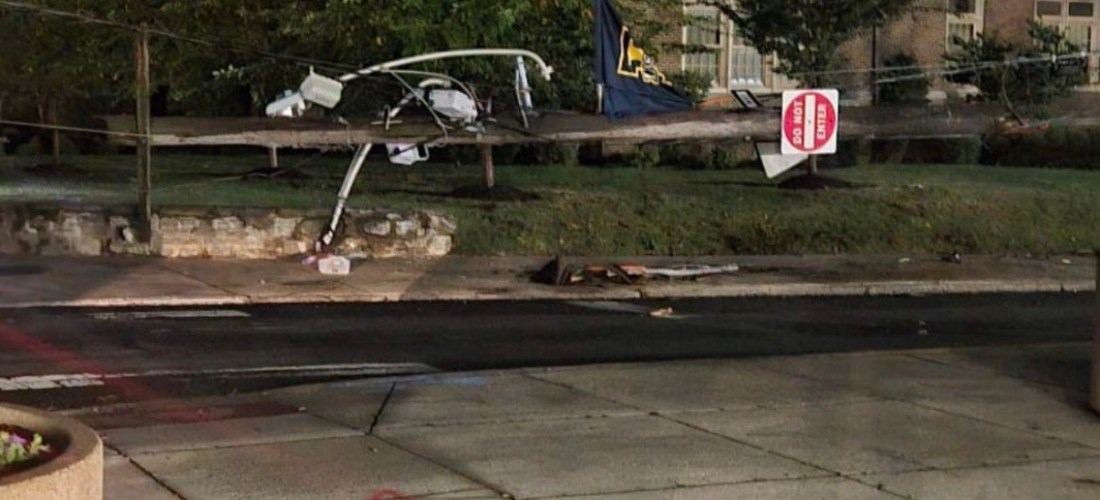
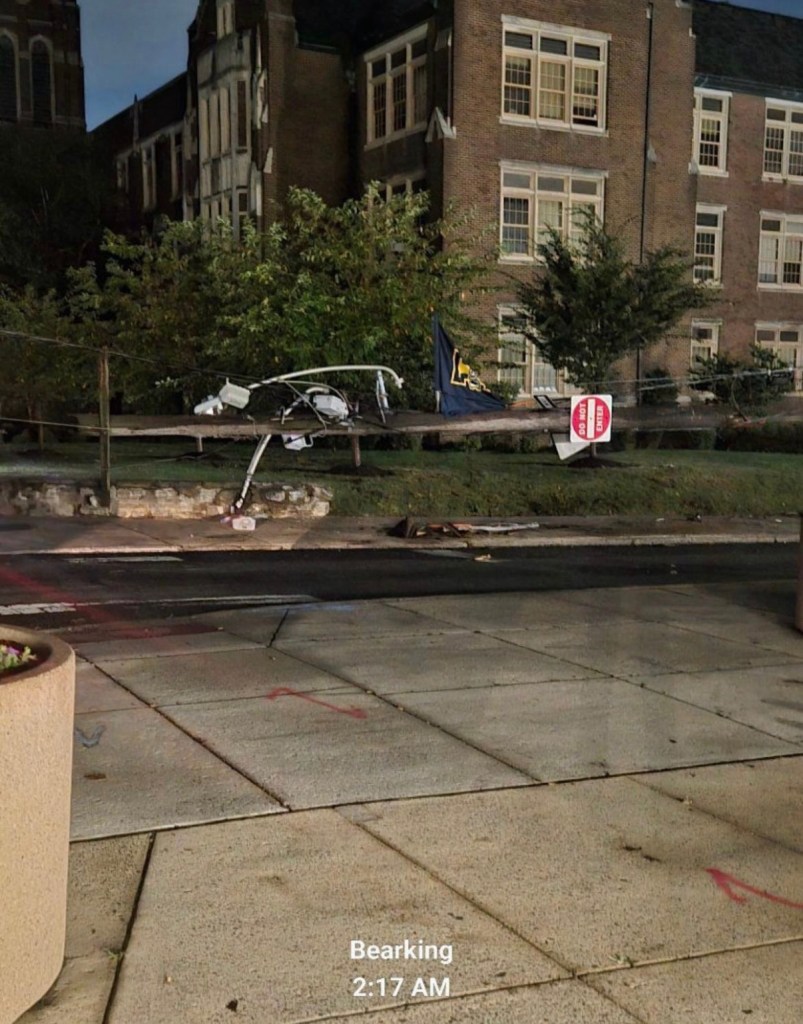
According to an email issued by La Salle Public Safety, around 2:15 a.m. a car was stolen off-campus by two Black men dressed in all black clothing, reportedly not affiliated with La Salle. The suspects were pursued by police to 20th and Olney, where the vehicle was abandoned in front of Connelly Library, and a transformer pole was destroyed in the process. The perpetrators fled the scene, running through both Main and South campuses. Students were ordered to shelter in place and instructed to call 911 if they heard anything suspicious or potentially helpful to halt the situation. 

At 3:11 a.m. another message was sent to the community, advising everyone to remain sheltered in place. PECO was responding to power outages in the North Residence Halls. About 10 minutes later, an additional alert confirmed that the outage was affecting the entire campus. 

Police completed their search for the carjacking suspects and determined there was no longer a threat to residents or those in surrounding areas. The shelter-in-place order was lifted at 3:41 a.m. However, Public Safety reported that 20th Street remained closed between Belfield Avenue and Olney Avenue due to downed wires. 

At 5:54 a.m., the University announced a two-hour delay for all classes and non-essential personnel. Power outages in select areas continued until approximately 7:40 a.m., followed by a notice that all classes would be canceled for the day. Internet services remained down until 11:00 a.m., and full restoration of electricity and Wi-Fi across campus was not achieved until noon. 

Even before the official cancellation of classes, many students expressed fear and hesitation about attending classes that day, citing safety concerns and uncertainty surrounding the incident. 

Friday’s events show persistent concerns about student safety in the neighborhoods surrounding the University. While Public Safety officers and Philadelphia Police regularly patrol university grounds, responsibility for off-campus areas falls to local authorities, posing additional challenges in maintaining safety beyond La Salle’s avenues. To stay in the loop of any potentially dangerous incidents in or around areas of La Salle University, download the Rave Guardian app and sign up for the La Salle emergency notification alerts at lasalle.edu/alerts.

Fallen transformer poll via Fizz

The Charlie Kirk Shooter

News

Amelia Head, Staff Writer

OREM, UTAH – Sept. 10, Charlie Kirk was hosting a live debate under the organization Turning Point USA at Utah Valley University. Kirk was speaking into a handheld microphone while sitting under a white tent, surrounded by cameras and other people invested in the debate. During one of his early questions, at 12:23 p.m. local time, a loud shot can be heard; Kirk reaches up with his right hand as his blood gushes from the left side of his neck. Suddenly, as it has become clear that he has been severely shot, the area goes into a pure panic, not knowing whether he will survive or not. This event resulted in the death of the right wing activist Charlie Kirk. His death was announced later on at the hospital as he failed to recover from the wound to his neck.

What is currently known is that the main suspect of the shooting has been identified as Tyler Robinson. He is a 22-year-old Utah resident that was attending an apprenticeship program at Dixie Technical College. He grew up in the city of Washington, Utah, nearly a 3 and a half hour drive from the Utah Valley University campus. In 2021, Robinson attended Utah State University for one semester and received college credit through Utah Tech University from 2019 to 2021 while he was still in high school.

On Sept. 11, the FBI released surveillance images showing the suspect. This revealing video shows him jumping off the roof where the shooting is believed to have happened. Authorities also alleged that Tyler Robinson’s roommate was involved in this case as the roommate in question had shown messages on the social media platform Discord that referenced needing to pick up a rifle from a drop point. 

“It is a high-powered, bolt-action rifle. That rifle was recovered in a wooded area where the shooter had fled,”  according to FBI Special Agent in Charge of the Salt Lake office.

New information is still being released as investigations continue.

Charlie Kirk via WikiCommons

SEPTA Updates

News

Kelsey McGovern, Staff Writer

PHILADELPHIA – SEPTA has recently faced critical financial issues impacting service schedules and fare rates.

In Aug. 2025, SEPTA began cutting services due to a $213 million funding crisis. About 800,000 Pennsylvanians, especially those in the greater Philadelphia area, have been affected. For example, buses have not been able to hold all passengers, impacting people’s daily lives and work schedules.

Because of service cuts, Philadelphia schools reported a decrease in attendance. Other events that would be affected include the FIFA World Cup and PGA Championship. SEPTA warns that if it does not receive the funding needed, it will cut half of its services by January 2026 and not return to a normal schedule for special events.

On Monday, Sept. 8, Gov. Josh Shapiro approved millions of dollars held in capital project funding to help restore services, according to 6abc. SEPTA reported that such cuts were necessary to comply with the $200 million deficit, even though it was quite drastic.

In court, the topic of SEPTA cuts being discriminatory toward lower-income or minority groups was raised. A judge ordered the two-week-old cuts to be undone after they were challenged. The Southeastern Pennsylvania Transportation Authority is working to restore services, but SEPTA said it will need $394 million in state funds to avoid issues for the next two years. PennDOT approved the funds to reverse the planned cuts. However, fares will increase 21.5% to generate about $31 million in revenue and return to a normal schedule. While SEPTA recognized this is an increase in fare prices, it said it is needed. A typical weekday ride will rise from $2.50 to $2.90.

The plan of shifting state-provided capital funds to resume service is only a temporary fix to the issue. Every year, the deficit will only grow if it does not receive aid. Pennsylvania must figure out a way to run transportation in a reliable and affordable way. It was estimated that services will return to normal by Sept. 14.

On Sept. 14, NBC Philadelphia interviewed SEPTA riders about the increase in fare prices. Around 700,000 people ride SEPTA each month, so the 21.5% increase in prices will make it harder for some to ride.

One rider mentioned that many people do not pay the fare, but those who do will be affected. This is an important factor to highlight because fare evasion contributes to the debt SEPTA is facing. Riders who do not pay cannot be upset about cuts in the schedule because they are part of the reason SEPTA is in debt. While it can be understood why some people do not pay because there are typically no repercussions, they should realize that the increase in fare prices now is partly because of their actions. Riders who have always paid the fare are now paying more because of those who cheat the system.

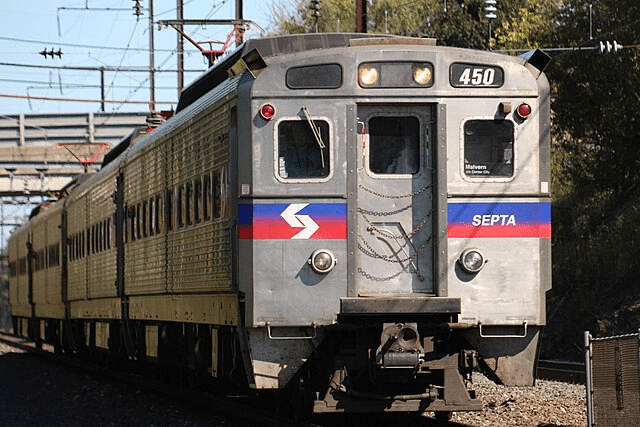
SEPTA via WikiCommons

The Hideaway is Open! 

News

Claire Herquet & Peyton Harris, Editors 

Following the closure of the Starbucks location on main campus in December, students, faculty and staff will now find their caffeine fix and study space at “The Hideaway,” the university’s newly branded coffee, taproom and eatery stop.

Located inside the former Starbucks location in the Union lobby, The Hideaway promises to be more than just a place to grab a latte. The La Salle Dining team and their construction workers have been working hard to build and design the space from scratch, carefully considering every detail to create a unique and welcoming atmosphere for our campus community. 

The Hideaway grand opening via Claire Herquet

As construction was being done over Spring break (as per a reel posted on the @lasalledining Instagram account), students and faculty came back to campus and saw the Hideaway’s doors open for its soft opening on Friday, April 4. Campus representatives were offering draft beers and free samples for those in attendance and were open to conversation about specifics of the new spot. 

The Union Hideaway, sponsored by Aramark, is a proud partner of La Colombe Coffee Roasters, an American coffee brand originally founded in Philadelphia. In addition to selling La Colombe on-the-go cold brews and lattes, the baristas at the Hideaway also make and sell iced and hot espresso drinks, refreshers/tea beverages and drip coffees. Pastries and breakfast sandwiches, along with a “pub-style” lunch and dinner menu provide students with an array of options. After 5:00 p.m., a selection of alcoholic beverages from draft beers, assorted wines, seltzers and La Salle’s own Explorer Ale are available for patrons aged 21-plus. 

This past Tuesday, with administrators, Aramark representatives, students and staff in attendance, La Salle Dining held the official grand opening of The Hideaway. A ribbon-cutting ceremony took place, with remarks given by Dr. Gaby, Former SGA President William Goydan and President Dan Allen. Hideaway staff were hard at work behind the counter crafting drinks, as well as mingling throughout the space providing different samples of the food offerings and the canned coffee options. 

The Hideaway menu via Claire Herquet

Dan Allen stressed to those in attendance that he would like feedback upon the opening of the Hideaway. He stated that this space is made in accordance with the love he has for the students and faculty of La Salle, and the Hideaway is what we make of it, as La Salle University is not just the place where we come to learn – we come here to thrive. He addressed that there will of course be improvements made in the coming months, but he needs to hear from us first.   

The Hideaway was built with Lasallians interests in mind, as Dr. Gaby relayed in a statement to The Collegian prior to the grand opening. 

“I am very pleased that we are able to offer to our students a unique and full eatery experience with extended hours than previously offered, now that we have opened the Union Hideaway. I am looking forward to students creating memories for years to come in our new space available not only for a study spot, but for good food, fun, and laughter,” she said. 

As Hideaway staff have been at work preparing food and beverages for some weeks now, many students have begun to frequent the new space as they try out new menu items. Freshman MyrrhJessica Okwara attended the grand opening ceremonies and was impressed with the various samples provided by staff. 

“When it comes to the food, I would say that it was delectable, it was delicious, especially the pizzas that they had out,” she said. “I have to become a regular.” 

“I really like the new detailed design. It’s really unique and a lot different from the other [places] we have here,” said sophomore Riley Kavchok. “I feel like with [The Hideaway] we have a wider variety of options, food-wise, bakery-wise, than when Starbucks was here. I really like the coffee, too,” she said. 

Both students agreed that a central community space like The Hideaway is essential to supporting students on campus.  

“A coffee spot is not just known for coffee, but just for the fact that you can sit and converse with people. It’s a great place to relax between classes, and most of all, it’s just important to the community that now we have our own space to do stuff,” said Okwara. Kavchok echoed that sentiment, adding, “I would reward myself with a fun drink whenever I was stressed out, especially during finals week. I’m happy now that I can do that again.” 

Starting from scratch in a new venue is no easy feat. Work began immediately after the Fall 2024 semester ended, and the new Hideaway is the culmination of all those efforts. Derek Bray, district marketing manager for Aramark’s Collegiate Hospitality division, says the process is “truly awe-inspiring”. 

“From the work performed by architects and contractors to product research and development and menu engineering and executing a comprehensive and engaging marketing strategy, the end result is really a culmination of these pieces all coming together at just the right moment and in a way that complement each other,” said Bray. 

Echoing statements from Dr. Gaby and Dr. Allen, Bray stressed that the main goal of the new space is to ensure that it meets students’ needs and is crafted from the feedback they receive. Their priority with the new space will continue to be, “creating a vibrant atmosphere and centrally located gathering space for students while enhancing the menu offerings throughout the day and creating a more robust late-night experience.” 

With its doors finally open, The Hideaway stands ready to be a comfortable and peaceful space for the La Salle community. Offering a diverse menu and a welcoming atmosphere for all, this new campus addition promises to be more than just a replacement for Starbucks.

As students, faculty, and staff begin to frequent and implement the Hideaway into their daily and weekly routines, the hard work being completed by university leaders and Aramark representatives suggests an exciting new chapter in the Student Union, one shaped by the people it aims to serve.