Inspiring La Salle student awarded PeproTech Diversity Scholarship — Press Release

Features

Student experiencing housing insecurity and treating disabled mother is awarded the inaugural Diversity Scholarship worth $40,000 toward his final undergraduate semester.

Header Image: PeproTech

Madison Martinez, Media Assistant, La Salle Residence Life

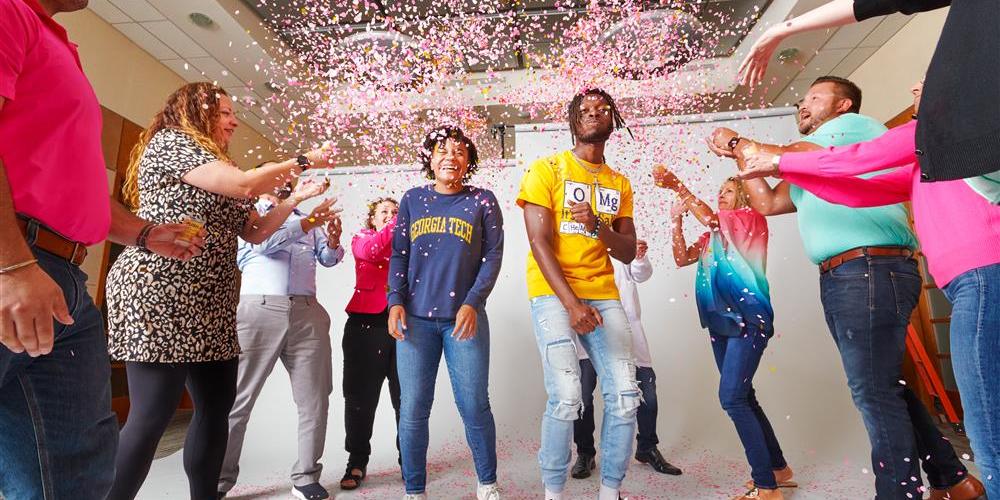
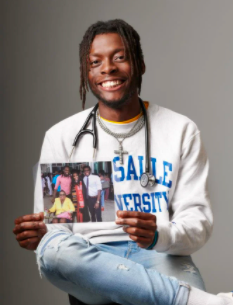
PHILADELPHIA, PA — La Salle University chemistry student, Jonathan Jonassaint, is one of two in the nation to be awarded the first annual Diversity Scholarship of $40,000 toward his final undergraduate semester provided by the biomedical engineering company, PeproTech, in East Windsor, New Jersey as they rollout their new heightened diversity, equity and inclusion initiatives seeking to make the scientific community a more inclusive one. 


The Philadelphian student awardee, Jonassaint, is known by La Salle University professors and peers as simply J-Jay, but J-Jay’s story is far from simple. He spent his younger years in Haiti until moving to Reading, Pennsylvania. At 13, J-Jay’s mother, Marie, suffered a knee injury and further malpractice upon treatment that dealt her permanent nerve damage. J-Jay has since been his mother’s caretaker. With his mother wheelchair-ridden and unable to work, the family experienced a period of homelessness.

After high school, J-Jay enrolled at his closest college option, La Salle University. “I did not really choose La Salle, but after reflecting on my experiences here, I believe La Salle chose me,” J-Jay said. He chose the pre-medical school path, chemistry and biology, because of his passion toward rehabilitating his mother. “I don’t want another child to see their mom deteriorate like I had to. I feel like it’s my personal responsibility to become a resource for others to rehabilitate themselves.”             

J-Jay, who will walk for graduation in May aspires to become a rehabilitative sports physician. The senior La Salle student believes that through his Professor’s efforts and their belief in him, he was able to continually succeed and grow in his courses. “My professors let me be unapologetically myself, they believe in me and I am eternally grateful for my relationships with each of them,” he said. Apart from his support, J-Jay gave back to La Salle during COVID-19 through hours of volunteer work at the on-campus testing site and student wellness center under his mentor Dr. Scott Cook. He also became a Resident Assistant and acted as a student leader to unify student communities at school. 

PeproTech

J-Jay applied for the PeproTech Diversity Scholarship and won over the summer, allowing him to enroll in his final semester at La Salle University this year. PeproTech launched this scholarship to demonstrate commitment to a more equitable and inclusive future for life sciences. The scholarship aims to foster an inclusive future and sought self-identified minority student applicants. Out of 400 applicants, PeproTech said to have chosen J-Jay upon his story “demonstrating great passion, drive and unique hardships,” and have since published an article on their website with J-Jay’s story.  For more information on PeproTech, visit their website or send them a message through their contact page.  

For a transcript of the interview with J-Jay refer here. To keep up with J-Jay’s journey, connect with him via linkedin or personal email at jonassaintj1@lasalle.edu

About PeproTech
PeproTech is a biomedical engineering company located in East Windsor, New Jersey, that researches cell signaling proteins, cytokines, and manufactures over 2,000 high-quality supplies to the global health industry. The company was started by three visionary scientists in 1988 and has developed into a competent and widely trusted brand. PeproTech has over 100 employees and several offices around the world. Most importantly, the company is newly developing diversity, equity and inclusion initiatives to encourage diversification and inclusion in the larger scientific community. For more information on PeproTech, visit their website or send them a message through their contact page.

Language at La Salle: benefits of multilingual communication

Features

Alina Snopkowski, Editor

Happy Foreign Language Awareness Week, La Salle! There are countless benefits to studying a foreign language, far too many to put into one article, but we tried our best. Hear from students, alumni and professors on why they’ve learned multiple languages.

Margot Santos, ‘22 Political science and international relations major, LGU minor

Spanish, Portuguese and English; learning French, Italian and Russian

“I speak Spanish, Portuguese and English fluently as I grew up trilingual. I have an intermediate level of French, I can read and write and speak but I wouldn’t say I’m fluent yet. Italian I can understand a lot due to the Spanish language and when I studied it I could grasp it quite easily but I would say I have a good foundation of the language. I am currently studying Russian. This is my second semester taking the language and it is quite different from the other ones I know. It is a great challenge but I am fascinated and enjoy learning. I hope to add more languages to the list after I graduate.

I am very passionate about languages. I find it fascinating how much you can learn about not just the culture, but the people who speak that language. Communication is so important and is a tool used for everything in life. It makes a massive difference when you are able to speak to someone in their mother tongue. That feeling of trust, comfort and familiarity is instantly there. Not only this, but it is a great challenge and humbling experience as the learner to go out of your comfort zone and into someone else’s common ground. Language is what connects us and allows us to understand one another. It also makes traveling easier.”

Kashish Patel, ‘25 Finance and international business major

English and Gujrati; learning Spanish and Japanese

“I wanted to learn these languages because I want to visit Japan as well as Spanish speaking countries. I also used to teach at a tutoring center, which mainly worked with foreign kids who spoke little to no English, so it helped me a lot to have some knowledge of other languages. I think it’s super helpful to know several languages, especially living in the United States because of how many different languages people speak today. It’s helped me communicate with international friends that I’ve made as well.”

Dr. Barbara C. Allen, professor of history

English and Russian; studied French, Spanish and German

“I enjoyed taking French and Spanish courses in high school and wanted to try learning a different language in college. I chose Russian because the U.S. State Department considers it a critical language for international diplomacy and because the Cyrillic alphabet looked interesting. I found the alphabet was the easiest thing to learn. Russian grammar was much harder, because it is so different from English. But it was a very intellectually engaging subject to study. I decided to teach and research the history of Russia and the Soviet Union, so proficiency in the Russian language was obligatory. I need to read primary sources in Russian and read the work of Russian and Soviet historians, much of which has not been translated into English. It is important to study another language to have insight into another culture and a richer perspective about one’s own culture and society.”

Ciara Ledgard, ‘22 — Spanish major, Latin American studies and human services minor

Spanish and English; learning Italian and French

“I have been studying Spanish for several years, and learning Spanish helped me at my summer job when a lot of my fellow employees spoke Spanish as their native language. It helped to be able to communicate with them more clearly.”

Stephen Walton, administrative assistant for the departments of global languages, economics and political science

French and English, learning Japanese

“I speak French, as I took it in school since seventh grade and was a French Studies major when I was a student at Arcadia University. I’m currently trying to learn Japanese, but it’s far more difficult and different than French.

I learned French since my great-grandmother is French and came to America after WWII after marrying my great-grandfather, an American soldier. My mom was actually raised by my great-grandmother, so her upbringing was influenced by French culture.  My mom embraced this part of her heritage and passed it on to me and my two younger brothers. French is one of the biggest and most widespread languages in the world, so you can never go wrong learning French. Even many of our next door neighbors, the Canadians, speak French. Many of the departments I’ve worked in at universities involve language or study abroad, so it’s always been a huge benefit for me to be able to speak a foreign language.

As for Japanese, I’ve always been a fan of traditional Japanese culture as well as its pop culture. I’m a huge fan of anime, Japanese video games and the subcultures surrounding them, so it only makes sense that I learn Japanese with all the Japanese media I consume. Japan is also the country I dream most of visiting, so it would be great to be able to speak Japanese at least somewhat with native speakers.”

Oksana Chubok, professor of Russian

Ukrainian, Russian and English

“I am Ukrainian and my native language is Ukrainian, but by education I am a teacher of Russian language and literature. I fell in love with the Russian language at school, when I got acquainted with the works of Russian writers: Pushkin, Lermontov and Chekhov. I am a graduate of La Salle University; in 2010 I completed the program of Central and Eastern European Studies and received a master’s degree. Since 2010 I have been teaching Russian at the University. I love my students and my job!

Now, knowing the Russian language, I can use it in the fight against Russian propaganda. I try to reach out to those Russian-speaking people who to this day justify the actions of Vladimir Putin, who turn a blind eye (who close their eyes)  to the genocide of the Ukrainian people. There is no excuse for war!”

Elena Tzivekis, ‘21 — Communication major

English and Greek; learning Russian

“I learned Greek while growing up, and knowing the language of my ancestors helps connect me to my roots and also communicate with my family in the states and overseas as well. I decided to take Russian in college, because it is spoken by a handful of relatives on my mom’s side and I have always been fascinated by the language itself. While at La Salle, I had the privilege of learning Russian from one of my favorite professors at La Salle, Professor Chubok. It has helped me personally because it has brought me closer to some of my Russian-speaking family members, and I hope to one day visit Russia and develop my Russian even further.”

Danielle O’Brien ’24, International relations major, Spanish minor

Spanish and English; learning Mandarin

“At first I took Spanish throughout high school because, like most American students, it is required for graduation. But there is a fine line between simply learning a language to pass and learning it to learn it. I started getting discouraged when I noticed my peers around me were retaining the material faster than myself, so I dropped my upcoming Spanish class and decided to take up peer ESL tutoring instead as I thought that was a good way to still practice the language. I was astonished at how much more quickly I could pick up the language speaking with actual native speakers than simply sitting in a classroom. But aside from the opportunity allowing me to learn a second language better, it gave me the opportunity to see first-hand the effect on peers my age as a result of their status in the United States. It consequently inspired me to advocate for change. My experience as a peer ESL tutor for that program in my high school led me to major in international relations and minor in Spanish here at La Salle University, where I am still tutoring peers of an immigrant background in English through the BUSCA program. Thankfully, in my high school, beginners’ Mandarin was offered, which I took for two semesters. However, I’ve been unable to learn more in my higher education as it is not taught here at La Salle. Nevertheless, I can definitively say there is importance in learning languages as the peer tutoring demonstrated to me; language can help people of all backgrounds come to a common ground and thus it is the most essential thing one can learn.”

Dr. Mark Thomas, professor of political science

Russian, German and English; reading proficiency in Polish, Ukrainian, Dutch, Spanish and French

“I learned languages because it increased my marketability when I was looking for work, either in business or government work. Knowing a language removed barriers to communication with my non-U.S. colleagues and opened up topics of discussion in which my business partners did not know the English vocabulary. More speaking in their language built incredible rapport with my professional colleagues in government and business. It showed I cared enough about them and their traditions that I would learn their language. It also enabled me to get insights from listening to their news and reading their newspapers which eluded my monolingual mammal U.S. colleagues. It also allowed me to avoid cultural blunders, which hurt marketing efforts. The classic example of this is the Chevy Nova car. It did not sell well in Spanish-speaking countries.  “Nova” means “it does not go” in Spanish. Oops! By the way, Americans are one of few people in the world who are arrogant enough to think they do not need to learn another language. Almost every country around the world teaches a second language throughout school.”

Bianca Abbate, ‘21 — International relations major

Russian, Italian and English; studied German

“Studying foreign languages, especially Russian, opened doors for me. In 2019, I was able to spend a summer in Russia through a State Department scholarship. More importantly, now is an especially critical time to have a knowledge of Eastern European languages and cultures, given the devastating war in Ukraine. I think that my education in foreign languages has deepened and personalized my understanding of the ongoing tragedies overseas. I feel a special duty to educate myself on the issues. Studying Russian has also brought many Russian and Ukrainian people into my life — people I now think about every day. I’ve been keeping in touch with a few friends in Russia on social media, one of whom sends me pictures of protests in the major cities. While I don’t currently use Russian in my professional life, I expect to see more opportunities to do so in the future. It is weird to think that, if I had not gone to Russia when I did (just before the pandemic and before wartime), I may never have seen Russia in my lifetime.”

Alina Snopkowski, ‘22 — Economics and international studies and criminal justice major, history minor

English and Russian; learning Polish

“I have always been interested in languages and writing, and being able to understand more than one language means you are able to learn from so many more people. You also have access to more information than you would’ve had otherwise. I have been learning Russian at La Salle and while I can’t claim to be even close to fluent, I understand it well enough to be able to read the news from other countries — for example, I am interested in international relations and international politics, so sometimes I read the official state media from Belarus because I think it’s interesting and important to see how the government there presents situations and talks about things. Also, speaking a fair bit of Russian helped me communicate with people I worked with who didn’t speak much English.

People see my name and think I speak Polish; I’ve been on Zoom meetings with people who see my name pop up and then they start speaking Polish with me. It’s pretty embarrassing when I can’t say much. The only Polish I know is the basics through Duolingo and bad words through my family, but one of my goals is to learn Polish and go to Poland someday (with my grandmother). I would love to travel, and speaking more than just English would help me better communicate with people in different places and learn about them and their countries.”

Liz McLaughlin, ‘22 — PPE and finance major, Spanish minor

English and Spanish

Think about how much more connected the world would be if each person spoke, on average, three languages. I know that’s a lot, and I can only claim two — English and Spanish — but what a world that’d be! A big reason why I’ve enjoyed learning Spanish since I started taking classes in eighth grade is because it enables me to connect with people from other cultures in a more challenging way than if I only ever interacted with those who only speak English. Some of my favorite travel memories include traveling to places where I can communicate in Spanish; sometimes it’s nerve-wracking, especially when you’re talking to someone who speaks very quickly. But on the flip side, it’s a confidence booster to be able to adequately express yourself in another language. I firmly believe we should amp up our focus on foreign languages in American schools; I learn about how money varies from country to country, so why shouldn’t we also emphasize how people communicate those transactions? In an increasingly global and connected world, we shouldn’t fall behind on the most basic thing that unites us all: communication.”

Dr. Vicki Ketz, professor of Spanish, chairperson of the department of global languages, literature and perspectives

“I grew up in a multilingual household, so speaking foreign languages was normal for me. My father was in international business, and this is why my family lived in different countries all over the world. Wherever we would move, I would learn the language of that country.

Studying a global language is really more than learning words and grammar. You learn to communicate with other people from other countries. More importantly, you learn about different cultures: their history, their art, their political structures, their religion and their values. It opens your eyes to different perspectives; not everyone sees the world the way you do. Understanding the way people think is very important in any field that you may work. Maybe if humans were better at it, there would not be as much conflict in the world.

For me, learning a foreign language is like deciphering a puzzle with multiple variables, and I love breaking a code. I can remember being in Greece one time and using the knowledge that I had learned in my ancient Greek class to decrypt the signs. (Columbia required Latin and ancient Greek for PhD coursework, but I never thought I would use it.) But yet, there I was reading the Euclidean alphabet to understand what was written. That was pretty cool!”

The Renfrew Center’s Live Your Real Life campaign targets college students’ social media 

Features

Rita Offutt, Editor 

Header Image: Renfrew Center

The Renfrew Center for Eating Disorders launched the “Live Your Real Life” campaign, which addresses social media and body image, as part of National Eating Disorders Awareness Week, which runs from Feb. 21-27. 

According to The Renfrew Center’s website, the campaign was developed to “reflect on the impact social media has on your body image and mental health. You deserve to empower yourself and embrace the real you.” 

In a press release about the campaign, the organization described how the “Live Your Real Life” campaign will push against some common social media practices, saying “social media is often referred to as a highlight reel. Posts on platforms with a photo-sharing component tend to depict only the perfect moments of people’s lives rather than the full picture. This National Eating Disorders Awareness Week, The Renfrew Center is encouraging people to reverse this trend by taking pictures of their real-life selves — photos that aren’t perfectly curated for a highlight reel — and sharing them using the hashtag #LiveRealWithRenfrew.”

On social media, the hashtag #LiveRealWithRenfrew has been used to spark conversation about eating disorders and to give those in recovery a platform to share their stories. One community account on Instagram, @boycottthebefore, has partnered with the Renfrew Center to encourage women to share their “authentic” selves. A post from Feb. 16 reads, “The Renfrew Center is a place I hold near and dear to my heart as it was a safe place for me to recover and find community… Many of us get caught up in highlight reels and perfectionism. When we see how we all lead perfectly imperfect lives, we can better embrace our true selves… Together, let’s celebrate the real and the now.” 

The social-media-focused effort coincides with the release of a new study from the Renfrew Center. The nationwide survey asked college students about body image, isolation, depression and social media. According to the Renfrew Center, the survey found:

  • 93 percent of respondents have felt alone or isolated at least sometimes during the current school year. One in four said in the 2021-2022 academic year, they have always felt alone or isolated.
  • 100 percent of surveyed students have felt depressed at some point during the current school year. Fifty-five percent said they felt that way sometimes, while 27 percent said always.
  • 72 percent of respondents agreed with the statement, “I feel alone or isolated more often now than I did before the pandemic (prior to March 2020).” 70 percent reported feeling depressed more often now than pre-pandemic.
  • Two-thirds (67 percent) of surveyed students said their body image has gotten worse since before the pandemic.
  • When given a series of adjectives to describe how they typically feel after scrolling through social media — happy, sad, inspired, depressed, loved and lonely — the most common response was “lonely” at 39 percent, followed by “depressed” at 24 percent. 15 percent of respondents selected “inspired.”

In addition to the “Live Your Real Life” campaign, the Renfrew Center will host free, virtual events. Registration for the events, which include a yoga class and online webinars, is available at the Renfrew Center’s website

More information on eating disorders can be found through the National Association of Anorexia Nervosa and Associated Disorders, the Renfrew Center’s services catalog, and this guide to eating disorders

Students experiencing difficulty due to social media use, disordered eating or mental health concerns are encouraged to reach out to the La Salle Student Counseling Center. Appointments can be made by emailing studentcounseling@lasalle.edu

Valentine’s Day: ancient practices and upcoming events

Features

Rita Offutt, Editor

This year, Valentine’s Day falls on a Monday, helping La Salle students to ring in the fifth week of classes and celebrate their relationships. While there is a lot of controversy surrounding Valentine’s Day, especially regarding its commercialization, there have been few accurate accounts of the history of the holiday. In 2011, the National Public Radio (NPR) published an article about the origins of Valentine’s Day. According to the article:

“From Feb. 13 to 15, the Romans celebrated the feast of Lupercalia…The Roman romantics ‘were drunk. They were naked,’ says Noel Lenski, a historian at the University of Colorado at Boulder. Young women would actually line up for the men to hit them, Lenski says. They believed this would make them fertile. The brutal fete included a matchmaking lottery, in which young men drew the names of women from a jar. The couple would then be, um, coupled up for the duration of the festival — or longer, if the match was right.”

Despite legends about Cupid, most people who celebrate Valentine’s Day are doing so to celebrate preexisting love. For La Salle students, there is no better opportunity than in the City of Brotherly Love. Across the Philadelphia area, businesses and social hubs are ramping up for the holiday. In the spirit of the origins of Valentine’s Day, readers are encouraged to engage in a different type of matchmaking. Listed below are 10 different holiday attractions; readers are invited to close their eyes, randomly select a number, and consider participating in that activity. Consider it fate! Or, feel free to peruse the list at your leisure, and determine if any of the activities feel like the right way to celebrate your best friend, romantic partner or even yourself! A list of upcoming events can be found below the picture of Cupid.

1 | 2 | 3 | 4 | 5 | 6 | 7 | 8 | 9 | 10

Upcoming events:

  1. Jinxed heART show

@jinxedstore via Instagram

2. Valentine’s Day Party At The Philadelphia Butterfly Pavilion and Insectarium

Philadelphia Butterfly Pavilion and Insectarium

3. Blue Cross RiverRink Sweetheart Skate

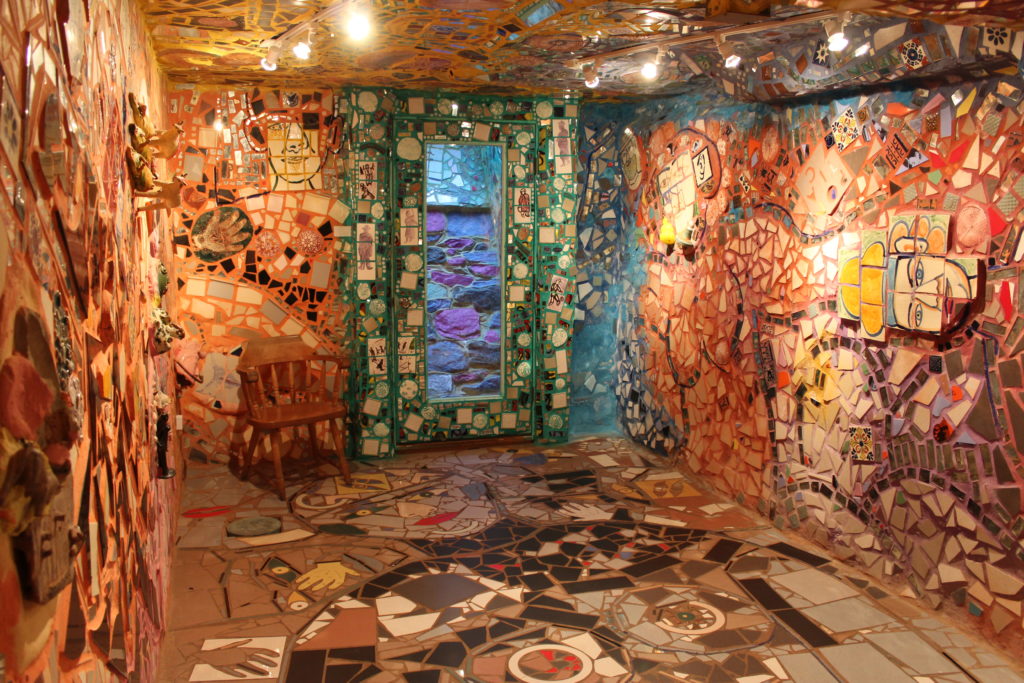
4. Philadelphia’s Magic Gardens Valentine’s Day Tour

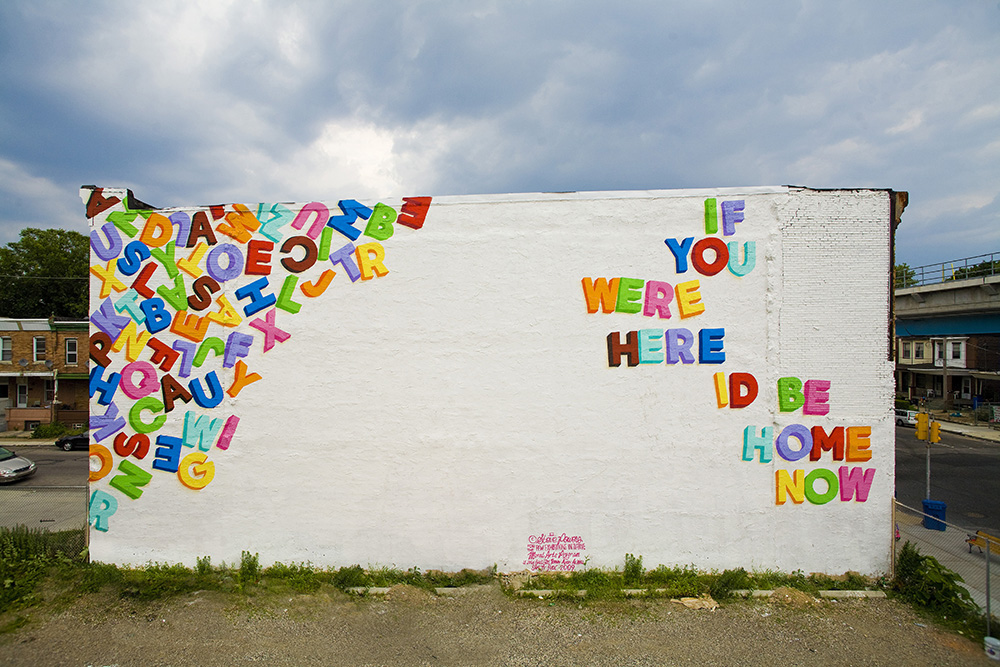
5. Mural Arts Love Letters Train Tour

6.  Late Night La Salle’s Build Your Own Bouquet

7. Annual “Laugh Your Heart Out” Valentines Day Comedy Show

8. Betsy Ross House – Tipsy History: A Love Story

9. Valentine’s BYOB G.O.A.T. Happy Hour Fundraiser

10. Candlelight: Classical Valentine’s Day at Michelangelo’s Sistine Chapel

Cory Anotado, ‘10: A career in digital arts and game shows

Features

Elizabeth McLaughlin, Editor

Header Image: “Jeopardy!”

As a kid, his grandparents entertained a constant loop of game shows, from 10 a.m. to 5 p.m. every day. Needless to say, such exposure nurtured an infatuation with game shows for Cory Anotado, ‘10. Over time, the La Salle alum has explored his passion via his hit blog, BuzzerBlog, and has also appeared on numerous game shows, from “Wheel of Fortune” to “The Chase” to “Jeopardy!” Nowadays, Anotado works for Dreamscape Marketing, a creative agency based in Baltimore that specializes in connecting businesses in the addiction treatment industry with those who need help the most. He also does some freelance graphic design, and has even designed a card deck that enables users to play multiple different games.

Anotado started BuzzerBlog in early 2005, before he started as a freshman at La Salle. His motivation was to create something that “reflected the modern game show fan’s sensibilities.” Anotado found that all of the game show news online was “written by a person who had an undying loyalty to old-school game shows, and who treated newer game shows with a haughty sense of disdain.” As the avid game show lover he is, he saw an underserved market — and opted to serve it himself. Since then, the blog has grown into an impressive, living artifact of the game show industry, employing a staff of writers who share Anotado’s passion. The staff includes Alex Davis, an old friend whom Anotado met through the game show fandom. Other staff members are Christian Carrion and Bob Hagh, two of Anotado’s closest and oldest friends. According to Anotado, his staff share similar visions for their blog, but each member carries their own unique sensibilities and viewpoints that enrich the site.

BuzzerBlog has grown to serve millions of viewers interested in the game show industry and culture. Over time, Anotado and his staff have had to adjust to their growing following. “As our audience has grown, so has our obligations — we understand that we’re speaking to a larger audience. It’s never changed our core emotions, just taught us empathy and wisdom.”

In addition to running a blog on the industry, Anotado has ample first hand experience being on game shows. He recalls filming “Wheel of Fortune” at the Wells Fargo (then Wachovia) Center, right in his backyard. He also appeared on “The Chase,” setting the record for the highest single-day winnings at $180,000. But it wasn’t easy; Anotado was paired with “two of the smartest people [he knows,]” a circumstance he recalls as “absolute kismet.” Most recently, he appeared on “Jeopardy!” alongside record-breaker Amy Schneider.

“Jeopardy!”

With all of his experience writing game show literature and competing on the shows themselves, Anotado has developed some hot takes on the industry as a whole. For one, “‘Wheel of Fortune’ has been boring for about 15 years.” (I couldn’t agree more.) He says that they need to do something; he suggests putting a video screen in the Wheel. Anotado also mentions that Bob Barker was way creepier than you remember; as someone who is only familiar with Drew Carey’s “The Price Is Right,” I’ll take his word for it. In fact, I was a HUGE fan of “The Price Is Right” and “Let’s Make a Deal” — I’ll admit that I even played hooky once or twice just to watch them live. But Anotado insists that most of the game shows you liked as a kid are actually not as good as you think they were… all those “sick” days for mediocre TV…

Lastly, Anotado opines that the absolute best video game versions of “Jeopardy!” and “Wheel of Fortune” were for the Wii. I cannot argue with him here; I stand by virtually everything that was ever made for the Wii.

Through it all, Anotado has kept in mind the Lasallian values that are so thoroughly instilled in our community here at 20th and Olney. His communication classes taught him the ins and outs of video editing; English classes gave him the writing background he needed “to become an actual real-live New York Times and Wall Street Journal-quoted journalist.” He stresses that without the digital art department, he wouldn’t be where he is today. The classes he took in that department taught him not only the technical and artistic skills he uses in his career, but also gave him the experience to deal with real-world art and design situations.

He also recalls his time as our very own Kicks editor of The La Salle Collegian, a position currently held by my good friend, Claire Kunzier. As the Kicks editor, Anotado once made a free version of La Salle “Monopoly,” where readers could cut the board out of the paper and then go to the myLaSalle server space to download money and cards to print out.

His advice to his fellow creatives: you are your biggest asset; specifically, the way you view the world is different from anyone else. “There’s no one who sees the world exactly like you. Design, especially — it’s art doing work. You get to make the art, and then you get to make it do the work.” It’s clear that Anotado is a master at making art do the work, as evidenced by his work for chalkboards at local bars to large interactive installations for Airbnb and video games for MTV. What’s more, Anotado encourages young creatives to find their motivation and stamina. For him and his friends at BuzzerBlog, what keeps them going is their fans and core audience, as well as the industry professionals who respect and admire what they do. Speaking of industry professionals, Ken Jennings once interviewed Anotado for his book, “Brainiac;” an interview Anotado conducted from La Salle’s very own WEXP studio in the Union.

To game show experts and those entirely unfamiliar with the industry, it is clear that Anotado has built an impressively creative career for himself, a career which started before he even stepped foot on La Salle’s campus. It was Anotado’s innate love for game shows that planted the seed for his fascinating career; La Salle nurtured this passion and helped Anotado build a creative, rewarding life for himself and his community.

Senior student project tackles COVID-19 vaccinations

Features

Rita Offutt, Editor

Emma Krall, a senior psychology major and chemistry minor, is preparing for the next steps after graduation. For Krall, doing so entails navigating through medical school applications while promoting healthy living on and off campus. As the Director of Harm Reduction and Prevention for Phi Mu Fraternity and the Council Chair for Student Health and Service with the La Salle Honors Program, Krall has an extensive background in navigating conversations about sensitive topics, including mental health and the COVID-19 pandemic. Relating specifically to COVID-19, Krall is passionate about the dissemination of accurate, accessible information. Her combined interest in medicine, the COVID-19 pandemic and student wellbeing prompted Krall to create a 1 minute, 17 second video entitled ‘How mRNA COVID-19 Vaccines (Pfizer & Moderna) Work’. 

Krall’s video was completed to fulfill the requirements of the La Salle Honors Project, a capstone assignment given to students enrolled in the Honors program. When reflecting on her work with the assignment, Krall said, “Because most of my undergraduate career has been centered around memorization and lab work, I wanted my Honors Project to be more on the creative side. During quarantine in Spring 2020, I began getting into digital art, graphic design, and animation as a hobby. My original idea was to create a digital series with the theme ‘Emotions During the Pandemic’ because COVID-19 had such a big impact on my life. However, this topic was extremely broad, and I did not know where to start. Right before I was supposed to have my first meeting…[for the Honors Project], I was scrolling on Instagram and saw that someone posted a COVID-19 vaccine animation. While the video was entertaining and encouraged vaccination, it was not biochemically correct! [The video] sparked my idea to create an animation that was scientifically correct while also being creative and entertaining. This idea seemed to join my passion for a career in medicine with my personal hobbies of art and animation.” 

In developing her video, Krall worked with several La Salle University professors. Geoffery Beatty, a faculty member in La Salle’s Digital Art program, served as the project advisor. Krall cites Beatty as having helped her to “construct my overall project.” Krall also worked with professors Jason Diaz and Kelly Daily. Diaz, who teaches Integrated Business, Science, and Technology, helped Krall to understand how the vaccine works. Daily, a Communication professor, helped Krall to develop her communication style and incorporate important aspects of public health into the video. 

Krall’s video is designed to make information about the COVID-19 vaccines more accessible, to promote understanding and encourage others to consider getting vaccinated. She said, “In my opinion, you should not need a background in medicine or science to understand how the mRNA COVID-19 vaccine works. Especially over the course of the pandemic, the gap of information between the medical community and the public has become very clear to me. I believe bridging this difference, through clear and accurate communication, can better vaccination efforts, promote stronger trust in science, and strengthen everyone’s understanding. I wanted to create an animation that could provide anyone with the terminology and proceedings of the Moderna and Pfizer vaccines…I genuinely hope my video either convinced at least one person to get fully vaccinated or it made one person feel more comfortable and competent in understanding how the vaccine works.” 

Krall’s video, as well as other artistic projects, are publicly available on her Instagram account @byemmacrawl.

Improv 101: La Salle’s funniest hidden gem

Features

Jakob Eiseman, Editor-in-Chief

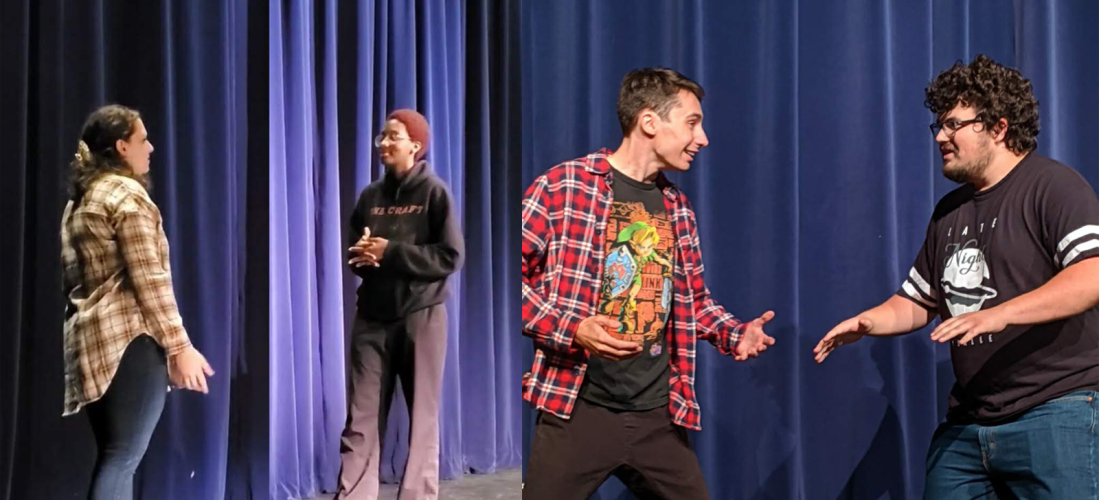
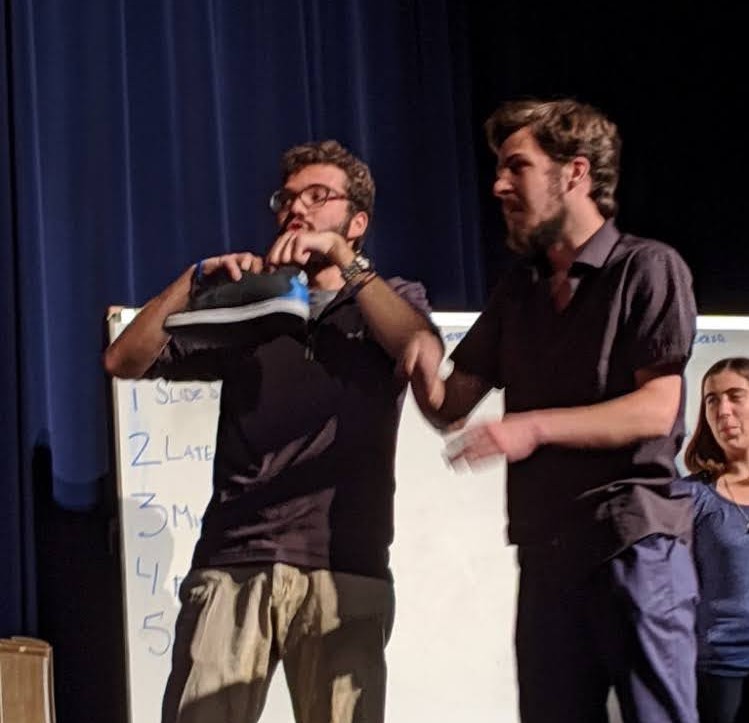
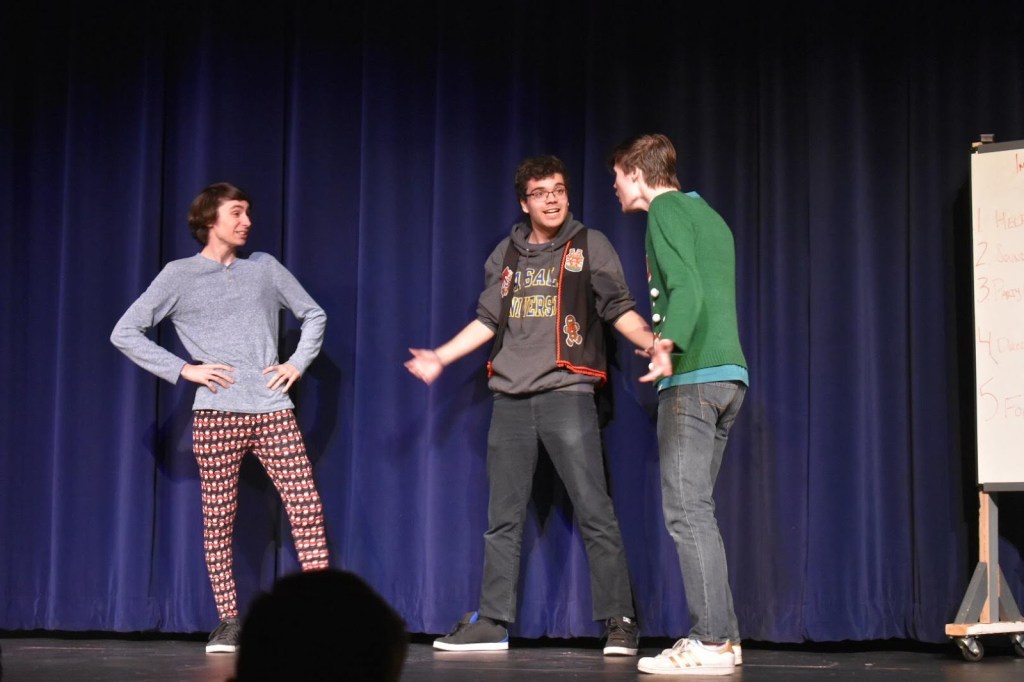
Nov. 13 was packed with Homecoming events here on La Salle’s campus. Between the men’s and women’s basketball games, matinee of the Masque’s production of “Mavericks” or the festival on the quad, there was something for everyone. To close out the night, La Salle’s improv team Improv 101 put on a special show for all the family and alumni that stuck around through the day’s excitement. This wasn’t just a normal Improv 101 show, because the team brought some alumni of their own. Seven La Salle alumni who were once part of Improv 101 reprised their place on the stage of the Dan Rodden theater for a show to remember. Alex Crosby ‘17, Emily Ermer ‘18, Brian Gelbach ‘18, Mark Bisicchia ‘18, Mike Poggioli ‘19, Tom Harris ‘20 and Jack Rohr ‘20 fell right back into their Improv 101 roots and worked with the current cast to put on a wonderful show.

Improv 101 is an umbrella group of the Masque of La Salle that features a rotating cast of some of the most talented improv comedians at La Salle. They put on shows regularly during the semester and also offer improv workshops to the La Salle community where people can come join in on the fun. “Improv 101 is a lot of fun and helps my creative juices flow. It’s so much fun working with all of the improvers,” said Sanera Powell, a senior digital arts major and member of Improv 101. Powell is a relatively recent addition to Improv 101, but fit right in with the alumni cast and was able to get major laughs from the crowd.

Courtesy of Martin Redanauer

A longtime member of Improv 101, senior computer science student Sam Da Silva said that “the alumni haven’t lost their style at all, they were still incredibly funny and I hope our current cast was able to live up to their shenanigans.” Da Silva, who joined the team during his freshman year said that “being able to go up there on stage and just have some fun with friends is always a great time and I’m so glad I was able to find the team when I did.” 

Although the cast, current and past, were able to fill the stage entirely, Improv 101 currently only has seven cast members, five of whom are seniors who will graduate this year. “You know most of the games we play during shows call for three to four people, and some of the bigger ones need up to six,” said Martin Redanauer, a senior psychology student at La Salle. Redanauer, who also joined the team when he was a freshman, is always trying to get new faces to show up to the improv workshops and have a good time. “Improv can be whatever you want, it really can. It’s just you sharing your sense of humor with everyone and letting loose on stage,” said Redanauer.

Courtesy of Sam Da Silva

“We’re honestly just a group of friends goofing off on stage,” said Kayla Stevens, a senior cast member, “We really enjoy being able to get up there and make people laugh and forget their problems for even just an hour.” Stevens, who improv acted as everything from a talking fish to a three-headed doctor during Saturday’s show, has a deep appreciation for the improv team, starting as a fan of the shows and eventually joining the team as a cast member.

Taking the improv stage for the first time at the alumni show was sophomore communication student Aidan Tyksinski who fit right in with the whole team despite never having met most of the alumni and tackling this talent-packed show as his first with the team. Tyksinski and junior Eila Nash, president of the Masque of La Salle, are recent additions to the team who will continue to carry on Improv 101 when all of the seniors graduate in the spring.

“At first, I liked doing improv because it was an opportunity for me to get on stage and make people laugh. But, as time went on, I got closer with the team and it became more about having fun with friends and now I can’t wait to get up there and joke around every show,” said Jon Colella, a senior communication student. “People should definitely consider joining the team because it’s provided me with countless memories and laughs that I will hold forever, more than any other club I’m a part of and I’m sure it would be the same for anyone who joins us up there,” said Colella.

“You don’t have to worry about anything, you just have fun with it and see what happens. You really never know where a scene is going to go. I just enjoy the ride and it always makes me happy,” said Da Silva when asked why those interested in improv should consider joining Improv 101 and attending workshops.

“The fact that we only have two members lined up for next year is a bit concerning,” said Redanauer when asked the same question, “but I’m sure we will be able to fill out the team because improv really is just something you can’t stop once you try it once.” Anyone interested in attending an Improv 101 workshop or learning more about the organization’s shows is encouraged to reach out to Redanauer at redanauerm1@lasalle.edu. You can also keep up with Improv 101 through the Masque’s social media pages: @themasqueoflasalle on Instagram and on Presence.

Programming protocols for student organizations

Features

Rita Offutt, Editor

The COVID-19 pandemic has influenced life at La Salle in many ways, such as continued mask-wearing and social distancing. While these measures are critical in order for La Salle to remain safe and healthy, student organizations have suffered tremendously during the COVID-19 pandemic, especially as they try to recruit new members and build a sense of community on campus. However, as the semester has progressed, there has been an increase in the number of student-led programs taking place on campus, spanning organizations such as The Masque (who held a Meet the Masque event on Sept. 15) and Alpha Sigma Tau (who held an anti-hazing event on Sept. 28). Student leaders who are interested in hosting activities or meetings on campus are encouraged to contact the Campus Activities Center (CAC) for review of their event proposal. 

The first step in the process is filling out an Information Request Form (IRF). Students can complete this form virtually or visit the CAC on the third floor of the Union to fill out a paper copy. The IRF will connect students with CAC staff for more information about hosting on-campus events. The IRF is also helpful for student org leaders who have not already received information on programming; protocols for holding events on campus were emailed to every known student org president. If a president of a student organization has not received programming information, it is because the CAC does not have their contact information. Leaders with questions or concerns are strongly encouraged to reach out to Mina Koller (utt@lasalle.edu) or Chris Kazmierczak (kazmierc@lasalle.edu).

After completing the IRF, students can make room reservations for their event. In order to do so, they need to access the Event Management System (EMS) or contact Kyra Spoto (spotok@lasalle.edu). In order to use the EMS, students need to create an account through the La Salle portal. Spoto, the Director of Union Services, can independently facilitate the reservation process or assist with EMS as needed. 

There are two primary considerations for student-led events: the number of people and the presence of food. If a program will have more than 50 people in attendance or will offer food, the event needs to be reviewed by the CAC and La Salle’s COVID-19 Response Team. Student organizations who are interested in holding large events or having food at their events need to contact the CAC before reserving space. The event will be reviewed by CAC staff and they will contact the COVID-19 response team on behalf of the student org. Aside from the primary considerations, student leaders may also want to consider the size of the space they will need for appropriate social distancing and whether a university staff or faculty member should be in attendance. Currently, student organizations are not permitted to have guests from outside the La Salle community, but specific requests will be reviewed on an individual basis.

Finally, once an event has been approved and a space has been reserved, student organizations are responsible for utilizing Presence to track attendance. Presence, a campus engagement platform, is available to every student organization for keeping track of membership, events and attendance. For contact tracing purposes, a full list of event attendees must be uploaded within 12 hours of the conclusion of any event on campus. More information about Presence or EMS will be made available to student leaders who complete an IRF.

Koller and Kazmierczak, who serve the La Salle community as the Assistant Director of Campus Programming and the Director of Campus Life, respectively, understand that programming has extra layers and additional complications now because of public health. Both empathize with the difficulty student organizations are facing and want students to know the CAC is trying to make it as easy as possible for student orgs to get back on their feet. Koller strongly encourages students to ask questions if they need help with programming, saying, “Don’t stop yourself from asking questions. Don’t stop yourself from looking for ways to make your college experience better and more fulfilling…part of the college experience is learning how to navigate the world…[the CAC staff] are here to help guide that experience and provide resources for that experience.” CAC staff, resident assistants, commuter connectors, professors, and student workers are all resources who are able to assist student organizations and student leaders as needed. 

Attached is a copy of the current COVID-19 Student Organization Reservations Protocols. These guidelines are subject to change based on community, state, or national regulations. Additionally, a visual representation of programming procedures has been provided. Student leaders and event planners are invited to reference the protocols and flowchart below as needed.

La Salle Panhellenic Council hosts virtual Meet the Greeks

Features

Rita Offutt, Editor

La Salle’s Panhellenic Council is the center of sorority life. All five social organizations are represented, and the different chapters come together to make decisions about Greek life at La Salle. All Greek organizations at La Salle participate in different philanthropic efforts, and the Panhellenic Council typically hosts an event each semester to promote the greater good. Previous events have included making dog toys for animal shelters and promoting body positivity. One of the most prominent issues the Panhellenic Council considers is recruitment, including formal recruitment weekend, which is held every spring, and the continuous-open-bid (COB) process. Alpha Sigma Tau, Alpha Theta Alpha, Delta Phi Epsilon, Gamma Phi Beta, and Phi Mu are all networking to recruit sophomore, junior and senior women as part of the COB process this fall, which is an informal opportunity to consider joining one of the chapters. In order to facilitate this process and familiarize the entire La Salle community with the five sororities, La Salle’s Panhellenic Council is hosting a Meet The Greeks event at 9 PM on October 6th. 

Jessica Nass, the president of the Panhellenic Council, believes, “Meet the Greeks will be a great way to get acquainted with all the incredible organizations La Salle has to offer. I strongly encourage anyone who is even considering Greek life to join us at the event and see what sorority life is all about.” The Meet the Greeks event will be hosted virtually. To access the Zoom link, visit the Instagram page @lasallepanhellenic . 

Erin Sweigert, a sister of Gamma Phi Beta who serves as a delegate on the Panhellenic Council, said, “I went Greek because I wanted to be in a community who accepts me for who I truly am and I’m so thankful I did! I found my forever people!”
Erin Holly, another delegate and sister of Alpha Sigma Tau, said, “My favorite part about Greek life is all of the friendships I have made, not only with my sisters but sisters of other chapters at La Salle!”