Country music is a personal lower level tier of music genres for me. I like a few songs, but also it’s never my first choice to listen to. A couple of weeks ago the Grammys were hosted and they honor all genres of popular music with categories to win against other genres and their own. Country music is honored in their own categories and against other top songs of the year; this goes for pretty much all award shows. But, what I don’t understand is why country music is so special to not only be in every regular award show but to also have TWO of their own award shows. They have the Country Music Awards (CMA) and the American Country Music Awards (ACMA) as well as the country music hall of fame. It’s normal to have an award show for a genre, but two, along with several other events centered around one group of music? Someone give me the stats on why country music needs this many events.
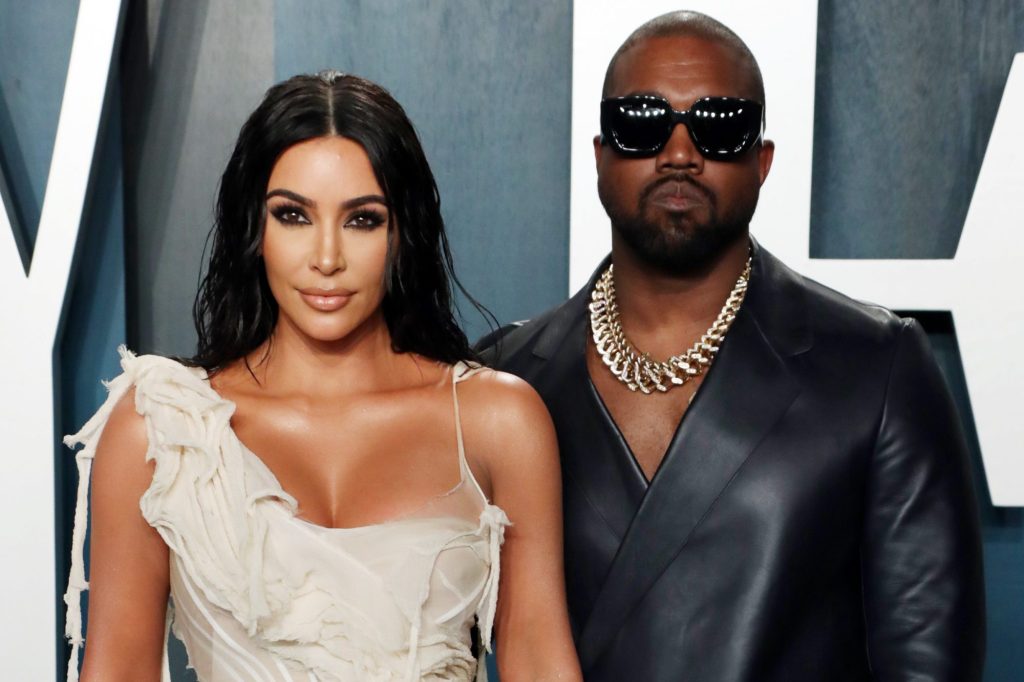
Day 1 of Kimye divorce: Not too bad. Both of them are in different homes and Kim has the kids, so everything is looking good.
Day 2: Kanye bit North’s foot. She said she wanted to live with Kim so he bit her foot.
Day 3: Kim burned every pair of her Yeezys and everything else Kanye has made for his brand that she owns. Why she couldn’t donate them is beyond me.
Week 2: Kayne sent cookies with Jeffery Star’s face on them to Kim, and now Kim is stomping on them. Just smashing them, cookie by cookie. The kids all stole one and said they taste really good for having Voldemort’s face on them. Saint doesn’t understand why Voldemort has hair or how he has a nose.
Week 3: Kris Jenner just got into a fist fight with Kanye. She punched him and then said “Not one of my girls” and just became an animal. Security broke them apart, but Kris cracked open a beer and said “pour one out for the Trumper.”
As we round the corner on the first year of this pandemic, I can’t help but reflect on where we were 365 days ago. In the first week of March 2020, I went from attending a mock trial event with hundreds of people from across the country to throwing a 20th birthday party for one of my closest friends. I didn’t know it at the time, but the normalcy of handshakes and hugs would soon melt away with no promise of ever returning. Or so I thought.
Fast-forward a year later, and we are certainly still in a pandemic but, with one-tenth of the country’s population vaccinated, this March feels more hopeful than the last. Last March was characterized by persistent changes to our everyday lives, forcing us to reevaluate nearly every facet of 21st-century life. Public health needed to be addressed, along with social justice and our relationships with our loved ones; lesson after lesson, ad nauseam. 2020 taught me that another thing needed to be addressed: my relationship with myself.
I’m sure my fellow college students can relate; ours is a story of constant congregation that quickly turned into sorrowful exile. We are social creatures who were yanked from the most social environment we’ve ever experienced and sentenced to solitude. I quickly became too familiar with the walls of my childhood bedroom, wishing I could spend just one more night with my friends for old time’s sake. I had never been in a situation where I could not physically see anyone lest I risk contracting a deadly virus; none of us had any idea how to proceed. I quickly understood that this was uncharted territory for all of us.
Fabrice Coffrini/Getty Images
On March 11, 2020, the World Health Organization (WHO) first characterized the coronavirus outbreak as a pandemic.
As the curious person I am, I wanted to chart that territory. I wanted to immerse myself in the idea of being alone so that I could better understand myself and those around me. Sure, loneliness sounds a little scary, but they say explorers are never lost, right? So I dove in.
I first had to understand where I was and how I was feeling. Then, I asked myself if that was where I wanted to be: the obvious answer was no, “Liz, you’d much rather be at a frat party with your roommates than stuck in this existentialist rut.” So, I had to bridge the gap between where I was and where I wanted to be. Not surprisingly at all, I found that this desire to bridge the gap was a common one; this experience was a tale as old as time, as Celine Dion would say.
A man born 125 years before coronavirus came about said that happiness is derivative. This man was named Jiddu Krishnamurti, and he argued that happiness is always a by-product of something else. You think you’ll be happy when you get that promotion. You get promoted, but you’re still not fully satisfied. Now, you think you’ll be happy when you get the girl. You’re in a relationship now, and guess what… you’re still not fully satisfied. There is a search for something permanent, within the self and things beyond the self; but happiness is never permanent.
Krishnamurti offered that instead of happiness, we should begin searching for something else: self-knowledge. There is an idea that you must first recognize what is; “you cannot imagine or have belief in something which you are not.” On top of that, you have to be real with yourself about your circumstances. To understand what is, there must be freedom from the fear of what is. This was really, really hard to put into practice considering, you know, everything going on in the world. It seemed hard, but not impossible.
My thought process went something like, “okay, I get the vibe that he’s saying happiness is tricky to pursue, but if I can understand myself, I think there’s some merit and pleasure in that.” So that’s what I tried to do (and I’m still trying). A global pandemic and all its associated isolation is, admittedly, a really convenient time to, if you’re able, parse through your own self-knowledge.
That isn’t to say a global pandemic isn’t tough; we all dearly miss the way things used to be. But those things aren’t reality anymore. Taking a look around my childhood bedroom, I reminded myself to stay grounded in the present because, as cliché as it sounds, the past and the future were either gone or uncertain. I was alone, and that was a fact; I was alone, and that fact didn’t have to be unfortunate. That is where self-knowledge comes in.
Understanding yourself is a lifelong task, the terms of which, I imagine, are always changing as you grow and evolve. But it doesn’t matter what the circumstances are, the following is true: everyone’s potential for self-knowledge exists within them. It cannot be explained by some self-help book or school newspaper article, but it is there. And it is worth exploring.
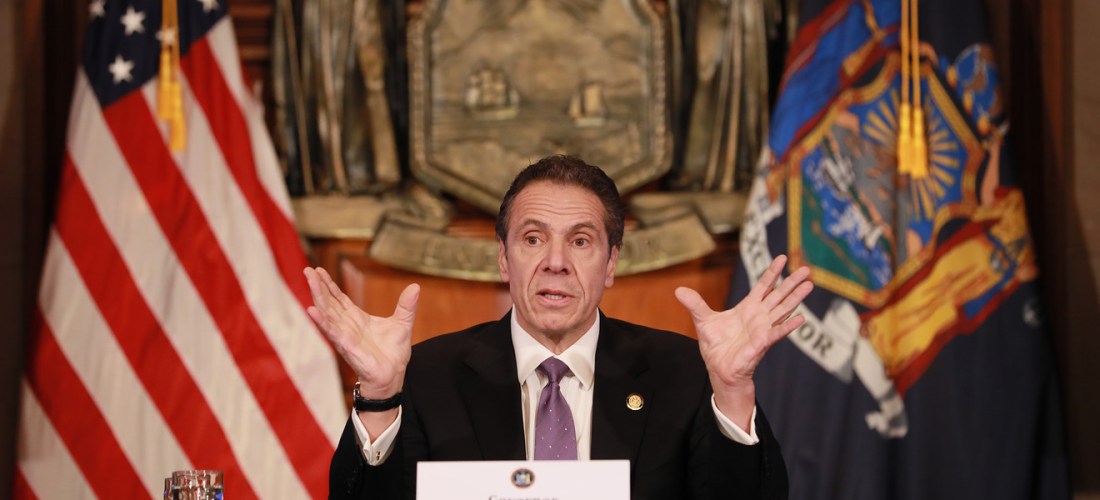
Over the past two weeks, a slew of sexual misconduct allegations against New York Governor Andrew Cuomo have come out. The allegations have ranged from inappropriate comments that contributed to an uncomfortable work environment to violations of personal boundaries and inappropriate touching. It should go without saying that these allegations, if found to be true, are contemptible. I have to admit that it is somewhat gratifying to see such a media firestorm around a figure so deserving of one, especially after being so shamelessly fawned over by the press just a year prior. However, I am somewhat dissatisfied that Governor Cuomo seems to be getting off relatively lightly, all things considered. While these allegations of sexual harassment in the workplace are explosive for the Democrat, it seems as if this story has completely overshadowed the much more scandalous story concerning the Governor’s office: New York’s mismanagement of nursing homes during the pandemic and subsequent attempts to cover up the true number of deaths reported from them.
Darren McGee – Office of Governor Andrew Cuomo
Cuomo’s direction of New York’s response to the coronavirus made the governor very popular with the media last year.
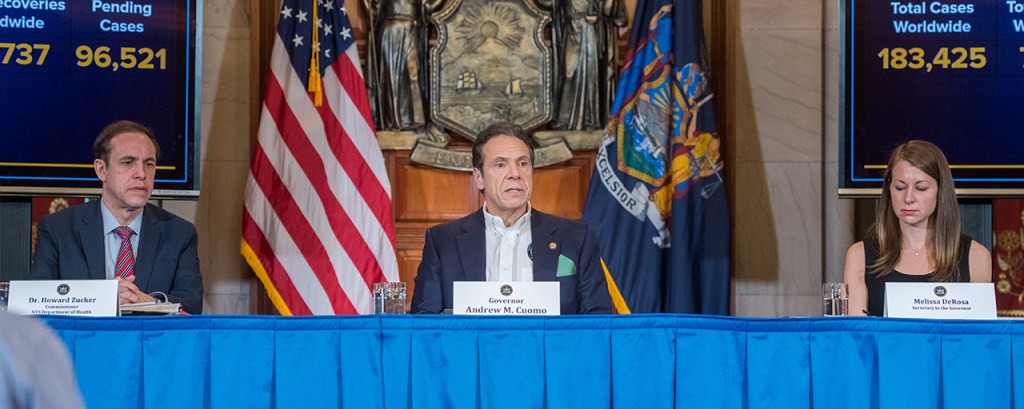
A report released by The New York State Attorney General’s office revealed that the number of COVID-19 deaths in nursing homes had been massively underreported by officials in Cuomo’s office. The report states that as much as 50 percent of COVID-related nursing home deaths were omitted from official tallies of nursing home related deaths released by New York State. Following the release of the report, Cuomo’s aide, Melissa DeLaroma, had reportedly met on a private video conference call with Democrat lawmakers to apologize for the suppression of numbers, citing fears by the Governor’s Office that the enormous amount of deaths would be used against them by then-President Trump to justify an investigation by the Justice Department. These developments are leaving questions about the Governor’s controversial March 25, 2020 New York State Department of Health directive to admit COVID-positive patients into nursing homes, using them as overflow testing and treatment centers. This stunning political cover-up is not only a flagrant abuse of power, but it could also have a serious impact on medical statistics that are crucial for those researching the virus and qualitative analyses of the pandemic. Such a statistical aberration has potential reverberations that travel much further than New York State lines, as this data is used by experts across the country and around the world in the fight against the novel disease.
To be clear, the allegations of workplace impropriety should be taken seriously and, with the sheer volume of alleged victims coming forward in the past month alone (7 at the time of writing), it is definitely a matter that deserves an investigation and the public scorn it has earned Governor Cuomo. However, the media frenzy that has surrounded this story has eclipsed a much larger offense. With all due respect and sympathy to Cuomo’s alleged victims, I think the thousands of lives he has directly or indirectly affected, or maybe even ended, with his handling of nursing homes and the flagrant abuse of power in trying to cover up his administration’s missteps, is a scandal of a much higher magnitude. Yet, it seems as if the Governor and the press would both prefer to address these more salacious accusations of sexual harassment, with Cuomo last addressing criticism of the nursing home scandal almost over a month ago. Cuomo has also been quick to deny the multitude of the allegations of sexual harassment against him; and yet, media coverage surrounding the former seems to have been completely supplanted by the comparatively less severe implications of the latter.
Bearing witness to it all, I have been disgusted by the partisan pandering by the media that has been at play throughout this pandemic. I was incensed, in particular, by the relatively lax scrutiny Governor Cuomo received compared to former President Trump during the throes of lockdown when, in my opinion, both seemed to be equally, if not divergently, incompotent in their responses to the crisis and equally caustic and dismissive to their critics along the way. Over the past year, Republican governors, such as Ron DeSantis of Florida and Greg Abbott of Texas, received heaps of criticism over their handling of the pandemic, some of which was completely justified, some overly-critical, in my opinion. Conversely, if you flipped on the news less than a year ago it would have seemed as if Cuomo, the media darling and “America’s Governor,” was beyond reproach. In reality, he was just as, if not more guilty of, mismanagement of this crisis than others. It is unlikely Cuomo will be winning over progressives anytime soon considering the circumstances of his current controversy, and his puzzling statement during a recent press conference that he was not “elected by the politicians, [but] by the people” in a response to a question about the multiple Democratic legislators calling for his resignation reads to me as a pivot towards more populist, Trumpian politics. It remains to be seen what kind of future, if any, lies ahead for Governor Cuomo.
The takeaway of this whole situation should be that we cannot let party lines and partisan rhetoric distract us from abuse of power by officials we politically align ourselves with. I pray that the independent investigation into allegations of sexual misconduct by the Governor can proceed unimpeded, and that he will resign if these allegations are found to be true, but I also hope that he is forced to answer for his administration’s missteps at the onset of the pandemic and their reckless dereliction of duty in the tabulation of COVID-related nursing home deaths.
Tesla officially changed Elon Musk’s title of CEO to “Technoking of Tesla” in an 8-K filing with the Securities and Exchange Commission. Tesla’s CFO, Zach Kirkhorn, is now effectively “Master of Coin” according to the filing as well.
It’s 2050. An elementary school teacher is asking their students what they want to be when they grow up. Some kids want to be rockstars, others are medical school bound and one child replies, “I want to be Technoking.” Thanks to Elon Musk, that kid’s dreams just might come true some day.
On Monday, Mar. 15, the Tesla Inc. co-founder and CEO took on a new title: “Technoking of Tesla.” In a report filed with the Securities and Exchange Commission, Musk provided little explanation of the name switch; he also formally changed the title of Tesla’s chief financial officer, Zack Kirkhorn, to “Master of Coin.” Kirkhorn’s new title is a reference to a Game of Thrones character.
This apparently inconsequential change to Tesla Inc. has already prompted others to reevaluate their C-suite names. Siqi Chen declared himself the technoking of Runway Financial Inc., a financial startup that provides support and advice to struggling businesses. Runway Financial’s website is ripe with emojis, denoting a marked shift from the traditional stuffy environment of, for example, Charles Schwab. Runway Financial promises to deliver “something that fundamentally rethinks the role of financial data;” their CEO’s — or, rather, technoking’s — decision to change C-suite titles indicates that they are, on some level, fundamentally rethinking the traditional structure and formality of business hierarchy. Mr. Chen told The Wall Street Journal that “all titles are jokes, and it’s tribute to our Technoking Musk for making this clear to the SEC.”
There is no question that Musk is a trendsetter. But his decision to change the traditional C-suite titles to names that embrace meme culture could be reactionary to the rise in importance of retail investors as of late. Recall what happened with GME in late January 2021: Redditors drove the stock price up, causing Wall Street investors to hemorrhage money and re-evaluate their positions. It is clear that retail investors possess the power to influence markets in unprecedented ways. Given the fact that they are making their trades online, largely based on the advice of fellow netizens, perhaps Musk is simply catering to their culture.
Moreover, Tesla purchased $1.5 billion in Bitcoin this year. They are not only embracing the convergence of Internet and finance through trivial name changes, they are also literally investing in this new future of finance. It is clear that Musk is paying attention to the emerging influence of Internet culture on finance; perhaps Tesla will implement some more radical changes than technoking in the near future.
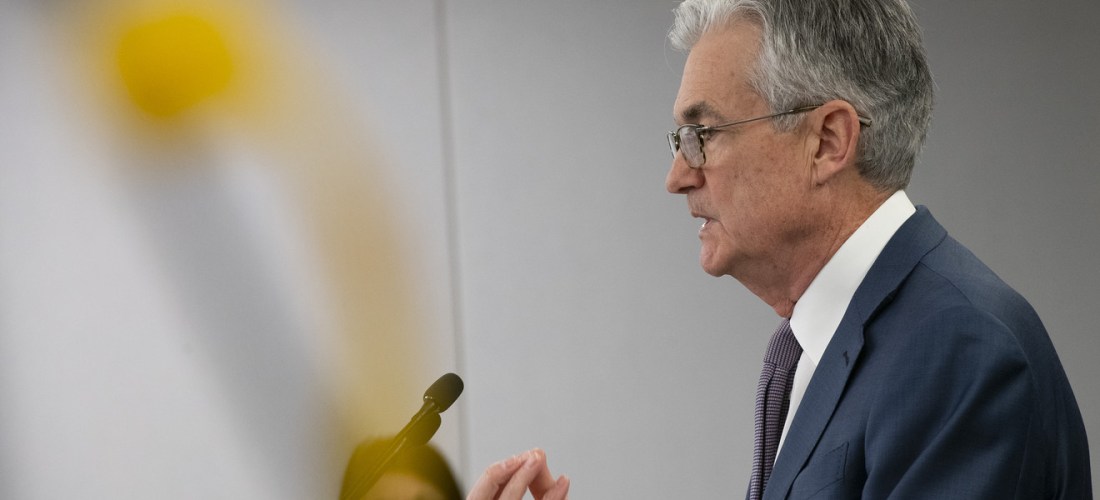
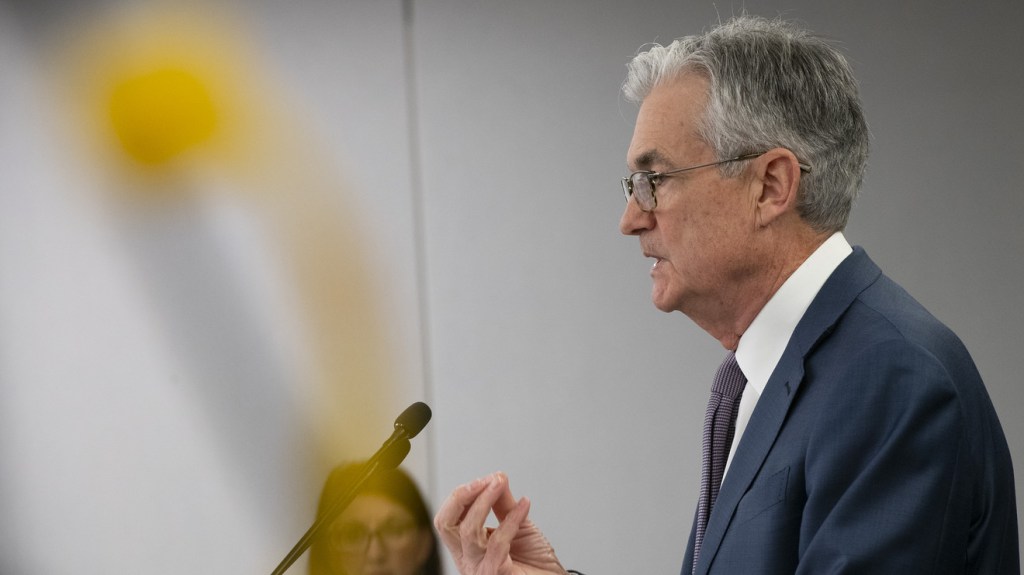
Pictured above is Federal Reserve Chairman Jerome Powell. Powell led this week’s FOMC meeting, forward-signaling the Fed’s monetary policy strategy and lending clarification to eager market makers.
Since the Federal Reserve’s inception in 1913, the central bank has made a profound impact on the nation’s commercial banking sector, monetary policy and the world. The Federal Reserve, or the Fed, operates as our nation’s commercial banking regulator, monetary policy interventionist and financial stabilizer. The Fed is made up of 12 member banks which assist an assigned geographic area around the country and help with banking services and compiling data in the area. The Fed’s main goals are price stability, maximum employment and maintaining moderate long-term interest rates.
The Fed meets eight times a year with members from other area banks known as the Federal Open Market Committee (FOMC). The FOMC consists of 12 members, which come from the Board of Governors of the Fed and Reserve Bank presidents. The FOMC is responsible for managing the country’s money supply.
The current chairman of the Fed is Jerome Powell. Powell has served in this role since 2018. An alumnus of Princeton and Georgetown, Powell worked shortly in investment banking in his early career and later went on to start working in public service under Former President George H. W. Bush. Since his time at the Fed, Powell has neither been described as either a dove, which is a policymaker interested in low unemployment and low interest rates, nor a hawk, which is a policymaker more concerned with stifling inflation. Instead, Powell has been described as a major mediator: one to find a consensus in monetary policy and the economy. He has been known to listen to many different members of Congress’ views on the economy.
The FOMC met live today at 2:30 p.m. to discuss the economy’s recovery. With three vaccines in full swing and a new stimulus package passed, many of the challenges induced by the coronavirus pandemic are seeming smaller, and recovery has been top-of-mind among regulators. As a result, speculators are expected to grow more eager to reenter the market after a tumultuous year.
Many investors are concerned with the recent rise in treasury yields and inflation. Powell has discussed inflation a few weeks ago, and he does not believe inflation to be a major concern. As expected, he reiterated this point during today’s FOMC meeting. The Fed’s Summary of Economic Projections in December estimated GDP to be 4.2 percent, unemployment to be at 5 percent, and core inflation to be at 1.8 percent for 2021. Some believe these estimates rely on optimistic outcomes regarding vaccine rollouts and business reopenings.
Market conditions indicated investors were not expecting a change in interest rates announced at the meeting, and there was none. Powell made it clear that the Fed would employ ample forward signaling before implementing any drastic, market-moving changes such as a tapering of treasury yields. In a Q&A with reporters, Powell made it clear that there needs to be significant progress made in economic recovery to consider the action. Currently, the federal funds target rate (the rate commercial banks lend to each other) is set from 0 to 0.25 percent. This was set low by the Fed to stimulate credit markets and encourage lending to businesses afflicted by the economic shutdown that occurred last March in response to spiking COVID-19 transmission rates. As we recover from the pandemic, the economy’s fate will be placed not only in the hands of the FOMC and the Fed but in the average American’s consumer confidence and their ability to spend money. A recovery in consumer confidence followed by an economic recovery will likely prompt the Fed to change course, when that will happen remains an uncertainty.
On March 4, an email from outgoing University President Colleen Hanycz announced La Salle’s administration is “planning for a primarily in-person semester” for Fall 2021. Although Hanycz will move to Xavier University over the summer, her announcement for the upcoming semester charted La Salle’s transition to post-pandemic life.
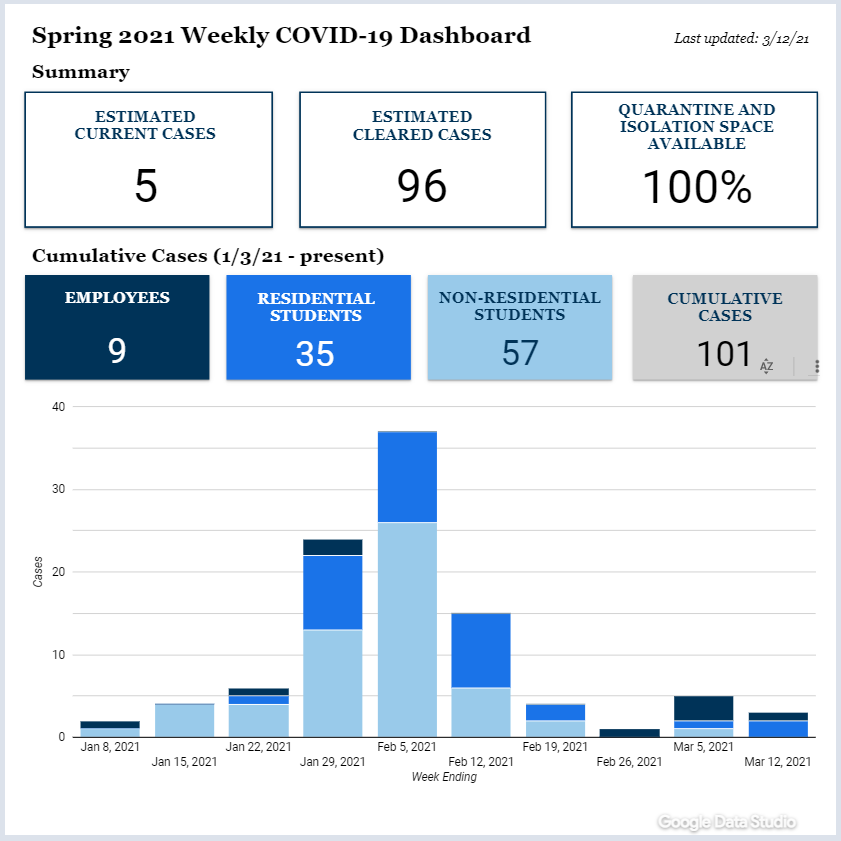
Hanycz described the Spring 2021 semester as a success, writing “our collective efforts, including a robust testing strategy, an enhanced and expanded contact tracing program, and the cooperation of our students, faculty and staff, have helped maintain low transmission numbers on our campus — including a positivity rate of less than 0.5%.” As of March 12, La Salle’s community has seen a total of 101 cases of COVID-19, with the most cases identified in the beginning of February. The following chart, copied from La Salle’s COVID-19 dashboard, details the instances of COVID-19 from Spring 2021.
Classroom constraints and professors’ discretion may impact course modalities for Fall 2021. As the City of Philadelphia adjusts their maximum capacity guidelines, Hanycz said La Salle will “work to transition to even more classes to in-person modality.” As of March 17, Philadelphia’s guidelines for colleges and universities says classrooms must have “at least six feet of distance between students/instructors [and either] 20 persons per 1,000 square feet; or less than 25 percent of maximum capacity of classrooms; or a maximum of 25 students per class.” Starting on April 4, Pennsylvania will begin to lessen restrictions for bars, restaurants and entertainment venues. While Philadelphia has not adjusted their restrictions to align with the state’s, the Philadelphia Inquirer describes the plan to lift the ban on events of more than 50 people. As many Philadelphia schools return to in-person classes, changes in educational regulations are expected. Nonetheless, the Registrar has listed six modalities for course delivery this fall: Face to face instruction (F2F), hybrid, staggered, remote with specific meeting times, online and independent study. The F2F modality will model the traditional classroom setting and the hybrid modality will be divided into traditional and online elements. The staggered modality is similar to the hybrid modality as professors may choose to have online elements, but students will have specific days of the week for in-person attendance. The next modality, remote with specific meeting times, will entail synchronous Zoom classes. The online modality will be asynchronous and fully remote. Students in independent study courses should consult with their professor to find out what the modality will be used for their specific project.
The plans for Fall 2021 include a meal-plan requirement for residential students, as well as continued social distancing and increased emphasis on health monitoring. Wearing a mask, washing one’s hands, making use of sanitizing stations, physical distancing and reporting any signs of sickness are expected to continue to be the norm, and students are required to continue these practices until further notice from the University.
On March 15, 2021, President Hanycz informed Explorers of the COVID-19 protocols after returning from a brief Easter break. There are no classes on Holy Thursday, April 1, and the University will be closed Good Friday, April 2 through Easter Monday on April 5. On Tuesday, April 6, La Salle will have a quiet period and conduct all classes remotely until Friday, April 9. This quiet period is meant to reduce the chance of transmissions by limiting interaction to households and pods. However, beginning on Tuesday, April 6, students with off-campus clinicals, practicums or internships may report to their respective sites. Residential students must return by Tuesday, April 6, and will be required to check-in with Residence Life staff.
Student testing will also be conducted on Friday, April 9, and Saturday, April 10 at Treetops Cafe. This testing is mandatory for selected students. These students will be notified by Monday, April 5 to select a testing time. This surveillance testing is a safety measure to protect the La Salle community. In addition, normal testing will increase after Easter. Staff can take voluntary tests that the University is offering as well.
Campus resources will be limited during the quiet period. La Salle Dining will offer to-go options only. Connelly Library will maintain restricted hours. Student Health will prioritize telehealth appointments. The Independence Blue Cross fitness center will be closed.
President Hanycz reassures Explorers that “We have come together in amazing and creative ways this year, most particularly this semester as we have experienced a very successful return to campus. I am confident in our planning and protocols, and I will continue to rely upon the cooperation of our students, faculty and staff to ensure La Salle University remains a safe place to live, learn and work.”
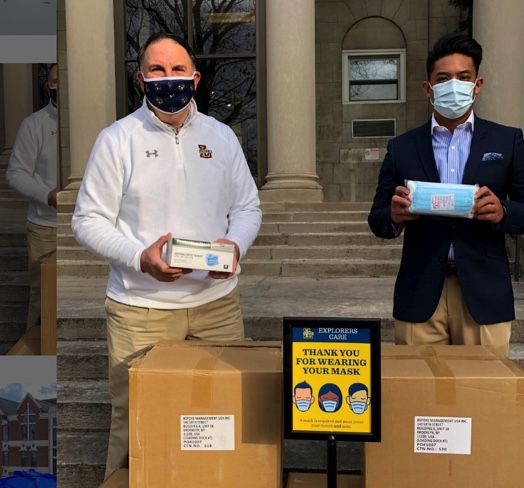
La Salle Community members masking up Instagram @lasalleuniv
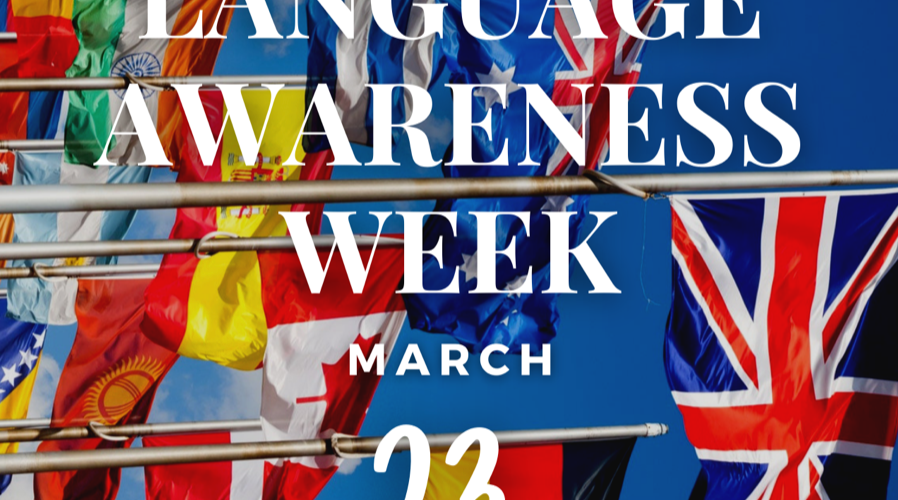
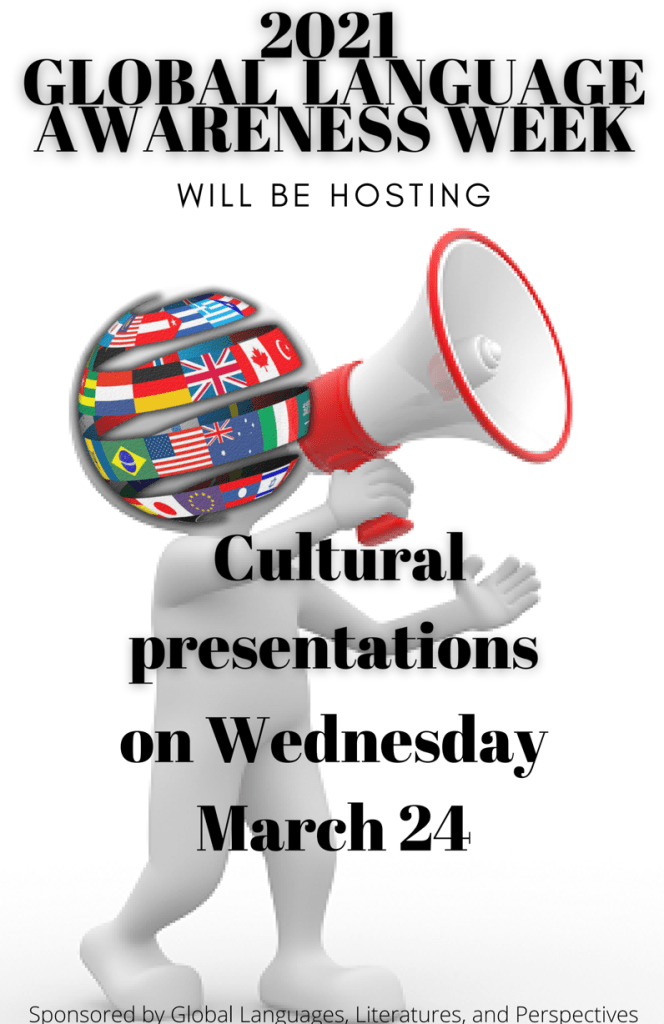
The Department of Global Languages, Literatures and Perspectives looks forward to its third annual Global Language Awareness Week. The department will host virtual events from March 23 to March 25. Read below for more information.
Tuesday March 23 2021
Register for a talk on foreign languages and career opportunities with Bill Nolte here.
Wednesday March 24, 2021
Join us for cultural presentations. More information on these talks (including times and topics) will be updated on this page at a later date. If you are interested in giving a 10-15 minute presentation about a piece of your culture, contact Bianca Abbate (abbateb2@lasalle.edu).
10:00 AM “Ruins in my Way: How Romans work around an ancient city”
“Impressionism to Modernism: French Paintings at the Philadelphia Museum of Art”Brother Leonard Marsh**LIVE** Join URL: https://lasalle.zoom.us/j/81383240715
The Department is also seeking school-wide participation. You can join in on the celebration of foreign languages by contributing to our collaborative, global song playlist here or by submitting pictures abroad here. The photos will be featured on the Collegian website at a later date.
For more information about Global Language Awareness Week, please contact Department Chair Victoria Ketz via email (ketz@lasalle.edu).
It has been a year since our campus closed down due to the coronavirus. On March 23, 2020, La Salle President Hanycz cancelled all classes for one week in preparation to fully move to remote learning. Since then, almost half of La Salle’s sports teams have been cut, resident life has changed dramatically, clubs have made immense accommodations to their members and most importantly the education of each and every student has drastically shifted from traditional schooling to an online format. What started as a two-week-long precaution has resulted in a year-long shift to what many refer to as the “new normal.” For La Salle, mirroring the world at large, this has meant a loss in our much-valued community. With vaccines being disseminated across the country, the situation seems to be in flux and many students and members of the editorial board cannot help but wonder: where will we go from here?
This year, resident life has changed drastically, and the impact has been a lack of togetherness on campus. For example, currently, dorms have a one visitor per room policy, and the visitor must be from the same dorm building. The only place students are allowed to meet in groups are resident lounges, which have occupancy limits of five. Students have been forced to deal with massive lines outside security checkpoints when trying to get into their dormitories because they are currently required to show campus security their IDs as well as swipe into campus, making the entire process of entering their own rooms significantly longer. At this time, resident life does not seem to have any plans of lifting these restrictions this semester, leaving many to wonder what campus will look like come the fall semester. While we can only hope things will actually improve with lessening case numbers and higher vaccination rates, it seems La Salle will continue its policy of following the rulebooks of surrounding schools, which we can only hope might mean decreased regulations by August.
The online classroom landscape has also had a negative impact on community at La Salle. Many of us can picture a bustling campus mid-Monday, as students would rush across the Quad to their 12:15 classes in Hayman. On sunnier days, students would populate the Quad, drinking Starbucks or playing frisbee, while others in Wister would look on from their desks. Then, we did not know what we had, and we never imagined our watering hole would one day be gone, and we would no longer have the opportunity to enjoy our Oath Pizza by the tables on the Quad. Now, even with a handful of in-person classes, the campus no longer offers the same atmosphere. Online classrooms have an air of isolation: most students do not even put their cameras on for class or bother to learn who is on the screen next to theirs. And who can blame them? The sense of community that was bolstered by our campus atmosphere is gone, and all that remains is a shared Zoom link.
Community is an extremely important aspect of life at La Salle. We see the same faces on campus. We know our neighbors by name. With all of the changes to our University as a result of the pandemic (many unavoidable), we have lost a sense of that community. Zoom classrooms are full of strangers — black screens with audio. Dorms are private spaces. The campus is disconnected. The atomization and thinning of society that we have seen in our world has been mirrored in our corner of the world on Broad and Olney.
The La Salle we all remember may never make a full return. Even after the majority of students have vaccines, we will likely continue current campus security policies whether the student body agrees with them or not. Come next year, we hopefully will have a brighter future ahead. Hopefully, we will once again learn our peers’ names and perhaps once again welcome them into our spaces.
Letters, guest columns and opinion pieces will be considered for publication provided that they meet the editorial standards of The Collegian. All letters must be received by the end of the day Sunday to be considered for the current issue. Letters can be submitted via email to abbateb2@lasalle.edu. The Collegian reserves the right to condense or edit submissions. Weekly editorials reflect the views of the editorial staff and are not representative of the university or necessarily the views of the rest of the Collegian’s staff. Columns and cartoons reflect the views of the respective writers and artists.








 The La Salle Collegian