Presidential search update

News

Kylie McGovern, Editor 

          Via La Salle University  

On Dec. 3 La Salle University students received an email from The Presidential Search Committee regarding an update about the search for La Salle University’s 30th President. The Committee members convened just before Thanksgiving because the application period closed. The committee members reviewed application materials for the robust pool of qualified and intriguing candidates. The committee then assessed the candidates based upon the characteristics outlined in the position profile.

 The position profile is available to the public. It refines the group to those that best match such characteristics of the university’s next president. The position profile includes contact information and then explains the following: “La Salle University celebrates its mission, traditions, and identity as a Lasallian, Catholic, and comprehensive liberal arts institution that promotes excellence in teaching and respect for all people, as it seeks its next President. La Salle offers a remarkable leadership opportunity for its next president. With a mission-driven sense of direction and faithfulness to its values, the Board of Trustees is positioning La Salle and the next president to proactively enhance the university’s reputation for excellence and achieve national prominence. The board’s commitment provides important momentum and opportunity for the next president who will provide innovative thought leadership, create a bold and new strategic plan, build community on campus and in the broader Philadelphia area and achieve long-term growth and financial sustainability.” 

Sophomore Luke Szyszkiewicz explains that he is “frustrated about how long the search is taking,” however, he understands that the process of the presidential source should be done “meticulously and thoroughly.” 

These presidential candidates have been invited to an initial round of interviews with the Search Committee that will occur this month. The committee will provide additional updates as the committee’s important work continues.

La Salle to hold COVID-19 booster clinic in December

News

Jakob Eiseman, Editor-in-Chief

La Salle University

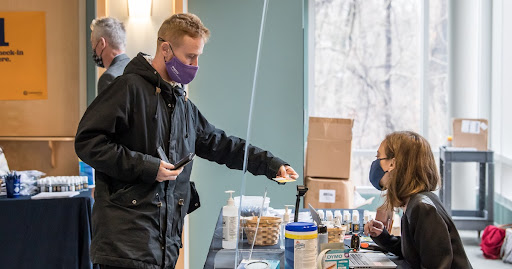
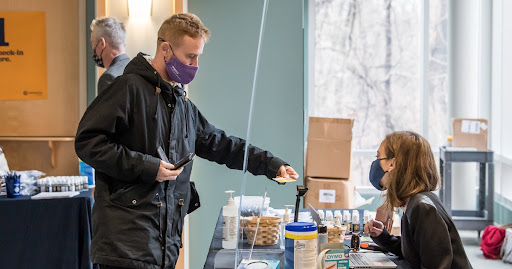
It was announced on Nov. 15, 2021 (after our last issue was already proofed) that La Salle University would be holding a COVID-19 booster vaccine clinic on Wednesday, Dec. 8, 2021 at the COVID testing facility built into TreeTops Cafe on South Campus.

Similar to the clinic held on campus at the end of the spring 2021 semester, Walmart pharmacy is coming in to administer the vaccine and encourage those looking to attend the clinic to complete all necessary prerequisites prior to arrival. While it was not stated which vaccine the clinic will be providing, the CDC has stated that it is safe to receive a booster vaccine that is not of the same type as your initial vaccination. 

In order to receive a vaccine booster from the clinic, members of the La Salle community will first have to confirm that they are, in fact, eligible for the vaccine booster. The CDC recommends that boosters be administered no sooner than six months after the administering of the second dose for the Moderna or Pfizer-BioNTech vaccine or two months after receiving the Johnson and Johnson vaccine. Those who are eligible are those who received their second dose of the Moderna or Pfizer vaccine before June 8 or the Johnson and Johnson vaccine before Oct. 8. If you are unsure you are eligible for a COVID booster, please check the CDC’s website for guidance.

At this time, the clinic is open to “La Salle students, faculty, staff, and Christian Brothers” only, but like the previous clinic, it may open up to the North Philadelphia community if stock of the booster and demand is high enough. Vaccine boosters will be available from 12 p.m. to 3 p.m. at TreeTops, and the University recommends that those interested schedule an appointment rather than walk in. Appointments can be made through this link. Those interested are also encouraged to complete the COVID-19 booster dose attestation form, which can be found here and on La Salle’s website.

While the booster, like the vaccine itself, is free to the general public, those who wish to receive the booster will have to provide proof of health insurance or sign an insurance waiver at the site on the day of the clinic. Those who attend the clinic will have to bring a government-issued photo ID, COVID-19 vaccination record card, and insurance card if applicable. 

As of its most recent update on Nov. 12, the La Salle COVID portal reflects that about 95 percent of the campus community is vaccinated, and the vaccine boosters were approved for everyone above the age of 18 by the CDC on Nov. 19.  The city of Philadelphia is urging its citizens to get the booster to further protect themselves, saying on their website, “Philadelphia has one of the highest rates of routine immunizations in the entire United States. Vaccines for measles and whooping cough and meningitis protect us every day. And many of those vaccines require a booster dose to make sure that we stay protected.”

Philadelphia bans low-level traffic stops

News

Rita Offutt, Editor

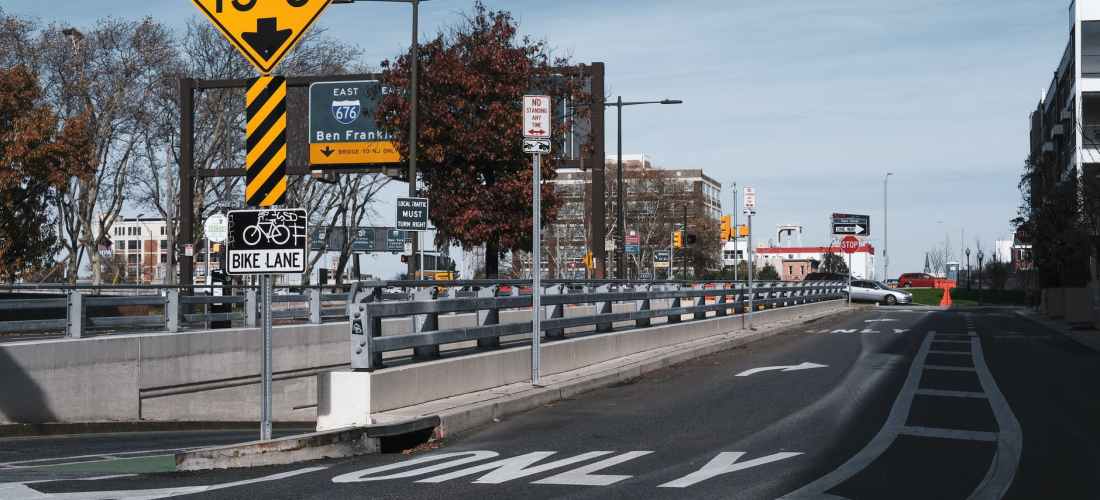
On Nov. 3, Philadelphia Mayor Jim Kenney signed the Driving Equality Bill, making Philadelphia the first major city to enact a law against low-level traffic stops. According to the National Public Radio (NPR), the law “bans stops for: driving with a single broken brake light, driving with a single headlight, having a registration plate that’s not clearly displayed, fastened, or visible, driving without an inspection or emissions sticker, bumper issues, minor obstructions (like something hanging from a rearview mirror) [and] driving without vehicle registration within 60 days of the observed infraction.” Instead of being stopped for these offenses, cars will be ticketed. 

Philadelphia’s city council passed the bill in a 14-2 vote on Oct. 14. It will go into effect in February, allowing the Philadelphia Police Department 120 days to retrain officers in accordance with the legislation. According to NPR, “The Philadelphia Police Department was part of a coalition of stakeholders who helped draft the legislation…to [address] racial disparity without compromising public safety.” CNN reported that the Philadelphia Police Department released a statement saying, “We believe this is a fair and balanced approach to addressing racial disparity without compromising public safety. This modified enforcement model for car stops furthers the Department’s priority of addressing the issue of racial disparity in the Department’s investigative stops and complements the Department’s efforts to address these same issues in pedestrian stops.” 

The Driving Equality Bill was initially proposed by city councilmember Isaiah Thomas in October 2020, and cosponsored by Kenyatta Johnson, Katherine Gilmore Richardson, Jamie Gauthier, Kendra Brooks, Maria Quiñones Sánchez, Cherelle Parker and Curtis Jones. According to NPR, Thomas authored the bill after he was stopped for a traffic violation while his son was in the car. Thomas told CNN, “I am humbled by every person who told my office of the humiliation and trauma experienced in some of these traffic stops. To many people who look like me, a traffic stop is a rite of passage — we pick out cars, we determine routes, we plan our social interactions around the fact that it is likely that we will be pulled over by police.” 

Homecoming and Family Weekend recap

News

Kylie McGovern, Editor 

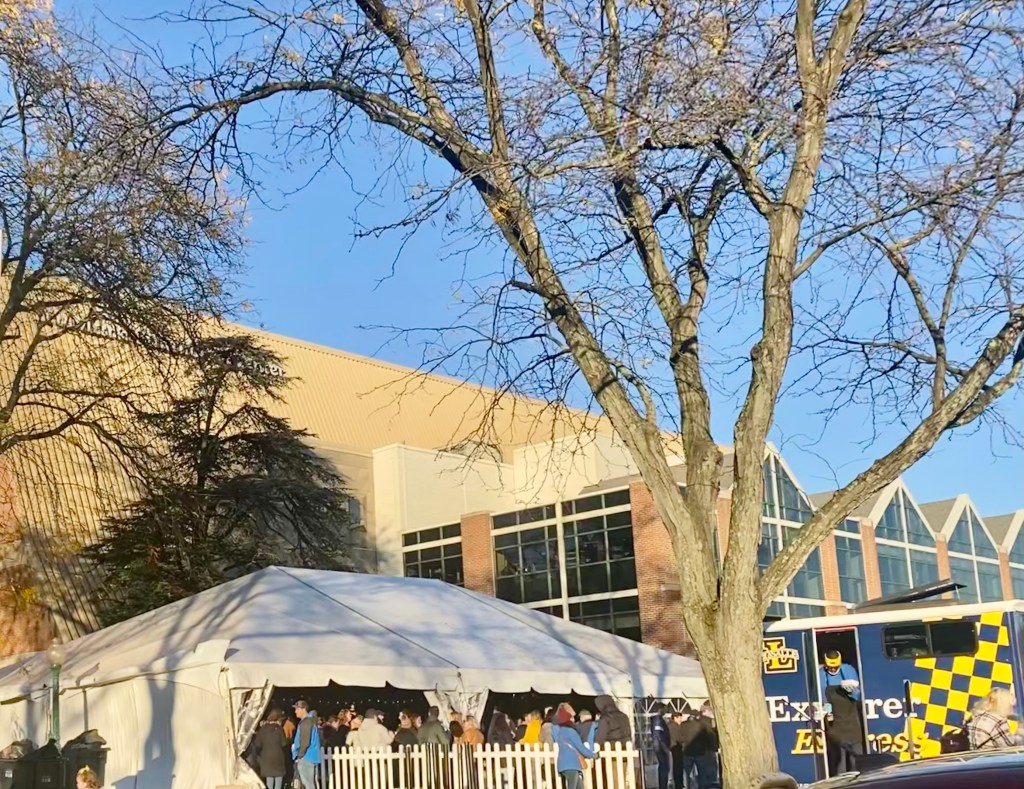
The Hideaway Tent in front of the TruMark Financial Center

On Saturday Nov. 13 Homecoming events were in full swing. The day began with a bus trip from La Salle’s campus to historic sights in Philly for visiting families to enjoy the gems the city has to offer. Next the Women’s Basketball team kicked off the double header with a win and more can be found on both the women’s and men’s basketball games in our sports section. The festival on the quad commenced at 12:30 p.m. Fellow alumni, faculty, staff, parents and students gathered on the Hansen Quad to enjoy food, drinks and music. Attendees of age were able to enjoy the beer garden on the quad. In addition, La Salle Ambassadors set up games like ring toss and skee ball with candy prizes. La Salle Ambassador Andrew Plunkett ‘23 said homecoming,“was a super fun time! Seeing the alumni come back to campus and enjoy playing our games was very exciting and I was happy to be a part of the festivities. Even though the weather wasn’t ideal, we made the best of it and I think everyone enjoyed some well-deserved fun.” Despite the rain, those coordinating the event moved the festivities inside and everyone enjoyed the afternoon. 

On Saturday afternoon, The La Salle University Art Museum was also open for tours to present the “Beyond 2D: Surface Play with Paper” exhibit. The Hideaway Tent was also open for business before the Homecoming men’s basketball game. Opening at 2:30 p.m., The Hideaway Tent was open until tip-off as a gathering place for basketball fans just outside of TruMark Financial Center. The Hideaway was once a local bar where La salle students could enjoy a beverage with some friends off campus. This tent commemorates the tradition while creating a new one. Food and beverages including beer and wine were available for purchase. The Explorers Express food truck served sandwiches to those looking for a quick snack before the game. After the game, families headed over to Deke’s BBQ to enjoy a post-game happy hour with family, friends and alumni. Saturday’s festivities concluded with “Live from La Salle” Family Trivia and Improv 101 Performance which you can read more about in the features section. 

On Sunday morning, families, students and those celebrating their 50th reunion gathered for mass at 11 a.m. in the De La Salle Chapel. Mass was celebrated by La Salle’s Father Frank. Following mass, two seniors: Eleanor Mancini and Jude Roche gave reflections about their families and the families they have found at La Salle.  After mass and the reflections,  the Alumni Association held a champagne luncheon to celebrate the Classes of 1970, 1971 and 1972 with a Golden Medallion presentation for their 50th Reunion. All those families at mass enjoyed a brunch at the Blue and Gold Dining Commons. Hundreds of people participated in this year’s La Salle Homecoming and Family Weekend — marking a major return to campus following the previous semesters which were severely impacted by the COVID-19 pandemic.  

New Collegian Podcast 

News

Header Image: Search Engine Journal 

Kylie McGovern, Editor

On Oct. 29, David O’Brien, ‘24 began spearheading a podcast project by meeting with communication Professor Dr. Mark Lashley about using the WEXP radio room to record podcasts. Throughout the past school year, the Collegian staff has been brainstorming a podcast component of the weekly newspaper. O’Brien’s vision for the podcast is for it to be an extension of the newspaper and discuss topics from the newspaper, ranging from business to features. The podcast will also have a similar function as the features section of the newspaper where the hosts will bring guests and discuss clubs, topics and other aspects of La Salle and the student in general. 

According to the podcast host, “a podcast is a series of spoken word, audio episodes, all focused on a particular topic or theme… You can subscribe to the show with an app on your phone and listen to episodes whenever you like on your headphones, in the car or through speakers.” The Infinite Dial conducted a survey exhibiting that 55 percent of the U.S. population had listened to a podcast ever; 37 percent had listened within the last month and 24 percent had listened within the last week, showing that podcasts are a form of media rapidly rising in popularity. Podcasts growing as a media industry are motivating O’Brien to start the podcast. 

In speaking with O’Brien, he explains, “I am so excited about starting the podcast with one of my best friends. I am doing the podcast because I am interested in pioneering something to make an impact as the managing editor. I want the Collegian to be adaptable to more formats in addition to our website and newsletter. I think the longevity of any student organization or publication is fluidity and adaptability. I know that podcasts are especially popular among college-aged people, and I think that the La Salle student body will not only benefit from getting news and interviews via a podcast, but will also be entertained by this new platform.” 

The podcast team hopes to record, edit and post the podcast in the coming weeks. After the first introduction episode, O’Brien plans to post the following episodes when the newspaper is published. 

University Housing Department announces amended guest policy

News

Kylie McGovern, Editor

On Nov. 2 La Salle University’s department of Housing and Residence Life announced an amended visiting policy via email. The email noted that, in general, students have observed compliance with the public health expectations outlined by the University in La Salle’s health and safety guidelines. 

Beginning Wednesday, Nov. 3, at 5 p.m., La Salle University’s visitation policy will be revised to allow all residential students to accept enrolled non-residential or commuter students as guests at their residences. All guests must continue to be registered online through the established guest registration process. This new policy will be reviewed on an ongoing basis by La Salle’s COVID-19 Response Team, who will be monitoring the number of campus COVID-19 cases, student conduct cases and the impact of contact tracing. 

Each residence hall must abide by different numbers of guests. Including the host or hosts, up to four students can be in a residence hall room, up to six students can be in an apartment and up to 10 students can visit any given townhouse at a time. In addition, face masks are required in residence hall rooms any time guests are visiting. While visiting, the guest must be escorted by their host at all times.

Although the acceptance of commuter guests opens visiting to a new group of people, if students want to host family members or other visitors who are unaffiliated with La Salle University, they may visit campus outside of residential communities and in publicly accessible, open-air spaces.  

Sophomore and commuter Danielle O’Brien says she is ​​“very excited about the new changes concerning the guest policy as a commuter. For a time it felt unfair that commuters — a large percent of La Salle’s student population — were being excluded from visiting dorms. I, like many other computers, have trouble finding things to do in between classes, and visiting friends’ dorms would be a perfect way to accommodate this. 

“Broadening the guest policy to commuter students such as myself is a great opportunity to make connections and friends that you wouldn’t otherwise, and I’m very excited to plan new activities with friends who are dorming and their dorm mates. Not to mention broadening the guest policy to commuters can entice commuters to rethink on-campus housing as it was made clear to me that those dorming at La Salle clearly have a community of their own within their building.”

Dr. Henry A. Reichman presents discussion on the future of academic freedom

News

Elizabeth McLaughlin, Editor

Mike Ferguson, AAUP

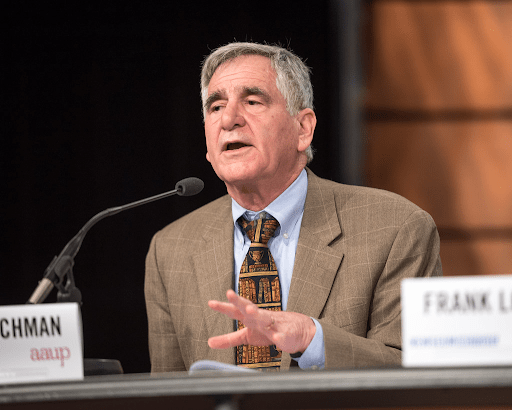
Dr. Henry Reichman conducted a virtual discussion on academic freedom in connection with the American Association of University Professors on Tuesday, Oct. 26, 2021.

On Tuesday, Oct. 26, Dr. Henry Reichman presented a Zoom discussion on academic freedom, a topic vital to the integrity of any institution of higher education. Dr. Reichman is the former American Association of University Professors (AAUP) Vice President and president of the AAUP Foundation, as well as the chair of AAUP’s Committee A on Academic Freedom and Tenure from 2012-2015. The event, organized by Dr. Barbara Allen and Dr. Joel Garver, garnered widespread attendance from students, staff and faculty members across all disciplines and from other universities.

In 2019, Dr. Reichman published his book “The Future of Academic Freedom,” which served as the backdrop for this conversation. He explained the terms of academic freedom, making sure to clarify common misconceptions, and offered his perspective on the current biggest threats to academic freedom.

Academic freedom is a concept belonging to the academic profession as a whole that protects the pursuit of inquiry. It guarantees to both faculty members and students the right to engage in debate without fear of censorship. In Dr. Reichman’s words, it “functions ultimately as the collective freedom of the scholarly community to govern itself in the interest of serving the common good in a democratic society.”

It is not, however, a civil liberty akin to freedom of speech; it cannot be classified as simply an employment benefit. Rather, it refers to the collective freedom of the faculty to govern itself as it sees fit, thereby promoting an environment in which academic inquiry is protected. It doesn’t allow a professor to do or say whatever they want without limit or accountability.

It does, however, protect a professor’s comments as a citizen even on topics that have nothing to do with their discipline. Such protection is essential to a healthy institution of higher education. Take, for example, the case of Dr. Arthur Butz, an electrical engineering professor at Northwestern University. In 1975, Dr. Butz published “The Hoax of the Twentieth Century: The Case Against the Presumed Extermination of European Jewry.” Dr. Butz’s Holocaust denial was met with harsh criticism from both his fellow faculty and the public at large. 

Many called for his resignation as a professor, decrying his blatantly anti-Semitic beliefs. Academic freedom, however, protects Dr. Butz’s right to publish this Holocaust denial book insofar as it does not affect his fitness to do research in and teach electrical engineering. Had Dr. Butz been a professor of 19th- and 20th-century history, for example, as Dr. Reichman was, then there would certainly be an argument that his beliefs about the Holocaust could affect his ability to do his job, and therefore academic freedom would not protect him. However, given his stature as a professor in engineering, Dr. Butz was allowed to publish such a book and keep his job.

The example of Dr. Butz is extreme, but nonetheless, academic freedom provides for an open environment for discussion within academic institutions. However, one of the most troubling trends in higher education, according to Dr. Reichman, is the tendency to misunderstand the concept of academic freedom; such a misunderstanding could prove to be dangerous to the liberties that such a concept seeks to protect. As with any debate on freedom, the question of responsibility arises: with great freedom comes great responsibility. Dr. Reichman argues that the responsibility refers not to using academic freedom with trepidation out of concern of backlash or censorship. Rather, there is a responsibility to protect this freedom, lest the integrity and functionality of academic institutions be jeopardized — “in academia, we have a collective responsibility to each other, our students, and the diverse common good in a democratic society.”


Toward the end of Dr. Reichman’s explanation of academic freedom, the floor was opened up to questions from audience members. One faculty member asked a question regarding intellectual property with respect to professor-created content: who owns the content we create for teaching? Dr. Reichman replied by saying that it belongs to the professor. The professor may retain their right to sign the rights of that intellectual property over to a publisher, for example, but since the faculty member is the one who created the material, it ultimately belongs to them. 

In the age of Zoom University, this question has become more relevant than ever; professors were required to move their entire courses online, demanding them to record lectures and develop virtual manipulatives, among other adjustments. The answer to the question of to whom do these materials belong remains unclear, but the AAUP states that they should belong to the faculty member who created them.

There was another question about the rights of the administration of a university to choose and have access to learning management systems (LMS), such as Canvas or Blackboard. According to Dr. Reichman, faculty members should be consulted in all decisions related to the university, especially those which directly impact teaching and learning. Therefore, the faculty should have a say in which LMS are used as well as the terms of access by the administration. Ultimately, faculty members should have the right to actively debate and vote on decisions made by their university that will affect their abilities to carry out their jobs. After all, “where academic freedom is not protected, shared governance will be a scam,” according to Dr. Reichman.

Students’ Government Elections

News

Kylie McGovern, Editor

The elected officials and their positions via @lasallesga on Instagram 

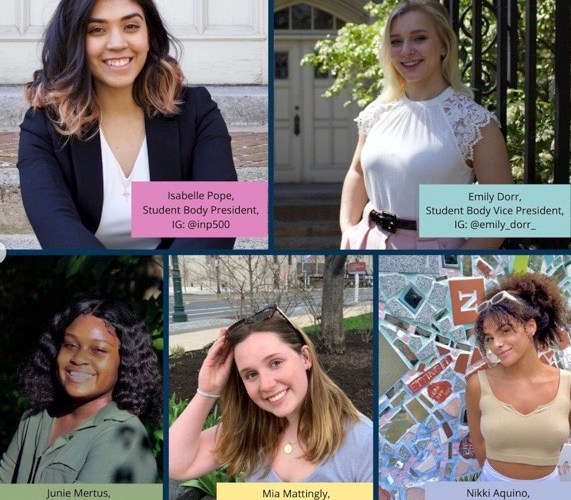
Elections for the Students’ Government Association (SGA) for the 2021-2022 academic year election were held from 8 a.m. on Friday, Oct. 22 until 6 p.m. Voting for the student government was conducted using an online survey, which each student received via email. On each screen of the survey, the voter clicked the photo of the student they wanted to represent for the executive board position. The offices up for election were student body president, student body vice-president, secretary of academic affairs, secretary of business affairs and secretary of public affairs. Isabelle Pope, Emily Dorr, Emily Gaboriault, Junie Mertus, Mia Mattingly and Nikki Aquino all ran for the various positions. Candidates made election campaign videos that @lasallesga posted on their Instagram account. 

The results of the election were announced on Oct. 23. The members elected were Isabelle Pope as student body president, Emily Dorr as student body vice-president, Junie Mertus as secretary of academic affairs, Mia Mattingly as secretary of business affairs and Nikki Aquino as secretary of public affairs. 

President Pope said “It was a good race and I am glad that people took the initiative to run for positions after a difficult year with COVID. I am also really excited to see how a group of strong women in SGA leadership positions is going to impact our year this year! We still need to officially appoint a chief of staff and deputy chief of staff, as well as a director of diversity, equity and inclusion and I’m confident that with a full e-board we will be able to accomplish more this year, now that we are on campus.” Mia Mattingly also said she is “super excited to take on this new role in student government as secretary of business affairs because I feel like in this position I can help take initiative within the association and lead it in a direction for more student engagement all while helping with the financial aspects behind the scenes.” The Students’ Government Association will be holding class senator elections on Oct. 29. 

SGA News Brief: Elections

News

News brief provided by Keri Marable on behalf of La Salle Students’ Government Association 

Header Image: La Salle SGA

This October, the Students’ Government Association (SGA) will run elections for the elected representative positions. These positions can vote on issues during SGA meetings. These positions include all senator positions and the executive board.

SGA is the official representative of the student body to the administration. One of three students’ governing bodies on campus, SGA advocates for a better student experience on campus, as well as hosts fundraisers and events. They consider any full-time student at La Salle as a member of SGA and welcome anyone to join them at their general assembly meetings on Tuesdays at 9 p.m.

The e-board positions president and vice president require that a student have been a part of the SGA e-Board for at least one year. The other elected e-board positions are only available to those who have been a member of SGA for a year. The only e-board position open to anyone without experience in SGA is the Director of Diversity Equity and Inclusion, which is appointed via application.

Election voting for the elected e-board positions is Oct. 22 from 8 a.m. to 6 p.m. The e-board positions currently up for election include student body president, vice president, secretary of academic affairs, secretary of public affairs, chief of staff and deputy chief of staff.

SGA considers the Student Body president as the Chair of the Executive Board and appoints senators to committees. The president is also the tie-breaking vote in the senate. They attend University Council and various Board of Trustees meetings as well as stay informed on activities within SGA and on campus. They employ an appointed chief of staff and visual direct line of communication between the president and administration. The president also delegates and supports e-board, senate and members of the student body.

The Student Body vice president works closely with the president. They attend relevant meetings together and the vice president assumes presidential duties when needed. They also prepare a calendar and budget with the secretary of Business affairs. The vice president also employs an appointed deputy chief of staff. They are the chair of general meetings and creator of general meetings PowerPoint slides.

The secretary of academic affairs attends academic curriculum-based meetings and committees to take notes and report back to SGA. They support and collaborate with the College Senators and their initiatives within their prospective colleges. They act as the liaison between the students/SGA and the academic program leadership as well as working directly with the provost.

The secretary of Business Affairs manages the budget with frugality by controlling all incoming and outgoing cash flows. They promote any fundraising ideas/programs approved by the e-board. They also utilize all resources available and gather, secure and re-distributes any funds brought in via these fundraising methods. They create funding proposals for all events that SGA holds that require a cash outlay in any capacity to be sent to the funding board for review as completed. The secretary of Business Affairs also sits on the funding board committee and submits a new budget proposal for SGA at the end of the academic year for SGA 2022-23.

The secretary of public affairs manages all social media platforms, including **Instagram @lasallesga, Twitter @lasallesga and TikTok @lasallestudentgov. They provide a visual display of SGA initiatives on campus and frontline communication online between the student body and SGA. *A demanding role

The chief of staff attends and takes e-board meeting minutes and attends any relevant meetings when asked. They work closely with the president, including on any initiatives they ran on. They also continue in their duties as a senator/representative.

The deputy chief of staff attends executive board meetings and any relevant meetings when asked. They also take general meeting minutes and handle attendance to be sent to the advisor. The deputy chief of staff works closely with the vice president, including any initiatives he/she/they ran on. They also continue in their duties as a senator/representative.

The required qualifications for president and vice president include having a GPA equal to or greater than a 2.75 and must have served on e-board for a year. The required qualifications for the other e-board positions include having a GPA equal to or greater than 2.75 and must have participated in SGA for at least one year. ALL Elected e-board Positions must not be on disciplinary probation, form a petition (50 signatures) due on Oct. 18 and be a full-time student.

For more information on what must be done for elected e-board positions, please contact Isabelle Pope at popei1@lasalle.edu.

Another position students can run for is Class Senator. Any full-time student can run as a class senator. Election Voting for class senators is Oct. 29 from 8 a.m. to 6 p.m.

Class Senators vote on bills, legislation, money allocations and various other items at General Assembly meetings. They represent and advocate for the ideas and needs of their respective class and are chosen by election. The required qualifications for Class Senators include having a GPA equal to or greater than 2.50, must not be on disciplinary probation, form a petition (25 signatures) due Oct. 25 and be a full-time student.

SGA also has two other voting representative positions available by application only. One of these includes the College Senators, who represent each one of the colleges on campus.

Applications will be made active on October 1. The deadline for these applications is Oct. 22 at 6 p.m. The College Senators represent each of the colleges at La Salle (Arts and Sciences, Business and Nursing and Health Sciences) as well as advocate for problems and ideas for certain colleges rather than class. They are voting members chosen by application.

College Senator requirements for qualification include having a GPA equal to or greater than 2.50 and must not be on disciplinary probation. College Senators must submit the application found on SGA’s instagram on Google Forms by Oct. 22 at 6 p.m.

The other position accepted via application is the Executive Board’s Director for Diversity, Equality, and Inclusion who works to make the campus more inclusive for our diverse student population. Applications will be made active on Oct. 1. The deadline for these applications is Oct. 22 at 6 p.m.

The Director of Diversity, Equity, and Inclusion works closely with the heads of the Multicultural center in promoting events and addressing societal microaggressions. They create a small task force of members of the student body to address cultural differences and injustices that need to be brought to attention. They also promote voter engagement amongst eligible students, currently an 85 percent voter registration, highest in Philadelphia. The Director of D.E.I fully utilizes La Salle’s diverse culture and helps to foster a more comforting home for students of ALL races, ethnicities, gender identities and orientations, abilities, religions, socioeconomic status, etc.

The required qualifications include having a GPA equal to or greater than 2.75. *Students of historically marginalized identity are encouraged to apply* Candidates must submit the application found on the SGA’s Instagram on Google Forms by Oct. 22 at 6 p.m.

If you have any additional questions, please contact Kyra Spoto, the Election Committee Chair, at spotok@lasalle.edu or Isabelle Pope, the SGA president, at popei1@lasalle.edu.

Be sure to follow SGA on all social media to keep updated with the election process as well as future events and meetings for SGA.

La Salle University 2021 Honors Convocation

News

Kylie McGovern, Editor 

Timothy O’Shaughnessy at the virtual Honors Convocation 

On Thursday, Oct. 7 nearly 800 La Salle University Students were honored for their academic achievements at the Honors Convocation. Students who achieved a cumulative GPA of 3.50 and above with a minimum of 24 credit hours as of the start of the Fall 2021 semester were celebrated on Thursday. Qualifying students and their families were cordially invited to attend this year’s Virtual Honors Convocation on Thursday, Oct. 7 at 5:30 p.m. via email by the Provost. 

The convocation started with a welcome from the interim provost and vice president of academic affairs Steven Sicnolfi, Ph.D. Next, Father Frank Berna, Ph.D. of the religion and theology department led a prayer and invocation celebrating the accomplishments of the La Salle students during the particularly challenging time of the COVID-19 pandemic. The interim president Timothy O’Shaughnessy made his remarks welcoming friends, families, special guests, and students to the convocation to honor the students. President O’Shaughnessy ‘85 explained that “we are proud to gather today to honor our students who have achieved extraordinary academic success in the Lasallian community.”

 In addition to honoring students this year, La Salle University conferred an honorary degree to a distinguished Lasallian, Nelson J. Perez, Archbishop of Philadelphia. Archbishop Nelson J. Perez explained that he is filled with great joy to be able to celebrate the academic success of the La Salle students. Archbishop Nelson J. Perez also explained how he was inspired by the environment at La Salle in his time teaching theology and psychology here at La Salle. 

Following the presentation of the degree to Archbishop Perez, Steven Siconolfi, Ph.D. presented the distinguished faculty. Mary Wilby, Ph.D., MSN, CRNP, ANP-BC, R.N. of the school of nursing was presented with the 2021 Distinguished Lasallian Educator award. Then, Susan Dixon, Ph.D., an art professor, received the faculty distinguished scholar award. Following that award, Dr. Thomas Blume Ph.D., LMFT, LPC received the faculty distinguished service award. Dr. Catilin Taylor Caitlin Taylor, Ph.D. was then presented with the De LaSalle institute distinguished teaching award for full-time faculty. Following Dr. Taylor’s award, Reg Kim was presented with the De LaSalle institute distinguished teaching award for part-time faculty. Finally, Dr. Jennifer Kleinow Ph.D., CCC-SLP received the 2021 Lindback distinguished teaching award. 

Next, each school and its dean were recognized. First, the School of Arts and Sciences dean Pamela E. Barnett, Ph.D. presented the students in her school being celebrated. Then dean Yusuf Joseph Ugras, Ph.D. presented the School of Business’s recognized students. Lastly, the School of Nursing and Health sciences dean Kathleen Czekanski, PH.D., R.N., CNE those Nursing and Health sciences students being recognized. Dr. Steven Sicnolfi then gave a brief conclusion followed by the alma mater.