Scholarship confusion sparks student advocacy at La Salle

Editorial

Editorial Board

Since the beginning of the fall 2025 semester, several students at La Salle have voiced concerns about how their financial aid packages have been poorly handled–specifically regarding the treatment of scholarships. According to the students affected, allegedly, some scholarships awarded from department donors or La Salle affiliated scholarships with external donors are being substituted for existing aid rather than added on top of it. This non-stacking practice results in students stating that they are not receiving the full financial benefit that they have expected.

While the university’s financial aid policies are designed to comply with federal and institutional guidelines, students are asking for more transparency and clearer communication. Students express that they are not often able to get a speedy explanation from financial aid office personnel, and/or come to find a solution to solve the issues outlined on their tuition bill. Some have expressed confusion over why merit-based awards are offsetting need-based aid, especially when both were earned independently.

In a conversation with Greg Nayor, La Salle’s Vice President of Enrollment Management and Marketing, Nayor clarified what it means when a scholarship is stacked or swapped. Nayor stated, “Scholarships are applied to a student’s overall financial package by either adding it on top (“stacking”) of all applied financial aid (federal and state, institutional, outside scholarships, etc), or where appropriate, replacing previously awarded institutional financial aid (“swapping”) with an endowed scholarship. It is important to note that students cannot receive more financial aid than the overall cost of attendance.”

Students who received scholarships at the end of the spring 2025 semester have been particularly affected by this issue. It has affected students across different departments, including accounting, athletics and political science. Specifically, political science recipients of the Robert J. Courtney, Ph.D., ’41 Scholarship and Byrne Scholarship have dealt with this issue firsthand.

The Courtney Scholarship, according to an article on La Salle’s website, states, “The endowed scholarship is in honor of long-time professor Robert J. Courtney, Ph.D., ’41, and goes to political science students who have shown academic excellence, dedication to public service, and demonstrated unmet financial need.”

Past recipients, per the political science department, who have received this scholarship have had it stacked on top of their other merit-based scholarships. Recipients as of last year, including the subject of the above article, Lindsay Wagner ’25, have had their scholarships stacked. As of this year, students are no longer receiving this scholarship stacked. Instead, it is getting swapped for their other merit-based scholarships, essentially not giving any additional aid to the students–even those who still have a sum of money owed for tuition each semester.

Senior Allie Ringsdorf is one student who received the Courtney Scholarship for this academic year and has dealt with the repercussions of these changes without prior notice.

“I received my fall billing statement over the summer, and I noticed that I owed more for the fall semester than I did in the Spring,” explained Ringsdorf. “I had grown to expect tuition hikes or additional fees each semester, but I received a scholarship a few months prior. So why did my situation get worse? The previous aid that I received was reduced and the Courtney Scholarship filled the hole, making my total aid package the same amount of money. When I received the scholarship in the spring, I was given the impression that I would be receiving additional aid of up to $4,000 over the next academic year. I did not feel the financial relief that I was anticipating for the last few months. My elation quickly turned to confusion and helplessness. I reached out to friends, fellow recipients, faculty, and financial aid for answers, but I received competing responses as to why I was not receiving additional aid. After what felt like a tornado ripping through my mind, I felt helpless as my situation remained unchanged.”

Similar to Ringsdorf, students across campus have expressed frustration over the lack of clarity and consistency in how scholarship and financial aid policies have been applied this term, given that they hadn’t received a formal announcement regarding scholarship changes or eligibility to receive them.

Another student wishing to remain anonymous added, “It feels like we’re being penalized for earning scholarships. That’s not how it should work.”

Additionally, students receiving the Byrne Scholarship have been dealing with the same issue. As per another article about a past recipient on La Salle’s website, “The Byrne Scholarship recognizes an outstanding junior and/or rising senior political science major who emphasizes the study of United States Government and politics while exemplifying their commitment to their academic achievement and learning.”

Like the Courtney Scholarship, past recipients from last year including Intizorhon Fataeva ’24 and students before Fataeva have received the Byrne Scholarship stacked atop their other merit scholarships. Students are wondering why this change occurred, when it was enacted, and why there have been no formal announcements made to both them and their department heads.

General billing confusion has only added to the frustration. Several students have reported receiving statements throughout their time at La Salle that do not reflect their expected aid, leading to panic and last-minute calls to the financial aid office.

When asked about the frequency of billing errors, Nayor stated, “Actual billing errors are actually far less common than one would think. In fact, I would say it is relatively rare for billing errors to occur, so much so that, I cannot quantify it.”

However, many students still face issues with their billing statements and forms. “Financial aid has messed up my bill since I started freshman year, and now I’m a senior,” criminal justice major Patrick Malloy said. “They add more stress than my classes to my life.”

“Financial aid messed up my 1098 tax form, so I went to the office, and they told me that they didn’t know what to do because the person in charge of the 1098 tax form permanently left,” said senior Koh McGinn. “Then they told me to call the federal government or ask my accountant to see if they can fix it even though it was financial aid’s fault, and they never fixed it to this day.”

In fairness, the financial aid office has complex tasks: balancing limited resources, following regulatory requirements and tending to individual student needs. It would make sense that some of these billing errors may have to do with the fact that a bill may be correct at the time it is issued, yet wrong at the time it is viewed by the student due to external circumstances (promissory note left unsigned, unaccepted loans, not registered full-time, etc).

Nayor emphasized that improving the student experience remains a top priority, and there have been actions taken to improve the financial aid office operations, as he has only been working in this role at La Salle for two years.

“Since I have arrived, a focus on the vast improvement of the overall experience for students and families has been my primary responsibility with financial aid and student accounts,” Nayor said. “We merged the areas to create a Student Financial Services shop, with the idea of having everything in one place. We hired 2 frontline customer service professionals, implemented a new ticketing system, added bilingual (Spanish) financial aid counselors, and more. We still have work to do on providing a better service for students and will continue to get better and better each year.”

VP of La Salle’s Student Government Association Jya Marshall responded to the situation with a broader call to action. “It’s essential that we, as student leaders, continue to advocate for the needs and expectations of our peers. The financial aid process is incredibly complex, as each student’s package must be carefully tailored to their unique circumstances. Because of this, transparency, openness, and accuracy are crucial, especially given the financial burdens higher education can place on students and their families. Students who excel academically should receive the complete benefits of the scholarships, endowments, or funds they’ve rightfully earned, in addition to what has already been credited to them in accordance with each scholarship’s provisions. Upholding La Salle’s founding principles ensures that all students can experience the transformative, Lasallian education that prepares them to lead purposeful and meaningful lives, and of course, being known for more.”

Students seeking support with their financial aid or billing concerns should turn to La Salle’s Student Financial Services office, located in the lower level of the Lawrence Administration Building. As stated previously, the office has recently undergone improvements to streamline assistance.

For help, students can email studentfinancialservices@lasalle.edu, call 215-951-1070, or submit a request through the online portal, Starfish. These resources aim to provide clarity and timely assistance for questions about scholarships, aid packages and tuition statements. As the university continues refining its processes, students are encouraged to advocate for transparency and reach out when issues arise. Ensuring access to accurate information and equitable aid is essential to upholding La Salle’s mission of providing a transformative, Lasallian education.
Walk A Mile in Her Shoes was problematic: let’s talk about it

Editorial

Emily Allgair and Maya Martin, Co-Editors-in-Chief

Originally started to combat and raise awareness for gender-based and relationship violence, the Walk A Mile in Her Shoes event has been held around mid-April since 2022 here at La Salle. The men of La Salle’s campus were invited and encouraged to put on a pair of red high heels and participate in the nationwide movement to walk a mile (approximately from the Hansen Quad to the Founders Building and back) as a means of showing support for survivors of sexual assault. This national organization and its event of the same title were started in 2001, and it was compelling in the early 2000s, but let’s be honest, it was problematic, especially in 2024. From perpetuating stereotypes to watching accused perpetrators participate, this event didn’t reflect La Salle University as an active environment for advocacy and support. The event will not be happening this year, and let’s discuss why we support that decision.

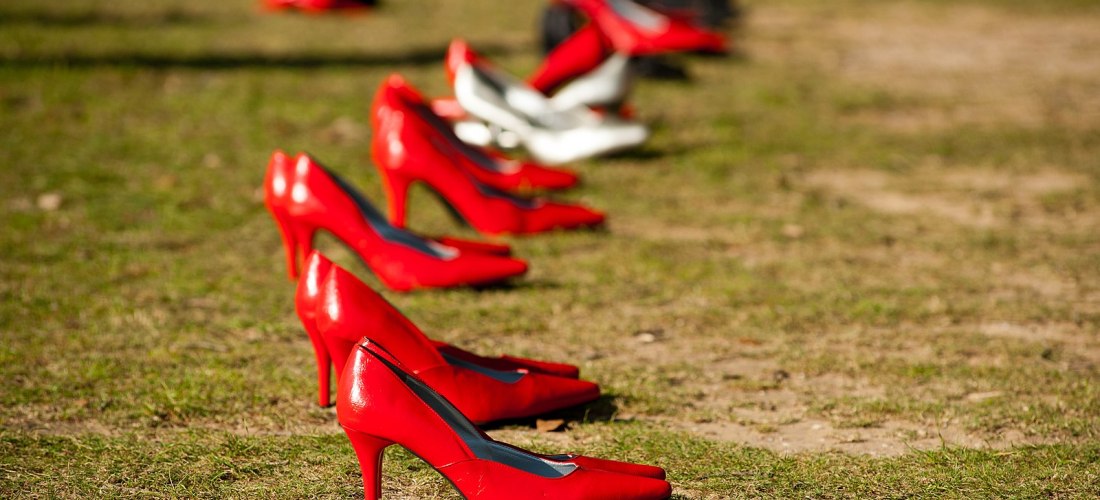
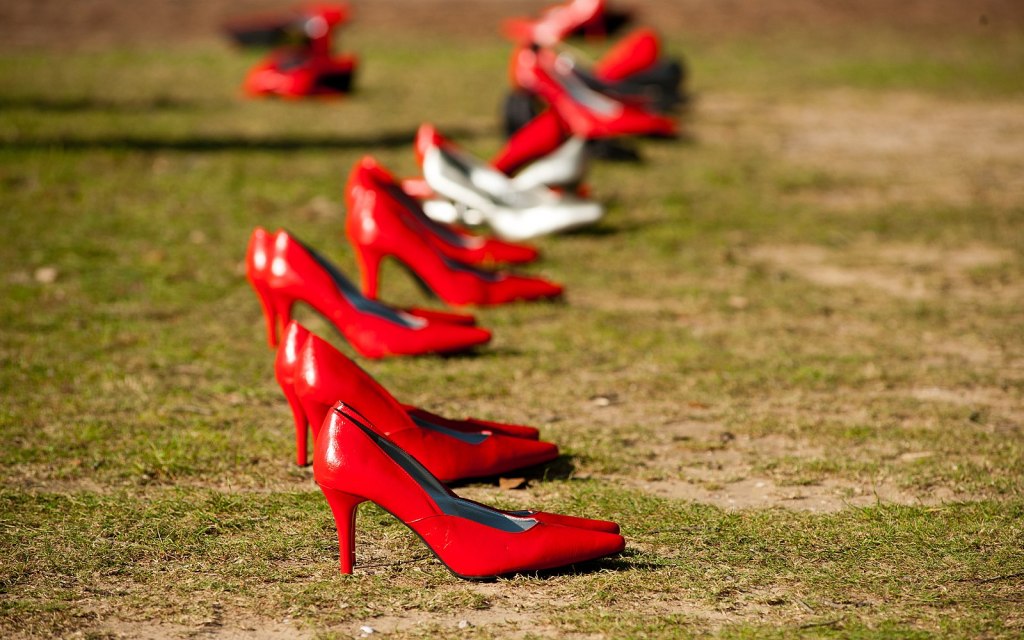
Red high heels via WikiCommons

The Walk A Mile in Her Shoes event first and foremost perpetuates the idea that relationship violence is a women’s-only issue, reinforcing outdated gender roles in regards to sexual assault. This blocks men, non-binary and trans people from being a part of the conversation surrounding sexual assault from a survivor standpoint. Basically, this event says that the “supportive community” of advocates is not a safe space for people who are not cis men to participate in, and in this case, to walk in heels to show their support. 

Second, the main action of this event (walking awkwardly in high heels) perpetuates the idea that what someone is wearing impacts their likelihood of being assaulted. Not only does this place blame on the survivor, but it is also statistically inaccurate. According to RAINN, eight out of ten rapes are committed by someone known to the survivor: 39% of rapes are committed by an acquaintance while 33% are committed by a current or former romantic partner. Not only does the central activity of this event promote inaccurate beliefs surrounding the perpetration of sexual assaults, but it also makes us wonder why people are participating.

“I think an event like Walk A Mile in Her Shoes can be kind of unsuspecting in a way,” said La Salle Junior Peter Re. “When I went into it I just thought it was going to be a fun time and support a good cause. And from my experience that’s all there was to it.”

Those who participate might care about the cause, but some students have questioned the silly nature of walking in bright red high heels with their friends. And some might ask if the intentions behind participation matters if the cause itself is good, but it really boils down to the message that is created by the participants, not the message that was intended. 

In fact, most of the men who have participated in the Walk A Mile in Her Shoes event are part of either Greek life or athletics – two organizations that are historically the ones most accused of perpetrating on college campuses around the nation. It is important to note that some coaches, staff, and athletes on campus are working to end sexual violence on campus, but that does not change the fact that the hive-mind mentality and societal pressure of some of the groups within these organizations creates a culture that needs to be challenged, especially in 2024. 

As for athletics, the NCAA is aware of this issue, and requires La Salle athletes to meet with the Assistant Director of Sexual Misconduct Advocacy and Education once a year to go over the school’s sexual misconduct policy and resources. And same goes for those in Greek life: they have an annual meeting to go over the school’s sexual misconduct policy and resources, but that doesn’t mean that the small percentage of problematic individuals within each organization don’t perpetrate sexual violence. An exponentially higher number of assaults happen within the setting of Greek life parties than in other events on and around campus, so why give a platform to the spaces that allow for the hive mind that can lead to such violence? What message does that send?

Rather than host an event with the potential to foster mixed and even wrong messages about relationship violence and sexual assault, the Associate Director of Sexual Misconduct Advocacy and Education here at La Salle, Maggie Szeder, sat down with us to talk about what she and her team are planning to do moving forward. 

The events Szeder plans on hosting during Sexual Assault Awareness Month includes a Light Up the Night event and, of course, Denim Day. Both of these events create a space for advocates to support without perpetuating stereotypes – a space where men, trans and non-binary people can also clearly be involved.

“So when you think about violence prevention, a lot of the push recently has been to follow a public health model. So, change can happen at the individual level, the relationship level, the community level and the societal level. So there are risk and protective factors at each level,” said Szeder. 

While the other risk factors can be found here, a strong sense of community is a big protective factor when it comes to violence prevention. Enhancing the sense of community that can be found within La Salle University is a major key to preventing sexual misconduct and violence, as well as other types of violence.  

“On campus I think there are some community groups and some close-knit social ties, and we want to extend that. We want to use those connective ties to sort of wipe out some of the problematic behaviors, as well,” Szeder added.

Overall, we, as a community, want to see student leaders standing up to sexual violence, and that message wasn’t getting across walking around in high heels. There will be a pursuit of creating and spreading events throughout the year to participate in and show awareness for advocacy and support for survivors. In making this a year-round commitment, it will be easier for students to participate in Sexual Assault Awareness Month activities during April. 

Moving forward, we want everyone in the student body, not just those involved in Greek life and athletics, to be more aware of how they shape the culture and continue the conversation around this difficult yet important topic.

While the official list of activities for this April’s Sexual Assault Awareness Month has yet to be confirmed, you can expect different events that reassure and promote advocacy, consent and healthy relationships. Check out the article that details these events, which can be found in the News section of this week’s publication. 

For how to be an active participant in La Salle’s community of advocates, Maggie Szeder and the Sexual Violence Prevention Education Committee welcome ideas and feedback on how to create a safe and encouraging environment for all survivors and advocates. You can contact her at szeder@lasalle.edu for more information.

Editorial: student opinions about public safety at La Salle

Editorial

Editorial Board

Disclaimer: Opinions in this article are that of the contributors of the editorial board which is composed of three different students. When we write “I” or “me” this does not reflect all of our opinions, but rather just one of our opinions. These opinions and experiences do not represent the greater Collegian Staff, the La Salle Student Body, or La Salle University as an institution. This editorial was written as a means of sharing thoughts and personal experiences as a vehicle to start a conversation about public safety at La Salle. This article is not the only opinion about public safety and its contents are not exhaustive. An editorial is simply “a newspaper article written by or on behalf of an editor that gives an opinion on a topical issue” (via Oxford Languages). 

Anytime I tell someone I go to La Salle I usually get similar responses like “Ugh the neighborhood,” “Isn’t it scary there?” “Hope you don’t leave campus at night,” etc. Perhaps you’ve heard similar responses or said these things yourself. I have come up with a pretty routine answer like “I have never had any issues with crime in the area. It exists, but violence is usually over interpersonal issues or in a struggle for someone’s property.” That being said we have all gotten the Citizen app notifications about someone being armed within a mile radius or La Salle alert Texts about crime in the area. 

I have been fortunate enough not to experience any type of crime interactions while attending La Salle, but I know that is not everyone’s experience. I believe that La Salle has a duty to protect students from any harm (crime-related or not) while they are on campus or coming to and from campus, and students have a duty to take advantage of the public safety resources that are available to them. But, I do not think La Salle is responsible for crime at large that students may hear about or be bystanders to off-campus. 

For resident assistants (RAs) and community assistants (CAs), campus safety is of utmost importance. In order to even be an RA or CA at La Salle, one has to train for two weeks before residents move in and the school year begins. Within training, the RAs and CAs work with public safety in different workshops to learn how to maintain safety on campus and help students in emergencies.

That being said, as an RA myself, I do feel safe on campus. I have a good relationship with public safety, I am educated on all of the safety features we have on campus and I know how to respond to on campus emergencies. However, I feel a big problem with safety we have on campus is that students do not know what safety features the campus has to offer and what the proper steps to take in an on campus emergency are. I myself luckily do because of the training I have as an RA. However, if I was not an RA, I cannot say that I would have access to all of the safety knowledge that I am equipped with.

I know that La Salle has offered some public safety seminars at the beginning of the school year for freshmen, however, most freshmen I have spoken to from this year and last year were not aware of these trainings or did not feel they needed to go. I believe that if La Salle somehow made the information presented in these meetings more accessible for students, then it would be more influential.

For example, one important piece of information I learned during RA training is to call public safety during an on campus emergency before calling 911. This is because when you call 911, responders do not know their way around campus, what building names are and the locations of buildings. If students call public safety first, public safety will send their own officers to the scene, call 911 from their end and personally direct first responders to the scene, so that they can get to the location of the emergency as quickly as possible. Without learning this knowledge from RA training, I would not have known to do this.

Another piece of advice I would have for students living on campus who are looking for more safety resources is to call the RA on duty number while in residence halls. The RAs and CAs are on duty every weekday from 6 p.m. until 8 a.m., and every weekend there is an RA on duty 24/7. The specific RA duty number for each building is posted on flyers throughout all of the residence halls and can be called in case of any problems. All RAs and CAs are trained to respond quickly in cases of emergencies and know what resources to use and who to call in case of these emergencies.

Having lived in St. Miguel for two years, I would encounter La Salle security at least twice a day – once leaving in the morning, and once coming home at night. On weekends, I would invite friends to come over and hang out in my townhouse, which of course is normal for a college student. For guests outside of the community of La Salle University, it makes sense to register them for a guest pass, even though it was kind of a pain to go through all of their information days before they came. For La Salle students, however, having to jump through hoops to have access to the campus that you pay for is annoying. So of course, back when there was a turnstile in townies, it became less of a hassle to double swipe, pass IDs back or use your roommate’s ID – less of a hassle until you got caught. 

La Salle would then make you write a letter of apology, make a poster on why not to do what you are being punished for and other persecutions that may or may not fit the crime. But, of course, not everyone is punished the same way. Students who have been caught passing back an ID by security have received emails from the school telling them about having to do the whole nine yards as punishment. Which, fair, the students have broken the rules, and living in an urban environment, we should understand that the rules are in place to keep us safe. But what happened to the other friend of mine who also passed back an ID? And still got caught? Nothing. La Salle was too busy to stay on her about making the poster and writing the paper. This leads me to my biggest qualm about La Salle’s persecution of breaking the rules.


If everyone were to be punished equally, there would be no true issues with how the school handles their punishments. But when different people are treated in different ways, even if there is no true bias besides the time of your crime, that is when things begin to get messy. Another issue is when the people doing the punishment handle the seriousness of the jobs differently – once, I was coming home to the townhouses when the security guards (not students, but those hired by the school) were smoking in the security booth. My guest at the time went to slide her ID to them and when they opened the little door, smoke poured out. And yet we are the ones getting in trouble for ‘sneaking’ La Salle students with valid student IDs into our homes? 

My sophomore year there was a break-in inside of the La Salle Apartments and I know a handful of people whose cars have either been broken into or stolen on La Salle’s campus throughout my four years here. The Annual Security and Fire Safety Report describes “the University’s policies and programs designed to aid in keeping the community safe; to share information on crime and disciplinary referral statistics, emergency preparedness and planning; and fire safety, fire statistics, and other fire-related information in residence facilities.”

I do understand why there are certain rules put in place. Although they may be annoying to go through, they are put in place to protect us. We don’t go to a school in a college town, we go to school in an environment within a city, in a neighborhood that belongs to people beyond La Salle’s immediate community, so of course these rules make sense. But when students aren’t allowed in certain areas of their own campus or when different security guards and administrators handle punishment differently, it becomes hard to want to follow these rules.  

Crime in Philadelphia and society in general is an issue much larger than La Salle University. Factors like poverty, social environments, and family structure all influence crime. According to the United States Department of Justice, in “ 2008–12, persons living in poor households at or below the Federal Poverty Level (FPL) (39.8 per 1,000) had more than double the rate of violent victimization as persons in high-income households.” Another study shows an explanation for the inequality-crime association as being “compositional: individuals offend when their own absolute level of resources is desperately low, and the effect of increasing inequality is to make such desperation more prevalent.” These factors behind crime seem to me to be things La Salle University is in general not responsible for.

The zip code that hosts La Salle University encompasses Logan, Ogontz and Fern Rock. People with real lives live around La Salle – not just your favorite frat boys and women’s sports team. The median income of Logan, Ogontz, and Fern Rock is just about $34,651 according to income by zip code. For some perspective, La Salle’s tuition is $34,270. 

If poverty is truly an indicator of why crime happens, perhaps La Salle University ought to look beyond busting students for underage drinking, parking tickets and public safety officers scrolling on their phones and look to the causes behind crime and public safety around our campus to make a true effort in ensuring public safety. 

In addition, in my own personal experience, I think that among the student body, there is a mocking or disrespectful attitude toward public safety issues in the area. I think that students almost think it is funny to get Citizen notifications about someone being armed with an object like a chair, and I am sure I once joined in with this banter. But, one day we as students will move away from 20th and Olney, but crime and violence will still exist near La Salle and in the larger Philadelphia area. This issue is deeper than La Salle public safety and student jokes about going to school in *insert derogatory names for the area*. Crime is a societal issue that is beyond La Salle, Logan, Ogontz, Fern Rock and Philadelphia. 

For some, living in Philadelphia or any urban environment can be scary from time to time because of the nature of crime in a city. I can confidently say that while on campus I do feel safe. I give much of that credit to my RA training for providing me with precautionary and emergency resources that make me feel safe. So, I think the most beneficial thing we can do as a school to make sure our students are safe on and off campus is to educate everyone on campus safety knowledge.

“COLLEGIAN PODCAST” EPISODE 19: Barcelona & The Butterfly Effect with Mia Mattingly

Podcast

On this week’s episode of The Pod, Kylie and David welcome guest and friend, Mia Mattingly, to talk about her extracurriculars and summer travels. From Spain to student government, join Mia as she walks us through the scholarly life of a female student-athlete here at La Salle.
Credits:
Hosts: David O’Brien, Kylie McGovern
Video: Emily Allgair
Guest: Mia Mattingly
Originally published Sept. 12, 2022

Looking back at La Salle’s return to face-to-face learning — Editorial

Editorial

The Editorial Board

Header Image: La Salle University

The 2021-2022 academic year marks La Salle’s first full year back, with events, breaks and studies following the traditional cadence that was expected from an in-person Lasallian education. While the spring 2021 semester was the La Salle community’s first re-introduction to in-person learning and living, it was very much a bumpy ride and a Band-Aid solution. We were here at the end of the last academic year, but we weren’t really here. This year, we came into our own again, and for some of us, got to experience the school as it was intended for the first time.

Now, as the members of the Editorial Board are studying for their final exams, packing up, getting ready to move back home for the summer or isolating to stay safe during this last minute COVID wave, we wanted to look back on this year, and celebrate the fact that we made it a whole year, not just without being sent home, but with a great sense of community and pride that we came together to make things work in a time filled with so much uncertainty.

As the new Editorial Board found its voice, we frequently commented on the progress the university was making in terms of COVID-19 cases, behavior and understanding, and so many changes came in just two semesters.

We eventually stopped writing these pieces because a general sense of comfort fell over the university, particularly when we followed the city in lifting the mask mandate, and things have felt very uplifting since then. But, being our last editorial of this year, we wanted to look back and just discuss everything we felt and everything that happened in this whirlwind of a year.

Perhaps the biggest change to on-campus life this year was in-person learning. While some of us had in-person classes at La Salle in the spring of 2021, the fall 2021 semester opened in-person and hybrid classes to so many more people, and many more professors moved away from online only modality. Some members of our board experienced their first in-person classes during this semester despite already being sophomores at La Salle.


Relationships had to be rekindled, and for underclassmen, these people who previously occupied a small box on their computer monitor were now living, breathing members of their lives. Beyond this, heightened vaccination rates eased many students’ minds, particularly those who were not keen on in-person learning in the spring of 2021.

Even though our desks were pushed far apart, we had assigned seats, we didn’t recognize each other or couldn’t hear each other in masks, it was still great to finally get to see so many familiar faces and be sat in these places that for some of us felt like home, and for others, would become a home away from home. Stopping by Saxby’s before class, passing someone you hadn’t seen since March of 2020 in the Hayman hallways or checking the seating chart and seeing new faces you’ve never met in person, only on a Zoom screen, the feeling was incredibly powerful.

But, it wasn’t just in-person classes, it was on-campus life. People were living on campus in the spring of 2021, but for a majority of students, that meant staying in your dorm or townhouse and seeing the same three or four people every day, afraid to venture out to meet others, either because rules were unclear, COVID was coming in waves or the risk of losing that small bit of human interaction because you went to the wrong party was just so terrifying. 

This year, with the low levels of cases being reported toward the end of the year, the university trying to promote some in-person events and moving onto campus in the summer instead of the dead of winter proved to be the push that people needed to get out and be a community again. We remember meeting up with our friends again, taking our masks off and knowing that we would be safe and just ready to be college students again in every sense, not just academically.

While events like the on-campus formal dance may have pushed the limits of our comfort in terms of the COVID risk, others like the school’s annual Homecoming celebration, wine tastings and weekly Late Night La Salle events went off without a hitch. Clubs were allowed to meet in person again, in some cases, with some even hosting events to bolster their numbers in a time when most clubs are bleeding seniors and not finding any newcomers.

Image courtesy of Jakob Eiseman
The Collegian‘s office in the Union that was once a place of collaboration and paper editing returned to its roots this year.

For us, returning to the Collegian’s office in the union meant more than we could have imagined. It’s dingy, it’s dusty and it took us about 10 full hours to clean out after over a year of being uninhabited, but the office was shaped up, and we returned to create the paper. We met as a group, some of us for the first time ever, and were able to bounce ideas off of each other, plan future issues using white boards, use body language to describe how we felt and avoid all of the awkwardness that came with meeting over Zoom, and the paper was so much better off for it.

Just something as simple as being able to have a club meeting in person or sit in Blue and Gold or the Union and have lunch with people who weren’t our roommates made the campus feel alive and vibrant, even on days when it was dead compared to its past peak. 

The important thing to remember, is that through all of this, vaccination and proper masking were the first lines of defense to us maintaining a proper campus environment, but people being selective with their social groups, avoiding crowded parties and public places when applicable, testing and properly reporting results to quarantine with accordance to guidelines helped us truly come through to where we are now. 

The school can only give us so many freedoms before we have the chance to ruin it — but we didn’t ruin it. People knew how important it was to stay COVID safe, so even when we went out, it was with people we trust, and we maintained proper social distancing or contact tracing.

The La Salle community has shown over the course of this year that it does have the ability to help restore campus to what it was prior to COVID. Through diligence, kindness and care, the La Salle community has properly dealt with the return to campus and helped restore trust in the collective’s involvement in the school both in and outside of the classroom.

As shown in classes where polled students did ask for masks to be worn, students managed to come together with little to no issues in wearing masks for those who needed to or felt uncomfortable when they were not worn. All around, even after COVID policies were relaxed, students continued to work towards helping others feel comfortable and safe during their time at La Salle.

With the exception of one time where the campus community was forced into an online modality due to case numbers, we have had no incidents or major outbreaks of note in the whole year, and we believe that, even though mitigating COVID-19 cases requires just the bare minimum amount of care on behalf of well-minded students, that we all still deserve a pat on the back.

That includes our amazing professors, who risked their health day after day to come in and teach. Some professors were open about the fact that they were at risk, or lived with those who were, and needed students to be very strict on mask wearing and contact tracing for the safety of their academic leaders, and the La Salle community was staunchly accepting of this.

As far as checkpoints go, we made it so far that the testing center was able to downsize and move out of Treetops Cafe, as the capacity needed was reduced by so much, we were able to drop the mask requirement on campus, even in the classroom, making classes seem much more personal and familiar now, with many of us unmasking in front of each other for the first time in years.

While we are unfortunately going through a small COVID wave right now, with about 30 cases being reported this week, for most of this semester, the average weekly case count was less than 10, reporting zero cases for several weeks. In total for this whole second semester, we have only seen about 300 cases and around 75 percent of the campus community is fully vaccinated with their booster.

Get boosted if you haven’t already.

We can feel the overall spirit of La Salle rekindling. Students are on the quad and hanging with classmates in the Union. Some of us on the Board spent our first year completely online, and this year has shown us why we chose to come to La Salle in the first place: the Lasallian people and community. These people are the Christian Brothers, the professors who know your name and the students you have come to know so well. The chapel bell rings and all we can think is “we’re back.” 

Obviously, we still have many hills to climb, and the university itself has taken a significant hit financially and in terms of enrollment. Dr. Daniel Allen has been brought in to steer the ship, and the economic repercussions of the pandemic are still ravaging universities across the nation. Hopefully the search committee and board of trustees we’re correct in assuming that Allen’s fundraising skills were what La Salle needed to pull us back up as an organization.

But, as a community, we’re here, and we’re here to stay for as long as we are afforded a place in our little corner of Philadelphia.

In an understandably pessimistic piece from April of 2021, the previous Editorial Board wrote, “Zoom classrooms are full of strangers — black screens with audio. Dorms are private spaces. The campus is disconnected. The atomization and thinning of society that we have seen in our world has been mirrored in our corner of the world on Broad and Olney. The La Salle we all remember may never make a full return.” Well, to our long graduated Collegian alumni, and to anyone who may have agreed with that sentiment at that time. We are proud to announce that we are back.

“Collegian Podcast” Episode 17: Lasallian Recaps & Words of Advice with the Collegian Seniors

Podcast

On this episode of the Pod, Kylie and David welcome Alina Snopkowski, Claire Kunzier, and Jake Eiseman to reminisce on their experiences, both at La Salle and on the Collegian editorial staff. From favorite memories to reminders on what’s important throughout undergrad, join this weeks guests as we close out our premiere season of the Pod!
Credits:
Hosts: David O’Brien, Kylie McGovern
Video: Emily Allgair
Guests: Alina Snopkowski, Claire Kunzier, and Jake Eiseman
Originally published May. 4, 2022

Broad speculation on America’s context problem — Editorial

Editorial

Header Image: The NewsHouse

At the Collegian, all of our staff writers, editors and board members are journalists. We are all student journalists who have a limited amount of time to put into our writing and our research, but we are journalists nonetheless. We are journalists because we find information, we synthesize it, commentate on it and present it in written word to an audience waiting to learn. We are the first to admit that our synthesis of information is from a unique perspective as the students of the university and that our limited time and the size of our staff limits our abilities to investigate in some cases. But, we strive to always present information to our audience in a way that reflects both the truth, and in cases where appropriate, our perspective.

Just as we are journalists who deliver this information to the readers in the capacity we have available to us, all of us have the ability to both interpret information and deliver it to others. The ideas of journalistic ethics and integrity are hot button issues, especially when discussing the modern media landscape, but in a way we all should strive to uphold that integrity. 

We as a people have an innate desire to learn, to acquire information about the things we do not understand in order to make them fit with our personal understanding of the world. When we seek out information, we would like to suggest and explain why it may be in your best interest to find sources and stories that can enrich your knowledge on a certain topic more deeply, rather than inform you shallowly about several different topics.

The Context Problem

Increasingly, rapid-fire news feeds and bite sized looks into the 24 hour news cycle are all too common. Social media, digestible news apps, headline skimming and even word of mouth will bring us to awareness on topics touching on everything from the war in Ukraine to the world of sports to celebrity drama in a matter of minutes so that when we have conversations with our peers and colleagues we have a touchstone, a place to jump off for conversation. But, how often do we miss the facts, the context or even the story itself because we have interpreted the information we have in the best way possible, but that information simply is not enough?

This editorial you are reading is broad, we cover a lot, and we hope you take some of it to heart to both better appreciate the content you take in, and also have a better idea into how to interact with at least our personal publication in a more personal manner to enrich your perspective on current events and history.

In the end, no one publication will provide you with all of the context needed to experience someone else’s story. You will never know all there is to know about the Phillies game, political hearings or the irate ramblings of crazed celebrities because you were not there, you are not the person being interviewed and you will see the events reflected on your background and understanding of the present. But this is not a reason to avoid context in favor of personal understanding. Seek out several published works on news, and if you see parts that do not line up, consider why. One publication may bring a political bias into their story, another may skip facts to create a false understanding of events and others may simply just report the raw facts but give no perspective.

Even by reading two published stories on the same event, a world’s worth of context is gained, because the overlaps are more solidified in your understanding, and the differences stand out as either additional information or perhaps questionable biases.

Reflected in Social Media

According to a Pew Research Study, 86 percent of U.S. adults said they get their news from a smartphone. With an increasing number of people primarily getting their news from social media, there is an increasing danger of misinformation, disinformation and malinformation. Social media like Instagram and Twitter have made arguably moot attempts to mitigate the cycles of negative information that tend to spread rapidly on their sites. 

One La Salle student had this to say: “Living in an age of social media, I think we are also living in an age of misinformation. In my 20 years of life I have seen immense history be made — both good and bad — and in general I have seen this history play out on social media. I remember posting a picture of the eiffel tower when a terrorist attack happened in Paris. Quite honestly, I had very little knowledge about the event and I was just posting because everyone else in my feed was too. I think this example is similar to how people use social media to post about the issues of the time like COVID-19 unresearched and in an attempt to fit in.” 

The effects of social media can be directly seen on members of the student body and their memories surrounding major events. Social media companies (Twitter, Instagram, Facebook, etc.) understand their power and are actively exercising it, perhaps in a negative or predatory manner.

On Nov. 16, 2021 Twitter created new labels for misinformation on the site. Twitter explains that they are working to help enable free expression and conversations, and would only intervene if content breaks their rules. But in cases when the rules are not broken, Twitter works to provide users with additional context like a message that reads “get the facts about COVID-19.”

However, many of us on this Editorial Board feel that these pop-up messages are not doing enough to educate the public. Users may see these alerts popping up on their posts and think it is funny, rather than the serious matter that misinformation is affecting society. 

As more people use various social media, more people are exposed to the cycles of fake news and misinformation. Twitter uses an algorithm that will show a tweet to more users if the tweet is retweeted, favorited or replied to more by enough of its first viewers. Therefore, if a popular tweet contains misinformation and users like what they see, more users will see the tweet in their timeline. Obviously it is more complex and technical than this, but generally this idea is found in most social media algorithms. Ultimately, sites like Twitter creating five word messages to attempt to combat misinformation is not enough. The organizations that control the social medium need to change their algorithm if they do not want fake news to spread. 

Censoring Falsities: Weakening Judgement

Twitter does make some attempts to censor users posting misinformation. For example, since introducing their COVID-19 guidance in January 2020, Twitter has suspended over 6,000 accounts and over 78,000 pieces of content that violated their policies. But, these suspensions create a new issue: a fear of control and censorship. 

The beauty and success of American society may not seem maintainable or even manageable at this point in time, however it should be our goal as Americans citizens to attempt to maintain its most fundamental value: freedom. Freedom of speech, freedom of press and freedom of thought are all directly intertwined. If one goes, the others are bound to go with it. Educators and journalists (including all user-generated content creators on social media) have a duty to not only our country but also to themselves to try and maintain it.

Censorship prohibits the individual from unlocking this innate need. “Truth is great and will prevail if left to herself, that she is the proper and sufficient antagonist to error, and has nothing to fear from the conflict, unless by human interposition disarmed of her natural weapons, free argument and debate; errors ceasing to be dangerous when it is permitted freely to contradict them,” said Thomas Jefferson.

Seek Context, Seek Understanding

As discussed, it is no secret that there is currently a massive issue when it comes to media and information. Whether you are talking to a white-collar professional with an Ivy League graduate education or a construction worker with a high-school education, there is a consistent feeling that the majority of Americans consume the most digestible form of media and regurgitate dogma without any evidence to back up their viewpoint. 

We are aware that across the country there is a widespread argument circulating that most Americans have become lazy when it comes to being educated. The response to this feeling by the majority of media outlets has been more than reprehensible.

While some media outlets and many individuals believe the best response to the general lack of ability or care surrounding media consumption is to make important information easier to digest, we cannot help but feel the opposite. 

The desire for knowledge is innate. The desire for education is primordial. It is the job of educators and journalists to do so. As a university filled with educators, La Salle can, should and, in many cases does, strive to do so not only for the sake of fulfilling its mission as an educational institution but also for the sake of fulfilling the intellectual aptitude of each and every student attending it. 

More importantly, though, the responsibility for seeking out the information needed to properly weigh in on something falls to the individual. Context allows this discovery of understanding. While individuals may choose the easy way out time and time again, they will make the right decision as long as it remains a consistent option. 

It is our role as journalists, our professors’ role as educators and our fellow community member’s role as members of our democracy to strive towards understanding. Bite-sized content, spoon-feeding context tags, social media bombardment and rapid-fire news are not the way to properly learn or experience the world. Censorship, though, does not fix this issue, and in fact could lead to it worsening. The only real solution to America’s context problem lies within members of the public, and it is frightening to think that the only solution we can significantly promote is to just focus your learning. 

You shouldn’t need an algorithm to tell you what to learn, and you shouldn’t have a watchdog telling you what is false. Because if you’re being told exactly what to look at, and aren’t trusted to judge truth from fiction, then what is even the point of learning? Do the work, find the context and learn what is true through your own effort.

The La Salle Collegian receives Pulitzer Prize for excellence in journalistic endeavors | Foolegian

Foolegian, Satire

Ain’t they just the greatest?

The Entire Staff of the New York Times

It was announced on March 31, 2022 that the student-run newspaper out of Philadelphia’s La Salle University, the La Salle Collegian, would be receiving the 2022 Pulitzer Journalism Prizes in Public Service, Breaking News Reporting, Investigative Reporting, Explanatory Reporting, Local Reporting, National Reporting, International Reporting, Feature Writing, Commentary, Criticism, Editorial Writing and Editorial Cartooning for their print publication, as well as the Audio Reporting award for the Collegian Podcast. A full sweep of this magnitude has never been seen before. 

Picture of Jake with no blood in his body.

President Daniel J. Allen, the president of La Salle, is taking full credit, saying that he has been a major influence on the direction of the paper for years now. When asked about how he influenced their writing, Allen refused to comment. Editor-in-Chief of the Collegian, Jakob “1,300 mg of caffeine per serving” Eiseman had this to say about their stunning victory, “I mean… yeah, I guess we’re alright. We finish uploading nearly every article after our deadlines and we barely ever have enough content to fill the paper, plus I barely care about following a proper editing process. You know what actually, I think we make every paper in existence look like a rag in comparison.”

Eiseman cites the COVID-19 pandemic as a major source of the Collegian’s success. “You know, ever since the pandemic hit, no one has been interested in writing for the paper. Our staff has shrunk to just a handful of wannabe writers making memes in the basement of the student Union, and none of our writers know how to actually conduct an interview or investigation. It’s really made us think about how to work under constraints. And you know what they say, ‘creativity is born from adversity,’ or something like that, I don’t know.”

The support system

The La Salle School of Arts and Sciences highlighted several of the Collegian’s seminal works they believe pushed them over the edge, sharing that articles like “Why you need a thneed” or “On barbershops” impacted not just the world of student journalism, but investigative reporting as a whole, diving deep into the personal turmoil that local conspiracy theorists like their managing editor David “Woe is me” O’Brien go through on a daily basis. His piece “Seed oils: A hidden danger in the American diet” is being used as an example of masterclass reporting in the communication department as we speak.

“I just speak my mind, man,” said O’Brien, “I don’t really have a process, I just kinda write whatever I want whenever I feel like it and expect everyone to think it’s funny. They’ve asked me to help with politics in the past considering my interests in public policy, but I just hate writing anything that isn’t a sh*tpost, and the Collegian respects that.”

Enrique poses for a photo after pounding back several beers Zero Sugar Monster Energy drinks.

The student pub is a large umbrella, though, and nearly every section bagged their own awards. The sports section in the Collegian rivals that of ESPN and Bleacher Report, despite being almost entirely written and edited by political science sophomore Enrique “There Are Bugs Under My Skin” Carrasco. Many faculty and members of the marketing and communication team at La Salle fell in love with Carrasco’s work when he published his piece “Opinion: Athletic department finally does something right” in which he vehemently bashes former head coach Ashley Howard with unsubstantiated claims and improper grammar to the beat of Chief Keef’s “Laughin’ to the Bank,” an idea that was just so funny that none of the Collegian staff could resist as surely it wouldn’t upset anybody within La Salle’s administration.

Carrasco is known to write dotingly of the men’s basketball team, saying in an interview with the Philadelphia Inquirer, “Yeah, if any of your staff wants to go to the women’s games and write about those, that’d be great because I’m just not doin’ that.” 

O’Brien and Carrasco, two unstoppable forces in the writing world, would cross paths and ignite a bitter blood feud in 2021 that was the inspiration for the series of articles that no doubt led to the Collegian’s Pulitzer in Feature Writing win: “Why I ABSOLUTELY despise David O’Brien,” “Why I absolutely loathe Enrique Carrasco” and the riveting finale, “Why David O’Brien and Enrique Carrasco are best friends again.” This harrowing tale of a friendship on the outs that eventually came back stronger had all of us crying in the proverbial club.

Overcoming their setbacks

Liz poses to promote her fashion brand “Liz Lettering” to anyone who will listen.

One criticism of the Collegian’s writing style that really hampered their chances in a few categories was the quality of some of their editors’ work. Business editor for the Collegian, Liz “Did you know I’m an artist?” McLaughlin, has been highly criticized by La Salle’s staff and pundits around the globe as being “too analytical” and “too good at writing for us to understand,” often employing the use of “big girl words,” actual fact-checking, investigative reporting and, god bless her readers’ souls, even interviews in some of her pieces. Articles like her hit piece on the university’s fund allocation or her 100 percent meaningful account of experiencing misogyny on campus were, at least in our opinion, a bit too much for the paper’s audience. We want goofy nonsense and short form articles with NO substance from today’s journalists, and actually caring about your work is just unacceptable. Do better Liz, be more like your peers in the news section.

Another frequent magnet for controversy is none other than Eiseman, the leader of this juggernaut crew. He has been criticized as being “a dirty little gamer” who puts thought and effort into his reviews of properties from pop culture, employing the same journalistic style as his editorials and hard news articles. “I just don’t see why he cares so much about entertainment, it’s not like anyone actually reads that stuff,” said Eiseman’s mother. 

“Yeah, I’m not really sure what they expected when they put the guy from arts and entertainment in charge of the whole paper,” said Eiseman, “I just wanna write about movies, not politics and university management, that stuff’s boring.” Despite claiming not to care, there are reports from within the Collegian’s office that he rules the publication with an iron fist, being dubbed a dictator by some for offering simple suggestions.

The standout stars

Journalists from across the country, the likes of Lester Holt, David Muir, Tucker Carlson, Anderson Cooper and others have ranted and raved about the Collegian’s politics section. “Always on time, always factual, never overflowing with surface-level writing and observations, our politics section is the pride and joy of the Libertarian Party,” said Politics Editor Danielle “I run the Instagram” O’Brien. 

The politics section is a fan favorite, with some articles like writer Rachel “Why am I being called out by a person I don’t even know” Phillips’ piece “Democrats demand the release of student debt memos” going on to inspire real change despite being only 400 words of mostly quotes from other publications. That piece quickly ended student debt, and not only that, but O’Brien’s piece on Critical Race Theory, that was in no way just facts from a political studies essay reworked into an article to fill space, single handedly ended racism in America. Nearly every single article from politics is under the 500 word minimum, but the editors let it pass, usually because they are uploaded in the wee hours of the morning after they have all gone to sleep. The staff had only this to say about the politics editing style: “No comment. But have you seen the great work she’s done with the Instagram page?”

The head copy editor for the Collegian, Alina “The farmgirl” Snopkowski, is a pure soul untouched by the vitriol that the rest of the staff exudes. Frankly, the writer of this column has nothing funny to say about her because without her work, the paper would have collapsed ages ago. However, our sources from within the Collegian have told us that she may be overworked by her higher-ups in the editing process, only having time to write one article for her own section in an entire semester. If this scandal turns out to be true, the prizes may be reconsidered.

Nolen… well…. Yeah…

Another powerhouse from the paper’s team is Nolen “LCD Soundsystem enjoyer” Kelly, the arts and entertainment editor who just won’t shut up. He opens his brain and projectile vomits the thoughts all over the page. His fans love the overly-complicated inside jokes, deep film lore references and snide comments Kelly’s reviews take, and he never once has he missed a joke. Kelly is taking his talents elsewhere next year, planning to live as a roadside hermit outside of Wister Court for a few years trying to tell strangers about how much he loves Paul Thomas Anderson and Christopher Nolan movies despite no one understanding a single thing he says. Kelly has a knack for working a reference to his Letterboxd account into every article he writes, and the critics at Pulitzer just loved spotting them in paragraph two of 54 in his hype piece for “The Batman.” 

Finally, the trump card of the staff, news editor Kylie “Pro feminism and pro doin’ your mom” McGovern. McGovern is the heart and soul of the Collegian’s Breaking News team, and consistently puts out banger articles that say exactly what the press release they are from says with no added context. She is heralded as the mother of the modern journalistic integrity movement, publishing articles that are so lean and short, that anyone who reads them gets the same exact information from them as from any announcement or email the university makes. Sometimes, her articles will be entirely made up of exact quotes from presidential emails, meaning she writes only about 100 words, leaving very little room for misinterpretation. McGovern’s articles may be short… and that’s the only joke we have to make about them because they’re genuinely good… but at least they’re always on time, something most of the staff can’t fathom.

Let us know what you think

According to Eiseman in an article written for Dictionary.com, “Winning a Pulitzer is widely considered one of the most prestigious honors in these fields, especially for U.S. journalism,” and we couldn’t agree more. Although Joseph Pulitzer is likely rolling in his grave, the journalism landscape has vastly shifted and this is just what the public wants. On behalf of the Collegian, Eiseman accepted the award, giving a simple speech of “It’s been an honor to lead the Collegian for the last year, and I look forward to seeing where they go in the future. I guarantee whoever takes over for me will continue the paper’s trajectory and proceed driving it further into the ground until the once mighty fourth branch of La Salle is nothing but an internet forum full of Seinfeld memes. Thank you.” 

Following the speech, we reached out to the university, and this is what they had to say. “The Collegian’s reporting really hasn’t lived up to our standards lately. They haven’t been doing nearly enough digging to find out any of the nasty secrets we’re hiding, like the fact that our Alumni Association lost over $34,000 combined in one year on the Golf Outing, Charter Dinner and other events which is public information on our 2019 Schedule G 990s. I guess the school population will never know any of our bad press because the ‘journalists’ at the Collegian are too busy sh*tposting. Oh well.”

Managing Editor O’Brien expressing his concerns to the school administration

Sorry La Salle, don’t know what to tell you, but this is just how it is. We won the prizes because we are the best just the way we are. You don’t like it? You can take it up with the Editorial Board by emailing them at soufleris@lasalle.edu. Maybe next time take the suggestions to them instead of holding them and whining about it behind their back. They are reasonable adults and can take criticism, and the Collegian staff is always willing to compromise. We genuinely respect and understand your comments regarding our writing style and quality of publication over the last few months, and will be making some changes accordingly based on them with full fervor, but you can just contact us directly next time please so we can have a conversation about it like you would with any other publication, yeah? Cool.

Update: The Pulitzer Prize for Best Writer on the Planet, No Seriously No One Will Ever Be Better Than This, Drop Out of Journalism School NOW has been awarded to Kicks and Cake Editor Claire “I am weed” Kunzier for her hard hitting commentary and complete mastery of the English language. The critics at the Pulitzer Prize Board were brought to tears, uncontrollable body urges and even Exploding Head Syndrome (EHS) upon reading her work “I can’t whistle.” The single paragraph is said to be so comically written that no English speaker can read it without instantly laughing themselves into cardiac arrest. The line “YOU KNOW IT’S HARDER THAN YOU THINK FLO RIDA, SOMETIMES YOU CAN’T ‘JUST PUT YOUR LIPS TOGETHER’ SOMETIMES PEOPLE CAN’T DO IT” has said to have killed over 100 people to date, and the rest of the article is being transcribed into runes as we speak to avoid overloading the human mind. Kicks and Cake continuously puts out these unbelievably great articles, leading some to believe that Kunzier has colluded with some form of greater being in order to control the human race through laughter-induced docileness and incredibly hot takes.