Following up on 9/29 article: Why you shouldn’t sleep in the same room as your phone

Commentary

Elizabeth McLaughlin, Editor
Synced

Attention is a powerful tool: one that enhances our human experiences, and one that is highly prized and captured by technology and media.

It has been nearly four months since I wrote the article entitled “Why you shouldn’t sleep in the same room as your phone.” After re-reading it this afternoon, I couldn’t help but notice ways in which I could improve upon it. I also noticed that my relationship with my phone has changed a bit since Sept. 29, the day that article was published. So without further ado, here’s the follow-up that no one asked for.

Full disclosure: I sleep with my phone in my room again. One night, as we were all wrapping up whatever conversation filled our living room that evening, my roommate Mia made a comment to my other roommate, Ren, that perhaps leaving her laptop downstairs overnight wasn’t the best idea in the event of a home invasion. It sucks that we have to think that way, but this advice was coming off the heels of a string of home invasions on our block committed by a man who lives just three doors down from us. Safeguarding ourselves and our belongings was a priority situated at the front of our minds. I plugged my phone into its usual spot next to our TV and went upstairs, not thinking much of Mia’s comment… until I started perseverating on it.

“If someone breaks in and steals my phone, they wouldn’t be stealing just my phone — I keep all of my cards in a wallet attached to my phone case. My debit card, my other debit card, my other debit card, my expired debit card, my credit card, my ID, my school ID, my expired ID. They would have it all. And I would have to re-obtain all those elements of my identity.” Talk about a headache! This was the opposite of my intention when I decided to sleep in a phone-less room, so needless to say, that night was the last night I heeded my own advice.

But that night launched a series of moments with myself in which I began to evaluate exactly how much of my identity is tethered to a device. My copious amount of cards aside, my phone is also a portal into the various versions of myself that I choose to share with others. I try to limit my social media to just Instagram these days, but even there, I have two accounts: a personal one and an art one. To me, there is not much delineation between what I might share on the former versus the latter; they represent the same person, just with different photos and captions. But my personal lack of boundaries between the two doesn’t matter much; by making both accounts, I chose to fragment my identity, creating two canalized versions of the one person I know myself to be. And that’s a little unnerving.

I fell down a rabbit hole of making a mental note of all the online avatars I’ve created for myself over my 21 years of life. It all started in late elementary school, early middle school when I created way too many One Direction fan accounts. And in 2012, I created my Facebook account to connect with relatives who lived in other states and also to play Farmville. Somewhere around then, I made multiple Tumblr accounts: for writing and One Direction, mainly. Thanks to the strong community that Directioners so famously fostered, I made virtual friends all over; I even inherited a meme account from one of those friends, who disposed of it and all of its ten thousand followers as easily as one would dispose of a used tissue.

I was very present online, because that’s what you do when you’re a teenager in the 21st century. Even now, I can remember with great detail the types of environments I was exposed to from platform to platform. My One Direction fan accounts are where I was first exposed to digital art; I remember becoming good friends with a Brazilian girl named Paula whose digital paintings of Niall Horan still impress me to this day. On my meme page, I exchanged units of cultural ideas and symbols with tens of thousands of people across the world (after all, that’s what the word “meme” literally means: a unit of cultural information spread by imitation, as defined by Richard Dawkins in his 1976 book “The Selfish Gene”). On my Tumblr accounts, I had access to a range of writers; the ones I found most interesting were the other 16-year-old girls who just so happened to be situated somewhere else on the planet. On a darker note, I was exposed to the nasty eating disorder environment that was all too familiar to girls like me in that era.

I had seen and experienced so much thanks to the Internet. And looking back on it, I can’t help but feel protective of my younger self; of young girls now who are experiencing their own digital renaissance as I type these words. And my concern isn’t reserved for teenage girls; it extends to all of us who regularly interact with the Internet. I’m realizing more and more with each passing day how much of who we are, individually and collectively, is informed by the ways technology captures our attention. Four months out from my initial article and almost two years into a global pandemic, I’m constantly taking note of how precious our attention is — and how sophisticated, calculated and well-funded the various attacks so often made on it are.

The word “attention” comes from Latin ad + tendere, meaning “to stretch toward.” I think it’s important to make the distinction that when we pay attention to something, the word itself does not describe a “bringing forth,” but instead a “stretching toward.” It’s as if we meet the object of our attention where it is, perceive it and then move onto the next object once we’ve had our fill. If it were the case that the act of paying attention is a bringing forth of sorts, then wouldn’t there be a loss in understanding by moving the object away from its original space in time? I like to think of an analogy of seeing the Eiffel Tower in pictures on our phone as compared to going to Paris and seeing it with our own eyes; the former eliminates much of the richness and enjoyment found in “stretching toward” in favor of the ease of “bringing forth.” Attention is a beautiful thing, I’m learning, precisely because it invites us to stretch ourselves toward something else; to step outside the perceived boundaries of the self to attempt to meet something (or someone else) where it is.

I’m also learning that the way media is presented to us is sometimes more compatible with a “bringing forth” model than a “stretching toward” model. We don’t have to go digging to find something that will capture our attention. In fact, we often do the opposite of digging: we just peruse the surface until we’ve had our fill. (If you don’t believe me, just consider the way a Twitter homepage is designed. The man who invented the “pull to refresh” mechanism, Loren Brichter, has since expressed great remorse for designing something that is so adept at holding our attention prisoner.) I’m afraid that we engage too often with too much surface-level attention that fails to satiate our curiosity. In other words, it’s easier to let ourselves be presented with information than it is to actively seek out what we want to know. I’ve realized that this whole critique I’ve just made is why I’m so against Tik Tok. The idea that an algorithm brings forth content for us which we then find worthy of our attention — to a frighteningly accurate degree, I might add — feels more than defeating; it feels uncreative.

It feels like the tools that enable us to fully experience what it means to be human are becoming dull. We have too many apps and instances where we can let others (people, algorithms) bring forth objects worthy of our attention; too infrequently do we actually stretch ourselves toward something else. I can’t blame us; actively shifting our attention toward x is harder than being passively presented with x, and it’s far too easy to dismiss x with a simple flick of our fingers. This is all to say, I prefer to spend time on the Internet actively seeking out things that interest me than spend time being a receptacle for whatever the algorithms have identified as worthy of my attention at that moment. In other words, I’d rather be (more) in charge of what I pay attention to than let my attention be channeled and canalized by external forces.

Harry Frankfurt is a philosopher who was born in 1929 in Langhorne, PA. I mention his birthplace because when I discovered it via a quick Wikipedia search, I was delighted to learn that he grew up just 30 minutes from me. I think it’s important that we supplement our interests with context; the context that this philosopher and I share in a geographic locale has made his impact on me all the more potent. I definitely need to dive deeper into his work on free will and the concept of a person, but there is one idea that I want to work into this article before I sign off: the idea of wanting to want what we want.

Say it’s Sunday morning and what I want is to scroll on social media, and I know that I want to do that because I wake up and reach for my phone. Is that what I want to be doing? Sometimes, yes. More often, no. So when I don’t want to want to do that, I don’t do it. At the risk of typing “want” way too many times, I’ll leave off with this: I want to enjoy what I do as I do it; I want what I do to add to the fullness of being human. So I have conversations like these with myself and others, consciously considering attention, both at the individual and collective levels. After all, what we pay attention to is what we make our lives out of; I don’t know about you, but I want to make a life I love.

For more on the topic of attention, and to find out where I learned a lot of the facts I used in this article, check out Jenny Odell’s book, “How to do Nothing: Resisting the Attention Economy.”
The semester should end before Thanksgiving

Commentary

Kylie McGovern, Editor 

Usually, if someone asks me about last fall semester, I will just groan about how much I hated Zoom. Although I despised an entirely online format last year, I loved the expedited semester that finished before Thanksgiving. I wish that this year we could have come to school two weeks earlier in August and began the semester two weeks sooner so that we could have finished classes and finals before Thanksgiving break, because my motivation at the end of this semester is at approximately zero.

A longer winter break that includes both Thanksgiving and the normally scheduled winter break would also give students the opportunity to perhaps work an internship, make some money, or just have uninterrupted rest.

In complaining to my friends about my lack of focus after the break, we can conclude that Thanksgiving break is a tease. The nice restful time spent with family to the jump to the end of semester assignments and finals has been brutal.

 If anyone has seen me attempt to do homework, my motivation is certainly sub-par. The other day I was writing a paper and had to listen to Cardi B’s “Money” to hopefully regain some focus to complete my work. If we had an expedited semester, the format would prevent Thanksgiving break from interrupting our motivation. In terms of other breaks, we already have fall break, which is a shorter and necessary break midway through the semester.

In conclusion, I support bringing back the expedited semester from last year. I would be happy to come to school two weeks early if that meant finishing two weeks early as well.

Homecoming and parents’ weekend should not be at the same time

Commentary

Enrique Carrasco, Editor

It happens too often: you’re hanging out in an alleyway with a drink in your hand when you look over and see two parents looking at you… judging you. It happened to several of my roommates, and several of my friends, and if I had drank this weekend, it definitely would have happened to me.  Homecoming is a time full of mistakes, bad decisions, and way too much alcohol for our upperclassmen. Parents’ weekend is all about family, being in communion with them, and enjoying their presence. As you can imagine, these two events do not go hand in hand. Yet for whatever reason, the school thinks it’s a really good idea to host both events at the same exact time. I am a strong advocate for the idea that parents’ weekend should not only be on a different weekend, but it should also be earlier in the semester.

I had been planning for this homecoming ever since I first heard of it, and my drunken plans should not be interrupted by some freshmen parents who have not seen their kid in a month. It happened to my friend, we’ll call him James, on homecoming. James had consumed copious amounts of alcohol before 2 p.m., and James was looking to continue the party before the basketball game started. Yet, while we were hanging out at our friend’s townhouse, their parents arrived. Not only did James have to stop drinking, but he had to sober up enough to talk to these very religious parents. As you can imagine, James did not leave a good impression on the parents, who were constantly giving him dirty looks just for being intoxicated. I believe it is not fair for James, who is a college student, to have to change his plans because some parents are here. Not only that, but James had plans to visit the countryside of Pennsylvania with this friend and their parents in the upcoming week, and the impression that drunk James made is less than ideal.

To fix this problem, I propose the school changes parents’ weekend to earlier in the semester (before Halloweekend would be ideal), to allow parents to visit their kids and see campus when 90 percent of the student body is not intoxicated in one way or another. The earlier the school pushes parents’ weekend, the better, as this change is sure to leave a better impression on the parents, who pay for their kids to be here. This, in turn, is likely to increase the number of students enrolling in the school, as parents’ impression of La Salle would be what La Salle normally is (a beautiful tranquil campus, with students frolicking around the quad) rather than intoxicated college students making a mess in an alleyway.  I know for a fact that I am not the only person on campus who believes that parents’ weekend should not be intertwined with homecoming, and various students (including James) agree with me on this one. 

I have an unhealthy relationship with Black Friday

Commentary

Jakob Eiseman, Editor-in-Chief

Header Image: CNBC

I’ve never loved and hated something so equally in my life as Black Friday. I am so internally conflicted about my feelings that existential dread already set in during the first week of November. Black Friday is magical, it is unethical; it’s a great value, but horrible for the environment; it’s a way to plan financially, but also extremely predatory. 

I should start off by saying that I have gone out Black Friday shopping in some capacity every year since I was 13 years old, with the exception of 2020, as I was not risking my life for a $10 copy of “Speed” on Blu-Ray… although maybe it would have been worth it…  I digress. I was raised as a deal hunter — I clip coupons, I follow Amazon wishlists, I have Twitter notifications turned on and get dozens of messages a day letting me know when anything from a Bowflex, to a Nintendo Switch OLED, to a subscribe-and-save pack of Double Stuf Oreos goes on sale. Naturally, this means Black Friday was always a big deal for me.

Around three or four years ago, though, I realized that I was spending money for the sake of spending money, rather than for the sake of getting products I actually needed or wanted. Sure, I’ve used that mood lamp shaped like a gemstone a few times, but did I really need to buy it just because it was at a Black Friday sale? I started to get buyers remorse even on good purchases like a mechanical keyboard for $100 off or Senheiser headphones that I use every day that I got for 50 percent off. For the last two years, I saw REI’s #OptOutside campaign trending on Twitter, and actually felt pretty inspired to spend some time outside with friends and family, but that didn’t stop me from checking my phone to see what I wanted to buy online.

Beyond my personal conflict with spending too much money, though, I also started to realize how draining Black Friday is for retail workers after working two myself in a retail position. Stores stay open to please mobs of deal hunters like myself, and workers miss out on time with their family around the Thanksgiving holiday. I always found consonance knowing that it was a choice they made, but in some cases it really isn’t a matter of choice. Beyond this, companies have begun opening their doors Thursday night, even pushing into Thursday morning in some cases, which plants that seed in people’s head that they are missing out on savings by spending time with their family. It feels wrong.

Now, the whole structure has fallen under its own weight, with some companies starting their deals as early as this week, and some lasting until after the holiday season itself. What’s worse is that as Black Friday participation has gone down, organizations are encouraged to compete using increasingly shady and predatory methods in order to hold on to what was once the biggest retail shopping day of the year. Most doorbuster deals are the same ones offered year round, especially on big ticket items like TVs, game consoles and appliances. They are literally the same deals that are offered every few months, but they are presented as once-a-year opportunities that can’t be passed up. Even more egregious than that, many products are driven up in price prior to Black Friday and then are put on discount to equal the actual MSRP, but are presented as a good deal. 
I don’t know. I’m sure I will still fall into some purchases this year, but I am going to try to stay out of the stores. I want to avoid COVID firstly, but it’s also a small way that I can protest the unethical practices big stores have been taking. I wasn’t writing this piece to corral the Collegian community into hating stores and boycotting Black Friday, but hopefully to find some others who are in a similar situation as me. Feel free to reply in the comments or reach out to me at my email with your thoughts on Black Friday and what we might be able to do as a society to move past it or improve it.

Can women safely exist in our society?

Commentary

Kylie McGovern, Editor

Header image: Philly Voice

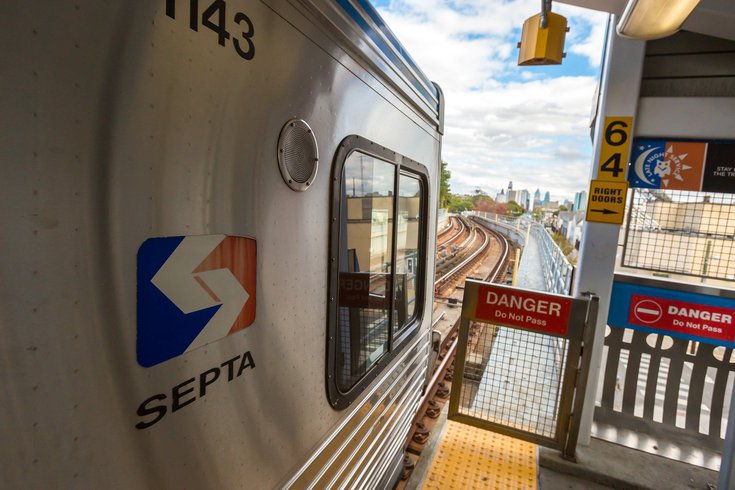
A few weeks ago I began to ponder the different newsworthy things I had heard about in recent days both at La Salle and the greater area of Philadelphia. What came to mind made me sick: the news about a woman who was raped while riding on a SEPTA Market-Frankford train at the 69th Street Terminal in Upper Darby. There is immense controversy about whether there were bystanders who took cell phone videos without calling the police or physically intervening but, frankly, my greater concern is the fact that a woman cannot ride public transportation without fear of literally being sexually assaulted. 

I know that I, among other La Salle students, use SEPTA frequently. This injustice that occurred to this woman shakes me to my core. I am frankly disgusted that we live in a world where women cannot even travel on or use resources like SEPTA without being endangered. I fear for my female classmates, my friends, my sisters, my aunts, my mother and my grandmothers who all use SEPTA. I am disgusted that females cannot even exist without being hurt.

This issue is bigger than just SEPTA. The world does not protect its women. According to the World Health Organisation (WHO), “most cases of femicide are committed by partners or ex-partners, and involve ongoing abuse in the home, threats or intimidation, sexual violence or situations where women have less power or fewer resources than their partner.” Furthermore, in a survey reported by the BBC, a third of respondents thought it was acceptable for men to hit their partners. These facts further emphasize the vulnerability women face today based on their gender.

A woman should not have to fear taking the train home from work. A woman should not have to fear walking home at night. A woman should not have to fear being talked down to by her coworkers or classmates. A woman should not have to fear seeing her perpetrators walk away unscathed. Women should not fear living, but they do — I walk across 20th street alone fearing being catcalled out of someone’s window and as they drive away laughing, I feel uncomfortable and ashamed.

Now I have to fear taking the train. I am terrified for the women around me and myself. Simply terrified. I am afraid for every woman I either know or do not know. I hope and I pray that this disgusting act of femicide, among the other situations myself and the women I know face every day, will one day disappear.

Megan Fox, please don’t do that

Commentary

Elizabeth McLaughlin, Editor

Please don’t partner with Boohoo. On Tuesday, Oct. 19, Boohoo released their biggest ever celebrity collaboration to date. This time around, Megan Fox’s line aims to “celebrate female sensuality,” according to Boohoo’s website. If I were Megan Fox, I would’ve preferred to craft a celebration of womanhood with another brand — one whose garments don’t fall apart almost as soon as they’re purchased; one that seeks to fix rather than destroy the environment; and one that doesn’t have slavery allegations.

Felisha Tolentino

Megan Fox and Boohoo teamed up to create the brand’s largest celebrity collaboration to date.

Every now and then, I search for news related to Boohoo. I’m currently doing my capstone on fast fashion and Buddhism and I’m using Boohoo as a case study. Recently, I discovered this collaboration with Megan Fox and immediately wished I had gotten the chance to talk her out of this despicable deal. Unfortunately, she wouldn’t return my calls, so here we are.

I worked for fashion week this past summer and spent most of my week working directly with Boohoo for their big debut. The Boohoo team arrived in Miami from LA with suitcases of garments for fittings before the show. I remember one influencer, Cindy Prado, came in to try on her swimsuit. I handed her the suit, she put it on, they took some photos, and Prado handed it back to us for safekeeping. It sat in a bag for a couple of days, and when it came time to dress the influencer for the runway, the garment was somehow already broken. Literally all it did was sit in a plastic bag, untouched — yet it was somehow unwearable. That’s because Boohoo deals in fast fashion, which is mutually exclusive to quality fashion. After all, there was once a time when fashion designers were responsible for crafting collections four times a year, in line with the seasons: winter, spring, summer and fall.

Now? There are 52 seasons. That’s not an exaggeration. Companies like Boohoo churn out new collections, on average, every single week, all year round. No wonder that garment was broken before it even got to the runway — it was built to fall apart. Once again, that is not a euphemism or exaggeration; fast fashion garments are literally built to fall apart so that you are forced to shop again, sooner rather than later.

How do brands like Boohoo accomplish such efficient capitalist modes of production? By slave labor, of course. I say that not to make light of the situation, but rather to elucidate the almost unfathomable allegation that slavery still exists today. Unfortunately, it’s not unfathomable — it’s reality. According to Livia Firth, 1 in 6 people work in the global fashion industry, making it the most labor-dependent industry on earth. There have been multiple investigations into Jaswal Fashions, a factory in Leicester, United Kingdom, which supplies up to 80 percent of its production to Boohoo alone. Some sources say that workers are paid as little as £3.50 an hour, according to an investigation from the Sunday Times. Other sources say that workers were forced to come in during COVID-19 lockdowns to keep pace with the increased demand for clothing as people stayed home and shopped online. It is unclear whether all workers at this factory are paid at all for their labor, and Boohoo has done little to redress the situation since it came to light.

I remember reading somewhere that Fox sends her kids to a “vegan school” (whatever that means). Thank you for caring at least a little about the environment and the meat industry’s impact on it, Ms. Fox. But has she thought about how many of her garments, manufactured by Boohoo, will end up in landfills? According to the Ellen MacArthur Foundation, the equivalent of one garbage truck of clothes are burned or landfilled every second. Our environment can’t sustain this rate of waste, so if we want to be able to celebrate female sensuality and send our kids to vegan schools, we should make sure that we have a planet where we can do those things first.

This article isn’t to shame anyone who shops fast fashion, especially because it is (unfortunately) all most of us can afford. It is, however, meant to raise eyebrows at celebrities like Fox who continue to validate and support such harmful business practices. Ms. Fox, if you’re reading this, it’s not too late — ditch Boohoo in favor of sustainability.

Social media: building up society and breaking down mental health

Commentary

Meghan Cain, Staff

Social media has become a dominating force in our society and is being introduced at increasingly younger ages. Knowing the influence that social media has over its users, it is no surprise to me that overuse of social media was rated number one on the 2020 Top 10 Child Health Concerns During the Pandemic List. Especially following the pandemic, which allowed for an overwhelming amount of free time for a lot of kids and adolescents, social media use is continuously growing.

In my opinion, the most harmful aspect of social media is its effects on the mental health of kids and adolescents, negatively affecting their confidence. I am currently working on an independent research study seeking to find the correlation between social media use and adolescent girls’ body dissatisfaction, social comparison and internalization of the thin ideal. The findings have shown so far that there is a positive correlation between social media use and negative self-feelings, which is worrisome considering the age at which social media is being introduced nowadays.

Social media robs children of their youth, and for adolescents, who are already experiencing a confusing period in their lives due to puberty, social media increases exposure to unrealistic idealized bodies and pressures them to change their appearances. A previous study of social media use and adolescent body image has found that “time spent using social media… is associated with greater preoccupation with how the body looks, which is, in turn, associated with more negative feelings about the body.” This finding supports the idea that social media has a negative influence on youth and their self-satisfaction, which is critical during such a vulnerable stage in their life. 

While there are many arguments against social media that expose the harms associated with it, there are also positives that come from social media, which leads this to be a controversial topic. One study that I have found supports social media in stating that it has “been used by adolescents to increase social connectivity, broaden social relationships and for entertainment… social media is a potentially inexpensive way to have conversations about mental health, important information and challenge stigma… to promote help-seeking for mental health difficulties.” There are clearly benefits of social media as it increases access to mental health awareness and information on coping, as well as increasing socialization and maintaining friendships. Through the interviews with young users in this same study, it was found that social media can be a way to promote mental health, but also to decrease it. Adolescent users had stated that “social media can fuel cyber-bullying and that could lead to problems like suicide, anger and depression.”

This theme leads me to a second study which found that “adolescents who spent more time on screen activities were significantly more likely to have high depressive symptoms or have at least one suicide-related outcome.” Additionally, electronic device use was significantly correlated to all four suicide-related outcomes, which are feeling sad or hopeless, seriously considering suicide, making a suicide plan and attempting suicide. There is an abundance of information that supports either side of the social media argument, which leads to a bit of controversy.

Social media is such a common aspect of our everyday lives that youths being on electronics or social media is normalized overall — a community-based issue, as social media has become ingrained into our society and would be difficult to remove.

As far as addressing this issue goes, spreading awareness of the harms of social media may provide some benefits. In terms of solving the issue, I do not think that much can be done on an individual level to decrease the detrimental effects of social media as a whole, but steps can be taken to ensure that one is using social media in healthy ways, as well as monitoring children and adolescents’ use. To solve the issue from the root, social media should not be introduced at elementary age, and when it is introduced it should be monitored. In other ways, the issue can to be addressed by the platforms’ corporations. One great strategy that I have seen in the news recently is actually from Facebook. The corporation is introducing features that promote wellbeing on the Instagram app, which is a branch of Facebook, such as prompting young users to take breaks. Another feature will be to “nudge” young users when they are looking at photos that may harm their well-being. There will also be optional parental controls that allow guardians to supervise what their children are doing online, which may be a bit controversial. In my opinion, these controls can be a great way to promote healthy social media use, but it also depends on what exactly the guardians will be able to see. The best way to monitor would be to make sure the children are not spending too much time on social media, and putting parental control locks on certain media to ensure they aren’t being exposed to harmful content.

In conclusion, social media use amongst our youth is an issue that I find to be important, and is one that I feel is only just beginning to gain traction. While we are slowly making advances in the promotion of healthy media use, we have a long way to go as a society. There are numerous arguments regarding the negative impacts of social media use on youth, but there are many to support it as well, so this issue must continue to be explored. I am trying to do my part in addressing the issue by conducting my independent study, and hope to use the results to make an impact.

Nicki Minaj featured on a new song that has a “Little Mix” of drama

Commentary

Claire Kunzier, Editor

Header image: meaww.com

The era of 2014 girl groups continues to crumble as former “Little Mix” member Jesy Nelson released her first solo track after leaving the group. Featuring Nicki Minaj, “Boyz” has reached Twitter fame due to the controversy surrounding Jesy singularly and her beef with her former band mates Pierre, Leigh-Anne and Jade. The song itself is not a slap nor a banger, although you could say its hits a little because of Nicki. Drama surrounds this song, particularly involving Jesy’s music video.

Jesy, a white British woman, is being accused of blackfishing due to the fact that her skin tone matches and in some instances is darker than Nicki’s, who is indeed a Black woman. Some of this distaste comes from “Little Mix” fans who just want to ruin Jesy’s career, very similar to the “Fifth Harmony” Camila Cabello situation, but also the genuine increase in white women tanning their skin to the point where they appear to be Black. While Nicki herself finds no issues as stated within this Tweet, “Jesy! We got all these #Jelly btchs actin real MESSY!!!!! Stop it miss gorl going live in one hour on IG to get into sum thangz,” there is still a large population of Twitter trying to start beef.

As referenced earlier, there is also just “Little Mix” deep rooted drama stemming from the other allegations of Jesy being a toxic member within the group. During her time in the girl group, Jesy has been accused of being a bully to her fellow members, specifically about their struggles with eating disorders, as well as being racist. I am talking about the vine of hers, please check it out.

Overall, the issue with Jesy is with her blackfishing as well as the accusations from her former bandmates. We are watching the demise of the final early 2010s girl bands as well as the recognition that sometimes tanning can become more than excessive.

My life as a college age android user

Commentary

Jake Eiseman, Editor-in-Chief

Header Image: nrkbeta.no via Flickr

Apple Inc. ruined my life.

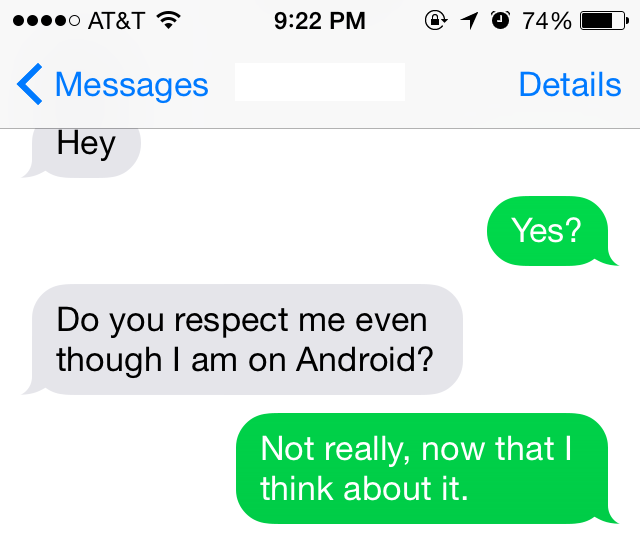
Okay it’s definitely not that bad, but I am reminded far too often how it’s a dog eat dog world and I’m wearing milkbone underwear when I expose myself as an Android user. Everywhere I look on La Salle’s campus I see people on their iPhone, with their AirPods in and using Apple music, and what do I do? Nothing. I do nothing because I am respectful and understand that it’s just a phone, it really does not matter. But, the moment someone asks to AirDrop something to me, or God forbid I turn an iMessage group chat green, I am targeted and chastised like I’m the problem.

The OverAnalyzed

Wake up, people. It’s not me that you should be targeting, I just sit here with my Galaxy S9+, talking to Bixby, customizing my home screens with all the freedom in the world, while Apple users didn’t even get the freedom to add widgets until iOS 14. Apple is an extremely predatory company. They lock you in early by acquiring good deals with the popular wireless plans they know will have teenagers and their parents on them like Verizon or AT&T, and once you’re in, good luck getting out.

Take into consideration that your Apple ID literally contains your entire life. All of the photos you’ve ever taken, all of your contacts, wireless payments, passwords, facial scans, personal data, analytics and so much more. What happens if you try to take all of that out of the Apple ecosystem? Well, for some things like pictures and contacts it is doable, but Apple makes the process as difficult as possible by forcing users to either hard transfer everything from the phone to a computer or to another phone slowly, or by downloading a replacement app like Google Photos and backing everything up manually. Lots of other things, though, are almost entirely locked behind Apple’s ecosystem. For example, all of the apps and in-app purchases made since you got “Angry Birds” when you were twelve until now will not transfer over. Some of them you can replace, but a lot of your digital footprint will be completely uprooted.

I won’t get into the actual politics and ethics of Apple’s production, as I am certain that companies like Samsung and Google are just as bad in other or even worse ways. But come on. Can we talk about how everyone found out last year that Apple uses planned obsolescence in the creation of their batteries and Apple users just said “cool,” and then bought an iPhone 12 Pro? I’m not shilling for the Google Pixel because it’s better than the iPhone, I’m shilling because people deserve to be treated better by the company that basically rules their whole life at this point.

You deserve better than to pay hundreds of dollars every year for a slightly better camera to a company that keeps you in a loop of constant disappointment, predatory technology practices and that is looking more and more every day to be like the villain from a shockingly familiar episode of “Black Mirror.” I just ask that before you go and buy into the iPhone 14,000,000 when it drops next month, just take some time to think about why you love Apple so much and if you really do, or if you just feel like you have to.

Lack of communication takes the safety out of public safety

Commentary

Meghan Cain, Staff

My friends and I went downtown for restaurant week recently and decided to make a night of it, walking around the city, browsing stores and taking in the night life rather than just eating dinner and coming straight back to campus. We checked the La Salle app to see when the shuttle would be coming and the app said the shuttle comes to the Septa stop each hour at :15 :55 and :35, and that on Fridays and Saturdays it runs until 3:00 am. We were under the impression that it didn’t matter how late we got back, knowing that we could take a shuttle back to our townhouse, so we took our time and enjoyed the night rather than trying to rush back to make sure we got home safe. 

We got to the stop at 8:50 and waited the five minutes for the shuttle to get there. La Salle took the shuttle tracker service off of the app, which we were disappointed to see, as we couldn’t tell if the shuttle was running on time or late and we didn’t want to be standing around in the dark waiting for it, especially not knowing how long it would take. A shuttle came at around 9:00 and unloaded a van full of students, then we got on. The driver told us we were lucky that that group had asked to be taken to the Septa stop, or else we would have been waiting for a long time before needing to just walk back in the dark. He informed us that La Salle had changed the shuttle hours and the shuttle now only runs until 9:00 p.m. on Fridays and Saturdays, but that it actually stops at the 8:15 p.m. cycle so that it can be finished its trip on time to get gas and make it back before 9:00 p.m. We told him that La Salle didn’t have that posted on the shuttle service page, and that we weren’t informed that the schedule changed. If this information was posted anywhere, it wasn’t made known. The driver informed us that communication hasn’t been clear between La Salle and public safety either, and that he wasn’t informed right away when the schedule had changed. He seemed disappointed in La Salle’s lack of communication.

I find this to be irresponsible on La Salle’s behalf, knowing that weekends are when students plan on staying out later, and that it is dangerous for them to be standing around waiting for the shuttle in our neighborhoods, which are  often receiving reports of violence. I am disappointed in La Salle for the lack of communication about important information such as this, and for the lack of care given to its students that are relying on the shuttle system for safety. We pay a lot of money to attend this school, so I think that at the very least we deserve proper communication.