Undoing the Knot: Five Generations of American Catholic Anti-Blackness

News

David O’Brien, Editor
Beacon Press

On Monday April 11, Dr. Maureen O’Connell, a religion professor at La Salle, presented a lecture based on her new book, “Undoing the Knot: Five Generations of American Catholic Anti-Blackness.” O’Connell opened her lecture by presenting a New York Times article on Georgetown University’s sale of 272 enslaved Africans in 1838 to Henry Johnson and Jesse Batey in exchange for $115,000 (about $2.79 million today). In 2015, Georgetown renamed buildings after descendants of the people sold and the Jesuits pledged to raise $100 million for descendants of slaves possessed by Jesuits. After discussing this article, O’Connell begged the question of what other universities owe to people wronged in their own institution’s past.

O’Connell focused on three primary issues surrounding talks about the past: remembering, gatekeeping and curriculum. The remembering section focused on the failures of communities in acknowledging that these issues occurred. Gatekeeping focused on institutions’ failures to validate and take into account the opinions of victims of these phenomena. The curriculum section focused on the failures of institutions to teach how and why these events occurred, the importance of them in the foundation of modern institutions and how we can properly educate people on these issues going forward. O’Connell reflected on these three primary dilemmas through her own research surrounding Rosemont College and Saint Joseph’s University as well as her own familial history and La Salle.

She followed each of these topics by asking the audience how they themselves have caused or experienced these issues and asked the community how the University can go about resolving them. A wide array of students, faculty members, parents and even some of the LaSallian brothers provided their own thoughts and insights and agreed that the goal of La Salle is to provide a campus where people can address and resolve the major social issues throughout the United States and improve the Catholic Church through doing so.

O’Connell encapsulated her entire lecture in a brief quote, “our belief in our own moral goodness goes unchallenged and in fact is reinforced by our inequality-sustaining charity. We have bought into the fragile myths of how we got here and promote false rationales as to why others haven’t been able to achieve the same things.” The purpose of this lecture and the vigorous research done to prepare the new book is to help guide members of the LaSallian and Philadelphian community towards accepting the sordid truth surrounding their past. O’Connell’s work pushes people in the Catholic Church to challenge the traditional narrative that has been enforced for generations and to attempt to find the truth behind our community as well as remedy numerous injustices from the past that have led to inequality within the current systems.
Explorathon raises over $31,000 to support B+ foundation

News

Kylie McGovern, Editor

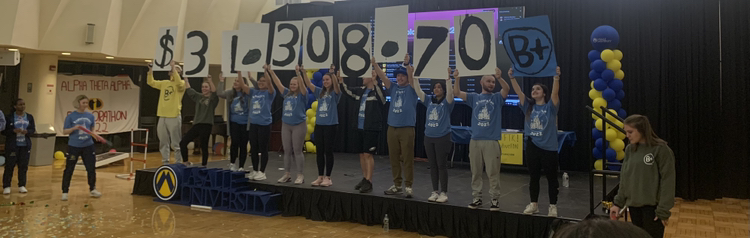
Header Image: Explorathon members reveal their total for the event. Image courtesy of Savanna Carestio

On April 2, La Salle’s yearly Exploration event raised over $31,000 for The B+ Foundation which works to provide financial and emotional support to families of children with cancer nationwide while funding critical, cutting-edge childhood cancer research. B+ is constantly raising money on college campuses and at local events like 5K races, Golf Outings, corporate partnerships and dance marathons. Explorathon hosted their event in the Union Ballroom from 5 p.m. until 10 p.m. and featured guest speakers, student talents, dancing, a rave and games. Fundraising and efforts for this event began last May and continued until the event concluded on Saturday night. 

Dance marathon fundraisers are especially popular at colleges in the area like Penn State University and Villanova University that benefit different charities. These events typically benefit organizations that fund pediatric cancer research and treatment. The B+ Foundation is the largest provider of financial assistance to families of kids with cancer in the U.S., helping nearly 3,000 families this year. In addition, B+ provided funding to over 150 critical childhood cancer research projects at top institutions globally. The top fundraising teams were the Delta Phi Epsilon sorority, the executive board for Explorathon, the Phi Mu sorority, the Elite Explorers team and La Salle Women’s Soccer. The top fundraising individuals were Kristin Frederick, Tehya Williams, Stasia Nguyen, Ashleigh Sieb and Cade. Various teams participated in this event including Greek life, athletics, academic clubs and more, uniting students throughout campus and various organizations to work together towards this cause. 

Many different students were on board for this event. Junior Melina Rallis worked as the morale coordinator for Explorathon. She explained that she works event planning. Rallis explained that she is the “hype man” for Explorathon. Rallis also expressed that it can take a lot of effort to get students involved with Explorathon because members of Greek life have their own philanthropies and college students are among the busiest of individuals. So, each team selects a team captain to communicate the information to and from the Explorathon executive board and their different teams. 

As for fundraising, Explorathon does fundraising all year like posting bingo boards on social media, sending emails and having fundraising nights at local restaurants. Rallis also spoke fondly  of the actual Explorathon event, saying “was a lot of fun and we had a ton of games. We played human hungry-hungry hippos, we had a lip sync battle, we made cards for some of the Be positive heroes.” Rallis also said that the event was effective for personal growth and accomplishment as feels “very accomplished after this all. Although we didn’t raise our goal we still raised $31,308 and I’m super proud of everyone who is involved who made this possible.”

Mellissa Olimpo, a junior communication student and executive director of Explorathon, said, “ It was a great day of dancing, having fun and raising money for the ‘Andrew McDonough Be Positive Foundation.’ Explorathon was able to raise $31,308.70, which means that 31 families are being helped because of Explorathon.” 

2020’s Explorathon raised over $22,000 for childhood cancer, and 2021’s Explorathon raised $39,000 for B+, helping out roughly 39 families through the participation of over 25 teams and organizations. While Explorathon did not hit their goal, they did succeed in helping the B+ foundation in their efforts to help those suffering from childhood cancer. Preparations have already begun for next year’s event, and more details will be shared on their Instagram page @lasalleexplorathon.

Archdiocesan Synod listening session held at La Salle

News

Jakob Eiseman, Editor-in-Chief

Header Image: Participants got to share their thoughts with church leaders in both a large group and individual discussion groups. La Salle University

From 6 p.m. to 9 p.m. on Monday, April 4, La Salle hosted one of the largest Catholic inter-campus gatherings in the city since Pope Francis began the synod campaign in October of 2021. Students and faculty were invited from Chestnut Hill College, Gwynedd Mercy University, Saint Joseph’s University, Villanova University, Rosemont College, Holy Family University, Neumann University and several other Catholic institutions from Pennsylvania.

Synod on Synodality is a two year process established by the Vatican under the guidance of Pope Francis that looks to establish listening sessions like this across the world with the goal of growing the Catholic church globally in terms of its operations and manner of professing its faith. From the Vatican’s official Synod website, the process is described as a way to evaluate the role of churchgoers in communion and vocation, the participation of the faithful in the Catholic experience and how to help the Church better carry out its mission and serve those “who live on the spiritual, social, economic, political, geographical and existential peripheries of our world.”

The Archdiocese of Philadelphia has already hosted over 18 listening sessions in the past month, but this was the first that featured a primarily higher education crowd. As young adults and educational leaders are those who will establish the next generation of all major organizations, including the Catholic church, having a meeting specifically for college-aged voices is a way to tap into a specific minority of the Catholic community that will one day have a significant impact on its future. On February 22 of this year, Ash Wednesday for Catholics, was the center of what the university referred to as Synod week, La Salle’s first major step into the process. Additionally in March, over 14 major universities within the Archdiocese of Philadelphia met for smaller listening sessions within their universities. This event is somewhat a culmination of both, bringing together passionate and like minded thinkers from across the city’s schools to discuss the future of the institution that has not always been favored by a young crowd in general.

While the press was not invited to the listening session due to the personal and tender nature of some of the subjects discussed by participants in the event, we were able to catch up with some students after the event to see what they thought about the Synod and this session in particular. “I attended the first Synod session a few weeks ago after Mass with only three other people so attending this session with a much larger group of people was very different. I really enjoyed interacting with other Catholics and Christians from varying schools,” said digital arts junior Grace McKenna, “I thought it was really enlightening to hear what others had to say and comforting to know I wasn’t alone in what I was feeling.” A large group of students and faculty gathered from many of the schools invited, meaning this was the largest event of this type that most students have attended thus far.

A large group of faculty and students from various universities filled the Union Ballroom.
La Salle University

“I am hopeful that this event will be helpful to the Synod mission and the Church overall,” said McKenna. Many students who attended were happy to share their opinions on what the church has been doing lately. “It’s a big deal that they are asking for the perspectives of not just the clergy but of the laypeople,” continued McKenna, “It was encouraging to see a lot of young believers gathering in one place discussing their hopes and fears for and of the Church.”

People from multiple faiths were invited to join in on the conversation, and psychology junior Bethany Macwana, a practicing Christian but not Roman Catholic, said  “I feel like the Synod experience is something really unique in our time. The last global Synod that happened was in the 1970s, so this is a very monumental and historical event.” “In my home church,” said Macwana, “there is only a pastor as the head of authority, so seeing someone in the Catholic faith from the ‘higher ups’ in attendance was pretty neat.” On La Salle’s involvement in the Synodal mission, Macwana said “I did gain more insight into the Catholic church and heard from other peers who are the same age as me who shared key moments in their spiritual journey. If it was not for the Synod, I would have not been exposed to something like this, so I do feel that La Salle should continue to participate.”

Finally, we were able to get a few comments from Rayna Alexander, an ISBT junior at La Salle who attended the listening session. “The event allowed for many perspectives to be heard and it felt great to be able to share with others who have had similar experiences,” said Alexander, “I feel the Synod gives me a place to voice my thoughts and frustrations openly while having others simply listen and understand my place. I definitely think the La Salle community should participate because all of our voices matter in making changes and solidifying the true value of the Catholic faith.” Alexander also expressed that she believes the event will make a real difference, commenting “With our voices, we are raising awareness and emphasizing concerns as we form into the leaders of our faith.”

New leadership of board of trustees announced 

News

Kylie McGovern, Editor

Header Image: La Salle University

On March 14, La Salle University’s Board of Trustees announced that Ellen E. Reilly, ’83 has been elected as its new Chair. On July 1, Reilly will become the first woman to serve as the Board’s Chair in the University’s 159-year history. Reilly has served as President of La Salle’s Alumni Association and earned ex-officio Board membership in 2021. She explains that when she began at La Salle as a computer science student the institution was newly co-educational and now she is “humbled to have been elected as Chair of the University’s Board of Trustees …it’s a role I never dreamed of holding when I first got involved with our Alumni Association. I am honored and proud to work on behalf of the Board and our University.”

Reilly will replace William W. Matthews, III, Esq., ’90 as Chair of the Board of Trustees. Matthews announced the leadership changes in an email on March 14 to the University community. He has served as the Board’s Chair since July 2020, but he was elected to the Board in 2007 and his term concludes June 30. Matthews explains that Reilly “is prepared for this moment — and it’s an important one for the Board and La Salle University alike.” “Ellen’s pride in La Salle is unmatched,” said La Salle University Interim President Tim O’Shaughnessy, ’85. “She possesses a deep commitment to our University and wants what is best for our students and our community. For her, La Salle isn’t just her alma mater. It’s a family. It’s home. I am confident in the future direction of our Board under Ellen’s leadership.”

Reilly currently works as the head of healthcare and life sciences at a company called WHOOP, which is a company that debuted a novel wrist-worn device that continually tracks key biomarkers. Reilly’s career experience includes partnering with businesses to transform and simplify business processes and delivering bottom-line measurable benefits. Before her work at WHOOP, Reilly was vice president of global technology partnerships at I(IMS Health), Q (Quintiles), and VIA (by way of) IQVIA and vice president of the life sciences and healthcare industry at DocuSign.

At La Salle University, Reilly is a member of an advisory board for the Dean of the School of Arts and Sciences, in which she has recently worked on an initiative to create a scholarship recognizing Brother Gerald Fitzgerald, FSC. Especially relevant this week, Reilly and over a dozen other La Salle alumni created a dollar-for-dollar match of up to $200,000 as part of La Salle’s 2022 Day of Giving.

In addition to Reilly’s election, John K. Dugan, CPA, ’85, will serve as the board’s newest Vice-Chair. Dugan is an accounting alumnus who worked for 29 years at the PcW Accounting Network. He has served on the Board since 2019 while working on several committees. The Board has also approved three-year term renewals for Vice-Chair AmyLynn Flood, CPA, ’95; Brother Jack Curran, FSC, Ph.D.; and Joann M. Magnatta, ’77. Along with Dugan’s election as Vice Chair, these changes are effective July 1.

La Salle institutes new masking policy

News

Kylie McGovern, Editor

Header Image: La Salle

On March 2, Interim President Tim O’Shaughnessy responded to the recently revised city mask guidelines explaining that, although the Philadelphia Department of Public Health issued an adjustment to its indoor masking policy, La Salle’s COVID-19 response team reviewed these revised public health guidelines and waited to update the campus community regarding any potential policy changes. Until that new update, the current indoor masking policy remained in effect. O’Shaughnessy continued to encourage COVID-19 boosters and vaccines because they remain the greatest tools for reducing severe illness in our community and returning to a more active campus life.

On March 4, just days after  the original update, O’Shaughnessy wrote to the La Salle community again to announce that “beginning Monday, March 7, La Salle University will transition to recommending, but not requiring, that masks be worn indoors. Everyone must continue to carry an appropriate mask with them at all times.” This changing mask policy follows the guidance of federal and local health agencies and was decided with the counsel of La Salle’s COVID-19 response team. 

There are still circumstances where masks will be required like on the University shuttle, in clinical healthcare settings and in the COVID-19 testing center. In addition, masks are required to be held in the event that an individual asks others to be masked in their presence. If asked to mask up, it is recommended students follow the request.

During the upcoming spring break (March 12–20), La Salle will likely see a significant portion of our community travel away from campus. Therefore, masks will be required for the five-day period immediately following the University’s spring break, the week of March 21–25, as a preventative strategy. O’Shaughnessy does, however, explain that “masks have helped limit the spread of COVID-19. If necessary, we will not hesitate to reinstitute a mask mandate in the event that we experience significantly increased case counts on campus or in the region.” 

As for other universities in the area and their mask mandates, many of these schools are on spring break. But, Temple University’s Senior Director of Health Services, Mark Denys, explained that “out of an abundance of caution, the university will still require the use of masks inside buildings when we return to campus next week.” Furthermore, Saint Joseph’s University’s president Mark C. Reed, Ed.D., explained on March 2 that “Given declining numbers regionally and nationally, our very high community vaccination rate and updated guidance from the CDC, City of Philadelphia and Montgomery County, the University will no longer require masks be worn indoors in all shared or common spaces at all times. Beginning tomorrow, March 3, masks will be optional on campus.” Drexel University decided that “despite loosened local mask ordinances, Drexel’s indoor mask requirement will continue at least through the end of winter term (through March 19, 2022) while we assess community needs moving forward. Masks are also still required on public transit throughout Philadelphia.” 

In speaking to a few students about the new mask guidelines, the Collegian’s Managing Editor David O’Brien kept his response simple, saying, “I’m glad we don’t have to wear them anymore,” but junior biology student Luke Szyszkiewicz explained that he “doesn’t like how confusing the different rules are between different professors and the university.”The Collegian’s Editor-in-Chief Jake Eiseman says, “I think dropping the mask guidelines on campus is a positive move. It’s in accordance with the CDC’s and the city’s recommendations and cases have been low on campus for months now. Giving people the option to take the mask off should be seen as a good thing overall, but there are bound to be a few bad apples. Many people will continue to wear the mask regardless, and some will remove them when they feel it is safe, but some will never wear a mask again even when expressing symptoms, and that is my main concern.” 

Editor’s Note: Although I am personally excited that we no longer have to wear masks because our cases are quite low, I think that these conditions should only prevail with high vaccination rates and requirements. I think that taking away the masks is a good decision for now and likely the remainder of the semester, but I hope the university continues to closely moderate cases and surges so that the campus’s health remains a top priority.

St Joseph’s University new residence hall for students with autism

News

Kylie McGovern, Editor

On Feb. 25, fellow Philadelphia university and basketball rival, St. Joseph’s University, announced that it will be opening a residence hall for students with autism. St. Joseph’s, has the Kinney Center for Autism Education and Support and plans to open its first residence hall specifically for students on the spectrum. This new residency will have a capacity of up to 17 student residents and a student adviser. This hall is called Saint Albert’s Hall and it will undergo $250,000 in renovations this summer. Most recently, Saint Albert’s Hall was used for COVID-19 housing. The new residence hall is meant to be for the first year or two, after which students will transition to other housing. The Kinney Center’s director Angus Murray explains that, “We came to the realization that the residence hall was a spot where a lot of our folks were struggling. Academically, they’re usually able to make the cut and succeed, but because of their social skills, they struggle in the residence halls. So we thought it might be helpful to have what we’re referring to as a longer runway as they transition from high school to college.” St. Joe’s is one of the first Philadelphia colleges to create a living option like this, but other colleges in the area like Drexel, Eastern, Rutgers and West Chester.The annual cost to live there is $12,000, but Angus Murray said St. Joe’s is seeking scholarship funding.

41 students are enrolled in Kinney’s ASPIRE (Autism Support Promoting Inclusive and Responsive Education) program and get help through the center. That number is growing and expected to reach 50 next year on the campus of nearly 6,800 undergraduate and graduate students and next year, enrollment will grow to more than 9,100 when St. Joe’s merges with the University of the Sciences.

The Kinney Center opened in 2009 when Paul Hondros, a St. Joe’s alumnus, was frustrated with the lack of services for his son and he became lead donor. Kinney employs 16 full-time staff members, nine graduate assistants and 125 part-time undergraduate students who provide services to children and adults of all ages. Students in the program are paired with peer mentors for the first two years and then eventually encouraged to become a mentor. Staff help them improve social skills, organize and manage time and prepare for careers. The center also has social events. ASPIRE students, who pay $8,000 for the services; take a full course load; participate in clubs, sports and activities and are in a variety of majors. They maintain an 84 percent six-year graduation rate, similar to St. Joe’s overall average. 

To design the new residence hall, St. Joseph’s is partnering with Thomas Jefferson University design students. Eighteen students and two professors from Jefferson’s College of Architecture and the Built Environment went inside the residence hall at St. Joe’s to take pictures and measurements, and to meet with Kinney staff.

Editor’s Note: Regardless of athletics riverlaries, I am happy to see different schools in Philadelphia working together to make living on campus and attending college a more accessible experience.  

Dr. Mshomba gives back to his hometown via an invaluable library

News

Elizabeth McLauglin, Editor

Header Image: Madecha Education Association

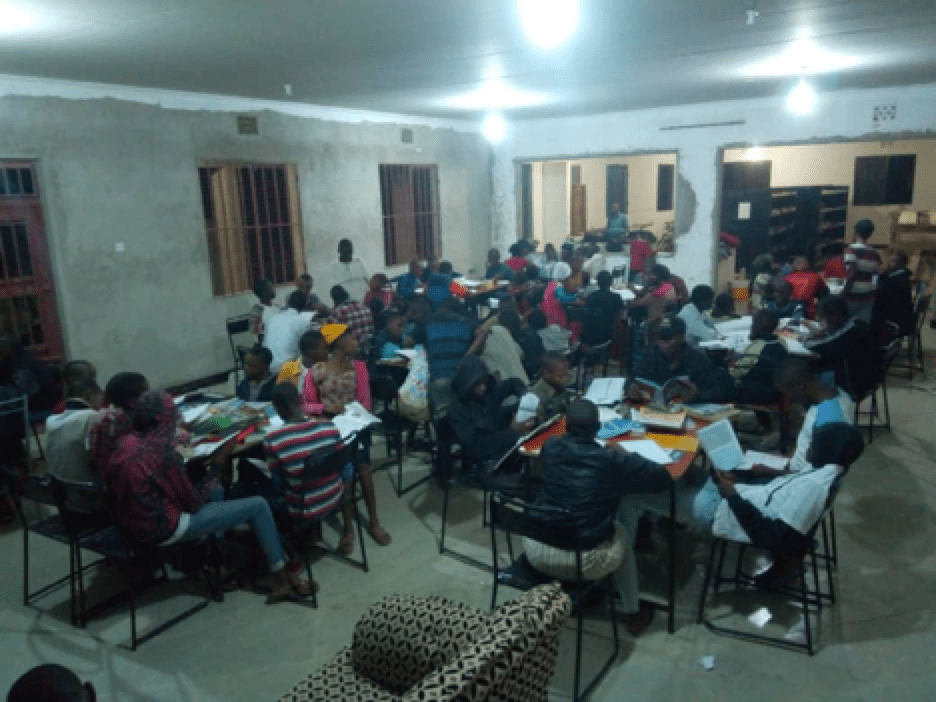
The Durning-O’Halloran Library in Arusha, Tanzania, established by Dr. Richard and Elaine Mshomba.

On Feb. 16, Dr. Richard Mshomba, a professor of economics here at La Salle, discussed how he has given back to his hometown in Sinon, Arusha, a city in  Tanzania via a community library that serves more than 15 schools. Mshomba’s devotion to Lasallian values stems back to his undergraduate career, when he received a scholarship to La Salle and moved from Tanzania to Philadelphia to study economics. In the years since, he has demonstrated steadfast commitment to the very values that underpin a Lasallian education. With his wife, Mshomba established the Madecha Education Association, the organization that operates the library.

The Durning-O’Halloran Library

Mshomba explains that “the education system in Tanzania is different from that in the U.S.,” with one key difference being that students have to pass national exams in order to pass on to the next level of schooling. The library provides students with access to books, laptops, internet and sample exams, to name a few resources. Construction on the library began in 2008 and was completed in 2016; it has since doubled in size, representing an invaluable resource to members of his hometown community.

The Durning-O’Halloran Library is named after Mshomba’s American host family, Joan and Charles Durning, as well as Elaine Mshomba’s parents, Joan and Joseph O’Halloran. All four individuals provided support, both financially and faith-based, for the Mshombas’ project. Moreover, a La Salle College High School student named Matthew Hladczuk undertook a fundraising effort for the library’s expansion.

Through community effort, the Mshombas were able to “provide additional educational opportunities for the young people in the community, [and] a long-term goal is to build a facility for vocational training.” In Mshomba’s words, “it is amazing what can be accomplished when people work together for the common good.”

The Durning-O’Halloran Library

Editor’s Note: During my freshman year, I was lucky enough to have Mshomba for microeconomics. From the first day of class and throughout the entire semester, it was clear to me that Mshomba values education very highly and works with students, both in and out of the classroom, to ensure that they are provided with the tools and resources they need to succeed. 

Philadelphia homeless population’s possessions discarded 

News

Kylie McGovern, Editor 

Header Image: Philadelphia Inquirer

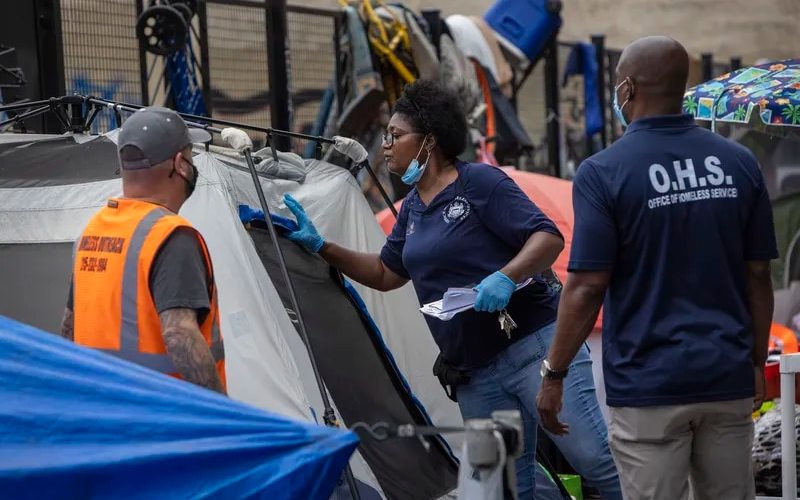
On Feb. 22, news was released that the day before the city of Philadelphia broke up two homeless encampments in Kensington this past summer. Villanova University professor Stephanie Sena, Villanova law student Delaney Keefe, and ACT-UP Philadelphia activist Jazmyn Henderson put Apple AirTags on belongings of eight of the encampments’ occupants. AirTags are tracking devices designed to act as a key finder to help people find personal objects. Soon after the encampments were broken up, the AirTags showed that four items were in a solid-waste facility in Conshohocken a few miles outside of Philadelphia. Advocates believe that this removal of belongings is a violation of constitutional rights for those experiencing homelessness. 

Keefe posted videos she shot on Aug. 18 that shows city workers pulling a couch out of a tent, and then destroying the tent. Greg Ramseyer, the owner of the tent, explained the tent was his property and he explained to police and city workers that the couch was not abandoned. In addition to Ramseyer’s couch, a black trunk, a plastic container of clothes and a backpack with a wallet and identification cards, which are considered extraordinarily difficult for people who are homeless to replace, were tracked in the waste facility in Conshohocken. 

The Philadelphia Office of Homeless Services’ website explains, “We will store personal belongings for free for at least 30 days” after a clear-out. A spokesperson for the city claims that any possessions collected at the encampment were stored at Prevention Point, a public health and social services nonprofit in Kensington. So, if something is thrown out, it is because the object was considered to be dangerous, abandoned or debris. “The city takes multiple steps to avoid disposing of anyone’s possessions, and offers storage,” the city’s spokesperson said. “For safety reasons, city staff do not go through individual bags.” The spokesperson added, “Individuals are encouraged to take their possessions with them and the city makes reasonable efforts to ensure that items that are clearly identifiable as personal property/personal belongings are not discarded.” However, the city has not addressed the data the AirTags picked up in Conshohocken. 

According to endhomelessness.org, in 2020 13,375 people were homeless in PA averaging about 10.4 homeless people per 10,000. However, the homeless population’s possessions being discarded is a widespread issue throughout urban areas throughout the US, not just Philadelphia. Similar situations have happened on the west coast in Phoenix and Los Angeles. In addition, this is a longstanding issue because, in 2012, a panel of the U.S. 9th Circuit Court of Appeals ruled, 2-1, that the personal possessions the homeless leave for a short time on city sidewalks may be taken only if the possessions pose an immediate threat to public safety or health or constitute criminal evidence. Nonetheless, these rules are up to interpretation–like in Philadelphia which may lead to possessions being discarded. 

News Brief: Answering the Pope’s call for Synod here at La Salle

News

Emily Dorr , Staff

Header Image: CNBC

It is truly a historic time in the Church as Pope Francis has called for a Synod on just that: Synodality, and in doing so invited all levels of Catholic institutions to begin a two-year process of listening and dialogue. It is the hope of Pope Francis that through this journey together, the Church will be able to learn from and create action in topics of concern identified by its congregation to best live out its continued mission. Now you may be asking yourself, what does this mean and what does this have to do with me? 

Well, whether you are a practicing Catholic or not, a group of faculty, staff, and students are organizing listening sessions just for you. We will listen, document and report issues of concern that you, the student body, presents to us. In doing so, La Salle will join 14 other Catholic institutions of Higher Education in Philadelphia who have answered Pope Francis’ call to Synod. This gathering, listening and discussion is the basis of Synod, a community which comes together and provides feedback for the Church. It is our hope to present what we have documented in April, along with other colleges and universities to the Archbishop, and in turn the Pope. 

If this is something you are interested in, be on the lookout for flyers and information cards as we will be advertising these sessions throughout the following weeks. If you have any questions, please feel free to reach out to Dr. O’Connell oconnellm@lasalle.edu, or Brother Ernest miller95@lasalle.edu. 

Our listening session will take place during the following dates and times:

Sunday Feb. 27 at 7 p.m.
Monday, Feb. 28 at 5 p.m.
Tuesday, March 1 at 12:30 p.m.
Wednesday, March 2 at 5 p.m.
Thursday, March 3 at 12:30 p.m.
Friday, March 4 at 12 p.m.
Sunday, March 6 at 7 p.m.

Listening sessions on Feb.  27, and March 2 and 3 will be held in the Chapel. All sessions other than those immediately following Mass in the Chapel will be held in the McShain Board Room Lounge on the second floor of the Union The Archdiocesan collegiate listening session will be at La Salle on Monday, April 4 from 6 to 9; location to be determined

La Salle’s new menstrual product pilot program

News

Kylie McGovern, Editor 

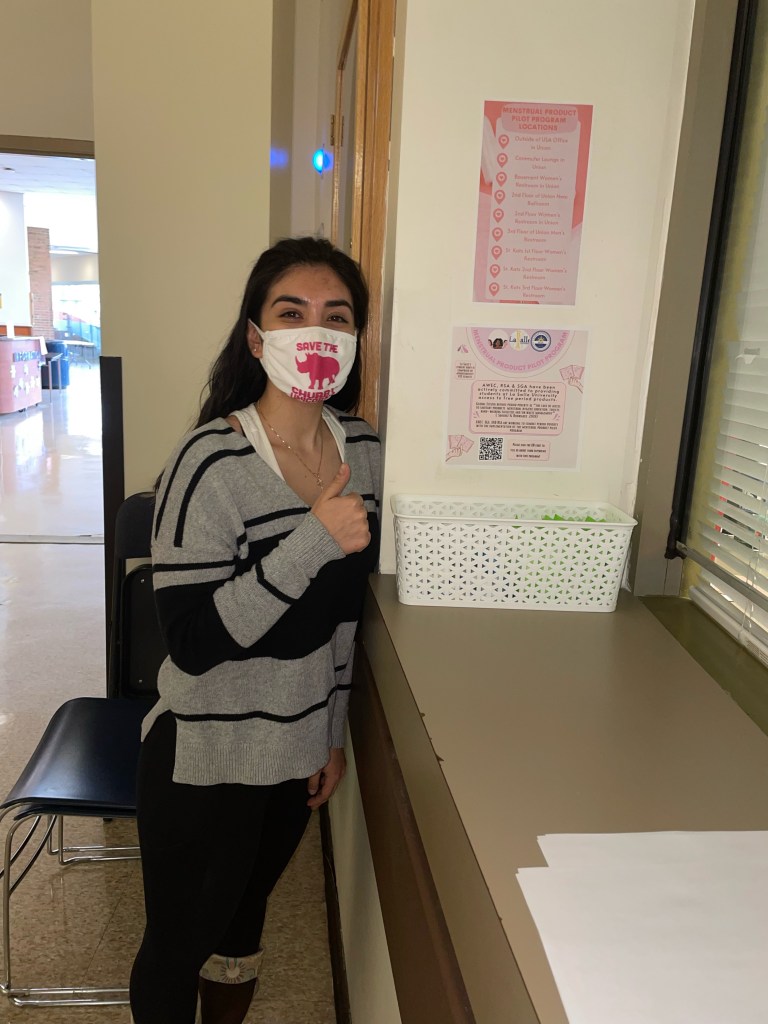
Isabelle Pope poses with the feminine hygiene products in the Union

On Feb. 16 La Salle University’s Students Government Association (SGA), Residence Life Association and All Women Every Color (AWEC) teamed up to announce a feminine hygiene initiative to provide tampons, pads and panty liners to students and faculty at La Salle University funded by the campus activity fund. @Lasallesga posted a video on Instagram to launch the menstrual product pilot program making period products available in St. Kat’s and the Union for women on campus, but also for any student regardless of their gender by having some baskets outside of the restrooms as well. Isabelle Pope, the president of SGA; Jua Brooks, co-founder and co-president of AWEC and Acie Barry, co-founder and co-president of AWEC explained the initiative via this Instagram video. This initiative has been in the works since 2019 and today the three organizations came together to announce their progress. SGA encourages anyone to reach out to them with any question as well as using the QR codes next to the products to provide feedback. This initiative will continue for the rest of the semester and if successful this program will likely continue in the future. 

In 2021, bills related to period equity were introduced in 37 states, according to Women’s Voices For The Earth, a nonprofit advocacy group. However, only five states require schools to provide menstrual products. Recently, California became the latest state to mandate that public schools and colleges stock free pads, tampons and other products in their restrooms. Therefore, this initiative at a private and small school like La Salle is a triumph for adequate menstrual product access. 

Barry explains that AWEC is “an organization founded by myself and Jua that is intended to be a safe space for women of color and allies alike on campus to join together and have important conversations. We are dedicated to creating social bonds within our organization and other organizations on campus all whilst also engaging in philanthropic efforts within the local community. We partnered with La Salle SAVE and hosted a hygiene product drive where we collected various items such as pads, tampons, razors, body wash, etc. and will be donating to a local organization called Women Against Abuse. Since the beginning of last semester, we have been researching period poverty amongst students and working with SGA and RSA to make menstrual products free and accessible to more students on campus. The pilot program started today and will run through the course of the year. Hopefully, if everything goes well, they will be in the majority of bathrooms across campus next year.”

In addition, Pope explained that originally, the proposal was supposed to be to get better dispensers in all of the women’s restrooms. The university explained that this was logistically difficult and expensive because matentience would have to be involved. So, baskets with free products seem easier and faster. The project began primarily with SGA in 2019 and 2020. But, by the end of 2021, the process was tough because of COVID-19 and funding issues. However, things began to look up when Pope joined as a member of AWEC and AWEC discussed access to feminine hygiene products. Pope made a connection between the two projects. The partnership made the entire project much faster, and Pope calls the collaboration a “huge learning experience.” She looks forward to cultivating better relationships with all the clubs on campus.