Virgin Galactic Stock jumps almost 30 percent as spaceflight ticket sales open Wednesday that require a $150,000 deposit.
Space tourism company Virgin Galactic is getting closer and closer to commercial operations. The company announced Tuesday that it will open ticket sales to the public for the first time on Wednesday. This announcement should excite aspiring astronauts and thrill-seeking investors.
For the soon-to-be astronauts that are seeking passage to space, the process is as simple as going to virgingalactic.com and starting the application. To book a reservation spot, Virgin Galactic requires a $150,000 deposit, so those interested will have to put a pretty penny into the experience.
Additionally, Virgin Galactic ticket prices start at $450,000 each. The company revealed, last year, three different sales offerings: a single seat purchase, packaged seats for couples, friends or family or opportunities to book entire flights. The company has said previously that, of the $150,000 deposit, $25,000 is nonrefundable.
These flights consist of a 90-minute journey, including the launch and boost into space. Virgin Galactic also states, however, they are only going to sign up 1,000 customers on board to start its commercial service later in 2022.
As for investors, shares of Virgin Galactic stock jumped almost 30 percent in trading to $10.56 by midday. The stock has been beaten over the past 12 months, dropping 80 percent, with the company having delayed the beginning of commercial space flights to late this year. The S&P 500 Index and the Dow Jones Industrial Average percent were up 1.2 percent and 1.1 percent, respectively.
The stock is jumping because the start of commercial operations has been a long time coming. To explain, numerous delays due to spacecraft testing sent shares plummeting shortly after they soared, just around the time the company sent founder Sir. Richard Branson into space.
This is certainly positive news for the company. Until now, Virgin Galactic has essentially been a pre-revenue business, and 1,000 customers paying $450,000 each in 2022 translates into $450 million of actual revenue for the business. Moreover, Tuesday’s announcement can be considered a relief for investors. It is estimated that just the deposits themselves will generate about $150 million in working capital for the company.
It will be interesting to see how Virgin Galactic’s stock price acts in the coming weeks as more and more people participate in the hype of open reservations for commercial space travel.
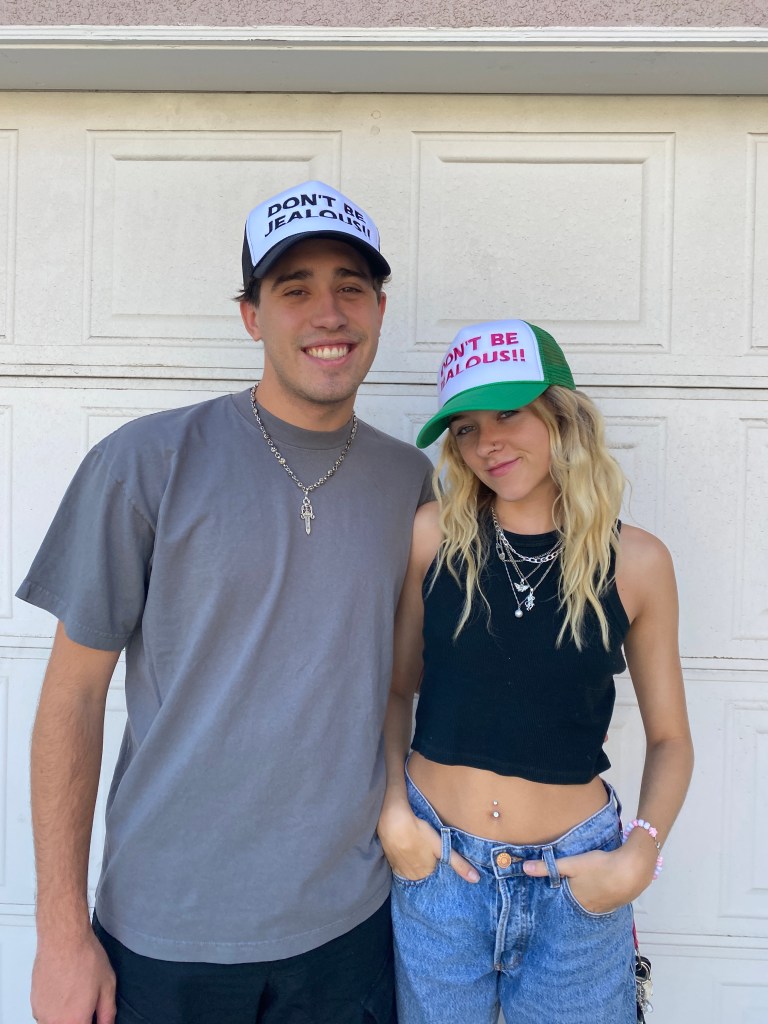
Sasha Tarnovsky and Andrew Burror, creators behind HoesForClothes, wearing their “don’t be jealous” trucker hats. June 2021. Source: Sasha Tarnovsky
Their latest clothing drop sold out in mere seconds. It was a completely custom-designed and manufactured hoodie, with the text, “Does it look like I care?! Because I do” written on the front and back. And for Sasha Tarnovsky and Andrew Burror, creators and owners of HoesForClothes, they care a whole lot about making the hottest, most fun clothes you’ve ever seen. Tarnovsky cites Dec. 30, 2019 as the official start date of her business, HoesForClothes, but her and Burror’s story goes back much further than that.
Tarnovsky got her first sewing machine in fourth grade for Christmas and from that point on, she was set on becoming a fashion designer. Throughout the years, her interests expanded and she enrolled at University of California, Santa Barbara to study political science. She graduated with her degree in political science as well as a minor in poverty and inequality in March of 2021. So if you start putting together a timeline of Tarnovsky’s life, you’d see that she was running her clothing business while completing her degree — talk about a multi-talented, hardworking girl! Not to mention, Tarnovsky turned 21 last June, so she graduated college early and is a successful business owner. Tarnovsky and Burror have been dating for four years, and their relationship forms the bedrock of their clothing brand: both individuals offer their creativity and business skills to H4C, and the brand wouldn’t be where it is today without their sincere dedication to the brand itself and each other.
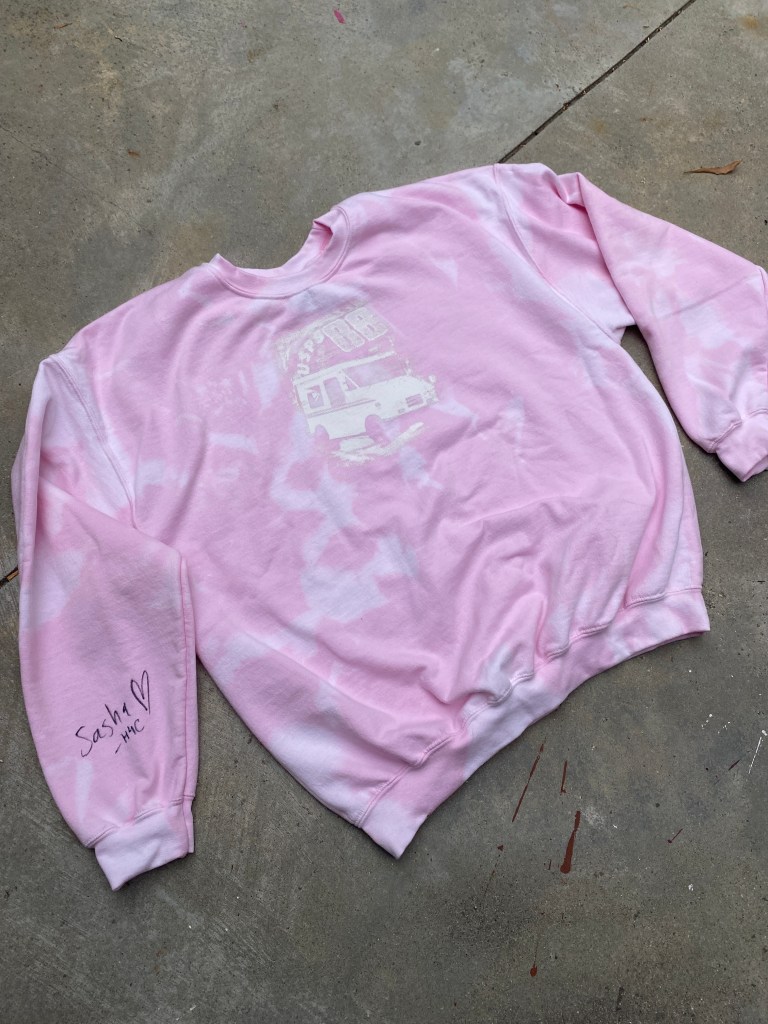
“USPS crew,” one of H4C’s oldest designs that a customer asked Sasha to sign. August 2021. Source: Sasha Tarnovsky
But Tarnovsky and Burror didn’t just stumble upon the idea for H4C one fortuitous day. Tarnovsky started her first brand that eventually became H4C in January of 2019, while she was a freshman at UC Santa Barbara. At that point, she was selling clothes from her closet, mostly to her friends. She curated an Instagram account called GrinchyVintage where she sold her clothes and posted content related to her taste in fashion. Over time, she moved on to selling upcycled thrifted and vintage clothing, and rebranded the name to Cherubs and Cherries. Tarnovksy recalls how this rebrand didn’t last very long because she didn’t feel like the name and vibe truly fit her personality. From there, she rebranded into HoesForClothes and has since built upon her amazingly successful company. If you visit hoesforclothes.com, which I strongly suggest you do, you’ll see the results of years of hard work and creativity. And if you’re anything like me, I bet you will find a bunch of clothes that would make the cutest additions to your wardrobe!
One of my personal favorites from the HoesForClothes catalog is the “fast fashion killed the small and independent designer” print. Tarnovsky mentioned how the song Video Killed the Radio Star by The Buggles was stuck in her head, and that’s how she got the inspiration for this print. As someone who is vehemently opposed to fast fashion, this print complements my interests while reminding me that there are still so many inspiring small, independent designers out there — like Tarnovsky and Burror, to name a couple. For Tarnovsky, her personal favorite designs are the “BE A HOE” trucker hat, her Y2K graphic sweatpants and her “wear what you want” hoodie (which is “100% his [Burror’s] work”). Speaking of the trucker hat — Tana Mongeau, a reality star and influencer, wore a “DUMP HIM” trucker from H4C on an episode of the TV show Reality House. Tarnovsky cites this instance as one of the craziest things to happen to her brand in 2021. Another surreal moment for her was running into a complete stranger in public who was wearing one of her designs — an accomplishment every small designer dreams of one day experiencing.
Becoming a fashion designer has been a goal of hers ever since she was little, so it goes without saying that Tarnovsky is living her dream. But that doesn’t mean that it comes without challenges. On days when her clothes are selling out in a matter of minutes, she sometimes feels stressed that something will go wrong, or she won’t get the orders filled in time or that her customers are growing irritated or impatient. On days when she doesn’t have tons of orders, she worries that her business is failing, or that no one likes her clothes anymore or that she won’t have enough money to continue growing and expanding. “I feel like there are a lot of ups and downs,” Tarnovsky says, “but I would not trade it for the world!”
Sasha celebrated after reaching 10k followers. July 2020. Source: Sasha Tarnovsky
There are some other elements of running a business that, at times, feel more taxing than rewarding. She cites Tik Tok as one of her least favorite parts about her job. She mentions that she doesn’t feel entirely comfortable or adept at video creation, so having to create Tik Toks to promote her brand often feels like a chore. If you’ll allow me to have a brief aside for a moment, I remember having a conversation with my friends about how I could grow my own clothing brand. My friend Angela said something along the lines of, “Liz, you’re not going to like hearing this, but you have to get on Tik Tok.” She was right, on both accounts: I did not like hearing that, but Tik Tok would certainly help grow my brand, a piece of advice offered by Tarnovsky, as well. Despite her dislike for the app, Tarnovsky has grown a considerable following of almost 40k on Tik Tok, and by the looks of it, her following is only going up from here.
One more thing that Tarnovsky mentions as challenging is the lack of social interaction that running a small business while fulfilling a high volume of orders entails. Pandemic aside, Tarnovsky recalls how she used to meet new people and hang out with friends often. Now that she’s behind a successful brand, her weeks can feel really lonely. She’s hoping that this changes when her brand gets bigger as she’s able to hire more employees and outsource certain tasks (perhaps Tik Tok content creation?) to others. In the meantime, Tarnovsky is absolutely crushing the game, and if it wasn’t clear enough already, she’s definitely a huge inspiration to me.
Throughout all of it — the good days and the bad — Tarnovsky has a strong support system that enables H4C to be all that it is: a successful, unique and inspiring brand that creates high-quality and appealing designs. When asked to shout out a couple of people who helped her and H4C get to where they are today, she says the list is endless. Her mom, her boyfriend, her friend Maddi who was her very first buyer, her sister who does her shipping and her grandparents who help with packaging and printing are all essential parts of the H4C company. She is also a great supporter of fellow clothing businesses run by creatives like herself. See the list at the end of this article for links to some of Tarnovsky’s current favorite brands.
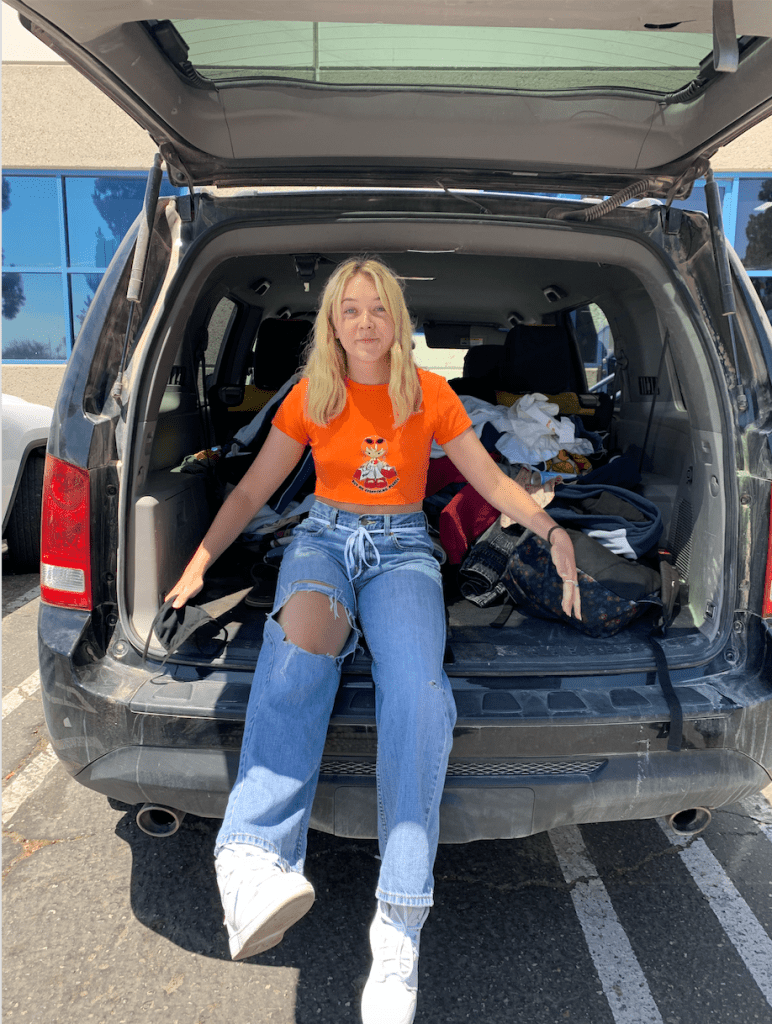
Sasha after a thrift haul for one-of-a-kind items and re-works. August 2020. Source: Sasha Tarnovsky
I am so excited to see what amazing designs and products HoesForClothes continues to put out in the future. Not only is their business extremely efficient and impressive, Tarnovsky is also such a sweet, inspiring and creative person who I was lucky enough to interview for this article. One core principle that Tarnovsky holds herself to — and encourages other creatives to do the same — is to stay true to herself and be original. She says, “Everything that I release that is not very ‘me’ where I’m just trying to appeal to someone else always flops. Copying other creators or being inspired by trends will never last. If you keep posting and creating items that are YOU and unique to your brand, you will develop an audience that is committed to the same aesthetic and you will see growth.” Tarnovsky and Burror are living proof that this advice works, given the success and integrity of their brand, HoesForClothes.
Another piece of advice imparted by Tarnovsky is to make yourself known as a human being, rather than just promoting your products as the work of some faceless, unsympathetic creature. At the core of this advice is the idea that we crave interaction; we sustain ourselves through real, meaningful relationships. That’s why small businesses like H4C are as successful as they are — because they refuse the practice of constantly churning out meaningless designs that lack any sort of personal touch. Rather, H4C and other small clothing brands like it favor a model that incorporates — and doesn’t alienate — humanity and business. The designs from H4C aren’t simply cute and jealousy-inducing; they’re created with love by two people who love each other and love what they do.
Keep an eye out for HoesForClothes, because Tarnovsky and Burror aren’t going anywhere — if anything, they’re only just getting started.
Sasha’s Current Favorite Small Businesses
Penelope Gazin’s Fashion Brand Company. “I am addicted.”
@fearhall’s (Instagram) Get Some Sleep. “They are currently the reason I canNOT STOP spending money. The owner is awesome, I met him in person at a pop up of theirs this year!”
Snapchat launches 523, a content accelerator program for minority-owned small businesses..
Do you know of any small, minority-owned businesses? Snapchat is looking for underprivileged entrepreneurs to be part of their 523 program, which will provide successful applicants with $10,000 each month to create content for Snapchat’s Discover section.
The name “523” pays homage to the original office location of Snapchat, Inc. at 523 Ocean Front Walk in Venice Beach, California. The goal is to provide platforms to small businesses run by people from underrepresented groups, defined by Snapchat as BIPOC, LGBTQ+, veterans, those with disabilities, and/or women. On top of that, the business cannot have netted more than $5 million in gross revenue for FY 2021 or during the last 12 months. The last qualifier is that any hopeful business cannot have more than 20 full-time employees.
Snapchat’s goal is to help “these creative minds… see the equitable benefits from their impact” by providing them with ample resources, both financial and social. On top of the $10k/month stipends, select business owners will also work with the company’s media and content partnership team; they will also have access to workshops and networking events with 523’s sponsors, which include AT&T, Nissan, Target, State Farm, Unilever, Uber Eats and McDonalds. “We’ll double down on our efforts to make sure that everyone feels that they belong on our platform… creating diverse, accurate content that reflects a rich variety of views across our global community,” Snapchat stated in their 2021 Citizen Report.
On one hand, this effort is aimed at the goal of supporting underprivileged businesses and creators who have lacked the resources and platforms to grow their businesses. On the other hand, this effort promotes Snap’s Discover service, a feature that contends with the likes of TikTok and Instagram Reels. Snapchat describes Discover as “the fastest way for our Snapchatters to be informed, entertained, and learn about the world around them.” Moreover, it “is a monetizable environment that supports our partners as they build their business.
Snapchat isn’t the only company with a program like this. In November, TikTok announced plans to offer $50,000 grants to 10 black creators. They are partnering with a company called MACRO “to ensure Black creatives and artists have the resources they need to reach new heights in their careers and spearhead innovation in their respective industries,” according to TikTok’s director of creator community, Kudzi Chikumbu. YouTube, Facebook, and Triller have launched similar programs. Applications are open from now until February 1, 2022. Selected small businesses will be announced on March 1. If you know of any small businesses who might benefit from partnering up with Snapchat, send them this article and they may be in the running for a $10k/month stipend.
The stock market rebounds after the temporary plunge as investors assess the economic risk from the new Omicron Variant of COVID-19.
Confirmed cases of the new Omicron coronavirus variant have on Friday continued to grow around the world, triggering the discovery as a strain on many countries to try and seal themselves off by imposing travel restrictions, while also sending stocks tumbling and causing oil prices to fall.
That being said, stocks have made a comeback Monday, bouncing back from the steep selloff last Friday where investors feared the Omicron COVID variant would disrupt the global economic rebound. Reports of the new Omicron variant of the coronavirus brought back memories of last summer when the fast-spreading Delta variant put a major dent in the recovery of the stock market. This discovery spooked investors on a traditionally quiet day in the market following Thanksgiving, leading to one of the worst days for stocks this year.
The most powerful lift for stocks came from those that have been able to grow strongly almost regardless of the economy’s strength or pandemic’s pall. Gains for five big tech-oriented stocks — Microsoft, Tesla, Apple, Amazon and Nvidia — which alone accounted for more than a third of the S&P 500’s rise. The gains for tech-oriented stocks also helped to drive the Nasdaq composite up a market-leading 1.9 percent.
The S&P 500 rose 1.3 percent to recover more than half of its drop from Friday, which was its worst since February. Treasury bond yields, which fell Friday as investors were gunning for safety, reversed course and rose Monday. In particular, the 10-year U.S. government bond yielded 1.52 percent when the New York Stock Exchange closed.
Travel-related stocks started the day Monday with gains but fell back as more caution filtered into the market and as travel restrictions around the world remained in force. They closed mixed after President Joe Biden said he was not considering a widespread U.S. lockdown. He stated the variant was a cause for concern and “not a cause for panic.” That being said, Delta Air Lines and American Airlines closed slightly lower, while cruise line operators Carnival and Norwegian Cruise Lines actually notched gains.
While the market has steadied itself, uneasiness still hangs over it due to the discovery of the variant, as the virus appears to spread more easily, and countries around the world have put up barriers to travel in hopes of slowing it. Still to be seen is how effective currently available vaccines are for the variant, and how long it may take to develop new Omicron-specific vaccines. It is evident that the Omicron variant is hitting markets less hard than other COVID variants, but just as the market quickly bounced back from its Delta fears, history appears to be repeating itself: investors are taking a breath and sensing a buying opportunity.
Americans are paying more for consumer goods during the biggest surge in U.S. inflation in more than 30 years.
Header Image: Forbes
Americans across the country are seeing higher prices at grocery stores and gas stations, causing even more pain for their wallets and pocketbooks right as the holiday shopping season is set to commence.
Data released by the Labor Department earlier this week indicates inflation has risen at its highest rate in over three decades. Consumer prices soared by 6.2 percent compared to the same period last year. This is the biggest one-year jump seen in the government’s consumer price index since 1990.
The increase in prices is surpassing wage gains and forcing Americans to dedicate a bigger share of their income to necessities such as food and gas. In particular, according to the Bureau of Labor Statistics data: meat, chicken, dairy, eggs, sugar and coffee are among the products that have seen especially large price gains in the past year.
Additionally, in the past year, energy costs have jumped a stunning 30 percent, with gasoline soaring by nearly 50 percent. A gallon of gas, on average, was $3.42 nationwide on Tuesday, according to AAA — up from $2.11 a year ago. The energy index climbed by some 4.8 percent last month alone and the gasoline index gained 6.1 percent. This marks the fifth consecutive monthly increase in gasoline prices.
Prices for natural gas and heating oil are also on the rise. For instance, the Energy Information Administration has predicted that Americans could spend up to 30 percent more on natural gas and 43 percent more on heating oil this coming winter.
Economists predict high inflation will subside sometime next year once the widespread shortages of supply and labor begin to ease, but it’s very unclear how much or how quickly price pressures will fade. In the meantime, inflation will continue to eat up American households in terms of consumer spending.
The General Electric Company (GE) is one of the largest, most diversified conglomerates in American history. The Boston-based organization creates a vast network of electronic products and pumps mass amounts of cash directly into the American technological research pool year after year.
It was announced Tuesday that GE has a plan to spin off parts of its mass network into three separate, public companies by 2024. In a press release, the company detailed its plan to peel off all parts of GE that do not relate to aviation or flight, and combine them appropriately to create three global organizations: GE Healthcare, GE Power, Renewable Energy and Digital, and GE. The press release notes that GE Healthcare will be the first of these companies to go public through a tax-free process that would allow all healthcare related divisions of GE to split off and become independent by 2023.
The next step of the process will be to combine GE Renewable Energy, GE Power and GE Digital into one business with a focus on leading America’s transition to renewable energy. Once combined, these divisions will share resources and be placed under a single banner within GE. Again, using the same tax-free process as GE Healthcare, this new umbrella will spin-off into a public, global company by 2024.
GE prime is expected to maintain around 20 percent of GE Healthcare, and the same can be assumed about GE’s energy branch, although future proceedings of the umbrella group will determine the exact amount. According to GE, the reason for this major schism is that once all three companies are independent they “will be better positioned to deliver long-term growth and create value for customers, investors, and employees.”
Current GE CEO H. Lawrence Culp Jr. said in a statement “The world demands—and deserves—we bring our best to solve the biggest challenges in flight, healthcare, and energy. By creating three industry-leading, global public companies, each can benefit from greater focus, tailored capital allocation, and strategic flexibility to drive long-term growth and value for customers, investors, and employees.”
Culp Jr. will continue to serve as CEO to GE and will take on the role of chairman to GE Healthcare when it is created. Once the GE energy company is spun off, Culp Jr. says he will focus solely on GE’s aviation efforts, but it is ambiguous whether he or colleague John Slattery will be named CEO of GE Aviation. Following the full transition, Peter Arduini will become the CEO of GE Healthcare and Scott Strazik will sit as CEO of the GE energy company.
The conglomerate noted that some of the factors that contributed to this decision and their support of it is a $75 billion reduction in debt since 2018 and risk reduction provided by their $9.4 billion in capital raised through investment portfolio changes, improvements to claims management and insurance premium increases since 2018.
What is notable about this transition is that GE, a company with an annual operating income upwards of $2.5 billion, according to the Wall Street Journal, is expected to incur a $2 billion dollar cost of transition, which includes all physical transitions such as offices, housing, and brand development, as well as contractual and legal transitions. It is also expected to pay out about half of a billion dollars to the federal and Massachusetts state government in taxes. As this plan is set to cross the finish line by 2024, that means that all three GE branches will effectively wipe out one year of the operational budget to make this transition a reality.
Shares of GE rose by more than 6 percent in early trading on Tuesday, maxing out around $115.01 as a result of these announcements, but at the time of writing this, one share in GE is currently valued at $111.29, around $5 higher than it was at this time one week prior.
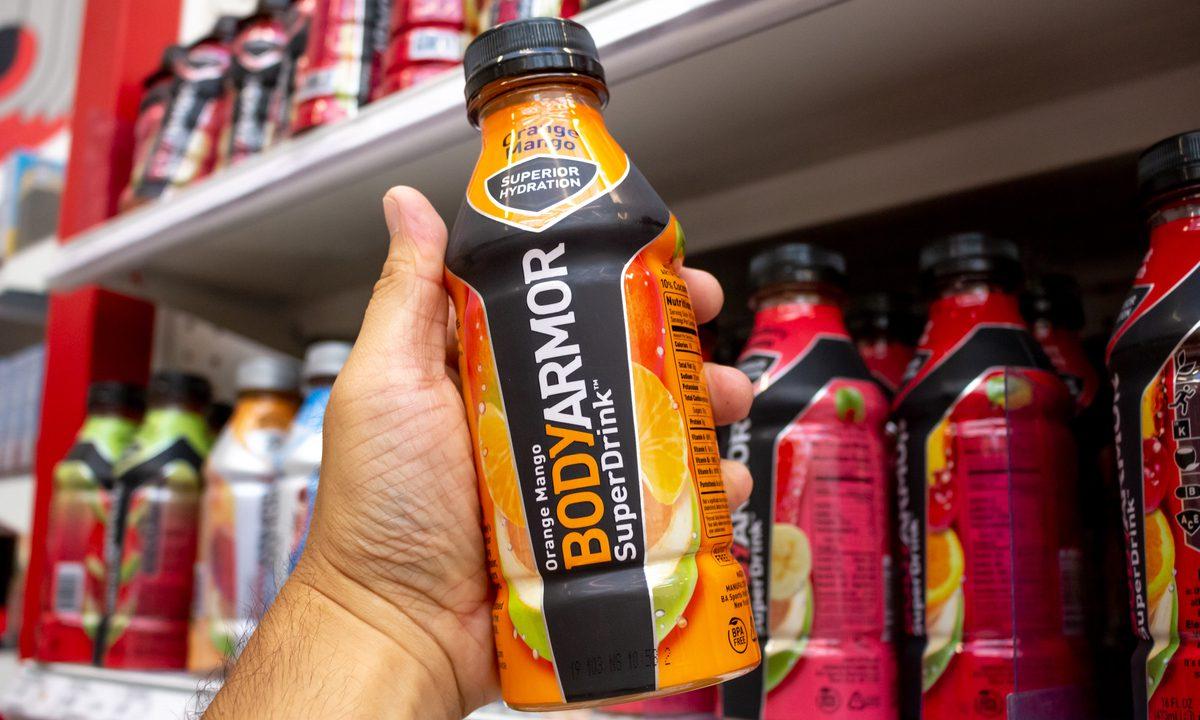
After Coke’s initial investment in the startup company BodyArmor, they decided to take full control with a $5.6 billion buyout.
Prior to this week, the Coca-Cola Company owned 15 percent of BodyArmor. One of the leading rivals to Gatorade, BodyArmor was a startup company that began in 2011. The company promotes their drink to contain natural flavors and sweeteners with no colors from artificial sources. Their first big investor was Kobe Bryant in 2013. He paved the way for more athletes like James Harden and Mike Trout to help support the small company grow larger. Starting in 2018, the Coca-Cola Company became their second largest investor behind the creator of BodyArmor Mike Repole.
On top of BodyArmor having their original sports drink, they also introduced BodyArmor Lyte. This drink is said to have the same nutrients of a regular bottle of BodyArmor but has only 20 calories and two grams of sugar per bottle. They also have released BodyArmor Sports water. This drink was said to be created for those who have an active lifestyle with a performance pH of 9+ and electrolytes for exercise. These two drinks plus the original BodyArmor sports drink allowed for high sales throughout the year.
It is now being announced that the Coca-Cola Company is fully buying BodyArmor for $5.6 billion. This company went from a small startup to a multibillion-dollar company within 10 years. For context, Kobe Bryant initially invested $6 million back in 2013, and his investment today is worth over $400 million.
Coke’s biggest rival, Pepsi, has been dominating the sports drink market due to Pepsi owning Gatorade. Gatorade in the past year had a 64 percent market share of U.S. sports drinks according to the Wall Street Journal. BodyArmor had 18 percent of sales, and Powerade had 13 percent. Coca-Cola now owns both Powerade and BodyArmor.
Coke is always trying to increase their product line to compete with Pepsi. They are trying to challenge Gatorade with the purchase of BodyArmor. An editor of Beverage Digest, Duane Stanford, states, “Coke can try to sandwich Gatorade between BodyArmor, a more premium brand, and Powerade, which is more of a value brand.”
The purchase of BodyArmor, in addition to their already owned brands like Powerade, Dasani water and Gold Peak tea brings a different strategy for Coke. They no longer have to be reliant on just the sodas they own like Fanta, Sprite and their very own Coca-Cola. They have branched off to other drinks, expanding their product line — this to compete with their largest competitor, PepsiCo.
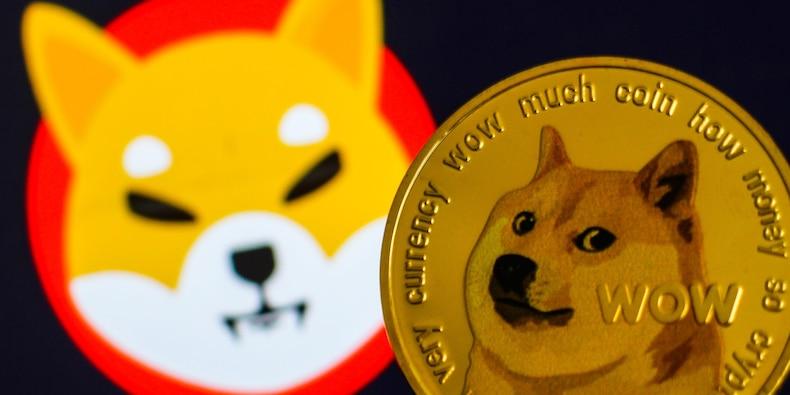
Digital cryptocurrency token Shiba Inu has jumped into the top 10 most valuable digital assets by market value, surpassing its inspiration, Dogecoin.
The recent trading frenzy over a digital token called Shiba Inu — commonly promoted as a “meme” or joke coin in the crypto world — has jumped the canine-themed cryptocurrency into the top 10 most valuable digital assets by market value, hitting over $39 billion and surpassing its cousin and apparent inspiration, Dogecoin.
Since Wednesday, both Dogecoin and Shiba have frequently swapped places in the rankings, competing in what many would call a rivalry between the two. In fact, the Shiba Inu community actually refers to the crypto token as the “Dogecoin killer”.
As of Monday afternoon, Dogecoin, which was launched in 2013 as a joke, ranks No. 10 in cryptocurrencies with a market value of over $35 billion, according to CoinGecko. Likewise, Shiba Inu, which launched in 2020 to poke fun at dogecoin, now ranks at No. 9 with a market value of over $39 billion. Shiba Inu hit an all-time high of$0.00008990 this past Monday.
Moreover, Shiba is up another 10 percent at midday this past Monday after its leap last week which had more than doubled in value. With this, most of that gain came in a flurry of trading last Wednesday, when it gained a whopping 66 percent. Besides, Shibu is in fact up about 900 percent in the past month.
Each Shiba coin costs just a tiny fraction of one cent; however, to put in simpler terms: if you were to have bought $1,000 worth of Shiba Inu in late September, your value of 20 million coins would now be worth around $9,000.
Both Shiba’s and Dogecoin’s growth can be largely credited to supporters hyping them up. It is the power of the people who are intensifying them that drives the performance of the coin a lot of the time, including celebrity supporters like billionaire Elon Musk, CEO of SpaceX and Tesla. Musk often tweets about different cryptocurrencies, and in doing so, has seemingly impacted their prices.
Overall, the current surge in Shiba Inu can be seen as very much community-driven, and it is clear to see any token or coin out there has the opportunity to run up like this if someone with a big microphone is amplifying it — case in point is Shiba Inu. Created in August 2020, it has taken less than two years to become a contender for a top 10 cryptocurrency spot.
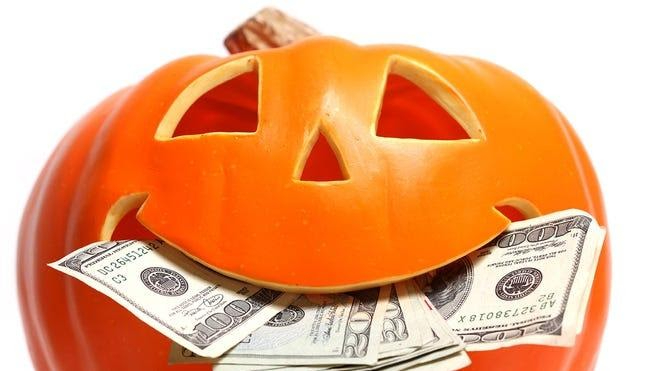
Despite ongoing pandemic concerns, U.S. consumer spending on Halloween is set to be higher than ever within the past five years.
An estimated two thirds or 65 percent of Americans intend to celebrate Halloween or participate in Halloween activities this year, up from 58 percent in 2020 and more comparable with 68 percent in 2019 before the COVID-19 pandemic. This trend demonstrates that Halloween is back on the schedule this year and plenty of Americans want trick-or-treaters, decorations and new costumes.
According to research from the National Retail Federation, U.S. consumer seasonal spending this year is forecasted to be $10.14 billion, up from $8.05 billion last year in 2020, $8.78 billion in 2019, $8.97 billion in 2018 and $9.09 billion in 2017. The top ways consumers are planning to celebrate the holiday include handing out candy (66 percent), decorating their home or yard (52 percent), dressing in costumes (46 percent), carving a pumpkin (44 percent) and hosting or attending a party (25 percent).
The association’s annual survey was carried out on its behalf by Prosper Insights and Analytics and analyzed celebration plans. Its findings presented 93 percent of millennial parents would be seeking to go all out for the holiday, particularly after last year in which many celebrations were restricted amid the pandemic; however, caution has been urged by health authorities, with the U.S. having the highest death toll from the pandemic in the world, with over 750,000 lost to Covid-19 since the start of the crisis that began early last year.
With more Americans celebrating Halloween this year, average spending is also up. For example, on average, consumers plan to spend $102.74 on costumes, candy, decorations and greeting cards – $10 more than what was planned last year. In addition, households with children are estimated to spend more than twice the amount than households without children ($149.69 compared with $73.57) this Halloween holiday. Likewise, the number of Americans planning to decorate for Halloween differentiates with last year’s spike in interest, with spending on decorations forecasted to climb to $3.17 billion, up from last year’s $2.59 billion. Totalspending on costumes is the highest it has been since 2017 at $3.10 billion.
Of those planning to dress up for Halloween, nearly 69 percent of adults already know what their costume will be this year. More than 4.6 million adults plan to dress like a witch, more than 1.6 million as a vampire, more than 1.4 million as a ghost, more than 1.1 million as a cat and another 1.1 million as a pirate. Notably, more than 1.8 million children plan to dress as Spiderman, more than 1.6 million as their favorite princess, more than 1.2 million as Batman and more than 1.2 million will dress as one of their other favorite superheroes. All in all, it is very apparent that Halloween forecasts this year prove Americans want to spend way more on trick-or-treaters, decorations and new costumes.
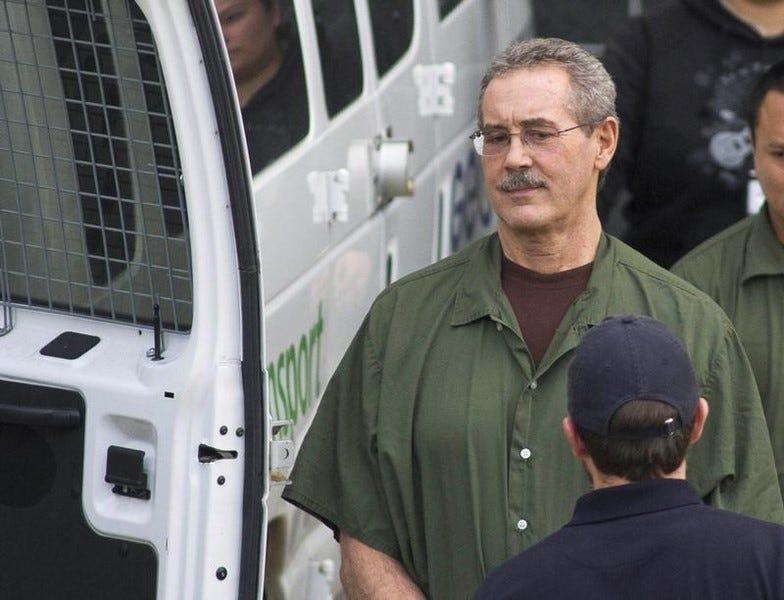
Robert Allen Stanford, a name that would rise to infamy, was born in Mexia, Texas on March 24, 1950. As a youth, Stanford once made $400 to clear an area of land for real estate developers and in exchange, he received cutdown trees that he could sell as firewood. After graduating from Baylor University, Stanford worked for Stanford Financial, a company that his grandfather founded as a salesman and bookkeeper. Stanford, with his talents in finding opportunities, transformed Stanford Financial into a multi-billion-dollar company owning $51 billion in investments. During the 1983 Texas oil bubble burst, Stanford traveled to Latin America and later set up shop in Antigua. Similar to all wealthy and successful people, Allen Stanford explored lobbying in the realm of politics; two lawmakers, Bob Ney and Tom DeLay, resigned as a result of his lobbying. It can be argued that his time in Antigua may have been the most successful years for him. Stanford led an extraordinary life which would eventually catch up with him.
After years of legitimacy, Allen Stanford went the unsavory route of scamming innocent people. Stanford’s plan was simple: tell investors that investing with him will lead to no risk and high returns and support it with a believable story. To hide his fraud, Stanford sent out fake financial reports. Stanford’s investors’ investments included securities such as certificates of deposits with interest rates double the average rate of the market. The average person would give Stanford their money because doing so appealed to their sense of financial security.
As far as Ponzi schemes go, the most notable and infamous one is Bernie Madoff. He scammed his investors roughly $20 billion while telling his clients their investments were valued to be at $60 billion. Madoff pleaded guilty and received a 150-year sentence. The second largest Ponzi scheme in history is that of Allen Stanford. Stanford sold high yield certificate deposits to 18,000 people from 113 countries where he ran a $7.2 billion Ponzi scheme. Stanford was eventually caught in 2009 and assigned a 110-year sentence starting in 2012. In June 2016, Ralph Janvey, a court-appointed receiver, obtained $65 million in a settlement. Out of the $7 billion in Stanford’s bank, only $63 million was uncovered at the start of the receivership. In other words,only 0.95 percent of that $7 billion was found. Already, $443 million has been given out to Stanford’s victims while another $550 million will be distributed in quarter one of 2022. This $1 billion recovery also happens to be the second largest amount in history, with Bernie Madoff’s victims recovering $11 billion.