Can The La Salle Men’s Basketball Program Turn Their Season Around?

Sports

Dani Colon, Editor

La Salle’s men’s basketball program is entering the 2026–27 season hoping to improve after a difficult 2025–26 season. Under Head Coach, Darris Nichols – the Explorers finished last season with a 9-23 record. One of the biggest problems last season was the team’s shooting efficiency. La Salle ranked last in the Atlantic 10 in field goal percentage and second to last in three-point shooting. This is something the coaching staff needed to address heading into the new season.

So far, La Salle MBB have started the season with a 1-2 record (as of November 11). They suffered a 94-55 loss to Houston, defeated LIU 88-80 and most recently lost to Villanova 80-59. Although the victory against LIU showed that the Explorers benefit from scoring, the other two games exposed some of the team’s weaknesses. Through three games, the Explorers are averaging 67.3 points per game while allowing 84.7 points. The team is also shooting at just 34.4% from the field and 29.3% from the three-point range. These numbers suggest that offensive consistency is a huge concern.

Head Coach Nichols has tried to revamp the player lineup to help address this problem, keeping only seven returning players. An important returning player is Rob Dockery, who led the team in scoring last season with 12.5 points per game. The team also added players such as Kam Burton, who shot 42.5% from the three-point range at Stephen F. Austin last season. These additions show that Nichols is working hard to build a team with better shooting abilities and more offensive options.

However, bringing in new players does not guarantee immediate results, especially when players are still adjusting to a new system and style of playing.

Looking ahead, will La Salle continue to lose and struggle? The upcoming games against Temple, UPenn and several other competitive programs will give a better understanding of where the team stands. Temple will be an especially important matchup, because it gives La Salle another opportunity to compete against a Philadelphia-based rival. Based on the team’s early shooting numbers and defensive struggles, it would not be a surprise if the Explorers lose more games before finding consistency. This does not mean the season is already lost, but the team needs to show improvement fast.

At this point, winning a full season is hard to predict. Nichols needs to find a consistent rotation, improve shooting efficiency, and limit turnovers. The biggest question moving forward is whether the coaching staff can get the most out of the players they have. If these problems continue, La Salle could face another difficult season. This is still the start, and truly anything can happen in the world of sports.

The NBA’s Injury Epidemic

Sports

Nate Tramdaks, Staff Writer

One of the unique aspects of the Joel Embiid fan, enjoyer, watcher experience is that, through osmosis, you become akin to various parts of the human body. He tore his meniscus (which acts as a cushion in your knee to stop the femur and tibia from grinding against one another) three times during the course of his career in 2017, 2021, and 2024, opting for arthroscopic knee surgery in 2025. The scope in 2025 was aimed at being the mother of all surgeries. In the past, Embiid treated his meniscus tears by having surgery to remove the torn piece of tissue. This approach, known as a partial meniscectomy, allows athletes to return to competition relatively quickly. The trade-off, however, is that removing portions of the meniscus leaves less cartilage to absorb the tremendous forces placed on the knee.

The NBA has faced a meteoric rise in injuries at and below the knee to start the 2026-2027 season. As of November 10th, there have been 691 total player games missed across the league. The dominant source of these missed games is knee injuries, accounting for 185 of the 691 games. With every game having no fewer than 5-6 players on the injury report, questions are starting to arise about the physical demands of the modern NBA, and what can be done to remedy it.

The first thing everyone points to is the number of games and the existence of back-to-backs. There are reasons beyond injuries to shorten the schedule, but a 2024 NBA study found no significant relationship between congested scheduling and increased injury rates. The NBA has played 82-game seasons since 1967, and players today have access to better medical care, nutrition, travel accommodations, and recovery technology than ever before. So why are injuries still such a persistent problem?

A new frontier people are exploring is the rise of youth year-round basketball. Specifically looking at the AAU circuit and basketball specialization at a young age. Unlike previous generations, many young players now compete almost continuously, leaving little time for their bodies to recover from the physical demands of the sport. A 2025 study published in the Orthopaedic Journal of Sports Medicine examined 318 NBA first-round draft picks from 2013–2023. It found that players who participated in multiple sports during high school missed 13.5% of games due to injury, compared with 16.9% for basketball-only athletes, over their first three NBA seasons.

To address the injuries, the solution may need to come in the form of a rule change that drastically changes the sport. The way the game is played now, a sport dominated by pace-and-space, players are asked to move so quickly laterally and cover so much ground that there may not be a solution that directly addresses injuries. 20-minute games would be great, but players will still get hurt because the game is so taxing. An example change would be changing the point values. Inside the arc, shots are worth three points, and outside the arc are worth four. This will change the balance of players’ shot diet, keeping players closer to the basketball, and they will not have to cover as much ground.

An Elegy for the American Country Club

Sports

Nate Tramdaks, Staff Writer

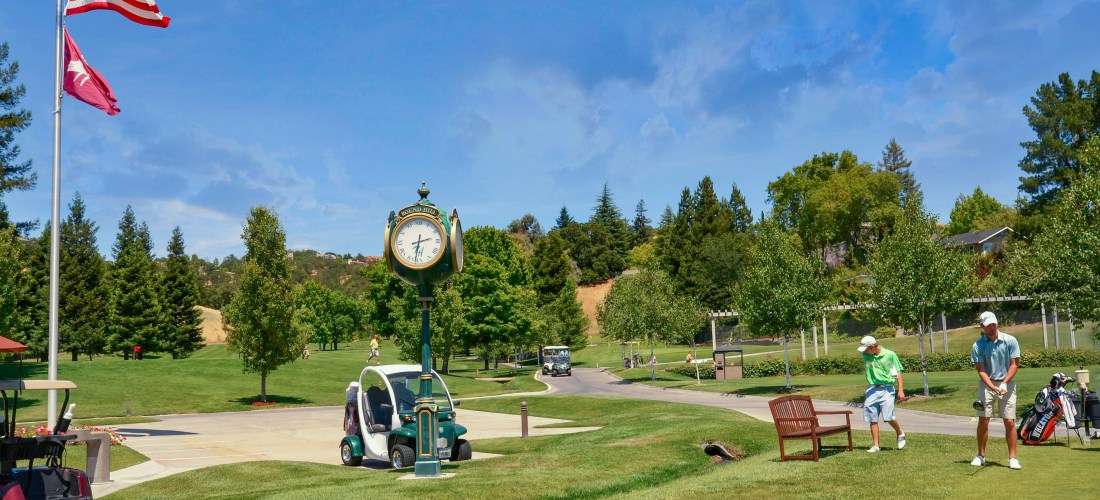
The decay of private golf in America marks the slow death of one of the country’s most distinctly American institutions, the country club.

For much of the past century, the private golf club occupied a unique place in American social life that, arguably, no longer exists. Membership was more than a means of access to a golf course. It was an attachment to a community–one whose identity had been shaped through generations of belonging. A community that was built around traditions set forth by those who came before. Traditions that then led to the identity of the club, making it unmistakable from another.

Historically, membership carried a certain responsibility with it to the club itself. Members were not customers simply paying to play a golf course upfront. They were stewards of the institution. Through member-elected boards and upholding customs, they helped shape the direction of their clubs while preserving their character and identity. A club is its members; the club is there for its members, but in turn, the members have the obligation to the club, and past members, to uphold its’ identity.

This relationship between a club and its members has become extremely transactional over the past decade, decade and a half. The member-driven club has been sold out to the corporate model with “sports groups” purchasing clubs, jacking up the dues and decreasing quality, strengthening the bottom line. When considering the direction of clubs, tradition and identity are no longer at the forefront of decision-making. Instead, clubs only concerns are centered around customer-acquisition (new members), expanding amenities, and in-turn, expanding revenue. The distinction between belonging to a club and paying to use amenities has all but vanished.

Compounding this corporate transformation is the obscene “Grow the Game” movement. What started out as a well-intentioned effort to introduce the game to a newer audience has become an excuse for companies to commercialize every aspect of the game. The over-corporatized slop that has invaded the golf world has bogged down something that is truly great. Now, every course in America is getting trampled on by people wearing ghastly micro-print polyester shirts driving golf carts blasting music and drinking High Noon Transfusions. The sport’s popularity is celebrated without much consideration for whether its culture is being preserved along the way.

This mentality has inevitably found its way into private clubs. The concern is no longer simply whether prospective members appreciate the institution they hope to join, but whether or not they are willing to pay the initiation fee. The result is a changing membership culture, where individuals may see the club primarily as a collection of amenities rather than a community to which they owe any responsibility. Herein lies the disconnect, those who do not have any regard for the culture of club golf, who did not grow up in it, and are not willing to learn or assimilate to club culture have no place in it.

The road back begins with a renewed understanding of what a private club is supposed to be. Clubs must once again place their members at the center of their identity, and give greater importance to the traditions and relationships. Prospective members should be encouraged to understand the history of the club they are joining and recognize that membership carries responsibilities as well as privileges.With that, the barrier to entry must be higher, every club must become invite-only. A club is its members, and only its members can decide who can be one of them.

For private golf to sustain in this country, it must resist the urge to become just another recreational profit center.

THE MLB DOMINICAN FARMING SYSTEM

Sports

Dani Colon, Editor

The Dominican Republic ranks second worldwide for the number of players produced for the MLB. With 17% of the population living in poverty, baseball can represent a chance for many children to build a better future for themselves and their families. For many young players, making it to the major leagues is more than just a dream; it’s a hope for escaping poverty. Boston Red Sox Hall of Famer David Ortiz has become a huge influential figure for many Dominicans; he understands these struggles himself, having grown up in the Dominican Republic.

With Dominican players making up 10% of MLB rosters, all 30 MLB teams have invested millions creating elite luxury baseball camps. A ProPublica investigation revealed a darker side of this system. MLB allows a shadow industry to operate around baseball development that preys on boys as young as seven years old. In 2021, a 14-year-old Belfi Rivera made a verbal agreement with the Arizona Diamondbacks and was promised 1.8 million dollars. What Rivera didn’t realize was that MLB teams cannot officially sign international players until they are 16-years-old. The agreement was verbal; it was also difficult to verify the details of the promised deal.

Rivera is the seventh of 11 children and grew up in poverty. His family earned only $150 a month, and both of his parents were illiterate. He even recalls only eating a piece of bread once a day. Here is where those involved in the predatory side of MLB take advantage of young players who are desperate for a chance to escape poverty. Rivera was approached by Santos Caraballo, a 40-year-old who has faced criminal charges in the United States. Caraballo offered Rivera loans, stating that Rivera would have to give him half of his earnings and pay him back once he turned 16 – the legal age to sign with an MLB team.

Caraballo stated that there will be a 7% interest loan monthly, which is illegal in the United States. Caraballo has been running his business, loaning money to children who sign before the age of 16 for years. In 2020, there was a whistleblower to the FBI; MLB knew about these loans, but the case was later dismissed. Numerous ads have even been posted on WhatsApp for families to see, offering money to children who have verbal agreements and want to receive their money instead of waiting until they are legally old enough to sign.

It’s not only here where these children are preyed upon; it starts as young as seven years old. Rivera was noticed by the Diamondbacks after he was approached by a trainer at just seven years old. When children train with baseball trainers, they can also be at risk of being “sold” to other well-known trainers. Trainers make agreements and deals with each other, and children are essentially passed along to other camps. They may have to live in boarding school-like facilities and leave their regular school life behind. They play baseball 24/7.

This might seem like the perfect life for these children, but they are still very young. Rivera even recalled feeling homesick.

When Caraballo tried convincing Rivera’s family to take out a loan, one thing that helped seal the deal was Caraballo claiming to be David Ortiz’s “right-hand man.” With multiple social media posts showing the two together, they were even listed as partners in a Miami-based sports company called “Big Papi Sports Group.” The company was shut down the next year. The title of the company was never listed. Caraballo was able to alter the legal documents on the loan because Rivera’s parents were both illiterate and refused to give a copy of the forms to the couple. Rivera’s family was only asking to sell 5% of his deal for $90,000 upfront. Carballo convinced them to sell 10% instead.

Months passed. Carballo continued convincing the family to take out more loans, even though they were able to live comfortably and afford the medical attention they needed. At one point, Caraballo offered them $70,000 with 7% interest. By the time Rivera was old enough to officially sign with the Diamondbacks and receive his money, Caraballo came in and took almost everything. After the loans and interest were added, the young player and his family were left with nothing. Rivera is not the first or the only child this has happened to. Many other children have gone through these situations. Some are afraid to come forward and speak out. Rivera even recalled meeting with Caraballo one day to discuss a loan when he noticed a gun on his side. Rivera recalls feeling anxious about that meeting. MLB is fully aware that this is happening. Players like Fernando Tatis Jr. have also been involved in these agreements. In 2017, Tatis signed an agreement to give up 10% of his earnings in exchange for money upfront. When the lenders saw his deal with the San Diego Padres, they wanted more money. Tatis sued the lenders and stopped making the payments.

The situation took a toll on Rivera’s mental health and even affected the way he played. For a few weeks, he was not seen in the lineup. Now, he only earns $100 a week, and that is only when he plays. One way MLB could help stop situations like this from happening is by creating an international draft, where teams receive ranked picks and select eligible players. The system could also require players to have a high school education. Even players selected with the last pick could receive $100,000. However, David Ortiz has reportedly posted on WhatsApp to reach people in the Dominican Republic and speak out against the idea of an international draft. For a country that produces so many MLB players, with all 30 teams investing millions into the island and many other Latin American players traveling there to train in these facilities, you would think the MLB would do everything in its power to help these players.

Even some international players receive financial literacy support, like the programs offered by the Miami Marlins. Yet, when it comes to protecting these young children from being taken advantage of, the baseball world seems to turn its back on them.


New Era For Baseball: The Rise Of A Professional League

Sports

Dani Colon, Editor

For the first time since 1954, there is finally an all women’s professional baseball league (WPBL),with four teams from Boston, Los Angeles, New York City and San Francisco. However, there aren’t any travel/away games–this keeps expenses low, as the league predicted that views would have low ratings. 

Wanting to start the season in a calm setting, the first ever game was set in rural Springfield, Illinois at Robin Roberts Stadium (Hall of Fame Phillies pitcher). Springfield, Illinois is home to one of the oldest paid women’s baseball games since 1875. With a sold out game of 4,000 fans, it was a hit. Starting off the season, the league had won 30 games. Also being held was the first professional Women’s Baseball Draft in history at Nationals Park. Before the league started, more than 600 players from 10 different countries made it to the draft.

The first girl to pitch a complete shutout win in the little league world series at just 13-years-old, Mo’ne Davis, was picked up by the Los Angeles Queens. San Francisco had the first pick and selected Kelsie Whitmore, who has played for USA Baseball and also plays as a pitcher and outfielder for Savannah Bananas. While the first game started, New York Queens catcher Denae Benites was the first woman to hit a home run in WPBL history. Benites not only was able to get the first home run, but also led the 2026 season with 11 home runs. Ayami Sato, pitcher for the Los Angeles Queens was also the first in WPBL history to throw a first complete game shutout against San Francisco. 

The WPBL is important because it gives women another chance to play baseball professionally. There has never been a professional Women’s Baseball League in the United States since the All-American Girls Professional Baseball League ended in 1954. Now, women from different countries have a new place to play and compete.

As the season came to a quick end, the Los Angeles Queens faced the San Francisco Fireballs in the WPBL championship round on September 16 with a close score of 7-6. The fireballs recorded 20 hits while also scoring the most runs in the league during the whole season and the most home runs (19). This is a whole new history being made for the WPBL;these stats will be used for measurements for next upcoming seasons. While the Queens took the championship being the first champions in WPBL history, Ayami Sato was also named the MVP and first in WPBL history. 

The league is still pretty small right now, with only four teams and all the games being played in one stadium. This is just the first season, and more history is to be made. 

The Doug Eddings Controversy and Race in MLB

Sports

Dani Colon, Editor

Baseball is already considered a “luxury sport,” with gear costing hundreds of dollars and some little league clubs even charging over $2,000 per child, not even guaranteeing a spot in the MLB. These clubs clearly just want to make a profit off of children and their families and claim that their club is the “best” because one child went to Division I. 

According to MLB.com, by 1981, there were over 177 African American players in the MLB, and in 1990 there were 156 players. The number of African American players continued to plummet, while in 2023 there were only 59 African American players in the MLB. Black kids who live in urban settings, only 6% of them have access to baseball fields, while Black kids who live in rural and suburban settings have between 11-13% access to fields. Whereas white kids who live in rural, suburban and urban settings have between 10-13% access to them.

The MLB wasn’t integrated until 1947, with racism being so high in the sport that it took years for Black players to even have the same opportunity to play. Even today, racism can still be seen in baseball through the lack of African American players and the unequal access that some Black children have to baseball. With children wanting to go pro, they always have a chance to do so through college offers and recruitment, but even the college application process can create barriers for students. This can make it harder for students who already have less access to resources to continue playing baseball at a higher level.

On September 5th, 2026, the St. Louis Cardinals faced the Colorado Rockies. Rookie Hancel Rincon from the Dominican Republic came in to pitch, and it was his first major league debut. However, when the pitch was released, the Rockies scored an inside-the-park home run in the bottom of the sixth inning. When the runner was coming home, the St. Louis’ third baseman came in and tried to tag the runner; this was ruled safe. St. Louis manager Oli Marmol, who is also of Dominican descent, decided to challenge the call. When the play was under review, home plate umpire Doug Eddings made the final decision that the call was safe. When he ruled the call, Eddings was very enthusiastic about the decision, almost like he was happy to prove Marmol wrong, and glanced at him.

While the next pitch was released, Rincon was visibly nervous and hit Eddings in the foot. It could be understandable that Eddings might think it was on purpose after that. Rincon winds up to pitch, but Eddings stops the game and tells the St. Louis catcher to communicate to Rincon to fix his hat, saying that it “won’t slide on his field.” Now, Marmol becomes visibly upset because this all had a common theme. The St. Louis catcher laughs and thinks this cannot be serious because when the footage is played back, there is no difference in the hat from before he was asked to fix it and after it was fixed.

This did not make sense to anyone in the St. Louis dugout, and players were visibly confused. Some people thought it was just the way Doug Eddings is because he has been known to make strict or unusual rules. But to Marmol, he had to defend his player. He told Eddings to “be a big boy,” and things ultimately started to get heated between the two, with them exchanging explicit words and Marmol ending up being ejected from the game.

This situation shows how racism and bias can appear in baseball. Eddings’ treatment of Rincon seemed different from how a player should normally be treated, especially over something as small as the way his hat was being worn. Rincon was already visibly nervous during his first major league appearance, and instead of helping calm the situation down, Eddings continued to confront him. This is a prime example of racism, because Rincon is a player of color who was being singled out and treated differently. Even though Eddings did not directly say anything racist, racism does not always happen through comments. By the end of the game, Eddings blamed a Rockies batter for saying that the hat was distracting, but when footage was played back, the batter never spoke to Eddings. 

The next day, Eddings was reprimanded by the MLB front office, and St. Louis players came to the game standing in unison with their teammate, having their hats on backwards and in many different ways. The situation affected the entire team and brought more attention to the way Rincon was treated.

If at First You Fail Miserably, Try Again?

Sports

Nate Tramdaks, Staff Writer

LIV Golf set out to disrupt the golf world back in 2022; now just over four years later, the league that promised to reinvent professional golf is being forced to reinvent itself. After more than $5 billion in investment from Saudi Arabia’s Public Investment Fund between 2022–2026, LIV Golf filed for Chapter 11 bankruptcy in September. The filing marks the lowest point yet for a league that, not long ago, looked capable of permanently changing the structure of professional golf and forced the hand of the PGA Tour. 

How did we end up here? At the beginning of 2025, LIV Golf did not look like a league headed toward bankruptcy. In fact, professional golf appeared closer than ever to putting its civil war behind it. After more than a year of negotiations between the PGA Tour and Saudi Arabia’s Public Investment Fund, the discussions made their way to the White House. Then PGA Tour Commissioner Jay Monahan, Tiger Woods and Adam Scott met with PIF Governor Yasir Al-Rumayyan and President Donald Trump in February, with hopes that a deal could finally reunify professional golf. They eventually never came to a deal, hung up on what “reunification” looked like. Monahan wanted to allow LIV to control a global circuit; Al Ruemeyer wanted to have LIV operate as an entity under the PGA, and wanted to have a co-Chairman seat next to Monahan.

The two tours went their separate ways, with reorganizing occurring in both. Brian Rolapp took over as president of the PGA Tour, and Scott O’Neil as president of LIV, succeeding founder and golf legend Greg Norman. Things eventually came to a head for LIV in April of 2025.

The PIF announced it would stop funding LIV Golf beyond the 2026 season. After pouring more than $5 billion into the league since its inception, Saudi Arabia’s sovereign wealth fund was finally turning out after four years of the tour not getting off the ground. For a league built almost entirely around the financial backing of the PIF, the announcement immediately put LIV’s future into question. This marked the beginning of the end for LIV 1.0. 

From April 2026 to now, LIV has endured a series of events that evoke a sarcastic, “you really hate to see it.” There are too many to list. Eventually, the season got cut short, mass layoffs ensued and eventually Chapter 11 bankruptcy. 

LIV is not disappearing completely. Instead, bankruptcy will serve as a reset. “LIV 2.0” is expected to operate with a smaller schedule, outside investment and a more sustainable structure than the guaranteed-contracts model that defined its first four years. The biggest question is who stays. Jon Rahm, Joaquin Niemann and Michael La Sasso are the three names to watch to return to the PGA Tour. Rahm and Niemann have held tour cards, so their return may be straightforward. La Sasso, on the other hand, skipped his senior year at Ole Miss to join LIV, never held a tour card; his road to PGA Tour status is one in question. 

LIV 2.0 has been speculated to be a “social media” dominant tour. Meaning that it will lean into the “YouTube Golf” scene led by none other than the YouTube golfer himself, Bryson DeChambeau.

The PGA Championship comes to Philadelphia

Sports

Nate Tramdaks, Staff Writer

The second Major of the year, the PGA Championship, returns to Aronimink Golf Club in Newtown Square for the first time in 64 years. 

Pound for pound, Pennsylvania is home to the most legendary and prestigious golf courses in the union, from Oakmont Country Club and Fox Chapel Golf Club in the west to Philadelphia Country Club and Merion Golf Club in the east. The heart of Pennsylvania golf, however, can be found in the southeastern corner of the state, surrounding Philadelphia. Here you will step onto one historic golf course after walking off of another. This dense and history rich area is home to courses such as the aforementioned Merion and Philly Country, as well as Philadelphia Cricket Club, Llanerch, Rolling Green, Manufacturers and, of course, Aronimink. 

With such a deeply ingrained golf culture and a plethora of courses to choose from, it is bewildering at how infrequently this area hosts a tour event. Since 2013, the Philadelphia area has hosted three men’s-professional golf events: 2013 US Open at Merion, 2018 BMW Championship at Aronimink and the 2025 Truist Championship at Philadelphia Cricket. The 2013 US Open was the last major this area hosted since 1981, when Merion was also the host of the US Open. The PGA Championship coming to Aronimink marks an optimistic step up to the national stage for Philadelphia golf, and with Merion set to be a recurring host of the US Open starting in 2030, more and more fans will start to be exposed to the prestige of Philadelphia golf. 

Aronimink is a very interesting choice of course to host the PGA. The last time the club hosted this event was back in 1962, when the legendary Gary Player won shooting 2 under par for the tournament. Since then, it has hosted just three professional men’s events: The 2010 and ‘11 AT&T National and the 2018 BMW. The return to Aronimink and the Philadelphia area is the way the PGA is paying tribute to our country’s 250th anniversary. 

Designed by the legendary course architect Donald Ross, Aronimink opened on Memorial Day in 1928. Following a classic Ross design, Aronimink is filled with tree-lined fairways, strategic bunkering and subtle green complexes that demand precision over power. While the course has been lengthened and modernized over time, it still retains the architectural identity that made Ross designs so respected in championship golf. That exemplification of tradition is what makes Aronimink intriguing as a major venue.

To put the course under a bit of scrutiny, however, questions have been raised about its ability to fully test today’s longest hitters on the PGA Tour. Modern championship golf has increasingly favored distance and aerial control, raising the question of whether a classic, tree-lined layout can adequately stretch the game’s best players. Still, others argue that precision-based courses like Aronimink are exactly what major championships need to prove that elite golf is not only about power, but also about patience, strategy and execution under pressure.

The PGA Championship is a premier event that helps the golf season launch into the summer. It is a great event for players to get their first major title, as well as players to pick up their second or third. This weekend will also give Jordan Spieth another try at completing the career grand-slam, which would make him the eighth player to achieve such a feat.

Golf green via Wikicommons

Back in bloom, 2026 Masters Tournament preview

Sports

Nate Tramdaks, Staff Writer

The flowers are in full bloom on the most hallowed grounds in golf. Every year, we head down to Georgia the first week of April to celebrate the champions of the past and to find out who will don the Green Jacket next. 

The 2025 Masters Tournament was about as close to perfection as you can possibly imagine. Rory McIlroy got his masterpiece, completing the career grand slam after a 14-year journey, defeating Justin Rose in a thrilling playoff. 

The bar is set high for 2026, and for the first time in a while, there is no clear favorite. World No.1 Scottie Scheffler looks completely out of sorts, McIlroy is battling through a post-Masters hangover, and it seems the rest of the field is chomping at the bit. Here are three players to keep an eye on for the week.

Ludvig Åberg

Åberg is starting to become a regular contender at Augusta. In his first Masters start back in 2024, he finished solo second, four shots beyond the champion, Scheffler. In 2025, Åberg was in contention all week and was even tied for the lead with Rose and McIlroy late on Sunday, but ultimately faded in the final three holes and finished seventh. After Åberg’s poor play on Sunday at the Players Championship this year, concerns are starting to be raised about his play under pressure. Despite these concerns, Åberg is still one of the best ball strikers on tour, and on a course like Augusta, this is key. Under pressure, he starts to become wild off the tee, but for the most part, you can get away with it on Augusta. In his last two starts in 2026, Åberg finished T3 and T5. This Masters marks another opportunity for Åberg to attain his welcome to the moment win.

Akshay Bhatia 

Bhatia is off to a blazing start to 2026. In his last five PGAT starts he has finished T16 or better, including a win at Arnie’s place. Bhatia’s game fits Augusta perfectly. He is not a dominant off-the-tee player, but he is an exceptional approach player and putter. This is where players win this tournament–115 yards and in. Bhatia has hit 84.2% of greens in regulation from the fairway under 150 yards, and although he has struggled from the rough, this is no concern at Augusta. Bhatia is making his third trip to Augusta this year. In 2024 he finished T35, and last year he finished T42. He is rolling right now, and there is no time like the present to earn your first major victory. 

Xander Schauffele 

As the current world No. 6, Schauffele is undoubtedly in his prime. After winning the PGA Championship and The Open Championship in 2024, he backed it up in 2025 with Top-12 finishes in The Open and U.S. Open, as well as appearing on the USA Ryder Cup team. Schauffele’s time to win the Green Jacket is now. The top is wide open, and of the guys vying to claim their share, he has the most experience in Major conditions, especially at Augusta. In his last seven starts at Augusta, he has finished top 10 five times. In 2025 he finished T8, and in 2024 was solo 8th. Xander’s game lends itself to Augusta, a solid driver of the golf ball, but more importantly, one of the best approach players in the sport. He is the best player in the world in strokes gained via approach at 2.2. A win at Augusta would catapult Schauffele into some serious all-time conversations and would put him a U.S. Open win away from completing the career grand slam.

Masters Tournament Logo via Wikicommons

Positives of the legalization of sports gambling 

Commentary, Sports

Kelsey McGovern, Staff Writer

In 2018, the Supreme Court struck down the Professional and Amateur Sports Protection Act (PASPA), ruling for the legalization of sports gambling in Murphy v. National Collegiate Athletic Association. Throughout the years following the legalization of sports gambling, controversy emerged regarding its effect within society. Some citizens saw it as detrimental to the integrity of the game, while other citizens viewed the legalization as beneficial because it is now monitored more closely.

Those who are against legalization  raise concerns about the practice becoming more prominent in people’s everyday lives by making it easier for fans to participate. However, whether a practice is legal or illegal does not prevent people from taking part in the activity. The legalization of sports betting allows viewers to engage in the sports community, enhancing entertainment, creates a safer environment for both individuals and teams through monitoring, and improves economic growth through increasing jobs.

Critics condemn sports gambling’s effect on the integrity of the game. They believe that legalization only makes it easier for people to involve themselves in sports gambling, increasing addictive habits. People can make bets online at any time, making the practice more convenient. On the other hand, supporters of the legalization of sports betting emphasize that there are more regulations in place monitoring actions, which not only limit money and time, but also increases the emphasis on the integrity of the game. Although sports gambling may be easier to access by just going online, there are more rules to protect secure payments and to ensure that only eligible participants are able to partake. Teams and players have stricter rules that uphold the integrity of the game.

Sports betting being a legal practice allows the sports community to pursue their favorite teams. Those who are interested in sports can follow scores through sports gambling. Those who do not know much about sports but are intrigued in some way or another are able to gain interest through sports betting. Engaging in sports betting increases viewership and entertainment. It allows people to gain knowledge on how different sports work, as well as the statistics behind it. People are free to do what they want with the money they earn and are only hurting themselves if they indulge too much. The legalization of sports gambling puts limits on interaction through regulations. It decreases the possibility of players getting involved or suspicious payments being made to ensure one conclusion or not. The legalization not only allows more regulations to be in place to prevent the bad habits that may result from sports gambling, but also enforces identity verifications. Because there is a more secure environment, jobs are created in the sports gambling industry.

Opponents argue that the legalization only makes the presence of sports gambling more normalized in society. These habits trickle down to children, which makes them pick up the same interest in gambling. Legalization enhances bad habits instead of stopping them. Pursuers are concerned that gambling addictions may increase, leading to financial instability for many people. However, no matter if something is legal or illegal, people who enjoy the practice will find a way to continue their habit. In making sports gambling legal, people are monitored to control addictive measures and the integrity of the game. Fraud and unsecure payments decrease with legalization, with the protection around the individual and the sports teams. The regulations on sports betting allow the integrity of the game to be upheld due to monitoring patterns. It decreases the possibility of players getting involved or suspicious payments being made to ensure one conclusion or not. It enforces identity verifications to permit eligible individuals to participate. Ultimately, the legalization creates more jobs, increasing economic growth, which generates local taxes. It creates hundreds of thousands of jobs like casino employers, app designers, advertisers, data analysts and many more. Revenues can go to education or infrastructure initiatives, benefiting the whole country.

The legalization of various practices within the United States is seen as a positive aspect. When activities or substances become legal, it reduces the possibility of harm. In the example of sports betting, people entering the practice can do so in a safe manner. When people pursue illegal hobbies, they are at higher risk for charges, fines or danger. The legalization of sports betting allows regulations to be in place, letting those who contribute to sports gambling be protected under the law. It increases the entertainment of fans and increases the number of sports fans through their interest in sports betting. On top of these factors, it increases gross domestic product (GDP), which allows the US to grow economically. The unemployed can receive work and wages because of the legalization of sports gambling.

Casino via Wikicommons