Americans are paying more for consumer goods during the biggest surge in U.S. inflation in more than 30 years.
Header Image: Forbes
Americans across the country are seeing higher prices at grocery stores and gas stations, causing even more pain for their wallets and pocketbooks right as the holiday shopping season is set to commence.
Data released by the Labor Department earlier this week indicates inflation has risen at its highest rate in over three decades. Consumer prices soared by 6.2 percent compared to the same period last year. This is the biggest one-year jump seen in the government’s consumer price index since 1990.
The increase in prices is surpassing wage gains and forcing Americans to dedicate a bigger share of their income to necessities such as food and gas. In particular, according to the Bureau of Labor Statistics data: meat, chicken, dairy, eggs, sugar and coffee are among the products that have seen especially large price gains in the past year.
Additionally, in the past year, energy costs have jumped a stunning 30 percent, with gasoline soaring by nearly 50 percent. A gallon of gas, on average, was $3.42 nationwide on Tuesday, according to AAA — up from $2.11 a year ago. The energy index climbed by some 4.8 percent last month alone and the gasoline index gained 6.1 percent. This marks the fifth consecutive monthly increase in gasoline prices.
Prices for natural gas and heating oil are also on the rise. For instance, the Energy Information Administration has predicted that Americans could spend up to 30 percent more on natural gas and 43 percent more on heating oil this coming winter.
Economists predict high inflation will subside sometime next year once the widespread shortages of supply and labor begin to ease, but it’s very unclear how much or how quickly price pressures will fade. In the meantime, inflation will continue to eat up American households in terms of consumer spending.
The General Electric Company (GE) is one of the largest, most diversified conglomerates in American history. The Boston-based organization creates a vast network of electronic products and pumps mass amounts of cash directly into the American technological research pool year after year.
It was announced Tuesday that GE has a plan to spin off parts of its mass network into three separate, public companies by 2024. In a press release, the company detailed its plan to peel off all parts of GE that do not relate to aviation or flight, and combine them appropriately to create three global organizations: GE Healthcare, GE Power, Renewable Energy and Digital, and GE. The press release notes that GE Healthcare will be the first of these companies to go public through a tax-free process that would allow all healthcare related divisions of GE to split off and become independent by 2023.
The next step of the process will be to combine GE Renewable Energy, GE Power and GE Digital into one business with a focus on leading America’s transition to renewable energy. Once combined, these divisions will share resources and be placed under a single banner within GE. Again, using the same tax-free process as GE Healthcare, this new umbrella will spin-off into a public, global company by 2024.
GE prime is expected to maintain around 20 percent of GE Healthcare, and the same can be assumed about GE’s energy branch, although future proceedings of the umbrella group will determine the exact amount. According to GE, the reason for this major schism is that once all three companies are independent they “will be better positioned to deliver long-term growth and create value for customers, investors, and employees.”
Current GE CEO H. Lawrence Culp Jr. said in a statement “The world demands—and deserves—we bring our best to solve the biggest challenges in flight, healthcare, and energy. By creating three industry-leading, global public companies, each can benefit from greater focus, tailored capital allocation, and strategic flexibility to drive long-term growth and value for customers, investors, and employees.”
Culp Jr. will continue to serve as CEO to GE and will take on the role of chairman to GE Healthcare when it is created. Once the GE energy company is spun off, Culp Jr. says he will focus solely on GE’s aviation efforts, but it is ambiguous whether he or colleague John Slattery will be named CEO of GE Aviation. Following the full transition, Peter Arduini will become the CEO of GE Healthcare and Scott Strazik will sit as CEO of the GE energy company.
The conglomerate noted that some of the factors that contributed to this decision and their support of it is a $75 billion reduction in debt since 2018 and risk reduction provided by their $9.4 billion in capital raised through investment portfolio changes, improvements to claims management and insurance premium increases since 2018.
What is notable about this transition is that GE, a company with an annual operating income upwards of $2.5 billion, according to the Wall Street Journal, is expected to incur a $2 billion dollar cost of transition, which includes all physical transitions such as offices, housing, and brand development, as well as contractual and legal transitions. It is also expected to pay out about half of a billion dollars to the federal and Massachusetts state government in taxes. As this plan is set to cross the finish line by 2024, that means that all three GE branches will effectively wipe out one year of the operational budget to make this transition a reality.
Shares of GE rose by more than 6 percent in early trading on Tuesday, maxing out around $115.01 as a result of these announcements, but at the time of writing this, one share in GE is currently valued at $111.29, around $5 higher than it was at this time one week prior.
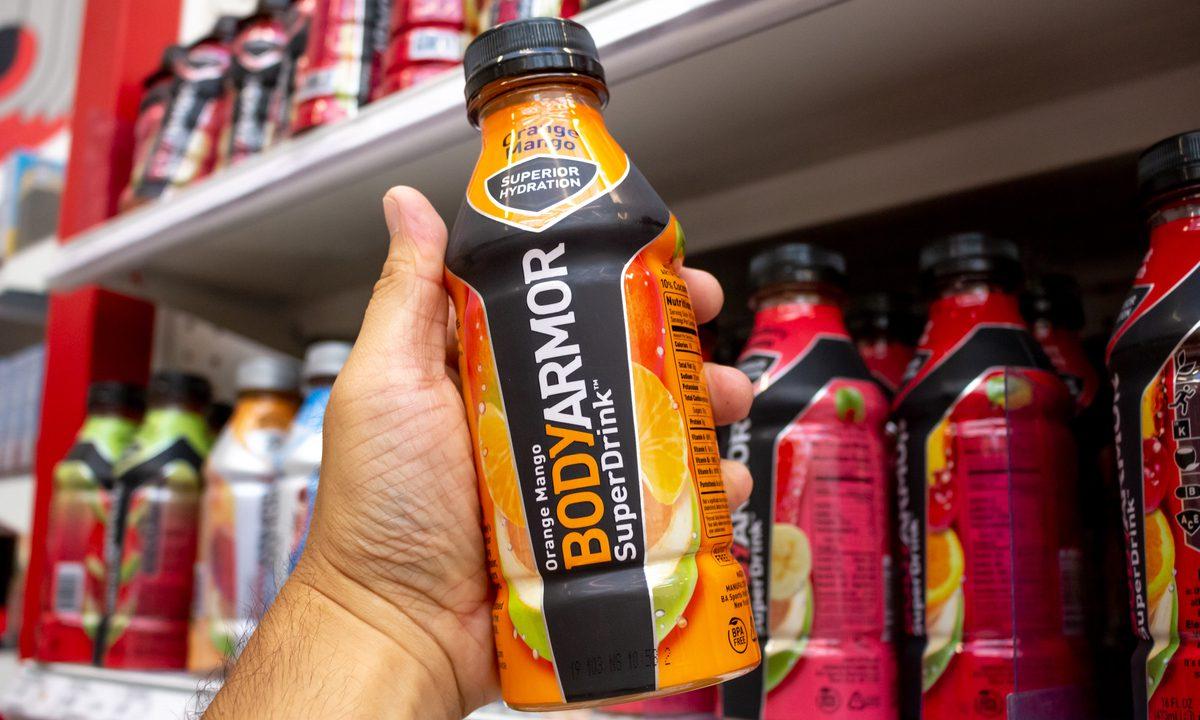
After Coke’s initial investment in the startup company BodyArmor, they decided to take full control with a $5.6 billion buyout.
Prior to this week, the Coca-Cola Company owned 15 percent of BodyArmor. One of the leading rivals to Gatorade, BodyArmor was a startup company that began in 2011. The company promotes their drink to contain natural flavors and sweeteners with no colors from artificial sources. Their first big investor was Kobe Bryant in 2013. He paved the way for more athletes like James Harden and Mike Trout to help support the small company grow larger. Starting in 2018, the Coca-Cola Company became their second largest investor behind the creator of BodyArmor Mike Repole.
On top of BodyArmor having their original sports drink, they also introduced BodyArmor Lyte. This drink is said to have the same nutrients of a regular bottle of BodyArmor but has only 20 calories and two grams of sugar per bottle. They also have released BodyArmor Sports water. This drink was said to be created for those who have an active lifestyle with a performance pH of 9+ and electrolytes for exercise. These two drinks plus the original BodyArmor sports drink allowed for high sales throughout the year.
It is now being announced that the Coca-Cola Company is fully buying BodyArmor for $5.6 billion. This company went from a small startup to a multibillion-dollar company within 10 years. For context, Kobe Bryant initially invested $6 million back in 2013, and his investment today is worth over $400 million.
Coke’s biggest rival, Pepsi, has been dominating the sports drink market due to Pepsi owning Gatorade. Gatorade in the past year had a 64 percent market share of U.S. sports drinks according to the Wall Street Journal. BodyArmor had 18 percent of sales, and Powerade had 13 percent. Coca-Cola now owns both Powerade and BodyArmor.
Coke is always trying to increase their product line to compete with Pepsi. They are trying to challenge Gatorade with the purchase of BodyArmor. An editor of Beverage Digest, Duane Stanford, states, “Coke can try to sandwich Gatorade between BodyArmor, a more premium brand, and Powerade, which is more of a value brand.”
The purchase of BodyArmor, in addition to their already owned brands like Powerade, Dasani water and Gold Peak tea brings a different strategy for Coke. They no longer have to be reliant on just the sodas they own like Fanta, Sprite and their very own Coca-Cola. They have branched off to other drinks, expanding their product line — this to compete with their largest competitor, PepsiCo.
Digital cryptocurrency token Shiba Inu has jumped into the top 10 most valuable digital assets by market value, surpassing its inspiration, Dogecoin.
The recent trading frenzy over a digital token called Shiba Inu — commonly promoted as a “meme” or joke coin in the crypto world — has jumped the canine-themed cryptocurrency into the top 10 most valuable digital assets by market value, hitting over $39 billion and surpassing its cousin and apparent inspiration, Dogecoin.
Since Wednesday, both Dogecoin and Shiba have frequently swapped places in the rankings, competing in what many would call a rivalry between the two. In fact, the Shiba Inu community actually refers to the crypto token as the “Dogecoin killer”.
As of Monday afternoon, Dogecoin, which was launched in 2013 as a joke, ranks No. 10 in cryptocurrencies with a market value of over $35 billion, according to CoinGecko. Likewise, Shiba Inu, which launched in 2020 to poke fun at dogecoin, now ranks at No. 9 with a market value of over $39 billion. Shiba Inu hit an all-time high of$0.00008990 this past Monday.
Moreover, Shiba is up another 10 percent at midday this past Monday after its leap last week which had more than doubled in value. With this, most of that gain came in a flurry of trading last Wednesday, when it gained a whopping 66 percent. Besides, Shibu is in fact up about 900 percent in the past month.
Each Shiba coin costs just a tiny fraction of one cent; however, to put in simpler terms: if you were to have bought $1,000 worth of Shiba Inu in late September, your value of 20 million coins would now be worth around $9,000.
Both Shiba’s and Dogecoin’s growth can be largely credited to supporters hyping them up. It is the power of the people who are intensifying them that drives the performance of the coin a lot of the time, including celebrity supporters like billionaire Elon Musk, CEO of SpaceX and Tesla. Musk often tweets about different cryptocurrencies, and in doing so, has seemingly impacted their prices.
Overall, the current surge in Shiba Inu can be seen as very much community-driven, and it is clear to see any token or coin out there has the opportunity to run up like this if someone with a big microphone is amplifying it — case in point is Shiba Inu. Created in August 2020, it has taken less than two years to become a contender for a top 10 cryptocurrency spot.
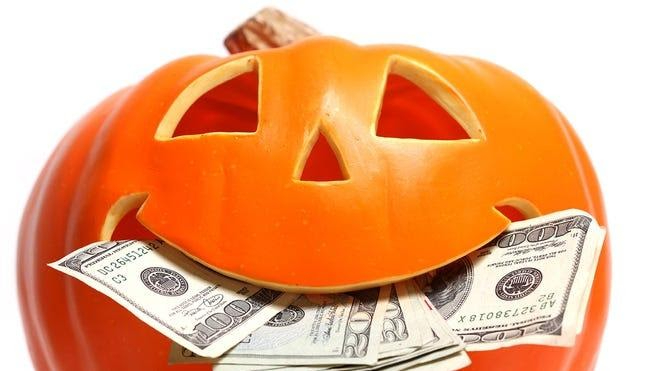
Despite ongoing pandemic concerns, U.S. consumer spending on Halloween is set to be higher than ever within the past five years.
An estimated two thirds or 65 percent of Americans intend to celebrate Halloween or participate in Halloween activities this year, up from 58 percent in 2020 and more comparable with 68 percent in 2019 before the COVID-19 pandemic. This trend demonstrates that Halloween is back on the schedule this year and plenty of Americans want trick-or-treaters, decorations and new costumes.
According to research from the National Retail Federation, U.S. consumer seasonal spending this year is forecasted to be $10.14 billion, up from $8.05 billion last year in 2020, $8.78 billion in 2019, $8.97 billion in 2018 and $9.09 billion in 2017. The top ways consumers are planning to celebrate the holiday include handing out candy (66 percent), decorating their home or yard (52 percent), dressing in costumes (46 percent), carving a pumpkin (44 percent) and hosting or attending a party (25 percent).
The association’s annual survey was carried out on its behalf by Prosper Insights and Analytics and analyzed celebration plans. Its findings presented 93 percent of millennial parents would be seeking to go all out for the holiday, particularly after last year in which many celebrations were restricted amid the pandemic; however, caution has been urged by health authorities, with the U.S. having the highest death toll from the pandemic in the world, with over 750,000 lost to Covid-19 since the start of the crisis that began early last year.
With more Americans celebrating Halloween this year, average spending is also up. For example, on average, consumers plan to spend $102.74 on costumes, candy, decorations and greeting cards – $10 more than what was planned last year. In addition, households with children are estimated to spend more than twice the amount than households without children ($149.69 compared with $73.57) this Halloween holiday. Likewise, the number of Americans planning to decorate for Halloween differentiates with last year’s spike in interest, with spending on decorations forecasted to climb to $3.17 billion, up from last year’s $2.59 billion. Totalspending on costumes is the highest it has been since 2017 at $3.10 billion.
Of those planning to dress up for Halloween, nearly 69 percent of adults already know what their costume will be this year. More than 4.6 million adults plan to dress like a witch, more than 1.6 million as a vampire, more than 1.4 million as a ghost, more than 1.1 million as a cat and another 1.1 million as a pirate. Notably, more than 1.8 million children plan to dress as Spiderman, more than 1.6 million as their favorite princess, more than 1.2 million as Batman and more than 1.2 million will dress as one of their other favorite superheroes. All in all, it is very apparent that Halloween forecasts this year prove Americans want to spend way more on trick-or-treaters, decorations and new costumes.
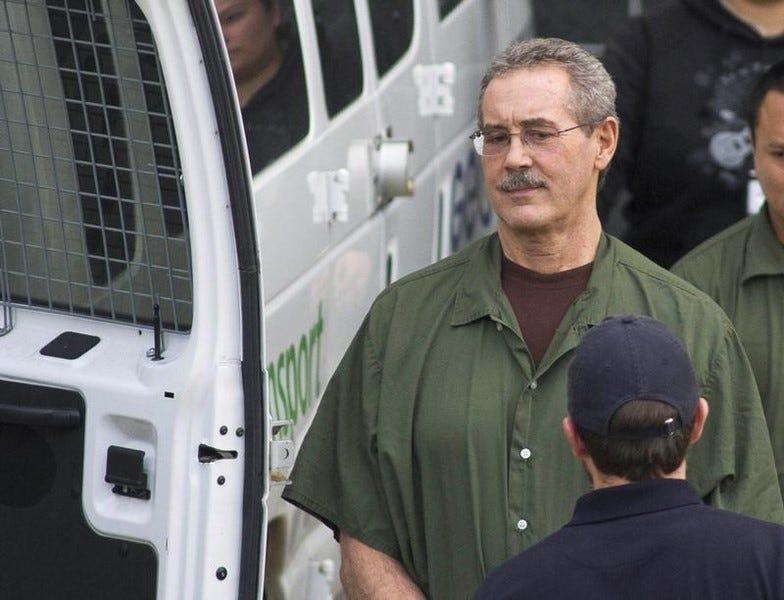
Robert Allen Stanford, a name that would rise to infamy, was born in Mexia, Texas on March 24, 1950. As a youth, Stanford once made $400 to clear an area of land for real estate developers and in exchange, he received cutdown trees that he could sell as firewood. After graduating from Baylor University, Stanford worked for Stanford Financial, a company that his grandfather founded as a salesman and bookkeeper. Stanford, with his talents in finding opportunities, transformed Stanford Financial into a multi-billion-dollar company owning $51 billion in investments. During the 1983 Texas oil bubble burst, Stanford traveled to Latin America and later set up shop in Antigua. Similar to all wealthy and successful people, Allen Stanford explored lobbying in the realm of politics; two lawmakers, Bob Ney and Tom DeLay, resigned as a result of his lobbying. It can be argued that his time in Antigua may have been the most successful years for him. Stanford led an extraordinary life which would eventually catch up with him.
After years of legitimacy, Allen Stanford went the unsavory route of scamming innocent people. Stanford’s plan was simple: tell investors that investing with him will lead to no risk and high returns and support it with a believable story. To hide his fraud, Stanford sent out fake financial reports. Stanford’s investors’ investments included securities such as certificates of deposits with interest rates double the average rate of the market. The average person would give Stanford their money because doing so appealed to their sense of financial security.
As far as Ponzi schemes go, the most notable and infamous one is Bernie Madoff. He scammed his investors roughly $20 billion while telling his clients their investments were valued to be at $60 billion. Madoff pleaded guilty and received a 150-year sentence. The second largest Ponzi scheme in history is that of Allen Stanford. Stanford sold high yield certificate deposits to 18,000 people from 113 countries where he ran a $7.2 billion Ponzi scheme. Stanford was eventually caught in 2009 and assigned a 110-year sentence starting in 2012. In June 2016, Ralph Janvey, a court-appointed receiver, obtained $65 million in a settlement. Out of the $7 billion in Stanford’s bank, only $63 million was uncovered at the start of the receivership. In other words,only 0.95 percent of that $7 billion was found. Already, $443 million has been given out to Stanford’s victims while another $550 million will be distributed in quarter one of 2022. This $1 billion recovery also happens to be the second largest amount in history, with Bernie Madoff’s victims recovering $11 billion.
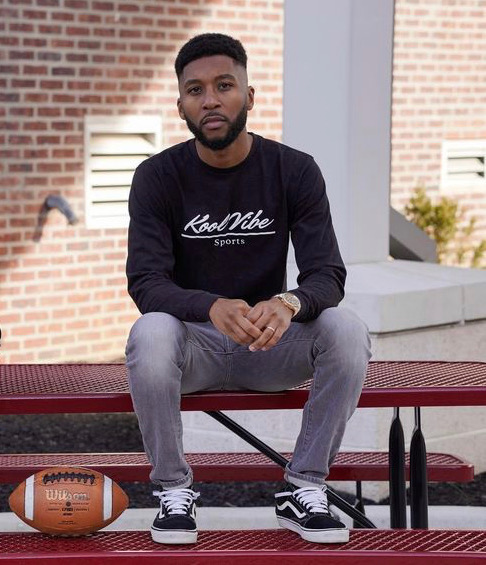
Malik Mitchell, ‘17 started his own sports marketing agency earlier this year and prides himself on providing high quality services to every one of his clients.
Jan. 8, 2021 was an important day for La Salle alumni Malik Mitchell: it was the day he officially started his business, Kool Vibe Sports (KVS). In nine months, Mitchell and his associates at KVS have grown to offer top-of-the-line sports marketing services to clients such as Zech McPhearson and Milton Williams of the Philadelphia Eagles and Sandro Platzgummer of the New York Giants, to name a few. Mitchell prides himself on being attuned to his clients’ needs, offering services such as contract negotiations, endorsement deals, media relations and more. He even recently helped one of his clients move to another apartment — a testament to how much he cares. Mitchell states that he and his team at KVS tirelessly work toward “maximizing client earnings and empowering athletes to own their talent on and off the field. He does all of this while working full time for South Jersey Gas in their marketing department.
Mitchell graduated from La Salle in 2017 with a degree in marketing. After graduation, Mitchell often communicated with one of his high school friends, Eli Apple, a cornerback for the Cincinnati Bengals. Apple and Mitchell would often discuss marketing opportunities for Apple to continue to build his brand. Mitchell realized: he was this football player’s go-to man for marketing advice, so he put those skills to use in the professional field. Fast forward a few years, and Mitchell founded Kool Vibe Sports, where he handles all off-field marketing and advises his clients, just as he did for his old friend, Eli.
He does this with the help of two crucial elements: passion and a dedicated team. Mitchell played football for more than ten years and brings that passion for the sport to his business, day-in and day-out. After graduation, Mitchell went on to create his own social media marketing company, “Malik Mitchell Marketing,” with clients ranging from a pharmaceutical firm to a barber shop. His Lasallian education coupled with his on-the-job training in social media marketing allow him to deliver an unparalleled experience to his clients throughout their career. His passion for sports combined with his know-how of marketing make him a valuable player within the field of sports marketing.
Mitchell isn’t the only La Salle alumni with a passion for sports marketing. Adam (A.C.) Bartley, ‘15, Brandon Rowe, ‘17, Jauwan Marant, ‘17, and Kathlyn Martin, ‘17, are also alumni of the La Salle marketing and communication programs, and all currently work alongside their good friend Mitchell at KVS. Mitchell, Rowe, Bartley and Marant all met within their first few weeks as La Salle students and immediately bonded over their shared interests and ambitions. Mitchell and Martin are college sweethearts and got married right after college. Mitchell had a vision for his business and his team helps him make this vision a reality by bringing their unique skills to the table.
After graduation, Bartley worked as a financial analyst and continually brings his go-getter mentality to every business venture at KVS. Rowe’s photography skills help him provide creative direction to their clients. Overall, all the employees at KVS share Mitchell’s vision of providing high quality sports marketing services to each and every one of their clients.
One of the greatest things about starting your own business is that “you could work for yourself for the rest of your life,” said Mitchell. But being your own boss comes with hours of hard work, planning and perseverance, according to Mitchell. When he’s not working full time at South Jersey Gas, Mitchell is thinking about ways he can enhance the quality of service he provides to his clients.
His advice to those interested in starting their own business? Create a plan. Set goals for yourself and outline the objectives that will ensure you accomplish those goals. It’s also important to measure your success along the way. Mitchell only officially started KVS in January of this year, but his diligence with measuring his success every step along the way is part of the reason why KVS has grown so much in such a short period of time. Working for yourself and with your friends is a great thing, and it comes with lots of planning and hard work.
Channeling your passion, building a great team and spending time to develop a comprehensive business plan are just three key elements of starting your own business. For Mitchell, it is also important to remember where he came from. He cites his parents as his mentors; as shining examples of the power of hard work, dedication and love. He also recalls his time spent in LA with his good friend Eli Apple, who showed him that he has a knack for sports marketing. He maintains close relationships with his friends and colleagues he met during his time at La Salle. With all this in mind, Malik Mitchell is dedicated to growing his business and providing top quality services to his clients.
This Lasallian alumnus is making a name for himself in the field of sports management and marketing, and he encourages readers interested in what he does to reach out at malik@koolvibesports.com. If you are interested in sports marketing, don’t hesitate to connect with Mitchell — he would love to help out his fellow Lasallians, and his insight is truly invaluable.
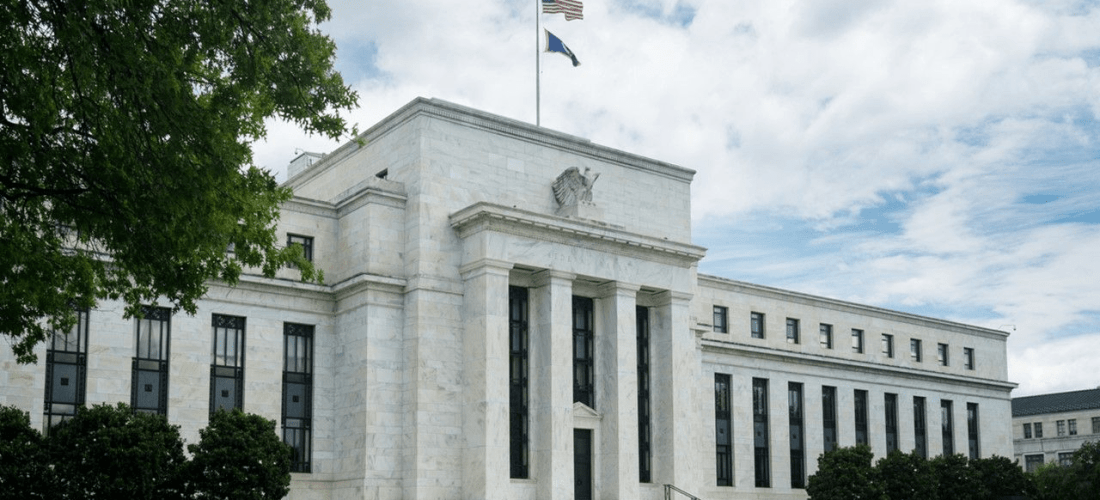
The Federal Reserve concluded its September meeting and announced plans that it may soon begin the process of slowing its asset purchases.
This past Tuesday, Sept. 21, the Federal Open Market Committee (FOMC) held its sixth meeting of the year in Washington, D.C. that included some highly anticipated news. At the meeting, the Fed announced that the economy has made progress toward its goal of maximum employment and price stability, and that if development continues, the FOMC will soon taper their securities. The Fed has maintained its current strategy for now, but the statement of potentially looming asset tapering is a substantial change from past meetings.
Federal Reserve Chairman Jerome Powell noted in his press conference that he decided to put off the unpleasant business of announcing when the Fed will peel back its bond purchases — a process known as tapering — as too many economic uncertainties flourish. Such security purchases have been a key part of the economic recovery during the COVID-19 pandemic. At first, those policies helped stabilize the economy, and they have since been a crucial part of the Fed’s accommodating monetary policy stance.
However, Powell stated that “if progress continues broadly as expected, the committee judges that a moderation in the pace of asset purchases may soon be warranted,” adding together that if the economy remains on path, this situation could result in a gradual tapering process that wraps up by mid-2022. With this, the tapering of asset purchasing could begin soon, meaning the Fed’s long-promised signaling has arrived; nevertheless, Powell has still yet to commit to a specific timeline.
Powell also indicated that growth made with inflation is still not a long-term concern, even as the Summary of Economic Projections (SEP) includes a higher median inflation forecast for 2021 than June’s SEP. Powell’s personal view halted that the assessment for significant progress to employment has been “all but met.”
The SEP announced this month reflects the Fed’s awareness of current economic conditions. The FOMC’s mean inflation expectations for 2021 grew from 3.4 percent in June to 4.2 percent in the latest forecast; however, Powell has insisted that the committee looks at inflation as transitory due to pandemic-related supply factors. For instance, he cited the automotive industry’s supply chain issues in particular during the September press conference.
The meeting concluded with no members of the FOMC predicting a change to the federal funds rate in 2021, but more of them now anticipate an increase in intensity in 2022 relative to June’s predictions. The 18 participants are equally split between anticipating a small boost to the federal funds rate in 2022 and expecting a rate change in 2023 or later.
Between November and January, retail sales are expected to rise by eight percent from last year, according to the professional service network Deloitte’s holiday retail forecast. On top of that, Deloitte also said that e-commerce sales are expected to rise by up to 15 percent. Given the growing labor shortage, holiday shopping might be a much bigger headache this season, for both the consumer and the retail suppliers.
According to Melissa Hassett of the staffing agency ManpowerGroup Talent Solutions, “Hiring intention in the upcoming quarter is higher than ever.” Potential employees can anticipate benefits such as debt-free bachelors degrees, higher wages, quadruple-digit sign-on bonuses and more. Walmart is even offering ACT and SAT prep courses for free to high school employees. Last week NBC’s Leticia Miranda said, “Amazon announced that it will hire 125,000 employees at an average starting wage of $18 per hour with a $3,000 sign-on bonus.” In a move that is very telling of the times, Best Buy is hosting a virtual job fair, seeking to fill more than 5,000 positions.
Over the summer, restaurant chain Denny’s equipped a 53-foot kitchen truck to travel the country in a nationwide hiring effort. McDonald’s introduced a child care program to attract potential employees with kids. Additionally, McDonald’s announced a 10 percent increase in wages for hourly workers in May. The following month, the fast food chain had its “largest month of hires in the last couple of years,” according to McDonald’s U.S. Chief People Officer Tiffanie Boyd. Employers are desperate for workers; in recent months, “the bargaining power and the labor market has shifted toward job seekers,” according to Nick Bunker, economic research director for North America at the Indeed Hiring Lab.
For months, federal pandemic unemployment benefits offered people a more attractive alternative to working in a retail environment; they could make more by filing for unemployment than most companies were willing to pay them. Last week, most of these benefits expired. Despite this, retailers are still having a difficult time filling positions. On average, it takes 40 days to fill a retail position, a 21 percent increase from April this year, according to talent cloud company iCIMS. Another factor that makes people hesitant to go back to work is the concern regarding contracting COVID-19. Companies have introduced extremely attractive benefits in order to combat pandemic-induced unemployment, but it seems that health remains the main concern, a concern that will undoubtedly change the way we shop this holiday season.
Pictured above is Berkshire Hathaway’s chairman and CEO Warren Buffet and Executive Vice Chairman Charlie Munger. Both men practice a value investing strategy and have created impressive returns for their shareholders.
Over the weekend, Berkshire Hathaway held their annual shareholder meeting in Los Angeles, California. For the first time ever in the company’s long history, they held a shareholder meeting outside of Omaha, Nebraska. The meeting was headed by Berkshire’s executive staff, CEO and Chairman Warren Buffet and Executive Vice Chairman Charlie Munger.
Both Buffett and Munger are hailed as some of the greatest investors of all time. They believe in a value investing strategy influenced by the principles of Benjamin Graham. Graham is most famous for developing the Margin of Safety principle and for writing the finance classic “The Intelligent Investor.” In addition, they are greatly influenced by the strategies of Phil Fisher, the author of “Common Stocks and Uncommon Profits”whofamously believed the best time to sell a stock is never. Buffett and Munger emphasize a long-term investing strategy with an emphasis of finding “cheap” companies that appear to be trading below book value in the market. They own portions of great American corporations like Coca-Cola, Apple, Bank of America, Verizon and American Express.
At the meeting, Buffett and Munger fielded and answered various questions. With their growing age, they confirmed their eventual successor: Greg Abel, a current Vice Chairman, will take over as CEO and direct operations. Buffet emphasized his belief around stock picking for the average investor. He stated, “I do not think the average person can pick stocks.” His suggestion, instead, was to diversify into American equities and purchase a fund which follows the performance of the S&P 500. Buffet has made this point plenty of times in the past.
Both Buffett and Munger took jabs at the recent rise in SPACs and believe more people are turning to the market in a gambling-like sense. Buffet even went as far as calling SPACs an “exaggerated form of gambling.” A SPAC is a company that raises money through an initial public offering (IPO) with no commercial operations to acquire another existing company. They grew in popularity in 2020 as both a speculative investment and a way for companies to raise capital.
To add to the sense of increased gambling in the markets, Buffett and Munger stated their opinions about online trading app Robinhood. They both said the app encourages gambling due to the easy access of speculative call and put options. Munger even called the app shameful. In the past, they criticized Robinhood’s selling of order flow data and commission free trades. An executive from Robinhood responded by saying “the people are tired of the Buffets and Mungers of the world acting like they are the only oracles of investing.” The most controversial statement of the weekend was when Munger took a strong jab at cryptocurrency. He went so far as to say Bitcoin’s success is disgusting and contrary to the interests of civilization. In the past he has called Bitcoin “worthless artificial gold.”
The meeting concluded and many people took an opportunity to analyze both Buffet and Munger’s statements. Both men have led Berkshire for decades with expectational investment returns and their statements may prove important for investors looking for guidance.






 The La Salle Collegian