Now that summer has come to an end, the “Big Brother” Season 23 finale is only a few weeks away. There has been a lot of controversy and differing opinions about this year’s season based solely on one alliance called The Cookout. The Cookout consists of six individuals: Azah Awasum, Xavier Prather, Kyland Young, Derek Frazier, Tiffany Mitchell and Hannah Chaddha, who are all Black.
The controversy surrounds a plan that Mitchell hatched within days of being in the “Big Brother” house. In all twenty-three seasons, there has never been an all Black final six.. Knowing this, Mitchell suggested each member in their alliance pair up with another houseguest outside of their alliance and sit on the block with them each week.
In all of my years of watching “Big Brother,” I have never seen a plan executed so well. The Cookout has worked together for months now and sent home every other houseguest this summer without being suspected as an alliance, which would surely prompt the other players to send their members home.
This week, The Cookout has succeeded in making “Big Brother” history as the first time the final six were all Black. Some have said that this is “reverse racism” towards majority groups; however, I do not see it that way. In the past, the final six have been all white, but no one ever suggests those houseguests are guilty of racism. Groups of individuals who share similar experiences often couple up with other people like them. I see this as an alliance of people from similar backgrounds relating and working together just like people have in the past. I think this is a pretty neat display of unity, and I am so happy that I got to watch it unfold from ideas, to a plan, to reality throughout the show this summer.
I was in my living room, checking my email, when that message from President Colleen Hanycz popped up into the top of my inbox. It was paragraph upon paragraph of fluff, with the University doing their best to soften the blow that was buried further along in the email. But can you really sugarcoat announcing that seven of the university’s athletics programs would be terminated after this school year?
The most shocking program on that list, at least for myself, was baseball. To my knowledge, as someone who knows quite a bit about La Salle sports, baseball had always done fairly well. They seemed like one of the most popular sports at the University, their athletes some of the most well-known around campus. There were some sports on the list that were understandable…but baseball? Really?
None of the teams were given a chance to fundraise for themselves before the announcement came out, which is an issue in and of itself. This piece is not trying to suggest that baseball is somehow more deserving of being saved than any of the other sports that are being cut, but their performance this season is really leaving La Salle with egg on its face.
Let’s start with their record: 20-11 overall, 6-2 in the A10. It’s close to being the best record at this point in the season, and has included some truly spectacular games, comebacks that left fans on the edges of their seats, absolute dominance over opponents (e.g. the 22-2 victory over Penn earlier this month) and players wearing their hearts on their sleeves. They’ve been vocal about how hard they’re willing to fight to keep their program alive, but it’s not stated more loudly than in how they play.
Freshman pitcher Frank Elissalt could easily throw in the towel and not care about how he pitches. What’s the point, right? But he does the exact opposite. He’s now earned Atlantic 10 Rookie of the Week four times, along with earning Pitcher of the Week twice.
Junior catcher Tatem Levins has options outside of La Salle. He doesn’t need to show up in the batter’s box and behind the plate the way that he does, but he has not let up in his incredible and consistent performances.
There are plenty more individuals that could be named here (Elijah Dickerson, Ryan Guckin, Nick Di Vietro, Connor Coolahan, etc.) and that should tell you something. These players don’t have a certain future at La Salle. They chose to come here to play the sport they love and represent the University with everything they’ve got, only to be blindsided by a program slashing that was purely driven by financial interest with little to no regard for the welfare of the student-athletes it would be affecting. Shouldn’t it tell you something, President Hanycz, that even though you and the University turned your back on these players, they’ve still fought tooth and nail and put their blood, sweat and tears into ensuring that La Salle is currently sitting at the top of the A10?
Legendary soccer defender Tony Adams once said, “Play for the name on the front of the shirt and they’ll remember the name on the back.” That’s what this current La Salle baseball team is doing. The University’s name will be attached to whatever accolades they collect this season, but as a community, we’ll remember the individual players that didn’t let their team be taken away from them without an admirable fight. Whether or not the team is able to be saved, this particular team won’t be lost in the shuffle of decades of iconic baseball squads.
Forget Hank DeVincent. No matter what, the names of these current players will be the ones permanently etched in the earth between McCarthy Stadium and St. Basil’s.
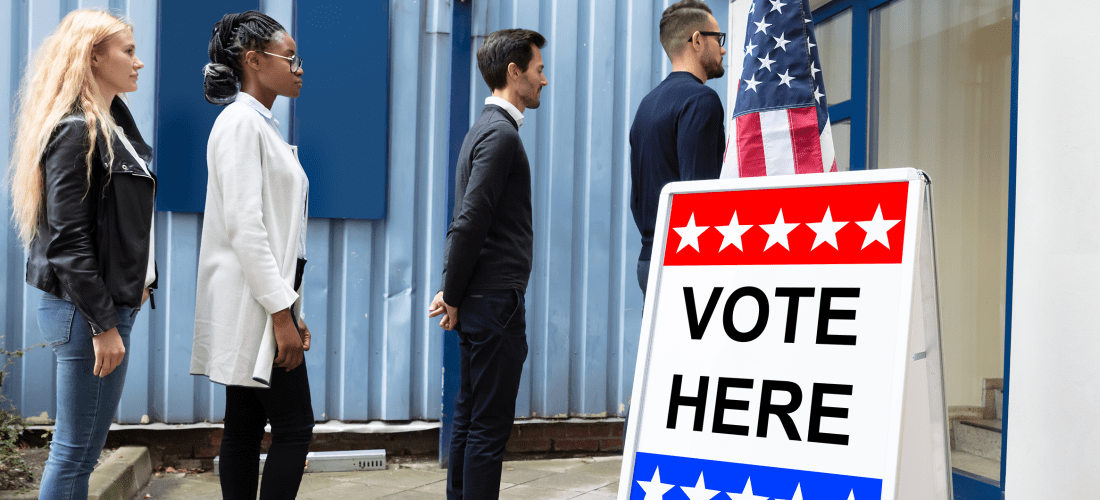
We are only four months into 2021 and a brand-new president, and already there are discussions about the 2022 midterms and if the Republicans can take the House and the Democrats can build on their majority in the Senate. You would think after a turbulent election beginning with a confusing Iowa caucus and ended with an attack on the Capitol that everyone would be fed up with elections and politics. However, with the senate divided fifty-fifty, a slew of bills being proposed in state legislatures designed to complicate the voting process (that is the nicest way I can put it) and states beginning to redraw their congressional districts, the stakes have never been higher for both parties. While 2022 is certainly going to be an important election year, and one that absolutely no one should ignore, there is another election about to occur in six months — local municipal elections across the country.
Local elections occur between the presidential election and the midterm and consist of offices that don’t hold the same national notoriety as president or congressman, but are more instrumental to our daily lives — elections for people such as school board members, district attorneys, sheriffs and local township council members. These are the office holders who can actually help you or really hurt you and your community if you choose to ignore them. The wrong people on your school board can result in your local school being underfunded, or worse, closed down. The right district attorney can determine if actual criminal justice reform happens. Likewise, these offices can be the starting ground for future politicians who seek higher office. President Joe Biden may be more well known as a senator from Delaware and Barack Obama’s vice president, but he started his political career in running for New Castle County Council in Delaware back in 1970. Today’s local sheriff may become your state’s next senator, so you want to make sure that person is good for the position.
I take great pride in the fact that the first election I ever got involved in was the local 2017 election for the school board in my area. A friend of mine, Adam, was running for school board and I told him I wanted to help in some way. Adam and I knew each other from back when I was working at a comic shop and the two of us remained friends after I left. Like me, he felt off about Trump’s election and even though I was a Republican at the time and he was a Democrat, I told him I wanted to support his campaign. I helped hand out campaign literature at the polling place. While my role was small, it felt good to be involved in the political process and make a difference by helping a friend win an election. It gave me a sense of control and being a part of something that really can’t be felt with national elections. Local elections are smaller, more intimate and if you are a history or political science major, it’s a great way to learn about local government from the ground up.
So when you go home this summer, please look up local elections in your community. Research your township’s Republican and Democratic (depending on your personal leanings) parties, offer your time to being a part of a campaign, or go to a couple of committee meetings. Government is not some alien far off institution, it’s local people trying to solve the issues of their communities — and you never know, it could lead to the beginning of your own personal future in public office.
Well, folks, it’s finally happened! The only show worth watching on La Salle TV is moving to the big time. ESPN recently announced that SportsLine, which brings you all of your news regarding La Salle sports every Thursday (and sometimes Wednesdays) at around 8:00 p.m. on YouTube and the LTV Instagram, will be covering NCAA happenings in a national broadcasting slot.
SportsLine, hosted by the absolutely radiant, charismatic, and enchanting Siobhan Nolan and some guy named, like, Timothy or Theodore or Tobias or something, has been orchestrating this deal since the beginning of the semester. Studio manager Tonya Ellis revealed that ESPN expressed rampant interest after seeing the abundant broadcasting talents of Nolan, who made her debut as a fixture on SportsLine at the beginning of it’s 23rd season.
“They saw how engaging and captivating she was, and were amazed at how interesting she made the show even when we were completely remote,” Ellis said. “[ESPN CEO] James Pitaro called me personally and said, ‘We need to take this show to the next level. Every college sports fan needs to have SportsLine in their life.’”
Pitaro originally wanted Nolan to host the show by herself, but she refused to film the show without her counterpart.
“Tyler is just as important to the show as I am,” Nolan told The Collegian. “He talks about the boring, nerdy stuff like stats and numbers. It makes us sound more legit and like we don’t actually plagiarize our recaps from GoExplorers.com. He’s essential to this operation.”
The show’s other producers — the ethereal Jamie Smith, the steadfast Myles Williams, and big baller senior producer Isaiah Clark — will continue their work on the show, meaning that SportsLine, ever the innovators, will manage an elaborate national broadcast with literally just five people putting the show together.
The first episode of SportsLine will be airing this Thursday, with a projected audience of 328.2 million people tuning in.
“So, what do you all think about this D.C. situation?” When Virginia Governor Ralph Northam posed the question at the weekly U.S. governors group Zoom meeting on Monday, March 29, he was just trying to spark some conversation so National Governors Association Chair and Governor of New York Andrew Cuomo wouldn’t put them into breakout rooms.
Maryland Governor Larry Hogan shared his opinion right away. “Some people are saying Maryland might just absorb D.C., but, frankly, we don’t really want them.”
“Honestly, I wouldn’t mind,” Daniel McKee, governor of Rhode Island, said, “then Rhode Island wouldn’t be the smallest state.”
“D.C. as a state,” Texas Governor Greg Abbott scoffed, “that’s ridiculous. They just want to have their own senators. If they become a state, Texas will just leave and become its own country. Don’t mess with Texas.”
Silence fell over the zoom call as the governors pondered Abbott’s comments. Although they would only admit it later, many senators had considered proposing such a thing, but Abbott’s words made them realize that someone else had a similar idea.
After that instrumental Zoom meeting, the governors moved quickly and contacted their state governments. By Wednesday, March 31, all state governments had drafted some sort of proposal to officially become their own countries. Every state will vote on these proposals within the next two weeks, and it is expected that all will pass with overwhelming margins. Every state has something to gain from becoming its own country, and every governor has held a press conference in the past few days explaining why their state — soon to be country — will be in a better position in the future.
“We used to be our own country,” Vermont Governor Phil Scott explained, “we can go back to the good old days when we didn’t have to answer to the U.S. government.”
“When we become our own country,” Delaware Governor John Carney said, “Delaware will continue its proud tradition of having no sales taxes. We also have a great tourism sector with the Delaware Beaches, and we will now be able to generate extra revenue for the country by charging visitors from other countries special prices to visit these areas.”
“We’ll finally be moving the capital from Harrisburg to Philadelphia,” Pennsylvania’s Tom Wolf said, “most people think the capital is Philadelphia anyway, and it has a cooler nickname — ‘the City of Brotherly Love’ — Harrisburg’s nickname is literally just ‘Pennsylvania’s Capital City,’ which it won’t be for long.”
“I think one of the most important symbols of a country is its flag,” Maryland’s Hogan explained, “and Maryland has the best state flag in the country, currently, so as our own country we’d have the best flag in the world.”
The Philadelphia Inquirer
Current governor of Pennsylvania Tom Wolf is excited to change the future country’s capital to Philadelphia.
There will be 50 new countries in the world after the U.S. splits apart, although not all the states will retain their current borders. Washington D.C. will become its own country, while the states of South and North Dakota will merge into one entity simply called “New Dakota” in a bid to increase the future country’s population to at least a million people. The border between Wisconsin and Michigan would be redrawn so the upper peninsula would belong to Wisconsin.
In regards to the proposed change in borders, Michigan Governor Gretchen Whitmer remarked, “This plan makes perfect sense. Only 3% of Michigan’s population lives up there, so it’s not like we’re losing much. We also wouldn’t have to pay to maintain the Mackinac Bridge, and we can funnel that money into Detroit tourism instead. It’s a win-win.”
However, there are, of course, some expected problems when changing these states into countries.
“We have a slight issue because there’s already a country called Georgia,” Georgia (the state) Governor Brian Kemp said, “I didn’t know about it until last week, actually, when one of my staffers brought it to my attention. I think it’s in Asia or something. So we’d have to change our name. Or we could sue them for rights to the name. I think we have a pretty good shot at winning that.” In a similar vein, governor of New Mexico Michelle Lujan Grisham remarked that “with New Mexico in the process of becoming its own country, we have already begun a conversation with President of Mexico Andrés Manuel López Obrador in regards to the name situation. We might be changing our name to North Mexico, and they would be South Mexico.”
These new countries will still be strongly connected. All former U.S. states intend to belong to a newly proposed union called the Union of Former American States (UFAS), not to be confused with the UFAS that is the Uniform Federal Accessibility Standards, which will no longer exist because the U.S. federal government will not exist. UFAS would help put regulations in place for trade, travel and work between the new countries.
With the recent news that President Biden is rolling aimlessly through the White House in a wheelchair, babbling incoherently, this move to separate the states could not come at a better time. Taking control of the U.S. away from Biden is both a necessary move and one that, given his current state, the president will likely not be able to oppose (or even notice).
I am twenty years old and still learning how to use technology. Sure, I’m pretty adept at all the basics: Microsoft Office, Adobe Creative Cloud, etc. I can even create (mediocre) animations on digital art software like Procreate. But I’m still — and likely always will be — learning how technology fits into my everyday life. I’m learning how to have a relationship with technology. I’m old enough to remember a time when social media didn’t exist. But I’m also not old enough to recall the days when computers weren’t woven into the very fabric of our daily lives. I’m positioned to have a relationship with technology that demands almost complete reliance, but not utter and perpetual immersion.
But the generations below me and my peers have been living in the heyday of social media since birth. My mom is a nanny and she has been with the same child for his entire life — seven years. I’ve gotten to see firsthand his introduction (at a very young age) to the iPad — and all the problems that ensued. I’ll preface this article by saying that I recognize the importance of and need for technology in our daily lives; I’m not longing for some pre-digital return to nature because I know it’s not possible. I’m simply noticing and reporting the detriments of constant exposure to technology.
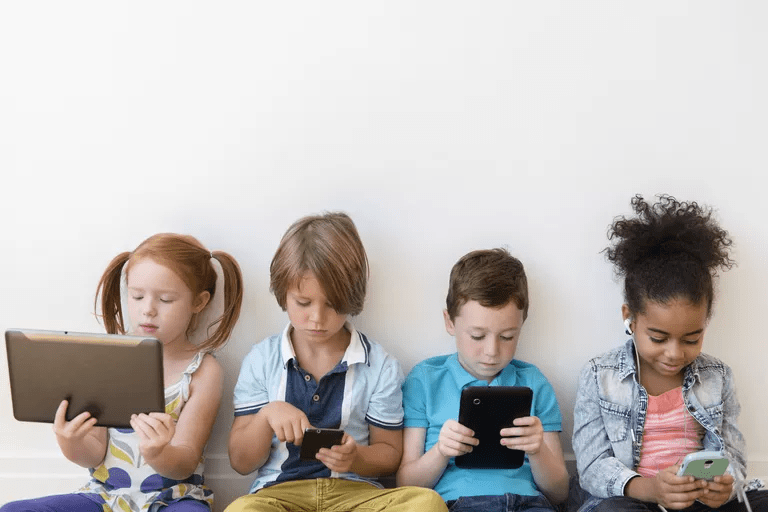
The issues with childhood engagement with technology can be viewed from multiple angles. For one, it can interfere with their basic human functions, such as sleep. “Electronic stimulation has been shown to interfere with both falling and staying asleep,” according to Northwestern University’s parenting expert Katherine Lee. In fact, a study published by Pediatrics “found that children who sleep near a smartphone or another small-screen device get less sleep than kids who are not allowed to have these types of devices in their bedrooms.” If you’ve ever babysat a child, you know how hard it can be to get them to turn off the iPad. And if you’re trying to get them to turn it off because it’s bedtime? Good luck.
Jamie Grill/Getty Images
The average child is saturated with screen time every single day; their reliance on these devices has detrimental effects.
So it’s clear that the simple act of sitting in front of a screen can cause issues. But what about what’s on the screen? Any time anyone engages with technology, there are two parties involved: on one side of the screen, there’s a supercomputer pointed at your brain, trying to figure out the perfect next thing to show you. On the other side of the screen is our prefrontal cortex, which evolved millions of years ago to do its best job at goal articulation, goal retention, staying on task and self-discipline. This is true for all of us who have brains. But imagine it’s not you, it’s a seven-year-old, or a five-year-old, or even a two-year-old. At that age, I was playing with Lincoln Logs and American Girl Dolls — neither of which had supercomputer powers.
As a twenty-year-old, I’ve had time to learn how to differentiate information that benefits me from information that harms me. But kids haven’t had that time yet. In 2015, Aaron Mackey was a graduate fellow at Georgetown University Law Center’s Institute for Public Representation. He was part of a coalition that included the Campaign for a Commercial-Free Childhood and the Center for Digital Democracy. The coalition alleged that “it’s deceptive to tell kids that this [YouTube] is a safe product… Anyone, with just a little bit of searching, can find a lot of inappropriate content.”
Moreover, the infinite possibilities offered by YouTube can cause addiction. According to the American Addiction Center, those with higher addiction risk are unable to self-regulate, impulsive and lack a strong sense of moderation. YouTube’s recommendation algorithm doesn’t want you to self-regulate; it wants to regulate for you. Its algorithm wants you to impulsively click on whatever catches your eye because that’s how it builds a profile on you. Its algorithm rejects moderation in favor of saturation. And yet, we’re placing it in the tiny hands of our precious kids. Sleep issues, inappropriate content and addiction — the gamut doesn’t stop there; these are just three angles from which one can view the greater problem of technological saturation. Kids aren’t the only victims; everyone who engages with technology is susceptible to these ailments. But kids are the most unaware. They have no idea what any of the iPad implications are, but they are sincerely affected by them. They’re just kids and it’s our job to care for them. After having only scratched the surface on this topic, I’m questioning whether giving our kids iPads is a good idea. In fact, I know it’s a terrible idea — but we’re going to keep doing it. So how can we ensure that our kids don’t ruin their sleep schedule and develop an addictive personality while viewing inappropriate content online? I’m only twenty years old and I don’t plan on having kids for a while, but I sincerely hope I’m able to answer that question by then.
Five years ago, a week before “Star Wars: The Force Awakens” arrived in theaters, I had taken a job in a local grocery store pushing carts in the evening. It was during the holiday season, a time when grocery stores and other retail businesses hired anyone with a pulse. Pushing carts wasn’t a bad gig overall. When the weather was warm and they were constructing the overpass near my work, I loved watching the sunset in the parking lot and listening to the banging of metal in the night air. The work was simple and pleasant. Since then, I have been a cashier, janitor, seafood rep (that lasted a week) and now a floater (a fancier term for stock boy). Being a floater has never been an easy job. It is not just stocking cans of corn on the shelf with a bunch of teenagers and college students. Retirees, teenagers, other college students, people looking for a second chance, parents even college graduates (a coworker who worked overnight stocking shelves had a degree in Business from Temple) work in retail. It has become a major source of employment for the educated and the uneducated, the skilled and the unskilled alike. Regardless of race or creed, what unites us is our frustration for our work and since the pandemic that frustration has only exasperated.
When the pandemic first hit a year ago, our shelves were quickly depleted the weekend Pennsylvania began to shut down. Our freezers became barren, most if not all of our meats were sold, and, of course, we ran out of toilet paper. By the end of the day Saturday of the first weekend of the pandemic, all we really had were Little Debbie products and some sparkling cider left over from Christmas 2019 (that stuff sells poorly, even in the middle of a pandemic). It is hard to believe it has been a year since COVID-19 first hit — those months of March to maybe June of 2020 feel both distant and recent to me. I tried keeping a log back in April, but many of my notes were mundane. I did not record all that happened at work and when I was not working, I was at home puttering around my house. The supply chain did not collapse, but it was under pressure that had not been seen before in the recent history of the United States.
Courtesy of James LeVan
Pictured above is a frozen food aisle in early April 2020.
It was hard telling people who were desperate for toilet paper that we did not have any. I tried directing them to the nearest small corner store or family-owned chain (in the beginning they maintained a better supply than we did). When people would ask me when we would get more stuff in, I would shrug my shoulders and tell them I did not want to lie to them. Some people would accuse us of hoarding supplies and truth be told, we were not. Some coworkers bought a pack of toilet paper together and divided the rolls amongst themselves. For me, my parents had to drive out to the rural parts of PA to find ground beef and toilet paper. We had plenty of Lysol spray and wipes left over from when I had the flu a month earlier (an odd stroke of luck when I think about it). At the beginning of the pandemic, a coworker gave me a can of Lysol and I felt bad taking it, so I took it back to the shelf and explained that we had plenty of it at home, and it felt like I was hoarding. A woman quickly came and picked it up from me and said thank you.
In normal times, delivery trucks come in the early evening, and the overnight crew comes in around 8 p.m. to break it down. However, during the summer, trucks became infrequent. I remember one time I had to come in early (5 a.m.) to help overnight unload a truck that had gotten there an hour earlier. Sometimes we would not get a truck for a day or so and then multiple loads in one day. It really depended on the luck of the draw that day. One surprising phenomenon was that at one point, just so we had stuff, we got stacks of toilet paper and flour that were originally meant for hotels. But since no one was travelling, it made more sense for us to stock shelves with it. Things are semi-stable now, though we still end up running short on supplies depending on what they are.
On social media and television, we were praised for continuing to come into work. That we were in a way heroes for making sure communities had food and supplies. The media certainly thought we were awesome, and we had some customers thank us for what we were doing. However, I do not think people realize just how bad it got on some days. The fear that your coworker sitting across from you had COVID in the breakroom, to customers who would lose control and act like a child having a tantrum in a toy store. One moment that stands out in my mind was the time me and my manager had to go over to our beer garden because an older white man was screaming at a co-worker and an African American customer. When we asked what was wrong, the old man started screaming at our manager claiming that a Black man was following him around the store (he was not, we checked the cameras). He spent 20 minutes screaming at us, telling us about how his wife left him in the store alone, that he thought we were discriminating against him because he was white and not questioning the Black man, he was accusing of following him, that he had PTSD and that if he did not yell, he would get violent. I honestly thought I was going to have to fight this guy who was twice my size at that moment and that I was going to end up on the news. The guy tired himself out and then proceeded to leave and went about our business.
We who work at stores like Acme, Giant, Walmart and Target have been through Hell this last year. We have gone home crying, scared and exhausted. I have broken down in tears personally three times this past year. Many of us did not choose to continue working during this pandemic because we were brave or had a sense of duty. We did it because we had bills to pay and mouths to feed. Our work was not a breeze to begin with and the pandemic only exacerbated our problems. Grocery stores face issues of sexual harassment, disrespect and abuse from the communities we feed. The latter is still being felt now as we struggle to get vaccines and the latest attempt for a minimum wage increase died with Senator Sinema’s obnoxious thumbs down. It is important to remember that behind that mask, the cashier that sounds like a robot reciting the “thank you for shopping with us,” the women in health and beauty care and the guys stocking the shelves are all human and we are so tired.
As we round the corner on the first year of this pandemic, I can’t help but reflect on where we were 365 days ago. In the first week of March 2020, I went from attending a mock trial event with hundreds of people from across the country to throwing a 20th birthday party for one of my closest friends. I didn’t know it at the time, but the normalcy of handshakes and hugs would soon melt away with no promise of ever returning. Or so I thought.
Fast-forward a year later, and we are certainly still in a pandemic but, with one-tenth of the country’s population vaccinated, this March feels more hopeful than the last. Last March was characterized by persistent changes to our everyday lives, forcing us to reevaluate nearly every facet of 21st-century life. Public health needed to be addressed, along with social justice and our relationships with our loved ones; lesson after lesson, ad nauseam. 2020 taught me that another thing needed to be addressed: my relationship with myself.
I’m sure my fellow college students can relate; ours is a story of constant congregation that quickly turned into sorrowful exile. We are social creatures who were yanked from the most social environment we’ve ever experienced and sentenced to solitude. I quickly became too familiar with the walls of my childhood bedroom, wishing I could spend just one more night with my friends for old time’s sake. I had never been in a situation where I could not physically see anyone lest I risk contracting a deadly virus; none of us had any idea how to proceed. I quickly understood that this was uncharted territory for all of us.
Fabrice Coffrini/Getty Images
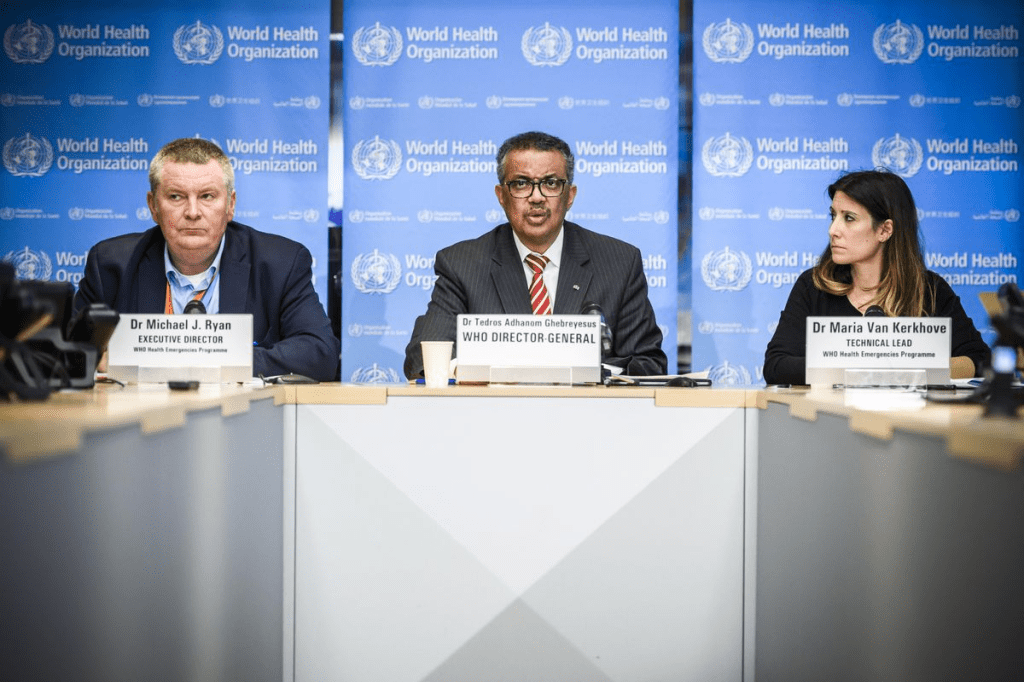
On March 11, 2020, the World Health Organization (WHO) first characterized the coronavirus outbreak as a pandemic.
As the curious person I am, I wanted to chart that territory. I wanted to immerse myself in the idea of being alone so that I could better understand myself and those around me. Sure, loneliness sounds a little scary, but they say explorers are never lost, right? So I dove in.
I first had to understand where I was and how I was feeling. Then, I asked myself if that was where I wanted to be: the obvious answer was no, “Liz, you’d much rather be at a frat party with your roommates than stuck in this existentialist rut.” So, I had to bridge the gap between where I was and where I wanted to be. Not surprisingly at all, I found that this desire to bridge the gap was a common one; this experience was a tale as old as time, as Celine Dion would say.
A man born 125 years before coronavirus came about said that happiness is derivative. This man was named Jiddu Krishnamurti, and he argued that happiness is always a by-product of something else. You think you’ll be happy when you get that promotion. You get promoted, but you’re still not fully satisfied. Now, you think you’ll be happy when you get the girl. You’re in a relationship now, and guess what… you’re still not fully satisfied. There is a search for something permanent, within the self and things beyond the self; but happiness is never permanent.
Krishnamurti offered that instead of happiness, we should begin searching for something else: self-knowledge. There is an idea that you must first recognize what is; “you cannot imagine or have belief in something which you are not.” On top of that, you have to be real with yourself about your circumstances. To understand what is, there must be freedom from the fear of what is. This was really, really hard to put into practice considering, you know, everything going on in the world. It seemed hard, but not impossible.
My thought process went something like, “okay, I get the vibe that he’s saying happiness is tricky to pursue, but if I can understand myself, I think there’s some merit and pleasure in that.” So that’s what I tried to do (and I’m still trying). A global pandemic and all its associated isolation is, admittedly, a really convenient time to, if you’re able, parse through your own self-knowledge.
That isn’t to say a global pandemic isn’t tough; we all dearly miss the way things used to be. But those things aren’t reality anymore. Taking a look around my childhood bedroom, I reminded myself to stay grounded in the present because, as cliché as it sounds, the past and the future were either gone or uncertain. I was alone, and that was a fact; I was alone, and that fact didn’t have to be unfortunate. That is where self-knowledge comes in.
Understanding yourself is a lifelong task, the terms of which, I imagine, are always changing as you grow and evolve. But it doesn’t matter what the circumstances are, the following is true: everyone’s potential for self-knowledge exists within them. It cannot be explained by some self-help book or school newspaper article, but it is there. And it is worth exploring.
Over the past two weeks, a slew of sexual misconduct allegations against New York Governor Andrew Cuomo have come out. The allegations have ranged from inappropriate comments that contributed to an uncomfortable work environment to violations of personal boundaries and inappropriate touching. It should go without saying that these allegations, if found to be true, are contemptible. I have to admit that it is somewhat gratifying to see such a media firestorm around a figure so deserving of one, especially after being so shamelessly fawned over by the press just a year prior. However, I am somewhat dissatisfied that Governor Cuomo seems to be getting off relatively lightly, all things considered. While these allegations of sexual harassment in the workplace are explosive for the Democrat, it seems as if this story has completely overshadowed the much more scandalous story concerning the Governor’s office: New York’s mismanagement of nursing homes during the pandemic and subsequent attempts to cover up the true number of deaths reported from them.
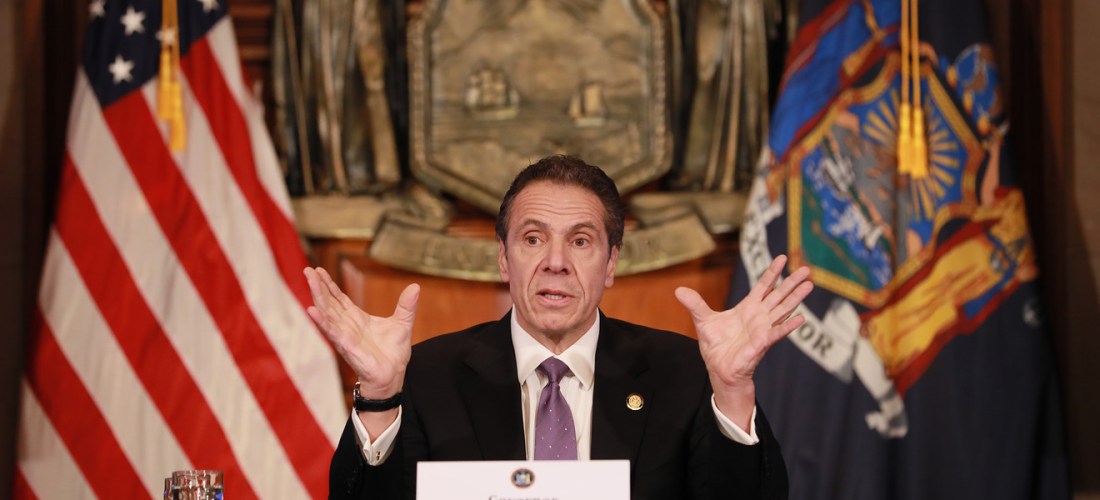
Darren McGee – Office of Governor Andrew Cuomo
Cuomo’s direction of New York’s response to the coronavirus made the governor very popular with the media last year.
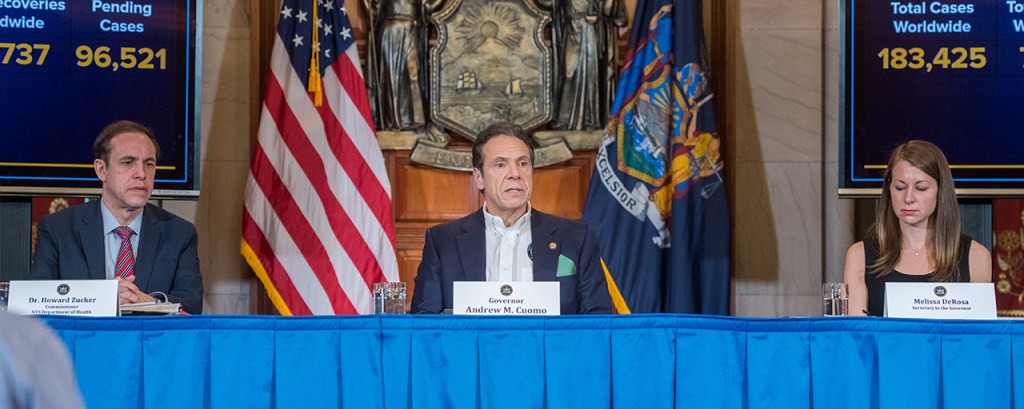
A report released by The New York State Attorney General’s office revealed that the number of COVID-19 deaths in nursing homes had been massively underreported by officials in Cuomo’s office. The report states that as much as 50 percent of COVID-related nursing home deaths were omitted from official tallies of nursing home related deaths released by New York State. Following the release of the report, Cuomo’s aide, Melissa DeLaroma, had reportedly met on a private video conference call with Democrat lawmakers to apologize for the suppression of numbers, citing fears by the Governor’s Office that the enormous amount of deaths would be used against them by then-President Trump to justify an investigation by the Justice Department. These developments are leaving questions about the Governor’s controversial March 25, 2020 New York State Department of Health directive to admit COVID-positive patients into nursing homes, using them as overflow testing and treatment centers. This stunning political cover-up is not only a flagrant abuse of power, but it could also have a serious impact on medical statistics that are crucial for those researching the virus and qualitative analyses of the pandemic. Such a statistical aberration has potential reverberations that travel much further than New York State lines, as this data is used by experts across the country and around the world in the fight against the novel disease.
To be clear, the allegations of workplace impropriety should be taken seriously and, with the sheer volume of alleged victims coming forward in the past month alone (7 at the time of writing), it is definitely a matter that deserves an investigation and the public scorn it has earned Governor Cuomo. However, the media frenzy that has surrounded this story has eclipsed a much larger offense. With all due respect and sympathy to Cuomo’s alleged victims, I think the thousands of lives he has directly or indirectly affected, or maybe even ended, with his handling of nursing homes and the flagrant abuse of power in trying to cover up his administration’s missteps, is a scandal of a much higher magnitude. Yet, it seems as if the Governor and the press would both prefer to address these more salacious accusations of sexual harassment, with Cuomo last addressing criticism of the nursing home scandal almost over a month ago. Cuomo has also been quick to deny the multitude of the allegations of sexual harassment against him; and yet, media coverage surrounding the former seems to have been completely supplanted by the comparatively less severe implications of the latter.
Bearing witness to it all, I have been disgusted by the partisan pandering by the media that has been at play throughout this pandemic. I was incensed, in particular, by the relatively lax scrutiny Governor Cuomo received compared to former President Trump during the throes of lockdown when, in my opinion, both seemed to be equally, if not divergently, incompotent in their responses to the crisis and equally caustic and dismissive to their critics along the way. Over the past year, Republican governors, such as Ron DeSantis of Florida and Greg Abbott of Texas, received heaps of criticism over their handling of the pandemic, some of which was completely justified, some overly-critical, in my opinion. Conversely, if you flipped on the news less than a year ago it would have seemed as if Cuomo, the media darling and “America’s Governor,” was beyond reproach. In reality, he was just as, if not more guilty of, mismanagement of this crisis than others. It is unlikely Cuomo will be winning over progressives anytime soon considering the circumstances of his current controversy, and his puzzling statement during a recent press conference that he was not “elected by the politicians, [but] by the people” in a response to a question about the multiple Democratic legislators calling for his resignation reads to me as a pivot towards more populist, Trumpian politics. It remains to be seen what kind of future, if any, lies ahead for Governor Cuomo.
The takeaway of this whole situation should be that we cannot let party lines and partisan rhetoric distract us from abuse of power by officials we politically align ourselves with. I pray that the independent investigation into allegations of sexual misconduct by the Governor can proceed unimpeded, and that he will resign if these allegations are found to be true, but I also hope that he is forced to answer for his administration’s missteps at the onset of the pandemic and their reckless dereliction of duty in the tabulation of COVID-related nursing home deaths.
Emily Dorr, a junior history and religion double major, was adopted from Ukraine by her parents in 2002 and came to America by plane. Growing up in Bucks County, Pennsylvania, she struggled to fit in and had trouble in school at a young age. Nonetheless, Dorr’s parents were very supportive. “My parents were always super involved in my education and I wouldn’t have gotten through it without them,” she said. Despite the struggles Dorr endured as a young child, one thing that stuck with her was the idea of service and social justice through the lens of Catholicism.
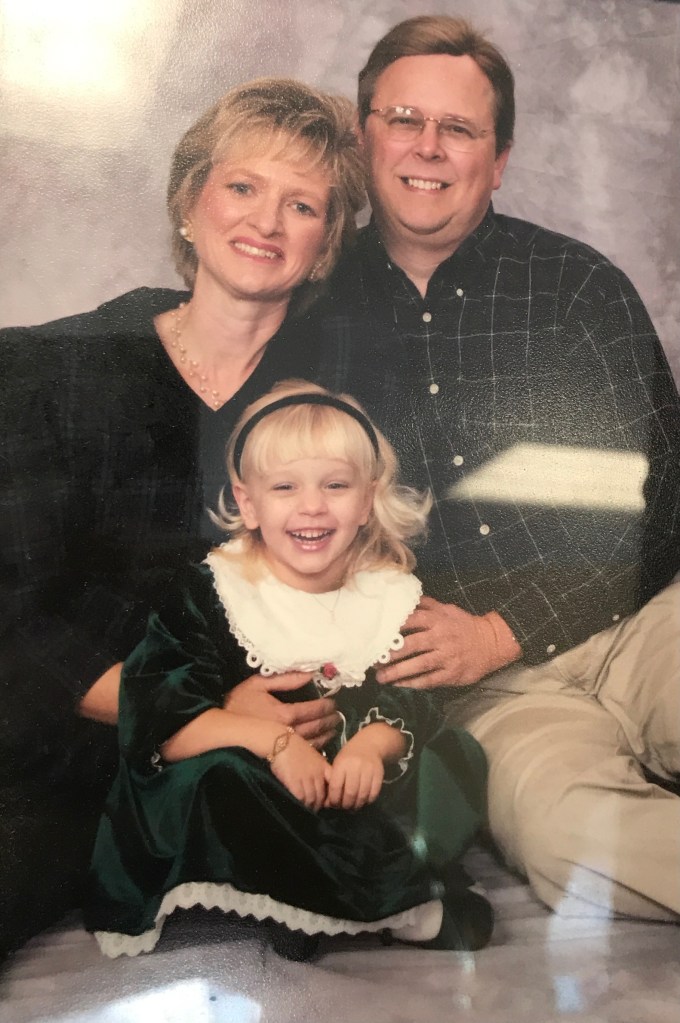
Pictured above are Dorr and her parents in 2004. (Photo courtesy of Emily Dorr)
Growing up, Emily was no stranger to La Salle University’s campus. Her mother, Mary Dorr, has been working at La Salle since 1999 as the assistant dean of the School of Nursing and Health Sciences and has also been actively involved with the neighboring Germantown Hospital as the director of nursing education for the School of Nursing in 1990 and the chair of education for the Germantown Hospital and Medical Center in 1992. Due to her mother’s position at La Salle, naturally, Dorr spent a lot of her time on our campus as a young girl, getting to know all the nooks and crannies of campus. While many students only call La Salle home for four years, Dorr had an “awesome experience” growing up on campus and said La Salle became a second home for her. “The Brothers would walk me around campus,” said the junior.
Dorr’s passion for service and for knowledge of the world continued throughout high school. She had the opportunity to visit Haiti, which provided a whole new perspective for her. “You got to physically see the fundraising and advocacy that we did, have an actual impact on schools there,” she explained.
With the importance of service and social justice instilled in Dorr at a young age, in conjunction with Mary Dorr’s long-term employment at La Salle, it should come as no surprise that Emily Dorr continues to be directly involved on campus. Dorr continued her service and advocacy work from high school at La Salle through her participation in the El Otro Lado LIVE Trip to El Paso to learn about the immigration crisis.
As a freshman, she began to participate in the La Salle University Neighborhood Tutoring Program where she worked to mentor and tutor students in the Germantown area. Additionally, Emily has worked as a La Salle tour guide, as a budget worker in the La Salle Transfer Office and as an Explorientation general leader.
When COVID-19 struck, many had trouble adapting, but Emily adapted quickly, juggling multiple activities this year including the Histories Club, working as an AIDS Outreach Coordinator, joining the Phi Mu Sorority and most notably, leading the Students’ Government Association (SGA) as a member of the e-board, first as the deputy chief of staff and currently as the vice president.
Through her involvement, Dorr’s dedication and desire to actively participate at our University, while creating change where she can, shows immensely. In the SGA specifically, she has worked to publish content revolving around COVID-19, promote the Pass/Fail petition alongside Emily Gaboriault and organize a Trash Bash in our surrounding community.
While planning these activities, she also has diversity and inclusion at the forefront of her mind, always providing her perspective regardless of what others may think. Dorr is consistently learning and advocating for social justice on her Instagram page and within her interpersonal relationships. “She always tries her best to be there for people and help people the best way she can,” Ronnie Matos, a former La Salle student, said.
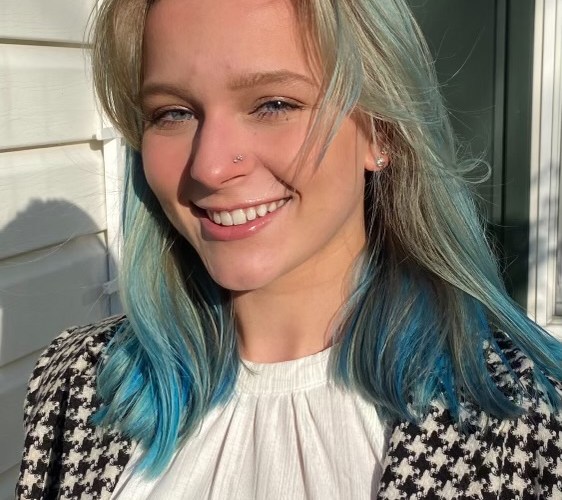
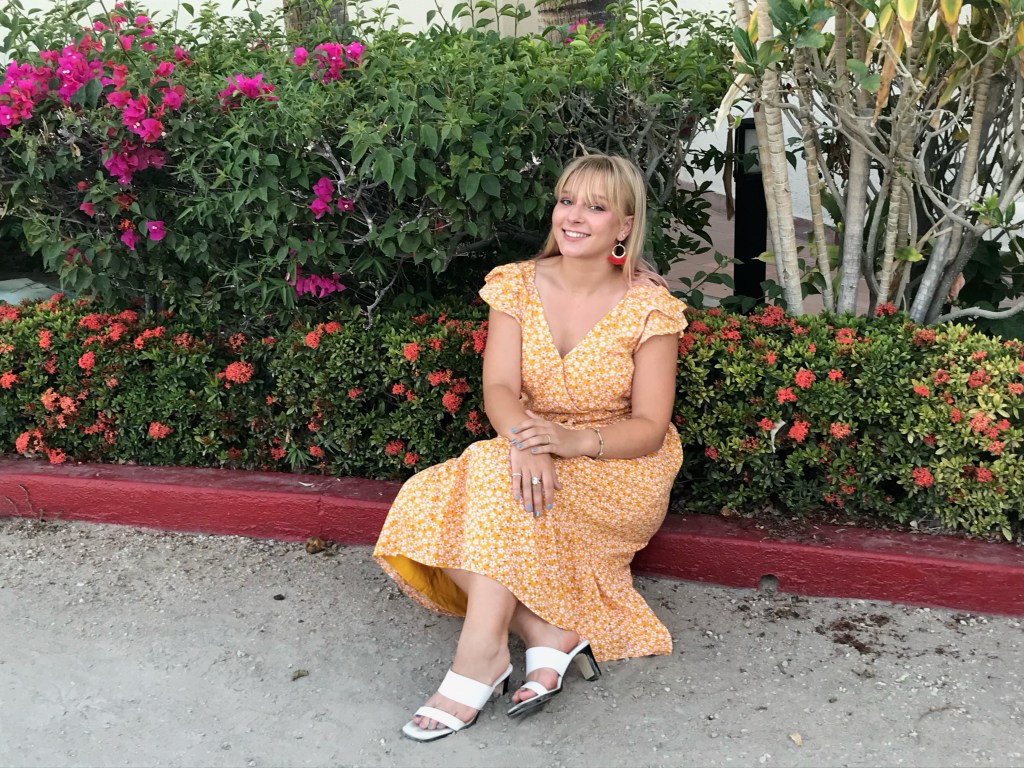
Pictured above is Emily in Cabo San Lucas, Mexico. (Photo Courtesy of Emily Dorr)
Dorr says that many of her humanities professors have strongly impacted her, but notes two specifically: professor of religion Maureen O’Connell and professor of history Carly Goodman. “Dr. O’Connell continues to inspire me to break down the barriers of creating sustainable, community-based change,” she remarked. “Dr. Goodman has really enriched my understanding of history in specific areas that I didn’t have previous knowledge in.”
In her spare time, Dorr enjoys drawing and singing and she also loves to travel, having gone to Poland, Greece, Turkey, Germany, Puerto Rico, Mexico and many other countries. In the future, Dorr would love to go to India to visit the Golden Temple and learn more about the Sikh peoples.







 The La Salle Collegian