CDC to re-evaluate Johnson & Johnson vaccine as halt due to cases of rare blood clots lingers on

Business

Elizabeth McLaughlin, Staff

AP Photo/David Zalubowski

The administration of the Johnson & Johnson COVID-19 vaccine was paused due to cases of rare blood clots associated with those who received the shot.

On April 20th, Johnson & Johnson announced that the European Medicines Agency’s Pharmacovigilance Risk Assessment Committee (PRAC) reviewed the company’s vaccine and confirmed that the overall benefit-risk profile remains positive. 

In recent months, Johnson & Johnson’s vaccine has been linked to a small number of cases of blood clots in combination with low platelet counts. These cases, though small in number, were enough to draw international concern. The EMA made it clear on Tuesday that there is some validity to these links between Johnson & Johnson’s vaccine and blood clots. Moreover, in a press release, the EMA stated “that a warning about unusual blood clots with low blood platelets should be added to the product information for COVID-19 Vaccine Janssen.”

The EMA relied on all available evidence, it said, which included eight U.S. reports of serious blood clot cases. As of April 7th, more than 7 million people had received the J&J vaccine in the United States.

The linkage between the vaccine and blood clots is not unique to Johnson & Johnson. In March, more than a dozen European countries halted the use of the AstraZeneca shot after some people who received the vaccine reported experiences of blood clots. 18 of these cases turned out to be fatal, compared to only one case of fatality linked to the Johnson & Johnson shot. The EMA stated that “unusual blood clots with low platelets” should be listed as “very rare side effects” for the AstraZeneca vaccine.

On Friday, April 23rd, vaccine advisers to the Centers for Disease Control and Prevention will meet to make recommendations regarding the use of the Johnson & Johnson vaccine. They will be meeting less than two weeks after the CDC and US Food and Drug Administration recommended a pause on the use of the Janssen vaccine. The pause gave experts time to work with doctors regarding the identification and treatment of these rare blood clots.

Moreover, ranking members at the CDC project said that “there will likely be more reports of blood clots connected to the vaccine” (Mascarenhas, CNN). Dr. William Schaffner, a non-voting member of the CDC’s Advisory Committee on Immunization Practices, stated that he and his colleagues need to understand the demographics of blood clot cases before they can move forward with a decision. Dr. Schaffner said that on Friday, the ACIP could give the all-clear for the vaccine, or it could recommend that the US stop using the vaccine entirely. Dr. Schaffner thinks it is likely that the ACIP will recommend the use continues with warnings about possible adverse side effects. Additionally, Dr. Schaffner says it is wise for high-risk people to avoid the vaccine altogether.

The chair of the ACIP, Dr. Jose Romero, who is also Arkansas’ secretary of health, says that the committee has reviewed enough data at this point to make a responsible decision. Although more data will be presented on Friday, Dr. Romero believes that the committee will likely affirm the vaccine’s legitimacy after estimating the risk-benefit analysis. However, there are currently so few cases of blood clots that it is hard to assess the entire picture of risk. For example, all but one case were in females; some members of the ACIP are concerned that cases among men or older people might arise in the near future. The ACIP would benefit from more data in the form of blood clot cases, but those looking to receive the vaccine might not benefit.

Dr. Romero stated, “I really hope that the American public will look at this pause and look at what we have done during this pause as an indication of how safe the vaccine system and the vaccine pipeline is in this country.”

mclaughline7@lasalle.edu

Johnson & Johnson vaccine rollout halted amid concerns over rare form of blood clotting

Business

Bill O’Brien, Editor

Pbs

Cases of blood clotting remain extremely rare among the upwards of 7 million Johnson & Johnson vaccine recipients. To this date, there have only been six reported cases of cerebral venous sinus thrombosis from J&J vaccine recipients, per Centers for Disease Control (CDC).

Johnson & Johnson (NYSE: JNJ) trended downward (-3.04 percent) following regulatory actions on Tuesday, April 13, that halted administration of the medical device giant’s one-dose vaccine. Per the CDC, Johnson & Johnson’s vaccine has been administered to more than 7 million people as of April 14. Since then, aside from common side effects typically caused by vaccines, there have been six reported cases of a rare blood clotting condition known as cerebral venous sinus thrombosis. The condition has been reported in conjunction with low levels of blood platelets, a condition known as thrombocytopenia, per CDC reports.

All six cases were of women between the ages of 18 to 48, and symptoms were reported to have occurred six to thirteen days after receiving the vaccine. The combination of cerebral venous sinus thrombosis and thrombocytopenia is difficult to treat. The conventional remedy for blood clots, an anticoagulant called Heparin, cannot be used as, according to the CDC, “In this setting, administration of Heparin may be dangerous, and alternative treatments need to be given.”

Although regulatory scrutiny poses significant risk to Johnson & Johnson’s vaccine distribution, JNJ shares have stabilized around $159.59, just 1.24 percent lower than its week high of $161.69, as of Wednesday at 12:40 p.m. EST, following Tuesday’s vaccine halt. Investors appear cautious but, surprisingly, largely unbothered by the halting of the vaccine which has an additional 10 million doses in circulation, on top of the more than 7 million already administered. 

JNJ’s price resiliency is likely due to regulatory language from FDA officials signaling a swift and optimistic outcome for the vaccine. On an April 13 joint media call with CDC officials, Dr. Janet Woodstock, Acting Director of the FDA, iterated that she expects the pause to be a short one: “Well, the timeframe will depend obviously on what we learn in the next few days, however, we expect it to be a matter of days for this pause.” Signaling from the CDC reinforces this rhetoric, depicting the action as precautionary rather than the result of crisis. Per their website, last updated on April 13, the Centers for Disease Control convened an “Advisory Committee on Immunization Practices (ACIP)” with the goal to “review these cases and assess their potential significance.”

On a broader scale, public health officials do not believe this situation will detract from the Biden Administration’s ambitious vaccination efforts, citing the Johnson & Johnson vaccine to be a minority among COVID-19 vaccines distributed. According to Anne Schuchat, Principal Deputy Director of the CDC, over 121 million Americans have been vaccinated with at least one dose of one of the three vaccines from Pfizer, Moderna and Johnson & Johnson. Johnson & Johnson only represents just over 7 million of those doses. Although a prolonged pause on Johnson & Johnson’s vaccine does not pose a robust threat to the larger mass vaccination effort from a supply standpoint, the negative press associated could have potential drawbacks on an American populace that has already struggled to trust the rapidly developed vaccines that are being distributed under emergency use authorization from the FDA. Continued public confidence in the vaccination effort is a key driver to achieving herd immunity and the reopening of the economy that would subsequently follow.

Hottest new craze to hit markets: bubble investing

Foolegian

Bill O’Brien, Editor

Lombardiletter

The 2000 market crash often referred to as the “dot com bubble” was great for investors exposing their portfolio to the tech industry, realizing very high returns for a time. What happened after is irrelevant.

With financial markets experiencing depressed fixed income yields and spreads, investors have had to get creative when it comes to portfolio strategy and turning a buck during the pandemic. Luckily, some investors have hopped on a new wave that is surely keeping them hype and, at least emotionally, invested in the market. Bubble investing has been around since the inception of supply and demand markets, but never have investors been jumping through hoops for insanely overvalued investments like they have been today.

David Portnoy, Chief Market Strategist at Barstool Sports, or “Stool Presidente,” as his analysts call him, is the pioneer of the portfolio strategy. “Say it you cowards. Stocks only go up. Stocks only go up. Say the words Ron. I am your King,” Portnoy iterates time and time again in his annual research report to clients via Twitter. Sophisticated retail investors were quick to adopt Portnoy’s market strategies, flooding securities with, virtually, no cash flow, like Gamestop (NYSE: GME) and AMC Theatres (NYSE: AMC), realizing massive returns in the process (if one bought early enough, but that part’s irrelevant).

Even Fed Chair Jerome Powell has had a lot to say about asset valuations in markets to reporters after the Fed’s latest Federal Open Market Committee Hearing. “The market’s hot, baby, the market’s RED HOT. Fed’s getting in on this for sure, Gamestop to the moon, diamond hands my friends, DIAMOND HANDS.” Since the hearing, the Federal Reserve’s balance sheet is valued at approximately $7.72 trillion. Sources at the Fed confirm Powell has been pressuring analysts at the Reserve’s New York trading desks to “get their diamond hands on GME pronto.” 

The Fed’s aggressive buying sprees have prompted some backlash among junior analysts working at the Central Bank. One analyst spoke to Collegian reporters on the condition of anonymity, “I sit at a desk and buy as many junk bonds as I can until the early morning. I can’t eat, I can’t sleep… At this point, I would rather be worked to an early grave by DJ D-Sol at Goldman.”

Cnbc

Powell responded to analysts’ claims of overwork with personal attacks. “Kids these days got no gumption, no spirit. Back in my day, we fueled financial crises 18 hours a day. We didn’t get Peloton bikes as participation awards either. Buncha pansies if you ask me.”

Anyways, what was I writing about again? Oh right, the 2020-21 bubble investing trend (craze). Bubble investing has been a mixed bag depending on who you are. If you’re an ambitious investor with a lot to lose and not a lot of know-how, then chances are this trend is perfect for you. Plus, you’ll be able to tell your friends you’re “in the market” at least for as long as your positions last. The future of investing is looking bright as of April 2021. Whether that bright light is a beautiful sunrise on the horizon or a nuclear bomb exploding in the distance, coming to vaporize all of our highly leveraged market positions, well, I guess that’s up to you to decide. Until next time, as the once-great Ben Affleck said in a famous coming-of-age movie, Good Will Hunting, “the business we have, here-to-for, you can speak to my aforementioned attorney. Good day, gentlemen, and until that day comes, keep your ear to the grindstone.” This is investing.

The overpromising and under-delivering of AstraZeneca

Business

Elizabeth McLaughlin, Staff

NBC News

Shares in AstraZeneca have dropped 8.1 percent in the last six months as the public loses confidence in the company’s COVID-19 vaccine.

We are now over a year into the COVID-19 pandemic and millions across the world are beginning to feel a little more at ease as countries ramp up their vaccination efforts. Those in the U.S. are familiar with the Pfizer-BioNTech, Moderna and Johnson & Johnson vaccines. On Monday, AstraZeneca released results of a large U.S. trial, claiming that the vaccine was shown to be safe and 79 percent effective in preventing symptomatic disease.

Meanwhile, regulators in Denmark, Germany and Norway identified reports of serious or fatal blood clots among young people who had been administered the AstraZeneca vaccine. Although the number of reported cases is small, regulators argue that it is statistically significant; Germany halted the distribution of AstraZeneca’s vaccine and most other countries soon followed suit. New Zealand decided to donate its supply to countries in need, opting for the Pfizer-BioNTech shot instead. South Africa sold its AstraZeneca doses. Confidence in the company’s vaccine is dropping and so is their stock price.

Angela Merkel, chancellor of Germany, instituted a lockdown that will not be lifted until at least April 18. Germany’s DAX, the blue-chip stock market index comprising the thirty largest actively traded companies on the Frankfurt Stock Exchange, was down 0.1 percent as of Tuesday. On top of that, “yields are falling as investors look to bonds for safety,” according to Al Root via Barron’s. The 10-year U.S. treasury yield dropped to 1.63 percent Tuesday. 

Moreover, U.S.-listed shares of AstraZeneca dropped two percent in premarket trading; shares in London fell more than one percent. Overall, AstraZeneca shares have dropped 8.1 percent in the last six months, compared to the Zacks Large Cap Pharmaceuticals industry’s gain of 4.8 percent. Although confidence in AstraZeneca’s vaccine is low, some of the company’s other drugs could pick up the slack. Cancer drugs Lynparza, Tagrisso and Imfinzi, according to the Nasdaq analysts, “should keep driving revenues”.

In December 2020, analyst Jim Crumly wrote on The Motley Fool that AstraZeneca was “one of the most attractive buys in the industry at the moment.” A Morgan Stanley analyst predicted that AstraZeneca’s 2021 profit could increase by 30 percent because of their COVID-19 antibody medicine.

But just last week, the president of the European Commission, Ursula von der Leyen, stated that “AstraZeneca has unfortunately underproduced and underdelivered.” If that weren’t enough, on Tuesday, the National Institute of Allergy and Infectious Disease reported more concerns about AstraZeneca’s efficacy from its vaccine trial. More specifically, the Data and Safety Monitoring Board (DSMB) as an independent expert group, “wrote a rather harsh note to [AstraZeneca]… saying that in fact they felt that the data that was in the press release were somewhat outdated and might in fact be misleading a bit,” according to Dr. Anthony Fauci on Tuesday. Despite this, Fauci maintains that AstraZeneca has likely produced “a very good vaccine.”

How the “Technoking of Tesla” is embracing meme culture

Business

Elizabeth McLaughlin, Staff

Getty Images

Tesla officially changed Elon Musk’s title of CEO to “Technoking of Tesla” in an 8-K filing with the Securities and Exchange Commission. Tesla’s CFO, Zach Kirkhorn, is now effectively “Master of Coin” according to the filing as well.

It’s 2050. An elementary school teacher is asking their students what they want to be when they grow up. Some kids want to be rockstars, others are medical school bound and one child replies, “I want to be Technoking.” Thanks to Elon Musk, that kid’s dreams just might come true some day.

On Monday, Mar. 15, the Tesla Inc. co-founder and CEO took on a new title: “Technoking of Tesla.” In a report filed with the Securities and Exchange Commission, Musk provided little explanation of the name switch; he also formally changed the title of Tesla’s chief financial officer, Zack Kirkhorn, to “Master of Coin.” Kirkhorn’s new title is a reference to a Game of Thrones character.

This apparently inconsequential change to Tesla Inc. has already prompted others to reevaluate their C-suite names. Siqi Chen declared himself the technoking of Runway Financial Inc., a financial startup that provides support and advice to struggling businesses. Runway Financial’s website is ripe with emojis, denoting a marked shift from the traditional stuffy environment of, for example, Charles Schwab. Runway Financial promises to deliver “something that fundamentally rethinks the role of financial data;” their CEO’s — or, rather, technoking’s — decision to change C-suite titles indicates that they are, on some level, fundamentally rethinking the traditional structure and formality of business hierarchy. Mr. Chen told The Wall Street Journal that “all titles are jokes, and it’s tribute to our Technoking Musk for making this clear to the SEC.”

There is no question that Musk is a trendsetter. But his decision to change the traditional C-suite titles to names that embrace meme culture could be reactionary to the rise in importance of retail investors as of late. Recall what happened with GME in late January 2021: Redditors drove the stock price up, causing Wall Street investors to hemorrhage money and re-evaluate their positions. It is clear that retail investors possess the power to influence markets in unprecedented ways. Given the fact that they are making their trades online, largely based on the advice of fellow netizens, perhaps Musk is simply catering to their culture.

Moreover, Tesla purchased $1.5 billion in Bitcoin this year. They are not only embracing the convergence of Internet and finance through trivial name changes, they are also literally investing in this new future of finance. It is clear that Musk is paying attention to the emerging influence of Internet culture on finance; perhaps Tesla will implement some more radical changes than technoking in the near future.

mclaughline7@lasalle.edu

Powell discusses FOMC meeting, forward-guidance and economic recovery

Business

Michael D’Angelo, Staff

Marketwatch

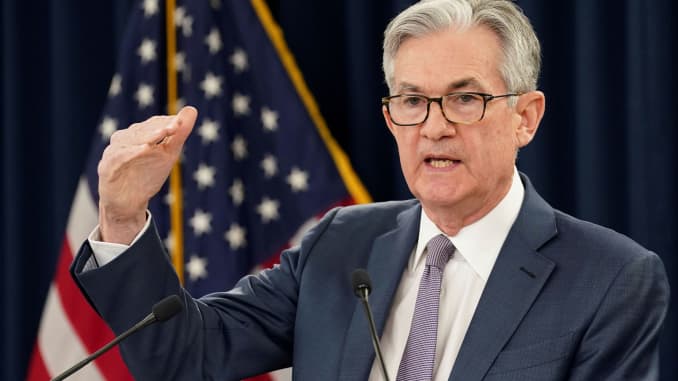
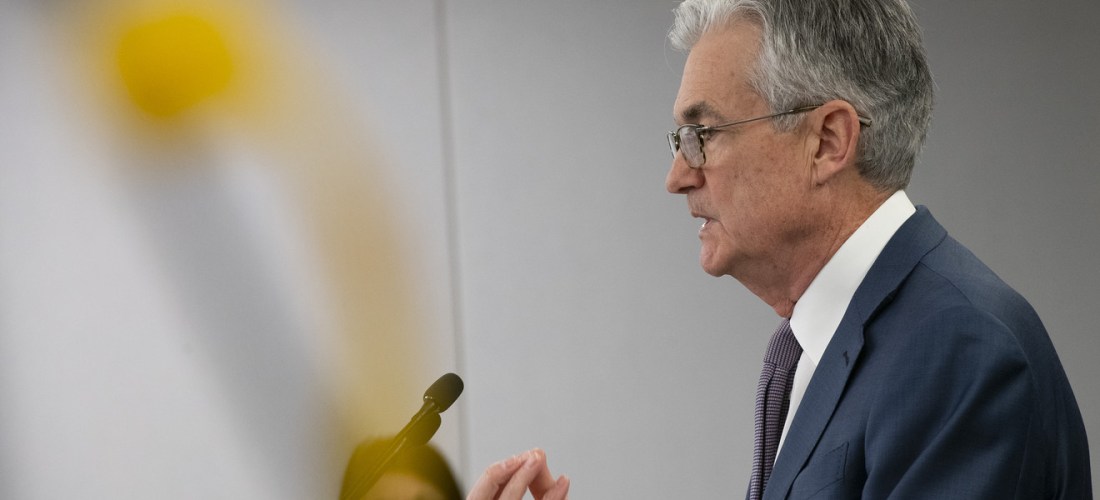
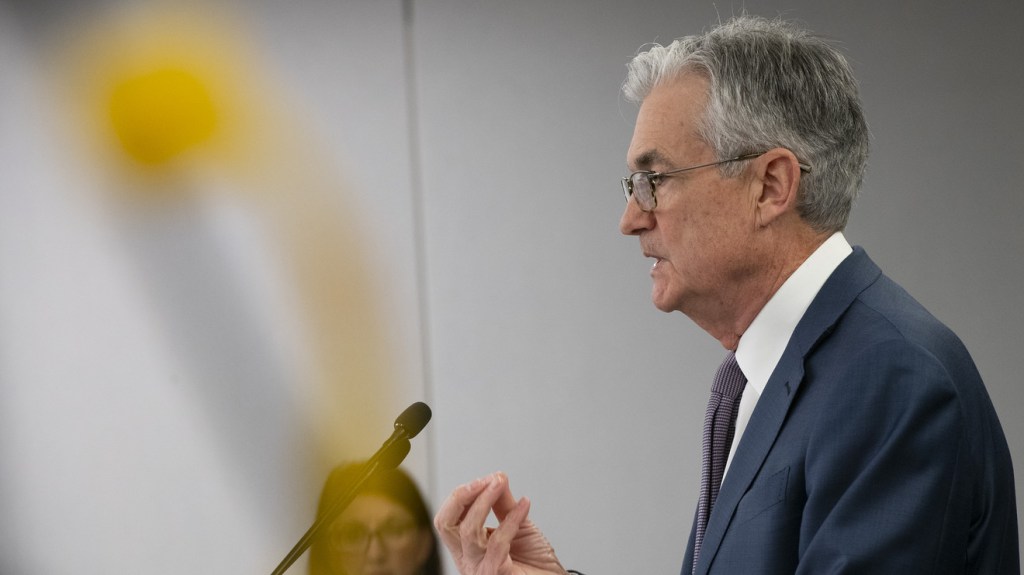
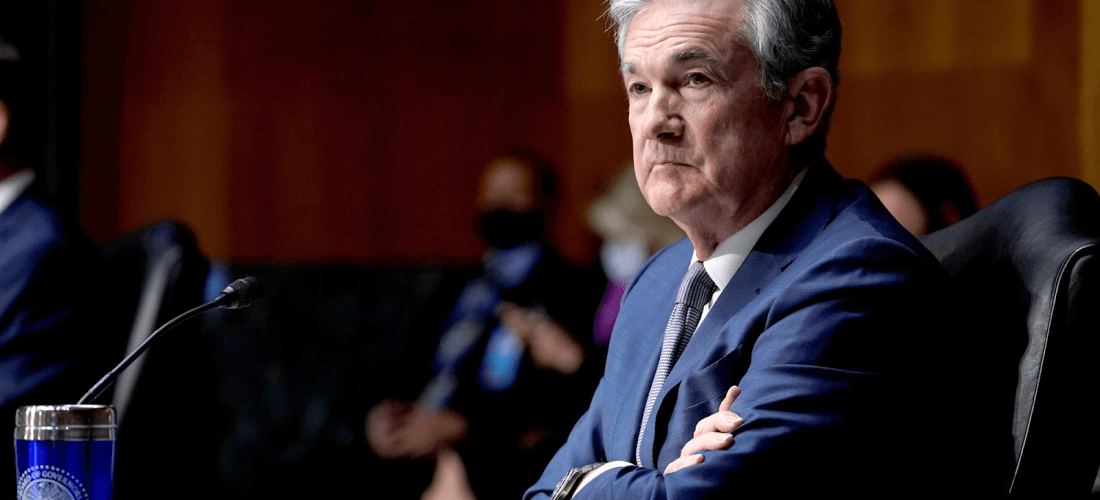
Pictured above is Federal Reserve Chairman Jerome Powell. Powell led this week’s FOMC meeting, forward-signaling the Fed’s monetary policy strategy and lending clarification to eager market makers.

Since the Federal Reserve’s inception in 1913, the central bank has made a profound impact on the nation’s commercial banking sector, monetary policy and the world. The Federal Reserve, or the Fed, operates as our nation’s commercial banking regulator, monetary policy interventionist and financial stabilizer. The Fed is made up of 12 member banks which assist an assigned geographic area around the country and help with banking services and compiling data in the area. The Fed’s main goals are price stability, maximum employment and maintaining moderate long-term interest rates. 

The Fed meets eight times a year with members from other area banks known as the Federal Open Market Committee (FOMC). The FOMC consists of 12 members, which come from the Board of Governors of the Fed and Reserve Bank presidents. The FOMC is responsible for managing the country’s money supply.  

The current chairman of the Fed is Jerome Powell. Powell has served in this role since 2018. An alumnus of Princeton and Georgetown, Powell worked shortly in investment banking in his early career and later went on to start working in public service under Former President George H. W. Bush. Since his time at the Fed, Powell has neither been described as either a dove, which is a policymaker interested in low unemployment and low interest rates,  nor a hawk, which is a policymaker more concerned with stifling inflation. Instead, Powell has been described as a major mediator: one to find a consensus in monetary policy and the economy. He has been known to listen to many different members of Congress’ views on the economy. 

The FOMC met live today at 2:30 p.m. to discuss the economy’s recovery. With three vaccines in full swing and a new stimulus package passed, many of the challenges induced by the coronavirus pandemic are seeming smaller, and recovery has been top-of-mind among regulators. As a result, speculators are expected to grow more eager to reenter the market after a tumultuous year.

Many investors are concerned with the recent rise in treasury yields and inflation. Powell has discussed inflation a few weeks ago, and he does not believe inflation to be a major concern. As expected, he reiterated this point during today’s FOMC meeting. The Fed’s Summary of Economic Projections in December estimated GDP to be 4.2 percent, unemployment to be at 5 percent, and core inflation to be at 1.8 percent for 2021. Some believe these estimates rely on optimistic outcomes regarding vaccine rollouts and business reopenings. 

Market conditions indicated investors were not expecting a change in interest rates announced at the meeting, and there was none. Powell made it clear that the Fed would employ ample forward signaling before implementing any drastic, market-moving changes such as a tapering of treasury yields. In a Q&A with reporters, Powell made it clear that there needs to be significant progress made in economic recovery to consider the action. Currently, the federal funds target rate (the rate commercial banks lend to each other) is set from 0 to 0.25 percent. This was set low by the Fed to stimulate credit markets and encourage lending to businesses afflicted by the economic shutdown that occurred last March in response to spiking COVID-19 transmission rates.  As we recover from the pandemic, the economy’s fate will be placed not only in the hands of the FOMC and the Fed but in the average American’s consumer confidence and their ability to spend money. A recovery in consumer confidence followed by an economic recovery will likely prompt the Fed to change course, when that will happen remains an uncertainty.

dangelom2@lasalle.edu

Fiscal policy moves: long-awaited COVID-19 relief bill faces approval

Business

Elizabeth McLaughlin, Staff

Getty Images

President Joe Biden delivered a speech at the White House after the Senate’s passage of the American Rescue Plan on Saturday, March 6.

On Wednesday, March 10, the House plans to finalize the Senate-approved COVID-relief bill, dubbed the American Rescue Plan, after many months of debate. Among other provisions, the bill includes $1,400 checks; in December, President Trump permitted $600 checks and in March, the amount was $1,200. That means Congress has allocated a total of $2,400 in stimulus to the average American throughout the pandemic. Additionally, the relief bill offers $300-a-week federal jobless benefits. On March 5, Senate Democrats spent more than nine hours debating the amount of jobless benefits the government should offer in the bill. 

Senator Joe Manchin (D-WV) stated that “we have reached a compromise that enables the economy to rebound quickly while also protecting those receiving unemployment benefits from being hit with [an] unexpected tax bill next year.” The deal allows the first $10,200 of the jobless benefits to be non-taxable for those with incomes of up to $150,000. Tax rules on excess business loss limitations were extended for one year, through 2026. Senator Manchin stated, “those making less than $150,000 and receiving unemployment will be eligible for a $10,200 tax break.” 

Under the bill, the Pandemic Unemployment Assistance program (PUA) and the Pandemic Emergency Unemployment Compensation program (PEUC) are extended until Sept. 6. PUA is open to workers who don’t qualify for typical unemployment benefits, such as gig workers, freelancers and independent contractors. The PEUC, on the other hand, provides additional weeks of unemployment insurance once state benefits have been exhausted.

The unemployment benefits were especially crucial because, if Congress does not pass this bill, 11.4 million workers will lose their benefits between March 14 and April 11. Given the fact that more than 80 million people have filed for unemployment benefits since the pandemic began, any sort of assistance that the government can provide is critical to the improvement of the economy.

The relief bill also provides funding for vaccine distribution and testing. Moreover, the bill provides money for K-12 schools and higher education institutions. Democrats have argued that the bill will help alleviate child poverty “and help households afford food and rent while the economy recovers from the pandemic,” according to reporting from CNBC.). Republicans have criticized Democrats for focusing on policies seemingly unrelated to the pandemic.

The bill is poised to make its final passage through the House on Wednesday, March 10; if it does, President Biden can sign it by the weekend. There is a deadline on Sunday, March 15, to renew unemployment aid, so President Biden must sign the bill before then. House Democratic Caucus Chair Hakeem Jeffries (D-NY) said he is “110 percent confident that the votes exist to pass.” There is no telling when stimulus checks will be distributed to individual bank accounts, but the IRS has had a relatively quick turnaround with the two previous stimulus checks. Unfortunately, for many Americans, the aid cannot come soon enough.

mclaughline7@lasalle.edu

The Oracle of Omaha speaks — Financial Commentary

Business

Michael D’Angelo, Staff

USA Today

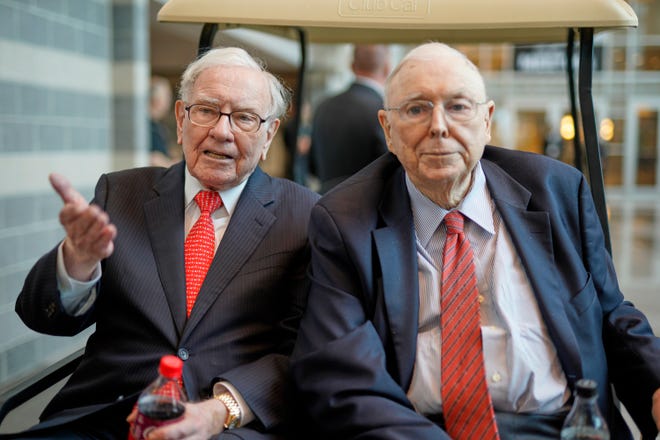
Berkshire Hathaway’s CEO, Warren Buffett (right), and Vice Chairman, Charles Munger (left). Buffet is famously referred to as the “Oracle of Omaha.” His value investing strategies have created impressive returns for his company, which he views as a “collection of businesses.”

Warren Buffett is a big name in the financial sector. He is known for his down to earth approach when it comes to investing and his frugal personality despite being worth billions. 

Buffett is the definition of the old-school Midwesterner who places his hope and confidence in his fellow Americans. He disdains Wall Street, instead choosing to operate his infamous holding company, Berkshire Hathaway, from Omaha, Nebraska. He is so frugal he chooses to purchase a McDonald’s breakfast sandwich with exact change every day before he goes into the office but chooses the cheaper option if the markets performed poorly the day prior. In addition, he still lives in the same house that he purchased in the early 1950s. 

Buffett accumulated his wealth by practicing a value investment strategy he learned from Benjamin Graham. This strategy relies on analyzing a company’s book value to determine if it is worth less than the market price. If this occurs, the stock is considered to be an undervalued and a cheap option. Buffett emphasizes buying cheap companies with value and knowing how the company operates. Buffett and Berkshire Hathaway own shares of major companies like Coca-Cola, Apple, General Motors and Verizon. 

In the past week, both Buffett and his company have been popping up over news headlines in many financial publications. This is due to the release of Buffett’s annual letter to shareholders and Berkshire’s 2020 annual report. I had the opportunity to read through Buffett’s letter  and despite some criticism regarding the letter to be socially tone-deaf, I believe he is spot on and paves a strong future for Berkshire Hathaway. 

In the letter, Buffett begins by detailing Berkshire’s earnings of $42.5 billion, then he jumps to emphasizing Berkshire’s retained earnings which he believes are building “value and lots of value.” Both Buffett and Charlie Munger, Buffett’s Vice Chairman at Berkshire Hathaway, view Berkshire as a collection of businesses in which the firm has invested in the “long-term prosperity” of those businesses’ success. He writes in the letter that Berkshire’s main goal is to own parts of, or all of, a diverse group of businesses with good economic characteristics and good management. 

As the letter moves on, Buffett sheds light on a mistake he made in purchasing aerospace company; Precision Castparts. He paid the wrong price for the company and misjudged the average amount of future earnings. Also, Buffett takes a shot at bonds and says that fixed income investors face a bleak future. To increase Berkshire’s profitability, Buffett repurchased back 80,998 A class shares and spent $24.7 billion in the process.  

Despite not addressing the pandemic, social justice protests, and other events of the past year, Buffett confidently concludes, “never bet against America.” Also, he ridicules market gurus and says they can find equities to fit their tastes instead of buying Berkshire. He goes on to describe investing as a positive-sum game where even a monkey can randomly toss darts at a board of S&P 500 companies and profit. This is certainly a response to bull market and retail trader enthusiasm since March. Buffet the letter iterating plans to meet with his best friend, Munger, in Los Angeles and to host the annual meeting on May 1. 

I enjoyed reading the letter and I agree with the legendary investor, we should have faith in America. We need to look forward to our country’s prosperity, despite so many obstacles in our way. After all, why bet against America? A country which holds a report card of economic success and entrepreneurial prosperity achieved by generations. 

dangelom2@lasalle.edu

Fed Chairman Jerome Powell testifies before Senate Banking Committee

Business

Elizabeth McLaughlin, Staff

Reuters

Chairman of the Federal Reserve Jerome Powell listens during a hearing before the Senate Banking Committee in December 2020.

On Tuesday, Feb. 23 at 11 a.m. EST, the chair of the Federal Reserve, Jerome Powell, testified before the Senate Banking Committee regarding the central bank’s semi-annual Monetary Policy Report. The Committee’s chair, Senator Sherrod Brown (D-OH) began the session with opening remarks about the current state of economic affairs. Senator Brown made it clear from the beginning that he is in favor of the Fed using any monetary tools it sees fit to manage inflation and unemployment, stating, “most people are not worried about doing too much to get through this pandemic, they’re worried about doing too little.” Further, he recalled remarks from Janet Yellen, the treasury secretary, who stated that if the Fed doesn’t do more by way of monetary policy, we risk a “permanent scarring” of our economy and our future.

Ranking member Senator Pat Toomey (R-PA) disagreed with Senator Brown, stating, “the last thing we need is a massive multimillion-dollar spending bill.” Senator Toomey was chiefly concerned with inflation and urged Powell to roll back the Fed’s holdings of treasury securities and agency mortgage-backed securities in order to avoid uncontrollable and unwanted inflation. Senator Toomey stated that most American households are in better financial positions now than they were before the pandemic. He stated that in his opinion, the last two recessions were caused by asset bubbles that burst. In 2001, it was the stock market, in 2008, the mortgage credit market. Additionally, Senator Toomey believes that monetary policy contributed a great deal to the formation of those bubbles. 

He also remarked that there is a link between record amounts of liquidity and unprecedented asset valuations, like those of GameStop and Bitcoin, as of late. Across the board, Senator Toomey stated, there are elevated asset prices and signs of emerging inflation. He asked Powell if he believes there is a link between the liquidity the Fed has been providing and some of these unprecedented asset prices, to which Powell responded, “there is certainly a link.” Despite this, Powell and the Fed plan to continue the bond-buying program “at least at its current pace until we make substantial progress toward our current goals.”

Powell presented his testimony in two parts: a review of the current economic situation and the Fed’s plans for monetary policy moving forward. Powell stated that the sectors most adversely affected by the resurgence of the virus are the weakest. Household spending on services remains low, especially in the hard-hit sectors of leisure and hospitality. However, household spending on goods picked up in January. Moreover, the housing sector has “more than fully recovered from the downturn.” Regarding the labor market, Powell stated that the pace of improvement in the labor market has slowed and the unemployment rate remained elevated at 6.8 percent in January. Participation in the labor market is notably below pre-pandemic levels. 

Moreover, Powell stated that “those least able to shoulder the burden [of the pandemic] have been hardest hit,” citing low wage workers, African Americans, Hispanics and other minority groups as the most affected. During the questioning portion of the hearing, Senator Bob Menendez (D-NJ) explained the varying unemployment rates by race: in January, the unemployment rate among the black population was 9.2 percent; among Hispanics, 8.6 percent. The unemployment rate among white people was 5.7 percent. Additionally, the Black labor force exit rate increased dramatically while the white labor force exit rate returned to pre-pandemic levels, suggesting that the Black unemployment rate is misleadingly low compared to the white rate. Senator Menendez got Powell to agree that minority families are bearing the brunt of the damage caused by the pandemic, “along with those at the lower end of the income spectrum.”

Regarding inflation, Powell stated that there were large declines in the spring, but consumer prices partially rebounded last year. Powell also stated that as the very low inflation readings from last March and April drop out of the 12-month calculation on inflation, we should expect readings on inflation to move up. This is called the base effect and it should not be a cause for concern. Powell mentioned that overall, inflation remains below the 2 percent long-run objective. He stressed that the 2 percent goal is an average, so periods of lower-than-average inflation should be followed by periods with inflation rates greater than 2 percent.

In his overview of the monetary policy report, Powell emphasized that maximum employment is a broad and inclusive goal, so policy decisions should be informed by an assessment of the shortfalls of employment from its maximum level, rather than deviations from its maximum level. Furthermore, Powell mentioned that actions taken by the Fed in the early months of the pandemic have constrained their main policy tool by the lower bound. In other words, the Fed has been lowering interest rates in unprecedented ways since even before the start of the pandemic, so their ability to use lowering interest rates as a monetary policy tool is weakened.

If lowering interest rates isn’t really much of an option anymore, what will the Fed do? Simply put, the Fed will do what it has been doing throughout the pandemic: increase holdings of securities at least at their current pace. The Fed will closely monitor inflation; Powell stated that “well-anchored inflation expectations will enhance our ability to meet both our employment and inflation goals.” Powell assured Congress that the Fed “will continue to clearly communicate our assessment of progress toward our goals well in advance of any change in the pace of purchases.”

mclaughline7@lasalle.edu

Don’t be afraid of stocks: an examination of financial bubbles and their history

Business

Michael D’Angelo, Staff

Medium

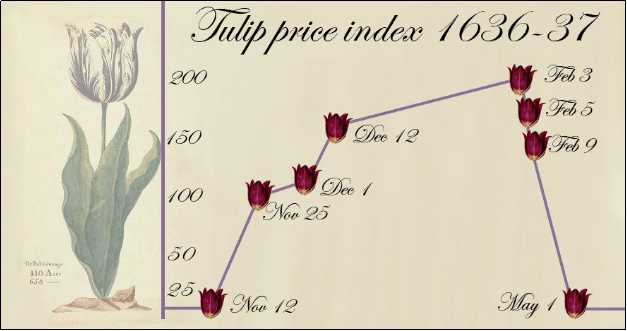
Pictured above is the price index of Tulips from the infamous Tulip bubble burst of the 1600s in the Dutch Netherlands. The tulip bubble burst is the first ever recorded financial bubble in history.

Chances are if you checked the financial markets on Tuesday morning, indices were in the red. Many investors were concerned with a large federal stimulus package, the recent rise in commodities, and a rise in the 10-year U.S. Treasury Bond. Headlines regarding Michael Burry’s prediction about hyperinflation, Treasury Bonds, and WTI Crude Oil exploding to over $60 a barrel flooded the news on Monday and investors were alarmed. Tuesday’s open saw the tech heavy NASDAQ dropping nearly 3 percent. 

Amid growing concerns among investors, talks of a potential financial bubble, which occurs when asset prices become based on inconsistent and irrational views about the future, surfaced and Ray Dalio’s bubble indicator found 50 of the 1,000 biggest companies are in extreme bubbles. Although this is only half of the companies considered in a bubble from the Dot Com burst, investors should certainly take notice but not let news headlines deter from their equity investing.

Nonetheless, financial bubbles and investor psychology is still a fascinating topic. I recently became interested in the concept of financial bubbles after picking up a copy of the novel, Irrational Exuberance by Economist J.D. Shiller. In his book, Shiller accurately predicted the housing crisis and suggests monetary policy tools to ease the consequences of financial bubbles. The term “Irrational Exuberance” was coined by former Fed Chairman, Alan Greenspan, in the late 1980s. Below is the  breakdown and examination of the history of bubbles.

Financial bubbles have occurred all throughout history; In the 1630s, the Dutch went crazy for Tulip bulbs. The price soared from 1636 to 1637 and many went so far as selling their homes to purchase the simple garden plant. Eventually, the mass hysteria surrounding tulips faded and the price of tulips declined 90 percent.. 

Do you remember Isaac Newton, the pioneer of the concept of gravity? Well, Newton was burned hard and lost a fortune when the South Sea Company bubble burst in the 1720s. The South Sea Company was promised a monopoly by the British government to trade in South American colonies. British investors dived headfirst into the South Sea and the stock reached a high over 1,000 pounds and then came down after news of fraud and the monopoly fell out. 

Bubbles are no phenomena to the past as we have seen in the modern era. The Japanese real estate and equity markets exploded in the late 1980s and then came down.  The Dotcom bubble occurred in the United States in the late 1990s to early 2000s when investors dived into tech and internet stocks. The most recent bubble occurred with the U.S. housing market in the late 2000s to 2010s. Housing prices increased dramatically leading many investors to falsely believe the inability of the housing market to crash. The market declined dramatically, due to an excess of subprime mortgage loans, followed by the global recession due to mortgage securitization. 

History certainly has a knack of repeating itself and we could be seeing another bubble occur in any sector of the economy. With bubbles and investor mania creating a collapse of asset prices, the key to surviving the next bubble is to rely less on weekend worrying, where we, as retail investors or institutional investors, absorb weekly  news on the weekend leading to a belief in an economic doom at the start of a new week. To take from Peter Lynch, we should not get scared out of stocks. 

dangelom2@lasalle.edu