La Salle alumna announced as The First Chief Racial Equity Officer

News

Nya Griffin, staff
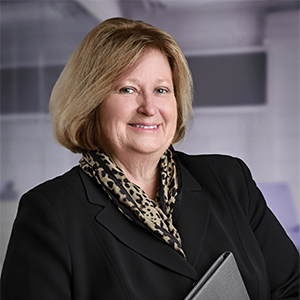
Header Image: Gail Carter Hamilton via Lasalle.edu

On April 28, La Salle University announced that Gail Carter Hamilton, an alumni of La Salle in 1998 and 2009 will address the health disparities in Philadelphia, as the Philadelphia Department of Public Health (PDPH) appointed her to be the first Chief Racial Equity Officer in Jan. 2022.

Hamilton’s overwhelming passion for nursing and public health laid the foundation for her career. After extensive coursework, and training in epidemiology and faculty taking out time to help make sure that she not only understood the information but would succeed beyond her own expectations in nursing. 

“Our close-knit classroom style allowed for a more intimate learning environment,” she said. “Where more one-on-one time with our professor helped prepare us for the rigors of bedside nursing. I truly believe that it is because of this unique atmosphere I was more than ready to face the challenges that lay ahead.”, said Hamilton. Reflecting on her time at La Salle, her participation in Student Nurses Association of Pennsylvania and the Organization of Latin American Students (OLAS) makes her connection to the La Salle community honorable. 

According to Phila.gov, this newly created position is intended to centralize efforts to ensure racial equity in Health Department operations and activities. Also, this position is to help guide planning to address health inequities in Philadelphia. Hamilton describes this role in healthcare terms, that the officer is meant to listen to the community, diagnose a problem, and then prescribe a solution, while keeping community members involved, instead of telling them what will be done. “The purpose of the role is to make sure that our department has equity at the center,” she said.

Hamilton having the foundational background from La Salle and the initiative and willingness to help our community is remarkable. “I am committed to working to address health equity and health justice in Philadelphia,” said Hamilton. “So many of our communities are struggling under the dual burden of systemic racism and the pandemic, which led to much worse outcomes in communities of color. I look forward to ensuring that racial equity is at the heart of our operations and that we are able to build sustainable partnerships throughout the city in order to maintain robust public health programs,” she said. 

Hamilton hopes that through her role she will accomplish mobilization and community engagement. “Many times, what happens is, people in government see the problem and they say, ‘A-ha, this is what will fix it.’ That’s not equity,” she explained. “Equity in part means that we’re bringing in the people who have the problem, to tell us how to help them fix the problem. What we really want is to decolonize the work to allow everybody to feel like they have a say in what happens to them in their communities.” 

As a Philadelphia native, Hamilton said framing its citizens as assets and embracing its diversity will help improve its public health strategies. 

As for her La Salle roots, Hamilton said she hopes to stay connected to her alma mater and hopes to include nursing graduates that will be able to work within the framework of the Philadelphia Department of Public Health (PDPH) as new initiatives are implemented beginning summer 2022 and beyond.

“My job is to help shape and change the future of how public health is delivered,” she added.

Community meeting regarding recent crime in the area

News

Kylie McGovern, Editor 

Header Image: Contech

On Tuesday, April 26 there was a community meeting with public safety and Residence Life in Founders’ Hall for La Salle Apartments and St. Teresa Court Apartments residents. Over the weekend, an apartment was burglarized in La Salle Apartments, an on-campus residence hall for sophomores, juniors and seniors located on Olney and Chew Avenues. This meeting was led by Vice President of Student Development & Campus Life Gabrielle St. Léger, Ed.D., Assistant Vice President of Public Safety Dr. Amanda Guthorn, and Director of Residence Life TiRease Holmes. 10 students total attended this evening from both residential areas. 

Students voiced their concerns to Léger, Guthorn and Holmes about how safety in their apartments could be improved after the break-in this weekend. Public safety has video footage of the burglars boosting one another over the fence. Although the traditional residence halls in North Residence Halls and the St. Miguel townhouses have security guards, La Salle Apartments and St. Teresa Court Apartments do not. These buildings were not built in particular for university housing. La Salle acquired these properties, rather than originally building them like the other on-campus housing. Therefore, there is no security desk installed. Students at the meeting voiced that implementing a security desk and security officer in La Salle Apartments and St. Teresa Court Apartments would make them feel safer. La Salle Apartments and St. Teresa Court Apartments were designed for students to have more “independent living,” but the students impacted by the lack of security have wondered about the cost of their independent living. Students at the meeting also suggested improved lighting in their apartment areas since the buildings are somewhat separated from the rest of campus. Léger and Guthorn took this suggestion to heart and walked with students to see the areas that could be lit more properly. 

In addition to increased patrol and security at La Salle Apartments and St. Teresa Court Apartments, students living in those areas have expressed frustration in submitting maintenance requests that go unanswered. For example, students had explained that they had been frustrated after submitting multiple maintenance requests for both safety matters – like locks – to cosmetic issues, to heating issues during winter. Although safety is the main concern of both students and Léger, Guthorn and Holmes, students should also feel comfortable in their environments. 

At the end of the day, students at La Salle need to feel safe and heard. Students living on campus end up paying upwards of $10,000 a year for “room and board” at La Salle University, in addition to tuition and other fees. Dialogues like this one at the community meeting with residence life, public safety and students may bring about change.

Decolonial ecology lecture

News

David O’Brien, Editor

On April 19, La Salle’s Religion and Theology department hosted philosopher Malcolm Ferdinand to lecture about his book “Decolonial Ecology.” The book was recently translated by La Salle religion professor Dr. Anthony Smith. Ferdinand opened his lecture by explaining his own background in engineering and philosophy as well as his personal background living as a minority in France.

Ferdinand’s lecture focused on synthesizing two seemingly unrelated topics: environmentalism and racial injustice. While these two subjects are often discussed separately, Ferdinand’s book and lecture showed how the two are heavily interconnected. Ferdinand’s perspective is that if one is to evaluate environmental issues, one must examine racial injustice, especially in a postcolonial context. If one is to evaluate racial injustice, one must evaluate the effects of environmental issues and how they are significantly more harmful towards developing nations and minorities. Ferdinand examined how numerous climate and environmental initiatives often only focus on white people and nations, not continuously marginalized people of color and developing nations. In doing so, these initiatives fail to actually address the current environmental crisis on a global scale and continue to reassert the global division caused by colonialism.

Malcom Ferdinan

Ferdinand utilized both statistics surrounding the Caribbean and stories of individuals and slave ships during colonization of the Caribbean as the basis for his research and work. Ferdinand related modern climate change solutions to that of a nature preserve. Inside the preserve everything looks natural, ecologically sound, and healthy, however, outside the preserve, industrialism and ecological issues rage on. Ferdinand argues that the modern west is becoming a nature preserve, as the west continues to deal with climate change and other environmental issues, it seeks to maintain its way of life brought on by an industrial and material golden age through outsourcing all of its issues to countries in the developing world. 

In doing so, “solutions” to ecological issues not only further racial oppression but also fail to resolve environmental issues. Ferdinand discusses that through outsourcing these issues to other nations, racial oppression worsens and environmental issues continue. Thus, while seeking to resolve the environmental crises of our time, we must view them globally and holistically rather than in an atomized way. 

After the lecture, Dr. Smith interviewed Ferdinand about the contents of his book, the research done to write the book, and discussed the experience of translating the text. Ferdinand and Smith then opened up the floor to questions from the audience. Students and faculty asked a variety of questions surrounding “Decolonial Ecology” as well as more specific questions surrounding environmental issues and race relations in both the U.S. and France.

The return of Philadelphia’s mask mandate 

News

The return of Philadelphia’s mask mandate 

Kylie McGovern, Editor

Header Image: New York Times
Philadelphians wearing masks outside of City Hall

On Monday, April 11, Philadelphia announced that the indoor mask mandate would be reinstated beginning on April 18 because of rising COVID-19 cases which have risen more than 50 percent in 10 days. This rise is the threshold that the city’s guidelines call for people to wear masks indoors. Health officials believe the recent spike is being driven by the highly transmissible subvariant of omicron: BA.2. Spreading rapidly throughout Europe and Asia, BA.2 has become dominant in the U.S. and more specifically Philadelphia in recent weeks. Currently, Philadelphia averages 142 new cases per day. 

Masks will be required in all indoor public spaces, including schools and childcare settings, businesses, restaurants and government buildings. Once the mandate goes into effect, residents will be asked to report any business not complying with the mandate. The mask mandate is tied to the COVID-19 Response Levels, and as COVID cases rise in Philly, the Philadelphia Public Health Department wants to protect its most vulnerable residents and they believe wearing a mask around others is an easy way to do that. 

Before the update, Philadelphia was operating on Level One which means that two or more of the following are true: average new cases per day are less than 100, hospitalizations are less than 50 or cases have increased by less than 50 percent in the previous 10 days. There are no vaccine or testing requirements for establishments that serve food or drink in Level One. Within Level One, there is no expressed mask requirement except in schools, healthcare institutions, congregate settings and on public transportation. 

Since the city is transitioning into Level Two, two or more of the following are true: average new cases per day are less than 225, hospitalizations are less than 100 and cases have increased by more than 50 percent in the previous 10 days. With this new phase, the city will be requiring that citizens wear a mask when indoors in public places, but there is no expressed vaccine or testing requirement for places that serve food or drink. 

Health Commissioner Cheryl Bettigole said businesses can choose to be mask-free if they require all employees and visitors to prove they have been vaccinated. Bettigole believes that if the city failed to require masks now, “knowing that every previous wave of infections has been followed by a wave of hospitalizations, and then a wave of deaths, then it will be too late for many of our residents.” 

Although the national increase for COVID-19 is relatively low, about three percent, cases in northeastern cities like New York City and Washington, D.C., have been higher. Some colleges in the northeast, including Columbia, Georgetown and Johns Hopkins, have reinstated indoor mask mandates recently. La Salle University has yet to make a statement about mask requirements, but in the past, La Salle has followed suit with the city of Philadelphia’s guidelines. Some La Salle students are frustrated with the new city guidelines. Sophomore Enrique Carrasco says that the new guidelines are confusing because cases are not as high as they have been in the past when new mask mandates were instated. Senior criminal justice student Audrey Walker says she is “curious to see if the university will follow the city mandate since cases on campus are very low right now,” and senior psychology student Frankie Knoll is concerned about having to wear a mask at graduation if the mandate is put in place. “I think the new mask mandate can be frustrating for some people tired of wearing them, but I think it’s a good idea to protect Philly and get the numbers down,” said graduate student Sarah Lundquist.  In addition, sophomore David O’Brien hopes that La Salle maintains the current policy, rather than mandating masks again.

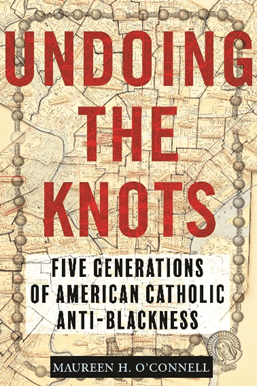
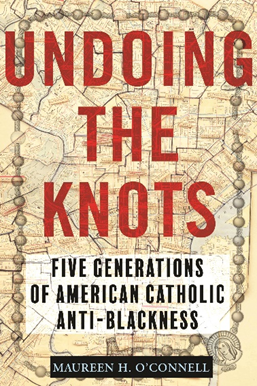
Undoing the Knot: Five Generations of American Catholic Anti-Blackness

News

David O’Brien, Editor

Beacon Press

On Monday April 11, Dr. Maureen O’Connell, a religion professor at La Salle, presented a lecture based on her new book, “Undoing the Knot: Five Generations of American Catholic Anti-Blackness.” O’Connell opened her lecture by presenting a New York Times article on Georgetown University’s sale of 272 enslaved Africans in 1838 to Henry Johnson and Jesse Batey in exchange for $115,000 (about $2.79 million today). In 2015, Georgetown renamed buildings after descendants of the people sold and the Jesuits pledged to raise $100 million for descendants of slaves possessed by Jesuits. After discussing this article, O’Connell begged the question of what other universities owe to people wronged in their own institution’s past.

O’Connell focused on three primary issues surrounding talks about the past: remembering, gatekeeping and curriculum. The remembering section focused on the failures of communities in acknowledging that these issues occurred. Gatekeeping focused on institutions’ failures to validate and take into account the opinions of victims of these phenomena. The curriculum section focused on the failures of institutions to teach how and why these events occurred, the importance of them in the foundation of modern institutions and how we can properly educate people on these issues going forward. O’Connell reflected on these three primary dilemmas through her own research surrounding Rosemont College and Saint Joseph’s University as well as her own familial history and La Salle.

She followed each of these topics by asking the audience how they themselves have caused or experienced these issues and asked the community how the University can go about resolving them. A wide array of students, faculty members, parents and even some of the LaSallian brothers provided their own thoughts and insights and agreed that the goal of La Salle is to provide a campus where people can address and resolve the major social issues throughout the United States and improve the Catholic Church through doing so.

O’Connell encapsulated her entire lecture in a brief quote, “our belief in our own moral goodness goes unchallenged and in fact is reinforced by our inequality-sustaining charity. We have bought into the fragile myths of how we got here and promote false rationales as to why others haven’t been able to achieve the same things.” The purpose of this lecture and the vigorous research done to prepare the new book is to help guide members of the LaSallian and Philadelphian community towards accepting the sordid truth surrounding their past. O’Connell’s work pushes people in the Catholic Church to challenge the traditional narrative that has been enforced for generations and to attempt to find the truth behind our community as well as remedy numerous injustices from the past that have led to inequality within the current systems.

Results of the 2022-2023 SGA elections

News

Jakob Eiseman, Editor-in-Chief

Header Image: @​​lasallesga via Instagram

From April 1 to April 8, La Salle’s Student Government Association (SGA) ran elections and promoted campaigns by students running for the positions of student body president, vice president, secretary of academic affairs, secretary of business and senators for each class. SGA ran elections for their executive board from 8 a.m. to 6 p.m. on April 1, allowing members of the student body to vote on the four open positions. Although each position’s winner ran uncontested, the voting process was upheld for write-in purposes. The winners of the elections and representatives filling the positions are as follows:

Student Body President- Michaela Craner, Communication Sciences & Disorders 5-year

Student Body Vice President- Nikki Aquino, Biochemistry

Secretary of Academic Affairs- Junie Mertus, Biology

Secretary of Business Affairs- Will Goydan, Finance

Elections for class senators were held from 8 a.m. to 6 p.m. on April 8, allowing students to vote for multiple candidates for each class senator position. The freshman class of 22-23 will have a chance to elect senators at the beginning of next semester after they have had time to live on campus for a period. The winners of each class senator position are as follows:

Sophomore Class Senators: Brisa Barrios, Biology; Isabel Najera, International Relations; Gwendolyn Karas, Secondary Education

Junior Class Senator- Mia Mattingly, International Relations

Senior Class Senators- Nina Kolodgie, Biology; Brendan Storino, Communication Sciences & Disorders 5 year

We had a chance to catch up with some of the newly elected members of SGA, and this is what they had to say: Goydan was to the book and simply said, “As Secretary of Business Affairs I will be in charge of managing proposals for different events and ensuring that SGA continues to make use of its budget in a way that best supports our community.” Meanwhile, the new student body president, Craner, said “I am so honored to be serving as your SGA president. Looking toward the coming year, I will be focusing on improving communication between the student body and SGA through various means as well as within SGA itself. Next year, I want to grow SGA’s presence on campus through surveys and outreach to other organizations, while strengthening the bonds between our members. Make sure to keep an eye out for our surveys and initiatives in the future.”

On Tuesday, April 22 at 6 p.m. an induction ceremony was held in the La Salle Union Compass Club, and all officials listed above are now officially sworn in as representatives of the student body. We at the Collegian look forward to working closely with SGA to communicate to and from the student body, and wish the new officials the best of luck in their representative and academic endeavors.

Traditionally, SGA has been governed by first collecting data and polling the student body on suggestions and desired changes before communicating those suggestions to the university’s governing bodies, and it looks like Craner will be upholding this tradition. SGA works with several university committees including those related to public safety, dining, campus life and curriculum. 

Explorathon raises over $31,000 to support B+ foundation

News

Kylie McGovern, Editor

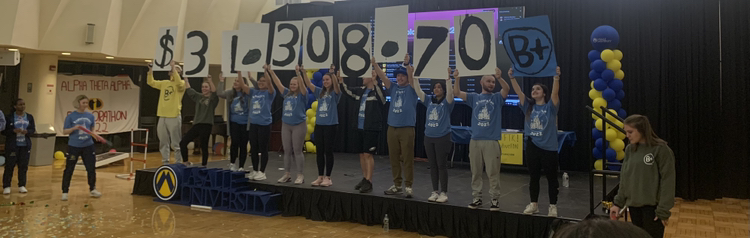
Header Image: Explorathon members reveal their total for the event. Image courtesy of Savanna Carestio

On April 2, La Salle’s yearly Exploration event raised over $31,000 for The B+ Foundation which works to provide financial and emotional support to families of children with cancer nationwide while funding critical, cutting-edge childhood cancer research. B+ is constantly raising money on college campuses and at local events like 5K races, Golf Outings, corporate partnerships and dance marathons. Explorathon hosted their event in the Union Ballroom from 5 p.m. until 10 p.m. and featured guest speakers, student talents, dancing, a rave and games. Fundraising and efforts for this event began last May and continued until the event concluded on Saturday night. 

Dance marathon fundraisers are especially popular at colleges in the area like Penn State University and Villanova University that benefit different charities. These events typically benefit organizations that fund pediatric cancer research and treatment. The B+ Foundation is the largest provider of financial assistance to families of kids with cancer in the U.S., helping nearly 3,000 families this year. In addition, B+ provided funding to over 150 critical childhood cancer research projects at top institutions globally. The top fundraising teams were the Delta Phi Epsilon sorority, the executive board for Explorathon, the Phi Mu sorority, the Elite Explorers team and La Salle Women’s Soccer. The top fundraising individuals were Kristin Frederick, Tehya Williams, Stasia Nguyen, Ashleigh Sieb and Cade. Various teams participated in this event including Greek life, athletics, academic clubs and more, uniting students throughout campus and various organizations to work together towards this cause. 

Many different students were on board for this event. Junior Melina Rallis worked as the morale coordinator for Explorathon. She explained that she works event planning. Rallis explained that she is the “hype man” for Explorathon. Rallis also expressed that it can take a lot of effort to get students involved with Explorathon because members of Greek life have their own philanthropies and college students are among the busiest of individuals. So, each team selects a team captain to communicate the information to and from the Explorathon executive board and their different teams. 

As for fundraising, Explorathon does fundraising all year like posting bingo boards on social media, sending emails and having fundraising nights at local restaurants. Rallis also spoke fondly  of the actual Explorathon event, saying “was a lot of fun and we had a ton of games. We played human hungry-hungry hippos, we had a lip sync battle, we made cards for some of the Be positive heroes.” Rallis also said that the event was effective for personal growth and accomplishment as feels “very accomplished after this all. Although we didn’t raise our goal we still raised $31,308 and I’m super proud of everyone who is involved who made this possible.”

Mellissa Olimpo, a junior communication student and executive director of Explorathon, said, “ It was a great day of dancing, having fun and raising money for the ‘Andrew McDonough Be Positive Foundation.’ Explorathon was able to raise $31,308.70, which means that 31 families are being helped because of Explorathon.” 

2020’s Explorathon raised over $22,000 for childhood cancer, and 2021’s Explorathon raised $39,000 for B+, helping out roughly 39 families through the participation of over 25 teams and organizations. While Explorathon did not hit their goal, they did succeed in helping the B+ foundation in their efforts to help those suffering from childhood cancer. Preparations have already begun for next year’s event, and more details will be shared on their Instagram page @lasalleexplorathon.

Archdiocesan Synod listening session held at La Salle

News

Jakob Eiseman, Editor-in-Chief

Header Image: Participants got to share their thoughts with church leaders in both a large group and individual discussion groups. La Salle University

From 6 p.m. to 9 p.m. on Monday, April 4, La Salle hosted one of the largest Catholic inter-campus gatherings in the city since Pope Francis began the synod campaign in October of 2021. Students and faculty were invited from Chestnut Hill College, Gwynedd Mercy University, Saint Joseph’s University, Villanova University, Rosemont College, Holy Family University, Neumann University and several other Catholic institutions from Pennsylvania.

Synod on Synodality is a two year process established by the Vatican under the guidance of Pope Francis that looks to establish listening sessions like this across the world with the goal of growing the Catholic church globally in terms of its operations and manner of professing its faith. From the Vatican’s official Synod website, the process is described as a way to evaluate the role of churchgoers in communion and vocation, the participation of the faithful in the Catholic experience and how to help the Church better carry out its mission and serve those “who live on the spiritual, social, economic, political, geographical and existential peripheries of our world.”

The Archdiocese of Philadelphia has already hosted over 18 listening sessions in the past month, but this was the first that featured a primarily higher education crowd. As young adults and educational leaders are those who will establish the next generation of all major organizations, including the Catholic church, having a meeting specifically for college-aged voices is a way to tap into a specific minority of the Catholic community that will one day have a significant impact on its future. On February 22 of this year, Ash Wednesday for Catholics, was the center of what the university referred to as Synod week, La Salle’s first major step into the process. Additionally in March, over 14 major universities within the Archdiocese of Philadelphia met for smaller listening sessions within their universities. This event is somewhat a culmination of both, bringing together passionate and like minded thinkers from across the city’s schools to discuss the future of the institution that has not always been favored by a young crowd in general.

While the press was not invited to the listening session due to the personal and tender nature of some of the subjects discussed by participants in the event, we were able to catch up with some students after the event to see what they thought about the Synod and this session in particular. “I attended the first Synod session a few weeks ago after Mass with only three other people so attending this session with a much larger group of people was very different. I really enjoyed interacting with other Catholics and Christians from varying schools,” said digital arts junior Grace McKenna, “I thought it was really enlightening to hear what others had to say and comforting to know I wasn’t alone in what I was feeling.” A large group of students and faculty gathered from many of the schools invited, meaning this was the largest event of this type that most students have attended thus far.

A large group of faculty and students from various universities filled the Union Ballroom.
La Salle University

“I am hopeful that this event will be helpful to the Synod mission and the Church overall,” said McKenna. Many students who attended were happy to share their opinions on what the church has been doing lately. “It’s a big deal that they are asking for the perspectives of not just the clergy but of the laypeople,” continued McKenna, “It was encouraging to see a lot of young believers gathering in one place discussing their hopes and fears for and of the Church.”

People from multiple faiths were invited to join in on the conversation, and psychology junior Bethany Macwana, a practicing Christian but not Roman Catholic, said  “I feel like the Synod experience is something really unique in our time. The last global Synod that happened was in the 1970s, so this is a very monumental and historical event.” “In my home church,” said Macwana, “there is only a pastor as the head of authority, so seeing someone in the Catholic faith from the ‘higher ups’ in attendance was pretty neat.” On La Salle’s involvement in the Synodal mission, Macwana said “I did gain more insight into the Catholic church and heard from other peers who are the same age as me who shared key moments in their spiritual journey. If it was not for the Synod, I would have not been exposed to something like this, so I do feel that La Salle should continue to participate.”

Finally, we were able to get a few comments from Rayna Alexander, an ISBT junior at La Salle who attended the listening session. “The event allowed for many perspectives to be heard and it felt great to be able to share with others who have had similar experiences,” said Alexander, “I feel the Synod gives me a place to voice my thoughts and frustrations openly while having others simply listen and understand my place. I definitely think the La Salle community should participate because all of our voices matter in making changes and solidifying the true value of the Catholic faith.” Alexander also expressed that she believes the event will make a real difference, commenting “With our voices, we are raising awareness and emphasizing concerns as we form into the leaders of our faith.”

New leadership of board of trustees announced 

News

Kylie McGovern, Editor

Header Image: La Salle University

On March 14, La Salle University’s Board of Trustees announced that Ellen E. Reilly, ’83 has been elected as its new Chair. On July 1, Reilly will become the first woman to serve as the Board’s Chair in the University’s 159-year history. Reilly has served as President of La Salle’s Alumni Association and earned ex-officio Board membership in 2021. She explains that when she began at La Salle as a computer science student the institution was newly co-educational and now she is “humbled to have been elected as Chair of the University’s Board of Trustees …it’s a role I never dreamed of holding when I first got involved with our Alumni Association. I am honored and proud to work on behalf of the Board and our University.”

Reilly will replace William W. Matthews, III, Esq., ’90 as Chair of the Board of Trustees. Matthews announced the leadership changes in an email on March 14 to the University community. He has served as the Board’s Chair since July 2020, but he was elected to the Board in 2007 and his term concludes June 30. Matthews explains that Reilly “is prepared for this moment — and it’s an important one for the Board and La Salle University alike.” “Ellen’s pride in La Salle is unmatched,” said La Salle University Interim President Tim O’Shaughnessy, ’85. “She possesses a deep commitment to our University and wants what is best for our students and our community. For her, La Salle isn’t just her alma mater. It’s a family. It’s home. I am confident in the future direction of our Board under Ellen’s leadership.”

Reilly currently works as the head of healthcare and life sciences at a company called WHOOP, which is a company that debuted a novel wrist-worn device that continually tracks key biomarkers. Reilly’s career experience includes partnering with businesses to transform and simplify business processes and delivering bottom-line measurable benefits. Before her work at WHOOP, Reilly was vice president of global technology partnerships at I(IMS Health), Q (Quintiles), and VIA (by way of) IQVIA and vice president of the life sciences and healthcare industry at DocuSign.

At La Salle University, Reilly is a member of an advisory board for the Dean of the School of Arts and Sciences, in which she has recently worked on an initiative to create a scholarship recognizing Brother Gerald Fitzgerald, FSC. Especially relevant this week, Reilly and over a dozen other La Salle alumni created a dollar-for-dollar match of up to $200,000 as part of La Salle’s 2022 Day of Giving.

In addition to Reilly’s election, John K. Dugan, CPA, ’85, will serve as the board’s newest Vice-Chair. Dugan is an accounting alumnus who worked for 29 years at the PcW Accounting Network. He has served on the Board since 2019 while working on several committees. The Board has also approved three-year term renewals for Vice-Chair AmyLynn Flood, CPA, ’95; Brother Jack Curran, FSC, Ph.D.; and Joann M. Magnatta, ’77. Along with Dugan’s election as Vice Chair, these changes are effective July 1.

La Salle institutes new masking policy

News

Kylie McGovern, Editor

Header Image: La Salle

On March 2, Interim President Tim O’Shaughnessy responded to the recently revised city mask guidelines explaining that, although the Philadelphia Department of Public Health issued an adjustment to its indoor masking policy, La Salle’s COVID-19 response team reviewed these revised public health guidelines and waited to update the campus community regarding any potential policy changes. Until that new update, the current indoor masking policy remained in effect. O’Shaughnessy continued to encourage COVID-19 boosters and vaccines because they remain the greatest tools for reducing severe illness in our community and returning to a more active campus life.

On March 4, just days after  the original update, O’Shaughnessy wrote to the La Salle community again to announce that “beginning Monday, March 7, La Salle University will transition to recommending, but not requiring, that masks be worn indoors. Everyone must continue to carry an appropriate mask with them at all times.” This changing mask policy follows the guidance of federal and local health agencies and was decided with the counsel of La Salle’s COVID-19 response team. 

There are still circumstances where masks will be required like on the University shuttle, in clinical healthcare settings and in the COVID-19 testing center. In addition, masks are required to be held in the event that an individual asks others to be masked in their presence. If asked to mask up, it is recommended students follow the request.

During the upcoming spring break (March 12–20), La Salle will likely see a significant portion of our community travel away from campus. Therefore, masks will be required for the five-day period immediately following the University’s spring break, the week of March 21–25, as a preventative strategy. O’Shaughnessy does, however, explain that “masks have helped limit the spread of COVID-19. If necessary, we will not hesitate to reinstitute a mask mandate in the event that we experience significantly increased case counts on campus or in the region.” 

As for other universities in the area and their mask mandates, many of these schools are on spring break. But, Temple University’s Senior Director of Health Services, Mark Denys, explained that “out of an abundance of caution, the university will still require the use of masks inside buildings when we return to campus next week.” Furthermore, Saint Joseph’s University’s president Mark C. Reed, Ed.D., explained on March 2 that “Given declining numbers regionally and nationally, our very high community vaccination rate and updated guidance from the CDC, City of Philadelphia and Montgomery County, the University will no longer require masks be worn indoors in all shared or common spaces at all times. Beginning tomorrow, March 3, masks will be optional on campus.” Drexel University decided that “despite loosened local mask ordinances, Drexel’s indoor mask requirement will continue at least through the end of winter term (through March 19, 2022) while we assess community needs moving forward. Masks are also still required on public transit throughout Philadelphia.” 

In speaking to a few students about the new mask guidelines, the Collegian’s Managing Editor David O’Brien kept his response simple, saying, “I’m glad we don’t have to wear them anymore,” but junior biology student Luke Szyszkiewicz explained that he “doesn’t like how confusing the different rules are between different professors and the university.”The Collegian’s Editor-in-Chief Jake Eiseman says, “I think dropping the mask guidelines on campus is a positive move. It’s in accordance with the CDC’s and the city’s recommendations and cases have been low on campus for months now. Giving people the option to take the mask off should be seen as a good thing overall, but there are bound to be a few bad apples. Many people will continue to wear the mask regardless, and some will remove them when they feel it is safe, but some will never wear a mask again even when expressing symptoms, and that is my main concern.” 

Editor’s Note: Although I am personally excited that we no longer have to wear masks because our cases are quite low, I think that these conditions should only prevail with high vaccination rates and requirements. I think that taking away the masks is a good decision for now and likely the remainder of the semester, but I hope the university continues to closely moderate cases and surges so that the campus’s health remains a top priority.