On Wednesday, March 23, Federal Reserve Chairman Jerome Powell discussed the need for consumer protection when it comes to digital currencies. The Bank for International Settlements, an organization that includes central bankers from around the world, organized the panel at which Powell spoke. There are two kinds of new technologies that Powell is concerned with: stablecoins and central bank digital currencies.
The former are a kind of cryptocurrency tied to a commodity or the dollar; the latter are government-issued digital forms of currencies, like the U.S. dollar. Back in Jan., the Fed released a study on stablecoins that identifies the form of currency as “a possible breakthrough innovation in the future of payments.” The Fed understands that stablecoins have the potential to significantly impact the banking system, both on traditional banking and credit provision. As for digital currencies, the Fed is researching the topic but has not decided whether to issue their own.
Although Powell did not provide much detail as to the content of these regulations, he did say that these digital transactions should be regulated the same as other transactions executed by banks. Powell is particularly concerned with the perceived lack of consumer awareness of the risk associated with cryptocurrency: many popular investments lack government protection of losses. The rate of adult Americans who invest in cryptocurrency is 16 percent and it seems that the hype is only growing, meaning that more Americans are going to be exposed to unregulated risk by investing in crypto in the coming years. That is, however, unless the government develops more robust laws and regulations concerning digital currencies.
Besides personal loss and privacy concerns, Powell discussed how cryptocurrency assets have been used for “illicit activity,” such as money laundering. On top of that, Sen. Elizabeth Warren has expressed concern regarding crypto use and evading sanctions on Russia.
Global financial stocks tumbled on Monday, March 7 with increasing investor fears about the potential for economic damage and pressure on consumer spending as the price of oil soars following Russia’s invasion of Ukraine.
Lenders, investors and dozens of payment companies with links to Russia have been cutting ties with the country. These moves and news come amidst Western sanctions against Russia. While the United States’ sanctions have been aimed at limiting the flow of Western money and damaging Russia’s economy, Ukraine has called for the boycott of Russian energy exports.
Major accounting firms Deloitte and EY said on Monday they are cutting ties with Russia, mirroring moves by fellow Big Four accounting and consultancy firms KPMG and PwC. These firms and their work are often key to businesses obtaining international investor backing.
Global stocks drop more than two percent, hitting a bear market as oil prices briefly rise to $130 a barrel.
U.S. stocks fell in morning trading after oil prices burst above $130 a barrel Sunday night, threatening to upset calculations for company costs, consumer behavior and the overall course of inflation. The losses for major indexes deepened on Monday afternoon as investors dialed back on risk by selling shares of companies across much of the economy, with the tech-heavy Nasdaq Composite falling into a bear market by declining to 20 percent below its November high.
S&P 500 banks (.SPXBK) fell 4.8 percent on Monday and the broader S&P 500 financial sector (.SPSY) closed down 3.7 percent as the yield curve — the difference between longer and shorter-dated U.S. Treasuries — narrowed, suggesting pressure on U.S. banks’ profitability. The bank index has fallen more than 10 percent since the conflict escalated on Feb. 24.
Shares in U.S. payment companies tumbled on Monday with American Express Co. (AXP.N) closing down 8.0 percent after it said on Sunday it was suspending all operations in Russia and Belarus, joining Visa Inc. (V.N), which fell 4.8 percent and Mastercard Inc. which fell 5.4 percent after their similar announcements the previous day. Payments company PayPal Holdings Inc. (PYPL.O) is also down 6.3 percent. Investors are growing fearful that the consequences of the war in Ukraine, now in its 14th day, could become increasingly dramatic for financial markets. This conflict has already upset commodity markets, increased tensions between Moscow and the Western world and led to Russia being unplugged from much of the global financial system. It is also evident more economic sanctions are to come.
As Russia’s initial invasion of Ukraine goes on, various different countries across the world have decided to place sanctions on Russia, and oftentimes, refusing to do any business with anything Russian-related. Several companies, such as: Apple, ExxonMobil, Ford and many others, have decided to shut down all of their operations in Russia, something that has had detrimental effects on the Russian economy and the Ruble.
According to various Kremlin officials, including spokesman Dmitry Pskov, “Russia’s economy is taking serious blows… But there is a certain margin of safety, there is potential, there are some plans, work is underway.”
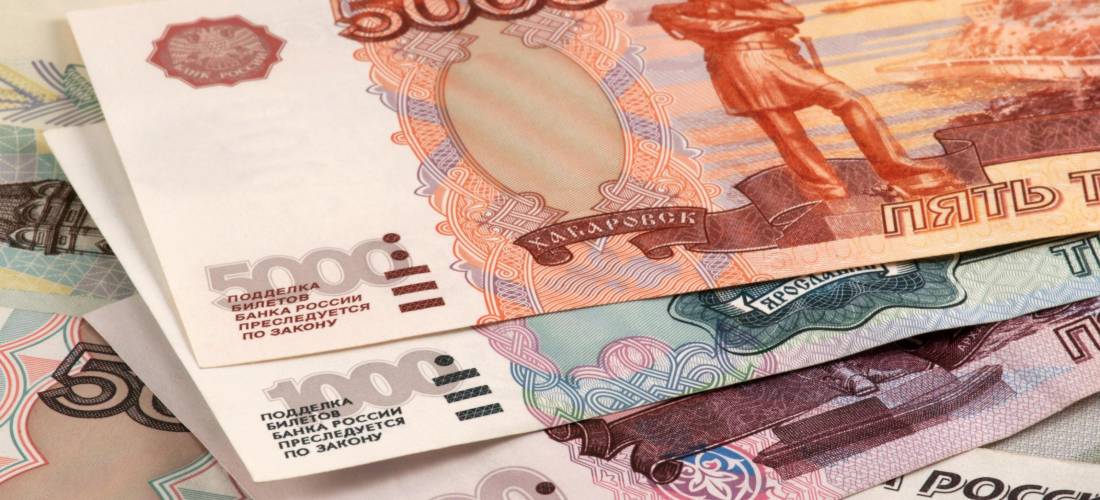
Sberbank, Russia’s biggest lender, has decided to stop all operations within Europe, as various regulators and sanctions across Europe have caused depositors to withdraw all their money, in order to try and avoid the sanctions placed by the West on Russia. These sanctions only prove to be a bigger part of the response by the West in order to slow Putin’s plans of Ukraine’s invasion. Global experts have estimated that nearly $1 trillion of Russia’s assets have been frozen as a response to the invasion. As the invasion of Ukraine continues, so do the international sanctions placed on Russian businesses, banks and assets. Russian banks have been cut off from international trade, further tanking the economy and the price of the Ruble. At the time of writing this, the Russian ruble is valued at .0099 U.S dollars. That is to say, one Ruble is the equivalent to $.0099, less than a penny. Weeks ago, the Ruble was trading at $.013 per Ruble, a significant decrease in price. Experts have estimated that the Ruble has fallen by approximately 40 percent since the invasion started. In fact, the Ruble has gotten so low, that various other currencies are valued at a much higher price. Take for example, the “Robux.”Robux is an in-game currency for the kid’s game “Roblox.”Robux, although having no use or value outside of the video game, is valued at approximately $.0125. One can buy 400 Robux for $4.99. This comes to show how decimated the Russian economy has become because of the invasion. Many experts believe that many more sanctions are to come to Russia if the invasion continues, and these sanctions will do anything but help the already struggling Russian economy.
On Monday evening, Russian President Vladimir Putin ordered forces into two regions of Eastern Ukraine. The rising tensions have sent jitters through markets. Oil, natural-gas and agricultural prices rose as pressures threatened to disrupt flows of natural resources from Eastern Europe to world markets.
Russia was the largest supplier of natural gas and oil to the European Union last year, and one of the world’s largest producers of oil and natural gas, accounting for 17 percent of the world’s natural gas and 12 percent of its oil. These tensions are contributing to increases in oil prices.
Crude prices recently crossed $90 per barrel, representing an increase of more than 20 percent this year and a pickup of more than 80 percent since the beginning of 2021. These gains, however, can also be credited to other factors such as tight supply. For instance demand for oil has surged since the early pandemic lows. Production, however, has not kept pace.
Moreover, U.S. crude surged more than three percent at one point to a high of $96. The contract ended the session 1.4 percent higher at $92.35 per barrel. Brent traded as high as $99.50, before settling at $96.84 per barrel for a gain of 1.52 percent.
Wall Street’s benchmark S&P 500 ended the day down one percent to its lowest closing level since late 2021, led lower by energy and consumer discretionary stocks. The decline on Tuesday brought the index into a correction, or 10 percent below its recent peak in January. Surging oil prices will benefit oil producers, but those producers will raise costs for everyone else. This will certainly depress economic activity, as consumers and companies alike respond to higher prices by cutting back. Gasoline prices in the U.S. are averaging more than $3.50 a gallon, the highest average since 2014. If crude prices should rise higher, gasoline prices would almost certainly climb more.The biggest burden for Americans would fall on lower-income families, since they spend a larger percentage of their household budget on gasoline (American Council for Energy Efficient Economy). In addition, rising natural gas prices could raise electricity and home heating bills. The increasing costs for transportation, power and heat would all contribute to inflation, which is already at its highest rate in 40 years in the U.S., though there is debate about how long the impact would be. All and all, it is clear that any rise in oil prices will affect the world markets in a negative manner.
The Rounds is a company focused on delivering everyday essentials in a more sustainable way compared to large corporations like Amazon. Two University of Pennsylvania alumni, Alexander Torrey and Byungwoo Ko, used their skills to develop The Rounds in 2019 and the two now lead a growing company working towards bringing sustainability and convenience to cities across the United States.
The Rounds’s goal is to be a local type of delivery that delivers low-waste household, personal care, pantry, baby and pet items right to your door. Their website explains that “The Rounds is a zero-waste refill and delivery service for the stuff you use every day. We keep your kitchen, bathroom and vanity stocked with local favorites and sustainable basics.” These essentials are delivered to doorsteps via e-bikes — just one of the ways The Rounds reduces their carbon footprint.
The Rounds launched in Center City, Philadelphia, but has since expanded to surrounding neighborhoods like Fairmount, Fishtown, Graduate Hospital, Queen Village, Manayunk, Chestnut Hill and Germantown. In addition, The Rounds is expanding to Washington, D.C., and is preparing to launch in Miami soon. The sustainable company is already seeing environmentally positive results because the neighborhoods have experienced a reduction in trash since using the service. The Rounds estimates that its members will save an average of 50 pounds of package waste from their homes each year.
The Rounds boasts their environmentally-conscious message by using zero-waste packaging, including reusable containers and bags. Customers can leave their empties on their doorsteps and The Rounds swaps them out for new ones. The company explains that this model is like the modern day milkman, but for all essential goods. As for the actual products, The Rounds partners directly with manufacturers and local businesses to give their customers the highest quality, most sustainable staples.
The rounds utilizes a membership business model, so there are no delivery fees and the weekly refills are included with your membership, which is $5.95 a month. With a membership customers get access to:
Overall, The Rounds is a step into the future of environmentally-conscious consumerism and was begun by our fellow Philadelphian students. Their success shows your passion can turn into a business idea or, better yet, a business idea that will help the local and global communities someday.
Texas is seeking hundreds of billions of dollars in penalties due to Meta’s Facebook collecting facial recognition data.
Facebook is falling into problems with the government again for violating privacy terms with their customers. Facebook’s parent company, Meta, is taking the heat due to selling data of people’s faces to third parties. The problem comes because they did not destroy the data in a timely manner.
Facebook and Meta have both been using facial recognition for a while now to help support their programs. Meta has a budding virtual reality system and Facebook’s social media supports facial recognition to increase protection on accounts.
One of the complaints in the files reads “Facebook repeatedly captured Texans’ biometric identifiers without their consent not hundreds, or thousands or millions of times — but billions of times, all in violation of CUBI and the DTPA.” CUBI is the Capture or Use of a Biometric Identifier Act. This act requires privacy for participants using the technology. DTPA stands for the Deceptive Trade Practices Act. Facebook is being accused of violating this act by selling data captured from the users of their products.
What is interesting about this lawsuit is that Facebook shut down its facial recognition feature in November. They wanted to weigh the positives of using it while also thinking about the growing concerns of holding users’ data.
Not too long ago, Facebook was in a major lawsuit for how they handled the data that they have been collecting. The previous lawsuit had Facebook paying $650 million for not informing their users of the data they were collecting.
Texas Attorney General Ken Paxton states, “Facebook will no longer take advantage of people and their children with the intent to turn a profit at the expense of one’s safety and well-being.” Texas is in full swing to stop “yet another of Big Tech’s deceitful business practices,” said Paxton.
Right after the lawsuit was announced, Meta stated that they would delete the data of over one billion users. The company seems to be fully prepared to deal with the lawsuit and plans to fight against the claims made against them. Not many states have been focusing on biometric privacy, and now Texas is stepping into the ring on this problematic feature.
Virgin Galactic Stock jumps almost 30 percent as spaceflight ticket sales open Wednesday that require a $150,000 deposit.
Space tourism company Virgin Galactic is getting closer and closer to commercial operations. The company announced Tuesday that it will open ticket sales to the public for the first time on Wednesday. This announcement should excite aspiring astronauts and thrill-seeking investors.
For the soon-to-be astronauts that are seeking passage to space, the process is as simple as going to virgingalactic.com and starting the application. To book a reservation spot, Virgin Galactic requires a $150,000 deposit, so those interested will have to put a pretty penny into the experience.
Additionally, Virgin Galactic ticket prices start at $450,000 each. The company revealed, last year, three different sales offerings: a single seat purchase, packaged seats for couples, friends or family or opportunities to book entire flights. The company has said previously that, of the $150,000 deposit, $25,000 is nonrefundable.
These flights consist of a 90-minute journey, including the launch and boost into space. Virgin Galactic also states, however, they are only going to sign up 1,000 customers on board to start its commercial service later in 2022.
As for investors, shares of Virgin Galactic stock jumped almost 30 percent in trading to $10.56 by midday. The stock has been beaten over the past 12 months, dropping 80 percent, with the company having delayed the beginning of commercial space flights to late this year. The S&P 500 Index and the Dow Jones Industrial Average percent were up 1.2 percent and 1.1 percent, respectively.
The stock is jumping because the start of commercial operations has been a long time coming. To explain, numerous delays due to spacecraft testing sent shares plummeting shortly after they soared, just around the time the company sent founder Sir. Richard Branson into space.
This is certainly positive news for the company. Until now, Virgin Galactic has essentially been a pre-revenue business, and 1,000 customers paying $450,000 each in 2022 translates into $450 million of actual revenue for the business. Moreover, Tuesday’s announcement can be considered a relief for investors. It is estimated that just the deposits themselves will generate about $150 million in working capital for the company.
It will be interesting to see how Virgin Galactic’s stock price acts in the coming weeks as more and more people participate in the hype of open reservations for commercial space travel.
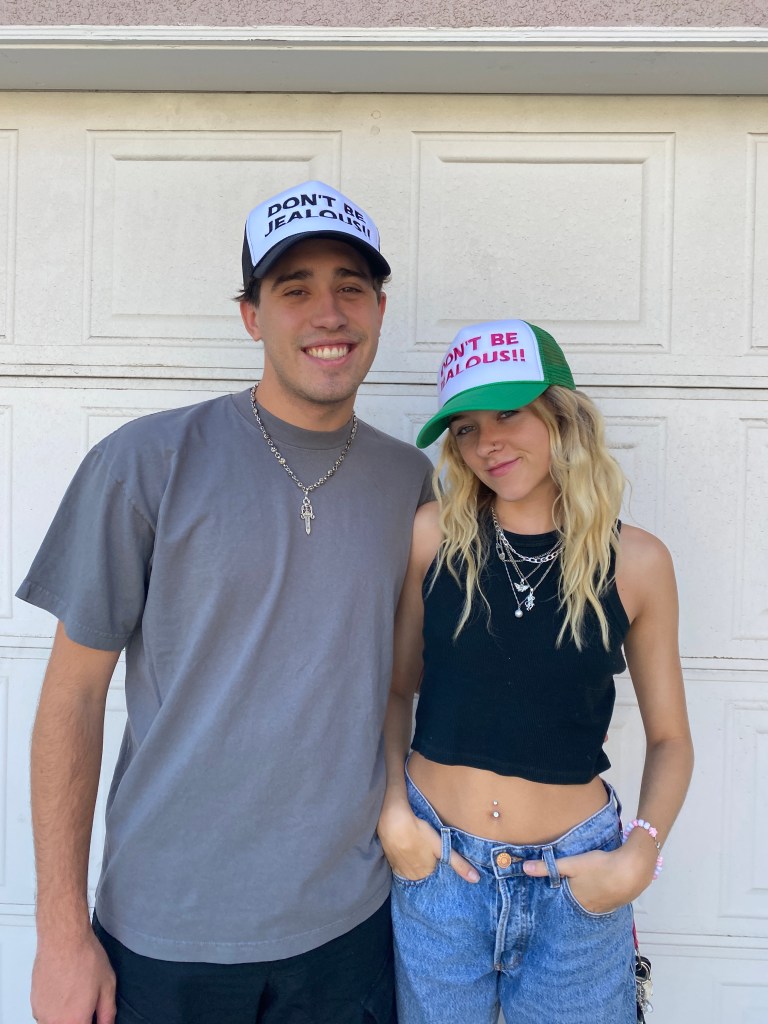
Sasha Tarnovsky and Andrew Burror, creators behind HoesForClothes, wearing their “don’t be jealous” trucker hats. June 2021. Source: Sasha Tarnovsky
Their latest clothing drop sold out in mere seconds. It was a completely custom-designed and manufactured hoodie, with the text, “Does it look like I care?! Because I do” written on the front and back. And for Sasha Tarnovsky and Andrew Burror, creators and owners of HoesForClothes, they care a whole lot about making the hottest, most fun clothes you’ve ever seen. Tarnovsky cites Dec. 30, 2019 as the official start date of her business, HoesForClothes, but her and Burror’s story goes back much further than that.
Tarnovsky got her first sewing machine in fourth grade for Christmas and from that point on, she was set on becoming a fashion designer. Throughout the years, her interests expanded and she enrolled at University of California, Santa Barbara to study political science. She graduated with her degree in political science as well as a minor in poverty and inequality in March of 2021. So if you start putting together a timeline of Tarnovsky’s life, you’d see that she was running her clothing business while completing her degree — talk about a multi-talented, hardworking girl! Not to mention, Tarnovsky turned 21 last June, so she graduated college early and is a successful business owner. Tarnovsky and Burror have been dating for four years, and their relationship forms the bedrock of their clothing brand: both individuals offer their creativity and business skills to H4C, and the brand wouldn’t be where it is today without their sincere dedication to the brand itself and each other.
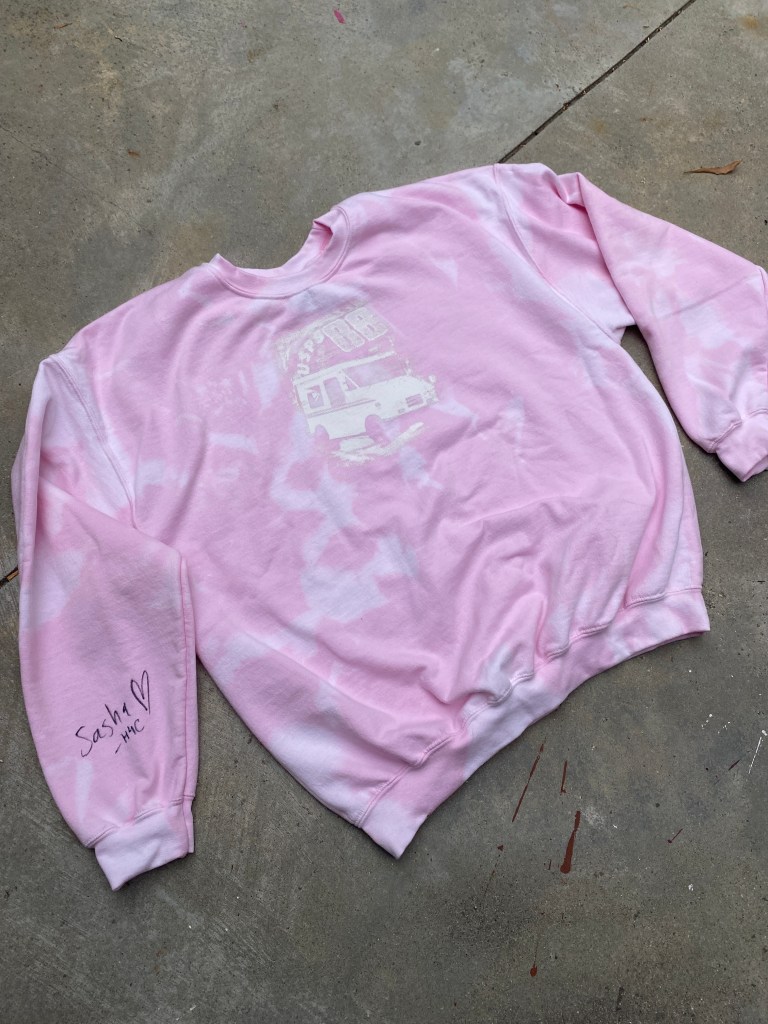
“USPS crew,” one of H4C’s oldest designs that a customer asked Sasha to sign. August 2021. Source: Sasha Tarnovsky
But Tarnovsky and Burror didn’t just stumble upon the idea for H4C one fortuitous day. Tarnovsky started her first brand that eventually became H4C in January of 2019, while she was a freshman at UC Santa Barbara. At that point, she was selling clothes from her closet, mostly to her friends. She curated an Instagram account called GrinchyVintage where she sold her clothes and posted content related to her taste in fashion. Over time, she moved on to selling upcycled thrifted and vintage clothing, and rebranded the name to Cherubs and Cherries. Tarnovksy recalls how this rebrand didn’t last very long because she didn’t feel like the name and vibe truly fit her personality. From there, she rebranded into HoesForClothes and has since built upon her amazingly successful company. If you visit hoesforclothes.com, which I strongly suggest you do, you’ll see the results of years of hard work and creativity. And if you’re anything like me, I bet you will find a bunch of clothes that would make the cutest additions to your wardrobe!
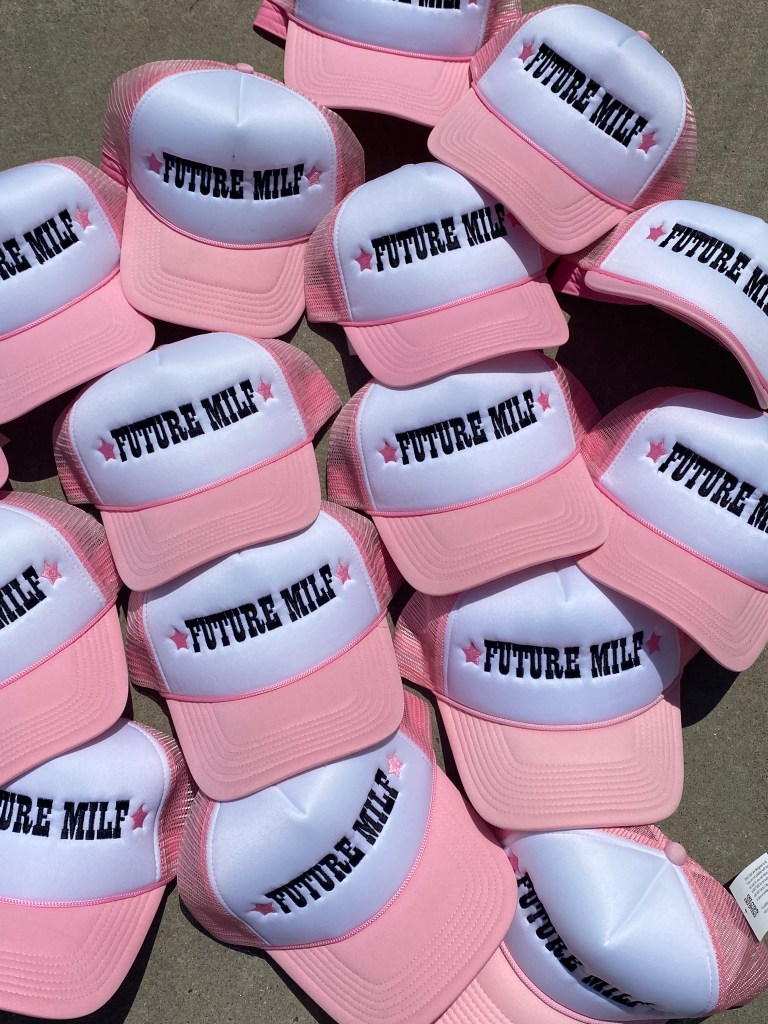
One of my personal favorites from the HoesForClothes catalog is the “fast fashion killed the small and independent designer” print. Tarnovsky mentioned how the song Video Killed the Radio Star by The Buggles was stuck in her head, and that’s how she got the inspiration for this print. As someone who is vehemently opposed to fast fashion, this print complements my interests while reminding me that there are still so many inspiring small, independent designers out there — like Tarnovsky and Burror, to name a couple. For Tarnovsky, her personal favorite designs are the “BE A HOE” trucker hat, her Y2K graphic sweatpants and her “wear what you want” hoodie (which is “100% his [Burror’s] work”). Speaking of the trucker hat — Tana Mongeau, a reality star and influencer, wore a “DUMP HIM” trucker from H4C on an episode of the TV show Reality House. Tarnovsky cites this instance as one of the craziest things to happen to her brand in 2021. Another surreal moment for her was running into a complete stranger in public who was wearing one of her designs — an accomplishment every small designer dreams of one day experiencing.
Becoming a fashion designer has been a goal of hers ever since she was little, so it goes without saying that Tarnovsky is living her dream. But that doesn’t mean that it comes without challenges. On days when her clothes are selling out in a matter of minutes, she sometimes feels stressed that something will go wrong, or she won’t get the orders filled in time or that her customers are growing irritated or impatient. On days when she doesn’t have tons of orders, she worries that her business is failing, or that no one likes her clothes anymore or that she won’t have enough money to continue growing and expanding. “I feel like there are a lot of ups and downs,” Tarnovsky says, “but I would not trade it for the world!”
Sasha celebrated after reaching 10k followers. July 2020. Source: Sasha Tarnovsky
There are some other elements of running a business that, at times, feel more taxing than rewarding. She cites Tik Tok as one of her least favorite parts about her job. She mentions that she doesn’t feel entirely comfortable or adept at video creation, so having to create Tik Toks to promote her brand often feels like a chore. If you’ll allow me to have a brief aside for a moment, I remember having a conversation with my friends about how I could grow my own clothing brand. My friend Angela said something along the lines of, “Liz, you’re not going to like hearing this, but you have to get on Tik Tok.” She was right, on both accounts: I did not like hearing that, but Tik Tok would certainly help grow my brand, a piece of advice offered by Tarnovsky, as well. Despite her dislike for the app, Tarnovsky has grown a considerable following of almost 40k on Tik Tok, and by the looks of it, her following is only going up from here.
One more thing that Tarnovsky mentions as challenging is the lack of social interaction that running a small business while fulfilling a high volume of orders entails. Pandemic aside, Tarnovsky recalls how she used to meet new people and hang out with friends often. Now that she’s behind a successful brand, her weeks can feel really lonely. She’s hoping that this changes when her brand gets bigger as she’s able to hire more employees and outsource certain tasks (perhaps Tik Tok content creation?) to others. In the meantime, Tarnovsky is absolutely crushing the game, and if it wasn’t clear enough already, she’s definitely a huge inspiration to me.
Throughout all of it — the good days and the bad — Tarnovsky has a strong support system that enables H4C to be all that it is: a successful, unique and inspiring brand that creates high-quality and appealing designs. When asked to shout out a couple of people who helped her and H4C get to where they are today, she says the list is endless. Her mom, her boyfriend, her friend Maddi who was her very first buyer, her sister who does her shipping and her grandparents who help with packaging and printing are all essential parts of the H4C company. She is also a great supporter of fellow clothing businesses run by creatives like herself. See the list at the end of this article for links to some of Tarnovsky’s current favorite brands.
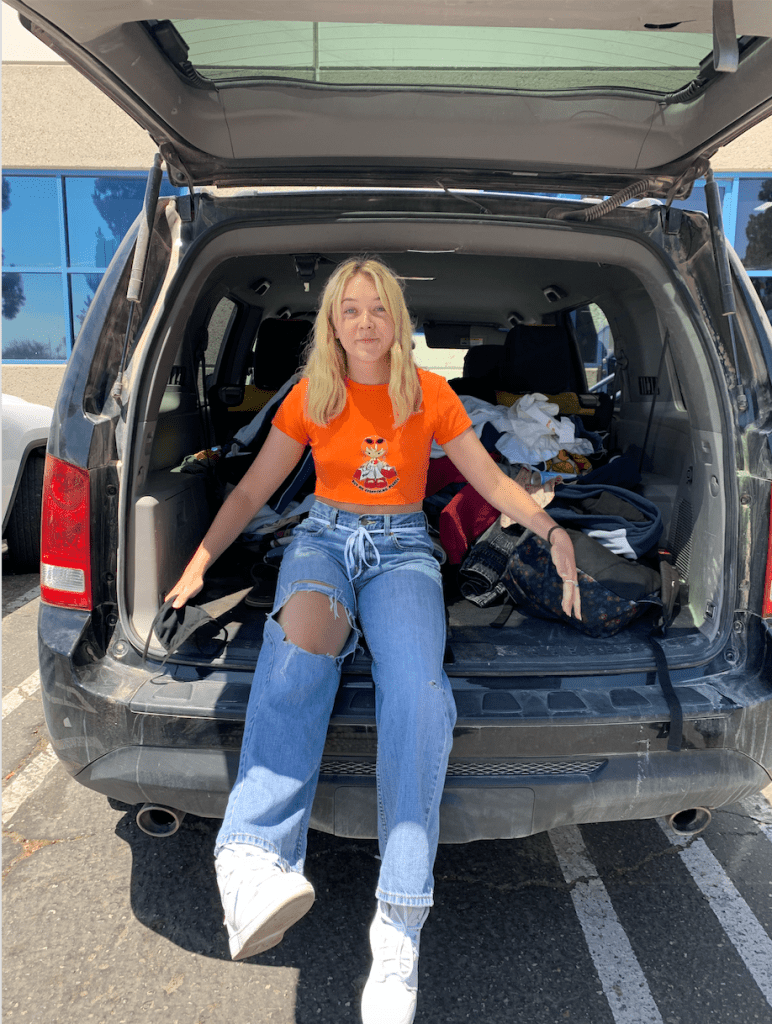
Sasha after a thrift haul for one-of-a-kind items and re-works. August 2020. Source: Sasha Tarnovsky
I am so excited to see what amazing designs and products HoesForClothes continues to put out in the future. Not only is their business extremely efficient and impressive, Tarnovsky is also such a sweet, inspiring and creative person who I was lucky enough to interview for this article. One core principle that Tarnovsky holds herself to — and encourages other creatives to do the same — is to stay true to herself and be original. She says, “Everything that I release that is not very ‘me’ where I’m just trying to appeal to someone else always flops. Copying other creators or being inspired by trends will never last. If you keep posting and creating items that are YOU and unique to your brand, you will develop an audience that is committed to the same aesthetic and you will see growth.” Tarnovsky and Burror are living proof that this advice works, given the success and integrity of their brand, HoesForClothes.
Another piece of advice imparted by Tarnovsky is to make yourself known as a human being, rather than just promoting your products as the work of some faceless, unsympathetic creature. At the core of this advice is the idea that we crave interaction; we sustain ourselves through real, meaningful relationships. That’s why small businesses like H4C are as successful as they are — because they refuse the practice of constantly churning out meaningless designs that lack any sort of personal touch. Rather, H4C and other small clothing brands like it favor a model that incorporates — and doesn’t alienate — humanity and business. The designs from H4C aren’t simply cute and jealousy-inducing; they’re created with love by two people who love each other and love what they do.
Keep an eye out for HoesForClothes, because Tarnovsky and Burror aren’t going anywhere — if anything, they’re only just getting started.
Sasha’s Current Favorite Small Businesses
Penelope Gazin’s Fashion Brand Company. “I am addicted.”
@fearhall’s (Instagram) Get Some Sleep. “They are currently the reason I canNOT STOP spending money. The owner is awesome, I met him in person at a pop up of theirs this year!”
Snapchat launches 523, a content accelerator program for minority-owned small businesses..
Do you know of any small, minority-owned businesses? Snapchat is looking for underprivileged entrepreneurs to be part of their 523 program, which will provide successful applicants with $10,000 each month to create content for Snapchat’s Discover section.
The name “523” pays homage to the original office location of Snapchat, Inc. at 523 Ocean Front Walk in Venice Beach, California. The goal is to provide platforms to small businesses run by people from underrepresented groups, defined by Snapchat as BIPOC, LGBTQ+, veterans, those with disabilities, and/or women. On top of that, the business cannot have netted more than $5 million in gross revenue for FY 2021 or during the last 12 months. The last qualifier is that any hopeful business cannot have more than 20 full-time employees.
Snapchat’s goal is to help “these creative minds… see the equitable benefits from their impact” by providing them with ample resources, both financial and social. On top of the $10k/month stipends, select business owners will also work with the company’s media and content partnership team; they will also have access to workshops and networking events with 523’s sponsors, which include AT&T, Nissan, Target, State Farm, Unilever, Uber Eats and McDonalds. “We’ll double down on our efforts to make sure that everyone feels that they belong on our platform… creating diverse, accurate content that reflects a rich variety of views across our global community,” Snapchat stated in their 2021 Citizen Report.
On one hand, this effort is aimed at the goal of supporting underprivileged businesses and creators who have lacked the resources and platforms to grow their businesses. On the other hand, this effort promotes Snap’s Discover service, a feature that contends with the likes of TikTok and Instagram Reels. Snapchat describes Discover as “the fastest way for our Snapchatters to be informed, entertained, and learn about the world around them.” Moreover, it “is a monetizable environment that supports our partners as they build their business.
Snapchat isn’t the only company with a program like this. In November, TikTok announced plans to offer $50,000 grants to 10 black creators. They are partnering with a company called MACRO “to ensure Black creatives and artists have the resources they need to reach new heights in their careers and spearhead innovation in their respective industries,” according to TikTok’s director of creator community, Kudzi Chikumbu. YouTube, Facebook, and Triller have launched similar programs. Applications are open from now until February 1, 2022. Selected small businesses will be announced on March 1. If you know of any small businesses who might benefit from partnering up with Snapchat, send them this article and they may be in the running for a $10k/month stipend.
The stock market rebounds after the temporary plunge as investors assess the economic risk from the new Omicron Variant of COVID-19.
Confirmed cases of the new Omicron coronavirus variant have on Friday continued to grow around the world, triggering the discovery as a strain on many countries to try and seal themselves off by imposing travel restrictions, while also sending stocks tumbling and causing oil prices to fall.
That being said, stocks have made a comeback Monday, bouncing back from the steep selloff last Friday where investors feared the Omicron COVID variant would disrupt the global economic rebound. Reports of the new Omicron variant of the coronavirus brought back memories of last summer when the fast-spreading Delta variant put a major dent in the recovery of the stock market. This discovery spooked investors on a traditionally quiet day in the market following Thanksgiving, leading to one of the worst days for stocks this year.
The most powerful lift for stocks came from those that have been able to grow strongly almost regardless of the economy’s strength or pandemic’s pall. Gains for five big tech-oriented stocks — Microsoft, Tesla, Apple, Amazon and Nvidia — which alone accounted for more than a third of the S&P 500’s rise. The gains for tech-oriented stocks also helped to drive the Nasdaq composite up a market-leading 1.9 percent.
The S&P 500 rose 1.3 percent to recover more than half of its drop from Friday, which was its worst since February. Treasury bond yields, which fell Friday as investors were gunning for safety, reversed course and rose Monday. In particular, the 10-year U.S. government bond yielded 1.52 percent when the New York Stock Exchange closed.
Travel-related stocks started the day Monday with gains but fell back as more caution filtered into the market and as travel restrictions around the world remained in force. They closed mixed after President Joe Biden said he was not considering a widespread U.S. lockdown. He stated the variant was a cause for concern and “not a cause for panic.” That being said, Delta Air Lines and American Airlines closed slightly lower, while cruise line operators Carnival and Norwegian Cruise Lines actually notched gains.
While the market has steadied itself, uneasiness still hangs over it due to the discovery of the variant, as the virus appears to spread more easily, and countries around the world have put up barriers to travel in hopes of slowing it. Still to be seen is how effective currently available vaccines are for the variant, and how long it may take to develop new Omicron-specific vaccines. It is evident that the Omicron variant is hitting markets less hard than other COVID variants, but just as the market quickly bounced back from its Delta fears, history appears to be repeating itself: investors are taking a breath and sensing a buying opportunity.







 The La Salle Collegian