The scariest thing this Halloween 

Commentary
via City of Philadelphia

Kylie McGovern, Editor 

Ghosts, ghouls, vampires, and witches are not nearly as scary to me as some of the voting apathy I have experienced recently. Polyas.com defines voting apathy as “a lack of interest in participating in elections by certain groups of voters. One side-effect of voter apathy can be low voter turnout on election day if voting is non-compulsory. In countries or areas with compulsory elections, voter apathy may manifest itself in the form of a high proportion of spoilt ballots or donkey votes.” I have experienced this spirit (get it, cause it’s Halloween) of voting apathy with haunting phrases like “I am anti-vote” or when asked if registered to vote someone said, “like for president?” Seriously spooky. 

So, why vote? My simple and perhaps pessimistic answer is that voting is the last shred of democracy we have left. Look, America’s democratic system is far from perfect, the nine arguably most powerful individuals are APPOINTED for LIFE and maybe some senators have been serving since the ‘80s, but voting in all elections every year (yes, even the ones that happen in May and in years without a presidential election) local elections can actually massively impact your lives and neighborhoods. 

If using your address here at La Salle, national, state, and local offices are up for the vote this election. A PA senator seat is up for election. If you have been lucky or unlucky enough to see a scary political ad you’d know that John Fetterman (yes, the one who wears hoodies) and Mehmet Oz (that one TV doctor) are the main competitors although others are also running. In addition, PA governor is up for election. Josh Shapiro runs for the democrat party and Douglas V. Mastriano runs as the republican candidate. In addition, PA lieutenant governor is up for election. Although I do certainly think it is important to vote in these elections. I think it is immensely important to vote in local elections which are also on the ballot. If using your La Salle address, you have the opportunity to vote for the Philadelphia City Council: drafts, debates, and enacts legislation that exclusively impacts the city of Philadelphia. City council also plans city finances which essentially decides where your tax dollars go. This allocation of taxes can go to repave the roads or programs at public schools AKA things that can directly impact you. The council also “has the authority to decide who sits on various city boards and commissions. As a result, the City Council has significant influence in shaping city policies and programs” according to Committee of Seventy. Ultimately, these local elections have the opportunity to make tangible change in my opinion and to me your vote goes a lot farther in these local elections during “off years.” So, now that I hopefully have convinced you about the importance of voting, you can register to vote following this link, although it will be too late to register to vote on Nov. 8, I hope I’ve convinced you to vote in the next election in May 2023.  Please vote. The future can be scary, and I am not talking about in a The Sixth Sense way. The future is rather scary because  2021 was the warmest year ever recorded, there have been 35 school shootings in the US, and social media is derailing democracy with misinformation. I think that voting maybe won’t solve all of these issues, but it might elect some people who will take a crack at making a better tomorrow for you. See you at the polls on Nov. 8, 2022, from 7:00 a.m. to 8:00 p.m.

The rise and fall and rise again of the Republicans

Commentary

James LeVan, Staff

The month of January has been one of the roughest times for the Republican Party in its history. With its members blamed for the attack on the Capitol, loss of donations from big business, divisions throughout the party and its flag bearer Donald Trump’s uncertain future, it can be easily assumed that the GOP is in ruins and on the cusp of a collapse. However, the Republican Party has a history of rising from the ashes of its self-inflicted wounds and returning to power. In the aftermath of Watergate and Nixon’s resignation, Republicans believed themselves relegated to a permanent minority status in Congress. However, a mixture of the Reagan revolution and the work of Newt Gingrich and his new generation of Firestarter Republicans helped the GOP gain control of both chambers of Congress in 1994. Calamity hit the Republican Party again in the late 2000’s when a mix of the Great Recession brought on by deregulation and frustration over then-President George W. Bush’s handling of the war in Iraq cost them both chambers of Congress in 2006 and boosted Barack Obama to the White House. Yet by 2014, a more hardline Republican Party, transformed by the Tea Party Movement, had regained both chambers of Congress and would, in some ways, set the stage for Donald Trump’s surprise victory in 2016. Perhaps the best example of Republican defeat and return comes from analyzing the party from 1932 through 1952 and how the GOP changed after what was one of its worst hours.

The 1920’s saw the Republican party put three men in the White House consecutively (Harding, Coolidge and Hoover) and maintain control of both chambers of Congress. With total power, the GOP set out to enact their platform agenda of lowering the taxes on the wealthy that were implemented by the Wilson administration to fight World War I and deregulation of the private sector. At the same time, they also raised tariffs on foreign goods and encouraged the world to buy American. The Republican Party of the 1920’s believed that the government that did the least did best. We regard the 1920’s as a roaring decade of extravagant wealth because it appeared that everything was going well, and the American economy appeared to be thriving. By 1929, however, the good times were over as the Depression ravaged the world and forced people out of work. The Hoover administration’s response to the Depression was essentially a doubling down on the same policies of lower taxes and deregulation. They had hoped that the free market would eventually correct itself. In the meantime, they told the American people to fend for themselves. The American people did not respond well to this call for personal responsibility when suffering during a catastrophe, a feeling many can relate to today. In response to the apparent lack of response from their leaders, the American people decided to give Hoover and the Republicans in  Congress the boot and decided to give Franklin Delano Roosevelt, along with his New Deal, a try, thus putting the Republican Party into a state of political exile for two decades.

Historian Heather Cox Richardson does an excellent job of documenting the Republican Party’s time in the political wilderness in her book “To Make Men Free: A History of the Republican Party,” which presents the entire history of the GOP from its founding before the Civil War to the Bush years. She describes the Republican Party, after their attempt to beat Roosevelt in 1936, as essentially being split into factions with two very distinct visions for both the United States and the party: the Taft wing and the Dewey wing.

Encyclopædia Britannica

Robert Taft disagreed with Roosevelt’s economic policies.

Led by its namesake Senator Robert Taft (the son of former president and chief justice, William Howard Taft) of Ohio, the Taft wing believed that the economic policies enacted in the 1920’s were fine and that FDR and the Democrats’ agenda would lead the nation toward socialism. According to Richardson, their hatred of the New Deal was so fierce that they were even willing to align themselves with the Southern Democrats, who were not keen on it because of the New Deal’s aid to African Americans. The Taft wing saw themselves as defenders of the American way of life, the Constitution and as the only true Republicans in the United States, unlike their rivals over in the Dewey wing of the party.

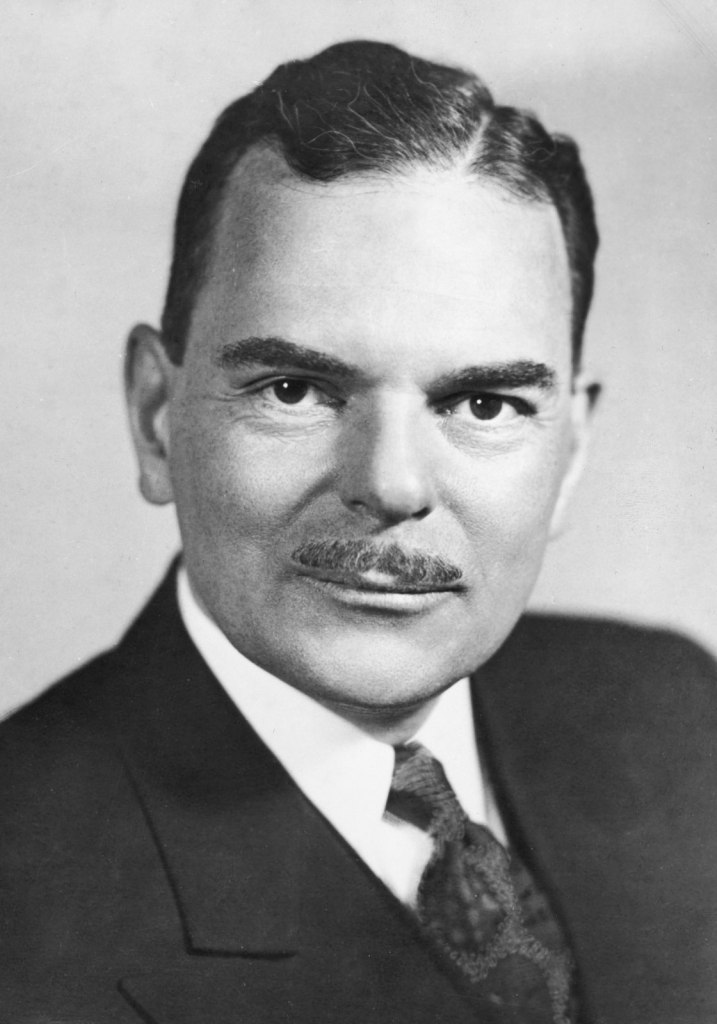
Opposite of the Taft wing were the Dewey Republicans, led by New York District Attorney, Thomas Dewey. This group believed that the government had a role in regulating business and were more open-minded about the New Deal. Dewey Republicans threw their support behind the establishment of a minimum wage, the Wagner Act and an end to child labor. They also differed from the Taft wing with their support for intervention into World War II, believing that such intervention would boost American production.

Encyclopædia Britannica

Thomas Dewey lead his namesake wing of the Republican Party.

Over the course of two decades, these two factions would duke it out over which side would be in control of the Republican Party, and each wing had their chance to prove their case to the American people. However, neither side was able to defeat FDR or his successor Harry Truman. There was one change, though. In 1952, when former allied General Dwight D. Eisenhower decided to enter the Republican primary as a Dewey Republican against Robert Taft. The Taft Wing could not hope to defeat the popular general who led the allied forces in Europe. As a consolation, Senator Richard Nixon of California was chosen as Eisenhower’s running mate to gain their support and unite the party. Together, the two won the 1952 presidential election. Eisenhower then set out to enact a fiscal policy of balanced budgets and reduction of the national debt while also advocating for labor rights and social services. Richardson says that the Republicans had been transformed through decades of exile and strife and came back a more egalitarian party akin to their forebears: Abraham Lincoln and Thaddeus Stevens.

The GOP has been down and beaten before and always finds its way back. The questions now are just how long will it be in the wilderness and what it will stand for. Will it dump Trump and attempt to cleanse itself of his legacy and most devoted supporters in Congress? Will it look to the examples of Thomas Dewey and embrace the more egalitarian vision his wing had or continue to channel the spirit of Robert Taft? Ultimately, the decision will fall upon Republicans to answer what it means to be a member of their party.

levanj1@lasalle.edu