Stocks dip as Fed points to a March hike

Uncategorized

Jason Ryan, Staff

Facing both chaotic financial markets and raging inflation, the Federal Reserve indicated it could soon raise interest rates for the first time in more than three years as part of a broader tightening of historically easy monetary policy.

In a move that came as little surprise, the Fed’s policymaking group said a .25 percentage point increase to its benchmark short-term borrowing rate is likely coming. It would be the first increase since December 2018.

Chairman Jerome Powell added that the Fed could move towards a more aggressive path, stating, “I think there’s quite a bit of room to raise interest rates without threatening the labor market… sooner…and perhaps faster.” These comments were made at his post-meeting news conference. 

Source: Globe Echo

This was not the message investors were hoping for. That being said, the major stock market averages turned quite negative shortly following Powell’s statement. Investors have ineffectively been trying to guess what is going on with the Fed for weeks. Still, Powell said the Fed and investors were on the same page.

The Dow turned negative, falling 70 points. The index had been up as many as 500 points earlier Wednesday. The S&P 500 and Nasdaq gave up some of their gains as well. The S&P 500 was up just .01 percent and the Nasdaq rose 0.6 percent. In addition, bond yields rose following the Fed’s statement. The yield on the 10-year Treasury rose to 1.8 percent from 1.78 percent from late Tuesday. 

Pressure from inflation on businesses and consumers is what is driving the Fed to raise interest rates this year. There is some concern on Wall Street that the central bank will raise interest rates this year more than the four times that which most economists currently expect.

Since the COVID-19 pandemic erupted in 2020, investors have poured money into stocks, confident that the central bank would help keep share prices upright. With that support going away, markets have been hit with a spell of volatility. The S&P 500 is down 7.3 percent so far this year, while the Dow is off 6 percent. The Nasdaq Composite has also fallen 11 percent. The Federal Reserve’s announcement for its soon hike in interest rates has been attributed to an unstable market seen last week. With this news, it is interesting to see what is to happen in the coming weeks.
Snapchat launches program to help small businesses grow

Business

Elizabeth McLaughlin, Editor

Snapchat

Snapchat launches 523, a content accelerator program for minority-owned small businesses..

Do you know of any small, minority-owned businesses? Snapchat is looking for underprivileged entrepreneurs to be part of their 523 program, which will provide successful applicants with $10,000 each month to create content for Snapchat’s Discover section.

The name “523” pays homage to the original office location of Snapchat, Inc. at 523 Ocean Front Walk in Venice Beach, California. The goal is to provide platforms to small businesses run by people from underrepresented groups, defined by Snapchat as BIPOC, LGBTQ+, veterans, those with disabilities, and/or women. On top of that, the business cannot have netted more than $5 million in gross revenue for FY 2021 or during the last 12 months. The last qualifier is that any hopeful business cannot have more than 20 full-time employees.

Snapchat’s goal is to help “these creative minds… see the equitable benefits from their impact” by providing them with ample resources, both financial and social. On top of the $10k/month stipends, select business owners will also work with the company’s media and content partnership team; they will also have access to workshops and networking events with 523’s sponsors, which include AT&T, Nissan, Target, State Farm, Unilever, Uber Eats and McDonalds. “We’ll double down on our efforts to make sure that everyone feels that they belong on our platform… creating diverse, accurate content that reflects a rich variety of views across our global community,” Snapchat stated in their 2021 Citizen Report.

On one hand, this effort is aimed at the goal of supporting underprivileged businesses and creators who have lacked the resources and platforms to grow their businesses. On the other hand, this effort promotes Snap’s Discover service, a feature that contends with the likes of TikTok and Instagram Reels. Snapchat describes Discover as “the fastest way for our Snapchatters to be informed, entertained, and learn about the world around them.” Moreover, it “is a monetizable environment that supports our partners as they build their business.

Snapchat isn’t the only company with a program like this. In November, TikTok announced plans to offer $50,000 grants to 10 black creators. They are partnering with a company called MACRO “to ensure Black creatives and artists have the resources they need to reach new heights in their careers and spearhead innovation in their respective industries,” according to TikTok’s director of creator community, Kudzi Chikumbu. YouTube, Facebook, and Triller have launched similar programs.
Applications are open from now until February 1, 2022. Selected small businesses will be announced on March 1. If you know of any small businesses who might benefit from partnering up with Snapchat, send them this article and they may be in the running for a $10k/month stipend.

Omicron variant: Stocks rebound after plunge

Business

Jason Ryan, Staff

Header Image: New York Times

The stock market rebounds after the temporary plunge as investors assess the economic risk from the new Omicron Variant of COVID-19. 

Confirmed cases of the new Omicron coronavirus variant have on Friday continued to grow around the world, triggering the discovery as a strain on many countries to try and seal themselves off by imposing travel restrictions, while also sending stocks tumbling and causing oil prices to fall.

That being said, stocks have made a comeback Monday, bouncing back from the steep selloff last Friday where investors feared the Omicron COVID variant would disrupt the global economic rebound. Reports of the new Omicron variant of the coronavirus brought back memories of last summer when the fast-spreading Delta variant put a major dent in the recovery of the stock market. This discovery spooked investors on a traditionally quiet day in the market following Thanksgiving, leading to one of the worst days for stocks this year.

The most powerful lift for stocks came from those that have been able to grow strongly almost regardless of the economy’s strength or pandemic’s pall. Gains for five big tech-oriented stocks — Microsoft, Tesla, Apple, Amazon and Nvidia — which alone accounted for more than a third of the S&P 500’s rise. The gains for tech-oriented stocks also helped to drive the Nasdaq composite up a market-leading 1.9 percent.

The S&P 500 rose 1.3 percent to recover more than half of its drop from Friday, which was its worst since February. Treasury bond yields, which fell Friday as investors were gunning for safety, reversed course and rose Monday. In particular, the 10-year U.S. government bond yielded 1.52 percent when the New York Stock Exchange closed.

Travel-related stocks started the day Monday with gains but fell back as more caution filtered into the market and as travel restrictions around the world remained in force. They closed mixed after President Joe Biden said he was not considering a widespread U.S. lockdown. He stated the variant was a cause for concern and “not a cause for panic.” That being said, Delta Air Lines and American Airlines closed slightly lower, while cruise line operators Carnival and Norwegian Cruise Lines actually notched gains.

While the market has steadied itself, uneasiness still hangs over it due to the discovery of the variant, as the virus appears to spread more easily, and countries around the world have put up barriers to travel in hopes of slowing it. Still to be seen is how effective currently available vaccines are for the variant, and how long it may take to develop new Omicron-specific vaccines. It is evident that the Omicron variant is hitting markets less hard than other COVID variants, but just as the market quickly bounced back from its Delta fears, history appears to be repeating itself: investors are taking a breath and sensing a buying opportunity.

       Ryanj21@lasalle.edu

U.S. hits 30-year inflation high; how it affects consumer spending

Business

Jason Ryan, Staff

Buckle Up: 3 Reasons Why Inflation Is Rising

Americans are paying more for consumer goods during the biggest surge in U.S. inflation in more than 30 years.

Header Image: Forbes

Americans across the country are seeing higher prices at grocery stores and gas stations, causing  even more pain for their wallets and pocketbooks right as the holiday shopping season is set to commence. 

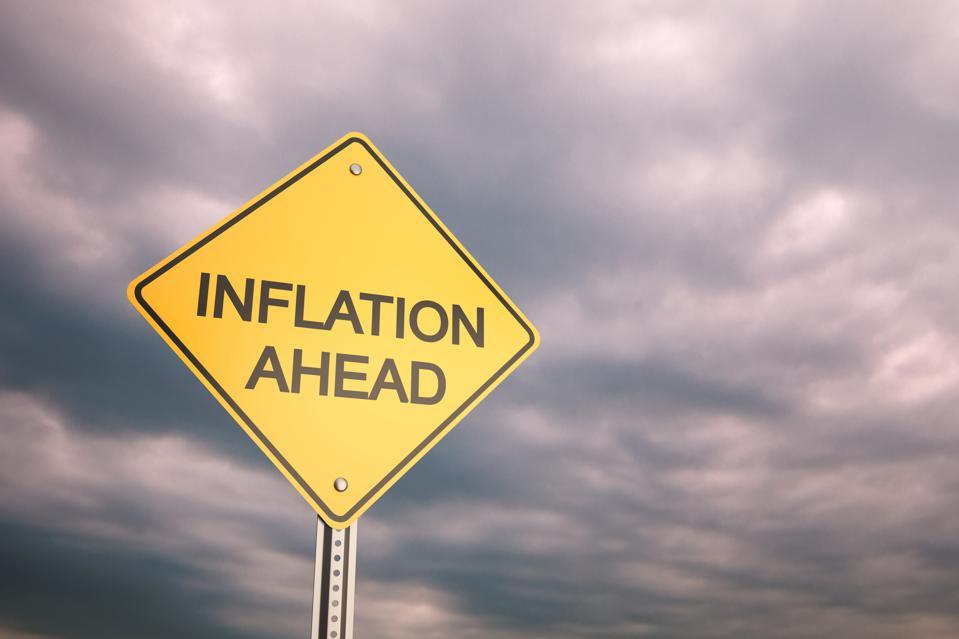
Data released by the Labor Department earlier this week indicates inflation has risen at its highest rate in over three decades. Consumer prices soared by 6.2 percent compared to the same period last year. This is the biggest one-year jump seen in the government’s consumer price index since 1990.

The increase in prices is surpassing wage gains and forcing Americans to dedicate a bigger share of their income to necessities such as food and gas. In particular, according to the Bureau of Labor Statistics data: meat, chicken, dairy, eggs, sugar and coffee are among the products that have seen especially large price gains in the past year. 

Additionally, in the past year, energy costs have jumped a stunning 30 percent, with gasoline soaring by nearly 50 percent. A gallon of gas, on average, was $3.42 nationwide on Tuesday, according to AAA — up from $2.11 a year ago. The energy index climbed by some 4.8 percent last month alone and the gasoline index gained 6.1 percent. This marks the fifth consecutive monthly increase in gasoline prices.

Prices for natural gas and heating oil are also on the rise. For instance, the Energy Information Administration has predicted that Americans could spend up to 30 percent more on natural gas and 43 percent more on heating oil this coming winter. 

Economists predict high inflation will subside sometime next year once the widespread shortages of supply and labor begin to ease, but it’s very unclear how much or how quickly price pressures will fade. In the meantime, inflation will continue to eat up American households in terms of consumer spending. 

Coke pays $5.6 billion for control of BodyArmor

Business

Gibson McMonagle, Staff

PepsiCo Outpaces Coca-Cola 3-to-1 in Sports Drink | PYMNTS.com

PYMNTS

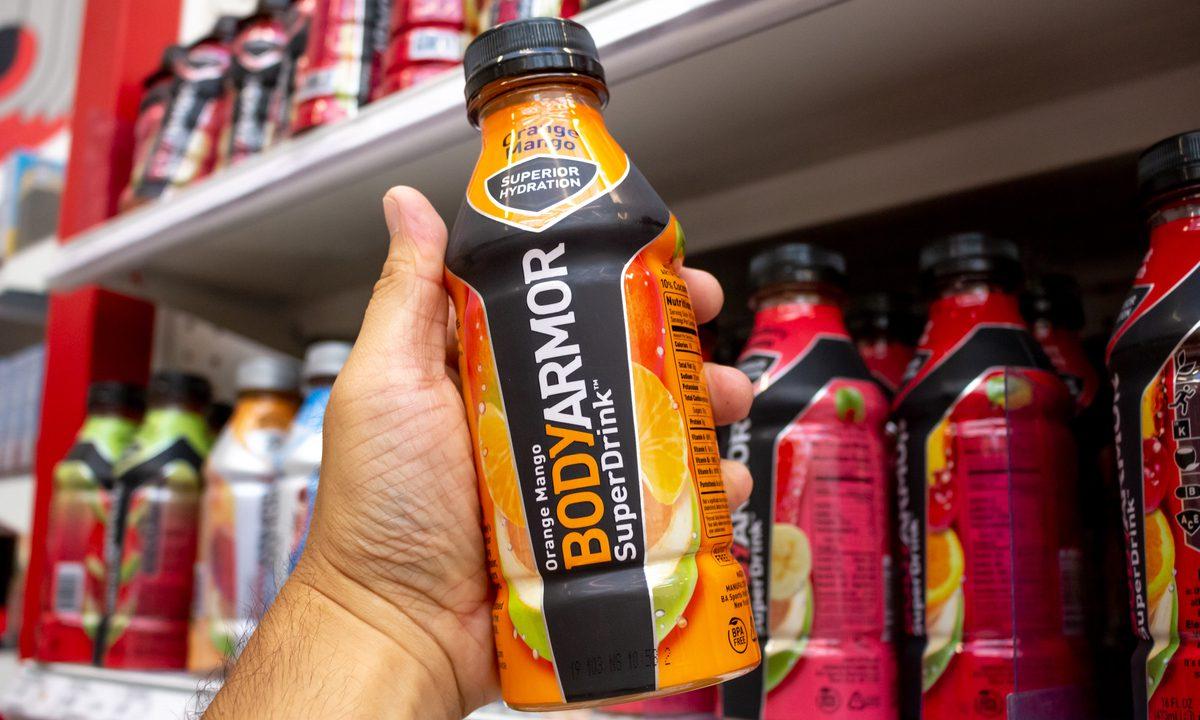
After Coke’s initial investment in the startup company BodyArmor, they decided to take full control with a $5.6 billion buyout. 

Prior to this week, the Coca-Cola Company owned 15 percent of BodyArmor. One of the leading rivals to Gatorade, BodyArmor was a startup company that began in 2011. The company promotes their drink to contain natural flavors and sweeteners with no colors from artificial sources. Their first big investor was Kobe Bryant in 2013. He paved the way for more athletes like James Harden and Mike Trout to help support the small company grow larger. Starting in 2018, the Coca-Cola Company became their second largest investor behind the creator of BodyArmor Mike Repole. 

On top of BodyArmor having their original sports drink, they also introduced BodyArmor Lyte. This drink is said to have the same nutrients of a regular bottle of BodyArmor but has only 20 calories and two grams of sugar per bottle. They also have released BodyArmor Sports water. This drink was said to be created for those who have an active lifestyle with a performance pH of 9+ and electrolytes for exercise. These two drinks plus the original BodyArmor sports drink allowed for high sales throughout the year. 

It is now being announced that the Coca-Cola Company is fully buying BodyArmor for $5.6 billion. This company went from a small startup to a multibillion-dollar company within 10 years. For context, Kobe Bryant initially invested $6 million back in 2013, and his investment today is worth over $400 million.  

Coke’s biggest rival, Pepsi, has been dominating the sports drink market due to Pepsi owning Gatorade. Gatorade in the past year had a 64 percent market share of U.S. sports drinks according to the Wall Street Journal. BodyArmor had 18 percent of sales, and Powerade had 13 percent. Coca-Cola now owns both Powerade and BodyArmor. 

Coke is always trying to increase their product line to compete with Pepsi. They are trying to challenge Gatorade with the purchase of BodyArmor. An editor of Beverage Digest, Duane Stanford, states, “Coke can try to sandwich Gatorade between BodyArmor, a more premium brand, and Powerade, which is more of a value brand.” 

The purchase of BodyArmor, in addition to their already owned brands like Powerade, Dasani water and Gold Peak tea brings a different strategy for Coke. They no longer have to be reliant on just the sodas they own like Fanta, Sprite and their very own Coca-Cola. They have branched off to other drinks, expanding their product line — this to compete with their largest competitor, PepsiCo.

Shiba Inu gets in top 10 cryptocurrencies, surpasses dogecoin

Business

Jason Ryan, Staff

Dogecoin struggles to keep pace with shiba inu's record-breaking surge even  as Elon Musk boosts his favorite cryptocurrency | Currency News | Financial  and Business News | Markets Insider

Market Insider

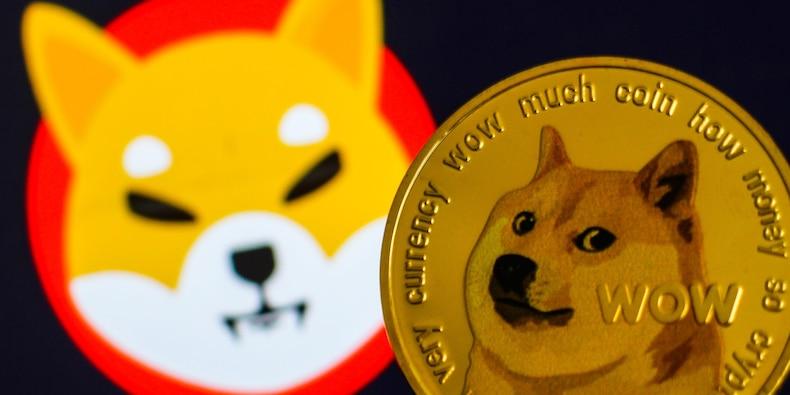
Digital cryptocurrency token Shiba Inu has jumped into the top 10 most valuable digital assets by market value, surpassing its inspiration, Dogecoin. 

The recent trading frenzy over a digital token called Shiba Inu — commonly promoted as a “meme” or joke coin in the crypto world — has jumped the canine-themed cryptocurrency into the top 10 most valuable digital assets by market value, hitting over $39 billion and surpassing its cousin and apparent inspiration, Dogecoin.

Since Wednesday, both Dogecoin and Shiba have frequently swapped places in the rankings, competing in what many would call a rivalry between the two. In fact, the Shiba Inu community actually refers to the crypto token as the “Dogecoin killer”.

As of Monday afternoon, Dogecoin, which was launched in 2013 as a joke, ranks No. 10 in cryptocurrencies with a market value of over $35 billion, according to CoinGecko.  Likewise, Shiba Inu, which launched in 2020 to poke fun at dogecoin, now ranks at No. 9 with a market value of over $39 billion. Shiba Inu hit an all-time high of $0.00008990 this past Monday.

Moreover, Shiba is up another 10 percent at midday this past Monday after its leap last week which had more than doubled in value. With this, most of that gain came in a flurry of trading last Wednesday, when it gained a whopping 66 percent. Besides, Shibu is in fact up about 900 percent in the past month.

Each Shiba coin costs just a tiny fraction of one cent; however, to put in simpler terms: if you were to have bought $1,000 worth of Shiba Inu in late September, your value of 20 million coins would now be worth around $9,000.

Both Shiba’s and Dogecoin’s growth can be largely credited to supporters hyping them up. It is the power of the people who are intensifying them that drives the performance of the coin a lot of the time, including celebrity supporters like billionaire Elon Musk, CEO of SpaceX and Tesla. Musk often tweets about different cryptocurrencies, and in doing so, has seemingly impacted their prices.

For example, a few times throughout 2021, Shiba has appeared to leap after Musk repeatedly posted images of his Shiba Inu puppy on Twitter; however, interestingly enough, on Oct. 24, Musk did clarify that he does not own any Shiba Inu tokens and that he only owns bitcoin, etherium and Dogecoin.

Overall, the current surge in Shiba Inu can be seen as very much community-driven, and it is clear to see any token or coin out there has the opportunity to run up like this if someone with a big microphone is amplifying it — case in point is Shiba Inu. Created in August 2020, it  has taken less than two years to become a contender for a top 10 cryptocurrency spot.    

U.S. set for highest Halloween spending in five years

Business

Jason Ryan, Staff

  Header Image: USA Today

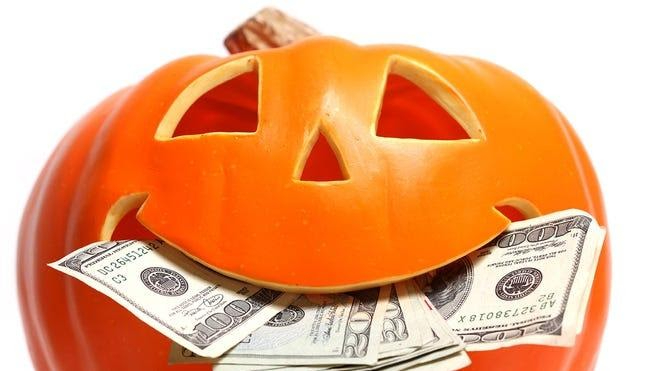
Despite ongoing pandemic concerns, U.S. consumer spending on Halloween is set to be higher than ever within the past five years. 

An estimated two thirds or 65 percent of Americans intend to celebrate Halloween or participate in Halloween activities this year, up from 58 percent in 2020 and more comparable with 68 percent in 2019 before the COVID-19 pandemic. This trend demonstrates that Halloween is back on the schedule this year and plenty of Americans want trick-or-treaters, decorations and new costumes. 

According to research from the National Retail Federation, U.S. consumer seasonal spending this year is forecasted to be $10.14 billion, up from $8.05 billion last year in 2020, $8.78 billion in 2019, $8.97 billion in 2018 and $9.09 billion in 2017. The top ways consumers are planning to celebrate the holiday include handing out candy (66 percent), decorating their home or yard (52 percent), dressing in costumes (46 percent), carving a pumpkin (44 percent) and hosting or attending a party (25 percent). 

The association’s annual survey was carried out on its behalf by Prosper Insights and Analytics and analyzed celebration plans. Its findings presented 93 percent of millennial parents would be seeking to go all out for the holiday, particularly after last year in which many celebrations were restricted amid the pandemic; however, caution has been urged by health authorities, with the U.S. having the highest death toll from the pandemic in the world, with over 750,000 lost to Covid-19 since the start of the crisis that began early last year.

With more Americans celebrating Halloween this year, average spending is also up. For example, on average, consumers plan to spend $102.74 on costumes, candy, decorations and greeting cards – $10 more than what was planned last year. In addition, households with children are estimated to spend more than twice the amount than households without children ($149.69 compared with $73.57) this Halloween holiday. Likewise, the number of Americans planning to decorate for Halloween differentiates with last year’s spike in interest, with spending on decorations forecasted to climb to $3.17 billion, up from last year’s $2.59 billion. Total spending on costumes is the highest it has been since 2017 at $3.10 billion.

Of those planning to dress up for Halloween, nearly 69 percent of adults already know what their costume will be this year. More than 4.6 million adults plan to dress like a witch, more than 1.6 million as a vampire, more than 1.4 million as a ghost, more than 1.1 million as a cat and another 1.1 million as a pirate. Notably, more than 1.8 million children plan to dress as Spiderman, more than 1.6 million as their favorite princess, more than 1.2 million as Batman and more than 1.2 million will dress as one of their other favorite superheroes. All in all, it is very apparent that Halloween forecasts this year prove Americans want to spend way more on trick-or-treaters, decorations and new costumes.

       ryanj21@lasalle.edu

Warren and Charlie meet in sunny California

Business

Michael D’Angelo, Staff

Vintage Value Investing

Pictured above is Berkshire Hathaway’s chairman and CEO Warren Buffet and Executive Vice Chairman Charlie Munger. Both men practice a value investing strategy and have created impressive returns for their shareholders.

Over the weekend, Berkshire Hathaway held their annual shareholder meeting in Los Angeles, California. For the first time ever in the company’s long history, they held a shareholder meeting outside of Omaha, Nebraska. The meeting was headed by Berkshire’s executive staff, CEO and Chairman Warren Buffet and Executive Vice Chairman Charlie Munger. 

Both Buffett and Munger are hailed as some of the greatest investors of all time. They believe in a value investing strategy influenced by the principles of Benjamin Graham. Graham is most famous for developing the Margin of Safety principle and for writing the finance classic “The Intelligent Investor.” In addition, they are greatly influenced by the strategies of Phil Fisher, the author of “Common Stocks and Uncommon Profits” who famously believed the best time to sell a stock is never. Buffett and Munger emphasize a long-term investing strategy with an emphasis of finding “cheap” companies that appear to be trading below book value in the market. They own portions of great American corporations like Coca-Cola, Apple, Bank of America, Verizon and American Express.             

At the meeting, Buffett and Munger fielded and answered various questions. With their growing age, they confirmed their eventual successor: Greg Abel, a current Vice Chairman, will take over as CEO and direct operations. Buffet emphasized his belief around stock picking for the average investor. He stated, “I do not think the average person can pick stocks.” His suggestion, instead, was to diversify into American equities and purchase a fund which follows the performance of the S&P 500. Buffet has made this point plenty of times in the past. 

Both Buffett and Munger took jabs at the recent rise in SPACs and believe more people are turning to the market in a gambling-like sense. Buffet even went as far as calling SPACs an “exaggerated form of gambling.” A SPAC is a company that raises money through an initial public offering (IPO) with no commercial operations to acquire another existing company. They grew in popularity in 2020 as both a speculative investment and a way for companies to raise capital. 

To add to the sense of increased gambling in the markets, Buffett and Munger stated their opinions about online trading app Robinhood. They both said the app encourages gambling due to the easy access of speculative call and put options. Munger even called the app shameful. In the past, they criticized Robinhood’s selling of order flow data and commission free trades. An executive from Robinhood responded by saying “the people are tired of the Buffets and Mungers of the world acting like they are the only oracles of investing.” The most controversial statement of the weekend was when Munger took a strong jab at cryptocurrency. He went so far as to say Bitcoin’s success is disgusting and contrary to the interests of civilization. In the past he has called Bitcoin “worthless artificial gold.” 

The meeting concluded and many people took an opportunity to analyze both Buffet and Munger’s statements. Both men have led Berkshire for decades with expectational investment returns and their statements may prove important for investors looking for guidance. 

SPAC markets erase 2021 gains amid possible regulatory headwinds

Business

Bill O’Brien, Editor

“There may be advantages to providing greater clarity on the scope of the safe harbor in the PSLRA (Private Securities Litigation Reform Act). Congress could not have predicted the wave of SPACs in which we find ourselves. It may be time to revisit these issues.” – Jon Coates, Acting Director, Division of Corporation Finance (SEC)

Coindesk

The SEC’s Acting Director of Corporation Finance, Jon Coates, has called on Congress to reign in SPACs and tighten regulatory disclosure requirements on the “blank check” companies.

What used to be a niche investment vehicle that served as an alternative for privately-held companies to enter public markets is now regarded as a market craze, a change that has taken place amid the historic, pandemic-induced 2020 market crash. Companies looking to go public partnered with SPACs to take advantage of markets flush with capital but volatile amid the backdrop of the coronavirus pandemic. Unfortunately though, SPAC moguls, like Bill Ackman, who the Collegian covered in its Feb 10 issue, are learning that, like all good things, the SPAC craze must too come to an end. 

SPAC markets have taken a sharp downturn in recent months, and even more trouble is on the horizon due, in large part, to heightened regulatory scrutiny for the investment vehicle. John Coates, the SEC’s Acting Director, Division of Corporation Finance, released a statement on the Securities and Exchange Commission’s (SEC) website sounding alarms on the SPAC surge. The SEC’s statement, SPACs, IPOs and Liability Risk under the Securities Laws, contained verbiage that has likely contributed to the recent downturn in SPAC markets. The SEC is now eyeing SPACs for the potential they have to mislead investors as they have significantly less disclosure requirements than a traditional IPO would have.

  In the statement, Coates discusses how 25 years ago, the path to public markets for a company was fairly simple and one-tracked and, with the innovations markets have today, there should be regulation to follow along with it. “With all these changes, the appeal of understanding and developing law around economic substance over form may be greater than ever.” Coates talks about how initial public offerings are a “distinct and challenging moment for disclosure” for companies undergoing them for good reason. “An IPO is where the protections of the federal security laws are typically most needed to overcome the information asymmetries between a new investment opportunity and investors in the newly public company,” says Coates.

Coates ends the statement by calling for legislative bodies to consider imposing tighter requirements that would target the second phase of a SPAC transaction, otherwise known as the “de-SPAC,” where a target company is acquired and original investors in the SPAC typically unload their shares into the secondary market. Coates calls on authorities to treat the de-SPAC transaction as the “real IPO.” “It is the de-SPAC as much as any other element of the process on which we should focus the full panoply of federal securities law protections — including those that apply to traditional IPOs.” Heightened regulatory pressures have further depressed SPAC markets that have already been reeling in recent months. The proposed regulation could increase disclosure costs for the blank-check companies which already face tough competition from private equity firms when hunting for target companies.

A SPAC index across 210 different companies, made up of 60 percent public companies derived from SPACs and 40 percent pre-IPO SPACs, “Indxx SPAC & NextGen IPO Index,” has fallen 24.87 percent since the SPAC market’s February highs. New accounting guidelines issued by Jon Coates and Acting Chief Accountant of the SEC, Paul Munter, have helped to grind SPAC markets to a halt as well. The statement, which read, “OCA (Office of the Chief Accountant) staff concluded that – the tender offer provision would require the warrants to be classified as a liability measured at fair value, with changes in fair value reported each period in earnings,” has the potential to impact newly issued SPACs and companies that have already gone public through a SPAC transaction. Proponents of the investment vehicle are eyeing financial regulators to see what moves they will make to tighten regulations around the investment vehicle. Eyes will surely be on the SEC in the coming months to see how they choose to advance their agenda as laid out by John Coates.

Currency of the future or tulip bulb of the past: will crypto continue to boom or will it bust?

Business

Michael D’Angelo, Staff

Gadgets 360

Pictured above is Tesla CEO, Elon Musk. In late March, Musk announced via Twitter that Tesla cars may be bought with bitcoin and any bitcoin Tesla receives as revenue will not be converted to fiat currency.

All the recent rage in the financial markets is related to cryptocurrency. It appears almost daily one can see a crypto-related news headline. Just two weeks ago a “meme” cryptocurrency known as dogecoin reached an all-time high, netting some traders thousands of dollars. In addition, just yesterday, Tesla announced they sold $272 million worth of bitcoin (BTC) during the first quarter. 

Cryptocurrency is defined as an unregulated digital currency that uses an online ledger to track ownership to buy and sell goods. An idea of unregulated digital currency drives the enthusiasm behind crypto and many investors view the currency as digital cash that cannot be traced. The most popular cryptocurrency is Bitcoin. Bitcoin utilizes complex blockchain technology to track ownership and manage trading. Some investors see Bitcoin as a store of value and an alternative to physical gold while others view it solely as currency to buy and sell goods. 

Bitcoin has grown tremendously since its inception in 2009 and has experienced widespread interest since last March when the pandemic and stay-at-home orders forced millions into lockdown. Much of Bitcoin’s rise is attributed to retail investors, but institutional investors are involved with the commodity. Big-name financial companies and fintech players like Square and MicroStrategy have used cash to purchase bitcoin. Even asset management fund Fidelity has jumped in and intends to release an ETF to track BTC benchmarks. Bitcoin’s market cap is currently valued at over $1 trillion. 

Tesla’s CEO, Elon Musk, has spoken countless times about cryptocurrency and his company’s offer to accept Bitcoin as payment for their cars. In February of 2021, Tesla bought $1.5 billion of Bitcoin. They stated in SEC filings that the purpose of the purchase was to gain a better return on their cash, but they did warn investors of the price volatility involved with the purchase. According to Tesla’s Q1 earnings report, total revenue grew year-over-year by 74 percent. Tesla’s GAAP net income reached $438 million while non-GAAP net income was over $1 billion. Also, Tesla reported more deliveries of their car products. Musk made the Bitcoin purchase to emphasize the liquidity involved with the coin. 

As cryptocurrency becomes more widespread, regulators and government officials are left scratching their heads. They must decide how to regulate the crypto market. India had a ban on cryptocurrency which has been reversed in March of this year. Turkey has banned cryptocurrency. Back home in the United States, Bitcoin faces some regulation by organizations like the SEC, the Fed and the CFTC. The IRS taxes Bitcoin and other cryptocurrencies as property. Janet Yellen, the current Treasury Secretary, believes Bitcoin is an “extremely inefficient” way to conduct monetary transactions. Overall, many regulators are going to have to find an agreement and decide how to regulate the coin. 

As Bitcoin grows in popularity and many people look to the future, we must be cautious of the recent rapid rise in its price and remember the history of financial booms and busts. Bitcoin and the cryptocurrency market have the potential to fully take over our lives. Bitcoin can be as useful as the American dollar in the next few decades or can be remembered like the tulip bulb of 1637.