My friends and I went downtown for restaurant week recently and decided to make a night of it, walking around the city, browsing stores and taking in the night life rather than just eating dinner and coming straight back to campus. We checked the La Salle app to see when the shuttle would be coming and the app said the shuttle comes to the Septa stop each hour at :15 :55 and :35, and that on Fridays and Saturdays it runs until 3:00 am. We were under the impression that it didn’t matter how late we got back, knowing that we could take a shuttle back to our townhouse, so we took our time and enjoyed the night rather than trying to rush back to make sure we got home safe.
We got to the stop at 8:50 and waited the five minutes for the shuttle to get there. La Salle took the shuttle tracker service off of the app, which we were disappointed to see, as we couldn’t tell if the shuttle was running on time or late and we didn’t want to be standing around in the dark waiting for it, especially not knowing how long it would take. A shuttle came at around 9:00 and unloaded a van full of students, then we got on. The driver told us we were lucky that that group had asked to be taken to the Septa stop, or else we would have been waiting for a long time before needing to just walk back in the dark. He informed us that La Salle had changed the shuttle hours and the shuttle now only runs until 9:00 p.m. on Fridays and Saturdays, but that it actually stops at the 8:15 p.m. cycle so that it can be finished its trip on time to get gas and make it back before 9:00 p.m. We told him that La Salle didn’t have that posted on the shuttle service page, and that we weren’t informed that the schedule changed. If this information was posted anywhere, it wasn’t made known. The driver informed us that communication hasn’t been clear between La Salle and public safety either, and that he wasn’t informed right away when the schedule had changed. He seemed disappointed in La Salle’s lack of communication.
I find this to be irresponsible on La Salle’s behalf, knowing that weekends are when students plan on staying out later, and that it is dangerous for them to be standing around waiting for the shuttle in our neighborhoods, which are often receiving reports of violence. I am disappointed in La Salle for the lack of communication about important information such as this, and for the lack of care given to its students that are relying on the shuttle system for safety. We pay a lot of money to attend this school, so I think that at the very least we deserve proper communication.
While La Salle is pretty much entirely back in person, the Collegian is not just yet. The wire baskets that used to hold copies of the week’s (and week before’s…and week before’s…) Collegians are now empty, and if you’re reading this article, it means you’ve been able to find us online.
When we were publishing physical copies of the newspaper, the only way to guess how many people were reading was to see how many copies were left over in the little baskets in the Union, B and G, library and other areas we deemed high-traffic enough to abandon stacks of papers. We also had no way of knowing which articles or sections were the most popular, or when people were reading the paper. For example, I was the one who delivered the papers to Benilde every Thursday, and it was always a guessing game of how many papers would be left over from the week before. Sometimes there were only a few copies remaining, other weeks there’d be dozens still stacked up in the basket. How many people grabbed a paper and only read the sports section or did the sudoku puzzle? How many people leafed through the Collegian while waiting for a friend in the Union or between classes in the library and then put the paper back in the basket or abandoned it on a table?
Ever since we began publishing the Collegian online, I have been (a bit obsessively) checking the statistics page that the website provides. Apparently, early Wednesday afternoons are when most people visit the site, the News category is the most popular and the most views we ever had was earlier this year in February. The traffic to the website falls after Wednesday, the day when we publish the articles, but there’s still at least a few views each day throughout the week.
Of course there’s drawbacks to not having a physical paper. To access the paper, a reader has to have the link to the page (or be willing to Google search for the paper and find the correct site). People who might have picked up the Collegian while walking through Holroyd or on their way out of B and G now might not even know the paper still exists if they’ve never been sent the link to our page.
I think the most interesting information the WordPress site gives is their report of all the different countries someone has read a website from. On that page, it shows that people have read the Collegian from over thirty countries besides the United States. Many of these countries are home to various Lasallian-affiliated educational institutions, but many are not.
Lasallian educational institutions and Collegian readers.
This map shows the world according to the Collegian’s readers — many are reading the paper from countries with Lasallian schools, colored in dark blue on the map, but there are also several countries with Lasallian schools, shown in yellow, that haven’t had anyone reading the Collegian. Then there’s the ones I’m most interested in — the countries without Lasallian schools, but somehow someone from them still found the Collegian. Seeing those light blue countries raises some questions — who is reading our paper in Norway? How did someone in Saudi Arabia find the Collegian? — but also shows that people who have probably never set foot on campus can now access the paper. That says something about the reach of the internet in general, but also something about the reach of La Salle, and the connection we on this campus have with those learning in Brazil or Egypt or the Philippines, united through the values of St. Jean-Baptiste de La Salle — and, in a tiny way, through the Collegian.
How do you feel when you leave something unfinished? Some may say just a little anxious, others may experience downright despair. A lucky few of us simply feel neutral: “I’ll get to it tomorrow, no need to fret.” But most of us probably don’t feel good when we go to bed knowing that we didn’t finish all that we needed to do.
What’s worse than that feeling? Seeing it manifested in tiny, red, numbered bubbles plastered all over our phone screens. You have: 3 unread emails, 65 unread texts, 18 Snapchats, 7 Canvas announcements, and a whole lot of dread…or at least I do at the moment. Never has there been a time in human history in which we have been more consciously made aware of our unfinished business. That fact alone is anxiety inducing, even for those of us who are quick to clean up our inboxes at the earliest opportunity. Many of us have an obsessive relationship with clearing our notifications; I have an unwritten rule for myself that my Outlook inbox has to be attended to as quickly as possible, at any hour of the day. The other day, I found myself performing the mundane, rote ritual of clearing out my Gmail of all the quotidian branded messages I get from various companies. I took a moment to recognize the anxiety attached to my habits, and took an oath to change for the better.
Office Sign Company
It is worthwhile to establish a cell phone-free zone in your daily life.
In a sense, we are slaves to our notifications. They demand our attention and remain in the corners of our minds, begging to be resolved, ad nauseam. I can’t think of anything more tiring than going to bed with the knowledge that I have so many unfinished tasks; tasks which await my attention as soon as I wake up. That is why I no longer sleep with my phone in my room. By eliminating the opportunity to be reminded of messages which require my attention, I’ve created a more peaceful space for myself.
In fact, I’ve modified my relationship with my phone in more ways than one. I don’t bring my phone with me to the dinner table (I never did, shoutout to mom and dad for that one), but I also don’t bring it to my desk when I’m doing work, or sometimes when I’m hanging with friends. I prefer to maintain a much bigger distance from my phone than I had in the past and it has served me well. These days, I wake up and begin to lean into my day alone, without the presence of pesky notifications or posts from others. Then, I make the choice to go downstairs and check my phone when I’m ready. If, overnight, a friend or family member texted me, I’m much more eager to respond than I would have been had I been consciously aware of their message for hours on end.
By cutting the leash between my phone and me, I’ve significantly reduced my anxiety. I no longer feel like I need to lug around this hunk of junk with me wherever I go. When I do decide to take my phone out, it’s for a purpose that serves me and enhances my day. By breaking up with listless scrolling, I’ve crafted a more meaningful life. By leaving my phone downstairs when I go to bed, I can blissfully pretend, at least for a few hours, that I exist in an era untouched by smart-phone-induced anxiety. By choosing when to use my phone and when to leave it at home, I’m choosing a more enjoyable life.
So tonight, I invite you to leave your phone alone; be alone with your thoughts. There is no rule that you have to check every notification, every app, all the time. A smartphone is only smart after you examine your relationship with it; after you unlearn codependence in favor of balance. I promise, those little red bubbles (unfortunately) aren’t going anywhere.
I do not regard myself as a particularly fashionable person. I do not read GQ or follow any specific fashion blogs on the Internet. Despite that, I do like to put in the effort in the morning to dress nicely. So much so that I will get up at 5 a.m. so that I can put some minimal effort in. I like to wear a tie, a nice pair of pants and a button-down shirt. Sometimes I wear a belt, other times I put on suspenders (which I prefer to be honest). It really depends on my mood in the morning. Before I moved to Philly, I used to put on a tie and would go to my local Barnes and Noble and sit in the café reading political magazines and books I purchased. My parents always wondered why I got dressed to sit in a bookstore and my reasoning was simple: after a year of only wearing work clothes or pajamas, I wanted to look nice and dress like a human being.
When I was a young man, I did not have a lot of confidence in myself or my ability to do anything. I was angry, uninterested, unmotivated, and all I wanted to do was get through the school days and go home and hide in my room. My wardrobe was mostly blue jeans and dark shirts with a camo hoodie. Things were not particularly better as I grew older. In my first two years of community college, I would work as a dishwasher and was forced to wear these ugly wool shirts and blue jeans. They were uncomfortable to wear and they developed a strange smell. I hated that job for several reasons. The one that comes to mind now is that every time I would come home from my shift, it was because I would look at myself in the mirror and feel exhausted and disgusted. Insecurity is a strong feeling and not one a person can overcome easily, and my work did not help. The restaurant I worked at was toxic and not exactly a healthy work environment (in every sense of the word).
The one advantage about it was that it was located right across from my bank and Marshalls. One day after my check was cashed, I decided to march over there and start looking through the clothing racks. Going to Marshalls to try and make myself presentable was a new experience. Determining what to wear and purchase was like trying to figure out a new language with minimal experience in speaking it. I am a proud product of public schools; uniforms were never required. My family were not church-goers and the churches we did attend were not big on fancy dress. My experience in fashion was not minimal, it was nonexistent, and I was starting from nothing. So, I did what any 20-year-old would do in this situation, I looked up pictures of James Bond and worked from there. I bought myself a solid white shirt and a red tie and when I got home and tried them on a transformation had occurred. For the first time, I felt like a man and was confident and proud of myself. It was though I was looking at someone I could aspire to, an ideal version of myself made real that had existed in my head but was now present in the physical world. I walked around my house that day playing “Stayin Alive” by the Bee Gees and “You Know my Name” by Chris Cornell. The only thing I did not do was buy dress shoes, relying instead on a nice pair of sneakers since I walked and took public transportation everywhere. Even now, I struggle with dress shoes and prefer to pull a Gary Johnson.
The Late Show with Stephen Colbert
Former 2016 Libertarian presidential candidate Gary Johnson (center) prefers to wear sneakers with his suits.
Over time, I began to piece together a wardrobe that I can customize depending on the day of the week. The tie became a banner representing my mood and frame of mind for the day. The pants and shirt are a stylish way to present myself and occasionally turn heads. Fashion is about confidence, finding the style of dress that suits you and appeals to your confidence. For me, it was not just that I was dressing nicely, I was dressing towards an idea, a version of myself that I could be proud of and aspire to. That is what fashion is more about me — attempting to bring out the inner version of you that you are most proud of and comfortable in.
Do I think everyone on campus (undergraduate, graduate, staff, faculty, etc.) should dress like me? Should we have a dress code? Hell no — I dress the way I want to because it is how I want to and it appeals to my personal aesthetic. This is my style, and I do not want to force others to dress my way and have them risk losing their own sense of self-confidence no more than I would want someone else to try and tell me how to dress and destroy my own sense of self-esteem.
Now that summer has come to an end, the “Big Brother” Season 23 finale is only a few weeks away. There has been a lot of controversy and differing opinions about this year’s season based solely on one alliance called The Cookout. The Cookout consists of six individuals: Azah Awasum, Xavier Prather, Kyland Young, Derek Frazier, Tiffany Mitchell and Hannah Chaddha, who are all Black.
The controversy surrounds a plan that Mitchell hatched within days of being in the “Big Brother” house. In all twenty-three seasons, there has never been an all Black final six.. Knowing this, Mitchell suggested each member in their alliance pair up with another houseguest outside of their alliance and sit on the block with them each week.
In all of my years of watching “Big Brother,” I have never seen a plan executed so well. The Cookout has worked together for months now and sent home every other houseguest this summer without being suspected as an alliance, which would surely prompt the other players to send their members home.
This week, The Cookout has succeeded in making “Big Brother” history as the first time the final six were all Black. Some have said that this is “reverse racism” towards majority groups; however, I do not see it that way. In the past, the final six have been all white, but no one ever suggests those houseguests are guilty of racism. Groups of individuals who share similar experiences often couple up with other people like them. I see this as an alliance of people from similar backgrounds relating and working together just like people have in the past. I think this is a pretty neat display of unity, and I am so happy that I got to watch it unfold from ideas, to a plan, to reality throughout the show this summer.
My friends and I had a conversation the other day lamenting what we missed and what we missed out on over this past year since none of us were on campus. We talked about dinners at B&G, the recycling situation at the townhouses and the Late Night La Salle events we used to attend. Every week on Wednesdays, I remember the long nights (trapped) in the basement of the Union, editing the Collegian with a buffalo chicken Subway sub beside me while Bianca cloncked around the room in her high heeled boots throwing around ideas for the editorial. Every so often, a professor or student in one of my classes will begin a sentence with “Well, back when we were on campus,” or “So, if we were still on campus, we could” and I remember the “good old days” back when we could talk face-to-face and chat in the hallways before classes and office hours were “just show up” and not “wait for me to email you a Zoom link.”
And then I get all sad about it. I think it’s pretty easy to get into that sort of mindset. I think it’s pretty justified. I can’t lie and say there haven’t been times where I think about everything I did freshman year or the beginning of sophomore year and I’m hit with “wait a second, did I just lose an entire year of college?”
Did I? Did we?
I think the answer is no. But I also think I understand why I (and a whole lot of other people) think that’s not the case.
I don’t need to go on and on about how these aren’t ideal circumstances for anyone, how this has been hard on all of us, how this has certainly affected some people and some situations more than others. We all know it and have heard it before. This article isn’t supposed to be a rehashed sob story or some cheesy “It’s all alright!”
I guess I’ve just been feeling dejected. I think the end of the semester will do that to you in general, but I suppose I should’ve expected it more now, when we can’t pull all-nighters in the Connelly Library or beg the printers in Wister Hall to work because please, please, it’s 8:27 a.m. and my philosophy class is on the third floor and I still have five pages that haven’t made it off of the computer yet.
And so I’m looking for something. I’m not sure what, exactly. Probably a sign, like I usually am, because I’m big on signs. Some sign that this past year and change wasn’t a total wash (I know it wasn’t, somewhere in my real brain — I still learned and experienced a lot of things, both academically and not — but my emotional brain is still wishing I was playing bingo in the Union Ballroom or eating chicken nuggets with my roommates at Treetops or just existing around a community of other people who aren’t my family or my coworkers).
So here are my end of the semester thoughts: I’m searching for something. Maybe it’s guidance, maybe it’s a more specific sense of purpose, maybe it’s some sort of direction or explanation. I’m not sure what it is, exactly; I just know I’m seeking something that I feel like I’m missing.
And in a religion class last night, where the topic was spirituality, religion and those who drift away (and sometimes come back) to organized faiths, Brother Mike posed a question about the intrinsic value of that looking for something, both within and outside of organized religious traditions.
And he said something that I think applies not only to religious searching but to searching for meaning, anywhere and everywhere and especially now:
I was in my living room, checking my email, when that message from President Colleen Hanycz popped up into the top of my inbox. It was paragraph upon paragraph of fluff, with the University doing their best to soften the blow that was buried further along in the email. But can you really sugarcoat announcing that seven of the university’s athletics programs would be terminated after this school year?
The most shocking program on that list, at least for myself, was baseball. To my knowledge, as someone who knows quite a bit about La Salle sports, baseball had always done fairly well. They seemed like one of the most popular sports at the University, their athletes some of the most well-known around campus. There were some sports on the list that were understandable…but baseball? Really?
None of the teams were given a chance to fundraise for themselves before the announcement came out, which is an issue in and of itself. This piece is not trying to suggest that baseball is somehow more deserving of being saved than any of the other sports that are being cut, but their performance this season is really leaving La Salle with egg on its face.
Let’s start with their record: 20-11 overall, 6-2 in the A10. It’s close to being the best record at this point in the season, and has included some truly spectacular games, comebacks that left fans on the edges of their seats, absolute dominance over opponents (e.g. the 22-2 victory over Penn earlier this month) and players wearing their hearts on their sleeves. They’ve been vocal about how hard they’re willing to fight to keep their program alive, but it’s not stated more loudly than in how they play.
Freshman pitcher Frank Elissalt could easily throw in the towel and not care about how he pitches. What’s the point, right? But he does the exact opposite. He’s now earned Atlantic 10 Rookie of the Week four times, along with earning Pitcher of the Week twice.
Junior catcher Tatem Levins has options outside of La Salle. He doesn’t need to show up in the batter’s box and behind the plate the way that he does, but he has not let up in his incredible and consistent performances.
There are plenty more individuals that could be named here (Elijah Dickerson, Ryan Guckin, Nick Di Vietro, Connor Coolahan, etc.) and that should tell you something. These players don’t have a certain future at La Salle. They chose to come here to play the sport they love and represent the University with everything they’ve got, only to be blindsided by a program slashing that was purely driven by financial interest with little to no regard for the welfare of the student-athletes it would be affecting. Shouldn’t it tell you something, President Hanycz, that even though you and the University turned your back on these players, they’ve still fought tooth and nail and put their blood, sweat and tears into ensuring that La Salle is currently sitting at the top of the A10?
Legendary soccer defender Tony Adams once said, “Play for the name on the front of the shirt and they’ll remember the name on the back.” That’s what this current La Salle baseball team is doing. The University’s name will be attached to whatever accolades they collect this season, but as a community, we’ll remember the individual players that didn’t let their team be taken away from them without an admirable fight. Whether or not the team is able to be saved, this particular team won’t be lost in the shuffle of decades of iconic baseball squads.
Forget Hank DeVincent. No matter what, the names of these current players will be the ones permanently etched in the earth between McCarthy Stadium and St. Basil’s.
We are only four months into 2021 and a brand-new president, and already there are discussions about the 2022 midterms and if the Republicans can take the House and the Democrats can build on their majority in the Senate. You would think after a turbulent election beginning with a confusing Iowa caucus and ended with an attack on the Capitol that everyone would be fed up with elections and politics. However, with the senate divided fifty-fifty, a slew of bills being proposed in state legislatures designed to complicate the voting process (that is the nicest way I can put it) and states beginning to redraw their congressional districts, the stakes have never been higher for both parties. While 2022 is certainly going to be an important election year, and one that absolutely no one should ignore, there is another election about to occur in six months — local municipal elections across the country.
Local elections occur between the presidential election and the midterm and consist of offices that don’t hold the same national notoriety as president or congressman, but are more instrumental to our daily lives — elections for people such as school board members, district attorneys, sheriffs and local township council members. These are the office holders who can actually help you or really hurt you and your community if you choose to ignore them. The wrong people on your school board can result in your local school being underfunded, or worse, closed down. The right district attorney can determine if actual criminal justice reform happens. Likewise, these offices can be the starting ground for future politicians who seek higher office. President Joe Biden may be more well known as a senator from Delaware and Barack Obama’s vice president, but he started his political career in running for New Castle County Council in Delaware back in 1970. Today’s local sheriff may become your state’s next senator, so you want to make sure that person is good for the position.
I take great pride in the fact that the first election I ever got involved in was the local 2017 election for the school board in my area. A friend of mine, Adam, was running for school board and I told him I wanted to help in some way. Adam and I knew each other from back when I was working at a comic shop and the two of us remained friends after I left. Like me, he felt off about Trump’s election and even though I was a Republican at the time and he was a Democrat, I told him I wanted to support his campaign. I helped hand out campaign literature at the polling place. While my role was small, it felt good to be involved in the political process and make a difference by helping a friend win an election. It gave me a sense of control and being a part of something that really can’t be felt with national elections. Local elections are smaller, more intimate and if you are a history or political science major, it’s a great way to learn about local government from the ground up.
So when you go home this summer, please look up local elections in your community. Research your township’s Republican and Democratic (depending on your personal leanings) parties, offer your time to being a part of a campaign, or go to a couple of committee meetings. Government is not some alien far off institution, it’s local people trying to solve the issues of their communities — and you never know, it could lead to the beginning of your own personal future in public office.
I am twenty years old and still learning how to use technology. Sure, I’m pretty adept at all the basics: Microsoft Office, Adobe Creative Cloud, etc. I can even create (mediocre) animations on digital art software like Procreate. But I’m still — and likely always will be — learning how technology fits into my everyday life. I’m learning how to have a relationship with technology. I’m old enough to remember a time when social media didn’t exist. But I’m also not old enough to recall the days when computers weren’t woven into the very fabric of our daily lives. I’m positioned to have a relationship with technology that demands almost complete reliance, but not utter and perpetual immersion.
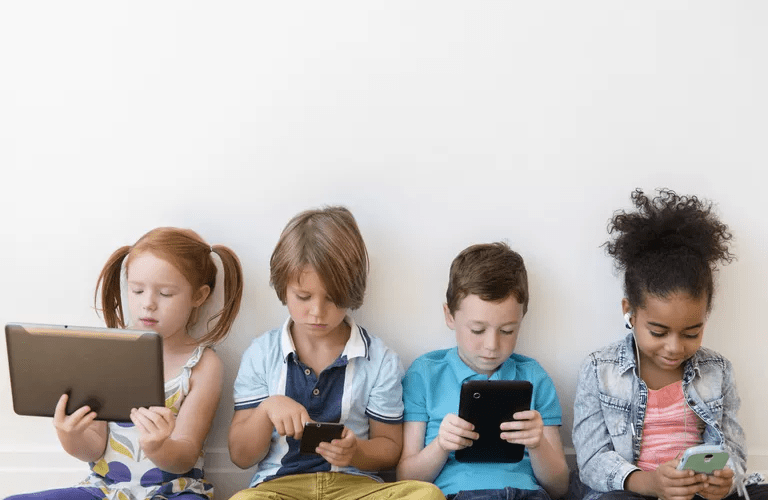
But the generations below me and my peers have been living in the heyday of social media since birth. My mom is a nanny and she has been with the same child for his entire life — seven years. I’ve gotten to see firsthand his introduction (at a very young age) to the iPad — and all the problems that ensued. I’ll preface this article by saying that I recognize the importance of and need for technology in our daily lives; I’m not longing for some pre-digital return to nature because I know it’s not possible. I’m simply noticing and reporting the detriments of constant exposure to technology.
The issues with childhood engagement with technology can be viewed from multiple angles. For one, it can interfere with their basic human functions, such as sleep. “Electronic stimulation has been shown to interfere with both falling and staying asleep,” according to Northwestern University’s parenting expert Katherine Lee. In fact, a study published by Pediatrics “found that children who sleep near a smartphone or another small-screen device get less sleep than kids who are not allowed to have these types of devices in their bedrooms.” If you’ve ever babysat a child, you know how hard it can be to get them to turn off the iPad. And if you’re trying to get them to turn it off because it’s bedtime? Good luck.
Jamie Grill/Getty Images
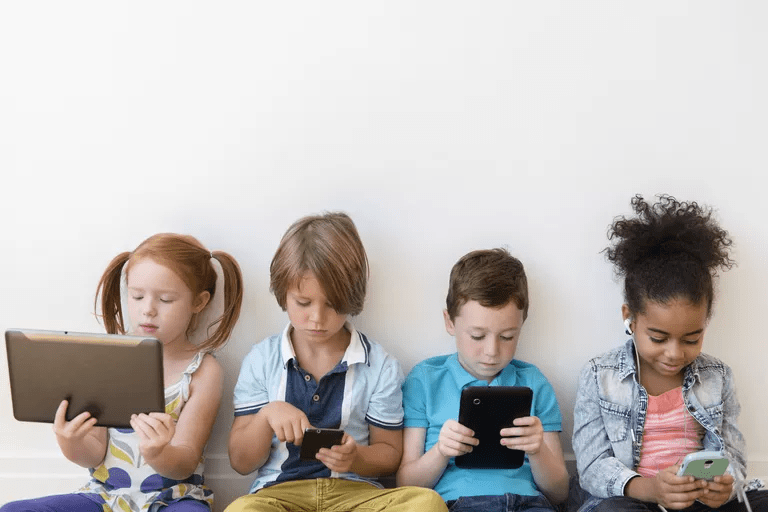
The average child is saturated with screen time every single day; their reliance on these devices has detrimental effects.
So it’s clear that the simple act of sitting in front of a screen can cause issues. But what about what’s on the screen? Any time anyone engages with technology, there are two parties involved: on one side of the screen, there’s a supercomputer pointed at your brain, trying to figure out the perfect next thing to show you. On the other side of the screen is our prefrontal cortex, which evolved millions of years ago to do its best job at goal articulation, goal retention, staying on task and self-discipline. This is true for all of us who have brains. But imagine it’s not you, it’s a seven-year-old, or a five-year-old, or even a two-year-old. At that age, I was playing with Lincoln Logs and American Girl Dolls — neither of which had supercomputer powers.
As a twenty-year-old, I’ve had time to learn how to differentiate information that benefits me from information that harms me. But kids haven’t had that time yet. In 2015, Aaron Mackey was a graduate fellow at Georgetown University Law Center’s Institute for Public Representation. He was part of a coalition that included the Campaign for a Commercial-Free Childhood and the Center for Digital Democracy. The coalition alleged that “it’s deceptive to tell kids that this [YouTube] is a safe product… Anyone, with just a little bit of searching, can find a lot of inappropriate content.”
Moreover, the infinite possibilities offered by YouTube can cause addiction. According to the American Addiction Center, those with higher addiction risk are unable to self-regulate, impulsive and lack a strong sense of moderation. YouTube’s recommendation algorithm doesn’t want you to self-regulate; it wants to regulate for you. Its algorithm wants you to impulsively click on whatever catches your eye because that’s how it builds a profile on you. Its algorithm rejects moderation in favor of saturation. And yet, we’re placing it in the tiny hands of our precious kids. Sleep issues, inappropriate content and addiction — the gamut doesn’t stop there; these are just three angles from which one can view the greater problem of technological saturation. Kids aren’t the only victims; everyone who engages with technology is susceptible to these ailments. But kids are the most unaware. They have no idea what any of the iPad implications are, but they are sincerely affected by them. They’re just kids and it’s our job to care for them. After having only scratched the surface on this topic, I’m questioning whether giving our kids iPads is a good idea. In fact, I know it’s a terrible idea — but we’re going to keep doing it. So how can we ensure that our kids don’t ruin their sleep schedule and develop an addictive personality while viewing inappropriate content online? I’m only twenty years old and I don’t plan on having kids for a while, but I sincerely hope I’m able to answer that question by then.
Five years ago, a week before “Star Wars: The Force Awakens” arrived in theaters, I had taken a job in a local grocery store pushing carts in the evening. It was during the holiday season, a time when grocery stores and other retail businesses hired anyone with a pulse. Pushing carts wasn’t a bad gig overall. When the weather was warm and they were constructing the overpass near my work, I loved watching the sunset in the parking lot and listening to the banging of metal in the night air. The work was simple and pleasant. Since then, I have been a cashier, janitor, seafood rep (that lasted a week) and now a floater (a fancier term for stock boy). Being a floater has never been an easy job. It is not just stocking cans of corn on the shelf with a bunch of teenagers and college students. Retirees, teenagers, other college students, people looking for a second chance, parents even college graduates (a coworker who worked overnight stocking shelves had a degree in Business from Temple) work in retail. It has become a major source of employment for the educated and the uneducated, the skilled and the unskilled alike. Regardless of race or creed, what unites us is our frustration for our work and since the pandemic that frustration has only exasperated.
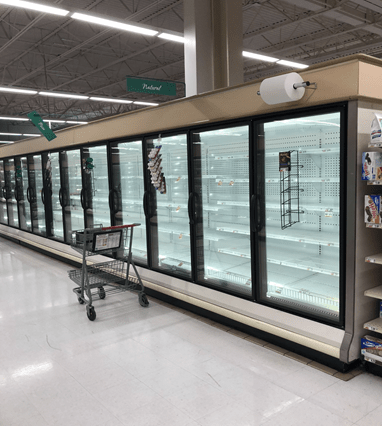
When the pandemic first hit a year ago, our shelves were quickly depleted the weekend Pennsylvania began to shut down. Our freezers became barren, most if not all of our meats were sold, and, of course, we ran out of toilet paper. By the end of the day Saturday of the first weekend of the pandemic, all we really had were Little Debbie products and some sparkling cider left over from Christmas 2019 (that stuff sells poorly, even in the middle of a pandemic). It is hard to believe it has been a year since COVID-19 first hit — those months of March to maybe June of 2020 feel both distant and recent to me. I tried keeping a log back in April, but many of my notes were mundane. I did not record all that happened at work and when I was not working, I was at home puttering around my house. The supply chain did not collapse, but it was under pressure that had not been seen before in the recent history of the United States.
Courtesy of James LeVan
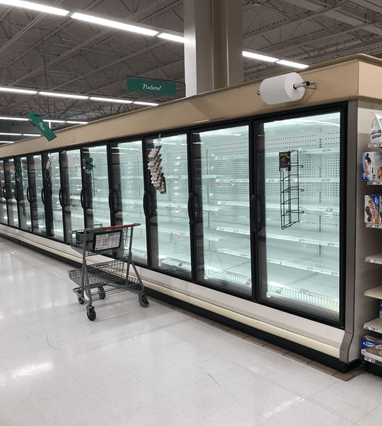
Pictured above is a frozen food aisle in early April 2020.
It was hard telling people who were desperate for toilet paper that we did not have any. I tried directing them to the nearest small corner store or family-owned chain (in the beginning they maintained a better supply than we did). When people would ask me when we would get more stuff in, I would shrug my shoulders and tell them I did not want to lie to them. Some people would accuse us of hoarding supplies and truth be told, we were not. Some coworkers bought a pack of toilet paper together and divided the rolls amongst themselves. For me, my parents had to drive out to the rural parts of PA to find ground beef and toilet paper. We had plenty of Lysol spray and wipes left over from when I had the flu a month earlier (an odd stroke of luck when I think about it). At the beginning of the pandemic, a coworker gave me a can of Lysol and I felt bad taking it, so I took it back to the shelf and explained that we had plenty of it at home, and it felt like I was hoarding. A woman quickly came and picked it up from me and said thank you.
In normal times, delivery trucks come in the early evening, and the overnight crew comes in around 8 p.m. to break it down. However, during the summer, trucks became infrequent. I remember one time I had to come in early (5 a.m.) to help overnight unload a truck that had gotten there an hour earlier. Sometimes we would not get a truck for a day or so and then multiple loads in one day. It really depended on the luck of the draw that day. One surprising phenomenon was that at one point, just so we had stuff, we got stacks of toilet paper and flour that were originally meant for hotels. But since no one was travelling, it made more sense for us to stock shelves with it. Things are semi-stable now, though we still end up running short on supplies depending on what they are.
On social media and television, we were praised for continuing to come into work. That we were in a way heroes for making sure communities had food and supplies. The media certainly thought we were awesome, and we had some customers thank us for what we were doing. However, I do not think people realize just how bad it got on some days. The fear that your coworker sitting across from you had COVID in the breakroom, to customers who would lose control and act like a child having a tantrum in a toy store. One moment that stands out in my mind was the time me and my manager had to go over to our beer garden because an older white man was screaming at a co-worker and an African American customer. When we asked what was wrong, the old man started screaming at our manager claiming that a Black man was following him around the store (he was not, we checked the cameras). He spent 20 minutes screaming at us, telling us about how his wife left him in the store alone, that he thought we were discriminating against him because he was white and not questioning the Black man, he was accusing of following him, that he had PTSD and that if he did not yell, he would get violent. I honestly thought I was going to have to fight this guy who was twice my size at that moment and that I was going to end up on the news. The guy tired himself out and then proceeded to leave and went about our business.
We who work at stores like Acme, Giant, Walmart and Target have been through Hell this last year. We have gone home crying, scared and exhausted. I have broken down in tears personally three times this past year. Many of us did not choose to continue working during this pandemic because we were brave or had a sense of duty. We did it because we had bills to pay and mouths to feed. Our work was not a breeze to begin with and the pandemic only exacerbated our problems. Grocery stores face issues of sexual harassment, disrespect and abuse from the communities we feed. The latter is still being felt now as we struggle to get vaccines and the latest attempt for a minimum wage increase died with Senator Sinema’s obnoxious thumbs down. It is important to remember that behind that mask, the cashier that sounds like a robot reciting the “thank you for shopping with us,” the women in health and beauty care and the guys stocking the shelves are all human and we are so tired.






 The La Salle Collegian