Searching for meaning after a year away from La Salle

Commentary

Alina Snopkowski, Editor

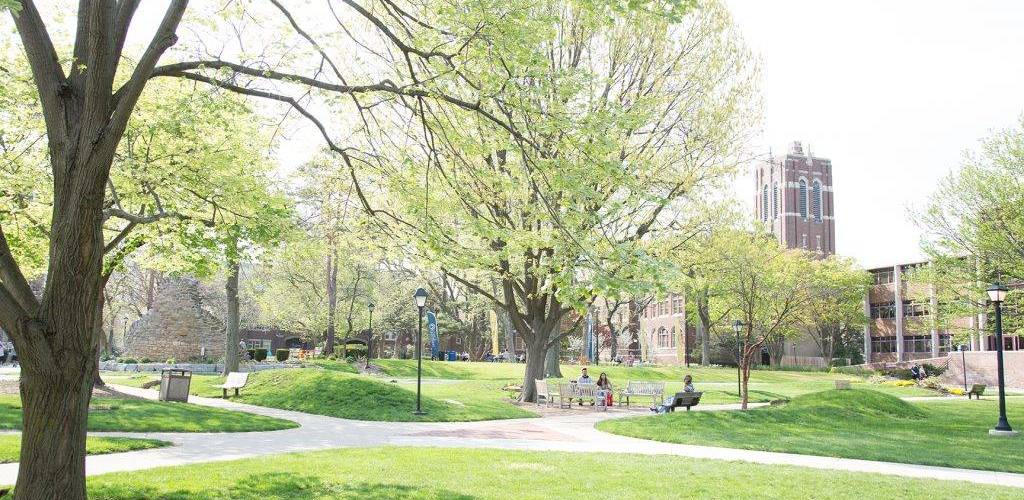
Header Image: lasalle.edu

My friends and I had a conversation the other day lamenting what we missed and what we missed out on over this past year since none of us were on campus. We talked about dinners at B&G, the recycling situation at the townhouses and the Late Night La Salle events we used to attend. Every week on Wednesdays, I remember the long nights (trapped) in the basement of the Union, editing the Collegian with a buffalo chicken Subway sub beside me while Bianca cloncked around the room in her high heeled boots throwing around ideas for the editorial. Every so often, a professor or student in one of my classes will begin a sentence with “Well, back when we were on campus,” or “So, if we were still on campus, we could” and I remember the “good old days” back when we could talk face-to-face and chat in the hallways before classes and office hours were “just show up” and not “wait for me to email you a Zoom link.”

And then I get all sad about it. I think it’s pretty easy to get into that sort of mindset. I think it’s pretty justified. I can’t lie and say there haven’t been times where I think about everything I did freshman year or the beginning of sophomore year and I’m hit with “wait a second, did I just lose an entire year of college?”

Did I? Did we?

I think the answer is no. But I also think I understand why I (and a whole lot of other people) think that’s not the case.

I don’t need to go on and on about how these aren’t ideal circumstances for anyone, how this has been hard on all of us, how this has certainly affected some people and some situations more than others. We all know it and have heard it before. This article isn’t supposed to be a rehashed sob story or some cheesy “It’s all alright!”

I guess I’ve just been feeling dejected. I think the end of the semester will do that to you in general, but I suppose I should’ve expected it more now, when we can’t pull all-nighters in the Connelly Library or beg the printers in Wister Hall to work because please, please, it’s 8:27 a.m. and my philosophy class is on the third floor and I still have five pages that haven’t made it off of the computer yet.

And so I’m looking for something. I’m not sure what, exactly. Probably a sign, like I usually am, because I’m big on signs. Some sign that this past year and change wasn’t a total wash (I know it wasn’t, somewhere in my real brain — I still learned and experienced a lot of things, both academically and not — but my emotional brain is still wishing I was playing bingo in the Union Ballroom or eating chicken nuggets with my roommates at Treetops or just existing around a community of other people who aren’t my family or my coworkers).

So here are my end of the semester thoughts: I’m searching for something. Maybe it’s guidance, maybe it’s a more specific sense of purpose, maybe it’s some sort of direction or explanation. I’m not sure what it is, exactly; I just know I’m seeking something that I feel like I’m missing.

And in a religion class last night, where the topic was spirituality, religion and those who drift away (and sometimes come back) to organized faiths, Brother Mike posed a question about the intrinsic value of that looking for something, both within and outside of organized religious traditions.

And he said something that I think applies not only to religious searching but to searching for meaning, anywhere and everywhere and especially now:

“The search is part of the experience.”

The upside of a year in isolation: Self-knowledge

Commentary

Elizabeth McLaughlin, Staff

As we round the corner on the first year of this pandemic, I can’t help but reflect on where we were 365 days ago. In the first week of March 2020, I went from attending a mock trial event with hundreds of people from across the country to throwing a 20th birthday party for one of my closest friends. I didn’t know it at the time, but the normalcy of handshakes and hugs would soon melt away with no promise of ever returning. Or so I thought. 

Fast-forward a year later, and we are certainly still in a pandemic but, with one-tenth of the country’s population vaccinated, this March feels more hopeful than the last. Last March was characterized by persistent changes to our everyday lives, forcing us to reevaluate nearly every facet of 21st-century life. Public health needed to be addressed, along with social justice and our relationships with our loved ones; lesson after lesson, ad nauseam. 2020 taught me that another thing needed to be addressed: my relationship with myself. 

I’m sure my fellow college students can relate; ours is a story of constant congregation that quickly turned into sorrowful exile. We are social creatures who were yanked from the most social environment we’ve ever experienced and sentenced to solitude. I quickly became too familiar with the walls of my childhood bedroom, wishing I could spend just one more night with my friends for old time’s sake. I had never been in a situation where I could not physically see anyone lest I risk contracting a deadly virus; none of us had any idea how to proceed. I quickly understood that this was uncharted territory for all of us. 

Fabrice Coffrini/Getty Images

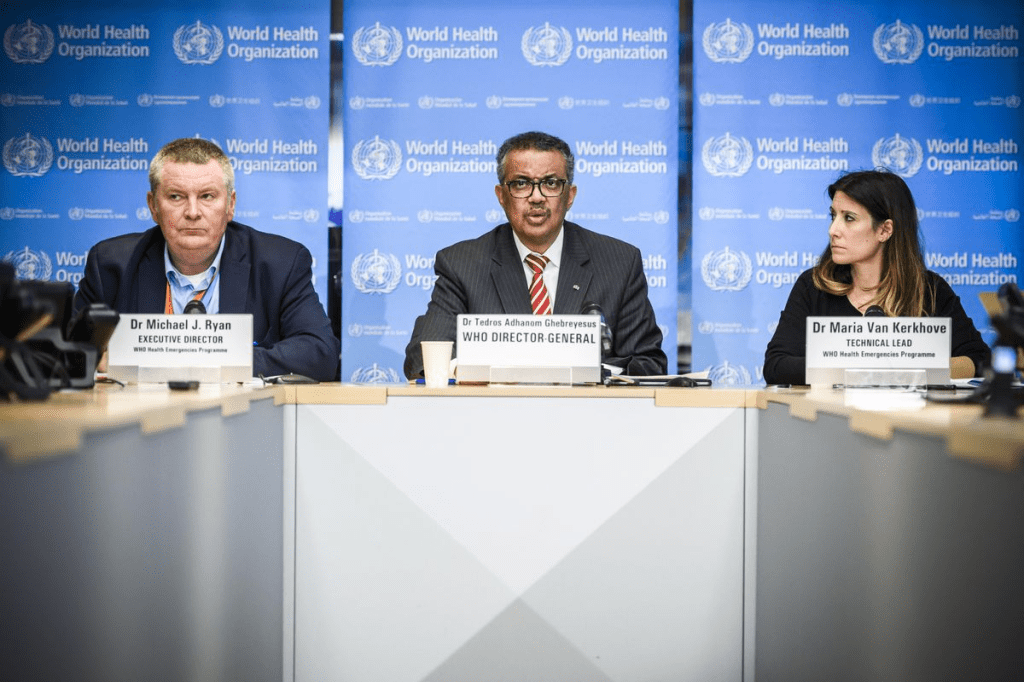
On March 11, 2020, the World Health Organization (WHO) first characterized the coronavirus outbreak as a pandemic.

As the curious person I am, I wanted to chart that territory. I wanted to immerse myself in the idea of being alone so that I could better understand myself and those around me. Sure, loneliness sounds a little scary, but they say explorers are never lost, right? So I dove in.

I first had to understand where I was and how I was feeling. Then, I asked myself if that was where I wanted to be: the obvious answer was no, “Liz, you’d much rather be at a frat party with your roommates than stuck in this existentialist rut.” So, I had to bridge the gap between where I was and where I wanted to be. Not surprisingly at all, I found that this desire to bridge the gap was a common one; this experience was a tale as old as time, as Celine Dion would say.

A man born 125 years before coronavirus came about said that happiness is derivative. This man was named Jiddu Krishnamurti, and he argued that happiness is always a by-product of something else. You think you’ll be happy when you get that promotion. You get promoted, but you’re still not fully satisfied. Now, you think you’ll be happy when you get the girl. You’re in a relationship now, and guess what… you’re still not fully satisfied. There is a search for something permanent, within the self and things beyond the self; but happiness is never permanent.

Krishnamurti offered that instead of happiness, we should begin searching for something else: self-knowledge. There is an idea that you must first recognize what is; “you cannot imagine or have belief in something which you are not.” On top of that, you have to be real with yourself about your circumstances. To understand what is, there must be freedom from the fear of what is. This was really, really hard to put into practice considering, you know, everything going on in the world. It seemed hard, but not impossible.

My thought process went something like, “okay, I get the vibe that he’s saying happiness is tricky to pursue, but if I can understand myself, I think there’s some merit and pleasure in that.” So that’s what I tried to do (and I’m still trying). A global pandemic and all its associated isolation is, admittedly, a really convenient time to, if you’re able, parse through your own self-knowledge.

That isn’t to say a global pandemic isn’t tough; we all dearly miss the way things used to be. But those things aren’t reality anymore. Taking a look around my childhood bedroom, I reminded myself to stay grounded in the present because, as cliché as it sounds, the past and the future were either gone or uncertain. I was alone, and that was a fact; I was alone, and that fact didn’t have to be unfortunate. That is where self-knowledge comes in.

Understanding yourself is a lifelong task, the terms of which, I imagine, are always changing as you grow and evolve. But it doesn’t matter what the circumstances are, the following is true: everyone’s potential for self-knowledge exists within them. It cannot be explained by some self-help book or school newspaper article, but it is there. And it is worth exploring.

mclaughline7@lasalle.edu