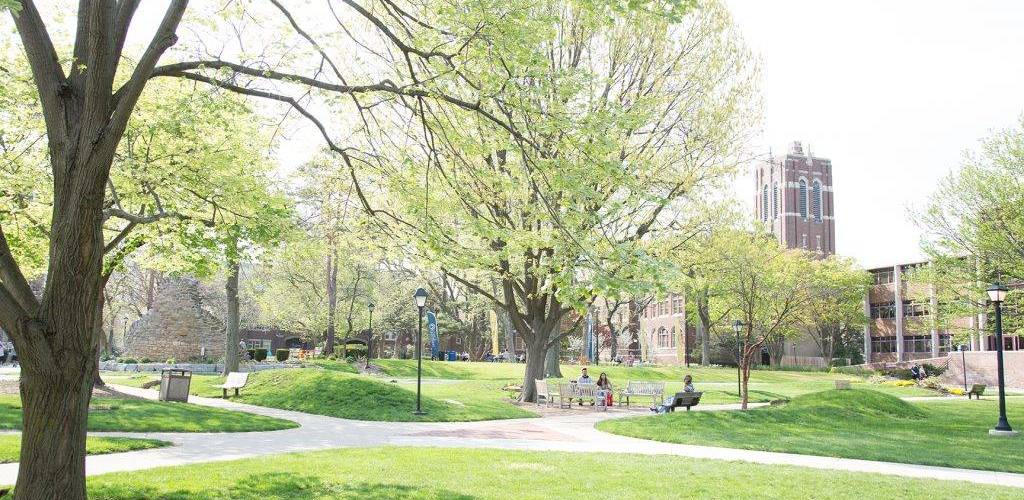
Searching for meaning after a year away from La Salle

Commentary

Alina Snopkowski, Editor

Header Image: lasalle.edu

My friends and I had a conversation the other day lamenting what we missed and what we missed out on over this past year since none of us were on campus. We talked about dinners at B&G, the recycling situation at the townhouses and the Late Night La Salle events we used to attend. Every week on Wednesdays, I remember the long nights (trapped) in the basement of the Union, editing the Collegian with a buffalo chicken Subway sub beside me while Bianca cloncked around the room in her high heeled boots throwing around ideas for the editorial. Every so often, a professor or student in one of my classes will begin a sentence with “Well, back when we were on campus,” or “So, if we were still on campus, we could” and I remember the “good old days” back when we could talk face-to-face and chat in the hallways before classes and office hours were “just show up” and not “wait for me to email you a Zoom link.”

And then I get all sad about it. I think it’s pretty easy to get into that sort of mindset. I think it’s pretty justified. I can’t lie and say there haven’t been times where I think about everything I did freshman year or the beginning of sophomore year and I’m hit with “wait a second, did I just lose an entire year of college?”

Did I? Did we?

I think the answer is no. But I also think I understand why I (and a whole lot of other people) think that’s not the case.

I don’t need to go on and on about how these aren’t ideal circumstances for anyone, how this has been hard on all of us, how this has certainly affected some people and some situations more than others. We all know it and have heard it before. This article isn’t supposed to be a rehashed sob story or some cheesy “It’s all alright!”

I guess I’ve just been feeling dejected. I think the end of the semester will do that to you in general, but I suppose I should’ve expected it more now, when we can’t pull all-nighters in the Connelly Library or beg the printers in Wister Hall to work because please, please, it’s 8:27 a.m. and my philosophy class is on the third floor and I still have five pages that haven’t made it off of the computer yet.

And so I’m looking for something. I’m not sure what, exactly. Probably a sign, like I usually am, because I’m big on signs. Some sign that this past year and change wasn’t a total wash (I know it wasn’t, somewhere in my real brain — I still learned and experienced a lot of things, both academically and not — but my emotional brain is still wishing I was playing bingo in the Union Ballroom or eating chicken nuggets with my roommates at Treetops or just existing around a community of other people who aren’t my family or my coworkers).

So here are my end of the semester thoughts: I’m searching for something. Maybe it’s guidance, maybe it’s a more specific sense of purpose, maybe it’s some sort of direction or explanation. I’m not sure what it is, exactly; I just know I’m seeking something that I feel like I’m missing.

And in a religion class last night, where the topic was spirituality, religion and those who drift away (and sometimes come back) to organized faiths, Brother Mike posed a question about the intrinsic value of that looking for something, both within and outside of organized religious traditions.

And he said something that I think applies not only to religious searching but to searching for meaning, anywhere and everywhere and especially now:

“The search is part of the experience.”

Save La Salle Baseball

Commentary

Commentary Staff

Header image: goexplorers.com

It was one of those “where were you?” moments.

I was in my living room, checking my email, when that message from President Colleen Hanycz popped up into the top of my inbox. It was paragraph upon paragraph of fluff, with the University doing their best to soften the blow that was buried further along in the email. But can you really sugarcoat announcing that seven of the university’s athletics programs would be terminated after this school year?

The most shocking program on that list, at least for myself, was baseball. To my knowledge, as someone who knows quite a bit about La Salle sports, baseball had always done fairly well. They seemed like one of the most popular sports at the University, their athletes some of the most well-known around campus. There were some sports on the list that were understandable…but baseball? Really?

None of the teams were given a chance to fundraise for themselves before the announcement came out, which is an issue in and of itself. This piece is not trying to suggest that baseball is somehow more deserving of being saved than any of the other sports that are being cut, but their performance this season is really leaving La Salle with egg on its face.

Let’s start with their record: 20-11 overall, 6-2 in the A10. It’s close to being the best record at this point in the season, and has included some truly spectacular games, comebacks that left fans on the edges of their seats, absolute dominance over opponents (e.g. the 22-2 victory over Penn earlier this month) and players wearing their hearts on their sleeves. They’ve been vocal about how hard they’re willing to fight to keep their program alive, but it’s not stated more loudly than in how they play.

Freshman pitcher Frank Elissalt could easily throw in the towel and not care about how he pitches. What’s the point, right? But he does the exact opposite. He’s now earned Atlantic 10 Rookie of the Week four times, along with earning Pitcher of the Week twice.

Junior catcher Tatem Levins has options outside of La Salle. He doesn’t need to show up in the batter’s box and behind the plate the way that he does, but he has not let up in his incredible and consistent performances.

There are plenty more individuals that could be named here (Elijah Dickerson, Ryan Guckin, Nick Di Vietro, Connor Coolahan, etc.) and that should tell you something. These players don’t have a certain future at La Salle. They chose to come here to play the sport they love and represent the University with everything they’ve got, only to be blindsided by a program slashing that was purely driven by financial interest with little to no regard for the welfare of the student-athletes it would be affecting. Shouldn’t it tell you something, President Hanycz, that even though you and the University turned your back on these players, they’ve still fought tooth and nail and put their blood, sweat and tears into ensuring that La Salle is currently sitting at the top of the A10?

Legendary soccer defender Tony Adams once said, “Play for the name on the front of the shirt and they’ll remember the name on the back.” That’s what this current La Salle baseball team is doing. The University’s name will be attached to whatever accolades they collect this season, but as a community, we’ll remember the individual players that didn’t let their team be taken away from them without an admirable fight. Whether or not the team is able to be saved, this particular team won’t be lost in the shuffle of decades of iconic baseball squads.

Forget Hank DeVincent. No matter what, the names of these current players will be the ones permanently etched in the earth between McCarthy Stadium and St. Basil’s.

The iPad is harming our kids and they have no idea

Commentary

Elizabeth McLaughlin, Staff

I am twenty years old and still learning how to use technology. Sure, I’m pretty adept at all the basics: Microsoft Office, Adobe Creative Cloud, etc. I can even create (mediocre) animations on digital art software like Procreate. But I’m still — and likely always will be — learning how technology fits into my everyday life. I’m learning how to have a relationship with technology. I’m old enough to remember a time when social media didn’t exist. But I’m also not old enough to recall the days when computers weren’t woven into the very fabric of our daily lives. I’m positioned to have a relationship with technology that demands almost complete reliance, but not utter and perpetual immersion.

But the generations below me and my peers have been living in the heyday of social media since birth. My mom is a nanny and she has been with the same child for his entire life — seven years. I’ve gotten to see firsthand his introduction (at a very young age) to the iPad — and all the problems that ensued. I’ll preface this article by saying that I recognize the importance of and need for technology in our daily lives; I’m not longing for some pre-digital return to nature because I know it’s not possible. I’m simply noticing and reporting the detriments of constant exposure to technology.

The issues with childhood engagement with technology can be viewed from multiple angles. For one, it can interfere with their basic human functions, such as sleep. “Electronic stimulation has been shown to interfere with both falling and staying asleep,” according to Northwestern University’s parenting expert Katherine Lee. In fact, a study published by Pediatrics “found that children who sleep near a smartphone or another small-screen device get less sleep than kids who are not allowed to have these types of devices in their bedrooms.” If you’ve ever babysat a child, you know how hard it can be to get them to turn off the iPad. And if you’re trying to get them to turn it off because it’s bedtime? Good luck.

Jamie Grill/Getty Images

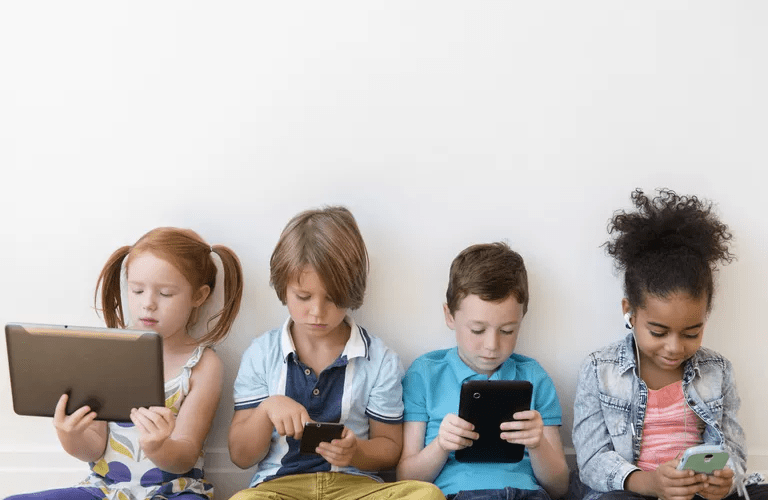
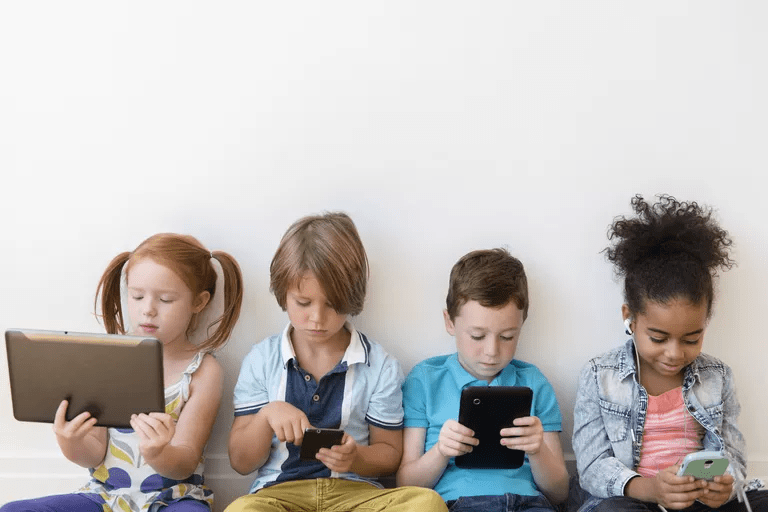
The average child is saturated with screen time every single day; their reliance on these devices has detrimental effects.

So it’s clear that the simple act of sitting in front of a screen can cause issues. But what about what’s on the screen? Any time anyone engages with technology, there are two parties involved: on one side of the screen, there’s a supercomputer pointed at your brain, trying to figure out the perfect next thing to show you. On the other side of the screen is our prefrontal cortex, which evolved millions of years ago to do its best job at goal articulation, goal retention, staying on task and self-discipline. This is true for all of us who have brains. But imagine it’s not you, it’s a seven-year-old, or a five-year-old, or even a two-year-old. At that age, I was playing with Lincoln Logs and American Girl Dolls — neither of which had supercomputer powers.

As a twenty-year-old, I’ve had time to learn how to differentiate information that benefits me from information that harms me. But kids haven’t had that time yet. In 2015, Aaron Mackey was a graduate fellow at Georgetown University Law Center’s Institute for Public Representation. He was part of a coalition that included the Campaign for a Commercial-Free Childhood and the Center for Digital Democracy. The coalition alleged that “it’s deceptive to tell kids that this [YouTube] is a safe product… Anyone, with just a little bit of searching, can find a lot of inappropriate content.”

Moreover, the infinite possibilities offered by YouTube can cause addiction. According to the American Addiction Center, those with higher addiction risk are unable to self-regulate, impulsive and lack a strong sense of moderation. YouTube’s recommendation algorithm doesn’t want you to self-regulate; it wants to regulate for you. Its algorithm wants you to impulsively click on whatever catches your eye because that’s how it builds a profile on you. Its algorithm rejects moderation in favor of saturation. And yet, we’re placing it in the tiny hands of our precious kids. Sleep issues, inappropriate content and addiction — the gamut doesn’t stop there; these are just three angles from which one can view the greater problem of technological saturation. Kids aren’t the only victims; everyone who engages with technology is susceptible to these ailments. But kids are the most unaware. They have no idea what any of the iPad implications are, but they are sincerely affected by them. They’re just kids and it’s our job to care for them. After having only scratched the surface on this topic, I’m questioning whether giving our kids iPads is a good idea. In fact, I know it’s a terrible idea — but we’re going to keep doing it. So how can we ensure that our kids don’t ruin their sleep schedule and develop an addictive personality while viewing inappropriate content online? I’m only twenty years old and I don’t plan on having kids for a while, but I sincerely hope I’m able to answer that question by then.

A year in retail

Commentary

James LeVan, Staff

Five years ago, a week before “Star Wars: The Force Awakens” arrived in theaters, I had taken a job in a local grocery store pushing carts in the evening. It was during the holiday season, a time when grocery stores and other retail businesses hired anyone with a pulse. Pushing carts wasn’t a bad gig overall. When the weather was warm and they were constructing the overpass near my work, I loved watching the sunset in the parking lot and listening to the banging of metal in the night air. The work was simple and pleasant. Since then, I have been a cashier, janitor, seafood rep (that lasted a week) and now a floater (a fancier term for stock boy). Being a floater has never been an easy job. It is not just stocking cans of corn on the shelf with a bunch of teenagers and college students. Retirees, teenagers, other college students, people looking for a second chance, parents even college graduates (a coworker who worked overnight stocking shelves had a degree in Business from Temple) work in retail. It has become a major source of employment for the educated and the uneducated, the skilled and the unskilled alike. Regardless of race or creed, what unites us is our frustration for our work and since the pandemic that frustration has only exasperated.

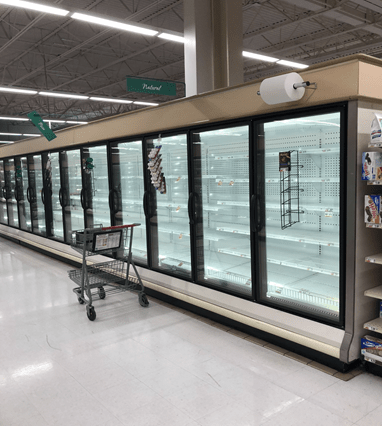
When the pandemic first hit a year ago, our shelves were quickly depleted the weekend Pennsylvania began to shut down. Our freezers became barren, most if not all of our meats were sold, and, of course, we ran out of toilet paper. By the end of the day Saturday of the first weekend of the pandemic, all we really had were Little Debbie products and some sparkling cider left over from Christmas 2019 (that stuff sells poorly, even in the middle of a pandemic). It is hard to believe it has been a year since COVID-19 first hit — those months of March to maybe June of 2020 feel both distant and recent to me. I tried keeping a log back in April, but many of my notes were mundane. I did not record all that happened at work and when I was not working, I was at home puttering around my house. The supply chain did not collapse, but it was under pressure that had not been seen before in the recent history of the United States. 

Courtesy of James LeVan

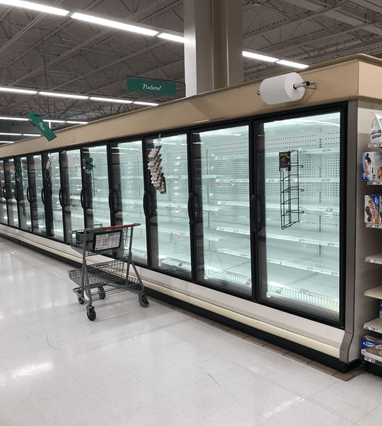
Pictured above is a frozen food aisle in early April 2020.

It was hard telling people who were desperate for toilet paper that we did not have any. I tried directing them to the nearest small corner store or family-owned chain (in the beginning they maintained a better supply than we did). When people would ask me when we would get more stuff in, I would shrug my shoulders and tell them I did not want to lie to them. Some people would accuse us of hoarding supplies and truth be told, we were not. Some coworkers bought a pack of toilet paper together and divided the rolls amongst themselves. For me, my parents had to drive out to the rural parts of PA to find ground beef and toilet paper. We had plenty of Lysol spray and wipes left over from when I had the flu a month earlier (an odd stroke of luck when I think about it). At the beginning of the pandemic, a coworker gave me a can of Lysol and I felt bad taking it, so I took it back to the shelf and explained that we had plenty of it at home, and it felt like I was hoarding. A woman quickly came and picked it up from me and said thank you.

In normal times, delivery trucks come in the early evening, and the overnight crew comes in around 8 p.m. to break it down. However, during the summer, trucks became infrequent. I remember one time I had to come in early (5 a.m.) to help overnight unload a truck that had gotten there an hour earlier. Sometimes we would not get a truck for a day or so and then multiple loads in one day. It really depended on the luck of the draw that day. One surprising phenomenon was that at one point, just so we had stuff, we got stacks of toilet paper and flour that were originally meant for hotels. But since no one was travelling, it made more sense for us to stock shelves with it. Things are semi-stable now, though we still end up running short on supplies depending on what they are.

On social media and television, we were praised for continuing to come into work. That we were in a way heroes for making sure communities had food and supplies. The media certainly thought we were awesome, and we had some customers thank us for what we were doing. However, I do not think people realize just how bad it got on some days. The fear that your coworker sitting across from you had COVID in the breakroom, to customers who would lose control and act like a child having a tantrum in a toy store. One moment that stands out in my mind was the time me and my manager had to go over to our beer garden because an older white man was screaming at a co-worker and an African American customer. When we asked what was wrong, the old man started screaming at our manager claiming that a Black man was following him around the store (he was not, we checked the cameras). He spent 20 minutes screaming at us, telling us about how his wife left him in the store alone, that he thought we were discriminating against him because he was white and not questioning the Black man, he was accusing of following him, that he had PTSD and that if he did not yell, he would get violent. I honestly thought I was going to have to fight this guy who was twice my size at that moment and that I was going to end up on the news. The guy tired himself out and then proceeded to leave and went about our business.

We who work at stores like Acme, Giant, Walmart and Target have been through Hell this last year. We have gone home crying, scared and exhausted. I have broken down in tears personally three times this past year. Many of us did not choose to continue working during this pandemic because we were brave or had a sense of duty. We did it because we had bills to pay and mouths to feed. Our work was not a breeze to begin with and the pandemic only exacerbated our problems. Grocery stores face issues of sexual harassment, disrespect and abuse from the communities we feed. The latter is still being felt now as we struggle to get vaccines and the latest attempt for a minimum wage increase died with Senator Sinema’s obnoxious thumbs down. It is important to remember that behind that mask, the cashier that sounds like a robot reciting the “thank you for shopping with us,” the women in health and beauty care and the guys stocking the shelves are all human and we are so tired.

Andrew Cuomo is rightfully in hot water, for all the wrong reasons

Commentary

Cianan Meagher, Staff

Header Image: MarketWatch

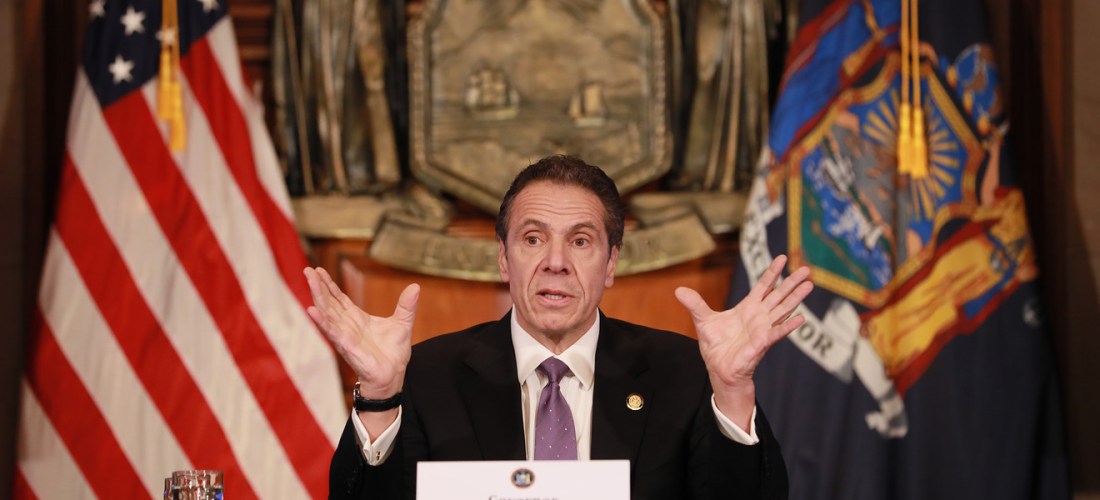
Over the past two weeks, a slew of sexual misconduct allegations against New York Governor Andrew Cuomo have come out. The allegations have ranged from inappropriate comments that contributed to an uncomfortable work environment to violations of personal boundaries and inappropriate touching. It should go without saying that these allegations, if found to be true, are contemptible. I have to admit that it is somewhat gratifying to see such a media firestorm around a figure so deserving of one, especially after being so shamelessly fawned over by the press just a year prior. However, I am somewhat dissatisfied that Governor Cuomo seems to be getting off relatively lightly, all things considered. While these allegations of sexual harassment in the workplace are explosive for the Democrat, it seems as if this story has completely overshadowed the much more scandalous story concerning the Governor’s office: New York’s mismanagement of nursing homes during the pandemic and subsequent attempts to cover up the true number of deaths reported from them.

Darren McGee – Office of Governor Andrew Cuomo

Cuomo’s direction of New York’s response to the coronavirus made the governor very popular with the media last year.

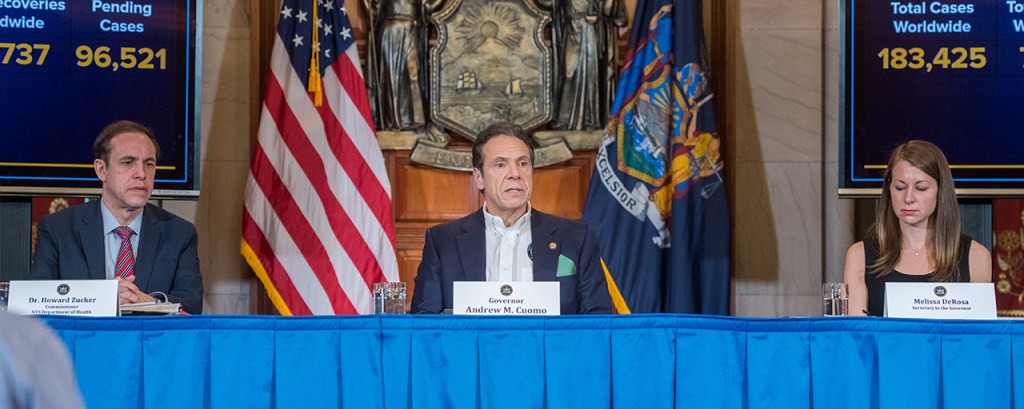
A report released by The New York State Attorney General’s office revealed that the number of COVID-19 deaths in nursing homes had been massively underreported by officials in Cuomo’s office. The report states that as much as 50 percent of COVID-related nursing home deaths were omitted from official tallies of nursing home related deaths released by New York State. Following the release of the report, Cuomo’s aide, Melissa DeLaroma, had reportedly met on a private video conference call with Democrat lawmakers to apologize for the suppression of numbers, citing fears by the Governor’s Office that the enormous amount of deaths would be used against them by then-President Trump to justify an investigation by the Justice Department. These developments are leaving questions about the Governor’s controversial March 25, 2020 New York State Department of Health directive to admit COVID-positive patients into nursing homes, using them as overflow testing and treatment centers. This stunning political cover-up is not only a flagrant abuse of power, but it could also have a serious impact on medical statistics that are crucial for those researching the virus and qualitative analyses of the pandemic. Such a statistical aberration has potential reverberations that travel much further than New York State lines, as this data is used by experts across the country and around the world in the fight against the novel disease.

To be clear, the allegations of workplace impropriety should be taken seriously and, with the sheer volume of alleged victims coming forward in the past month alone (7 at the time of writing), it is definitely a matter that deserves an investigation and the public scorn it has earned Governor Cuomo. However, the media frenzy that has surrounded this story has eclipsed a much larger offense. With all due respect and sympathy to Cuomo’s alleged victims, I think the thousands of lives he has directly or indirectly affected, or maybe even ended, with his handling of nursing homes and the flagrant abuse of power in trying to cover up his administration’s missteps, is a scandal of a much higher magnitude. Yet, it seems as if the Governor and the press would both prefer to address these more salacious accusations of sexual harassment, with Cuomo last addressing criticism of the nursing home scandal almost over a month ago. Cuomo has also been quick to deny the multitude of the allegations of sexual harassment against him; and yet, media coverage surrounding the former seems to have been completely supplanted by the comparatively less severe implications of the latter.

Bearing witness to it all, I have been disgusted by the partisan pandering by the media that has been at play throughout this pandemic. I was incensed, in particular, by the relatively lax scrutiny Governor Cuomo received compared to former President Trump during the throes of lockdown when, in my opinion, both seemed to be equally, if not divergently, incompotent in their responses to the crisis and equally caustic and dismissive to their critics along the way. Over the past year, Republican governors, such as Ron DeSantis of Florida and Greg Abbott of Texas, received heaps of criticism over their handling of the pandemic, some of which was completely justified, some overly-critical, in my opinion. Conversely, if you flipped on the news less than a year ago it would have seemed as if Cuomo, the media darling and “America’s Governor,” was beyond reproach. In reality, he was just as, if not more guilty of, mismanagement of this crisis than others. It is unlikely Cuomo will be winning over progressives anytime soon considering the circumstances of his current controversy, and his puzzling statement during a recent press conference that he was not “elected by the politicians, [but] by the people” in a response to a question about the multiple Democratic legislators calling for his resignation reads to me as a pivot towards more populist, Trumpian politics. It remains to be seen what kind of future, if any, lies ahead for Governor Cuomo.

The takeaway of this whole situation should be that we cannot let party lines and partisan rhetoric distract us from abuse of power by officials we politically align ourselves with. I pray that the independent investigation into allegations of sexual misconduct by the Governor can proceed unimpeded, and that he will resign if these allegations are found to be true, but I also hope that he is forced to answer for his administration’s missteps at the onset of the pandemic and their reckless dereliction of duty in the tabulation of COVID-related nursing home deaths.

meagherc1@lasalle.edu

Do you smoke in grocery stores?

Commentary

Alina Snopkowski, Editor

Fair warning: this article isn’t about smoking or grocery stores, at least not really. It’s about the rules and requirements that businesses have in place, and why being asked to wear a mask in certain places shouldn’t be a big issue.

For those of you who like charts and statistics, this site tracks, among other things, what percentage of the country’s population says they always wear a mask in public; here is the specific page for the state of Pennsylvania. In Delaware, where I am currently living and working, the last updated numbers show that a little over 80% of the people in the state say they always wear a mask in public. In the restaurant where I work, the vast majority of customers come in with their masks on or, if they forget, a simple “do you have a mask you can wear while you’re inside?” has them immediately scrambling in their pockets or purses to find their masks and put them on. When I’m working at the register up front, it’s my responsibility to make sure people are following the rules when they come in, and most customers are totally fine with it. A few months ago a man grumbled “are you serious? This is America” before reluctantly putting his mask on after I reminded him, but, for the most part, people are completely on top of the requirements.

And then here comes Paula (not her real name, of course, although I doubt anyone would be able to find her anyway). Paula calls and orders some food for takeout and I tell her it’ll be ready in about ten minutes. When she arrives, she’s not wearing her mask. We have signs on the windows but people forget. “Good morning,” I say, “do you have a mask you can wear while you’re in here?”

Paula flatly says “no.” Before I can say anything else, she launches into “it’s against the Constitution, so I’m not going to wear one. I don’t want to live in a communist country.”

I’ll be on record here and now saying I don’t particularly want to live in a communist country, either. But I don’t think asking someone to wear a mask while within a business that requires it is communism. The restaurant I work at didn’t invent these rules, but we have to follow them if we want to stay open. 99 percent of people understand this.

Back to Paula. She’s shoving her money at me and grabbing the plastic bag of her food off the front desk. “We appreciate you coming in but you have to wear a mask,” I say, probably a little meekly, because I was kind of rattled at the communism comment, “we have to follow these rules or we could get in trouble.”

“It’s not real, sweetheart,” she says, in the kind of tone that one might use to correct someone who said the moon is made of cheese, “wake up.”

And then she’s gone.

The whole interaction lasted barely a minute and the front desk is far over six feet away from any of the tables, so I doubt any customers even heard the conversation. But for the rest of the morning I was thinking about what else I should have said:

Do you smoke in grocery stores?

If there’s a sign on a store that says “no shoes, no shirt, no service,” do you walk in anyway in your bare feet and then get angry when they tell you to put some shoes on or leave? Or, more likely, do you not even bat an eye, because businesses having some level of requirements on what’s allowed (and not allowed) in their buildings is completely reasonable?

I don’t need to say that small businesses are struggling in this pandemic. We all know it. I also don’t need to say that these rules don’t necessarily come from us — usually a governor tells us what we have to do — but we’re required to follow them and enforce them in order to stay open. By patronizing a particular business, you pretty much agree to follow the rules while you’re on their premises. I don’t want to tell Paula not to come back, but the fact is she’s not allowed in if she refuses to wear her mask. I suppose it’s her right not to wear one, but it’s our responsibility not to let her in if she doesn’t. I, like most people, am looking forward to the day where we don’t have to wear masks anymore. But for the time being, this is the situation we have to deal with.

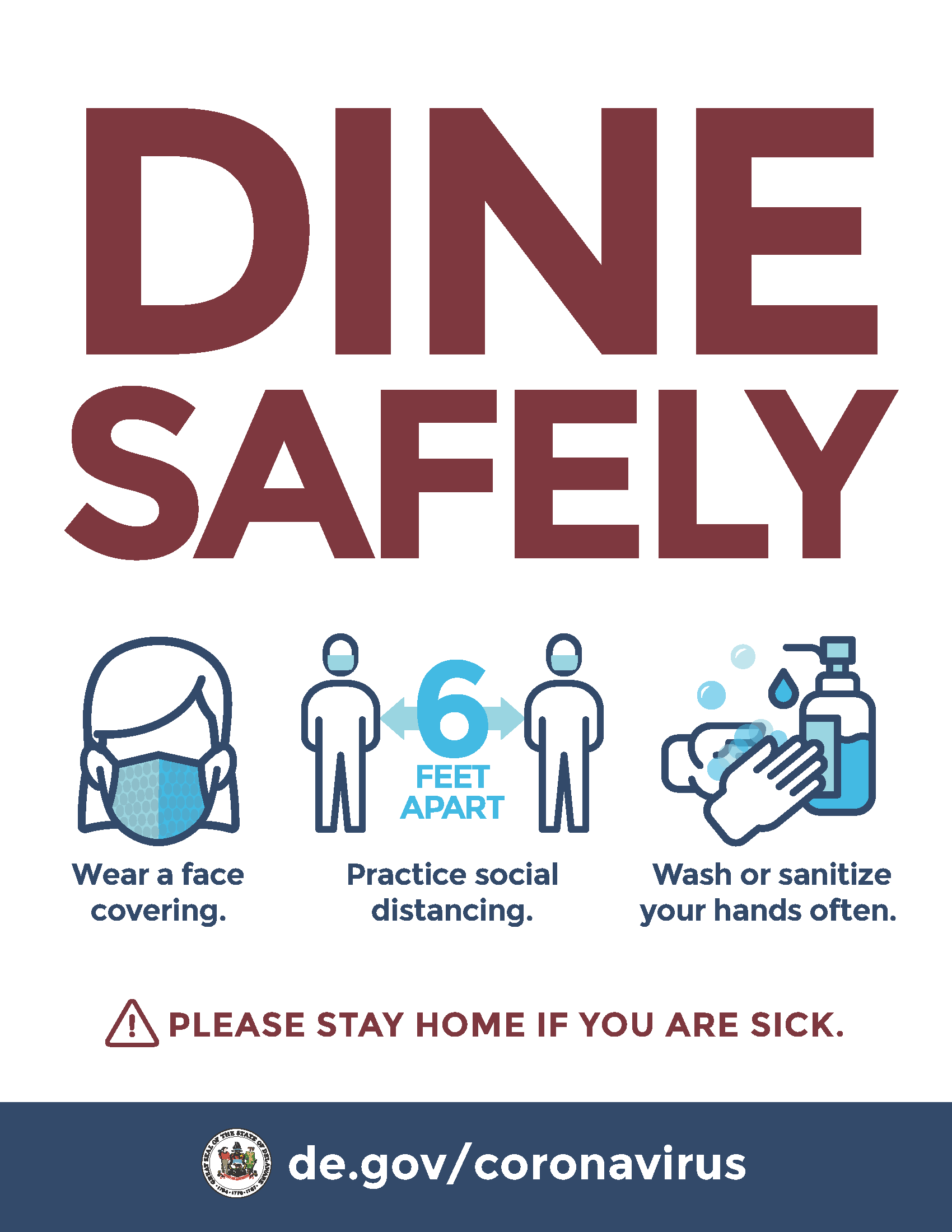
Delaware.gov

Signs like this one are on display in many restaurants in Delaware.

So, forgive me for the clickbait title for this article, but I want you to think about this mask situation not as ‘communism’ or some sort of infringement on personal freedoms but in this way — how different is it, really, from being told you must wear shoes in a particular store or that you can’t smoke in certain places? For the time being, “no mask, no service” has been added to these commonplace requirements. You’re allowed to spend your money and your time wherever you see fit, but if there’s a rule at a place you want to go to, you have to follow it. If you don’t want to, you can choose to go somewhere else. Small businesses are hurting enough — please don’t make it any more difficult by refusing to follow simple, clearly posted requirements.

And, believe it or not, Paula came back about a week later. She called again one morning, I recognized her name on the caller ID on the phone, and her order was identical to last time’s. I tell her ten minutes, give or take, and I wait at the front desk watching the parking lot for her car.

She pulls up and parks, then sits in her car for what seems like ten more minutes checking something on her phone. She isn’t wearing a mask yet. Okay, fine, she’s still in her car. She opens her door. Still no mask. Crosses the parking lot. Still no mask. I’m ready now — I’m prepared to tell her to go back outside, that she can give me her money out on the sidewalk and I’ll bring her food out to her there, but I can’t let her into the building.

And then, at the very last second, she pulls a mask up from around her neck. She gives me her money and takes her food and that’s that.

I don’t know why she changed her behavior, but I’m glad she did.

We won’t have to wear masks forever. One of my favorite websites at the moment is this one by Bloomberg, which estimates how long it’ll take to vaccinate 75 percent of the country’s population based on the current speed of vaccinations. Last I checked, they’re clocking it at about six months. That’s a while, but it’s certainly not forever.

Someday this will all be over, but until then, I ask you to please support your local small businesses in any way you can — and that includes wearing a mask.

snopkowskia1@lasalle.edu

Catharsis: America needs a reformation

Commentary

James LeVan, Staff

Today, Wednesday, March 10, is my birthday. I have no plans, no desires and, to be honest, there is a part of me that really does not want to celebrate this year at all. After all, this week also marks the one-year anniversary of when the pandemic hit Pennsylvania and the country began to shut down. 

This week has made me feel reflective about both my life this past year and the country as a whole and, well, we need change in this country desperately. I am not just talking about making the country pandemic-proof, but about the clashes between protestors and police over the summer as a result of the brutal murders of numerous African American men and women, the economic collapse, the election and then all of it reaching a crescendo with the terrorist attack on the Capitol. 2020 can best be described as a large mirror held up to the American soul and we can no longer deny the existence of its internal demons.

There is a myth that permeates through American society called “American Exceptionalism.” It is the belief that the United States is unique and superior to other nations. Well, as we have seen this past year, this is simply not true. We are not exceptional and are just as likely to collapse as the Romans, the Soviets or any of the numerous Chinese dynasties that lost the Mandate of Heaven. If nothing else, this year has shown us that we are not prepared for the problems of the 21st century and that we run the risk of falling by the wayside. If we do not make changes, then our experiment in the republican government— the first liberal democracy — will perish. 

In short, we need a reformation. What do I mean by a reformation? I mean that we need to start preparing our citizenry, institutions and infrastructure for the potential crises of the 21st century and beyond. We cannot just have a memory hole of this past year and all the crap we endured; we need to look at it and remember it. We need to study 2020 and all that led up to it. We also need to reconcile our history of racism and oppression and begin to bridge the gap between our ideals of equality under the law and opportunity and the reality that we do not live in a meritocracy. All this of course would take a long time to implement and will span three or four presidential terms but this work must be done. What sectors of our society do I believe need reform? Well, there are three in particular: democracy, labor and education.

We are holding onto old institutions and policies that prevent low-income and people of color from voting or being fully engaged in the democratic process. We also have a two-party system that elects leaders who seem more focused on winning reelection or auditioning for their next gig once they leave office than they are at governing or legislating. Ideas such as abolishing the electoral college, rank choice voting and laws to prevent gerrymandering are some of the lofty ideas floating around that will help improve the health of our republican government. These changes will require a lot of grassroots movement and activism from the ground up before they can be implemented. If achieved, however, we will see more pragmatic candidates emerge, more participation and more competitive districts.

Regarding labor, as an essential worker in a grocery store this past year, I have seen firsthand what the workers who have kept the supply chain stable have to go through and the horrors of corporate culture that is incredibly hierarchical and does not allow for a true voice to the people who kept this country afloat. Likewise, we are facing a huge labor shortage in trade skills across the country that if not corrected soon will spell disaster to our country’s infrastructure and economy. Therefore, we need to raise the federal minimum wage and implement a Universal Basic Income while also promoting unions and workplace democracy (allowing employees to have a say in the decision-making process of their work). This will give workers the ability to leave a company if they feel the workplace conditions are too toxic to continue.

Regarding education, universities are facing huge budget crunches resulting in part due to lack of funding from state legislatures and now lack of enrollment, as potential students are choosing to hold off on going to college because of the pandemic. Since universities are one of the United States’ more important sectors, the idea of universities closing or shrinking to where they only offer a small number of programs is incredibly problematic because it would mean the destruction of one of the few sectors of American society that is appealing to the outside world. It will also cause our workforce to become undereducated and therefore leave the United States at a competitive disadvantage to other nations. Encouraging education and making it more affordable to go to school and study while also properly investing in our universities will go hand-in-hand with preparing our workforce for the battles of the 21st century. A well-educated society is a productive and functional society.

During the pandemic, I have had the honor of learning history from one of the best scholars in the United States, Dr. Carly Goodman. In her classes, Dr. Goodman would often explain to us that one reason to study history was to inspire us to imagine a better world than the one we have now, that society is not a static force incapable of change, but a malleable thing that can be altered because we will it to. This idea is, in fact, my reason for studying history. I have always been fascinated with reformers and those who looked at their times and thought about possible solutions. I do not know about the rest of you, but I personally do not want to live through another year like 2020. I have an idea on what the world could look like post-pandemic, and if I had to take a guess, you do too. So, feel free to send your ideas to the Collegian. Maybe we can build a better America, and world, together.

levanj1@lasalle.edu

American soccer culture needs to exist beyond a World Cup cycle

Commentary

Siobhan Nolan, Staff

I don’t know about you, but I’ve been counting the days until September. After what happened in 2017, this redemption arc is a long time coming. Such a plethora of young talent will surely propel us further in this competition than we’ve gone in recent memory.

I’m, of course, talking about the upcoming qualifiers for the 2022 World Cup. The United States men’s national team didn’t qualify for the 2018 World Cup after a disastrous and heartbreaking loss to Trinidad & Tobago in 2017. At least, it was heartbreaking for American soccer fans — of which there are not as many as there should be.

When I say American soccer fans, I don’t mean people that are aware that the United States has a national team, could name a couple of players (bonus points if they can name players other than Landon Donovan or Clint Dempsey!), and will don something red, white and blue when the U.S. does appear in a World Cup. I mean genuine fans that follow the national team year-round, keep up with the American youngsters currently dominating Europe and are desperately trying to turn the United States into a legitimate soccer nation.

Soccer is the world’s sport. In many countries, it’s essentially the national religion. You have your club team and your national team, and those are the teams that you would die for. In a large majority of the world, the population eats, sleeps and breathes soccer.

So why is such an influential country like the United States so different?

It’s a strange situation. About 3 million American kids play soccer — which is the most of any country in the entire world. The United States (specifically MLS youth programs) is producing some of the most promising young talent in soccer right now — Christian Pulisic, Weston McKennie, Gio Reyna, Tyler Adams, Brenden Aaronson, etc. etc. The United States women’s national team is the best women’s soccer team in the world. Yet, Americans are more interested in watching football, basketball, baseball and hockey. If you’re even aware that your city has an MLS team (go Union!), you probably don’t follow them closely. The USMNT becomes a source of national pride every four years. It’s inconsistent, frustrating and frankly quite confusing.

Francisco Seco/Associated Press

The U.S. women’s soccer team won the 2019 FIFA Women’s World Cup.

Kids in Europe and South America are kicking soccer balls the minute they can walk. They take training seriously, and will willingly move away from their home countries at as young as 14 years old in order to pursue a prosperous career in the sport. Their countries take immense pride in their national teams, and the unity that comes from a winning team is unmatched. Soccer is a sport that truly brings all kinds of people together, and is a true joy to watch. The creativity, the passion, the devotion that exists in soccer is life-changing. It’s something immeasurably beautiful that everyone should experience at some point in their lives. It’s not something I can fully and accurately articulate, but once you feel it, you want everyone else to experience it too. It really is that amazing.

So I challenge you, in preparation for the 2022 World Cup, learn more about your national team. Learn their names, their strengths, their weaknesses, their backstories. Watch the World Cup qualifiers, let yourself get sucked into the heat of the game and relish in the thrill of having your team qualify for the most coveted trophy in the game. Root for them when 2022 rolls around, and let yourself be devastated if they lose or overcome with joy if they win the whole thing. Allow yourself to fall totally and completely into the beautiful game.

It’s a lot more exhilarating than the Super Bowl, I promise.

nolans5@lasalle.edu