Warren and Charlie meet in sunny California

Business

Michael D’Angelo, Staff

Vintage Value Investing

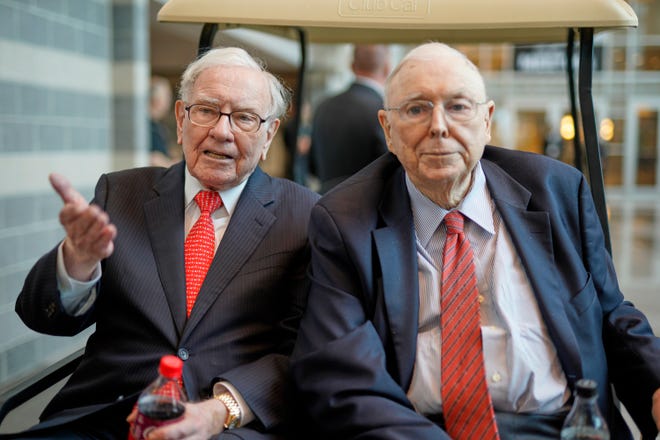
Pictured above is Berkshire Hathaway’s chairman and CEO Warren Buffet and Executive Vice Chairman Charlie Munger. Both men practice a value investing strategy and have created impressive returns for their shareholders.

Over the weekend, Berkshire Hathaway held their annual shareholder meeting in Los Angeles, California. For the first time ever in the company’s long history, they held a shareholder meeting outside of Omaha, Nebraska. The meeting was headed by Berkshire’s executive staff, CEO and Chairman Warren Buffet and Executive Vice Chairman Charlie Munger. 

Both Buffett and Munger are hailed as some of the greatest investors of all time. They believe in a value investing strategy influenced by the principles of Benjamin Graham. Graham is most famous for developing the Margin of Safety principle and for writing the finance classic “The Intelligent Investor.” In addition, they are greatly influenced by the strategies of Phil Fisher, the author of “Common Stocks and Uncommon Profits” who famously believed the best time to sell a stock is never. Buffett and Munger emphasize a long-term investing strategy with an emphasis of finding “cheap” companies that appear to be trading below book value in the market. They own portions of great American corporations like Coca-Cola, Apple, Bank of America, Verizon and American Express.             

At the meeting, Buffett and Munger fielded and answered various questions. With their growing age, they confirmed their eventual successor: Greg Abel, a current Vice Chairman, will take over as CEO and direct operations. Buffet emphasized his belief around stock picking for the average investor. He stated, “I do not think the average person can pick stocks.” His suggestion, instead, was to diversify into American equities and purchase a fund which follows the performance of the S&P 500. Buffet has made this point plenty of times in the past. 

Both Buffett and Munger took jabs at the recent rise in SPACs and believe more people are turning to the market in a gambling-like sense. Buffet even went as far as calling SPACs an “exaggerated form of gambling.” A SPAC is a company that raises money through an initial public offering (IPO) with no commercial operations to acquire another existing company. They grew in popularity in 2020 as both a speculative investment and a way for companies to raise capital. 

To add to the sense of increased gambling in the markets, Buffett and Munger stated their opinions about online trading app Robinhood. They both said the app encourages gambling due to the easy access of speculative call and put options. Munger even called the app shameful. In the past, they criticized Robinhood’s selling of order flow data and commission free trades. An executive from Robinhood responded by saying “the people are tired of the Buffets and Mungers of the world acting like they are the only oracles of investing.” The most controversial statement of the weekend was when Munger took a strong jab at cryptocurrency. He went so far as to say Bitcoin’s success is disgusting and contrary to the interests of civilization. In the past he has called Bitcoin “worthless artificial gold.” 

The meeting concluded and many people took an opportunity to analyze both Buffet and Munger’s statements. Both men have led Berkshire for decades with expectational investment returns and their statements may prove important for investors looking for guidance. 

SPAC markets erase 2021 gains amid possible regulatory headwinds

Business

Bill O’Brien, Editor

“There may be advantages to providing greater clarity on the scope of the safe harbor in the PSLRA (Private Securities Litigation Reform Act). Congress could not have predicted the wave of SPACs in which we find ourselves. It may be time to revisit these issues.” – Jon Coates, Acting Director, Division of Corporation Finance (SEC)

Coindesk

The SEC’s Acting Director of Corporation Finance, Jon Coates, has called on Congress to reign in SPACs and tighten regulatory disclosure requirements on the “blank check” companies.

What used to be a niche investment vehicle that served as an alternative for privately-held companies to enter public markets is now regarded as a market craze, a change that has taken place amid the historic, pandemic-induced 2020 market crash. Companies looking to go public partnered with SPACs to take advantage of markets flush with capital but volatile amid the backdrop of the coronavirus pandemic. Unfortunately though, SPAC moguls, like Bill Ackman, who the Collegian covered in its Feb 10 issue, are learning that, like all good things, the SPAC craze must too come to an end. 

SPAC markets have taken a sharp downturn in recent months, and even more trouble is on the horizon due, in large part, to heightened regulatory scrutiny for the investment vehicle. John Coates, the SEC’s Acting Director, Division of Corporation Finance, released a statement on the Securities and Exchange Commission’s (SEC) website sounding alarms on the SPAC surge. The SEC’s statement, SPACs, IPOs and Liability Risk under the Securities Laws, contained verbiage that has likely contributed to the recent downturn in SPAC markets. The SEC is now eyeing SPACs for the potential they have to mislead investors as they have significantly less disclosure requirements than a traditional IPO would have.

  In the statement, Coates discusses how 25 years ago, the path to public markets for a company was fairly simple and one-tracked and, with the innovations markets have today, there should be regulation to follow along with it. “With all these changes, the appeal of understanding and developing law around economic substance over form may be greater than ever.” Coates talks about how initial public offerings are a “distinct and challenging moment for disclosure” for companies undergoing them for good reason. “An IPO is where the protections of the federal security laws are typically most needed to overcome the information asymmetries between a new investment opportunity and investors in the newly public company,” says Coates.

Coates ends the statement by calling for legislative bodies to consider imposing tighter requirements that would target the second phase of a SPAC transaction, otherwise known as the “de-SPAC,” where a target company is acquired and original investors in the SPAC typically unload their shares into the secondary market. Coates calls on authorities to treat the de-SPAC transaction as the “real IPO.” “It is the de-SPAC as much as any other element of the process on which we should focus the full panoply of federal securities law protections — including those that apply to traditional IPOs.” Heightened regulatory pressures have further depressed SPAC markets that have already been reeling in recent months. The proposed regulation could increase disclosure costs for the blank-check companies which already face tough competition from private equity firms when hunting for target companies.

A SPAC index across 210 different companies, made up of 60 percent public companies derived from SPACs and 40 percent pre-IPO SPACs, “Indxx SPAC & NextGen IPO Index,” has fallen 24.87 percent since the SPAC market’s February highs. New accounting guidelines issued by Jon Coates and Acting Chief Accountant of the SEC, Paul Munter, have helped to grind SPAC markets to a halt as well. The statement, which read, “OCA (Office of the Chief Accountant) staff concluded that – the tender offer provision would require the warrants to be classified as a liability measured at fair value, with changes in fair value reported each period in earnings,” has the potential to impact newly issued SPACs and companies that have already gone public through a SPAC transaction. Proponents of the investment vehicle are eyeing financial regulators to see what moves they will make to tighten regulations around the investment vehicle. Eyes will surely be on the SEC in the coming months to see how they choose to advance their agenda as laid out by John Coates.

Johnson & Johnson vaccine rollout halted amid concerns over rare form of blood clotting

Business

Bill O’Brien, Editor

Pbs

Cases of blood clotting remain extremely rare among the upwards of 7 million Johnson & Johnson vaccine recipients. To this date, there have only been six reported cases of cerebral venous sinus thrombosis from J&J vaccine recipients, per Centers for Disease Control (CDC).

Johnson & Johnson (NYSE: JNJ) trended downward (-3.04 percent) following regulatory actions on Tuesday, April 13, that halted administration of the medical device giant’s one-dose vaccine. Per the CDC, Johnson & Johnson’s vaccine has been administered to more than 7 million people as of April 14. Since then, aside from common side effects typically caused by vaccines, there have been six reported cases of a rare blood clotting condition known as cerebral venous sinus thrombosis. The condition has been reported in conjunction with low levels of blood platelets, a condition known as thrombocytopenia, per CDC reports.

All six cases were of women between the ages of 18 to 48, and symptoms were reported to have occurred six to thirteen days after receiving the vaccine. The combination of cerebral venous sinus thrombosis and thrombocytopenia is difficult to treat. The conventional remedy for blood clots, an anticoagulant called Heparin, cannot be used as, according to the CDC, “In this setting, administration of Heparin may be dangerous, and alternative treatments need to be given.”

Although regulatory scrutiny poses significant risk to Johnson & Johnson’s vaccine distribution, JNJ shares have stabilized around $159.59, just 1.24 percent lower than its week high of $161.69, as of Wednesday at 12:40 p.m. EST, following Tuesday’s vaccine halt. Investors appear cautious but, surprisingly, largely unbothered by the halting of the vaccine which has an additional 10 million doses in circulation, on top of the more than 7 million already administered. 

JNJ’s price resiliency is likely due to regulatory language from FDA officials signaling a swift and optimistic outcome for the vaccine. On an April 13 joint media call with CDC officials, Dr. Janet Woodstock, Acting Director of the FDA, iterated that she expects the pause to be a short one: “Well, the timeframe will depend obviously on what we learn in the next few days, however, we expect it to be a matter of days for this pause.” Signaling from the CDC reinforces this rhetoric, depicting the action as precautionary rather than the result of crisis. Per their website, last updated on April 13, the Centers for Disease Control convened an “Advisory Committee on Immunization Practices (ACIP)” with the goal to “review these cases and assess their potential significance.”

On a broader scale, public health officials do not believe this situation will detract from the Biden Administration’s ambitious vaccination efforts, citing the Johnson & Johnson vaccine to be a minority among COVID-19 vaccines distributed. According to Anne Schuchat, Principal Deputy Director of the CDC, over 121 million Americans have been vaccinated with at least one dose of one of the three vaccines from Pfizer, Moderna and Johnson & Johnson. Johnson & Johnson only represents just over 7 million of those doses. Although a prolonged pause on Johnson & Johnson’s vaccine does not pose a robust threat to the larger mass vaccination effort from a supply standpoint, the negative press associated could have potential drawbacks on an American populace that has already struggled to trust the rapidly developed vaccines that are being distributed under emergency use authorization from the FDA. Continued public confidence in the vaccination effort is a key driver to achieving herd immunity and the reopening of the economy that would subsequently follow.

The Oracle of Omaha speaks — Financial Commentary

Business

Michael D’Angelo, Staff

USA Today

Berkshire Hathaway’s CEO, Warren Buffett (right), and Vice Chairman, Charles Munger (left). Buffet is famously referred to as the “Oracle of Omaha.” His value investing strategies have created impressive returns for his company, which he views as a “collection of businesses.”

Warren Buffett is a big name in the financial sector. He is known for his down to earth approach when it comes to investing and his frugal personality despite being worth billions. 

Buffett is the definition of the old-school Midwesterner who places his hope and confidence in his fellow Americans. He disdains Wall Street, instead choosing to operate his infamous holding company, Berkshire Hathaway, from Omaha, Nebraska. He is so frugal he chooses to purchase a McDonald’s breakfast sandwich with exact change every day before he goes into the office but chooses the cheaper option if the markets performed poorly the day prior. In addition, he still lives in the same house that he purchased in the early 1950s. 

Buffett accumulated his wealth by practicing a value investment strategy he learned from Benjamin Graham. This strategy relies on analyzing a company’s book value to determine if it is worth less than the market price. If this occurs, the stock is considered to be an undervalued and a cheap option. Buffett emphasizes buying cheap companies with value and knowing how the company operates. Buffett and Berkshire Hathaway own shares of major companies like Coca-Cola, Apple, General Motors and Verizon. 

In the past week, both Buffett and his company have been popping up over news headlines in many financial publications. This is due to the release of Buffett’s annual letter to shareholders and Berkshire’s 2020 annual report. I had the opportunity to read through Buffett’s letter  and despite some criticism regarding the letter to be socially tone-deaf, I believe he is spot on and paves a strong future for Berkshire Hathaway. 

In the letter, Buffett begins by detailing Berkshire’s earnings of $42.5 billion, then he jumps to emphasizing Berkshire’s retained earnings which he believes are building “value and lots of value.” Both Buffett and Charlie Munger, Buffett’s Vice Chairman at Berkshire Hathaway, view Berkshire as a collection of businesses in which the firm has invested in the “long-term prosperity” of those businesses’ success. He writes in the letter that Berkshire’s main goal is to own parts of, or all of, a diverse group of businesses with good economic characteristics and good management. 

As the letter moves on, Buffett sheds light on a mistake he made in purchasing aerospace company; Precision Castparts. He paid the wrong price for the company and misjudged the average amount of future earnings. Also, Buffett takes a shot at bonds and says that fixed income investors face a bleak future. To increase Berkshire’s profitability, Buffett repurchased back 80,998 A class shares and spent $24.7 billion in the process.  

Despite not addressing the pandemic, social justice protests, and other events of the past year, Buffett confidently concludes, “never bet against America.” Also, he ridicules market gurus and says they can find equities to fit their tastes instead of buying Berkshire. He goes on to describe investing as a positive-sum game where even a monkey can randomly toss darts at a board of S&P 500 companies and profit. This is certainly a response to bull market and retail trader enthusiasm since March. Buffet the letter iterating plans to meet with his best friend, Munger, in Los Angeles and to host the annual meeting on May 1. 

I enjoyed reading the letter and I agree with the legendary investor, we should have faith in America. We need to look forward to our country’s prosperity, despite so many obstacles in our way. After all, why bet against America? A country which holds a report card of economic success and entrepreneurial prosperity achieved by generations. 

dangelom2@lasalle.edu

Fed Chairman Jerome Powell testifies before Senate Banking Committee

Business

Elizabeth McLaughlin, Staff

Reuters

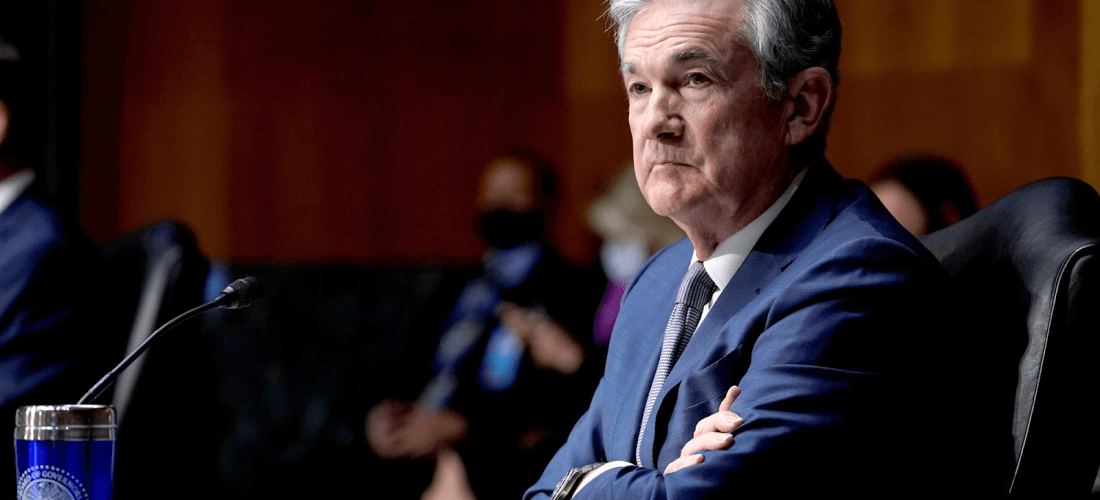
Chairman of the Federal Reserve Jerome Powell listens during a hearing before the Senate Banking Committee in December 2020.

On Tuesday, Feb. 23 at 11 a.m. EST, the chair of the Federal Reserve, Jerome Powell, testified before the Senate Banking Committee regarding the central bank’s semi-annual Monetary Policy Report. The Committee’s chair, Senator Sherrod Brown (D-OH) began the session with opening remarks about the current state of economic affairs. Senator Brown made it clear from the beginning that he is in favor of the Fed using any monetary tools it sees fit to manage inflation and unemployment, stating, “most people are not worried about doing too much to get through this pandemic, they’re worried about doing too little.” Further, he recalled remarks from Janet Yellen, the treasury secretary, who stated that if the Fed doesn’t do more by way of monetary policy, we risk a “permanent scarring” of our economy and our future.

Ranking member Senator Pat Toomey (R-PA) disagreed with Senator Brown, stating, “the last thing we need is a massive multimillion-dollar spending bill.” Senator Toomey was chiefly concerned with inflation and urged Powell to roll back the Fed’s holdings of treasury securities and agency mortgage-backed securities in order to avoid uncontrollable and unwanted inflation. Senator Toomey stated that most American households are in better financial positions now than they were before the pandemic. He stated that in his opinion, the last two recessions were caused by asset bubbles that burst. In 2001, it was the stock market, in 2008, the mortgage credit market. Additionally, Senator Toomey believes that monetary policy contributed a great deal to the formation of those bubbles. 

He also remarked that there is a link between record amounts of liquidity and unprecedented asset valuations, like those of GameStop and Bitcoin, as of late. Across the board, Senator Toomey stated, there are elevated asset prices and signs of emerging inflation. He asked Powell if he believes there is a link between the liquidity the Fed has been providing and some of these unprecedented asset prices, to which Powell responded, “there is certainly a link.” Despite this, Powell and the Fed plan to continue the bond-buying program “at least at its current pace until we make substantial progress toward our current goals.”

Powell presented his testimony in two parts: a review of the current economic situation and the Fed’s plans for monetary policy moving forward. Powell stated that the sectors most adversely affected by the resurgence of the virus are the weakest. Household spending on services remains low, especially in the hard-hit sectors of leisure and hospitality. However, household spending on goods picked up in January. Moreover, the housing sector has “more than fully recovered from the downturn.” Regarding the labor market, Powell stated that the pace of improvement in the labor market has slowed and the unemployment rate remained elevated at 6.8 percent in January. Participation in the labor market is notably below pre-pandemic levels. 

Moreover, Powell stated that “those least able to shoulder the burden [of the pandemic] have been hardest hit,” citing low wage workers, African Americans, Hispanics and other minority groups as the most affected. During the questioning portion of the hearing, Senator Bob Menendez (D-NJ) explained the varying unemployment rates by race: in January, the unemployment rate among the black population was 9.2 percent; among Hispanics, 8.6 percent. The unemployment rate among white people was 5.7 percent. Additionally, the Black labor force exit rate increased dramatically while the white labor force exit rate returned to pre-pandemic levels, suggesting that the Black unemployment rate is misleadingly low compared to the white rate. Senator Menendez got Powell to agree that minority families are bearing the brunt of the damage caused by the pandemic, “along with those at the lower end of the income spectrum.”

Regarding inflation, Powell stated that there were large declines in the spring, but consumer prices partially rebounded last year. Powell also stated that as the very low inflation readings from last March and April drop out of the 12-month calculation on inflation, we should expect readings on inflation to move up. This is called the base effect and it should not be a cause for concern. Powell mentioned that overall, inflation remains below the 2 percent long-run objective. He stressed that the 2 percent goal is an average, so periods of lower-than-average inflation should be followed by periods with inflation rates greater than 2 percent.

In his overview of the monetary policy report, Powell emphasized that maximum employment is a broad and inclusive goal, so policy decisions should be informed by an assessment of the shortfalls of employment from its maximum level, rather than deviations from its maximum level. Furthermore, Powell mentioned that actions taken by the Fed in the early months of the pandemic have constrained their main policy tool by the lower bound. In other words, the Fed has been lowering interest rates in unprecedented ways since even before the start of the pandemic, so their ability to use lowering interest rates as a monetary policy tool is weakened.

If lowering interest rates isn’t really much of an option anymore, what will the Fed do? Simply put, the Fed will do what it has been doing throughout the pandemic: increase holdings of securities at least at their current pace. The Fed will closely monitor inflation; Powell stated that “well-anchored inflation expectations will enhance our ability to meet both our employment and inflation goals.” Powell assured Congress that the Fed “will continue to clearly communicate our assessment of progress toward our goals well in advance of any change in the pace of purchases.”

mclaughline7@lasalle.edu

Don’t be afraid of stocks: an examination of financial bubbles and their history

Business

Michael D’Angelo, Staff

Medium

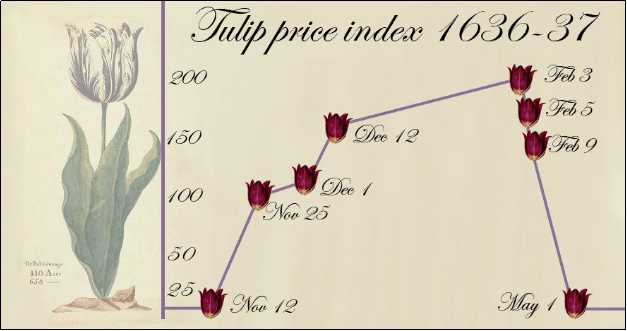
Pictured above is the price index of Tulips from the infamous Tulip bubble burst of the 1600s in the Dutch Netherlands. The tulip bubble burst is the first ever recorded financial bubble in history.

Chances are if you checked the financial markets on Tuesday morning, indices were in the red. Many investors were concerned with a large federal stimulus package, the recent rise in commodities, and a rise in the 10-year U.S. Treasury Bond. Headlines regarding Michael Burry’s prediction about hyperinflation, Treasury Bonds, and WTI Crude Oil exploding to over $60 a barrel flooded the news on Monday and investors were alarmed. Tuesday’s open saw the tech heavy NASDAQ dropping nearly 3 percent. 

Amid growing concerns among investors, talks of a potential financial bubble, which occurs when asset prices become based on inconsistent and irrational views about the future, surfaced and Ray Dalio’s bubble indicator found 50 of the 1,000 biggest companies are in extreme bubbles. Although this is only half of the companies considered in a bubble from the Dot Com burst, investors should certainly take notice but not let news headlines deter from their equity investing.

Nonetheless, financial bubbles and investor psychology is still a fascinating topic. I recently became interested in the concept of financial bubbles after picking up a copy of the novel, Irrational Exuberance by Economist J.D. Shiller. In his book, Shiller accurately predicted the housing crisis and suggests monetary policy tools to ease the consequences of financial bubbles. The term “Irrational Exuberance” was coined by former Fed Chairman, Alan Greenspan, in the late 1980s. Below is the  breakdown and examination of the history of bubbles.

Financial bubbles have occurred all throughout history; In the 1630s, the Dutch went crazy for Tulip bulbs. The price soared from 1636 to 1637 and many went so far as selling their homes to purchase the simple garden plant. Eventually, the mass hysteria surrounding tulips faded and the price of tulips declined 90 percent.. 

Do you remember Isaac Newton, the pioneer of the concept of gravity? Well, Newton was burned hard and lost a fortune when the South Sea Company bubble burst in the 1720s. The South Sea Company was promised a monopoly by the British government to trade in South American colonies. British investors dived headfirst into the South Sea and the stock reached a high over 1,000 pounds and then came down after news of fraud and the monopoly fell out. 

Bubbles are no phenomena to the past as we have seen in the modern era. The Japanese real estate and equity markets exploded in the late 1980s and then came down.  The Dotcom bubble occurred in the United States in the late 1990s to early 2000s when investors dived into tech and internet stocks. The most recent bubble occurred with the U.S. housing market in the late 2000s to 2010s. Housing prices increased dramatically leading many investors to falsely believe the inability of the housing market to crash. The market declined dramatically, due to an excess of subprime mortgage loans, followed by the global recession due to mortgage securitization. 

History certainly has a knack of repeating itself and we could be seeing another bubble occur in any sector of the economy. With bubbles and investor mania creating a collapse of asset prices, the key to surviving the next bubble is to rely less on weekend worrying, where we, as retail investors or institutional investors, absorb weekly  news on the weekend leading to a belief in an economic doom at the start of a new week. To take from Peter Lynch, we should not get scared out of stocks. 

dangelom2@lasalle.edu

Cathie Wood and ARK Innovation: the Newest Tech Bulls

Business

Michael D’Angelo, Staff

charlierose

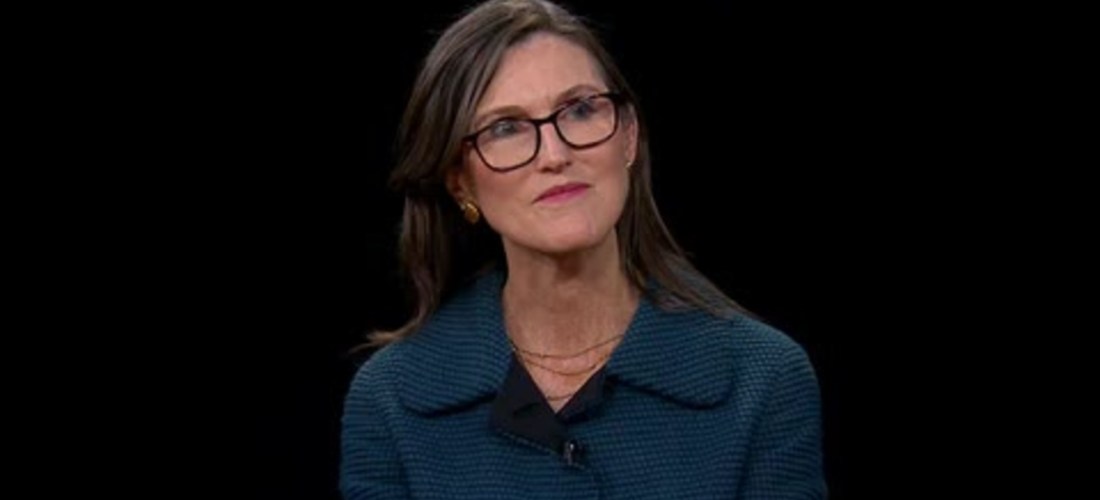
Founder, Chief Executive Officer and Chief Investment Officer of ARK Invest, Cathie Wood (pictured above), is known on the street as a star stock-picker.

Chances are if you are a retail or an institutional investor you probably hold long positions in exchange traded funds (ETFs) or equities relating to the technology industry. Many investors want to chase the next hot technology company that is going to change the world while, preferably, garnering high returns. Some retail investors do not have the time, knowledge, energy and/or skill to pick their own individual stocks. Instead of picking stocks by themselves, investors turn to institutional fund managers to pick heavy stocks for them. Investors will purchase ETFs and mutual funds which track tech companies’ performance.

Many institutional fund managers create ETFs dedicated to following tech companies. A major ETF which tracks the tech heavy NASDAQ composite, QQQ is managed by Invesco. Vanguard manages VGT which focuses on information technology and State Street manages multiple funds dedicated to tracking various tech stocks’ market performance. 

The newest fund manager from the street to popularize tech fund management is Cathie Wood at Ark Investment Management, LLC. Wood is the real deal with managing portfolios. She holds the title of CEO and CIO of Ark Investment Management LLC. In the past, Wood worked as an assistant economist with the Capital Group in the late 70s, then as a managing director for Jennison Associates LLC and then as a limited partner for Tupelo Capital Services. Later she worked as a Chief Investment Officer at Alliance Bernstein. Wood joined ARK investment Management in 2014 and, as mentioned above, she holds the title of CEO and CIO. Wood certainly has plenty of experience in the industry and her fund returns are impressive. 

Wood managed the largest actively managed ETF in 2020 which is the Ark Innovation ETF. The ticker symbol of the ETF is ARKK. ARKK’s objective is to seek an increase in long-term capital growth by investing at least 65% of the company’s assets in American and foreign tech equities that will change the world around us. Ark calls world-changing equities, a “disruptive innovation.” 

Wood has been crushing the game since 2016 with the Ark Innovation ETF. A quick look at the prospectus for ARKK reveals the ETF returned at market value 66.47% for the year ended on July 31st, 2020. In 2019, the total market return was 12.27%, 52.38% in 2018, 43.72% in 2017, 4.9% in 2016 and from October 31st, 2014 to August 31st, 2015, the return was 0.50%.  As of December 31st, 2020, ARKK’s top 10 holdings were Tesla (10.8%), Roku (6.9%), CRISPR Therapeutics (5.5%), Square (5.3%), Teladoc Health (4.4%), Invitae Corp (4.1%), Zillow (3.1%), Pure Storage (2.8%), Proto Labs (2.8%) and Spotify (2.7%). ARKK closed January 26th at $141.38.

Ark maintains other actively managed ETFs like Ark Next Generation Internet ETF (ARKW), ARK Fintech Innovation ETF (ARKF), ARK Genomic Revolution ETF (ARKG), ARK Autonomous Technology and Robotics ETF (ARKQ), the 3D Printing ETF (PRNT) and ARK Israel Innovative Tech ETF (IZRL). All of these ETFs are dedicated to finding innovative companies with the objective of changing their respective industry and the world. 

Wood still has time to prove her stock picking skills and to return more money to her shareholders. Wood has expressed interest in creating a bitcoin ETF after bitcoin hits a $2 trillion market capitalization, and she has further expressed intent on creating an ETF dedicated to following space companies. The future is looking bright for both ARK and Wood. Time will only be able to tell the success of these companies and the bullish tech attitude of their founder.

dangelom2@lasalle.edu

Ant Group’s world record-setting IPO in Shanghai and Hong Kong put on halt by Chinese regulators

Business

Bill O’Brien, Editor

“There’s a saying in China: ‘The tallest nail gets hammered down,'” said Duncan Clark, author of “Alibaba: The House that Jack Ma Built” and founder of investment advisory firm BDA China.

India Today

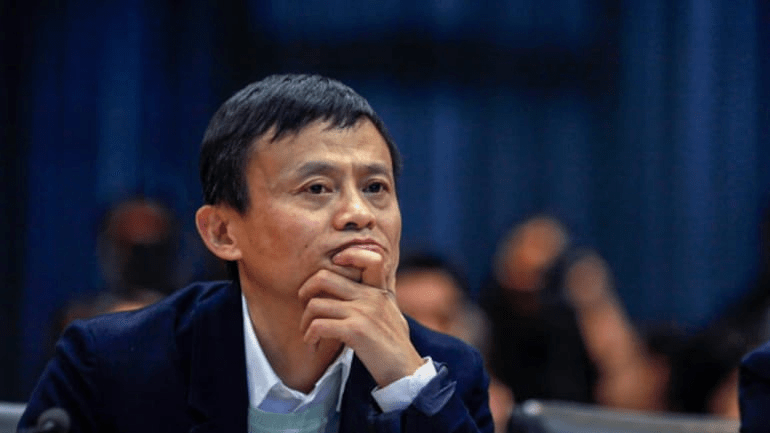
Jack Ma, pictured above, is not formally associated with the fintech company, Ant Group, but is the company’s controlling shareholder. Analysts are putting blame on the ecommerce mogul for recent statements criticizing Chinese regulators.

As U.S. markets whipsawed for the last 24 hours amid Election Day chaos, a leading fintech company in China experienced a ‘day of reckoning’ of sorts. The unicorn fintech company, Ant Group, was on track to set a record in raising capital from public markets with a $34.5 billion dollar IPO. Ant Group offers numerous services to its consumers, which include mobile payments services, wealth management, a third-party credit rating system and a mutual aid platform which “provides a basic health plan to protect participants against 100 kinds of critical illnesses.”

The company has made strides outside of the country into Europe as well. Ant Group’s mobile payment platform, Alipay, has existing relationships with numerous European digital wallets apps in Finland, Norway, Spain, Portugal and Austria. The fintech company has made headway in Britain as well, acquiring international money transfer services provider, WorldFirst, for $700 million in 2019 and reaching an agreement with Barlcaycard that enabled British retailers to accept Alipay in their stores.

The fintech company has been making incredible progress, which is why it is unsurprising that Chinese regulators yanking their IPO sent Alibaba, one-third shareholder of Ant Group, reeling. Alibaba, trading off a high of $310.73 early Monday evening (4:00P EST), fell 7.8 percent to $286.31 amid the news before rebounding to around $298.40 this Wednesday afternoon.

Analysts are pointing fingers at the controlling shareholder of the company and founder of Alibaba, Jack Ma, who recently gave a speech criticizing Chinese regulators for their risk aversion. “What we need is to build a healthy financial system, not systematic financial risks,” the Ant Group co-founder said at a conference in Shanghai. “To innovate without risks is to kill innovation. There’s no innovation without risks in the world.” He also highlighted the need for systemic reform in China’s financial sector, describing it as “a legacy of the Industrial Age.” Ma continued, saying, “we must set up a new one for the next generation and young people. We must reform the current system.”

Chinese regulators responded shortly after as if Ma had spit in their face, bringing Ant Group executives and Ma in for “regulatory interviews” which resulted in regulators deciding to suspend the fintech company’s initial public offerings in Shanghai and Hong Kong and prompting Ant Group to release the following statement to investors:

“Ant Group Co., Ltd. (the “Company”) announces that it was notified by the relevant regulators in the PRC today that its proposed A Share listing on the STAR Market is suspended as the Company may not meet listing qualifications or disclosure requirements due to material matters relating to the regulatory interview of our ultimate controller, our executive chairman and our chief executive officer by the relevant regulators and the recent changes in the Fintech regulatory environment. Consequently, the concurrent proposed H Share listing on the Main Board of The Stock Exchange of Hong Kong Limited shall also be suspended. Further details relating to the suspension of the H Share listing and the refund of the application monies will be made as soon as possible.” (ANT GROUP CO., LTD.)

Ant Group has made it clear it still intends to launch an IPO, preferably before the Chinese New Year, but analysts suspect they may need to do so under stricter capital requirements that will be set by the Chinese regulatory authorities or that it may need to sell its microlending business to do so.