Andrew Cuomo is rightfully in hot water, for all the wrong reasons

Commentary

Cianan Meagher, Staff

Header Image: MarketWatch

Over the past two weeks, a slew of sexual misconduct allegations against New York Governor Andrew Cuomo have come out. The allegations have ranged from inappropriate comments that contributed to an uncomfortable work environment to violations of personal boundaries and inappropriate touching. It should go without saying that these allegations, if found to be true, are contemptible. I have to admit that it is somewhat gratifying to see such a media firestorm around a figure so deserving of one, especially after being so shamelessly fawned over by the press just a year prior. However, I am somewhat dissatisfied that Governor Cuomo seems to be getting off relatively lightly, all things considered. While these allegations of sexual harassment in the workplace are explosive for the Democrat, it seems as if this story has completely overshadowed the much more scandalous story concerning the Governor’s office: New York’s mismanagement of nursing homes during the pandemic and subsequent attempts to cover up the true number of deaths reported from them.
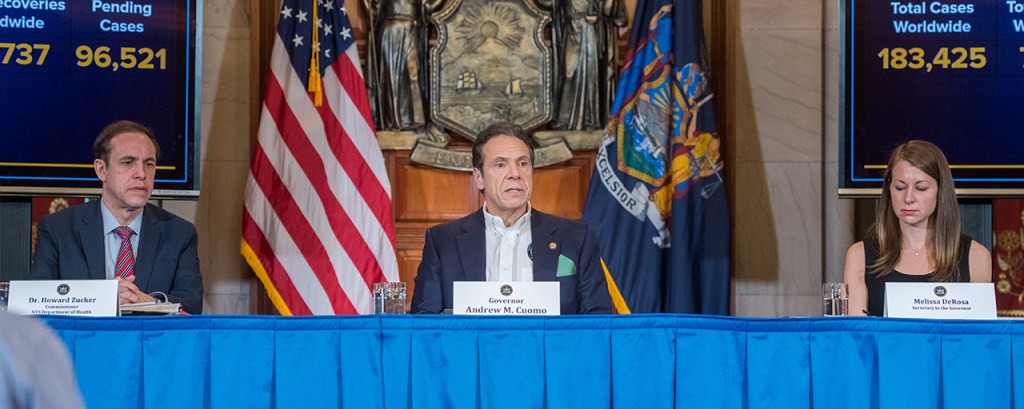
Darren McGee – Office of Governor Andrew Cuomo

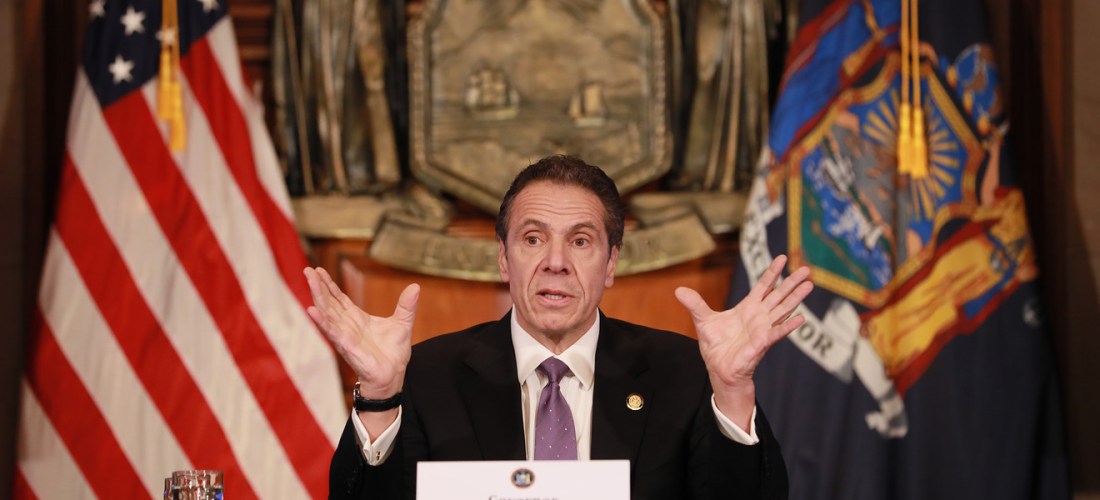
Cuomo’s direction of New York’s response to the coronavirus made the governor very popular with the media last year.

A report released by The New York State Attorney General’s office revealed that the number of COVID-19 deaths in nursing homes had been massively underreported by officials in Cuomo’s office. The report states that as much as 50 percent of COVID-related nursing home deaths were omitted from official tallies of nursing home related deaths released by New York State. Following the release of the report, Cuomo’s aide, Melissa DeLaroma, had reportedly met on a private video conference call with Democrat lawmakers to apologize for the suppression of numbers, citing fears by the Governor’s Office that the enormous amount of deaths would be used against them by then-President Trump to justify an investigation by the Justice Department. These developments are leaving questions about the Governor’s controversial March 25, 2020 New York State Department of Health directive to admit COVID-positive patients into nursing homes, using them as overflow testing and treatment centers. This stunning political cover-up is not only a flagrant abuse of power, but it could also have a serious impact on medical statistics that are crucial for those researching the virus and qualitative analyses of the pandemic. Such a statistical aberration has potential reverberations that travel much further than New York State lines, as this data is used by experts across the country and around the world in the fight against the novel disease.

To be clear, the allegations of workplace impropriety should be taken seriously and, with the sheer volume of alleged victims coming forward in the past month alone (7 at the time of writing), it is definitely a matter that deserves an investigation and the public scorn it has earned Governor Cuomo. However, the media frenzy that has surrounded this story has eclipsed a much larger offense. With all due respect and sympathy to Cuomo’s alleged victims, I think the thousands of lives he has directly or indirectly affected, or maybe even ended, with his handling of nursing homes and the flagrant abuse of power in trying to cover up his administration’s missteps, is a scandal of a much higher magnitude. Yet, it seems as if the Governor and the press would both prefer to address these more salacious accusations of sexual harassment, with Cuomo last addressing criticism of the nursing home scandal almost over a month ago. Cuomo has also been quick to deny the multitude of the allegations of sexual harassment against him; and yet, media coverage surrounding the former seems to have been completely supplanted by the comparatively less severe implications of the latter.

Bearing witness to it all, I have been disgusted by the partisan pandering by the media that has been at play throughout this pandemic. I was incensed, in particular, by the relatively lax scrutiny Governor Cuomo received compared to former President Trump during the throes of lockdown when, in my opinion, both seemed to be equally, if not divergently, incompotent in their responses to the crisis and equally caustic and dismissive to their critics along the way. Over the past year, Republican governors, such as Ron DeSantis of Florida and Greg Abbott of Texas, received heaps of criticism over their handling of the pandemic, some of which was completely justified, some overly-critical, in my opinion. Conversely, if you flipped on the news less than a year ago it would have seemed as if Cuomo, the media darling and “America’s Governor,” was beyond reproach. In reality, he was just as, if not more guilty of, mismanagement of this crisis than others. It is unlikely Cuomo will be winning over progressives anytime soon considering the circumstances of his current controversy, and his puzzling statement during a recent press conference that he was not “elected by the politicians, [but] by the people” in a response to a question about the multiple Democratic legislators calling for his resignation reads to me as a pivot towards more populist, Trumpian politics. It remains to be seen what kind of future, if any, lies ahead for Governor Cuomo.

The takeaway of this whole situation should be that we cannot let party lines and partisan rhetoric distract us from abuse of power by officials we politically align ourselves with. I pray that the independent investigation into allegations of sexual misconduct by the Governor can proceed unimpeded, and that he will resign if these allegations are found to be true, but I also hope that he is forced to answer for his administration’s missteps at the onset of the pandemic and their reckless dereliction of duty in the tabulation of COVID-related nursing home deaths.

meagherc1@lasalle.edu
Do you smoke in grocery stores?

Commentary

Alina Snopkowski, Editor

Fair warning: this article isn’t about smoking or grocery stores, at least not really. It’s about the rules and requirements that businesses have in place, and why being asked to wear a mask in certain places shouldn’t be a big issue.

For those of you who like charts and statistics, this site tracks, among other things, what percentage of the country’s population says they always wear a mask in public; here is the specific page for the state of Pennsylvania. In Delaware, where I am currently living and working, the last updated numbers show that a little over 80% of the people in the state say they always wear a mask in public. In the restaurant where I work, the vast majority of customers come in with their masks on or, if they forget, a simple “do you have a mask you can wear while you’re inside?” has them immediately scrambling in their pockets or purses to find their masks and put them on. When I’m working at the register up front, it’s my responsibility to make sure people are following the rules when they come in, and most customers are totally fine with it. A few months ago a man grumbled “are you serious? This is America” before reluctantly putting his mask on after I reminded him, but, for the most part, people are completely on top of the requirements.

And then here comes Paula (not her real name, of course, although I doubt anyone would be able to find her anyway). Paula calls and orders some food for takeout and I tell her it’ll be ready in about ten minutes. When she arrives, she’s not wearing her mask. We have signs on the windows but people forget. “Good morning,” I say, “do you have a mask you can wear while you’re in here?”

Paula flatly says “no.” Before I can say anything else, she launches into “it’s against the Constitution, so I’m not going to wear one. I don’t want to live in a communist country.”

I’ll be on record here and now saying I don’t particularly want to live in a communist country, either. But I don’t think asking someone to wear a mask while within a business that requires it is communism. The restaurant I work at didn’t invent these rules, but we have to follow them if we want to stay open. 99 percent of people understand this.

Back to Paula. She’s shoving her money at me and grabbing the plastic bag of her food off the front desk. “We appreciate you coming in but you have to wear a mask,” I say, probably a little meekly, because I was kind of rattled at the communism comment, “we have to follow these rules or we could get in trouble.”

“It’s not real, sweetheart,” she says, in the kind of tone that one might use to correct someone who said the moon is made of cheese, “wake up.”

And then she’s gone.

The whole interaction lasted barely a minute and the front desk is far over six feet away from any of the tables, so I doubt any customers even heard the conversation. But for the rest of the morning I was thinking about what else I should have said:

Do you smoke in grocery stores?

If there’s a sign on a store that says “no shoes, no shirt, no service,” do you walk in anyway in your bare feet and then get angry when they tell you to put some shoes on or leave? Or, more likely, do you not even bat an eye, because businesses having some level of requirements on what’s allowed (and not allowed) in their buildings is completely reasonable?

I don’t need to say that small businesses are struggling in this pandemic. We all know it. I also don’t need to say that these rules don’t necessarily come from us — usually a governor tells us what we have to do — but we’re required to follow them and enforce them in order to stay open. By patronizing a particular business, you pretty much agree to follow the rules while you’re on their premises. I don’t want to tell Paula not to come back, but the fact is she’s not allowed in if she refuses to wear her mask. I suppose it’s her right not to wear one, but it’s our responsibility not to let her in if she doesn’t. I, like most people, am looking forward to the day where we don’t have to wear masks anymore. But for the time being, this is the situation we have to deal with.

Delaware.gov

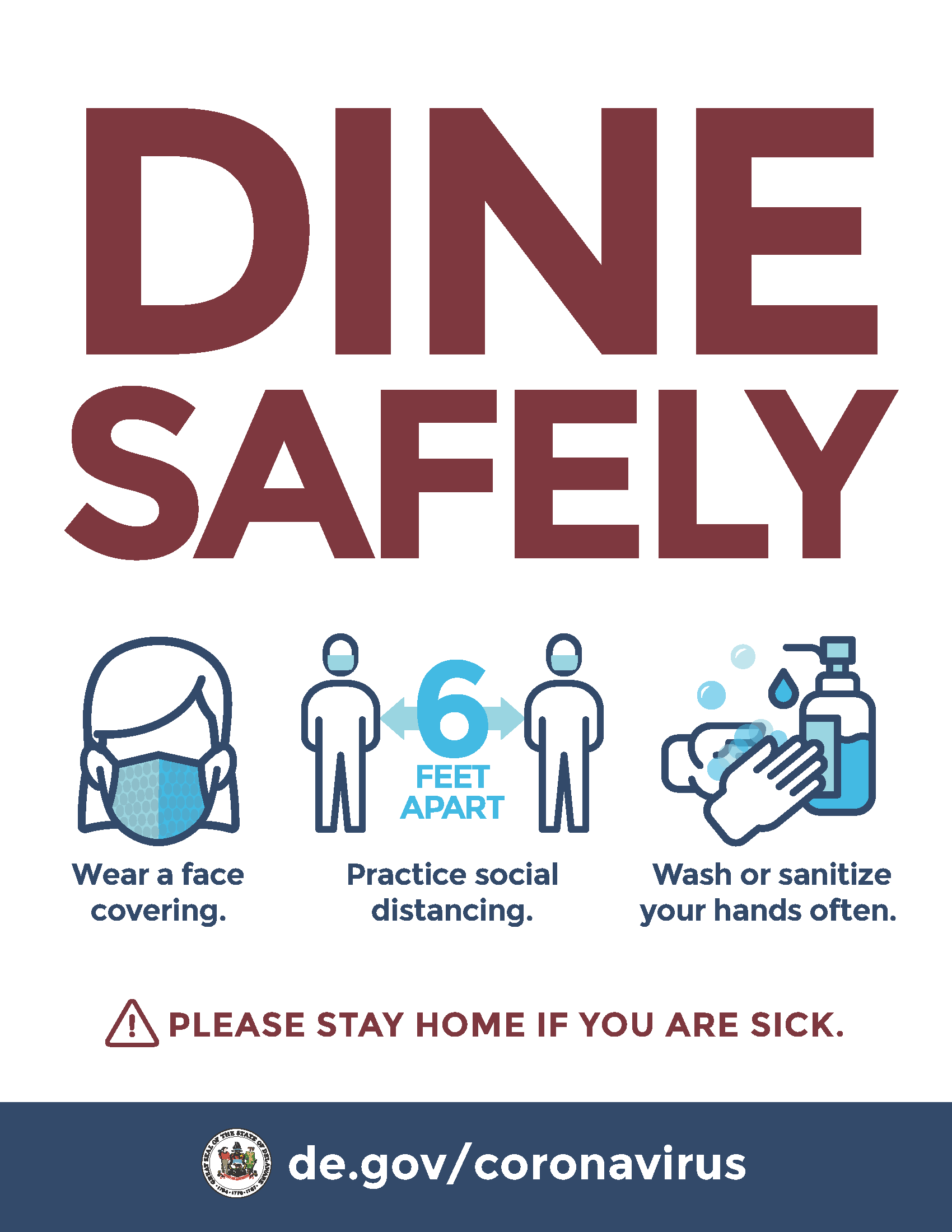
Signs like this one are on display in many restaurants in Delaware.

So, forgive me for the clickbait title for this article, but I want you to think about this mask situation not as ‘communism’ or some sort of infringement on personal freedoms but in this way — how different is it, really, from being told you must wear shoes in a particular store or that you can’t smoke in certain places? For the time being, “no mask, no service” has been added to these commonplace requirements. You’re allowed to spend your money and your time wherever you see fit, but if there’s a rule at a place you want to go to, you have to follow it. If you don’t want to, you can choose to go somewhere else. Small businesses are hurting enough — please don’t make it any more difficult by refusing to follow simple, clearly posted requirements.

And, believe it or not, Paula came back about a week later. She called again one morning, I recognized her name on the caller ID on the phone, and her order was identical to last time’s. I tell her ten minutes, give or take, and I wait at the front desk watching the parking lot for her car.

She pulls up and parks, then sits in her car for what seems like ten more minutes checking something on her phone. She isn’t wearing a mask yet. Okay, fine, she’s still in her car. She opens her door. Still no mask. Crosses the parking lot. Still no mask. I’m ready now — I’m prepared to tell her to go back outside, that she can give me her money out on the sidewalk and I’ll bring her food out to her there, but I can’t let her into the building.

And then, at the very last second, she pulls a mask up from around her neck. She gives me her money and takes her food and that’s that.

I don’t know why she changed her behavior, but I’m glad she did.

We won’t have to wear masks forever. One of my favorite websites at the moment is this one by Bloomberg, which estimates how long it’ll take to vaccinate 75 percent of the country’s population based on the current speed of vaccinations. Last I checked, they’re clocking it at about six months. That’s a while, but it’s certainly not forever.

Someday this will all be over, but until then, I ask you to please support your local small businesses in any way you can — and that includes wearing a mask.

snopkowskia1@lasalle.edu