

Sean Musial, Editor
During the 2025 MLB season so far, the Phillies have made it to the top of the NL East division with a record of 86-60. This has placed them second overall in the National League behind the Milwaukee Brewers.
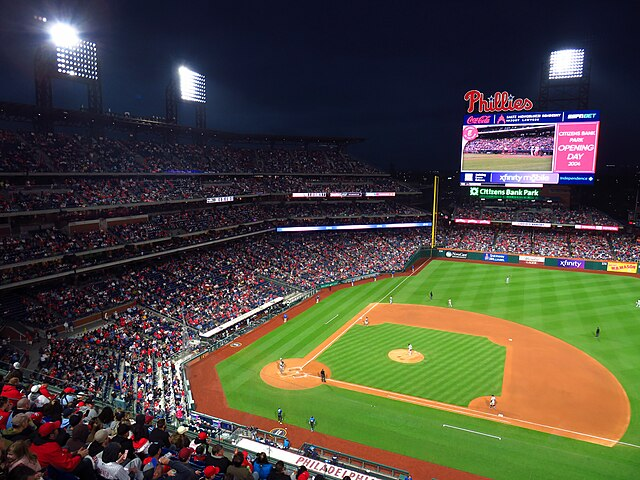
I had the fortunate opportunity of going to the Tuesday night game on Sept. 9 against the New York Mets with some of my hometown buddies. The Phillies dominated this game with a 9-3 final score, giving us an even better performance the next night with a score of 11-3.
The crowd roared the entire game. Behind us was a Mets fan that traveled all the way to Philly to see the game, and he couldn’t help but laugh at the banter the Phillies’ fans had to say during every moment.
With the win-streak they have now, it’s a great look as the regular season comes to an end in just a couple of weeks. A highlight in the Mets series saw Kyle Schwarber hitting his 50th home run. He has become the second Phillie in franchise history to hit 50 home runs in a single season, almost catching up to Ryan Howard’s 2006 record with 58. During the Sept. 9 game, the stadium roared over this accomplishment as the 50th “Schwar-bomb” made it into the stands.
Despite early turbulence with this year’s season, the Phillies began to build momentum as the summer advanced. Big series wins began to shape their identity moving forward as player inconsistency began to tighten up. The team got used to seeing themselves coming from behind or stop losing streaks before they saw it turn for the worse.
The journey towards “Red October” hasn’t been without serious tests coming from every direction. Alec Boehm was placed on a 10-day injured list with a cyst and Trea Turner is currently sidelined, raising questions about infield depth and who will be stepping up during those big decision making plays.
Kyle Schwarber remains a priority for Philly to retain, but his free-agent situation adds some tensions moving forward. This adds to the many uncertainties for many players’ contract situations, declining metrics in some cases, and the pressure of past postseason exits loom large. While wins are continuing to pile up, the offense has had its share of cold streaks that is threatening to derail what they’ve been building.
There are multiple factors that could either jeopardize or secure Philly’s postseason fates moving forward. If pitchers Jesus Luzardo, Ranger Suárez, Aaron Nola and company can stay sharp, give length and limit big innings, that takes a lot of pressure off the bullpen for someone like Jhoan Duran. He has been good, but some relievers have had uneven stretches. Closing tight games down the stretch, especially when facing pressure from Milwaukee for best NL record or wild‑card chasing teams, will be vital in the later games.
Prolonged slumps is something the Phillies need to avoid by any means. When Bryce Harper, Schwarber, Brandon Marsh and the supporting cast have hot bats together, the Phillies are dangerous. When any one of those bats cool off, the margin for error shrinks quickly. Injured players like Turner and Bohm may return, but their replacements need to perform well in high situations before that. Spot starts, defensive subs and pinch‑runners are often overlooked but can decide a close postseason series.
The Phillies are in prime shape to make a deep postseason run when you add all of this up. If they keep winning series, lock down the NL East and avoid letting the Brewers run away with the best overall NL record, they’ll enter October with hurtling momentum. Retaining key players would also help maintain the identity and power of the offense.
Nothing is guaranteed in baseball, especially come October, but this Phillies team seems to be peaking at a good time. The next couple weeks will likely reveal whether they’ve built enough depth, endurance and mental resilience to push past prior postseason disappointments. Go Phills!





 The La Salle Collegian