Asian Americans are still victims of violent crimes

national politics, Politics

Jada Urbaez, Staff

Header Image: Justin Sullivan via Getty Images
Asian American social justice protestors at a San Francisco assembly at Embarcadero Plaza on March 26, 2021.

Although the “Stop Asian Hate” movement gained less traction after its spike in engagement last spring, Asian Americans and people of Asian descent across the world are still victims of violent crimes. Christina Yuna Lee, 35, a Korean-American woman, was killed in her New York City apartment this past weekend. Lee was getting out of a taxi and was followed up six flights of stairs by suspect, Assamad Nash. 

Lee was stabbed more than 40 times, and neighbors called 911 after hearing screams from the apartment. When police arrived, Nash allegedly changed his voice to sound like a woman to say police were not needed. An hour later, officials knocked Lee’s apartment door down, and found her shirtless and slain in the bathtub. 

Nash has a history of charges in New York and New Jersey, including assault and possession of stolen property, and has been arrested six times since 2015. For the killing of Lee, Assamad Nash has been charged with burglary and murder. 

New York City has what some may consider an alarming hate crime report rate. In 2021, the New York Police Department received a collective 524 hate crime complaints, and made a total of 219 hate crime related arrests. It is known that Asian American New Yorkers are the victims at the heart of hate crimes throughout the city, experiencing over a 300 percent increase from 2020 to 2021. 

Another headlining murder of an Asian American woman happened on the New York City subway on Jan. 15, 2022. Michelle Go, 40, was pushed into the tracks by Martial Simon while a southbound R train was approaching the station. A 75-year-old Korean-American woman was attacked in Queens earlier this year. The elderly victim suffered face injuries including an inflamed left eye and a bleeding head, and told news sources she is “lucky to be alive.” A South Korean diplomat, 53, was punched near East 35th Street and 5th Avenue earlier this month and suffered a broken nose. The suspect fled the scene. The New York City Police Department has stated the Queens and Midtown attacks are not hate crimes.

New York Mayor, Eric Adams, was interviewed by Eyewitness News, regarding the pattern of these crimes throughout the city. When discussing Michelle Go’s murder, Adams stated, “People want to walk around and say, ‘Oh, he targeted someone else first, then he went to Ms. Go.’ Maybe that is the fact, but that is not what I feel.” Adams also shared that the NYPD has been “reluctant” to identify these crimes as hate crimes, and he does not agree with the incidents’ classifications. 

US Embassy in the Solomon Islands Signals Focus on the South Pacific

international politics, Politics

Elizabeth Boyle, Staff 

Header Image: YourBigSky

On Feb. 12, during a tour starting in Australia and ending in Fiji, Secretary of State Anthony Blinken announced the U.S. will open an embassy in the Solomon Islands. The Solomon Islands are located in the Southwestern Pacific Ocean. Blinken explained the reason for this new embassy is to increase the U.S. presence in the South Pacific Ocean as China becomes “strongly embedded.” The State Department said that, although the United States and the Solomon Islands have a good history dating back to World War II, China is “aggressively seek[ing] to engage” with the businessmen and politicians in the Solomon Islands. China is allegedly making promises concerning infrastructure loans and debt levels while trying to strike business deals in the Solomon Islands.

While Blinken talked about the embassy “enhancing the political, economic and commercial relationship” within the islands, setting up an embassy there will be quite pricey. It is estimated the initial setup will cost $12.4 million. The embassy will be located in the capital of the Solomon Islands, Honiara. The first steps of the process would be leasing the space for the embassy and having two U.S. employees and five local personnel to staff the embassy. To further increase U.S. presence in the Solomon Islands, the State Department talked about the Peace Corps reopening their office and moving volunteers back to the Solomon Islands.

While in Fiji, Blinken spoke with the Fijian acting Prime Minister Aiyaz Sayed-Khaiyum and other Pacific leaders. This was the first visit of the U.S. Secretary of State to Fiji in 36 years. The topics of their meeting included the potential threat of China, climate change and rising tensions between Ukraine and Russia. Sayed-Khaiyum welcomed Blinken, “Mr. Secretary, your being here shows that promise was more than words. We have just held the most historic and comprehensive meeting ever between Fiji and the U.S.A. and a wider meeting with our fellow Pacific leaders. We believe that both mark the start of more direct partnership between Fiji and the U.S.A., and a new era for America in the blue frontier of the Pacific.” He expressed that the islands in this Pacific region felt very left out and overlooked by the major countries. He said he felt the islands were, “small dots spotted from plane windows of leaders en route to meetings where they spoke about us rather than with us, if they spoke of us at all.” 

Blinken met with leaders from Australia, India, Fiji and Japan. These four nations form a group of Indo-Pacific democracies called “The Quad” created to counter the influence of China. Blinken shows support for The Quad by saying, “You can see the strength of that commitment to the Indo-Pacific throughout the past year.  Just look at some of the key markers on our calendar, from President Biden being the first U.S. president to address the Pacific Islands Forum to our increasing engagement with The Quad, whose ministers I just met with in Melbourne, to deepening our cooperation on a range of security and defense priorities through AUKUS.”

As the U.S. increases ties in the Pacific, China continues to try to increase political and military ties in the Solomon Islands. The Solomon Islands sent shockwaves through the South Pacific regions when they decided to pull their support from Taiwan and support China in 2019. This essentially started a divide within the country that continued through Dec. 2021 when Prime Minister Manasseh Sogavare survived a no-confidence motion against him in parliament. 

Democrats demand the release of student debt memos from the White House

national politics, Politics

Rachel Phillips, staff

Header Image: Chuck Schumer via Twitter

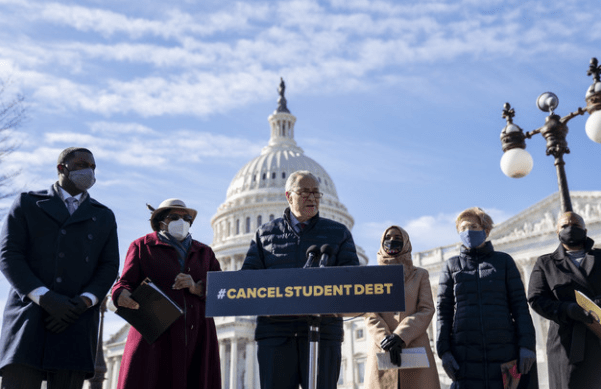
Dozens of Democratic leaders, including House majority leader Chuck Schumer, are calling on President Biden to fulfill one of his largest campaign promises: to cancel student debt. Despite the president’s previous interest in a loan forgiveness program, he expressed skepticism at his legal ability to implement wide-scale cancellations last year. 

Since then, the president has been working on memos with the Department of Education and the Justice Department about his legal authority to cancel the debt or implement a partial forgiveness program. However, these memos have yet to be shared with the Democratic leaders, who are asking for the report, or the general public. In a letter to the White House, led by Sen. Warren, Sen. Schumer, Rep Pramila Jayapal (D-Wash.), Rep. Ayanna Pressley (D. Mass), Rep. Ilhan Omar (D-Minn.) and Rep. Katie Porter (D-Calif.) and backed by 85 House and Senate Democrats, Biden was asked to release the memos immediately. 

“Publicly releasing memos outlining your existing authority on canceling student debt and broadly doing so is crucial in making a meaningful difference in the lives of current students, borrowers, and their families. It has been widely reported that the Department of Education has had this memo since April 2021, after being directed to draft it,” reads the letter.

 Statements have also been made by individual progressive leaders, with the most recent being Rep. Alexandria Ocasio- Cortez. In an interview with the New Yorker, AOC called out the hesitancy of the current administration, stating “this really isn’t a conversation about providing relief to a small niche group of people. It’s very much a keystone action politically. I think it’s a keystone action economically.” 

With the midterm elections quickly approaching, many progressive leaders are also emphasizing the political and economic implications of delivering on this major platform promise. However, despite the increased pressure from Democratic leaders, the Biden administration has still not released information regarding the reports. In addition, when asked about the cancellation of student debt in a January press conference, Biden did not provide any concrete answers, but rather reiterated that the issue remains a priority that is being continuously researched. 

Secretary of Education Miguel Cardona also reiterated the efforts of the president and his team, stating, “the administration is continuing to have conversations about broader loan forgiveness even as it touts the debt it has canceled by expanding or improving existing programs, such as those for public service workers or student borrowers who have become severely disabled.”

Local school district ordered by judge to continue their mask mandate

local politics, Politics, state politics

Jada Urbaez, Staff

Since school districts have reopened, many parents and students have demonstrated and spoken out because they believe masks should not be worn in schools. More recently, COVID-19 cases have declined locally, and some people are becoming tired of taking precautions. Hence why Perkiomen Valley School District, located in Montgomery County, Pennsylvania, wanted to halt the mask mandate for their district. 

The school board voted at the beginning of 2022 to no longer require students to wear face coverings. Parents took this decision to court, arguing stopping the mandate would violate the Americans with Disabilities Act. Instated in 1990, this Act prohibits discrimination of the disabled and provides equal opportunity in public settings. Fighting to continue Perkiomen Valley’s mask mandate would ensure the disabled would be able to safely attend classes without complications or life-threatening risks. The plaintiffs, who were represented by Attorney Carmen De Gisi, claimed not wearing masks would put students who are immunocompromised or disabled at an unnecessary risk, which ultimately defies the 1990 Act. 

The opposing side argued that masks cause discomfort and difficulty for the children to learn the material taught in school. In addition, parents argue that some students have anxiety, and wearing masks exacerbates their anxious feelings. All in all, the parents who wish to cease the mask mandate argue they make students uncomfortable, cause an inconvenience and do more harm than good. The federal judge disagreed and ruled that the Perkiomen Valley School District must continue the mask mandate for students, faculty, and staff until further notice.

COVID-19 cases reached their all-time peak in Pennsylvania just a month ago, but have decreased expeditiously since then. On Jan. 8, 2022, Pennsylvania reported 33,650 new cases, which bumped the state’s seven-day average to 25,848. However, just about a month later, 2,794 new cases were reported on Feb. 6, which brought the weekly average to 6,207. This decrease in positive cases may cause other school boards to do what Perkiomen Valley did, but they also may get declined by a judge for violating the Americans with Disabilities Act of 1990.Editor’s Note: Help stop the spread of COVID-19 by getting vaccinated, boosted, and tested.

Russia and NATO aerial interaction

international politics, Politics

Elizabeth Boyle, Staff

While Russia has recently gathered a global audience by deploying troops to Ukraine’s border, they have also gathered the attention of the United Kingdom while attempting to fly near U.K.  airspace unannounced. 

            On Feb. 2, 2022, Russia attempted to fly four military-strategic bomber aircraft near U.K. airspace. When the British Royal Air Force determined the Russian planes had a projected course of flying over U.K. airspace, the air force quickly had jets take off from the nearest military base in Lossiemouth located in northeast Scotland. Because they were unsure if this situation would be hostile, the jets launched were Typhoon jets. A Typhoon FGR.Mk 4 is a combat jet that is agile and can do a wide range of air operations including high-intensity conflict. At the same time, Oxfordshire, England launched a Voyager air-to-refueling tanker which can use pods located under the wings to quickly refuel jets. The report from the U.K. states that the bombers were “intercepted and escorted [out of the airway].” 

            This group has been called to intercept other aircraft that approach the U.K.’s controlled airspace. It is called the “U.K. area of interest” and is international airspace policed by the U.K. This time and during a similar Russian near incursion in November 2021, the Russian bombers did not enter U.K. airspace. The U.K. believes that when the “U. K. area of interest” airspace is entered without an invitation there are two potential issues. First, the Russian jets navigate without communication with the U.K.’s air traffic control system, thus endangering civilian aircraft in the area. Secondly, entering these airspaces unannounced could be a national security threat to the U.K. and its citizens. 

            Russia’s actions of unpredictable and potentially provocative air routes could provoke the North Atlantic Treaty Organization (NATO) to take action. A report produced by NATO in December of 2021 states that 290 NATO missions were flown in 2021 due to Russian aircraft posing potential threats. A school of thought is emerging globally that Vladimir Putin, Russia’s president, may be using provocative military aircraft flights to gauge NATO responsiveness to potential military threats. Putin, according to some observers, also highlights to his domestic audience that NATO’s responses to the Russian flights are an indication that NATO does not respect Russia’s right to free access to the international airspace. After all, an interception by NATO aircraft has often taken place over international waters. As the situation on the Ukrainian border continues to stress the international community concerned with a potential Russian attack into Ukraine, aerial interactions elsewhere in Europe highlight the contentious relationship between Russia and NATO and the potential for miscalculation in an atmosphere of increasing distrust.

Why neither party is supporting a candidate for the 2022 PA senate race

Politics, state politics

Aidan Tyksinski, staff

Header Image: Generals International

Why neither party is supporting a candidate for the 2022 PA senate race

While the 2022 Pennsylvania Senate race is one of the most discussed midterm races in the nation, it seems that two major players in the race are willing to stay uninvolved for the time being. Both the Pennsylvania Republicans and Democrats are unwilling at this point to throw their support behind any candidate fighting for soon-to-be-former Senator Pat Toomey’s seat. While both parties have a good reason not to do so at the moment, some candidates need these nominations more than others. 

For the Democratic party, there are a couple of reasons that no candidate has support, the biggest being that the pool of candidates is currently too big. For any Democratic candidate to get a nomination, they need at least two-thirds support from the committee. When the committee held this vote over a week ago, there were four frontrunners: John Fetterman, Val Arkoosh, Connor Lamb and Malcolm Kenyatta. The number of frontrunners recently shrunk by one due to Arkoosh dropping out of the race late last week. 

Out of the three leading candidates, it seems that most of the Democratic Committee is torn between Fetterman and Lamb. Fetterman, the more progressive of the two, has gotten more donations than any other candidate in the party. However, it seems that many members of the committee feel that Fetterman’s message might not create a lot of turnouts in the very purple state, and view Lamb as a moderate whose message could swing the seat back under Democrats’ control. During the voting for the nomination, 159 members endorsed Lamb, 64 members endorsed Fetterman and Kenyatta got 49. A candidate must get 176 votes for the nomination.

For the Republicans, the reason for not picking a nomination is much simpler: there is currently no clear front-runner in the race. The two current front-runners, Dr. Mehmet Öz and David McCormick, both joined the race very recently and have no experience running a political campaign. With this seat as valuable as it is, the Pennsylvania Republican Committee seems to be playing it safe until after the primary, when there will be a clear candidate for the November election.As it stands, either McCormick or Öz could win the primary in May. Using their deep pockets, both candidates have created attack ads against each other and the Democratic party. Both have also accused each other of having ties to foreign countries, with McCormick also throwing around the idea that Öz’s ties in Hollywood will not make a good senator for Pennsylvania. The party is not the only main player staying silent on the race. Former President Trump, whose advisors say is paying close attention to the open seat, has been silent on the race ever since the candidate he supported, Sean Parnell, dropped out in November of last year. In the coming weeks and months, it will be interesting to see if more candidates fall out of the race, and which party will back a candidate first.

Pennsylvania joins at least twenty-five other states in raising the minimum wage by 2024

Politics, state politics

Jada Urbaez, Staff

Pennsylvania joins at least twenty-five other states as they all raise the minimum wage for state workers this year. Effective last Monday, Jan. 31, 2022, the minimum wage for Pennsylvania state workers increased to $15 per hour. 

Back in 2018, Pennsylvania Governor Tom Wolf proposed that the minimum wage would increase annually by $.50, which would have been on track to pay workers $15 per hour by the year 2024. Pennsylvania has sped up the process and is two years early, considering it is only 2022 and the wage has increased tremendously. 

State workers will exclusively receive these benefits for the time being, not the general public. State workers include any individual that is employed by the Pennsylvania government such as workers at the Department of Motor Vehicles or other government services. 

The minimum wage for other workers remains at $7.25, which has not changed in 13 years. The last notable increase took place in 2008, when it raised from $6.25 per hour to $7.15 per hour. Then, in 2010, it went up by .$10, to where it is now at $7.25 per hour. Governor Wolf says that the standstill in the hourly pay rate is “an embarrassment” and plans to increase it drastically to $12 by July 1, following a $.50 raise annually. That is… if the majority Republican Pennsylvania General Assembly follows through with the governor’s goals for the state’s citizens. 

Pennsylvania currently sits at the 30th state in the United States in terms of the highest offered minimum wage. The federal minimum wage sits at $7.25 per hour, which is the current minimum wage not only in Pennsylvania but in other states including Oklahoma, Kansas and Idaho. Two adults with no children’s poverty wage is $8.29 an hour, by comparison.

The recent discussions around the nation regarding the pros and cons of raising wages have caused much disagreement and back and forth amongst people. Many express that increasing pay rates would result in higher prices of goods and services, which could possibly lead to hyperinflation. Others think this is untrue, and providing workers with a liveable wage could mean raising income for workers so they could afford day-to-day expenses, be financially stable and stress-free, which, in their opinion, far outweighs the possibility of rapid inflation.

Tensions and preparations increase in the Russia-Ukraine situation

international politics, Politics

Elizabeth Boyle, Staff

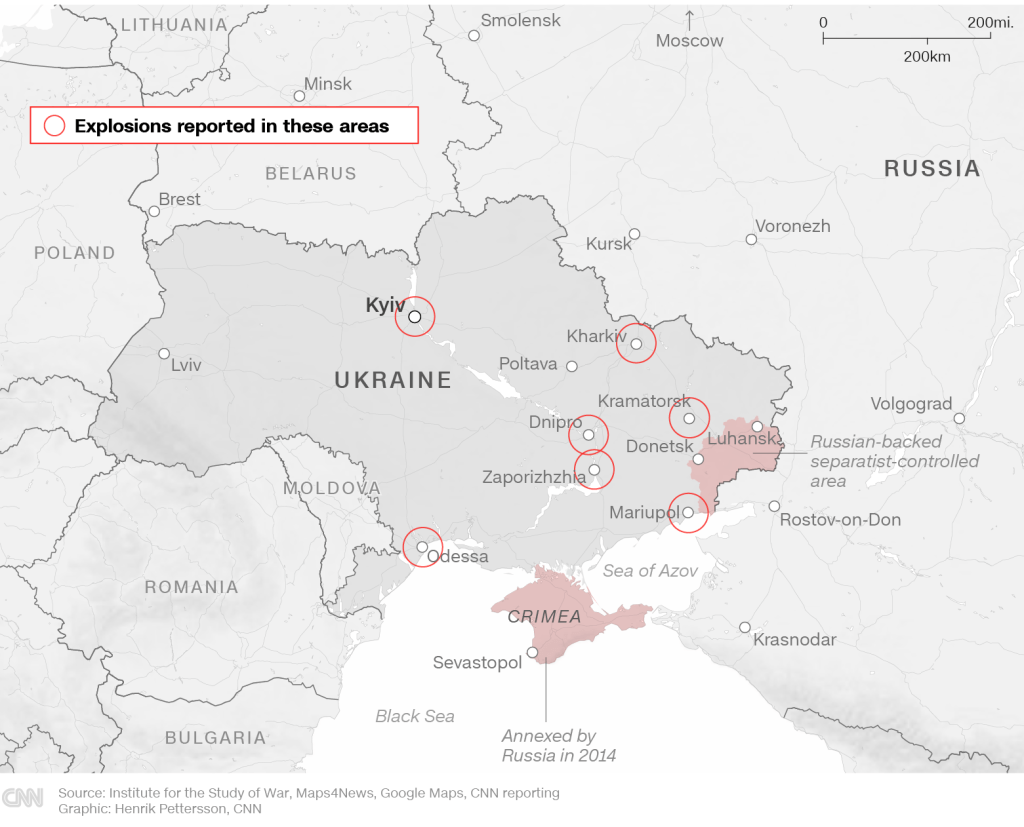
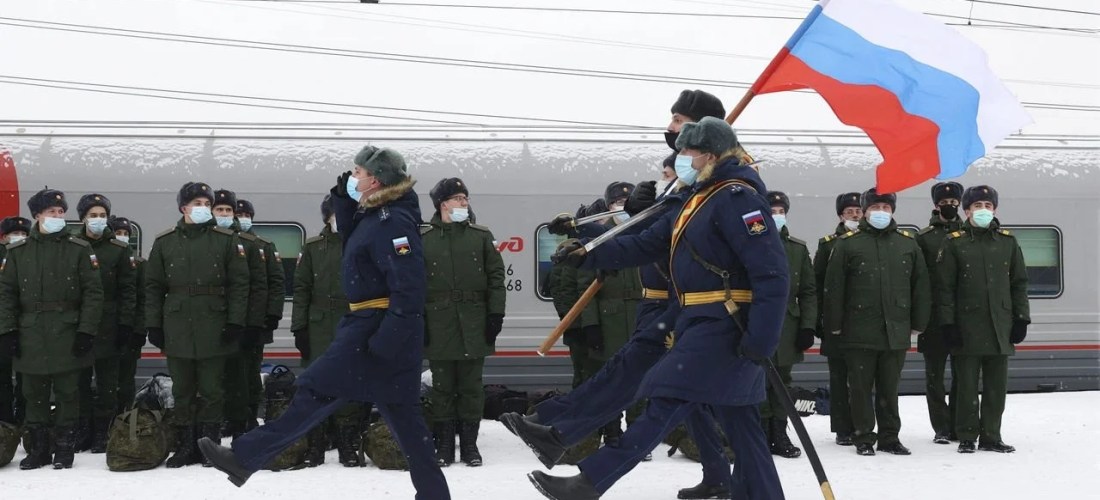
The movement of troops and rising tensions between Russia and Ukraine have recently gained a broad global audience. Currently, there are 100,000 Russian troops sitting outside the Ukrainian border, and President Joe Biden has raised concerns about an invasion in the near future. 

The United Nations Security Council had a meeting on Jan. 31 to discuss the security concerns. During the meeting, the U.S. and Russia went back and forth with each country accusing the other of provoking violence and raising tensions. President Biden spoke in full support of the meeting, saying, “[the meeting] was a critical step in rallying the world to speak out in one voice.” Putin was not supportive of the meeting and described it as a “PR stunt.”

Russian Ambassador to the United Nations Vasily Nebenzya argued that, by the U.S. speaking out about and preparing for Russia to invade Ukraine, the U.S. caused the situation to escalate. He believed it was the U.S.’s goal to provoke Russia. Nebenzya said, “our Western colleagues are talking about the need for de-escalation. However, first and foremost, they themselves are whipping up tensions and rhetoric and are provoking escalation. The discussions about a threat of war are provocative in and of themselves.” 

The U.S. Ambassador to the U.N., Linda Thomas-Greenfield, then accused Russia of providing false information with the goal of portraying Ukraine and the West as a threat to Russia. Thomas-Greenfield accused Russia of “attempting, without any factual basis, to paint Ukraine and Western countries as the aggressors to fabricate a pretext for attack.” She then mentioned the 100,000 troops currently positioned at Ukraine’s border.

President Biden has met with Tamim Bin Hamas Al Thani, the ruling Sheikh of Qatar. They discussed global energy supplies in case Europe needs energy if supplies are damaged by a Russian attack on Ukraine and the use of natural gas as a blackmail tool against Western Europe. Russia provides 40 percent of the natural gas used in Europe. The gas is currently transported from Russia through Ukraine to the rest of the continent, and, with a potential invasion, these lines could be disrupted. This disruption could also cause the prices of energy to rise globally.

Poland has been communicating with Ukraine and trying to help Ukraine as much as possible. Polish President Andrzej Duda met with Ukrainian President Volodymyr Zelenskyy and President Biden to talk about potential options in the situation. Duda offered thousands of rounds of ammunition to Ukraine for use in its defense. Ukraine has not yet replied to the offer.

Ukrainian citizens are also concerned about the potential of a Russian attack. Civilians have begun any type of training they can get in order to prepare themselves for self-defense. Many citizens are working on guerilla-style fighting techniques. The far-right group known as Azov worked with the National Corps to give military training to volunteers teaching them self-defense. The group has adopted the slogan “Do not panic, get ready!”

The commander of the Azov Battalion, Maxim Zhorn, said in an interview, “today, we are talking about the Russian Federation’s plan for a new attack against Ukrainian territories, and at the same time we are talking about the absolute ineffective actions of the [Ukrainian] government and that is why we took it upon ourselves to start training the civilian population.”

Hundreds of people showed up hoping to receive training. A similar group, run by Svetlana Putilina, trains women, predominantly Muslim women, in Kharkiv, on proper handling and use of military equipment. The women work on aiming, loading and firing various types of weapons including automatic rifles. The city of Kharkiv is only 25 miles from the border with Russia and the citizens there are concerned they could be one of the first targets. 

Biden prepares to make history by appointing the first Black woman to the U.S. Supreme Court

national politics, Politics

Rachel Phillips, Staff

After 28 years on the Supreme Court, Justice Breyer has announced his retirement and will officially step down at the end of the current term, occurring in late June or July of 2022. Over the years, Breyer has been known as a moderate on the Court, with his history of voting only indicating a slightly more conservative outlook than his Democratic peers. However, following the death of Ruth Bader Ginsberg, Breyer became the Court’s senior liberal, and his soon-to-be-vacant seat presents an opportunity for the Biden administration to introduce a potentially more progressive candidate. While the new Justice will not change the current 6 to 3 ratio of conservative to liberal judges in the Supreme Court, it does ensure that the seat will be filled by a Democratic preferred candidate who could potentially serve for decades. The timing of Breyer’s retirement also confirms that the seat will not be vacated during a future, potentially Republican, administration, where their chosen candidate could further sway an already conservative court majority. President Biden has yet to decide on his nominee, but the predicted timeline indicates the name could be announced as quickly as the end of February 2022. Democrats have adamantly stated they expect an efficient search and transition, hoping to parallel the speed of Republicans during the Amy Coney Barrett nomination in October of 2020.

The President is also hoping to deliver on a promise he made during his 2020 presidential campaign. Like the pledges of both Ronald Reagan and Donald Trump,  who vowed to nominate women, President Biden is planning to nominate the first Black woman to the U.S. Supreme Court. Currently, the front runners include Judge Ketanji Brown Jackson of the U.S. Court of Appeals for the D.C. Circuit, California Supreme Court Justice Leondra Kruger, Judge Candace Rae Jackson-Akiwumi who serves on the U.S. Court of Appeals for the Seventh Circuit and Judge J. Michelle of the U.S. District Court for the District of South Carolina. This list, however, is likely to expand in the coming weeks, as President Biden has stated that he is preparing to meet with an increasing number of nominees, as well as consult with lawyers, scholars and Vice President Kamala Harris throughout the decision process. In addition, Biden is also willing to hear suggestions from senators of either party regarding potential candidates. While the response to President Biden’s search criteria has drawn the criticism of many Republican leaders and accusations of “identity politics,” it is unlikely his position will change. Jen Psaki, Biden’s press secretary, confirmed during a White House briefing that “the President has stated and reiterated his commitment to nominating a Black woman to the Supreme Court and certainly stands by that.”

Canadian vehicle protest, “Freedom Convoy,” blocks essential U.S.-Canadian port over Canadian vaccine mandates

international politics, Politics

Ceara Grady, Staff

Header Image: Rebel News

A vehicle blockade has been built at one of the busiest ports of entry between the United States and Canada in support of what has come to be known as the Freedom Convoy.  The Freedom Convoy started as an assembly of Canadian truckers protesting a new Canadian COVID-19 mandate that requires unvaccinated truckers to quarantine and be tested after returning from any trips to the United States.

Since then, the movement has evolved to protest all of Canada’s vaccine mandates and other COVID-related restrictions. Prime Minister Justin Trudeau has said that he has no plans to engage or comply with the Freedom Convoy and their demands, saying, “my focus is standing with Canadians and getting through this pandemic”.

Additionally, a change in Canadian policy wouldn’t resolve the protestors’ objections, because the United States made vaccinations mandatory for Canadian truckers entering the United States at the end of January. Meanwhile, the blockade extends for miles from the entry port along the main highway, even extending into surrounding neighborhoods. The disruption of the line-up of trucks in these neighborhoods has blocked residents’ access to necessities like the grocery store and has even impacted services like postal delivery and school bus routes. 

On the United States’ side of the port in Montana, officials have started to turn away people trying to cross into Canada. The Freedom Convoy also protested outside of Canada’s Parliament in a massive but relatively peaceful demonstration. Despite this, there are concerns that the protests could turn violent and become more invasive. Such fears have caused Prime Minister Trudeau and his family to leave their official residence out of an abundance of caution, though he has and continues to emphasize that this coalition of truckers represents a small minority, as 90 percent of Canadian truckers are vaccinated. 

The Freedom Convoy has raised over $7 million through its GoFundMe campaign, which officials are taking as a sign that the protesters don’t plan to disband soon. Additionally, influential United States public figures like former President Donald Trump and Elon Musk have come out in support of the Freedom Convoy and its mission. There have also been reports that a similar group of protestors could make a cross-country trip, from California to Washington D.C., to protest similar COVID-19 vaccination rules for American truckers. 

Among safety and public health concerns, officials are also worried about the impact this blockade will have on both the Canadian and American economies, particularly as both are still working to recover from the height of the pandemic. Supply chain issues have been plaguing both economies due to complications in starting industries back up after reduced COVID-19 restrictions, but this blockade at the border and strike of truckers will continue to exacerbate those issues.