Biden and Gun Control

Politics

Kylie McGovern, Editor

PBS
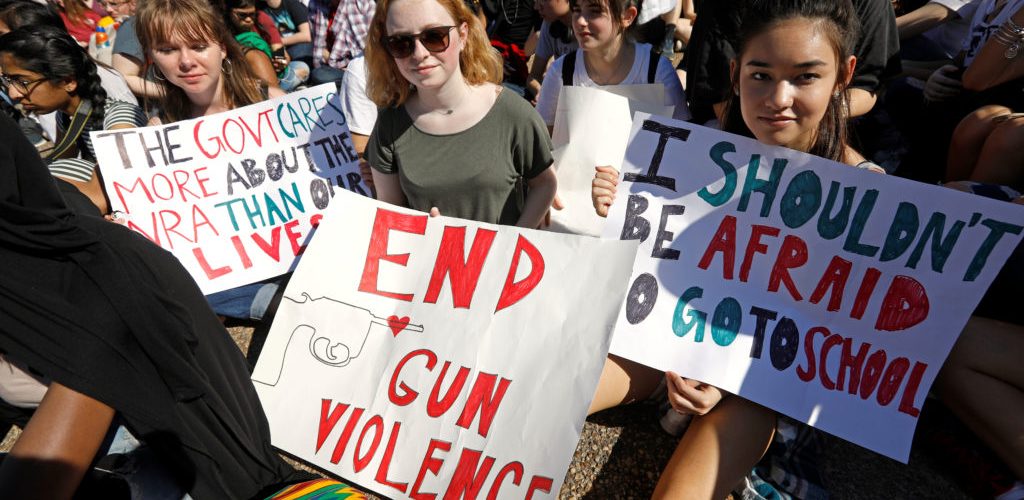
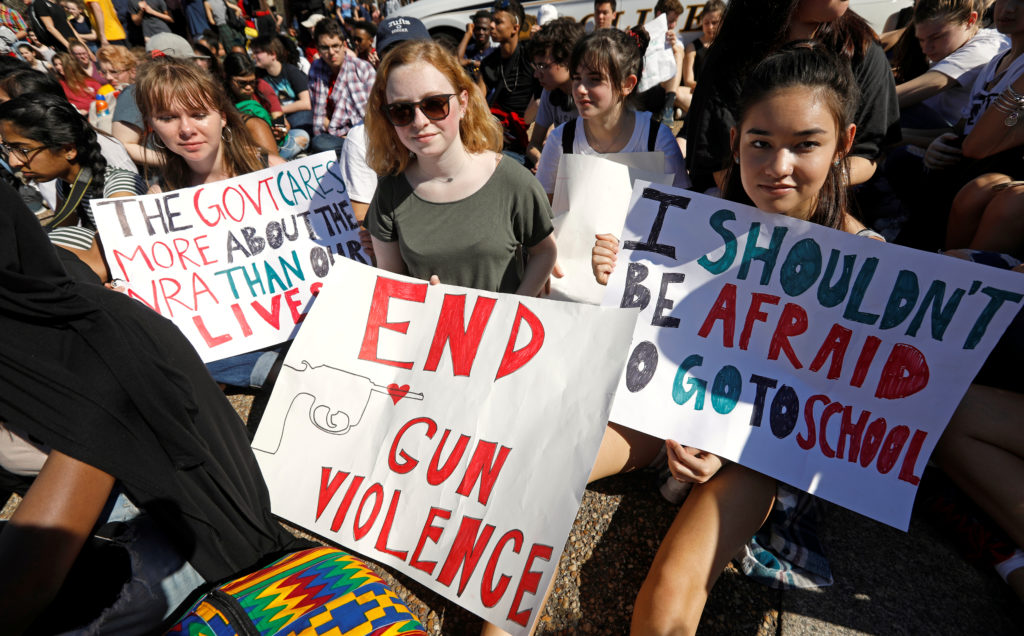
Image depicts one of the many gun control protests within the United States.

On Tuesday, Jen Psaki, the White House press secretary, announced that President Joe Biden is considering an executive action involving gun control and the Second Amendment. In response to recent mass shootings in Boulder, CO and Atlanta, GA, Biden cannot “wait another minute, let alone an hour” to enact gun control legislation. Psaki says, “we are considering a range of levers, including working through legislation, including executive action.” 

Biden is encouraging Congress to ban assault weapons and to pass bills ensuring stricter background checks. President Biden says he “got that done as a senator. It brought down mass shootings, we can do it again. We can ban assault weapons and high-capacity magazines in this country once again.” On March 11, the Democratic-majority House of Representatives passed a bill regarding an expansion of background checks on all commercial guns. One of the two bills, H.R. 8, “establishes new background check requirements for firearm transfers between private parties (i.e., unlicensed individuals). Specifically, it prohibits a firearm transfer between private parties unless a licensed gun dealer, manufacturer or importer first takes possession of the firearm to conduct a background check. The prohibition does not apply to certain firearm transfers or exchanges, such as a gift between spouses in good faith.” This bill has bipartisan support and the final vote on the background check bill was 227-203 in the House. Eight Republicans supported the legislation. One Democrat voted against it. However, despite bipartisan support, similar bills have not passed in the Senate with bipartisan house support. The other bill would be in an effort to close various loopholes in the sale and purchase of guns. This bill revises background check requirements applicable to proposed firearm transfers from a federal firearms licensee (e.g., a licensed gun dealer) to an unlicensed person. Specifically, it increases the amount of time, from three business days to a minimum of 10 business days, that a federal firearms licensee must wait to receive a completed background check prior to transferring a firearm to an unlicensed person. (This type of transaction is often referred to as a default proceed transaction).

If a submitted background check remains incomplete after 10 business days, then the prospective purchaser may submit a petition for a final firearms eligibility determination. If an additional 10 days elapse without a final determination, then the federal firearms licensee may transfer the firearm to the prospective purchaser. It would close the “Charleston Loophole,” which allows some gun sales to go through before a required background check. This legislation is not passed and needs Senate approval, but this is the beginning of a process towards stricter gun control laws and therefore less gun violence in the United States. 

Syrian Dilemma for President Joe Biden

Politics

Elizabeth Boyle, Staff

BBC
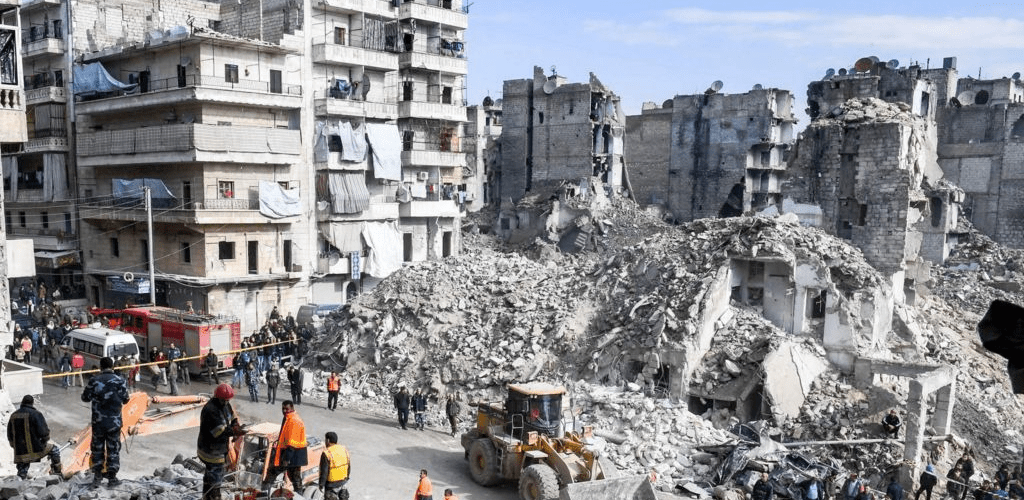
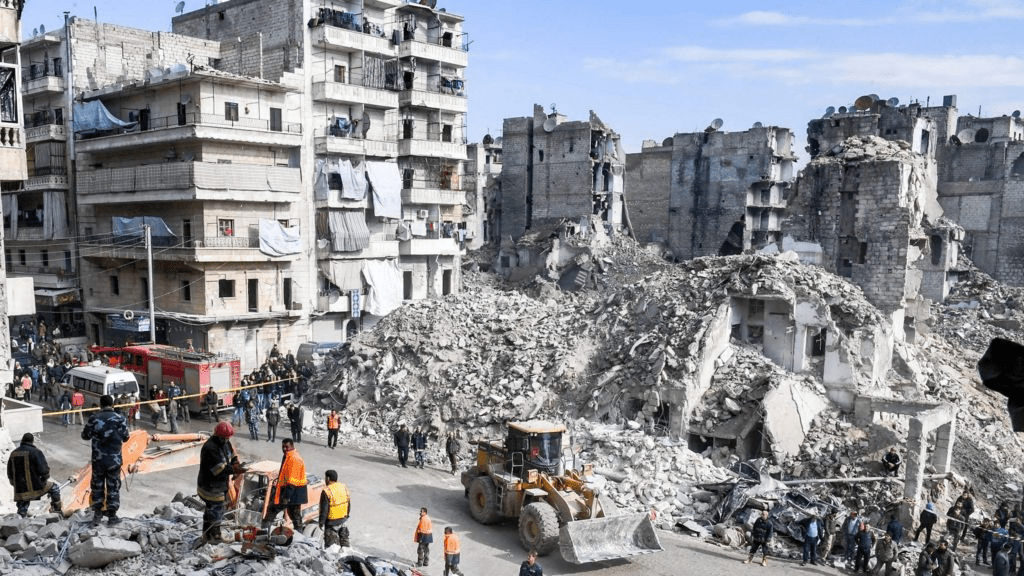
Image of one of the many wreckages throughout Syria.

As President Biden begins his third month in office, we continue to see shifts in international relations. This week there has been debate about President Biden’s position on the U.S. troops in Syria. 

            Currently, the U.S. has approximately 900 troops on a military outpost in a natural gas field in eastern Syria. Syria has been in a Civil War since 2011. The war is between the Ba’athist Syrian Arab Republic, which is led by President Bashar al Assad, and various foreign and domestic allies who oppose the Syrian government. In 2016 the United Nations estimated that 400,000 Syrians had been displaced or fled the country. The Syrian Army is conducting its own fight on behalf of Assad with the help of Russia and Iran. Because of them, Syria is supplied with warplanes and drones.

            Those who believe the U.S. troops should be removed, such as former U.S. ambassador to Syria, Robert Ford, think the U.S. is wasting resources. Ford argues that the Islamic State is contained and is not posing a threat to Europe or the U.S. He argues the Arab population now resents the U.S. alliance with the Kurdish militia. The Kurds are an Iranic ethnic group native to a mountainous region of Western Asia known as Kurdistan. Those who want the U.S. troops to stay would argue that the Syrian Democratic Forces (SDF), Assad’s primary domestic antagonists, have a portion of land outside of President Assad’s control. They have created stability in that area while the country continues to fight a decade-long war.If the U.S. troops were to be removed from Syria it could cause a security issue that the Islamic State could take advantage of. The stability created by the SDF is at risk. 

When President Obama was in office, he primarily used political negotiations in an effort to remove Assad. He also sent a small contingent of U.S. troops to help train the Kurds and Syrian rebels. When President Trump was in office, he increased U.S. forces in Syria to fight the Islamic State, and almost withdrew troops after the death of Islamic State leader Abu Bakr Baghdadi and the defeat of the Islamic State as a cohesive fighting force. Trump was advised against it, and agreed to keep U.S. forces present to work with the SDF to secure oil fields. In February 2021, President Biden ordered an airstrike on a camp in Syria near the Iraq border in retaliation for an Iranian-backed militia attack on a U.S. base in Iraq, during which a U.S. civilian contractor was killed.

As President Biden enters his third month in office and continues to expand the U.S. international relations, it will be interesting to see what he chooses to do moving forward.

boylee2@lasalle.edu

America’s State of Hate

Politics

Danielle O’Brien, Staff

Jim Wilson/The New York Times
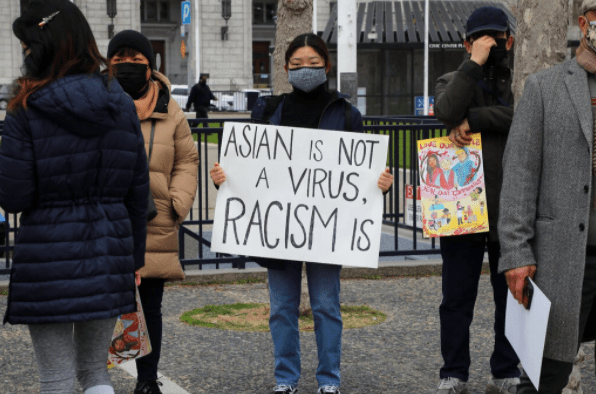
Image depicts protestors of violence against Asian American

With America already suffering a state of peril due to the COVID-19 pandemic, another unexpected increase in cases has risen: cases of hate crimes. The Asian-American community has especially suffered throughout the pandemic through lack of small business support, as well as an increase in xenophobic hate crimes directly resulting from this pandemic. It is observed that from 2019 to 2020, there has been a dramatic increase in hate crimes directed against the Asian-American community throughout the United States. It is possible that the COVID-19 pandemic has highlighted the existing xenophobic tendencies and state of hate which lay in America today.

2020-2021 was a rough year for most Americans because of the pandemic, but it has especially affected the Asian-American community. Hate crimes targeted towards the Asian-American community have in fact skyrocketed since the beginning of the pandemic. In 2020 alone, The NYPD reported that hate crimes against the Asian-American community in New York skyrocketed 1,900 percent. Over 2,800 hate crimes towards the Asian-American community were reported between 2019 and 2020. While this has been an ongoing trend in itself within the past, Asian related hate crimes have only been recently brought forth by major media outlets. Only three months into 2021, there have been countless acts of violence committed against the Asian-American community, especially the elderly. In February, for example, a 61 year old Filipino man, Noel Quintana, was slashed across his face with a box cutter on the New York subway, leaving a scar which is still visible today. Videos have surfaced of a 91 year old Chinese man being pushed to the ground as people call for justice for such senseless violence. But the examples of hate crimes against the elderly Asian-American community does not stop there. Attacks against all ethnicities within the Asian community, including Chinese, Thai, Korean, Vietnamese, Filipino and many more groups. These hate crimes could likely be attributed to the stigma which surrounds the Asian community as they are blamed by some for the ongoing pandemic. The former POTUS who described  COVID-19 as the “Kung-Flu” or “China-virus” did not help to discourage this stigma. However, the pandemic could only serve as an excuse for xenophobic Americans to act out on their hatred towards the Asian community. 

Politically the situation is being addressed as President Biden put in place an executive order which condemns the hate crimes and xenophobia being committed against the Asian community. The order, which is available for viewing on  Whitehouse.gov, hints to government contribution to this state of hate, stating “The Federal Government must recognize that it has played a role in furthering these xenophobic sentiments through the actions of political leaders, including references to the COVID-19 pandemic by the geographic location of its origin.  Such statements have stoked unfounded fears and perpetuated stigma about Asian Americans and Pacific Islanders and have contributed to increasing rates of bullying, harassment, and hate crimes against AAPI persons.”  The executive order further acknowledges the contribution the Asian-American community has given to the United States, denouncing the stigma and blame for COVID-19 which has been inflicted on the community. With Biden’s goal of uniting the country and bringing back the “soul” of America, there is still more work to be done beyond simply denouncing xenophobia. However, it is important to acknowledge that this is a step in the right direction for the White House in how to address issues of discrimination and hate which we are witnessing at this time.

obriend11@lasalle.edu

The 117th Congress, President Biden and the failure of progressives

Politics

David O’Brien, Editor

CNN
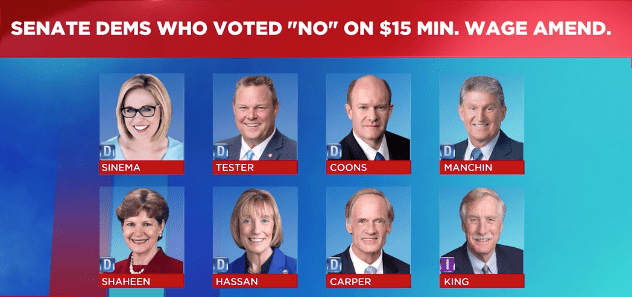
The seven Democratic Senators and the one Independent Senator who voted no on amending the coronavirus relief plan to include a $15 minimum wage.

After the inauguration of President Biden and the swearing in of the 117th Congress, progressives were optimistic about the new year and hoped to pass numerous components of their agenda. This optimism has quickly shown to be misplaced as the president and numerous Democrats (and one independent who caucuses with Democrats) have returned to the typical moderate Democratic agenda that most American citizens witnessed under President Obama.

Despite President Biden’s ideologically moderate reputation and his conservative-democrat career in the senate, he campaigned on numerous progressive promises such as clean energy and increasing the minimum wage. He also supported withdrawing American troops and attempting to switch from gunboat diplomacy to more “civilized” methods of dealing with foreign powers, however, he has already betrayed some of these promises. 

Last month, President Biden withdrew support from the Saudi-led offensive in Yemen. Biden claimed that America will put diplomacy first when dealing with the Middle East during his administration, however, he has quickly backpedalled  on this by dropping numerous bombs in Syria, seemingly out of nowhere. President Biden claimed the reasoning behind this attack was to protect American troops within Syria who were fighting Iranian troops in a proxy fight. The American troops in Syria are providing support for rebels against the Syrian government. Despite the American government’s claim to no longer destabilize the Middle East, backing rebels in a civil war seems like a method of doing so. 

Whether or not one supports military intervention in Syria, this attack was done illegally even in American presidency terms, since the Biden administration failed to get authorization under law of Authorization of Military Force of 2001, the law used by the president to receive authorization for all attacks focused on terrorism based threats. Biden has quickly betrayed the progressive anti-war agenda he once set out for during the campaign trail, in the name of a country that the United States is not even allies with.

The progressive Democrats’ anti-war policy was not the only aspect of their agenda to take a serious blow over the past few weeks. Democrats surrendered their plan to abolish the filibuster during the transition of the 116th congress to the 117th congress because of Republican threats to slow the transition process if the filibuster was not guaranteed to stay intact. Progressives also failed to keep the fifteen dollar minimum wage increase in the COVID-19 relief bill because of eight senate Democrats who voted against the addendum, many of whom did so because of the Senate Parliamentarian, an undemocratic position based on appointment by the Senate Majority leader, recommended it be removed since she did not believe it would hold under senate budget rules. Progressives have already failed to achieve two of the major goals in the legislature and it seems Biden has already turned his back on a progressive foreign policy and has focused on continuing traditional American foreign policy in the Middle East.

obriend10@lasalle.edu

U.S. improves relationship with Serbia

Politics

Elizabeth Boyle, Staff

Reuters
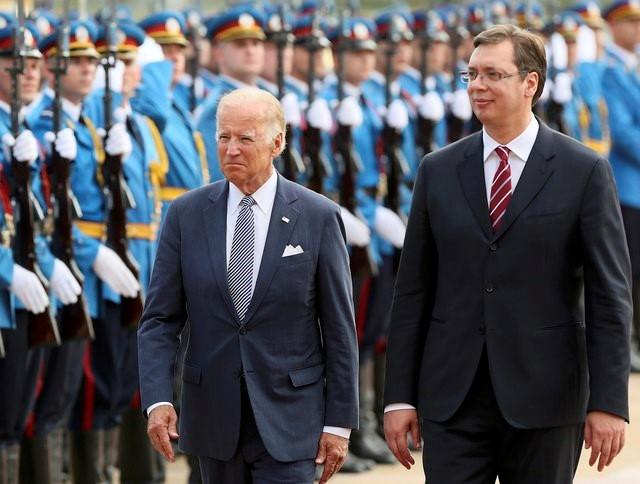
Image of President Biden and President Vučić.

In Southeast Europe there is a small country called Serbia. Serbia is approximately the size of South Carolina and has roughly 7.2 million people. Serbia is a neutral country that has alternated between close communications with major East and West powers. 

Recently, Serbia has captured the attention of U.S. national security experts. Last year Serbia received Chinese military aviation equipment. They were the first to be given the CH-92A combat drones armed with laser-guided missiles. China has been working on improving its drone technology to continue its economic growth  by being a part of the European defense market. China has invested in Serbia to help with coronavirus relief and sustainable energy projects. Serbian President Aleksandar Vučić has referred to Chinese President Xi Jinping as his brother.

Serbia has also received MiG-29 fighters which were donated by Russia. The Mikoyan MiG-29 is a twin-engine fighter jet developed by the Soviet Union in the 1970s.. Moscow has maintained a close relationship with Belgrade, the capital of Serbia. Russia has also sold Serbia the Pantsir S1 short-range air defense systems. This system uses 57E6 missiles to defend against fixed-wing planes and rotary-wing helicopters that may be a threat to the country. President Vučić has spoken of his close personal ties with Russian President Vladimir Putin. 

This week a U.S. Special Forces team, for the first time since the start of the COVID-19 pandemic, arrived in Belgrade to train with the elite Serbian counterterrorism units. The U.S. Special Forces will be focusing on helping train the Serbian military to be able to handle potential threats. 

Seeing as Russia and China currently have strong ties with Serbia, the U.S. is making an effort to improve its relationship as well. By helping the Serbian military, the U.S. could see an increase in trade and military ties with Serbia. Serbia welcomes U.S. support as it tries to become a member of the European Union through economic growth, modernization and a Western-focused international stance. 

boylee2@lasalle.edu

Iraq Working with the U.S. for Political Reform

Politics

Elizabeth Boyle, Staff

Foreign Policy
Former Vice President Biden and Former Iraqi Vice President Nouri Al-Maliki in 2009.

Since President Biden has taken office, one can see a string of international communications with many countries including Germany, China and now Iraq. The U.S. military and the United Nations (U.N.) will be working with Iraq to help the country recover from a recession, move forward with the Parliamentary election and help prevent the resurgence of the Islamic State extremist group  (ISIS).

In 2014 ISIS moved into Iraq, took control of Iraqi cities and militarily acquired large portions of Iraqi and Syrian territory. The U.S. and Iraq worked together in a military campaign to reclaim Iraqi territory and save innocent civilians. In the campaign, the U.S. led the airstrikes and Iraq led the ground action. ISIS was finally pushed out of Iraq in 2017, but many cities had been destroyed and thousands of people were killed. 

In order to move forward in rebuilding Iraq, solidifying government control and deterring future attacks, Iraq is now focusing on its government elections scheduled for Oct. 10, 2021. Iraq does not have a history of free, fair or accurate elections. In an effort to enhance the upcoming election’s legitimacy, the Iraqi government has recently sent a letter to the United Nations Assistance Mission for Iraq (UNAMI) asking for election observers. The U.S. has agreed to provide $9.7 million to UNAMI to help with the election and its preparations. In addition, Iraq will enhance its own security.

 The Special Representative of the U.N. Secretary General for UNAMI, Jeanine Hennis-Plasschaert, has said that the Iraqi parliament has passed legislation for funding of the election, to include registration of all the eligible people in Iraq. This legislation still needs to go through the Iraqi Federal Supreme Court to be finalized. The Federal Supreme Court also certifies election results. 

In the upcoming months, the U.S., in coordination with UNAMI and the Iraqi government, is planning to recover from the pandemic, have economic and political reform and keep its citizens safe while preparing for the election.

boylee2@lasalle.edu

America rejoins international forces during historic weekend

Politics

Aidan Tysinski, Staff

India Today
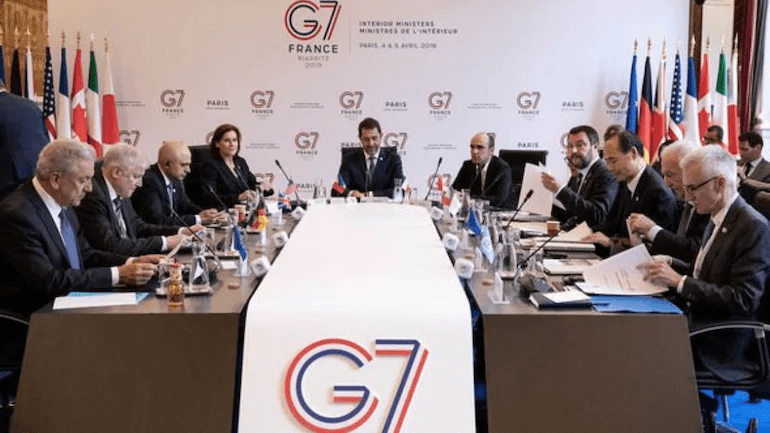
Image of the 45th G7 Summit Meeting, the last in-person summit prior to the pandemic.

Over the weekend, the Biden administration made massive changes to world diplomacy that contradicted many of the changes made by former President Donald Trump. On Thursday, the Biden administration announced its interest in negotiating to rejoin the Iran Nuclear Deal. The next day, the United States officially rejoined the Paris Climate Agreement and on Saturday said America would give $4 billion to a global COVID-19 vaccine program.

In his first speech at the G7 as U.S. President, Biden declared to the European leaders that “America is back.” This is a stark message compared to President Trump, whose “America first” policy often made the U.S. seem isolated from many of its allies. In June 2017, when President Trump announced America was pulling out of the Paris agreement, the French president said the United States pulling out was a mistake, and when President Trump pulled out of the Iran Nuclear Deal, German chancellor Angela Merkel said that the deal was the best way to keep an eye on Iran’s nuclear program.

Both the Paris agreement and the Iran Nuclear Deal were created for different issues. However, they both have support from many other countries around the world. The Paris Climate Agreement is a legally binding document created in 2014 with the goal of limiting global temperature changes to 1.5℃. To do this, each country creates a five-year plan to show how they will reduce carbon emissions into the atmosphere. These plans are created by each individual country that can change their goals during meetings set up about every five years.

The Iran Nuclear Deal was created to keep an eye on Iran and make sure no illegal weapons were being created by the country. The deal places certain limits on Iran, such as the amount of uranium the country can have at a time and the stopping of mining for new uranium. In return, all nuclear-based sanctions against Iran were dropped. The country was strictly looked over by the International Atomic Energy Agency, who made sure Iran was being compliant. When the United States pulled out of the deal, there were no records of Iran breaking any agreements set in place.

Both policies were something Biden pushed to go back to during his campaign. Not only does he think they are good for the country, but they were also policies he helped create during his time as vice president of the Obama administration. In the past, Biden called the Paris Climate Agreement “the most ambitious, inclusive climate agreement in history.” He was also a big defender of the Iran Nuclear Deal when the idea was first created.

Unfortunately for President Biden, rejoining international deals will not be as easy as he hoped. Domestically, many House and Senate Republicans have pushed back on both policies; they fear the Paris agreement is too restrictive for businesses and will get rid of many American jobs, while the Iran Nuclear Deal does not do enough to surveil Iran’s nuclear programs. Internationally, the United States will be greeted with open arms for rejoining the Paris agreement, but there are still issues with the Iranian government, who feel the United States broke their promise by getting rid of the deal and placing tariffs on Iranian goods, crushing Iran’s economy. Many Iranians are also still very angered with what they view as the assassination of Iranian general Qasem Soleimani last January. With many pressures coming from within the United States and internationally, it remains to be seen if Biden can successfully reconnect with old allies and create new ones from some of our most feared rivals.

  tyksinskia1@lasalle.edu

Recent Activity in the South China Sea

Politics

Elizabeth Boyle, Staff

Voice of America
Map of the region.

With all the cold weather here in Philadelphia, I’m sure we are all dreaming of warm weather and sunny beaches. Recently, there has been activity out at sea other than tourists enjoying a vacation. Activity in the South China Sea could be increasing tension between the United States and China. Over the past few months, China has been unhappy with U.S. Naval ships sailing in the South China Sea near islands claimed by China. There have been claims of the U.S. purposefully trying to increase tension with China but, when asked, Rear Admiral Jim Kirk, commander of the Nimitz Carrier Strike Group, assured that the U.S. is only focusing on lawful use of the sea.

         Recently in the South China Sea, China complained that two U.S. aircraft carrier strike teams were allegedly doing tactical drills. The commanders of the U.S. aircraft carrier strike groups had a conference call. Rear Admiral Doug Verissimo, commander of the USS Theodore Roosevelt strike group, made it clear that they were focusing on tactical proficiency and working to improve how well the two ships, the USS Theodore Roosevelt and the USS Nimitz, can work together. He emphasized there was no malicious intent. Verissimo went on to explain the reason for the drill in that location and at that time was because of the travel plans of each ship. The Nimitz was preparing to head home after a 250 day deployment. As the Nimitz was on its way home, the Theodore Roosevelt arrived to patrol the area. The Commanders decided it would be efficient to perform a drill because the ships were crossing paths.

The tension between the U.S. and China in the South China Sea is not something new. The U.S. has accused China of showing military force in the South China Sea to intimidate its neighbors, such as the Philippines and Malaysia. Similarly, China has accused the U.S. of using its navy as a “show of force.” As we enter President Joe Biden’s second month as president, the U.S.’s relationship with China may be on the path to significant change. President Biden, along with Secretary of State Blinken and Secretary of Defense Austin, has used the first few weeks of the new administration to improve the U.S.’s international relations. The U.S. has contacted many countries including Canada, The United Kingdom, France, Japan and China. On Feb. 6, 2021, President Biden and President Xi Jinping had their first conversation of the Biden presidency. The American public should keep an eye out for future discussions between President Biden and President Xi Jinping as they sort out how the U.S. and China will address a relationship dealing with the countries’ economies, human rights and military competition.

boylee2@lasalle.edu

Biden administration looks to next challenge: gun reform

Politics

Aidan Tysinski, Staff

Joe Biden for President
Biden Administration campaigning on a gun reform platform.

Lost in the chaos due to former president Donald Trump’s impeachment trial, last Sunday marked the three-year anniversary of the deadly Parkland shooting. The attack was carried out by a former Stoneman Douglas high school student, who killed 14 students and three teachers. The attack led to many protests around the country for more restrictive gun laws, or to ban the owning of semi-automatic rifles altogether.

On Sunday, to remember the victims, President Joe Biden put out a statement on the @POTUS Instagram account to show his sympathy for the victims as well as his plans for gun reform. In the statement, Biden says “The Parkland families have spent birthdays and holidays without their loved ones.” He then shows his support for what their families have done, saying they “have showed us how to turn our grief into purpose — to march, organize, and build a strong, inclusive, and durable movement of change.” Biden ends the statement by calling on Congress to pass bills that require background checks, ban assault weapons, ban high-capacity magazines and eliminate immunity to gun manufacturers, who Biden says have “knowingly put weapons of war on our streets.”

Politicians and groups were quick to come out with responses following the statement. The NRA Instagram page issued a post highlighting the Biden administration’s plan for gun reform, then ended the post by saying “NRA will NEVER stop fighting for the 2nd Amendment.” Freshman congresswoman Marjorie Taylor Green posted a picture of a line from the Second Amendment from the U.S. Constitution, which states “The right of the people to keep and bear arms shall not be infringed.” However, not every statement was politically motivated. Florida Senator Marco Rubio said that the parents’ “grace in the face of the most traumatic loss has been humbling.”

On Jan. 8, former house representative Gabrielle Gifford, who was shot during the Tucson shooting in 2011 that killed her staffer Gabe Zimmerman and nine-year-old Christina-Taylor Green, sent out a tweet for the ten-year memorial of the shooting. Biden responded to the tweet by saying “I pledge to continue to work with you — and with survivors, families, and advocates across the country — to defeat the NRA and end our epidemic of gun violence.” This tweet also got swift pushback from Republicans.

Like many issues Congress is dealing with, gun reform is a very partisan issue that seems to have no end in sight. During the 2020 primary, many Democrats had different plans for gun reform, such as using the federal government to buy guns back from citizens, to acquiring gun licenses and background checks through the federal government. Republicans, on the other hand, have called for red flag laws and some universal background checks, but have failed to pass several gun laws that have reached the senate and house floors. There is also the issue of the Second Amendment, which states that citizens have the right to own weapons. The NRA’s goal is to protect the Second Amendment, which puts Republican lawmakers in a tight spot, since the NRA donated close to $30 million to Republican campaigns in 2020. It seems that President Biden and the Democrats will once again be facing an uphill battle to pass gun reforms that are opposed by a huge Republican donor and several Congress members currently serving. 

tyksinskia1@lasalle.edu

The Modern Day Russian Revolution

Politics

Danielle O’Brien, Staff

NYTimes
A Russian protest for the unjust arrest of political dissidents.

As the world watches Russia erupt into pro-democracy protests, we must question what has been the catalyst to push them into this state? Was it the long periods of systematic oppression? The silencing of people’s freedom of speech? There are many explanations as to why the Russian people are tired of the status quo, but the martyr of these protests could be Alexei Navalny, the Russian opposition leader who escaped an assassination attempt last August, has now been sentenced to serve three years in prison for seeking treatment outside of Russia.

 Alexei Navalny, an outspoken political opponent to Vladamir Putin, has gained support from the youth of Russia as he promises to return Russia to its rightful owners: the people. Navalny, a lawyer, is a popular geopolitican, posing as a threat to President Putin himself best known for his bravery to stand against Russian corruption even in his early days as a lawyer, exposing insider trading. Navalny has attracted his youth following through his connections to social media and YouTube channels dedicated to investigating the higher ups in Russian society, including President Putin himself. Navalny posed a clear threat to Putin in the upcoming September elections with his rapidly growing following. Recently, however, Navalny’s political career has taken a bleak turn;within this last week, he has been sentenced to spend the rest of a previous house arrest sentence in jail. The sentencing was an obvious reach for the Russia government trying to hold back Navalny from becoming involved any further in politics. However, the government had missed out on their chance to silence Navalny in August considering he has an even bigger following now, specifically as a result of such blatant corruption. 

Navalny was poisoned last August, by poison nerve agent novichok, a poison specific to Russia. Miraculously, Navalny survived. As Navalny was transported to a hospital in Germany for treatment of his poisoning, he was to be charged with violation of his sentencing from a previous embezzlement case, and arrested as soon as he landed back in Russia.  In 2014, Navalny and his brother were put on trial for embezzlement, a case which was deemed by the European court of human rights as “arbitrary and manifestly unreasonable.” During his retrial in 2017, his brother was sentenced to three years in prison, while Navalny was released to five years on house arrest. Russian officials who charged Navalny with violating the terms of his suspended sentence point to his recovering in Germany and supposed “failure to report ” to his scheduled reporting times. Considering Navalny had spent two years of his sentence on house arrest, the remaining almost three years will be spent in prison, one can assert that Navalny’s imprisonment is a clear sign from the Russian government of his powerful effect on the Russian public which government officials, like President Putin, wish to silence. Nevertheless, this is even more unlikely now considering the support Navalny has gained in the face of Russian corruption. In fact, thousands have taken to the streets to break their silence on the issue.

It is reported that 5,100 protestors have been arrested in Russia as a results of these protests. Clips of the treatment of such protests by police have been circulating throughout social media.. Even from prison, Navalny continues to urge on his supporters, pleading for them to “overcome their fear and free the country from a bunch of thieves.” In a cold Russia, we are witnessing history being made as hundreds of thousands of Russians are breaking their silence to take a stand against the Russian establishment.

obriend11@lasalle.edu