The places that shape us: Founders’ Hall — Editorial

Editorial

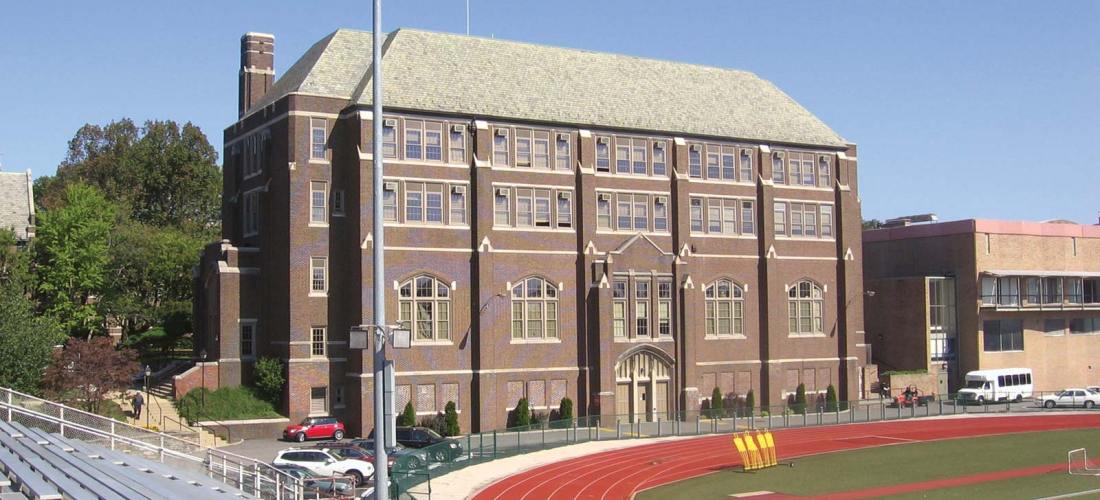
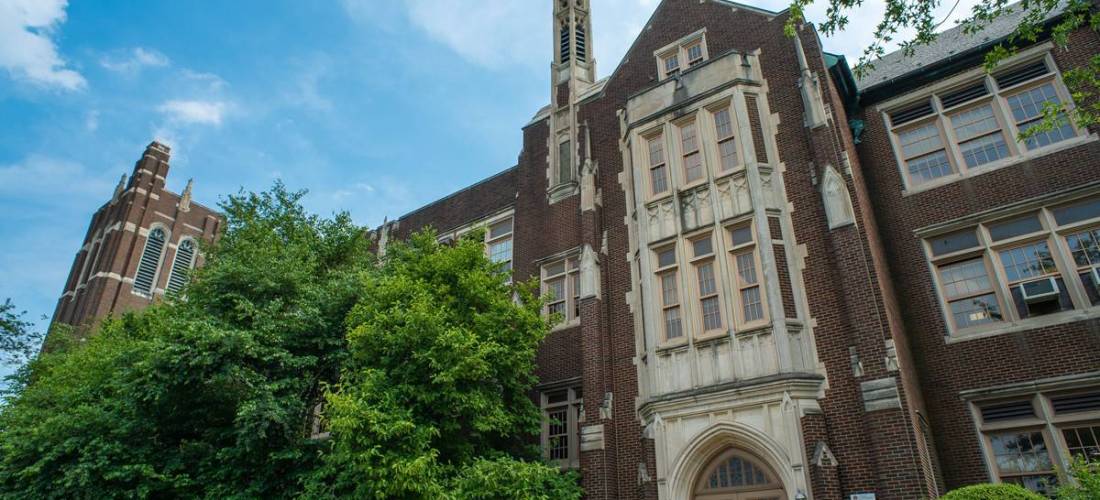
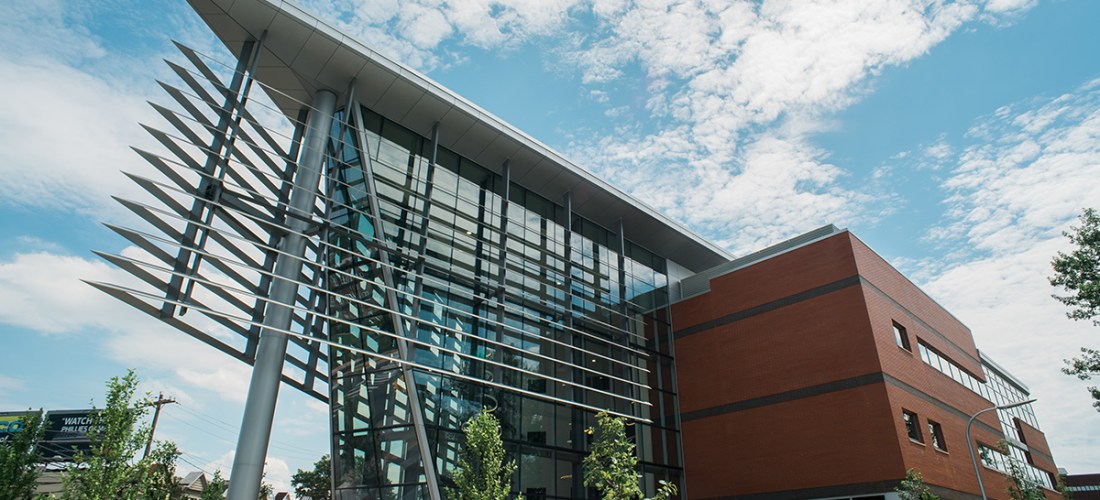
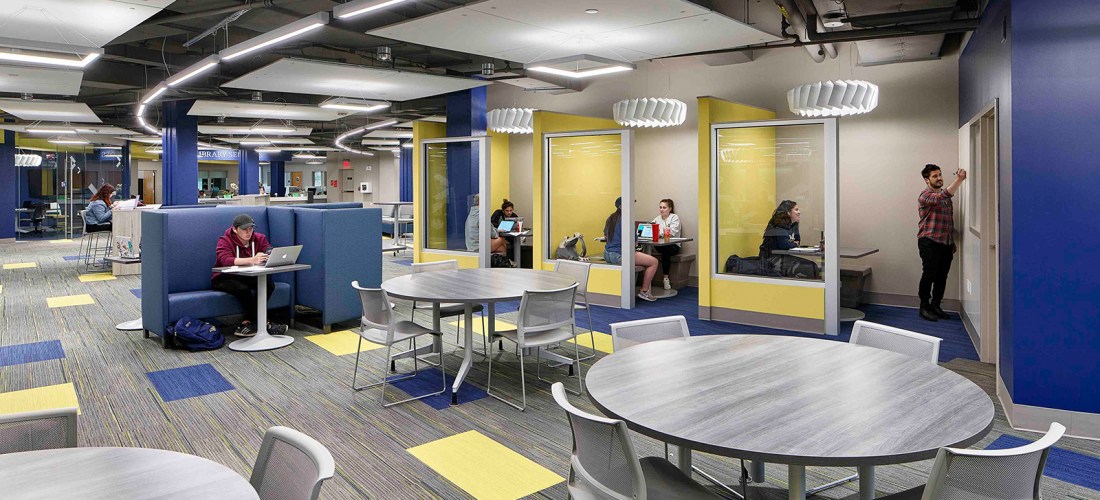
Last time in The places that shape us, we took a look at the La Salle Communication Center and its humble stature and beginning. In that article, we made reference to the visually stunning Founders’ Hall, home of La Salle’s business programs. We heard the requests to dive deep into what is perhaps La Salle’s biggest success story: Founders’ Hall. 

What officially started in 2014 was one of La Salle’s most ambitious projects to date: building a home for the budding success of La Salle business. While the business school has its roots all the way back in the 1870s as the Commercial Department of La Salle College, and there have been official La Salle degrees in accounting and business administration since the 1920s, the change of the program in 2003 when it became the School of Business jumpstarted an exponential growth in interest and success of business students from La Salle. We at the Collegian watched this boom occur with several of our staff members coming through the businesses program over the years.
La Salle University

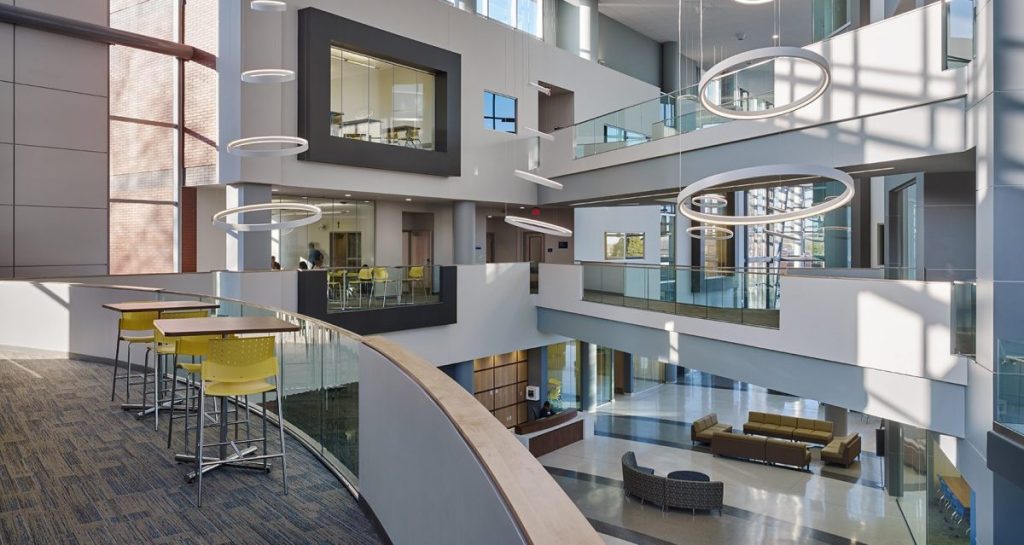
We truly love everything that the business building has to offer. We would be lying if we said it wasn’t hard for us to overlook the $35 million dollar price tag as tuition rates continue to rise for undergraduates, the architecture that does not match the rest of La Salle, or the rest of Olney/Germantown for that matter and the constant preferential treatment of the business program by parts of the administration and outside organizations, but with the love, care and resources that went into the building’s creation, we can understand why business students love it, why psychology students envy it and why it is a frequent selling point for incoming students.

One of the highlights of Founders’ Hall that does not get talked about a lot outside of the actual business major is the John Fries, ‘66 and Maureen A. Fries Trading Room, which is packed with actual Bloomberg terminals, one of the top-of-the-line software/hardware systems used by some of the biggest names on the stock market to monitor market data and analytics. The fact that students have a chance to train on these and run simulations is amazing and will really allow some students to get a leg up in the professional world. Some other boons that Founders’ has that might be hidden to Lasallians who don’t frequent it much are the Center for Entrepreneurship, a closely co-operative working center that is designed around working with students and their small business ideas, the Center for Sales Excellence, an interactive lab used by a variety of majors and the podcast recording booth used to create the “20th & Olney Podcast.”

La Salle University

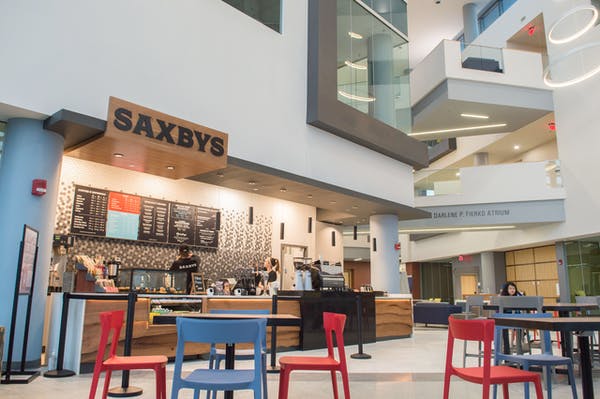
It’s no surprise to us that with all of these assets and so much more behind them that business students are graduating and finding their way in the job market every day. But, there are plenty of people who frequent Founders’ Hall that may have never taken a business course. La Salle tries to keep its community engaged and connected, which is why a lot of the resources that went into creating Founders’ make it a place to shape the whole community. Perhaps the most notable of these is the La Salle Career Center. Located in Founders’ 128, the Career Center helps students from all majors find their way to internships, jobs and whole career paths every day. We’d be remiss not to mention the student-run Saxby’s Cafe, which we all know is a cool idea and a nice dining option, but it really does not get enough credit here at La Salle. There is a whole cafe on La Salle’s campus that is a completely, nearly-independently run business with a student CEO and student workers — it’s definitely unique to say the least.
Saxby’s Coffee

“One of my favorite things about La Salle is how our academic buildings are modeled after the environments in which we’ll be working after graduation. The environment of Founders’ Hall is top-notch for learning and studying. Sometimes I go there just to marvel at its beautiful architecture,” said our Business editor Elizabeth McLaughlin.

While we at the Collegian love to call out the administration and student body on things we find dissatisfactory, including many of the problems Founders’ Hall has caused in the past, we cannot help but commend the University on the masterclass of business education that they have created for us Explorers. The School of Business, and the gigantic Founders’ Hall that encompass it, are a shining star for the Lasallian community, and we can’t wait to see it continue to reach new heights.

We also can’t wait for some of that innovation to come to the rest of campus, but that’s a story for another day.

— The Editorial Board
La Salle students’ history of not really caring about clubs — Editorial

Editorial

Header Image: Kimmel Bogrette Architecture

The Collegian has a long history calling out the students of La Salle on their lack of school spirit and general lack of interest in student organizations. We did not want to carry on this tradition, but the state that many student organizations are in right now is heartbreaking. This semester, the Collegian is actually more robust than it has been in a long time in terms of our editorial staff, but writer participation is trending low. Beyond this though, nearly every organization on campus is in a rebuilding period, and some are on the verge of fizzling out. 

We would say that this is because of the incoming classes being lost after spending time in Zoom university, but unfortunately, the La Salle student body’s lack of interest in student organizations is not a direct result of the pandemic, but rather a consistent part of La Salle’s students throughout history. We wouldn’t make this claim if we did not see it firsthand.

In a 1999 piece from the editorial board, the Collegian staff at the time led with “La Salle students have frequently been characterized as apathetic by faculty, professors and other students,” and we regret to say that the last 22 years have brought us right back to this conclusion. As with all our editorials, we want students to send in letters to the editor and explain why we’re wrong.

We want people to prove us wrong. Get involved.

In a September 1985 issue of the Collegian, assistant news editor Chris Johnson wrote, “During the college years, participation in activities leads to the development of social and leadership skills as well as learning to cooperate with faculty, administrators and other students…” and goes on to explain that it can be difficult for La Salle students to deal with social and education based stressors “but if they are willing to involve themselves in organizations… college life will be much easier.”

Now more than ever, especially as we approach the mid-semester slump, there are infinitely more stressors weighing on us, and student organizations can be an excellent outlet to recover some mental energy and resist stressors. While the university does provide outlets for counseling and stress relief, almost always they require significant mental input to actually enroll in or attend, which might in itself be a stressor. On the opposite side, student organizations are often communal gatherings that encourage stress relief through creativity and participation in a more personal and simple manner.

In 2019, the editorial board said in a biting statement to the community “[Our problem] is not digital media that edges us out, but the apathy of the greater student body.” The Collegian was pretty slim at that time, and the board was no doubt using the editorial staff at the time as an example of the effects of this apathy, but now we can look toward other student organizations through this lens and see skeleton crews.

Groups like Improv 101 and WEXP which in previous years had large casts are down to fewer than five members, La Salle TV shows are often produced with a crew no larger than five people including the station manager, some clubs and cultural organizations struggle to meet regularly as they cannot even fill up a Zoom meeting with enough participants to make breakout rooms but still students make no effort to get involved. 

We understand it can be difficult to find information regarding student organizations without a formal in-person activities fair, but professors, fellow students and the endless social media pages connected to La Salle can no doubt push people in the right direction toward certain groups. Ask around, take a look and find a group.

Like we said, please prove us wrong and get out there, get involved and find your passion here on campus.

— The Editorial Board

The places that shape us: La Salle Communication Center

Editorial

Header image: @LaSalleUniv via Twitter

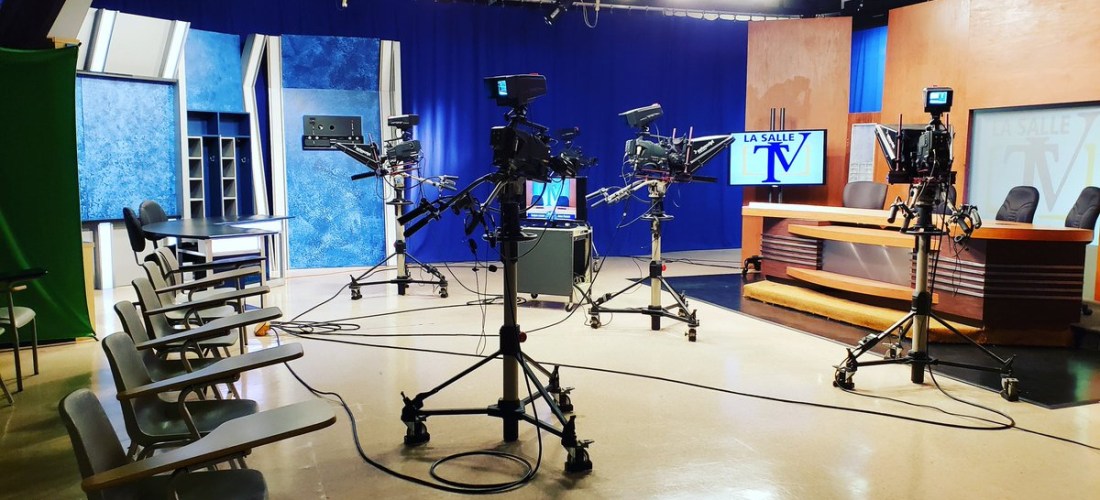
Welcome to a new series of editorial pieces in which we highlight some of the landmarks around La Salle’s campus that are formative, important, positive or interesting. Across campus, there are places we come and go to every day, but depending on what major or concentration students find themselves in, some of these places might feel a bit more like “home” than others. For many La Salle students and graduates, the La Salle Communication Center becomes a home away from their residence hall or place of living. Currently, there are around 150 students registered as communication majors, and hundreds of students have graduated from the program since it was founded. 

Image courtesy of Jakob Eiseman

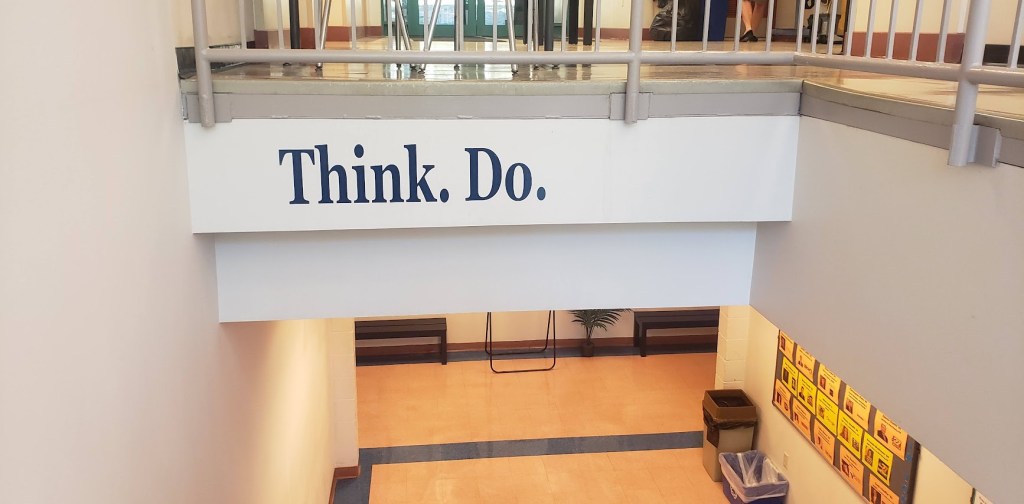
The beauty of having a university as educationally diverse as this one is that we all experience the campus, and all it has to offer, very differently. While many students will find themselves in each academic building at least once during their time at La Salle, it’s not just the buildings that matter, but the unique culture that each building’s teaching staff and student body brings. The Communication Center is always buzzing with creative ideas, whether its students discussing their projects in the lounge, La Salle TV hosts organizing segments and bits for their upcoming episodes or professors talking to students about their career prospects and goals. We find the culture of the Communication Center to be one of teamwork and camaraderie where people can feel free to express not only their opinions, but their creativity.

ID Team — La Salle University

La Salle’s communication program is ranked 34th in the North Region on U.S. based on the News & World Report’s 2018 list of best colleges, and with good reason. Communication is an extremely competitive field, and while La Salle may not have a multi-million dollar state-of-the-art recording studio or creation hub like say University of Maryland or Ohio University, it still facilitates students’ drive to create to an extremely personalized degree. The program is split up between public relations, mass media and journalism, interpersonal communication and now sports communication. The com majors on the Collegian staff are split between these programs and we can say definitively that the freedom of choice the com program gives is unlike anything else. We have partnered with La Salle TV to bolster our sports section by hosting “SportsLine” on the Collegian’s website. We have a large crossover with students from the mass media and journalism concentration, with courses such as in-depth journalism and news writing helping students get connected with our paper. 

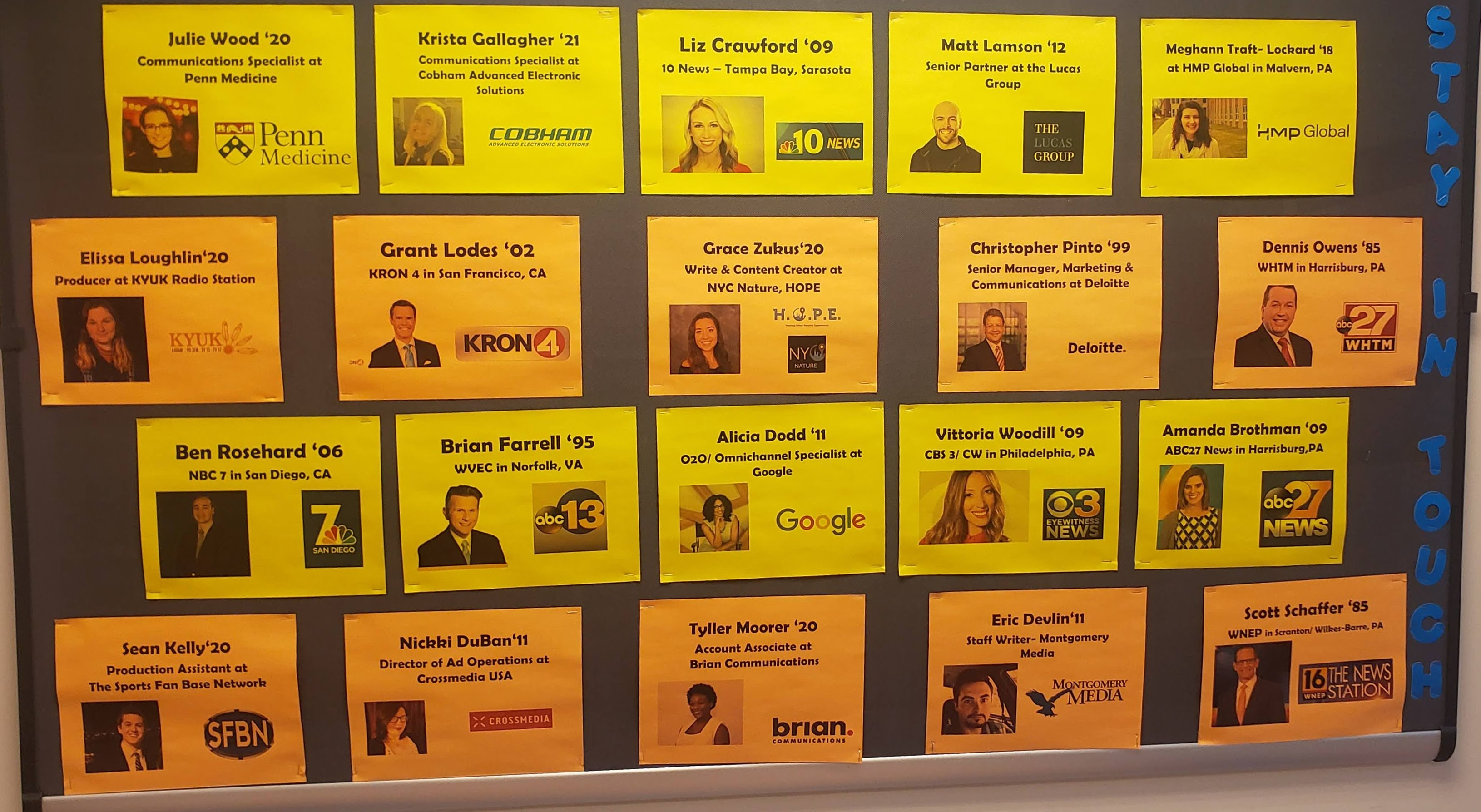
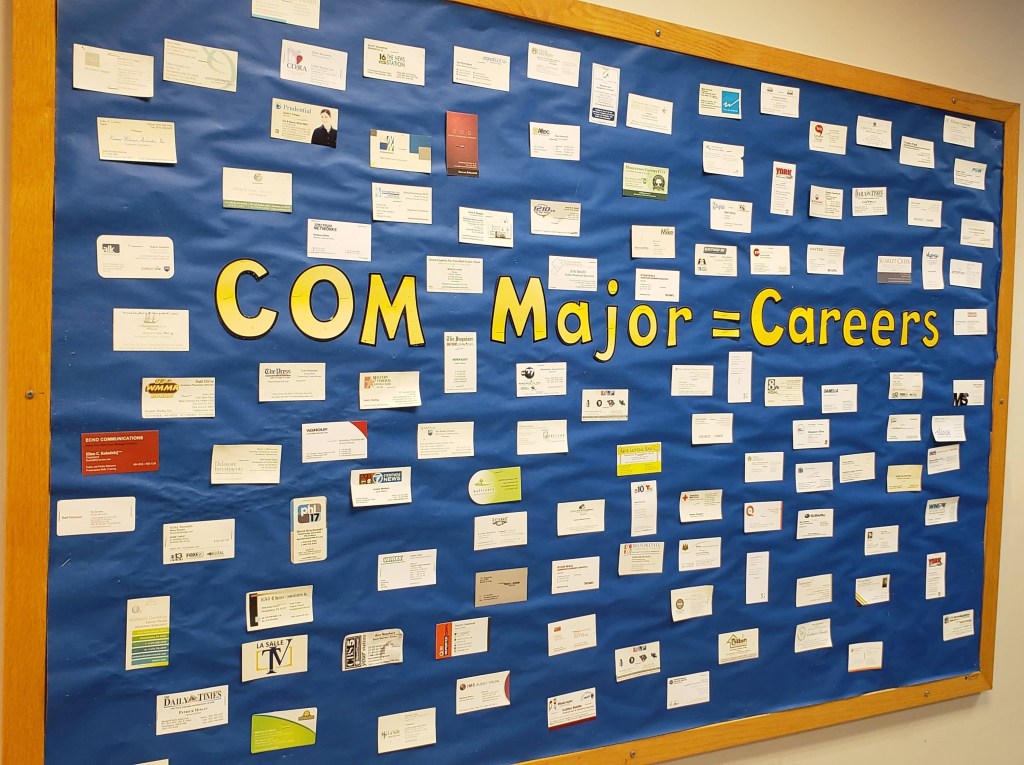
The walls of the Com Center are lined with success stories of alumni that have moved into jobs in media, public relations, news, creative writing fields, technical writing fields, interpersonal communication and counseling-related jobs and many, many more. Former editors for the Collegian make up parts of these walls, and others make up parts of our news influences at local and regional outlets like ABC10 and the Philadelphia Inquirer. 

When what is currently the Communication Center opened in 1964 as a school for orphaned girls run by the Sisters of St. Basil the Great, the building was not exactly designed to be a powerhouse for journalism, media and public relations, but that’s exactly what it is. The culture of communication at La Salle is working from the ground up and making a name for yourself on campus, just like it is in the actual communication field, and we believe the program as a whole reflects this as students make the most of their opportunities in the small, old building every day.

Images courtesy of Jakob Eiseman

The Communication Center sits removed from most of campus’s academic buildings, and pales in comparison visually and architecturally to Founder’s Hall, but that does not make it any less important to us at the Collegian, to communication students and to La Salle’s impact as a community on the communication industry. While Founder’s Hall is a spectacle in itself, which will no doubt be featured in The places that shape us, the Communication Center, and those that call it home, still manage to hold themselves up to the looming business school, the incredible nursing program and the wide variety of talented groups within the school of arts and sciences and say “we will succeed, no matter what.”

If you have suggestions for what place, building or landmark on campus we should cover next, please feel free to send suggestions to collegian@lasalle.edu. We are looking forward to diving deep into the culture and community that surrounds each specific area on campus this year and need your help to get insight into what makes our campus special.

— The Editorial Board

Philadelphia live music is back and it means a lot — Editorial

Editorial

Header Image: PHLCVB

It’s been a big month for La Salle Students and music. Buzzing in the La Salle student community was Made In America (MIA) two weeks ago, and then the Harry Styles’ concert in Philadelphia this past weekend. The implications of these music events’ decision to come to Philadelphia are astronomical for the student body of La Salle. One of La Salle’s main allures for potential students has been enjoying all of the art and entertainment throughout the city, and now students can finally enjoy them once again. 

One La Salle student had this to say about the experience, “Last Friday, Harry Styles performed at the Wells Fargo Center in Philadelphia for thousands of his fans, including my best friend and me. We sat in the tenth row — close enough to see his facial expressions and feel the energy that he and his band were giving off. But before the concert even started, fans were lined up at entrances, merch stands and of course bathrooms.

When Harry finally came on stage, he levitated up through the center of a 360° stage, promising to equally distribute his face to each area of the arena. He performed most songs off of his Fine Line album, a few from his self-titled debut and of course had to throw it back with ‘What Makes You Beautiful’ from his time in One Direction.

Emily’s experience is one that resonates with the majority of La Salle students. The return of festivals and pop icons to Philadelphia has revitalized campus and shown that despite continued mask mandates and the subsequent immediate return to Zoom university, music is one of the main things that brings the Lasallian community together. The concert venue’s opening is just the first step in our return to normalcy.

MIA also returned to Philadelphia in full force this year. Another La Salle student said that he was ready for the return of live music. “Made in America was a kind of cultural awakening for me; live music is just so much better than recorded music and, now that we can go back to venues, I think Philly is finally coming back,” he said. The MIA and Harry Styles circuit in Philadelphia marks the beginning of a massive return of concerts ranging from Phoebe Bridgers to Glass Animals. As these artists return to Philly, we are bound to see more students enjoying the benefits of city life and the La Salle experience outside of campus. 

Now that live music is back and people can return to the Philly nightlife, we can get a glimpse of what was lost before the pandemic. While it is still important to remember to follow local guidance on masking and COVID prevention, it is also important to see life returning to normal. Part of the Lasallian experience is experiencing all that Philadelphia has to offer, and although it is still a bit tough the return of live music is a good sign of what is to come. Universities are supposed to be a melting pot of cultural education and appreciation for the arts, and with La Salle being located in such a culturally rich and diverse city like Philadelphia, you would be hard pressed to find someone who chose any school in the city just for the school and not also for the city.

-The Editorial Board

Welcome back, it’s time to explore — Editorial

Editorial

Header Image: Britannica

First and foremost, we at the Collegian would like to say hello. Hello to the class of 2025. Welcome back to our dedicated upperclassmen and alumni, hello to all of the new and returning professors and staff at La Salle. Most of all, hello again to the readers of the Collegian. We’ve been around since 1931, and while we certainly can’t speak for every previous iteration of the Collegian, we appreciate you being by our side, and we can’t wait to continue this publication’s legacy.

We were there through the Spring 2020 semester, albeit as a PDF that got sent to your La Salle portal, we were there through the Fall 2020 semester when the world realized that maybe this temporary move to remote work and learning would last a bit more than a few months and yes, we were there last semester when we learned what the Collegian looks like in a pandemic-inspired online format. We never left, and we always tried our best to provide our community with news, entertainment and escape. But now, after all that, we continue to change and can definitively say “We’re still here.”

It has been one and a half years since former La Salle President Colleen Hanycz let the Lasallian community know that our little piece of Philadelphia at 20th and Olney was going to be largely empty for quite some time. Since then, we have gone through a lot of changes. As was mentioned in an article published in March 2021 by the former Editorial Board titled “COVID-19 and its impact on community at La Salle,” “almost half of La Salle’s sports teams have been cut, resident life has changed dramatically, clubs have made immense accommodations to their members and most importantly the education of each and every student has drastically shifted from traditional schooling to an online format.”

Add to that list that our President, Dean of the School of Business, Vice President For Student Affairs and Enrollment Management and significant portions of staff at every level have left or have been replaced and that we have come full circle back to in-person instruction and, yeah, we would say it has been an eventful time to be an Explorer over the past few years, for better or for worse.

We have progressed significantly, since even last semester, in terms of health and safety regulations, and the general anxiety caused by being on campus in a pandemic has been lessened. However, those social aspects of campus life are still a bit strange. While it is nostalgic and humorous to hear incoming first-year students ask how to get to Olney Transportation Center, what a Late Night event is or how to get to PackCity, when you take a step back, you realize that there are second, and even third-year students, asking the same questions — students that are members of the Lasallian community, but never had a true Lasallian experience. For the class of 2024, their first year, which was supposed to be a time to make friends, enter social circles, join student organizations and find their niche at La Salle was largely spent in front of a computer screen, or in a small bubble of people they barely knew. They have no stake in the Treetops versus B&G debate and most of them have never seen the inside of St. Basil’s Court or Neumann Hall, but, above all, some of them still have to find their way here.

We bring up this point to show that it is not just the first-year students exploring La Salle for the first time this year. All of us, faculty, upperclassmen, alumni and community alike, have things we miss, things we need to learn and things to figure out as a group. While we all readjust, we should take some time to remember what brought us all together in the first place: exploring. Our previous experiences with La Salle are great memories, but it is simply not the same university it was four years ago, or eight years ago, or any before that. We all have some exploring to do: seeing new faces, learning new things, understanding new perspectives and most importantly, learning how to thrive in the face of COVID. 

To those exploring on campus, say hello to your fellow Lasallians, get to know some new faces, reconnect with some people you haven’t seen in a long time and keep supporting each other as we all explore this new world together. To those continuing their journey off-campus, graduated or remote members of the La Salle community, understand that while things are always changing, and constantly learning and understanding change can be difficult, if we all respect and connect with one another, we’ll get through it.

Welcome to the Fall 2021 semester.

— The Editorial Board

La Salle’s new interim presidency and what it means for the Lasallian community

Editorial

The Editorial Board

Header image: La Salle University

The La Salle community received word on Monday that we would not be starting off the fall 2021 semester with a new full-time president, but rather an interim president who will be steering the ship until a Presidential Search Committee concludes their search and selection process. Timothy O’Shaughnessy was chosen by the La Salle University Board of Trustees to serve in the role and will not be a candidate for the presidential position beyond his time in the transitional period. 

The announcement, penned by William W. Matthews, III, Esq., a member of the class of 1990 and the La Salle Board of Trustees, detailed that a new president is planned to be announced by “early 2022.” Assuming there will be another transitional period going into the spring 2022 semester, the new president will likely be in their office in a full-time working position by the beginning of the fall 2022 semester. So, until then, Interim President O’Shaughnessy will be serving the Lasallian community and carrying on President Colleen Hanycz’s work in the office. For a full recap of the announcement, please look to our News section.

La Salle University

“We sought a candidate with senior administrative experience, a deep knowledge of Catholic education in Philadelphia, an understanding of our university and a firm commitment to the Lasallian mission — all of which Tim brings to this role,” said Matthews in his letter. Prior to his career on the La Salle Executive Cabinet which began in January of this year, O’Shaughnessy worked as the Vice President of Finance at Aramark where he led their business, sports and entertainment group. From 2008 to 2012 O’Shaughnessy cut his teeth working in the academic field as the CFO of St. Joseph’s Preparatory School. In the past he also served as an audit committee board member for Holy Family University, a board member of Cristo Rey Philadelphia High School and director of Polonia Bank. O’Shaughnessy’s most notable career achievement, however, is his role as the CFO of the Archdiocese of Philadelphia. As CFO, O’Shaughnessy oversaw millions of dollars in budgetary improvements through eliminating deficit spending.

With that said, while O’Shaughnessy should not be expected to make any major changes in his time as interim president, La Salle’s current financial woes could certainly use someone with a background in handling fiscal issues. Many students have watched La Salle lose numerous amenities that were originally promised to them, ranging from cut sports teams, to sold art, just to keep the school relevant without raising tuition by large amounts. O’Shaughnessy’s actions as interim president will no doubt be closely monitored by the Board of Trustees and his Executive Cabinet, however, it may prove beneficial to the university if O’Shaughnessy is able to flex some of his financial redevelopment muscle, or at least lay some groundwork for it. With the Archdiocese, this was mainly done through layoffs and the sale of real estate, which we on the Editorial Board stringently recommend avoiding, as selling Lasallian history does not sit well with the community, as is evidenced by the ongoing conversation regarding the sale of the La Salle Art Museum’s collections. The armory is an option, as it is so far removed from campus, but other historic buildings may become problematic if plans are devised to sell them.

While O’Shaughnessy’s career boasts a number of CFO positions, and he served as a part of the Lasallian community for a short time before being appointed, it is worth noting that he will be taking up the mantle at a paramountly important period for La Salle. Just this week, the university will begin distributing the Pfizer COVID-19 vaccine to students and members of the community, cases of the virus on the university’s campus are in the single digits and a new class of incoming freshmen will have to face COVID-19’s implications on campus starting as soon as the next Explorientation. 

The Business Journals

In her time with La Salle, President Hanycz accomplished many major changes including the tuition reset in 2017, the founding of the De La Salle Institute for Advanced Teaching and Learning, reforming the core curriculum, starting Project Compass and perhaps above all, guiding the Lasallian community through the transition to remote and hybrid learning and facilitating a safe return to in-person teaching with no major incidents and a general feeling of public health safety among undergraduates. The plans that were put in place in regards to COVID-19 during Hanycz’s tenure, no doubt heavily influenced and touched on by the Board, Executive Cabinet and the Student Wellness team, appear to be working well, and if they are continued to be supported by O’Shaughnessy and his staff, La Salle could very well return to the campus we remember.

The Lasallian community needs to recognize that O’Shaughnessy taking the role of interim president is a step back in terms of diversity, even if it is a temporary position. President Hanycz made history when she became the first lay and female president of La Salle in its over 150 years of operations. Especially with all that has gone on in the world in the last two years, partnered with the university’s continued message of standing in solidarity with the African American community and other minority groups in America, we urge the Presidential Selection Committee to take diversity, inclusion and representation very seriously when choosing their candidates for La Salle’s 30th president.

We at the Collegian wish Interim President O’Shaughnessy success in his work with the Lasallian community, thank President Hanycz for her time spent with us since 2015 and urge the entire Lasallian community to be engaged and involved with university announcements regarding presidential selection and to voice their opinions to university administration regarding potential candidates.


Letters, guest columns and opinion pieces will be considered for publication provided that they meet the editorial standards of The Collegian. All letters must be received by the end of the day Monday to be considered for the current issue. Letters can be submitted via email to abbateb2@lasalle.edu. The Collegian reserves the right to condense or edit submissions. Weekly editorials reflect the views of the editorial staff and are not representative of the university or necessarily the views of the rest of the Collegian’s staff. Columns and cartoons reflect the views of the respective writers and artists.

Who should be La Salle’s next president: the case for Brother Ernest J. Miller

Editorial

The Editorial Board

In January, it was announced to the La Salle community that La Salle President Colleen Hanycz would be leaving the University and entering a new role at Xavier University in the fall. This announcement left many Lasallians to wonder who would fill Hanycz’s shoes. Since the announcement, no public comment has been made about the institution’s search for a new leader. Given the effects of the pandemic and unceasing changes cast on the University, however, it is critical that La Salle’s next president is up for the job. La Salle needs someone with higher education experience who has a pulse on the needs of students and faculty, a commitment to the Lasallian mission and an understanding of the greater issues of today. The editorial board sees an obvious candidate for the role: none other than La Salle’s very own Brother Ernest J. Miller.

La Salle needs a president who understands the inner workings of the institution. The editorial board believes that the University should look inward for hiring La Salle’s next president. An ideal president for La Salle would be one which is able to identify and understand the unique needs of the institution’s students and faculty. An ideal president has already developed relationships with those students and faculty and can use those relationships to inform decisions he should make about the University. For a candidate to have a pulse on the needs of the University is an incredible advantage for the University. Brother Ernest exceeds these expectations. Brother Ernest is currently in a leadership position at La Salle, but in no way is he a shadowy figure in an ivory tower. Frequently visiting classes, attending Explorer Cafés and being a friendly face on campus, Brother Ernest appears to have a wide array of connections at the University which would make him an exceptionally personable leader. 

La Salle needs a president who is closely tied to the University’s mission. Brother Ernest joined La Salle University in 2015, but has been a Christian Brother for decades. He also has been a Lasallian educator for years, sharing the Lasallian mission at several Lasallian institutions. Serving as the vice president of mission, diversity and inclusion, Brother Ernest naturally has a deep understanding of and passion for the University’s mission. Most students can recall that it was Brother Ernest to bring the mission alive in our classrooms 一 introducing us to Saint John Baptist de La Salle. Ultimately, La Salle needs a president who makes decisions with consideration to our mission and identity; the vice president of mission, diversity and inclusion is, thus, a natural choice. 

La Salle needs a president who understands the issues of today. As the vice president of mission, diversity and inclusion, Brother Ernest has led the institution’s efforts to be a more inclusive environment that embraces diversity. Under Brother Ernest’s leadership, the University created the Joint Commission on Diversity, Equity and Inclusion, whose several workstreams aim to address social issues on and around campus. Also, if assuming the role of president, Brother Ernest would be the institution’s first Black president, bringing to the role a unique perspective which might be used to better the experience of Black students at the University. 

If Brother Ernest is not the ideal candidate for the job, we don’t know who is. Brother Ernest certainly meets the criteria of the ideal Lasallian president. Whether Brother Ernest is interested in consideration for the role the editorial board is not aware; though, should the Christian Brother be interested, he should be at the top of the University’s list. The editorial board is confident that, if assuming the role of La Salle University’s next president, Brother Ernest could achieve greatness for the institution and continue the Lasallian tradition on 20th and Olney. 


Letters, guest columns and opinion pieces will be considered for publication provided that they meet the editorial standards of The Collegian. All letters must be received by the end of the day Monday to be considered for the current issue. Letters can be submitted via email to abbateb2@lasalle.edu. The Collegian reserves the right to condense or edit submissions. Weekly editorials reflect the views of the editorial staff and are not representative of the university or necessarily the views of the rest of the Collegian’s staff. Columns and cartoons reflect the views of the respective writers and artists.

COVID-19 and its impact on community at La Salle

Editorial

Hoping for a return to togetherness come fall

The Editorial Board

It has been a year since our campus closed down due to the coronavirus. On March 23, 2020, La Salle President Hanycz cancelled all classes for one week in preparation to fully move to remote learning. Since then, almost half of La Salle’s sports teams have been cut, resident life has changed dramatically, clubs have made immense accommodations to their members and most importantly the education of each and every student has drastically shifted from traditional schooling to an online format. What started as a two-week-long precaution has resulted in a year-long shift to what many refer to as the “new normal.” For La Salle, mirroring the world at large, this has meant a loss in our much-valued community. With vaccines being disseminated across the country, the situation seems to be in flux and many students and members of the editorial board cannot help but wonder: where will we go from here?

This year, resident life has changed drastically, and the impact has been a lack of togetherness on campus. For example, currently, dorms have a one visitor per room policy, and the visitor must be from the same dorm building. The only place students are allowed to meet in groups are resident lounges, which have occupancy limits of five. Students have been forced to deal with massive lines outside security checkpoints when trying to get into their dormitories because they are currently required to show campus security their IDs as well as swipe into campus, making the entire process of entering their own rooms significantly longer. At this time, resident life does not seem to have any plans of lifting these restrictions this semester, leaving many to wonder what campus will look like come the fall semester. While we can only hope things will actually improve with lessening case numbers and higher vaccination rates, it seems La Salle will continue its policy of following the rulebooks of surrounding schools, which we can only hope might mean decreased regulations by August.

The online classroom landscape has also had a negative impact on community at La Salle. Many of us can picture a bustling campus mid-Monday, as students would rush across the Quad to their 12:15 classes in Hayman. On sunnier days, students would populate the Quad, drinking Starbucks or playing frisbee, while others in Wister would look on from their desks. Then, we did not know what we had, and we never imagined our watering hole would one day be gone, and we would no longer have the opportunity to enjoy our Oath Pizza by the tables on the Quad. Now, even with a handful of in-person classes, the campus no longer offers the same atmosphere. Online classrooms have an air of isolation: most students do not even put their cameras on for class or bother to learn who is on the screen next to theirs. And who can blame them? The sense of community that was bolstered by our campus atmosphere is gone, and all that remains is a shared Zoom link.

Community is an extremely important aspect of life at La Salle. We see the same faces on campus. We know our neighbors by name. With all of the changes to our University as a result of the pandemic (many unavoidable), we have lost a sense of that community. Zoom classrooms are full of strangers — black screens with audio. Dorms are private spaces. The campus is disconnected. The atomization and thinning of society that we have seen in our world has been mirrored in our corner of the world on Broad and Olney.

The La Salle we all remember may never make a full return. Even after the majority of students have vaccines, we will likely continue current campus security policies whether the student body agrees with them or not. Come next year, we hopefully will have a brighter future ahead. Hopefully, we will once again learn our peers’ names and perhaps once again welcome them into our spaces.


Letters, guest columns and opinion pieces will be considered for publication provided that they meet the editorial standards of The Collegian. All letters must be received by the end of the day Sunday to be considered for the current issue. Letters can be submitted via email to abbateb2@lasalle.edu. The Collegian reserves the right to condense or edit submissions. Weekly editorials reflect the views of the editorial staff and are not representative of the university or necessarily the views of the rest of the Collegian’s staff. Columns and cartoons reflect the views of the respective writers and artists.

Why you should donate to La Salle on March 23 — Editorial

Editorial

The Editorial Board

When asked “Why La Salle University?,” many students will point to the institution’s generosity; they will tell you that they invested in La Salle because La Salle invested in them. La Salle has a history of welcoming middle and lower-income students into the school and they have made this opportunity possible through scholarships – scholarships that are largely supported by La Salle’s Day of Giving. 

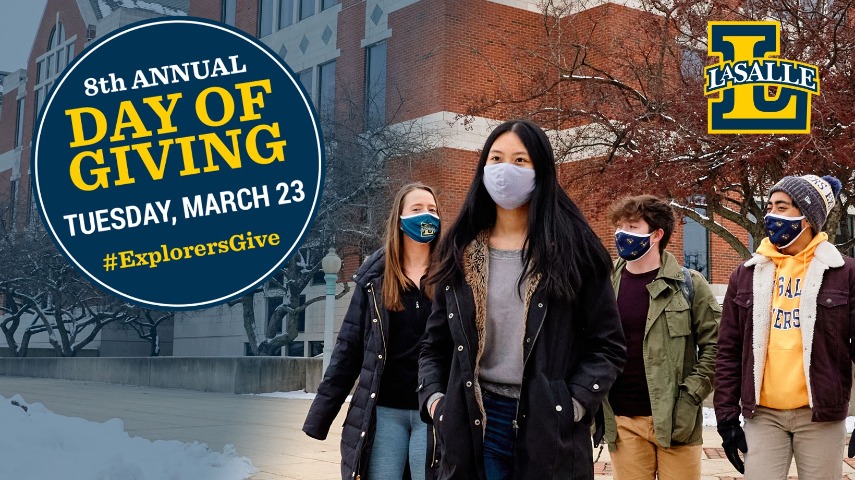
La Salle’s Day of Giving is around the corner and, Explorers, it is time to return the favor. In the fiscal year of 2020, Explorers donated more than $2.7 million to the La Salle Fund. During the 2020-21 academic year, the University was able to provide 175 endowed scholarships worth more than $700,000 and 225 student-earned scholarships. This financial support ultimately contributed to the diversity of the school: 44 percent of the undergraduate students are ethnically diverse and 29 percent of the freshmen are first-generation college students. 

The only way La Salle will be able to continue its mission is through the support of its Explorers. After all, the two largest sources of income at the University are tuition and donations. If it were not for donations in the past, La Salle’s virtual classrooms might look a little emptier. Thus, the saying goes, “Explores give because Explorers gave.” Alumni, families and friends of La Salle donate for a number of reasons, but most importantly because they were impacted by the University and they wish the same for future generations of Explorers. 

Perhaps some Explorers are hesitant to donate to the La Salle Fund because they are either unhappy with University spending or, in general, in disagreement with the direction of the University on some front. However, those who participate in La Salle’s Day of Giving are able to allocate their funds, meaning: if you have the means to donate but choose not to because of some objection, you are forgetting that you are really hurting the students in the end. While unspecified funds will feed into the La Salle Fund (monies to be used at the University’s discretion), funds may support different areas of the institution, including scholarships that could enable La Salle to welcome more lower-income students into its freshman class.

This Day of Giving, reflect on where you are and who you have become because of La Salle. La Salle is a small school that has opened its doors to financially-struggling families, and that reality has come at a cost. While we have incredibly successful alumni, we do not have an especially large or rich alumni base. We do not have a research university type, seemingly endless endowment. We do not have the comfort or security that larger universities have, but we do have a shared experience. If we want to continue the cycle of a quality Lasallian education at a reasonable cost, let’s put our money where our mouth is and donate on March 23. 

How to donate (per the Day of Giving site):

  • Online: Click on the “Give Now” button above to participate with a credit or debit card.
  • Phone: Call us at 215.951.1539 (On March 23, representatives will be available from 8:00 a.m. – 9:00 p.m.)
  • Mail: To the address below (must be received by March 23 )

La Salle University
The La Salle Fund
1900 W. Olney Ave.
Philadelphia, PA 19141

  • Venmo: Find @ExplorersGive on Venmo and make your gift directly through the app. All gifts through Venmo are designated to The La Salle Fund unless otherwise specified.
              Students: include your La Salle email, full name, and class year in memo line.
              Alumni: include an email address, full name, and class year in memo line.
              Faculty/Staff: include your La Salle email address and full name in the memo line.

Letters, guest columns and opinion pieces will be considered for publication provided that they meet the editorial standards of The Collegian. All letters must be received by the end of the day Monday to be considered for the current issue. Letters can be submitted via email to abbateb2@lasalle.edu. The Collegian reserves the right to condense or edit submissions. Weekly editorials reflect the views of the editorial staff and are not representative of the university or necessarily the views of the rest of the Collegian’s staff. Columns and cartoons reflect the views of the respective writers and artists.

A call to greater accountability within the Lasallian community – Letter to the Editor

Editorial

To the editor:

As we reflect on Black History Month and its year-long observance, I ask the Lasallian community to evaluate its history of oppression before striving to be anti-racist. While taking accountability for the actions of those that have come before you is a heavily debated topic, I believe it is the duty of the administration and other acting bodies to apologize for the role it played in reinforcing racial inequality.  

The acts of racism and implicit bias that killed George Floyd, Ahmaud Arbery and countless others have emboldened the calls for justice that have been present for hundreds of years. In our own history, such pleas date back to 1968 with the creation of the Black Student Union, sensitivity training and black history classes. Yet as with all calls for change, they were met with resistance and the Black Student Union was shut down after being labeled as a “threat.” This label was given to the group by a member of the counseling center who advised the University on the Black and LGBTQ+ communities from 1952 to the mid 70’s and was supported by the President at the time. 

In my archival research it was made apparent that almost every Black student group that has been present on campus was shut down, disbanded or suspended for reasons hidden under bureaucratic pretenses. The University viewed the organizing of Black students as a threat, too radical and not inclusive of the student body. Yet the information pamphlets available in our admissions office showcase the Black and Brown bodies that are used to advertise our diversity rate and create a false narrative of representation. 

The lack of action taken by the University to address the needs of the students it advertises has led to the creation of an Instagram page which highlights the experience of Black and POC students at La Salle. This is a common trend in higher education as many students have felt the only safe place to share their stories is through an anonymous submission to these social media pages. This is a reality for students that the University must address by creating a safe space for a Black student group to form or allow the regrouping of the Black Cultural Society. 

Student Government has played a role in the history of oppression of Black and POC students as it often mirrors the opinions and racial makeup of the University. As a predominately white organization with the sole power to speak for the student body it has inherently acted against the needs of Black students. This lack of representation runs rampant across La Salle not only in supporting roles or positions of power, but also in academic opportunities as work has been done to create a Black Studies minor but it has yet to come to fruition. As the Joint Commission of Diversity, Equity and Inclusion prepares to present its recommendations at the end of the year, I implore all departments, clubs and especially the administration to take responsibility for its actions. 

Sincerely, 

Emily E. Dorr ‘22 

dorre2@lasalle.edu


Letters, guest columns and opinion pieces will be considered for publication provided that they meet the editorial standards of The Collegian. All letters must be received by the end of the day Monday to be considered for the current issue. Letters can be submitted via email to abbateb2@lasalle.edu. The Collegian reserves the right to condense or edit submissions. Weekly editorials reflect the views of the editorial staff and are not representative of the university or necessarily the views of the rest of the Collegian’s staff. Columns and cartoons reflect the views of the respective writers and artists.