Scholarship confusion sparks student advocacy at La Salle

Editorial

Editorial Board

Since the beginning of the fall 2025 semester, several students at La Salle have voiced concerns about how their financial aid packages have been poorly handled–specifically regarding the treatment of scholarships. According to the students affected, allegedly, some scholarships awarded from department donors or La Salle affiliated scholarships with external donors are being substituted for existing aid rather than added on top of it. This non-stacking practice results in students stating that they are not receiving the full financial benefit that they have expected.

While the university’s financial aid policies are designed to comply with federal and institutional guidelines, students are asking for more transparency and clearer communication. Students express that they are not often able to get a speedy explanation from financial aid office personnel, and/or come to find a solution to solve the issues outlined on their tuition bill. Some have expressed confusion over why merit-based awards are offsetting need-based aid, especially when both were earned independently.

In a conversation with Greg Nayor, La Salle’s Vice President of Enrollment Management and Marketing, Nayor clarified what it means when a scholarship is stacked or swapped. Nayor stated, “Scholarships are applied to a student’s overall financial package by either adding it on top (“stacking”) of all applied financial aid (federal and state, institutional, outside scholarships, etc), or where appropriate, replacing previously awarded institutional financial aid (“swapping”) with an endowed scholarship. It is important to note that students cannot receive more financial aid than the overall cost of attendance.”

Students who received scholarships at the end of the spring 2025 semester have been particularly affected by this issue. It has affected students across different departments, including accounting, athletics and political science. Specifically, political science recipients of the Robert J. Courtney, Ph.D., ’41 Scholarship and Byrne Scholarship have dealt with this issue firsthand.

The Courtney Scholarship, according to an article on La Salle’s website, states, “The endowed scholarship is in honor of long-time professor Robert J. Courtney, Ph.D., ’41, and goes to political science students who have shown academic excellence, dedication to public service, and demonstrated unmet financial need.”

Past recipients, per the political science department, who have received this scholarship have had it stacked on top of their other merit-based scholarships. Recipients as of last year, including the subject of the above article, Lindsay Wagner ’25, have had their scholarships stacked. As of this year, students are no longer receiving this scholarship stacked. Instead, it is getting swapped for their other merit-based scholarships, essentially not giving any additional aid to the students–even those who still have a sum of money owed for tuition each semester.

Senior Allie Ringsdorf is one student who received the Courtney Scholarship for this academic year and has dealt with the repercussions of these changes without prior notice.

“I received my fall billing statement over the summer, and I noticed that I owed more for the fall semester than I did in the Spring,” explained Ringsdorf. “I had grown to expect tuition hikes or additional fees each semester, but I received a scholarship a few months prior. So why did my situation get worse? The previous aid that I received was reduced and the Courtney Scholarship filled the hole, making my total aid package the same amount of money. When I received the scholarship in the spring, I was given the impression that I would be receiving additional aid of up to $4,000 over the next academic year. I did not feel the financial relief that I was anticipating for the last few months. My elation quickly turned to confusion and helplessness. I reached out to friends, fellow recipients, faculty, and financial aid for answers, but I received competing responses as to why I was not receiving additional aid. After what felt like a tornado ripping through my mind, I felt helpless as my situation remained unchanged.”

Similar to Ringsdorf, students across campus have expressed frustration over the lack of clarity and consistency in how scholarship and financial aid policies have been applied this term, given that they hadn’t received a formal announcement regarding scholarship changes or eligibility to receive them.

Another student wishing to remain anonymous added, “It feels like we’re being penalized for earning scholarships. That’s not how it should work.”

Additionally, students receiving the Byrne Scholarship have been dealing with the same issue. As per another article about a past recipient on La Salle’s website, “The Byrne Scholarship recognizes an outstanding junior and/or rising senior political science major who emphasizes the study of United States Government and politics while exemplifying their commitment to their academic achievement and learning.”

Like the Courtney Scholarship, past recipients from last year including Intizorhon Fataeva ’24 and students before Fataeva have received the Byrne Scholarship stacked atop their other merit scholarships. Students are wondering why this change occurred, when it was enacted, and why there have been no formal announcements made to both them and their department heads.

General billing confusion has only added to the frustration. Several students have reported receiving statements throughout their time at La Salle that do not reflect their expected aid, leading to panic and last-minute calls to the financial aid office.

When asked about the frequency of billing errors, Nayor stated, “Actual billing errors are actually far less common than one would think. In fact, I would say it is relatively rare for billing errors to occur, so much so that, I cannot quantify it.”

However, many students still face issues with their billing statements and forms. “Financial aid has messed up my bill since I started freshman year, and now I’m a senior,” criminal justice major Patrick Malloy said. “They add more stress than my classes to my life.”

“Financial aid messed up my 1098 tax form, so I went to the office, and they told me that they didn’t know what to do because the person in charge of the 1098 tax form permanently left,” said senior Koh McGinn. “Then they told me to call the federal government or ask my accountant to see if they can fix it even though it was financial aid’s fault, and they never fixed it to this day.”

In fairness, the financial aid office has complex tasks: balancing limited resources, following regulatory requirements and tending to individual student needs. It would make sense that some of these billing errors may have to do with the fact that a bill may be correct at the time it is issued, yet wrong at the time it is viewed by the student due to external circumstances (promissory note left unsigned, unaccepted loans, not registered full-time, etc).

Nayor emphasized that improving the student experience remains a top priority, and there have been actions taken to improve the financial aid office operations, as he has only been working in this role at La Salle for two years.

“Since I have arrived, a focus on the vast improvement of the overall experience for students and families has been my primary responsibility with financial aid and student accounts,” Nayor said. “We merged the areas to create a Student Financial Services shop, with the idea of having everything in one place. We hired 2 frontline customer service professionals, implemented a new ticketing system, added bilingual (Spanish) financial aid counselors, and more. We still have work to do on providing a better service for students and will continue to get better and better each year.”

VP of La Salle’s Student Government Association Jya Marshall responded to the situation with a broader call to action. “It’s essential that we, as student leaders, continue to advocate for the needs and expectations of our peers. The financial aid process is incredibly complex, as each student’s package must be carefully tailored to their unique circumstances. Because of this, transparency, openness, and accuracy are crucial, especially given the financial burdens higher education can place on students and their families. Students who excel academically should receive the complete benefits of the scholarships, endowments, or funds they’ve rightfully earned, in addition to what has already been credited to them in accordance with each scholarship’s provisions. Upholding La Salle’s founding principles ensures that all students can experience the transformative, Lasallian education that prepares them to lead purposeful and meaningful lives, and of course, being known for more.”

Students seeking support with their financial aid or billing concerns should turn to La Salle’s Student Financial Services office, located in the lower level of the Lawrence Administration Building. As stated previously, the office has recently undergone improvements to streamline assistance.

For help, students can email studentfinancialservices@lasalle.edu, call 215-951-1070, or submit a request through the online portal, Starfish. These resources aim to provide clarity and timely assistance for questions about scholarships, aid packages and tuition statements. As the university continues refining its processes, students are encouraged to advocate for transparency and reach out when issues arise. Ensuring access to accurate information and equitable aid is essential to upholding La Salle’s mission of providing a transformative, Lasallian education.

Walk A Mile in Her Shoes was problematic: let’s talk about it

Editorial

Emily Allgair and Maya Martin, Co-Editors-in-Chief

Originally started to combat and raise awareness for gender-based and relationship violence, the Walk A Mile in Her Shoes event has been held around mid-April since 2022 here at La Salle. The men of La Salle’s campus were invited and encouraged to put on a pair of red high heels and participate in the nationwide movement to walk a mile (approximately from the Hansen Quad to the Founders Building and back) as a means of showing support for survivors of sexual assault. This national organization and its event of the same title were started in 2001, and it was compelling in the early 2000s, but let’s be honest, it was problematic, especially in 2024. From perpetuating stereotypes to watching accused perpetrators participate, this event didn’t reflect La Salle University as an active environment for advocacy and support. The event will not be happening this year, and let’s discuss why we support that decision.

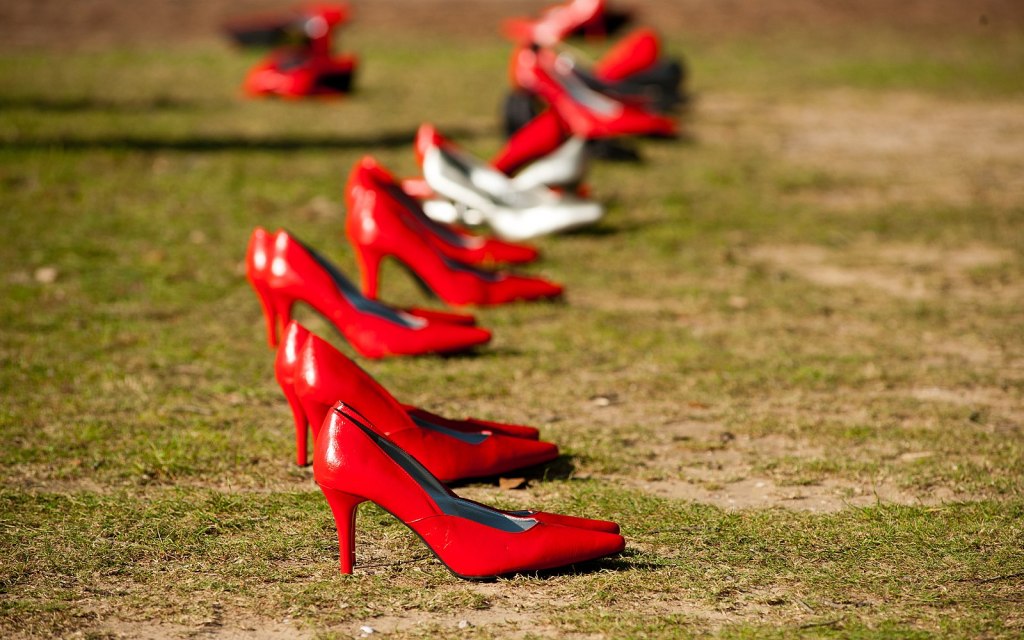
Red high heels via WikiCommons

The Walk A Mile in Her Shoes event first and foremost perpetuates the idea that relationship violence is a women’s-only issue, reinforcing outdated gender roles in regards to sexual assault. This blocks men, non-binary and trans people from being a part of the conversation surrounding sexual assault from a survivor standpoint. Basically, this event says that the “supportive community” of advocates is not a safe space for people who are not cis men to participate in, and in this case, to walk in heels to show their support. 

Second, the main action of this event (walking awkwardly in high heels) perpetuates the idea that what someone is wearing impacts their likelihood of being assaulted. Not only does this place blame on the survivor, but it is also statistically inaccurate. According to RAINN, eight out of ten rapes are committed by someone known to the survivor: 39% of rapes are committed by an acquaintance while 33% are committed by a current or former romantic partner. Not only does the central activity of this event promote inaccurate beliefs surrounding the perpetration of sexual assaults, but it also makes us wonder why people are participating.

“I think an event like Walk A Mile in Her Shoes can be kind of unsuspecting in a way,” said La Salle Junior Peter Re. “When I went into it I just thought it was going to be a fun time and support a good cause. And from my experience that’s all there was to it.”

Those who participate might care about the cause, but some students have questioned the silly nature of walking in bright red high heels with their friends. And some might ask if the intentions behind participation matters if the cause itself is good, but it really boils down to the message that is created by the participants, not the message that was intended. 

In fact, most of the men who have participated in the Walk A Mile in Her Shoes event are part of either Greek life or athletics – two organizations that are historically the ones most accused of perpetrating on college campuses around the nation. It is important to note that some coaches, staff, and athletes on campus are working to end sexual violence on campus, but that does not change the fact that the hive-mind mentality and societal pressure of some of the groups within these organizations creates a culture that needs to be challenged, especially in 2024. 

As for athletics, the NCAA is aware of this issue, and requires La Salle athletes to meet with the Assistant Director of Sexual Misconduct Advocacy and Education once a year to go over the school’s sexual misconduct policy and resources. And same goes for those in Greek life: they have an annual meeting to go over the school’s sexual misconduct policy and resources, but that doesn’t mean that the small percentage of problematic individuals within each organization don’t perpetrate sexual violence. An exponentially higher number of assaults happen within the setting of Greek life parties than in other events on and around campus, so why give a platform to the spaces that allow for the hive mind that can lead to such violence? What message does that send?

Rather than host an event with the potential to foster mixed and even wrong messages about relationship violence and sexual assault, the Associate Director of Sexual Misconduct Advocacy and Education here at La Salle, Maggie Szeder, sat down with us to talk about what she and her team are planning to do moving forward. 

The events Szeder plans on hosting during Sexual Assault Awareness Month includes a Light Up the Night event and, of course, Denim Day. Both of these events create a space for advocates to support without perpetuating stereotypes – a space where men, trans and non-binary people can also clearly be involved.

“So when you think about violence prevention, a lot of the push recently has been to follow a public health model. So, change can happen at the individual level, the relationship level, the community level and the societal level. So there are risk and protective factors at each level,” said Szeder. 

While the other risk factors can be found here, a strong sense of community is a big protective factor when it comes to violence prevention. Enhancing the sense of community that can be found within La Salle University is a major key to preventing sexual misconduct and violence, as well as other types of violence.  

“On campus I think there are some community groups and some close-knit social ties, and we want to extend that. We want to use those connective ties to sort of wipe out some of the problematic behaviors, as well,” Szeder added.

Overall, we, as a community, want to see student leaders standing up to sexual violence, and that message wasn’t getting across walking around in high heels. There will be a pursuit of creating and spreading events throughout the year to participate in and show awareness for advocacy and support for survivors. In making this a year-round commitment, it will be easier for students to participate in Sexual Assault Awareness Month activities during April. 

Moving forward, we want everyone in the student body, not just those involved in Greek life and athletics, to be more aware of how they shape the culture and continue the conversation around this difficult yet important topic.

While the official list of activities for this April’s Sexual Assault Awareness Month has yet to be confirmed, you can expect different events that reassure and promote advocacy, consent and healthy relationships. Check out the article that details these events, which can be found in the News section of this week’s publication. 

For how to be an active participant in La Salle’s community of advocates, Maggie Szeder and the Sexual Violence Prevention Education Committee welcome ideas and feedback on how to create a safe and encouraging environment for all survivors and advocates. You can contact her at szeder@lasalle.edu for more information.

Editorial: student opinions about public safety at La Salle

Editorial

Editorial Board

Disclaimer: Opinions in this article are that of the contributors of the editorial board which is composed of three different students. When we write “I” or “me” this does not reflect all of our opinions, but rather just one of our opinions. These opinions and experiences do not represent the greater Collegian Staff, the La Salle Student Body, or La Salle University as an institution. This editorial was written as a means of sharing thoughts and personal experiences as a vehicle to start a conversation about public safety at La Salle. This article is not the only opinion about public safety and its contents are not exhaustive. An editorial is simply “a newspaper article written by or on behalf of an editor that gives an opinion on a topical issue” (via Oxford Languages). 

Anytime I tell someone I go to La Salle I usually get similar responses like “Ugh the neighborhood,” “Isn’t it scary there?” “Hope you don’t leave campus at night,” etc. Perhaps you’ve heard similar responses or said these things yourself. I have come up with a pretty routine answer like “I have never had any issues with crime in the area. It exists, but violence is usually over interpersonal issues or in a struggle for someone’s property.” That being said we have all gotten the Citizen app notifications about someone being armed within a mile radius or La Salle alert Texts about crime in the area. 

I have been fortunate enough not to experience any type of crime interactions while attending La Salle, but I know that is not everyone’s experience. I believe that La Salle has a duty to protect students from any harm (crime-related or not) while they are on campus or coming to and from campus, and students have a duty to take advantage of the public safety resources that are available to them. But, I do not think La Salle is responsible for crime at large that students may hear about or be bystanders to off-campus. 

For resident assistants (RAs) and community assistants (CAs), campus safety is of utmost importance. In order to even be an RA or CA at La Salle, one has to train for two weeks before residents move in and the school year begins. Within training, the RAs and CAs work with public safety in different workshops to learn how to maintain safety on campus and help students in emergencies.

That being said, as an RA myself, I do feel safe on campus. I have a good relationship with public safety, I am educated on all of the safety features we have on campus and I know how to respond to on campus emergencies. However, I feel a big problem with safety we have on campus is that students do not know what safety features the campus has to offer and what the proper steps to take in an on campus emergency are. I myself luckily do because of the training I have as an RA. However, if I was not an RA, I cannot say that I would have access to all of the safety knowledge that I am equipped with.

I know that La Salle has offered some public safety seminars at the beginning of the school year for freshmen, however, most freshmen I have spoken to from this year and last year were not aware of these trainings or did not feel they needed to go. I believe that if La Salle somehow made the information presented in these meetings more accessible for students, then it would be more influential.

For example, one important piece of information I learned during RA training is to call public safety during an on campus emergency before calling 911. This is because when you call 911, responders do not know their way around campus, what building names are and the locations of buildings. If students call public safety first, public safety will send their own officers to the scene, call 911 from their end and personally direct first responders to the scene, so that they can get to the location of the emergency as quickly as possible. Without learning this knowledge from RA training, I would not have known to do this.

Another piece of advice I would have for students living on campus who are looking for more safety resources is to call the RA on duty number while in residence halls. The RAs and CAs are on duty every weekday from 6 p.m. until 8 a.m., and every weekend there is an RA on duty 24/7. The specific RA duty number for each building is posted on flyers throughout all of the residence halls and can be called in case of any problems. All RAs and CAs are trained to respond quickly in cases of emergencies and know what resources to use and who to call in case of these emergencies.

Having lived in St. Miguel for two years, I would encounter La Salle security at least twice a day – once leaving in the morning, and once coming home at night. On weekends, I would invite friends to come over and hang out in my townhouse, which of course is normal for a college student. For guests outside of the community of La Salle University, it makes sense to register them for a guest pass, even though it was kind of a pain to go through all of their information days before they came. For La Salle students, however, having to jump through hoops to have access to the campus that you pay for is annoying. So of course, back when there was a turnstile in townies, it became less of a hassle to double swipe, pass IDs back or use your roommate’s ID – less of a hassle until you got caught. 

La Salle would then make you write a letter of apology, make a poster on why not to do what you are being punished for and other persecutions that may or may not fit the crime. But, of course, not everyone is punished the same way. Students who have been caught passing back an ID by security have received emails from the school telling them about having to do the whole nine yards as punishment. Which, fair, the students have broken the rules, and living in an urban environment, we should understand that the rules are in place to keep us safe. But what happened to the other friend of mine who also passed back an ID? And still got caught? Nothing. La Salle was too busy to stay on her about making the poster and writing the paper. This leads me to my biggest qualm about La Salle’s persecution of breaking the rules.


If everyone were to be punished equally, there would be no true issues with how the school handles their punishments. But when different people are treated in different ways, even if there is no true bias besides the time of your crime, that is when things begin to get messy. Another issue is when the people doing the punishment handle the seriousness of the jobs differently – once, I was coming home to the townhouses when the security guards (not students, but those hired by the school) were smoking in the security booth. My guest at the time went to slide her ID to them and when they opened the little door, smoke poured out. And yet we are the ones getting in trouble for ‘sneaking’ La Salle students with valid student IDs into our homes? 

My sophomore year there was a break-in inside of the La Salle Apartments and I know a handful of people whose cars have either been broken into or stolen on La Salle’s campus throughout my four years here. The Annual Security and Fire Safety Report describes “the University’s policies and programs designed to aid in keeping the community safe; to share information on crime and disciplinary referral statistics, emergency preparedness and planning; and fire safety, fire statistics, and other fire-related information in residence facilities.”

I do understand why there are certain rules put in place. Although they may be annoying to go through, they are put in place to protect us. We don’t go to a school in a college town, we go to school in an environment within a city, in a neighborhood that belongs to people beyond La Salle’s immediate community, so of course these rules make sense. But when students aren’t allowed in certain areas of their own campus or when different security guards and administrators handle punishment differently, it becomes hard to want to follow these rules.  

Crime in Philadelphia and society in general is an issue much larger than La Salle University. Factors like poverty, social environments, and family structure all influence crime. According to the United States Department of Justice, in “ 2008–12, persons living in poor households at or below the Federal Poverty Level (FPL) (39.8 per 1,000) had more than double the rate of violent victimization as persons in high-income households.” Another study shows an explanation for the inequality-crime association as being “compositional: individuals offend when their own absolute level of resources is desperately low, and the effect of increasing inequality is to make such desperation more prevalent.” These factors behind crime seem to me to be things La Salle University is in general not responsible for.

The zip code that hosts La Salle University encompasses Logan, Ogontz and Fern Rock. People with real lives live around La Salle – not just your favorite frat boys and women’s sports team. The median income of Logan, Ogontz, and Fern Rock is just about $34,651 according to income by zip code. For some perspective, La Salle’s tuition is $34,270. 

If poverty is truly an indicator of why crime happens, perhaps La Salle University ought to look beyond busting students for underage drinking, parking tickets and public safety officers scrolling on their phones and look to the causes behind crime and public safety around our campus to make a true effort in ensuring public safety. 

In addition, in my own personal experience, I think that among the student body, there is a mocking or disrespectful attitude toward public safety issues in the area. I think that students almost think it is funny to get Citizen notifications about someone being armed with an object like a chair, and I am sure I once joined in with this banter. But, one day we as students will move away from 20th and Olney, but crime and violence will still exist near La Salle and in the larger Philadelphia area. This issue is deeper than La Salle public safety and student jokes about going to school in *insert derogatory names for the area*. Crime is a societal issue that is beyond La Salle, Logan, Ogontz, Fern Rock and Philadelphia. 

For some, living in Philadelphia or any urban environment can be scary from time to time because of the nature of crime in a city. I can confidently say that while on campus I do feel safe. I give much of that credit to my RA training for providing me with precautionary and emergency resources that make me feel safe. So, I think the most beneficial thing we can do as a school to make sure our students are safe on and off campus is to educate everyone on campus safety knowledge.

Foreign Language Awareness Week 2023: What to expect!

Editorial

Danielle O’Brien, editor

As some La Salle students may be aware, next week, from Monday, March 27th to March 30th, the LaSalle University foreign language department is hosting the annual Foreign Language Awareness Week (FLAW) 2023!  Nevertheless, some may be unaware of what this celebration entails and the meaning behind it. Thus, as the president of the Foreign Language Club here at LaSalle, I am here to answer all your dying questions!

What is Foreign Language Awareness Week?

Foreign Language Awareness Week is a week full of events that are meant to advertise the importance of learning a second language, which at times can struggle to accommodate at La Salle. We have all surely taken a course or two in a second language in our lifetime, whether it be in Middle school, High school. And while understandably, learning a second language is not always near and dear to the heart of every student, FLAW seeks to inform students about the importance if not beauty of learning and speaking a second language. After all, not only is speaking a second language becoming prevalent to the diversity of our student body but more prevalent within U.S society overall. According to U.S census.gov, “the number of people in the United States who spoke a language other than English at home nearly tripled from 23.1 million (about 1 in 10) in 1980 to 67.8 million (almost 1 in 5) in 2019”( Dietrich, Hernandez 2023). In this way, learning o second language is clearly becoming ever more important. Nevertheless, learning a second language starts with having options in what languages one can learn, something of wh FLAW promotes. 

Why you should learn a second language in the first place…

Although we understand that for some, learning a second language is simply a requirement to graduate, what we often fail to realize as a society is a value of taking what some consider simply “gen-ed” courses. In fact, take a look at some of our bilingual students here at La Salle Univerity and their perspectives on the value of knowing a second language.


Yazmin Herrera | Class of 23’

Double Major in International Business & Spanish

Spanish & Italian

“Speaking a second language to me means that I get double the opportunities in my career and life in general. I remember in grade school some things were difficult to comprehend because I only understood in one language or the other but I came to learn that that only meant I would have the ability to understand things in two languages. I have thcanSpanish because of my ethnicity (Mexican) and it means the world to me to be able to continue to speak the language and teach others about my culture”


Mariam Timbo | Class of 24’

Major in International Relations Minor in Econ

French & Bambara

“I grew up learning two languages at the same time. I never really saw it as a huge thing until I came to the U.S. In my country, the least amount of language people speak is two. Speaking multiple languages is also creating several personalities. You are part of all of these cultures and for me that is amazing. I can be anywhere in the world and not feel like I don’t belong because I can communicate with people there. But mainly because knowing different languages also teaches how to fit in, and how to adapt. So, now yeah I think I am blessed to be able to speak and understand many languages and it is something that I do not take for granted” 


My’ana | Class of 25’

Major in Nursing

Portuguese

“being able to speak a second language is valuable because you can communicate with more people, be able to teach others the language, and you would have more job opportunities because of it”


Vinyl Doing Class of 24’

Political Science Major with a minor in Business Administration

Vietnamese

“The value of speaking a second language is very important to me, as half of my family are only fluent in one language. As I had the privilege to learn both English and Vietnamese from my family, I was able to connect to both sides of my family and feel understood. Not only does it impact my family, but it also helps me connect with Vietnamese communities throughout the world, where I will feel a special bond with another. I am proud to be bilingual in such a diverse country, where speaking a second language may lead me to new opportunities and friendships”


Matthew | Class of 25’

Dual Major in International Business & Management and Leadership, Minor in Criminal Justice

Tagalog

“Speaking a 2nd language allows me to better connect with my family overseas. I know that when I meet someone that also speaks the language, we already have something in common so making friends is a lot easier”


Hannah Riad  | Class of 23’

Nursing

Japanese

“Growing up bilingual honestly brought me a lot of feelings of shame, especially when I was in elementary school. My classmates at the time would call it “weird” when they heard my mom speaking to me in Japanese, so I would ignore her and pretend not to understand. Despite this, my mom sent me to Japanese school on the weekends so I could learn to read and write the language. Thankfully, my mindset has changed as I’ve grown older and I now take every opportunity to use Japanese. I wish I could say that speaking a second language was always as “cool” as everyone makes it out to be, but it definitely was an obstacle that I had to overcome. I’m very grateful to my mom for not giving up on me!”

With that being said and hopefully with those reading now motivated to learn a second language, we should next inform you of the challenges that prevent you from doing so…


The current state of Language Learning at La Salle

Currently, at La Salle University, students can minor in Spanish when they take 6 courses in the language. Aside from Spanish, students at La Salle can take introduction courses to Japanese, German, Italian, and Russian depending on each course’s rotation. Nevertheless, it is important to distinguish that although students may be able to take Japanese 101 in the fall and Japanese 102 in the spring, for example, they are unable to learn beyond that through La Salle and thus are unable to minor in said language. This thus begs the question: why? In order to answer tTon we must first evaluate the current state of language learning. 

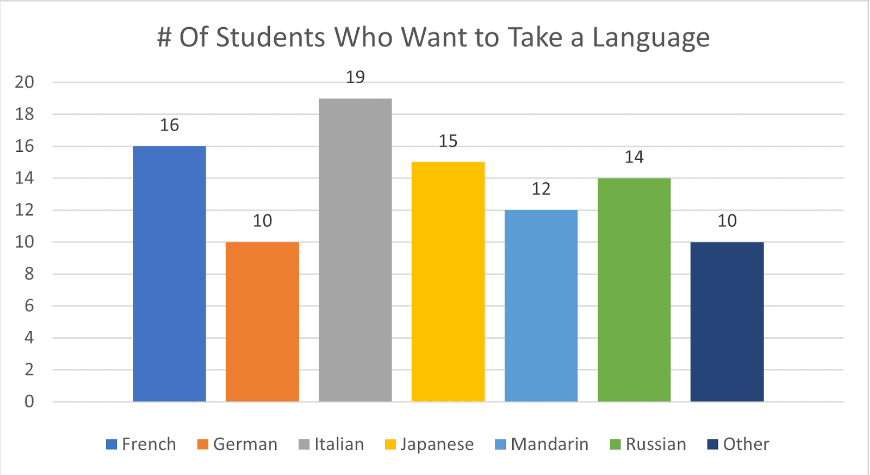
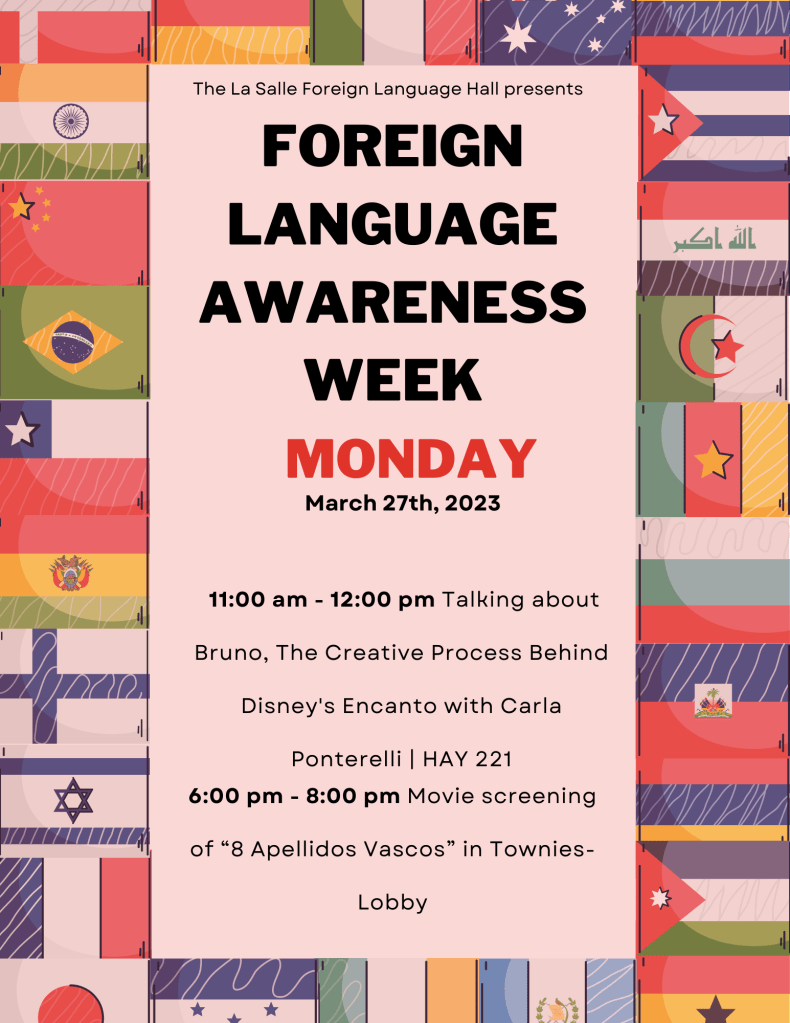
For the university to be able to argue for the implementation of higher-level language courses in Japanese, German, Italian, and Russian, the university first needs to gauge how many people would be interested in taking 6 courses in said language. Provided below is an infographic of information acquired from FLAW 2022 on student-language interest

Alina Snopkowski 2022 Poll on Language Interest 

The provided poll above was taken last year during Foreign Language Awareness week in 2022. During FLAW 2022, students had the opportunity to cast votes for which languages they would like to learn during their time at La Salle in cutely decorated flag boxes (decorated by yours truly alongside former Commentary editor Alina Snopkowski). Nevertheless, what the poll clearly demonstrates is that students at La Salle are in fact interested in taking a second language. In fact, as Alina noted in her 2022 article on FLAW, “almost all cases (sorry, German), exceed the 10-student minimum class size requirement”. 

But students expressed interest is not the only element that matters in factoring whether the Foreign Language Department can offer more minors. For example, if most of the people that express interest in taking a higher-level language course are juniors or seniors, they may graduate by the time the course could actually be available. Not to mention, there need to be at least 10 students registered in a class for it to be available. 

Alina Snopkowski, Demographics of Students in the poll

In reflecting on the demographics of students who expressed their interest in taking a foreign language at La Salle, we find a majority of voters were freshmen. Thus, with the two questions answered of how many people vote and who particularly does so, with results that meet all of the criteria to establish more minors, this begs the question; why haven’t these courses been brought back? 

For those who don’t know, Japanese 101, Italian 101, and French 101 are all being taught in Fall 2023 which students can still register for. Other courses such as Russian and German are on rotation to be reintroduced in the fall of 2024. Also, mandarin has yet to make a foreseeable comeback. In this way, the provided expressed student interest has not changed the current system of language courses being provided to students each semester consistently as well as at higher levels. Alumni, Alina Snopkowski , echoes student frustration when she states, “why take those language classes only as an elective? When someone is registering, it’s much easier to justify to your advisor registering for a language course if it can be taken as a minor than simply taking the introductory course as an elective with no chance of continuing into higher levels” What Snopski states in these lines is true. In reality, students often are not willing to take out loans or spend money on courses simply for the fun of it. Students at La Salle clearly recognize the value of having a minor in a foreign language, however, when the only option is Spanish or introduction courses of languages only offered once every two years, what is the point of registering? While surely, seniors do have the availability to register for courses out of the fun of it, minors cannot be built on the registration of seniors in 101 courses. Now be able to see how there is a cursed cycle to La Salle being unable to provide students foreign language minors. 

Surprisingly, the lack of implementation of the data is not due to understaffing either. In fact, there are several overly credible professors that have previously taught at least one of the languages described above but have been forced to teach other subjects because their courses were discontinued. In this way, not only is the loss of continuation of language not only is a disservice to student learning outcomes but furthermore to the professor’s teaching objectives.

Thus, how you can make a difference: support FLAW 2023

With why you should learn a second language clearly and furthermore how the data of student language learning interest compares to the current reality of language learning opportunities at La Salle, the Foreign Language department desperately needs your help in making FLAW 2023 a success. After all, if students come out and support the Foreign Language Department for FLAW 2023, whether it be through attending events, entering a raffle for language-related prizes, or voting in the 2023 language-interest poll, we will be able to gage and demonstrate to the University the student-body’s interested in diversifying the language we provide. Below are flyers for all of the events for the upcoming week. Nevertheless, you can always follow @lasalleforeignlanguage on Instagram to keep up to date.

Positive news about learning foreign languages at La Salle

As previously mentioned, for those who would be interested in at least registering for an introductory course in Japanese 101, Italian 101, and French 101, there is good news. Japanese 101, Italian 101, and French 101 are all being taught in Fall 2023 students can still register for this semester. And the more registrants, the better a chance the course has to survive.

Additionally, for those who may be unable to fit another language course into their schedule, a new club has been introduced to accommodate language learning outside of the classroom setting. (Que shameless self-promo). The Foreign language Club at La Salle University meets every Monday from 3pm-4pm in Hayman 214 to learn language unavailable at La Salle university. Each month, students are learning a new language for one hour every week. Although for example, in October 2022, club participants learned Russian with Professor Chubok, the club strives to take a more student-led approach to language learning. The months of November 2022 (Portuguese), January 2023 (Mandarin), and February 2023 (French) are all being taught by La Salle students who speak the language. And if the club is unable to find either a professor or student to teach the language, they are not shy from using other methods such as Duolingo. This was done as recently as the past month of March to teach club participants Gaelic. You can follow the foreign language club on Instagram @lasalleforeignlanguage to keep up to date with the club. For the month of April, the club is excited to offer Arabic.

Personal Note from the editor, Danielle O’Brien

In fact, if it weren’t for your comprehension of the English language, those reading this right now would not even understand what I’m saying. Thus, language is a beautiful thing. In the words of Nelson Mandela, “If you talk to a man in a language he understands, that goes to his head. If you talk to him in his own language, that goes to his heart”. On a more personal note, as an ESL tutor since my junior year of high school and now into my higher education, language has always been of value to me. Like many of us, learning a second language (Spanish) from middle school to high school seemed to me simply a requirement to graduate. However, with one opportunity, it soon turned into something much bigger and more impactful in my life. In participating in a program at my high school where native English-speaking students could peer tutor non-English-speaking students, I learned the true value of speaking a second language up close and personally. Speaking a second language reduces the invisible barriers that may have been laid between my peers and me. Not only did it allow me to better communicate with peers I wouldn’t traditionally have had the opportunity of meeting, but furthermore, without knowledge of a second language or at least the drive to learn more, I would not have been exposed to the many threats language-barriers present to immigrants quality of life. It is important to recognize that immigrants immigrating to the United States face several obstacles to achieving a higher quality of life that is often promised as a part of America, the biggest obstacle of all being language. Anything from ordering fries at McDonald’s to securing a professional job in the future can depend on a person’s language abilities. In this way, language learning determines how you survive. To some native English speakers, learning a second language is a hobby. But, it is the Foreign Language Department’s hope that through the events provided this upcoming week, not only can you recognize how learning a foreign language and culture can be fun, but furthermore that it is essential to improving the lives of others around us. Thank you for reading, please be sure to join us next week for Foreign language Awareness week in our events, entering a raffle at each event you attend for some language-related goodies, as well as participating in the 2023 language-interest poll that students can cast their vote in Hayman and the Union Lobby, Monday-Thursday 11-6pm! Additionally, don’t forget to visit our table at the foreign language food fair on Tuesday from 12pm-2pm. We hope to see you there!

What’s A La Soulmate?

Editorial

Kylie McGovern, Managing Editor

Merriam-Webster defines a soulmate as a person who is perfectly suited to another in temperament. In my time at La Salle, I had heard the term “La Soulmates” thrown around. A ‘La Soulmate’ is a person perfectly suited for another person who they met here at 20th and Olney. In hearing this term I realized that I already knew two La Soulmates: my parents.

 My parents met while working right here on campus at Germantown Hospital in the 90s. My mom was in nursing school and my dad was on the men’s rowing team and studied biology. My dad graduated in 1993 and he and my mom have created a life right outside of Philadelphia for the past thirty years. They got married in 1999 and I came along in 2001. My two sisters were born in 2003 and 2005. La Salle remained a special place for my parents as they reconnected with friends from La Salle over the years. But, in 2020 when I chose to come to my parents’ alma mater and my sister followed this past year La Salle became an even more centric part of our lives. 

In talking to friends here at La Salle, my parents’ La Soulmate story is special, but not unique. Many of my friends here have siblings or parents who are also La Soulmates. As a semester-long project here at the La Salle Collegian, I was lucky enough to connect with La Soulmates. These La Soulmates have various stories for how they met each other ranging from class to Greek life, to mutual friends, but one aspect that seems to be a player in all of these stories is the tight-knit community. Without further adieu, here are some stories from La Soulmates I connected with: 

Crista Bernardino explains that she and her husband Brad met at La Salle in 2010 when he was a freshman rushing Alpha Phi Delta and she was a junior in Gamma Phi Beta. The two were paired together at a social event and ran into one another a few months later at Finnegan’s Wake and have been together ever since. Today, the two have been married for over 6 years and have a son and daughter.

Justine Amorose and Sean Ford have a similar Greek love story. The two met in the fall of their freshman year while Justine studied nursing and was a member of Alpha Theta Alpha and Sean a member of Alpha Pi Delta. The two graduated in May 2021 and have been together for nearly five years.   

Other La Soulmates met through student organizations like Amanda Hicken and her husband Scott who met through the Masque. The two were friends for several years and then started dating Scott’s senior year. The two earned the Masque’s first ‘It’s About F*ing Time’ award at that year’s formal. Amanda and Scott have been married since 2009 and now live in Cleveland, Ohio with their daughter Amelia.

Johanna Szyszkiewicz met her fiance Joe while Joe was in the four-year MBA program and she was in the nursing program. The two met very briefly at a social for the Ambassadors but had a more official introduction at a Rugby social a few weeks later. The two love to enjoy the Eagles together today in between Johanna’s nursing shifts. 

The classroom here at La Salle brought other La Soulmates like Mary and Brad Himmelstein who met in statistics class, but also connected through peer educators and work-study. It’s a small school, right? The Himmelsteins’ got engaged their senior year and will celebrate their 15th wedding anniversary this year. 

 Kaitlyn (Petruccelli) Murphy and James Murphy met in the classroom like the Himmelstein. The two shared their classes together freshman year as biology majors in the same Honors Triple. Kaitlyn explained that “after everyone did poorly on our first history test with Dr. Stowe, Jimmy showed up at my dorm room with another classmate, looking to study with me. We subsequently formed a study group with four other bio majors in the Honors Program – we all studied together through four years at La Salle, including MCAT prep.” Jimmy and Kaitlyn stayed friends and study buddies until their junior year when they took physics when we started spending more time together. The two started dating at the end of that year. La Salle remains a role in the couple’s life recently as Br. Michael McGuinness attended their wedding last year and gave a homily at their nuptial mass. The two explained how Lasallian values shape their lives today in their careers in medicine. The two welcomed a baby boy this past summer. 

For some couples like Christina Potter and Marcus Jackson, La Salle strengthens their relationship from a pre-existing one. The two met at West Catholic High School, in senior year, a month before either told the other they were going to La Salle. They both ended up going to La Salle, where they stayed together all four years and are now married! The two said that “La Salle definitely helped us to grow and ‘explore’ our relationship!”

Chris and Melanie Idler both graduated in 1993. Melanie remembers seeing Chris in her freshman orientation in the summer before school started and was definitely hoping to run into him freshman year. But, Chris told me a story about how he remembered meeting Melanie saying “​​she was wearing two different color shoes, which I thought was a little odd, but it caught my eye.” The two disconnected for a while after school, but both were in Philly the same weekend without knowing it. Melanie ran into a friend from La Salle on the banks of the Schuylkill River that weekend who mentioned he was having a party that evening. Melanie and her friends ended up turning up at that friend’s house in Manayunk, where Chris happened to be. Today, Lasallian values play a part in the Idlers’ lives as they send their two daughters to a Christian Brothers high school in Washington, D.C. (St. John’s College High School) , one of which applied to La Salle for the class of 2027. 

Although these are just a few stories of La Soulmates, these love stories are a testament to the community and friendship that exists on campus. Personally, my life would be different without La Salle literally because my parents met here, but also emotionally because of the community this campus sows. I would like to extend my gratitude to all of the La Soulmates who reached out, even those who were not included. In addition, thank you to Cherylyn Rush and Brother Michael who helped connect me to the La Soulmates. 

La Salle’s test-free pilot program is a win for access and equity

Editorial

Bianca Abbate, Former Editor-in-Chief

Dear Editor,

Today, I write to you as a proud La Salle alumna. With the news that La Salle University will no longer consider standardized tests for admission or merit scholarships comes the realization that the University is paving a path toward equity in education. The future looks bright. This decision means that La Salle will be following the lead of other universities who will now endeavor a more holistic application process. 

Receiving a merit scholarship to attend La Salle University opened many doors for me. Perhaps the greatest door was having graduated college debt-free. While the experience seems distant, I think back to how I earned that scholarship in the first place. I recall my final days in high school and the anxiety of applying to college. I remember thinking that my grades and involvement would not be good enough if my SAT score could not reach a certain threshold. Even as a 17-year-old kid, I knew that I had more to offer a school than the number I could achieve on a standardized test, but I also knew that I had to surrender to this necessary hurdle for college admissions.   

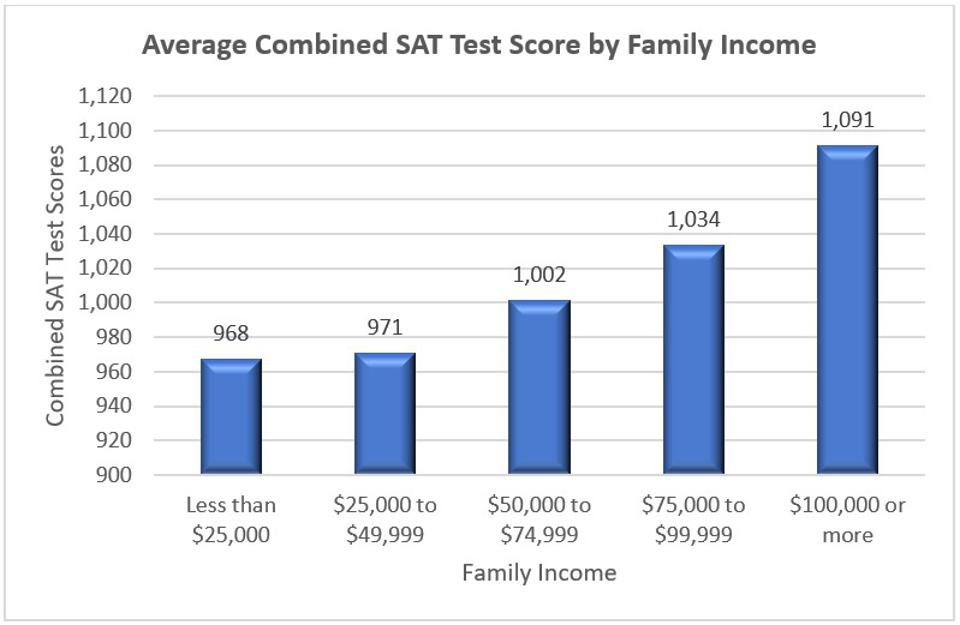
Ultimately, I performed well on the SAT. However, I assure you that my score had little to do with my aptitude and everything to do with the fact that I had the means to prepare for the test. I had the time to study and the money for tutoring. How many college applicants can say the same? The truth is that these standardized tests are not so standard after all. Like many other standardized tests, the SAT favors the rich and the white. The College Board’s own data reveals that wealthier, Caucasion and Asian Americans who come from more educated families tend to perform far better on the test. In a 2021 study of college admission tests, author Mark Kantrowitz presents three key findings: that male students are 42% more likely to have combined SAT test scores in the 1400 to 1600 range than female students, that white students are three times more likely than Black or African-American students and twice as likely as Hispanic or Latino students to have SAT test scores of 1400 to 1600, and that students with family income of $100,000 or more are more than twice as likely as students with a family income under $50,000 to have SAT test scores of 1400 to 1600. If these shameful results raise not even an eyebrow for those in education, what can we say about the merit of our education system?

Figure 1. Students from higher-income families tend to achieve higher SAT scores

Source. Mark Kantrowitz, Forbes

https://www.forbes.com/sites/markkantrowitz/2021/05/21/how-admissions-tests-discriminate-against-low-income-and-minority-student-admissions-at-selective-colleges/?sh=6078e49f3cc1

It would seem natural for a university to move away from these antiquated metrics for admission. Nonetheless, the news of this pilot program has been met with some criticism. In one LinkedIn post announcing the program, some rejoiced and others lamented, arguing that La Salle’s test-free policies would not prepare students for the “real world” and that it would lower the University’s standards. I cannot blame people for believing that this test might be a good measure of college preparedness and intelligence. After all, this concept has been shoved down our throats for years. Yet, I refuse to believe that La Salle is lowering its standards in this decision. Rather, La Salle is raising its standards for access to higher education. The University will not submit to the standards invented by the College Board to determine who will excel in their schools, an occasion to be celebrated.

I applaud La Salle’s decision to move past these arbitrary markers of college preparedness. Today, I am in a similar position as my 17-year-old self. I am now applying for law school and preparing to take the LSAT for the third time next week. Despite having the skills, the grades and the resume that I believe would make me a successful lawyer, I am subjected to yet another inequitable test which does not favor me as a first-generation student or a full-time employee. Even worse, this time, the test is much more costly and time-consuming, and the stakes are higher. Of course, the $200 test registration fees and thousands of dollars in decent test prep do not include the additional means it will take to submit one’s application. It saddens me to know that to even begin the pursuit of advanced education requires a hefty down payment. For many, the dream of becoming a doctor or lawyer will not be realized, not because they lack the intelligence or the tenacity, but because they lack the funds. The system must change.

Stellar test scores and even great grades can only get one so far in life. The true mark of a Lasallian is his or her character and commitment to community. These traits, not numbers, are what open doors for us and allow us to succeed in the professional world. I say that, as it does with each student it admits, La Salle took a chance on me, and I like to think that it will see a return on its investment. It is my hope as an alumna that La Salle will continue to take chances on students who will enrich the University with their unique perspectives. With La Salle’s new policy, the admissions team will find something special in young people that they may have otherwise overlooked. With the right tools and a nurturing environment, these students will undoubtedly prove the admissions team right in their decision. That’s a win for La Salle.

Looking back at La Salle’s return to face-to-face learning — Editorial

Editorial

The Editorial Board

Header Image: La Salle University

The 2021-2022 academic year marks La Salle’s first full year back, with events, breaks and studies following the traditional cadence that was expected from an in-person Lasallian education. While the spring 2021 semester was the La Salle community’s first re-introduction to in-person learning and living, it was very much a bumpy ride and a Band-Aid solution. We were here at the end of the last academic year, but we weren’t really here. This year, we came into our own again, and for some of us, got to experience the school as it was intended for the first time.

Now, as the members of the Editorial Board are studying for their final exams, packing up, getting ready to move back home for the summer or isolating to stay safe during this last minute COVID wave, we wanted to look back on this year, and celebrate the fact that we made it a whole year, not just without being sent home, but with a great sense of community and pride that we came together to make things work in a time filled with so much uncertainty.

As the new Editorial Board found its voice, we frequently commented on the progress the university was making in terms of COVID-19 cases, behavior and understanding, and so many changes came in just two semesters.

We eventually stopped writing these pieces because a general sense of comfort fell over the university, particularly when we followed the city in lifting the mask mandate, and things have felt very uplifting since then. But, being our last editorial of this year, we wanted to look back and just discuss everything we felt and everything that happened in this whirlwind of a year.

Perhaps the biggest change to on-campus life this year was in-person learning. While some of us had in-person classes at La Salle in the spring of 2021, the fall 2021 semester opened in-person and hybrid classes to so many more people, and many more professors moved away from online only modality. Some members of our board experienced their first in-person classes during this semester despite already being sophomores at La Salle.


Relationships had to be rekindled, and for underclassmen, these people who previously occupied a small box on their computer monitor were now living, breathing members of their lives. Beyond this, heightened vaccination rates eased many students’ minds, particularly those who were not keen on in-person learning in the spring of 2021.

Even though our desks were pushed far apart, we had assigned seats, we didn’t recognize each other or couldn’t hear each other in masks, it was still great to finally get to see so many familiar faces and be sat in these places that for some of us felt like home, and for others, would become a home away from home. Stopping by Saxby’s before class, passing someone you hadn’t seen since March of 2020 in the Hayman hallways or checking the seating chart and seeing new faces you’ve never met in person, only on a Zoom screen, the feeling was incredibly powerful.

But, it wasn’t just in-person classes, it was on-campus life. People were living on campus in the spring of 2021, but for a majority of students, that meant staying in your dorm or townhouse and seeing the same three or four people every day, afraid to venture out to meet others, either because rules were unclear, COVID was coming in waves or the risk of losing that small bit of human interaction because you went to the wrong party was just so terrifying. 

This year, with the low levels of cases being reported toward the end of the year, the university trying to promote some in-person events and moving onto campus in the summer instead of the dead of winter proved to be the push that people needed to get out and be a community again. We remember meeting up with our friends again, taking our masks off and knowing that we would be safe and just ready to be college students again in every sense, not just academically.

While events like the on-campus formal dance may have pushed the limits of our comfort in terms of the COVID risk, others like the school’s annual Homecoming celebration, wine tastings and weekly Late Night La Salle events went off without a hitch. Clubs were allowed to meet in person again, in some cases, with some even hosting events to bolster their numbers in a time when most clubs are bleeding seniors and not finding any newcomers.

Image courtesy of Jakob Eiseman
The Collegian‘s office in the Union that was once a place of collaboration and paper editing returned to its roots this year.

For us, returning to the Collegian’s office in the union meant more than we could have imagined. It’s dingy, it’s dusty and it took us about 10 full hours to clean out after over a year of being uninhabited, but the office was shaped up, and we returned to create the paper. We met as a group, some of us for the first time ever, and were able to bounce ideas off of each other, plan future issues using white boards, use body language to describe how we felt and avoid all of the awkwardness that came with meeting over Zoom, and the paper was so much better off for it.

Just something as simple as being able to have a club meeting in person or sit in Blue and Gold or the Union and have lunch with people who weren’t our roommates made the campus feel alive and vibrant, even on days when it was dead compared to its past peak. 

The important thing to remember, is that through all of this, vaccination and proper masking were the first lines of defense to us maintaining a proper campus environment, but people being selective with their social groups, avoiding crowded parties and public places when applicable, testing and properly reporting results to quarantine with accordance to guidelines helped us truly come through to where we are now. 

The school can only give us so many freedoms before we have the chance to ruin it — but we didn’t ruin it. People knew how important it was to stay COVID safe, so even when we went out, it was with people we trust, and we maintained proper social distancing or contact tracing.

The La Salle community has shown over the course of this year that it does have the ability to help restore campus to what it was prior to COVID. Through diligence, kindness and care, the La Salle community has properly dealt with the return to campus and helped restore trust in the collective’s involvement in the school both in and outside of the classroom.

As shown in classes where polled students did ask for masks to be worn, students managed to come together with little to no issues in wearing masks for those who needed to or felt uncomfortable when they were not worn. All around, even after COVID policies were relaxed, students continued to work towards helping others feel comfortable and safe during their time at La Salle.

With the exception of one time where the campus community was forced into an online modality due to case numbers, we have had no incidents or major outbreaks of note in the whole year, and we believe that, even though mitigating COVID-19 cases requires just the bare minimum amount of care on behalf of well-minded students, that we all still deserve a pat on the back.

That includes our amazing professors, who risked their health day after day to come in and teach. Some professors were open about the fact that they were at risk, or lived with those who were, and needed students to be very strict on mask wearing and contact tracing for the safety of their academic leaders, and the La Salle community was staunchly accepting of this.

As far as checkpoints go, we made it so far that the testing center was able to downsize and move out of Treetops Cafe, as the capacity needed was reduced by so much, we were able to drop the mask requirement on campus, even in the classroom, making classes seem much more personal and familiar now, with many of us unmasking in front of each other for the first time in years.

While we are unfortunately going through a small COVID wave right now, with about 30 cases being reported this week, for most of this semester, the average weekly case count was less than 10, reporting zero cases for several weeks. In total for this whole second semester, we have only seen about 300 cases and around 75 percent of the campus community is fully vaccinated with their booster.

Get boosted if you haven’t already.

We can feel the overall spirit of La Salle rekindling. Students are on the quad and hanging with classmates in the Union. Some of us on the Board spent our first year completely online, and this year has shown us why we chose to come to La Salle in the first place: the Lasallian people and community. These people are the Christian Brothers, the professors who know your name and the students you have come to know so well. The chapel bell rings and all we can think is “we’re back.” 

Obviously, we still have many hills to climb, and the university itself has taken a significant hit financially and in terms of enrollment. Dr. Daniel Allen has been brought in to steer the ship, and the economic repercussions of the pandemic are still ravaging universities across the nation. Hopefully the search committee and board of trustees we’re correct in assuming that Allen’s fundraising skills were what La Salle needed to pull us back up as an organization.
But, as a community, we’re here, and we’re here to stay for as long as we are afforded a place in our little corner of Philadelphia.

In an understandably pessimistic piece from April of 2021, the previous Editorial Board wrote, “Zoom classrooms are full of strangers — black screens with audio. Dorms are private spaces. The campus is disconnected. The atomization and thinning of society that we have seen in our world has been mirrored in our corner of the world on Broad and Olney. The La Salle we all remember may never make a full return.” Well, to our long graduated Collegian alumni, and to anyone who may have agreed with that sentiment at that time. We are proud to announce that we are back.

Broad speculation on America’s context problem — Editorial

Editorial

Header Image: The NewsHouse

At the Collegian, all of our staff writers, editors and board members are journalists. We are all student journalists who have a limited amount of time to put into our writing and our research, but we are journalists nonetheless. We are journalists because we find information, we synthesize it, commentate on it and present it in written word to an audience waiting to learn. We are the first to admit that our synthesis of information is from a unique perspective as the students of the university and that our limited time and the size of our staff limits our abilities to investigate in some cases. But, we strive to always present information to our audience in a way that reflects both the truth, and in cases where appropriate, our perspective.

Just as we are journalists who deliver this information to the readers in the capacity we have available to us, all of us have the ability to both interpret information and deliver it to others. The ideas of journalistic ethics and integrity are hot button issues, especially when discussing the modern media landscape, but in a way we all should strive to uphold that integrity. 

We as a people have an innate desire to learn, to acquire information about the things we do not understand in order to make them fit with our personal understanding of the world. When we seek out information, we would like to suggest and explain why it may be in your best interest to find sources and stories that can enrich your knowledge on a certain topic more deeply, rather than inform you shallowly about several different topics.

The Context Problem

Increasingly, rapid-fire news feeds and bite sized looks into the 24 hour news cycle are all too common. Social media, digestible news apps, headline skimming and even word of mouth will bring us to awareness on topics touching on everything from the war in Ukraine to the world of sports to celebrity drama in a matter of minutes so that when we have conversations with our peers and colleagues we have a touchstone, a place to jump off for conversation. But, how often do we miss the facts, the context or even the story itself because we have interpreted the information we have in the best way possible, but that information simply is not enough?

This editorial you are reading is broad, we cover a lot, and we hope you take some of it to heart to both better appreciate the content you take in, and also have a better idea into how to interact with at least our personal publication in a more personal manner to enrich your perspective on current events and history.

In the end, no one publication will provide you with all of the context needed to experience someone else’s story. You will never know all there is to know about the Phillies game, political hearings or the irate ramblings of crazed celebrities because you were not there, you are not the person being interviewed and you will see the events reflected on your background and understanding of the present. But this is not a reason to avoid context in favor of personal understanding. Seek out several published works on news, and if you see parts that do not line up, consider why. One publication may bring a political bias into their story, another may skip facts to create a false understanding of events and others may simply just report the raw facts but give no perspective.

Even by reading two published stories on the same event, a world’s worth of context is gained, because the overlaps are more solidified in your understanding, and the differences stand out as either additional information or perhaps questionable biases.

Reflected in Social Media

According to a Pew Research Study, 86 percent of U.S. adults said they get their news from a smartphone. With an increasing number of people primarily getting their news from social media, there is an increasing danger of misinformation, disinformation and malinformation. Social media like Instagram and Twitter have made arguably moot attempts to mitigate the cycles of negative information that tend to spread rapidly on their sites. 
One La Salle student had this to say: “Living in an age of social media, I think we are also living in an age of misinformation. In my 20 years of life I have seen immense history be made — both good and bad — and in general I have seen this history play out on social media. I remember posting a picture of the eiffel tower when a terrorist attack happened in Paris. Quite honestly, I had very little knowledge about the event and I was just posting because everyone else in my feed was too. I think this example is similar to how people use social media to post about the issues of the time like COVID-19 unresearched and in an attempt to fit in.” 

The effects of social media can be directly seen on members of the student body and their memories surrounding major events. Social media companies (Twitter, Instagram, Facebook, etc.) understand their power and are actively exercising it, perhaps in a negative or predatory manner.

On Nov. 16, 2021 Twitter created new labels for misinformation on the site. Twitter explains that they are working to help enable free expression and conversations, and would only intervene if content breaks their rules. But in cases when the rules are not broken, Twitter works to provide users with additional context like a message that reads “get the facts about COVID-19.”

However, many of us on this Editorial Board feel that these pop-up messages are not doing enough to educate the public. Users may see these alerts popping up on their posts and think it is funny, rather than the serious matter that misinformation is affecting society. 

As more people use various social media, more people are exposed to the cycles of fake news and misinformation. Twitter uses an algorithm that will show a tweet to more users if the tweet is retweeted, favorited or replied to more by enough of its first viewers. Therefore, if a popular tweet contains misinformation and users like what they see, more users will see the tweet in their timeline. Obviously it is more complex and technical than this, but generally this idea is found in most social media algorithms. Ultimately, sites like Twitter creating five word messages to attempt to combat misinformation is not enough. The organizations that control the social medium need to change their algorithm if they do not want fake news to spread. 

Censoring Falsities: Weakening Judgement

Twitter does make some attempts to censor users posting misinformation. For example, since introducing their COVID-19 guidance in January 2020, Twitter has suspended over 6,000 accounts and over 78,000 pieces of content that violated their policies. But, these suspensions create a new issue: a fear of control and censorship. 

The beauty and success of American society may not seem maintainable or even manageable at this point in time, however it should be our goal as Americans citizens to attempt to maintain its most fundamental value: freedom. Freedom of speech, freedom of press and freedom of thought are all directly intertwined. If one goes, the others are bound to go with it. Educators and journalists (including all user-generated content creators on social media) have a duty to not only our country but also to themselves to try and maintain it.

Censorship prohibits the individual from unlocking this innate need. “Truth is great and will prevail if left to herself, that she is the proper and sufficient antagonist to error, and has nothing to fear from the conflict, unless by human interposition disarmed of her natural weapons, free argument and debate; errors ceasing to be dangerous when it is permitted freely to contradict them,” said Thomas Jefferson.

Seek Context, Seek Understanding

As discussed, it is no secret that there is currently a massive issue when it comes to media and information. Whether you are talking to a white-collar professional with an Ivy League graduate education or a construction worker with a high-school education, there is a consistent feeling that the majority of Americans consume the most digestible form of media and regurgitate dogma without any evidence to back up their viewpoint. 

We are aware that across the country there is a widespread argument circulating that most Americans have become lazy when it comes to being educated. The response to this feeling by the majority of media outlets has been more than reprehensible.

While some media outlets and many individuals believe the best response to the general lack of ability or care surrounding media consumption is to make important information easier to digest, we cannot help but feel the opposite. 

The desire for knowledge is innate. The desire for education is primordial. It is the job of educators and journalists to do so. As a university filled with educators, La Salle can, should and, in many cases does, strive to do so not only for the sake of fulfilling its mission as an educational institution but also for the sake of fulfilling the intellectual aptitude of each and every student attending it. 

More importantly, though, the responsibility for seeking out the information needed to properly weigh in on something falls to the individual. Context allows this discovery of understanding. While individuals may choose the easy way out time and time again, they will make the right decision as long as it remains a consistent option. 

It is our role as journalists, our professors’ role as educators and our fellow community member’s role as members of our democracy to strive towards understanding. Bite-sized content, spoon-feeding context tags, social media bombardment and rapid-fire news are not the way to properly learn or experience the world. Censorship, though, does not fix this issue, and in fact could lead to it worsening. The only real solution to America’s context problem lies within members of the public, and it is frightening to think that the only solution we can significantly promote is to just focus your learning. 

You shouldn’t need an algorithm to tell you what to learn, and you shouldn’t have a watchdog telling you what is false. Because if you’re being told exactly what to look at, and aren’t trusted to judge truth from fiction, then what is even the point of learning? Do the work, find the context and learn what is true through your own effort.

The madness of March: The Explorers after Ashley Howard — Editorial

Editorial

The Editorial Board

Header Image: VCP Hoops

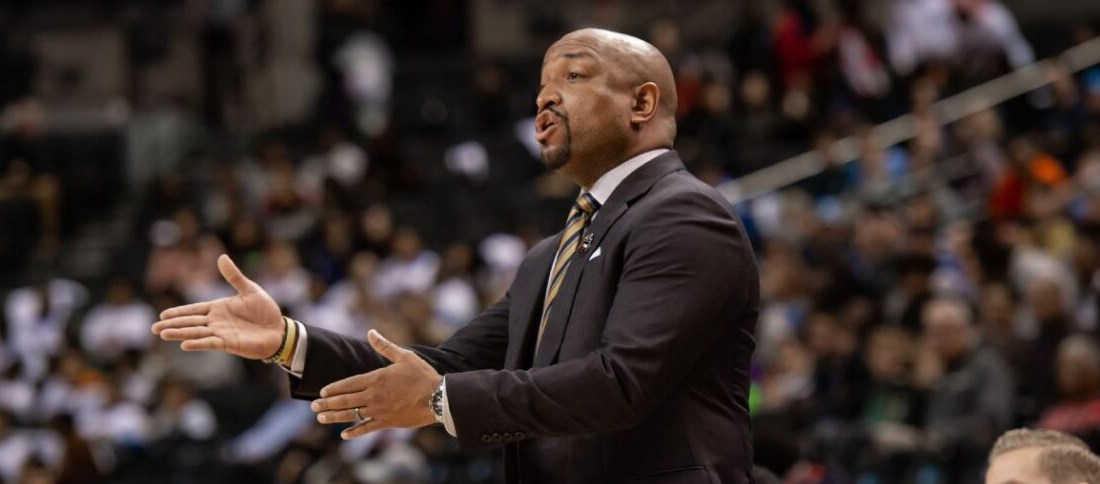
It was announced Monday that the La Salle Explorers men’s basketball team would be undergoing yet another major upheaval with the firing of head coach Ashley Howard. Howard has been with the team for four seasons, and does not have a stellar record to show for his time. La Salle finished with an 11-19 record this season. 

As is suggested in an ESPN article by Jeff Borzello, “[coaching] La Salle is considered arguably the most difficult job in the Atlantic 10 due to its resources and facilities.” But Howard is from Philly, was an assistant coach at Villanova for five seasons and was there when they won the national championship in 2016 and 2018 and had worked with La Salle in the past. If anyone was willing, ready and up to the task, seemingly, it was Howard. But, it appears that it just was not meant to be. 

To the defense of Howard, he was brought to La Salle with hopes he would copy and paste Villanova’s success here at our humble school. Copy Villanova’s program, a school that has over $1.88 billion in assets… yeah maybe someone here was expecting a little much from Howard, but he was expected to mirror the success, and, to that end, he failed.

Some are speculating that this change comes as La Salle welcomes its new President Daniel Allen, hoping that with a new executive staff, a plan can be forged to bring La Salle into a new financial era, with the basketball team playing a part in that change. Whether this means taking a gamble on a head coach and pouring even more resources into it, or finally letting the giant die in exchange for a different approach to athletic promotion, it is unknown. 

“It’s a wonderful game but it’s a difficult business,” Howard said to the Inquirer. Taking a look at the more than $1 billion in revenues generated by March Madness, and all of the money the Big Five in Philly invest into their teams just to get a shot at greatness, we’d agree it is a difficult business, and it’s just that, business. Basketball at a college level is no longer a game, it’s an investment, and it’s about time that La Salle realized they’re making the same bad investments over and over again.

While genuinely do not believe Howard had any ill intent when coming to La Salle, this fact needs to be considered: In exchange for a cut in salary, Howard extended his contract by two years in 2020 and received a buyout upon his termination, and if Giannini’s path is anything to be followed, signing a $500,000 annual contract and then tanking the team seems like a great way to make some quick cash. Just saying.

There is some on-campus controversy surrounds the firing, as it took place one day before La Salle’s annual day of giving and was announced under the radar. Some believe that this action makes the school look bad, as they got rid of a large investment one day before asking for money. Others believe that the timing was perfect, as it showed donors that La Salle carried an attitude that shows that poor performance will no longer be tolerated. 

Opinions about Howard

La Salle University Athletics

We asked various students around La Salle what they had to say, and the responses varied from person to person, although their reaction was mostly negative. While some viewed him as a good coach, many others had vastly more biting emotions towards Howard. For the sharpest of all, please check out our Sports section to see what editor Enrique Carrasco had to say about Howard’s firing. (Spoilers: He doesn’t exactly give him a glowing review.)

One student who chose to remain anonymous stated, “It needed to happen. The basketball team only got worse under him.” Another simply said, “He sucked.” Despite these comments, not all thoughts were negative. Some students stated that he was a “great coach.”

Sedin ‘22 also stated,”[Howard] wasn’t the best. Looked like he knew what he talked about, but I doubt he actually did.” Jake ‘22 stated, “I think he expected to be able to work with what La Salle was giving him and didn’t fully understand how much goes into running a team with as little resources as we have. He thought he could think outside the box to help the team succeed, but wasn’t able to.”

Andrew ‘23 had something interesting to say when he stated, “When he was chosen to succeed Giannini in 2018, Coach Howard was definitely the best choice. He played basketball for Drexel and under Jay Wright was instrumental in building two national championship teams at Villanova. However, at La Salle, it seemed like Howard was never genuinely interested. It seemed like every year, we would finish with a frustrating record and then be forced to build a new team due to the high frequency of transfers.”

The opinions on who should replace Howard were some of the most varied we received. A few people stated that they’d like to see La Salle alum Tim Leger take over the reins. Others said that they’d like to see Matt Langel. Overall, though, most people had no idea who should come in to replace him, but most believe it should be a coach new to the system. 

What’s next?

Photography Matters

So, if Howard got cut, John Giannini got cut and La Salle has been nowhere near the NCAA March Madness tournament since 2013, in which they were beaten by Wichita State, there aren’t many routes left for La Salle to take. 

In exchange for a cut in salary, Howard extended his contract by two years in 2020 and received a buyout upon his termination. Also, if Giannini’s path is anything to be followed, signing a $750,000 annual contract and then tanking the team seems like a great way to make some quick cash. Just saying.

Maybe the solution to La Salle’s woes doesn’t really lie with the coaching staff of the Explorers; maybe it doesn’t lie with the basketball team at all. When the major sports schism occurred in September of 2020, athletic director Brian Baptiste said that “It’s important to note that this is not a cost-cutting decision, but rather a strategic effort to reallocate our investment in a way that better aligns with our student-centered mission.” Well, since then, Gianni’s $700,000+ annual salary and the bountiful wealth “reallocated” from the other sports into men’s basketball has borne a 9-16 losing season, an 11-19 losing season and continually low placements in the Atlantic 10 power rankings. 

La Salle parades their men’s basketball team like it’s something to be proud of, and simply put: it’s shameful. All one has to do is look at the women’s basketball team’s 16-12 record and top five ranking in the A10 compared to the men’s 12th place rank. We can go on. Men’s cross country: A10 champions, women’s cross country: we have the Mancini sisters and that’s enough said. Field hockey has a .429 and women’s soccer has a .450 win rate. Not stellar, top ranking scores, but compared to the men’s basketball .278, it just speaks for itself.

For some members of the Editorial Board not particularly interested in sports, but more interested in seeing La Salle stay open, we think that flushing funds and resources into more successful sports and working to engage the student body in those will be more fruitful than the continuous efforts to have students attend a men’s basketball game in which the Explorers will likely lose. 

Yes, we are aware that these other sports may not boast as fierce a competition as men’s basketball, arguably the sport with the most talent in the whole NCAA what with recruiting, bracketing and the money that comes with it at an all-time high. But, if La Salle could just allocate a fraction of the funds they put toward the basketball team toward their actually good teams and their academic endeavors, recruitment would go up, the campus experience would be improved and as a result, recruiting for basketball would loosen up and who knows… if La Salle stopped propping itself up on a losing team, maybe they would be able to claw out of this hole the pandemic has left them in.

La Salle’s Day of Giving is more important now than ever before — Editorial

Editorial

The Editorial Board

Header Image: Explorers Give

On Tuesday, March 22, La Salle will be hosting its ninth annual Day of Giving, which is “a day to celebrate the University, its proud history, mission and legacy of service to students,” according to the Day of Giving’s official description. We won’t sugarcoat the idea. It’s a day where La Salle asks for money and everyone from the community opens their wallets to fund them. Many on campus have this perception because it’s the truth. But, it is also a negative connotation that many use as an excuse to not contribute to this incredibly important event.

The Day of Giving is not a cash grab like some believe — a lot of the money that is donated goes directly back into the students in various ways. Money collected on the Day of Giving is partially used to fund student scholarships, including some of the larger ones La Salle offers. “Like many students at La Salle, I receive scholarship support that would not be possible without La Salle’s Day of Giving,” said La Salle ambassador Aaron Srinivasan. “I very much see La Salle’s Day of Giving as a way to support the dreams of many students by making education more accessible, which is something I am extremely grateful for.” 

What isn’t apparent from the Day of Giving’s initial marketing push is that those who donate, at least online, are able to put their donation toward a specific fund. Right now, the four listed are the La Salle Fund, which is a general pool of donation money that gets put toward campus improvements, changes in curriculum, events and improvements to La Salle’s education services; the Student Scholarship Fund, which, as the name suggests, provides financial aid for students who may not be in the position financially to attend La Salle; the Explorer Fund, which supports student athletes and their teams; and finally, the Anna “Nush” Allen, ’80, MA ’02, Student Emergency Fund, which is money set aside to support students in the case of an emergency, either to help supplement medical expenses or replacement of lost property due to a disaster, which helps students in a variety of ways outside of their academic involvement.

Explorers Give

Beyond this, money can be even more granularly distributed so that those who donate know their money will go toward an initiative or department they believe in. Some options include the Diversity, Equity and Inclusion Initiative; the Honors Program; and the Schools of Arts and Sciences, Business and Nursing and Health Sciences respectively. For those interested or involved in La Salle athletics, donations can be put toward specific teams and sports groups as well. For many current students and alumni, the niche areas of La Salle like unique academic programs, student-run clubs and its small close-knit community are what make La Salle special. Therefore, being able to support specific areas of student life may make donors more inclined to donate towards something that directly impacted their Lasallian experience.  

There are many who have been skeptical about the university’s spending in the past and who are concerned with how it has handled its money since the beginning of the COVID-19 pandemic (or before, if we’re being completely honest), but these distribution options should alleviate those concerns, as your money can be put toward places you think need it the most. Many of us on the Collegian’s staff could not attend La Salle without financial aid, and at least a portion of that aid comes from students, alumni and members of the community who donate to the Day of Giving. We aren’t promoting it to our community for any other reason than that we have seen the benefit it has on the lives of students and want those benefits to continue. Last year, the Day of Giving raised over $1 million for various funds and initiatives, and that money really helped a lot of students and faculty advisors thrive as La Salle came out of the pandemic. We look forward to seeing how this year’s Day of Giving ends up supporting current and future Explorers and their endeavors with La Salle.

We think you should try to contribute to the Day of Giving in a way that is meaningful to you and will also be contributing to help current and future Lasallians. Here’s what some of La Salle’s student ambassadors had to say about the Day of Giving:

“Throughout my time here at La Salle, I’ve been blessed to have so many opportunities for academic and personal growth in and out of the classroom. Giving back to the community that has given me so much is really important to me and also to others who have benefitted from the quality education and caring community of La Salle. Please consider donating to help current and future Explorers continue finding their paths here at La Salle University.” 

— Communication Sciences and Disorders and Spanish student Michaela Craner, ‘23.

“The Day of Giving is important for La Salle because it allows for its mission to be carried out. I have been lucky enough to attend La Salle for the past three years, and in that short period of time, I’ve come to understand how special of a place La Salle is. La Salle enables its students to grow and evolve into young adults who are curious, creative and concerned with the welfare of not only those close to them but of everyone. The lessons I have learned while at La Salle have shaped me in ways I cannot fully yet describe, but one thing is for certain  — my life has been infinitely better because of my time at La Salle, and that would not be possible without the support we get, including donations from the Day of Giving.” 

 — ISBT and Math student Trevor Martinez, ‘23

Explorers Give

Our sports editor and La Salle ambassador Enrique Carrasco had this to say: “I’m an international student here at La Salle. Without the help from various different scholarships that La Salle has given me, I would’ve never been able to come to the United States to study. Without the help of people’s donations, my dreams of coming to the States to study and pursue a career in law would never be possible.” 

While the Day of Giving primarily focuses on funding different academic programs, numerous programs at La Salle that need funding have been ignored. Numerous extracurricular programs have had their funding cut in part due to the inability to receive a proper budget. Perhaps some of the money donated should not only go to academics, but also to some of the programs that make La Salle so wonderful in the first place. 

The Day of Giving addresses one of the most important issues every student and faculty member is forced to confront at La Salle: there is simply not enough funding currently to run everything smoothly. With the help of the donors, La Salle is able to help young students pursue a higher level of education, something that many of these students would never have the opportunity to do without this help.