Welcome to La Salle On Record, a new five-part series from WEXP Student Radio where senior Kyla Renegar sits down with members of the La Salle community to hear their stories, each focused on one of the five Lasallian values. The goal of this series is to delve into La Salle’s history, its mission, and learn more about what it really means to be Lasallian. In episode 1, Kyla had the chance to chat with Father Frank Berna about what it means to teach, preach, and live in the presence of God. Follow along with this series to hear more wisdom and hidden stories from the Lasallian community!
Commentary
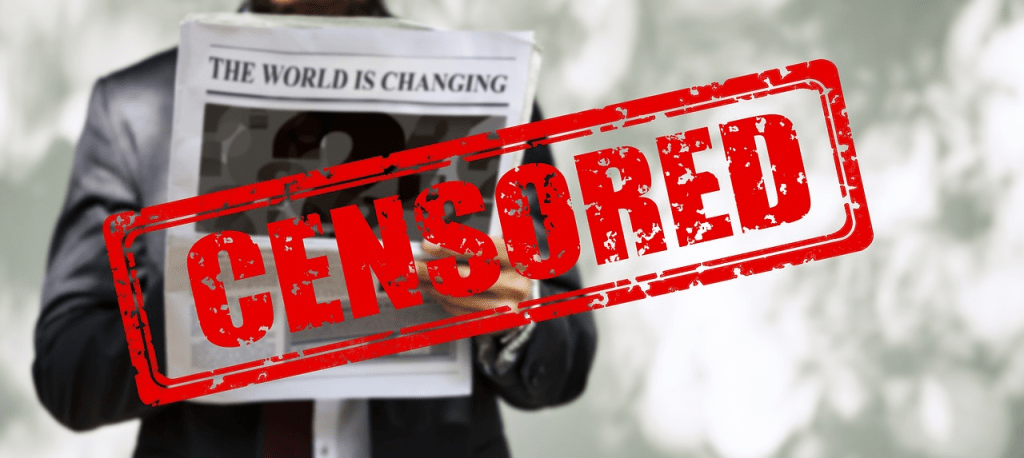
What Jimmy Kimmel’s censorship teaches Americans about their right to “free” speech
CommentarySam Klein, Editor
The First Amendment of the United States Constitution clearly outlines that “Congress shall make no law respecting an establishment of religion, or prohibiting the free exercise thereof; or abridging the freedom of speech, or of the press…” Over time, the Federal Communication Commission (FCC) has enacted various bylaws that prohibit speech in cases of obscenity, indecency and profanity in an attempt to protect the American people. Yet, one thing has always been certain since the Bill of Rights was officially ratified in 1791: the American people have a fundamental right to free speech.
In an era of vastly polarized political parties, the allowance of free speech has only further divided the American people, whose diverse opinions run rampant on the Internet, social media sites and by word of mouth. Still, our ability to voice our opinions is what makes democracy stand strong, allowing for a united front even if our opinions are not uniform. However, our democracy is as strong as it is fragile; our confidence in our autonomy is slowly deteriorating, one act of government censorship at a time.
Many journalists and media personalities are growing fearful of censorship following ABC’s decision to remove Jimmy Kimmel’s show off the air after his comments regarding the death of conservative activist Charlie Kirk. On Sept. 15, Kimmel discussed how divisive the country is while simultaneously criticizing Trump for deepening the divide, failing to release the Epstein files and ultimately targeting MAGA’s reaction to Kirk’s death.
Not only did Kimmel criticize MAGA’s response, but Trump’s minimal reaction to Kirk’s death as well. “This is not how an adult grieves the murder of somebody called a friend,” Kimmel said. “This is how a four-year-old mourns a goldfish.”
Kimmel’s mention of Kirk’s murder sparked immediate controversy. Chair of the FCC Brendan Carr threatened to take action against ABC, and therefore Disney, if they did not act quickly. Succumbing to the pressure, ABC claimed Kimmel’s show would be taken off the air indefinitely.
Yet a week later, ABC brought the show back.
In his opening monologue following the return of the show on Sept. 23, Kimmel said while choking back tears, “It was never my intention to make light of the murder of a young man. I don’t think the murderer who shot Charlie Kirk represents anyone. This was a sick person who believed violence was a solution and it isn’t, ever.”
Kimmel then expressed his sympathy for Erica Kirk, the widow of Charlie Kirk, and explained how her forgiveness of her late husband’s killer touched him deeply. Yet, in light of the events, Kimmel could not help but recognize the democratic importance of his censorship to the broader issue of regulating free speech.
Kimmel mentions how in other foreign countries, namely Russia and the Middle East, talk show hosts would get thrown in jail, or potentially worse, for criticizing people in a position of power, which is why he considers himself lucky. Yet, Kimmel acknowledges that within our democratic system, any censorship of comedians by our government is simply “anti-American.”
“[They] tried to coerce our affiliates who run our show in the cities you live in to take my show off the air. That’s not legal; that’s not American,” Kimmel said.
Trump himself was outraged about the return of Kimmel’s show, immediately taking his response to Truth Social by writing, “Why would they [ABC] want someone back who does so poorly, who’s not funny, and who puts the Network in jeopardy by playing 99% positive DEMOCRATIC GARBAGE.”
ABC has not publicly responded to Trump’s post, yet as CNN states, it remains clear that the president cannot stand to be criticized night after night.
Kimmel outlined the process of learning his show was being taken off the air while featured on fellow comedian Stephen Cobert’s talk show, The Late Show. Also an avid criticizer of Trump, Colbert is being taken off the air by CBS beginning in May of 2026 for “purely financial reasons,” yet fans are skeptical because the decision came after criticism of Trump and the show’s parent company, Paramount Global.
The technicalities of which talk shows will continue to air are irrelevant, for the importance of censoring them at all remains the focus of many journalists who believe our democracy is threatened. Kimmel’s remarks on his Sept. 15 show, while potentially controversial in nature, did not break any FCC guidelines that would give the government the ability to restrict his speech. The issue then wasn’t the legality of Kimmel’s words, rather the dislike of conservative higher ups, like Carr and Trump, to be nationally criticized, furthermore pressuring corporations like ABC to act.
Although Kimmel remains on the air, the question stands: How can we “Make America Great Again” if our government does not believe in upholding the principles established in our Constitution, and perhaps more importantly– What does government censorship mean for the future of our democracy?

The pissed off American dream
CommentarySean Musial, Editor
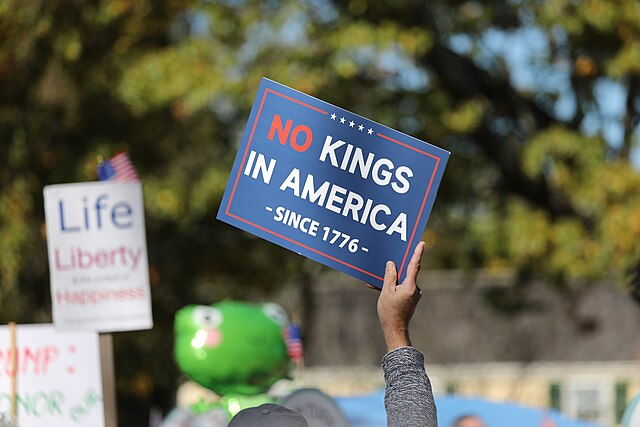
The American Dream. A term first coined nearly 100 years ago by historian and writer, James Truslow Adams, in his 1931 bestselling book, The Epic of America. Though the phrase was initially conceived in the book, the concept has been around since the birth of our country. The idea is deeply rooted in the Declaration of Independence, with things that were written like “all men are created equal” and “life, liberty, and the pursuit of happiness”.
The original and more detailed meaning is the following: the belief that anyone can achieve success and prosperity through their hard work and determination, rather than social class or circumstances of birth. Back then, sure. It could be something attainable by any American citizen if they put the work in. In modern society, those notions of “social class” and “circumstances” are becoming blurred through different economic, social, internal and external means. The American Dream is pissed off and looking for a rewrite.
Plenty of writers throughout history have written on the subject. With these myopic views and personal interpretations, the “Dream” has been seen in different lights. F. Scott Fitzgerald offered up a cynical look with The Great Gatsby by exploring themes of wealth, class and the pursuit of a materialistic version of it during the Jazz Age. The writer of Death of A Salesman, Arthur Miller, gave his audiences a ruinous critique of the concept, presenting an ordinary man’s spectacular failure. In The Grapes of Wrath, John Steinbeck depicts it as a luxury that can be rarely affordable for those living in poverty.
These novels and plays are very early glimpses of what had come of The American Dream during the 1920s and 1930s. Even though it has been over 100 years since the mentioned books came out to the American public, the overall ideas portrayed have been present throughout the past century. The argument can be made that it is prevalent in modern society more than ever.
The American Dream was supposed to be a promise… now it feels more like a punchline. When it was originally created, it was a less saturated and convoluted time. We live in a consumption culture now that has started to delude people into the certainty of what they can’t have. The illusion of mobility dangles in front of us like a carrot on a stick. We chase it endlessly, but the closer we get, the further it seems to move out of reach.
The crisis of identity comes into play through the uncertainty of someone not knowing if they’re doing too little or overdoing it. Anxiety towards that unknown path an individual takes often causes burnout. The disconnect between effort and reward breeds existential rage, making one question their hustle in a system that is already rigged against them.
How can one truly “be themselves” in a culture that commodifies authenticity? Being yourself is pursuing your dream. It’s a part of your foundation no matter how little or grand that idea that you long for is. Many who have still opted to chase it have started to find themselves with a different kind of struggle. Different struggles like social media backlash are oftentimes being overlooked because of the recurring factor of oversaturated content.
For Gen Zers and Millennials, they seem to be dreaming differently. They are branching off from that “white-picket fence” but rather towards freedom from depth, asking the grand question of what it all means, and granting mental peace. Some reject that systematic repression completely. Many are the people who choose the van life, embrace anti-work or become digital nomads as they still long for their own sense of peace.
This built-up anger isn’t a result of laziness or too much enlightenment, but it’s rather the result of a promise that has already been broken. We sometimes want something so badly that we can feel we can reach out and grab it. When we go to touch and nothing’s there, that’s when we start to get pissed off. It’s not unattainable. It just hasn’t reached that point yet. What happens when society loses its central myth? What replaces the Dream when belief collapses?
An argument can be made that it could turn us into a “copy and paste” society, meaning that each person will be identical then the person that came before or after them. An emotionless and predetermined life that is created for the higher-ups to rule over us at will for their own beneficial success. The anger we possess towards this idea that we won’t get to our overarching goal is sacred. It is a signal of life, resistance and the internal hunger for something real.
The success should be redefined and reimagined for it to stay alive out of what has come out of the modern world. It’s not accumulation but rather alignment. Yes, we accumulate knowledge, relationships and other things for the success of our dream to eventually become true. Letting everything align together like a jigsaw puzzle or a star constellation before you rush through it is what should feel more natural during the pursuit. It shouldn’t be consumption but rather connection. The connection with the ones closest to you and the connection with the audience you are trying to accumulate for the vision to inevitably come into fruition.
Community should come first over what is deemed your “competition.” As much as someone is the central driving force for the dream to come true, no one in history has done it without the help of others by their side. Mutual aid, collective care and decentering form the idea of the self-made man. Ego kills the dream even if you think it drives it. The dream could have never been a destination at all, but rather a mirror into one’s unconscious thoughts, feelings and hidden conflicts. That internal reflection evaluates your potential so it can bleed out into the real world.
The American dream is pissed off… and maybe it should be. Maybe that anger is something more honest, more human. Maybe it’s a path towards a more enlightened tomorrow rather than the limited past that it came from. Choose the present over the nostalgia of the past because it keeps you from longing for what was rather than what is. We may not want the old dream back, but we can make that choice to dream differently.
Our dreams in life are what make us human beings. That yearning for an idea or plan that feels so far away, even through hard work and major perseverance. Pursue the dream. Live, breathe and sleep it. Getting pissed off when you’re not there yet is a natural response to something you want and can imagine so clearly; it’s like you can reach out to touch it. Dream big or go home.
PPEL San Diego Summer School
CommentaryMaya Martin, Editor
This past June, I had the wonderful opportunity to travel to San Diego for a Philosophy, Politics, Economics and Law (PPEL) Summer School. The program was through the University of Arizona’s Center for the Philosophy of Freedom, and took place on campus at the University of San Diego.
I was accompanied on the program by my fellow La Salle students, Allie Ringsdorf, Lawrence Manny, Gabby Fletcher and Kenny Lynch. We gathered for a four-day-long session with teachings from renowned professors, professionals and philosophers from across the country. The program graciously covered the cost of housing, food and the school itself.

The purpose of the summer school was to explore foundational and contemporary questions about society, exchange and governance. Presenters shared their work and topics with us throughout the week on a variety of interdisciplinary issues. Two of my favorite presentations were “International Jurisdictions, Water, and the Internet” and “Schadenfreude Representation.”
The presentations given were extremely insightful and thought-provoking. Although we sat through about four presentations a day, each kept students engaged.
Additionally, during the program, students broke into groups of five and researched, organized and worked to present a project called the “Big Question Project.” The goal of this project was for groups to think of a burning question related to PPEL and reflect on its importance or significance.
My group won third place for our presentation on the question “How can privatized prisons be justified as a form of punishment?” The presentation served to speak about the history of private prisons and its interpretation through philosophical, political, economic and legal lenses.

Right before attending the summer school, local issues arose regarding Delaney Hall, an immigration detention center, in Newark, NJ. Being from New Jersey, these issues deeply affected my community and piqued my interest, so we stemmed the topic from there.
During our presentation, we talked about major issues occurring in private prisons, including discrimination by nationality, exploitation, cruel and unusual punishment, and non-disclosure issues.
Researching this topic was very interesting and opened my eyes to much more than I knew about private prisons. We learned through our research that, on average, inmates in privatized prisons make much less than inmates in public prisons. Additionally, while most public prisons offer free basic necessities, private prisons typically charge these items at an inflated cost.
Additional research also led us to the discovery of which companies support GeoGroup and CoreCiviC, the monopolies owning and profiting off of private prisons. Brands that many people know and love, including Nike, Starbucks, Microsoft and Bank of America all donated money to these companies.
The program gave us the opportunity to deep-dive into a topic of our choosing and allowed us to broaden our knowledge and analytical skills. Researching and creating this project also gave me a greater craving for justice.
I highly encourage any students who are interested to apply for the program and attend.
It is held annually in June and is open to all undergraduate students, including students who have just graduated from their senior year.

A Farewell Address
CommentarySean Bradley, Staff Writer
The time has come. As with all good things, they must come to an end. For two years, “Nature at La Salle” has delighted both student and faculty readers alike, helping them gain a better understanding and appreciation of the natural world around them.
While best remembered as a Collegian Features series, the idea of “Nature at La Salle” goes further back. Since my freshman year, I’ve had a deep passion for exploring nature and sharing my findings with others. At that time, I was interested in sharing my nature findings to new audiences while also teaching them about the things I found. For a brief period, I ran an Instagram page titled “Nature at La Salle,” which showcased pictures of the plants and animals found on La Salle’s campus and provided brief fun facts about them. I admit that it was fun for a while but after some time I lost interest and eventually deleted the page. Though the page was gone, the idea of a series highlighting the nature found on the university’s campus was never lost.
Fast forward to March 2023. One day, I overheard a student, who was a Collegian writer at the time, talking with another student about a recent article he wrote. Interested, I asked him how I could join and told him of my article idea. Luckily, I happened to know this student well and he helped get me connected with the Collegian, and have my first article published, “Nature at La Salle: Spring Flowers,” and the rest is history. I realized my true passion was writing about nature and sharing knowledge with others about nature’s wonders and importance. In the following months, 11 more articles followed, each with something cool and unique to offer readers.
Though I never got to some story ideas and would love to continue the series, I’m overall happy with the 12 published articles and I’m sure the La Salle community feels the same way and has learned a lot from them. Looking back, I think the series overall had a good run. I hope it has helped readers connect with nature and has inspired them to be caretakers of nature, especially now as life on our planet faces several existential threats. Our one and only home, Earth, needs us more than ever to be good stewards of nature just as much as we need nature to sustain ourselves. The time to help is now.
If there is any advice I have for future graduates, all I would say is be kind, follow your dreams and use your given talents to make the world a better place for everyone. Thank you.
Four surefire communication skills that give you a competitive edge
CommentaryLucas Alven, Staff writer
When I started my college studies in communication, I was convinced that the only relevant skill I would get out of it is knowing how to operate a camera. I was very wrong about this. There was a lot about my field that I needed to learn.
This may surprise you, but communication is not some easy major designed to pass students. The classes teach valuable skills that apply to every profession.
If you are looking for an advantage over the competition during your job hunt, communication skills make for a great addition. Here are my four surefire communication skills that employers will love to see on your resume.
1. Know your audience
Before I communicate anything, the first thing I like to do is think, “Who is my audience, what am I trying to say and how can I best convey my message to them?” From there, I fill in the blanks and communicate what I think is best.
Some of you might read this and think, “This is common sense!” However, many people overlook this important detail. Communicating with specific messages allows people to better understand what is said and how they should respond.
For example: You ask your boss for a raise. In this case, you would not just walk into the boss’s office and ask for a raise. Instead, you would respectfully set up a meeting where you would explain how you are deserving of a raise for the extra hours you spent in the office this year.
2. Know your communication skills
No, you do not have stress and become a perfectionist about every little thing you say. However, it is important to remember that everything is communication.
From the clothes you wear, to making hand gestures, everything communicates something. By understanding this idea, you can apply it to various workforce situations.
For example: You have to give a presentation to a large audience. To leave a good impression, you can choose a less distracting outfit to wear and present yourself with confident body language by using non-verbal hand gestures.
3. Know your team
I am not a huge fan of working on group projects, but they are an essential part of the workforce. Knowing how to work in group settings will allow you to successfully collaborate with your co-workers on projects. Effective group communication can be done by giving people the opportunity to share their ideas and criticisms to improve the work.
The most successful projects I have worked on were the ones where communication was open and ongoing, which is not surprising considering that there is a strong correlation between open workplace communication and better results from employees.
For example: You have a large project due in a month. While everyone is likely working on separate sections of the project, it is still important to come together for feedback. Doing this prevents issues from occurring, promotes new ideas and builds connection among a group.
4. Know the importance of listening
Again, some of you might read this and think, “This is common sense!” However, to the surprise of many, there is a huge difference between hearing and listening.
Active listening is when you fully focus on the person communicating, showing them that you fully understand what they are saying. Applying this skill to your career shows employers that you understand and care about the message that they are conveying.
For example: Your manager is assigning you a project to do. In this case, you could listen to your manager on and off, making sure you hear the essential parts that relate to what you have to do. However, it is better if you fully listen, nod your head and ask questions for clarity to make sure your manager knows that you understand.
Know what to do next?
Now that you know these skills, why not learn even more valuable communication skills? La Salle University’s Communication Department offers classes that blend the foundations of communication with concentrations that are relevant to your field.
Will you add any of these skills to your professional toolbelt? Are there any more skills that I forgot to mention? Let me know below in the comments!
The Matt Ox debacle and the effects that fame can have on the youth
CommentarySean Musial, Staff Writer
Former Philadelphia resident, Matthew Christopher Grau, more prominently known as ‘Matt Ox’, is a young rapper who rose to stardom with his 2017 single “Overwhelming”. The year prior, he collaborated with now deceased rapper, XXXTentacion, on the song “$$$” in his sophomore album. He has even collaborated with artists like Chief Keef, Key!, and Vallee with his debut Album “OX” later on in 2018.
On April 5, he was arrested in Burbank, California on drug charges following a traffic stop that had two other individuals in the car. According to authorities, they had pulled the Lexus over initially for vehicle code violations. They then found probable cause to search the vehicle because they then searched and inspected the vehicle. Police stated that they found several cups that contained oxycodone, Xanax and a cocktail of promethazine-codeine, also known as “lean.” Ox was released on a citation and ordered to appear in court on April 30.
Even with these serious charges, the 20-year-old posted his mugshot on social media. The caption reads: “F*** THE SYSTEM! FREE THE KIDS! NEW MUSIC SOON! LOCKED ME UP FOR NUN IM BACK THO!” This controversial post and reaction to something that should scare others adds to Ox’s persona and public image as a rebellious rapper that goes against the system. Not condoning these actions, the young rapper stays true to what he’s trying to convey– an image resemblance of ‘Emenem’ and what has become of the former child star in recent years. Ox has his own demons to deal with, but he’s here to stay to continue his creative form and garnish the controversies he has become known for.
Ox, just like many other kid stars that came before him, have been affected greatly from everything that comes with fame and fortune. Other former singers that started in their youth, like Demi Lovato and Justin Bieber, got involved with drugs and other scandals later on in life. Micheal Jackson is one of the clearest examples of this, taking the matter that he was robbed of his childhood to a whole other degree once he made it the 90’s and 2000’s. Since they are more in the hip-hop field, rather than rap, it’s a clear representation to see how they got from point A to point B. The lifestyle that comes with ‘rap’ is much different from other song genres, still having remedies of the partying that rock garnished or the beats that Hip Hop has made mainstream.
A deeper examination into Ox’s career reveals where he went from a young ambitious kid to a full-blown thug rapper. Ox was only 12 years old when he rose to fame, giving the world his catchy beats and music. Due to the amount of time that went into making his music videos, he eventually dropped out of school to pursue his music career more full time but his mom made sure to homeschool him so he could continue his education. As the years progressed and he got involved with more popular rappers in the industry, his craft grew into something new and even darker. Some people labeled his music as “dark trap music,” taking inspiration from some of his favorite artists like Soulja Boy and Lil B. Trap music is a subgenre of rap that explores themes of street life, drug culture, violence and ambition on top of the hard- hitting beats, aggressive melodies and candid lyrics. This music he has become most known for only contributes to the changes he has gone through throughout his early career, for the better or worse.
The take away from this is to stay true to yourself when fame enters the picture, and money only adds to the individual’s new life. In its essence, music is a form of art that can help individuals gain recognition. People can lose themselves. The best thing someone can do when found in this situation is ask what they would have done in their lives when things were much simpler, rather than going in head first in the situation before thinking it over. Pursue your dreams but don’t lose yourself in the process.
Exploring and Bridging Nations: Travel Study to Washington, D.C
CommentaryIsabella Teti, Editor
Since late January, students in La Salle University’s “U.S. Foreign Policy & Haiti” class, taught by Dr. Mark Thomas, have spent the semester preparing for the trip of a lifetime. However, not without first understanding the significance behind the reason for our journey.
As participants in this class, we studied Haiti’s political and governmental conditions, which have become nothing short of tragic. The people of Haiti are suffering immensely, living under the constant threat of gang violence, human rights violations and widespread food insecurity. By examining the effects of a full governmental collapse, our class was able to discuss not only what the United States is doing to help, but also brainstorm our own solutions to the overall crisis.
Through both textbook study and in-depth class discussions, we developed a well-rounded understanding of Haiti’s situation, equipping us to advocate for the country during our travel study experience.
Our travel study took place over La Salle’s spring break and was nothing short of unforgettable. We visited some of the nation’s most beautiful and significant landmarks, including the Shrine of the Immaculate Conception, the Capitol Building, the Pentagon and Arlington National Cemetery. We also visited the U.S. Senate’s Hart Building where we met with the staff of Senator Ron Johnson (R-WI), and the U.S. House’s Longworth Building where we spoke with the staff of Representative Dwight Evans (D-PA). We discussed the situation in Haiti and learned about their efforts to develop a plan of action. Both offices shared their insights and allowed our class to offer our perspectives and propose potential solutions for U.S. involvement. One of the most exciting moments of the trip was touring the Capitol and receiving passes from Representative Evans’ office to visit the House of Representatives gallery.
Another highlight was our visit to the Center for Strategic and International Studies, where we were briefed by Think Tank staff who have been studying Haiti’s economic and political conditions for many years. This experience offered a different perspective than our meetings on Capitol Hill. We also had the privilege of meeting the Ambassador of Kenya to the United States, David Kerich. He and his staff provided detailed information about Kenya’s peacekeeping missions in Haiti, explaining how their country is helping to reduce violence and restore security. We were able to ask thoughtful questions and learn about both the progress and challenges they’ve encountered.
One of my favorite experiences was touring the Pentagon. We explored the history of the U.S. military branches and visited the moving 9/11 Memorial where we heard a touching story about one of the heroes who lost their life that day. It was a place I had always wanted to visit, and I’m grateful to have finally experienced it. Later that day, we visited Arlington National Cemetery where we witnessed the Changing of the Guard at the Tomb of the Unknown Soldier—a rare and emotional moment. I was especially honored to see both a male and a female soldier perform the ceremony. We also toured the Holocaust Museum, a place I had long wanted to visit. Though somber, the museum provided extensive insight into both the origins and the aftermath of the Holocaust, far more than I had previously known.
During the trip, we also connected with La Salle alumni working in various government roles, from lawyers to federal agency employees. We even met alumni currently in law school, who offered helpful perspectives on the law school experience—guidance that was particularly valuable to students like myself.
All in all, the trip was a tremendous success. It was educational in the truest sense, as we applied what we learned in class at La Salle to conversations at some of the highest levels of government. This experience proved that La Salle is not only educating us about global issues like Haiti’s crisis, but is also preparing us—as future lawyers, politicians and public servants—to advocate for those who cannot speak for themselves. Through this opportunity, La Salle has shown its dedication to shaping the future of our country with integrity and purpose.
Farewell to The Collegian: What I Found Between the Lines
CommentaryChude Uzoka-Anofienem, Staff Writer
When I first began writing for The La Salle Collegian, I didn’t know exactly what to expect. I thought I’d string some sentences together, maybe cover a few events, toss in a joke or two and call it a day. What I didn’t anticipate was how deeply this paper would weave itself into my week, my thoughts and, most unexpectedly, my sense of purpose.
Writing for a student newspaper isn’t glamorous. You’re not chasing Pulitzers or making headlines across the country. But The Collegian was never about that. It was about something much quieter—and in many ways, more important. It was about community. It was about giving voice to student concerns, celebrating achievements that might otherwise go unnoticed and capturing what it feels like to be part of La Salle University.
I remember my first article vividly. It was about Elon Musk purchasing Twitter and turning it into a complete hell site. I agonized over every word, double-checking facts, trying to strike the right tone, writing from my own perspective. When it finally went live, I refreshed the page more times than I care to admit, wondering if anyone would even read it. Someone did. A classmate stopped me after a lecture and said, “Hey, I read your Elon Musk article. That was cool.” That two-second exchange gave me more confidence than a dozen English classes in middle and high school ever could.
From there, I found my rhythm. I wrote about things that interested me, straying away from the typical school newspaper topics related to campus issues and towards more broader stories filtered through a La Salle lens. Some topics were fun and breezy—ranking the best and worst songs released in a given year. Others were more serious, like examining the WWE’s less than stellar reputation. Whatever the subject, I tried to write with empathy and curiosity. If there was one thing The Collegian taught me, it was how to listen—really listen—to people and their stories.
Of course, none of this happened in a vacuum. The editorial team was the engine behind the whole operation—smart, driven, slightly sleep-deprived people who made magic happen on deadline week after week. They held the bar high, but always with grace and humor. I owe every polished article to an editor who pushed me to my best.
Now, as I write this final piece, I feel the kind of bittersweet gratitude that comes with leaving something meaningful behind. I’m proud of the words I’ve written, but even more so, I’m thankful for the experience itself—for the friendships, the late-night brainstorming sessions, the thrill of seeing my byline and the hundreds of tiny moments that made The Collegian feel like home.
To everyone who read, responded or rolled their eyes at my work—thank you. You made me a better writer, and a more thoughtful person. And to future writers picking up where I leave off: write boldly, edit kindly and never underestimate the impact of your words.
Goodbye for now—but the story always continues.
Letter to La Salle
CommentaryAndrew Noel, Editor
I don’t know why, but as a kid, I used to always think about college. It seemed like, to me at least, a far away place that I may never get to. As I write this, I am three weeks away from graduating. Calling the feeling “weird” would be an understatement.
When I was picking which college to go to, I knew I was making a big choice. I just didn’t realize how big of a choice I was making and how much, for the better, it would impact my life. Given that I am so close to graduating, I’ve done a lot of reflecting on the last four years. It’s perhaps no surprise that I’ve had a lot of mixed emotions this semester, with the main one being thankful.
I’m thankful for La Salle, for challenging me both inside and outside the classroom, and forcing me to grow as a person.
I’m thankful for my professors–namely Dr. Brian Wyant, Dr. Kathleen Bogle and Dr. Caitlin Taylor–all of whom made my experience as a criminal justice major a good one. I always knew that they had my back and only ever wanted to see me succeed. One of the many things I learned in college was how impactful professors can be, and I will be forever grateful for the support and encouragement they showed me along the way.
A few weeks ago, I was watching the NCAA men’s hockey national championship broadcast. The announcer calling the game said that the best part of college is the friends that you make for life. Now that this journey is so close to being over, I can’t agree anymore with that statement. La Salle has given me a lot of good things, but the best thing is without a doubt the friends I will have for the rest of my life.
When I was picking which school to attend, I had a lot of options. Yet, I think it’s safe to say that I hit the jackpot. I can only hope that everyone finds their college experience as fulfilling and life changing as I did.
So that’s it. The quickest and best four years of my life are over. While I’m excited for the future, I will certainly miss La Salle and be indebted for everything it has given me.