Goldman Sachs Prepares for Layoffs as Deal-Making slows

Business

Jason Ryan, Staff

Courtesy of Financial Times

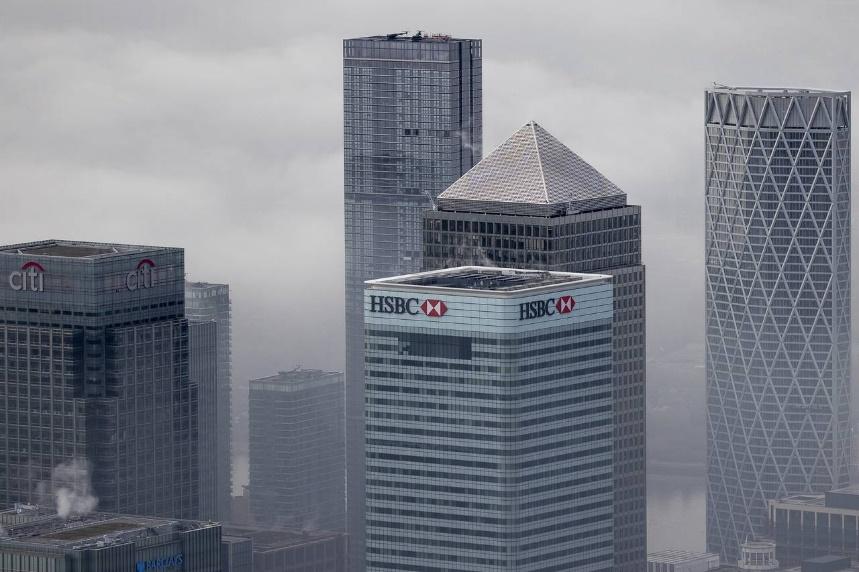
Goldman Sachs is a leading American multinational investment bank and financial services company headquartered in New York City. The company provides a wide range of services to a substantial and diversified client base that includes corporations, financial institutions, governments, and individuals. 

Goldman Sachs is preparing for a round of layoffs that could come as soon as next week due to low deal-making. At the end of June, Goldman had about 47,000 employees across investment banking, trading, asset and wealth management, consumer banking and operational functions. The job cuts can greatly affect employees across the company. 

Deal-making in the United States so far this year has totaled about $1.2 billion, compared with $2 billion a year ago in 2021, according to the data firm Dealogic. Initial public offerings raised about 95 percent less through the first half of the year than the first half of last year, according to EY, an advisory firm. With this, the number of deals has fallen about 73 percent.

Goldman typically revisits its headcount every year, letting go of employees based on performance and to match the bank’s needs. It had paused that program during the pandemic, which also coincided with a record period for deal-making, when bankers complained of being overworked. The program typically lays off 1 to 5 percent of workers; this round of layoffs is likely to be at the mid of that range. 

Goldman’s Chief Financial Officer, Denis Coleman, told analysts in July that the bank was “probably reinstating our annual performance review of our employee base at the end of the year.”

The move comes as the Federal Reserve’s effort to tame inflation by raising rates has somewhat cooled deal-making and raised concerns that the U.S. economy will tip into recession. The war in Ukraine has added further uncertainty to the mix.

With this however, Goldman reported in July that its second-quarter profit had dropped nearly 50 percent from a year earlier, to just under $3 billion. Revenue from Goldman’s investment banking division fell 41 percent from the same period in 2021. At that time, the bank said hiring for the rest of the year would slow.

Still, for executives across Wall Street, assessing the requisite size for layoffs can be difficult. This is a milestone as something like this has not formally existed in the past two years. Although it may be just a modest decrease over the company, it will still cause anxiety among employees. It will be interesting to see what Goldman Sachs’ headcount is at the end of the year. These layoffs are crucial to see if other job cuts on Wall Street go ahead with this trend. 

  ryanj21@lasalle.edu

Financial Problems turn Personal Problems for Bed Bath and Beyond

Business

Jorden McVeagh, Editor

https://www.nbcphiladelphia.com/tag/bed-bath-beyond/

On Sunday Sept.4th, Bed Bath and Beyond Chief Financial Officer Gustavo Arnal was found dead by New York City Police Officials. The former 52-year-old CFO was identified as deceased after it was found he threw himself off the balcony of his 18th floor high-rise apartment. Arnal had joined the company at the peak of the COVID-19 pandemic in May 2020 after a successful career at companies such as Avon, Walgreens and Procter and Gamble. Arnal was instrumental in guiding triple B through the pandemic through his financial knowledge and his ability to create a strong collaborative culture around him. This news however comes at a terrible time for triple B as they creep closer to declaring bankruptcy. As of now, they are fighting this problem by downsizing.

 As of Wednesday Sept. 7, the company will be laying off 20% of their corporate employees, closing 150 stores, and reducing several in-house home good brands. In addition to this, $500 million has been saved up to help the company fight through the financial hardships they are facing at this time. Shifting the focus back on Gustavo Arnal, on Aug. 23, a lawsuit filed in the US District Court in DC naming Arnal as a defendant in a class action lawsuit. This case pinned him against Ryan Cohen, who accused the company and Arnal of pump and dump schemes to hyperinflate the company’s stock price. The contents of the lawsuit stated that Arnal and other company officials made misleading comments regarding the company’s current financial situation. Bed Bath and Beyond failed to communicate financial plans with investors, delayed stockholders from seeing their holdings and stock positions, and shared fake revenue numbers.

The company also introduced their “Buy Buy Baby” promotion for the purpose of increasing stock price. This promotion saw triple B acquire a privately held baby merchandising company for $67 million. This comes at a time of financial hardship for companies worldwide. It is worth noting that Ryan Cohen, the other side of the lawsuit against Arnal, sold his $178 million stake in the company. As a result of this sale, Bed Bath & Beyond stock (BBBY) dropped by a whopping 19.63%. On Aug. 18, the day Cohen sold his shares, Bed Bath and Beyond stock price dropped from $23.08 per share to $8.63 per share as of today. This was the beginning of the downfall for the company, and they have been fighting to stay afloat since. It will be interesting to see how Bed Bath and Beyond fights through this time and the financial standing of the company moving forward.

Crypto guide for someone who knows nothing about crypto

Business

Elizabeth McLaughlin, Editor
Header Image: QuoteInspector

This will be my last article in the business section of my beloved school newspaper. Reflecting on my time spent editing this section for the past year, I have one regret: I wish we had talked about crypto more.

That’s not because I’m a crypto fanatic; I don’t own any Bitcoin or Ethereum or tokens. But I am about to complete my B.S. in finance and launch my art and design business. Given my background in finance coupled with my perspective as an artist, crypto clearly intersects with my interests.

I’ll admit: for the past two years or so, I would have groaned at the mere mention of the blockchain. What do you mean it’s digital money? Isn’t my money digital when I send it through Venmo? And what do you mean crypto is “decentralized…” where exactly is it? And what the f*ck is an NFT?

First, a few disclaimers:

  1. Crypto isn’t going anywhere. Whether you like it or not, it is part of the future of finance.
  2. There are strong arguments in favor of crypto. There are also strong arguments in opposition to crypto.
  3. I have not found a single, comprehensive guide to understanding cryptocurrency, probably for a few reasons:
    1. The field is constantly evolving.
    2. Part of its appeal is that it remains ambiguous; cryptic, if you will. Pun intended.
  4. It’s actually not that difficult to understand.

With those disclaimers in mind, let’s get into it. This guide heavily quotes the information provided by Cryptopedia.

  1. Cryptocurrency is a blockchain-based digital asset. There are two main blockchain-based digital assets: crypto and tokens. We’ll get to the blockchain later.
  2. “A digital asset is anything that is stored digitally and is uniquely identifiable that organizations can use to realize value.”
  3. The difference between crypto and tokens is that cryptocurrencies have their OWN blockchains, whereas tokens are built on EXISTING blockchains.
  4. Where does the term “crypto” come from?
    1. Cryptography: an advanced encryption technique that assures the authenticity of crypto by eliminating the possibility of counterfeiting or double-spending.
    2. Encryption: computer-speak for converting data from one form into another; more specifically, plaintext into ciphertext.
  5. What is the blockchain?
    1. Imagine a bank. Way back when, banks kept written records of all their transactions. Then computers came along, and they could print out data and store it in filing cabinets. All of this transaction data existed in real time and space, not just online. The blockchain is the digital “place” where transaction data is stored.
    2. Essentially, the blockchain is “a distributed ledger that connects a decentralized network on which users can send transactions and build applications without the need for a central authority or server” (Gemini).
      1. I implore you to look further into this and discover just how murky the “decentralization” truly is — basically, it is very difficult for any technology to not be centralized by one person or organization. Back to the basics.
    3. Bitcoin is the native cryptocurrency of its own blockchain. Ethereum is the native cryptocurrency of the Ethereum blockchain.
  6. When and where do these networks operate?
    1. Everywhere, all the time. These networks are called peer-to-peer, or P2P, meaning you can communicate from Philadelphia to Seoul almost instantaneously, without first passing through a dedicated server.
  7. So we understand the blockchain, and that the two biggest digital asset classes are crypto and tokens. What can you do with crypto?
    1. Trade it, use it as a medium of exchange, use it as a store of value.
  8. What is a token? What can you do with it?
    1. It’s easier to tell you what it’s not. It’s not the native, or main or flagship currency that accompanies a blockchain.
      1. For example, Ethereum (the blockchain) has ETH (the crypto), but it also has DAI, LINK, COMP and CryptoKitties.
    2. Like crypto, tokens hold value and can be exchanged. They can also represent physical assets. They are also used by users of certain blockchains to vote on actions/policies taken by the blockchain. In other words, users can use them to guide the course of their network.
  9. Is any of this stuff regulated?
    1. What a big question. I can’t answer it all in one guide. I can say, however, that tokens do follow sets of standards, known as ERC-20 and ERC-721. I cannot give you much more information on these standards than that. I never said I was an expert.
    2. Speaking strictly from a United States perspective, crypto is really hard to regulate from a governmental perspective. The age of the average Congressperson is around 61 years old. For context, I am 21 — I’ve had a Facebook account since age 8 — and even I don’t know where to begin with regulation.
  10. How do cryptocurrencies/tokens gain or lose value?
    1. There are many ways. One thing that heavily contributes to the rate of Bitcoin, the first and biggest cryptocurrency, for example, is hype. People “in the know” buy low and sell high, as one does in any stock market situation.
    2. Their value can fluctuate greatly and quickly — it is a volatile market.

I hope this guide has clarified what cryptocurrency is. I invite any insight and/or corrections from those who are more well-versed in it than I. For further reading on the topic, I suggest:

Don’t let the finance bros gatekeep this knowledge from you. In fact, nobody should gatekeep financial knowledge of any sort — we all know the sayings, “knowledge is power” and “money is power,” so knowledge of money? Priceless.

I’m not saying crypto or finance in general are simple to understand; there are a lot of variables and context that you need to consider. In my research on crypto, I’m learning that there’s a lot more about coding that I’d like to know; information that would definitely enhance my understanding of digital finance.

But with this and with all new endeavors, remember to give yourself time. Nothing happens overnight, meaning you won’t wake up tomorrow with a full, clear understanding of the blockchain or how to invest. Just like investing, good things take time. 

You owe yourself the time it takes to understand how to function in our modern world. And you can do it. Perhaps I’m talking to myself here, or the handful of people who will read this article; either way, you can do it. In the words of Elle Woods, “What, like it’s hard?” Cryptocurrency in many ways needs to evolve before it is publicly accepted, especially due to its environmental impact, but it is the future of currency exchange and it’s here to stay.

Editor’s Note: There are many controversies surrounding cryptocurrency. For example, it is believed that one Bitcoin transaction, let alone mining, takes up the same amount of energy that a U.S. house uses in 42 days. 102.38 kilograms of CO2 is created from one Ethereum trade. 30,000 tons of electronic waste come from crypto a year. 35 percent of Bitcoin is mined in the U.S. and over 60 percent of the U.S. power grid runs on fossil fuels. NFTs can be used in pyramid schemes due to the public’s lack of understanding and pleasant nature of the images. The ethics of using NFTs to dodge copyright laws undermines the entertainment industry and art industry. Bitcoin is also used to fund criminal activity as it is difficult to track and regulate in many countries.

Credit Suisse prepares for senior management changes after a year of crisis

Business

Ian Krysztofiak, Staff

Header Image: CNBC
Credit Suisse building in Zurich Switzerland.

The Swiss investment bank Credit Suisse (NYSE: CS) reportedly has plans to replace some of its senior management positions in the coming months after the chief financial officer, general counsel and Asia-Pacific head are set to step down. Chairman of the board, Axel Lehmann, is hoping to put the bank back on stable ground after recent losses and scandals. Credit Suisse was founded in the 1800s to fund the Swiss railway system, but has since grown into a double digit billion dollar holding company with reaches into nearly every international market.

Credit Suisse is planning to replace Chief Financial Officer David Mathers, Chief Legal Officer Romeo Cerutti and the CEO of the Asia-Pacific region Helman Sitohang. Mathers has been in this role since 2010 and Cerutti has been the bank’s top lawyer since 2009. The board has yet to make any decisions. 

Credit Suisse is expected to take a loss in the first quarter of 2022 after recent litigation provisions and losses on loans through Russia’s invasion of Ukraine. Credit Suisse is looking to scale back its investment banking division and sharpen its focus on wealth management. They are also looking “to stabilize the bank through cultural and strategic changes,” said chairman Axel Lehmann.

Lehmann has only been at the helm of the board since January, as the former chairman Antonio Horta-Osorio resigned due to breaking COVID-19 quarantine requirements by attending football and tennis matches. Hort-Orsorio was at Credit Suisse for less than a year before he resigned from the board. 

Credit Suisse reported a net loss of 1.57 billion Swiss francs ($1.7 billion) for 2021. This comes after a 5.5 billion loss resulting from its risky exposure to the hedge fund Archegos Capital, which resulted in the firing of nine executives and disciplinary action against another 24 executives. They also suffered fines of $475 million for their role in the “tuna bond” scandal in the Republic of Mozambique. The firm helped arrange loans to Mozambique that were said to be used for a state owned tuna fishery and maritime commerce and security projects, but were aware that portions of he money would be used for military projects. Credit Suisse received $50 million worth of kickbacks for their bankers in exchange for better loan terms, while Mozambique officials used the funds to finance military expansion instead of the promised fishing fleet. 

Credit Suisse was unable to make a profit in 2021 during the most profitable years for financial institutions. Though with an increased focus on cultural changes, decreased investment banking activities and new management changes, only time will tell if they can rebound from their calamities.

Elon Musk buys Twitter for a whopping $44 billion

Business

Jason Ryan, Staff

Shortly after becoming a majority shareholder with a 9.2 percent stake in the social media platform, Elon Musk has bought Twitter for $44 billion. Source: NPR

On Monday, Elon Musk, CEO of Tesla, Inc. and founder of SpaceX, purchased social media platform Twitter for $44 billion. Musk, the outspoken CEO, and the richest man on Earth, according to Forbes, plans to take the social media company private, and has said that he wishes for Twitter to adhere more closely to the principles of free speech, which, in a statement, Musk called, “the bedrock of a functioning democracy.” 

This deal caps off a hasty episode in which the billionaire became one of Twitter’s largest shareholders, buying a 9.2 percent stake of the company. Afterwards, Musk was offered and turned down a seat on its board and decided to bid to buy the entire company all in less than a month.

Under the terms of the deal, shareholders will receive $54.20 in cash for each share of Twitter stock they own, matching Musk’s original offer and marking a 38 percent premium over the stock price the day before Musk revealed his stake in the company.

The offer became more concrete once Musk announced in a Securities and Exchange Commission filing that he received commitments for $46.5 billion to help finance the potential deal. This included about $25.5 billion in debt financing from Morgan Stanley Senior Funding and other firms. He said he committed about $21 billion in equity financing.

Though Musk has indicated that his primary interest in Twitter has to do with what he views as the company’s censorship of free speech, Musk’s critics are concerned that the billionaire’s control over the platform could result in the silencing of their voices and others with whom he may disagree, given that he’s often blocked critics from his personal account.It is too premature to say what Musk is to do with Twitter, but it is obvious he clearly intends to make his presence felt and heard around the social media platform. Musk has repeatedly stressed in recent days that his goal is to bolster free speech on the platform and work to “unlock” Twitter’s “extraordinary potential.” We will be following this story in the coming week if there are any major updates.

Yen tumbles, as the Bank of Japan announces the purchase of 10-year bonds

Business

Ian Krysztofiak, Staff

The Yen has hit a seven-year record low of ¥124 when compared to the dollar on foreign exchange markets. Just 10 months ago, it was valued at ¥109. The Euro gained 1.17 percent to €135.79, a four-year high. The Yen is on track to be the worst performer in 2022 in the foreign exchange markets, next to the Swedish krona — while the U.S. dollar and the Australian dollar are currently the best performers of this year. The Yen has been commonly viewed as a “safe haven” currency when things are going wrong in markets.

On March 28, the dollar hit USD $125.09 against the Yen; it has since dropped two percent to around $122 on April 1. A weak Yen caused by low rates can make cost increases even worse for imports, but it should help Japan’s exporters. 

As the Bank of Japan (BOJ) moves to contain rising bond yields, they have announced the purchase of unlimited 10-year Japanese bonds for four straight days to curve bond yields. Inflation remains relatively quiet in Japan, as their estimate for 2022 is two percent, while they are currently at 0.9 percent. 

While Japan’s economy is already facing economic problems from surging energy costs and raw materials imports, confidence among Japan’s largest manufacturers declines as the Yen weakens. Japan has been primarily an export-driven economy, but in recent years production has been shifting overseas. Wage growth also remains relatively low and might not be able to keep up with overall inflation if the weak Yen pushes Yen-denominated energy prices up even higher.

Currently, the Yen is the third most heavily-traded currency, being used in trillions of dollars of highly leveraged trades. Hedge funds are fans of the Yen because they use it to invest in high yield bonds, and they use it to arbitrage differences in interest rates. These highly leveraged trades have the potential to fall apart quickly when the Yen makes upward or downward moves, forcing hedge funds to make margin calls and liquidate their safe bets.

While most central banks have been hiking interest rates to fight inflation, or at least discussing it, the BOJ has no plans to do either. Given Japan’s low inflation rates relative to the rest of the world, especially the United States, it makes sense that they wouldn’t need to hike interest rates to compensate. However, due to surging energy costs and raw materials imports, the Bank of Japan will likely have to exercise some type of monetary policy to strengthen the Yen back to its previous state.

Elon Musk is now Twitter’s largest shareholder

Business

Jason Ryan, Staff

Elon Musk’s newly disclosed 9.2 percent stake in Twitter Inc. has made him the largest shareholder of the social media-company, topping out numerous financial institutions. To put into perspective, Musk’s shareholding is four times greater than that of Jack Dorsey, who stepped down as chief executive in November.

Musk’s purchase comes after a bout of criticism aimed at the social media company. The outspoken Tesla CEO polled people on Twitter last month about whether it adheres to free speech principles. He later said he himself was considering building a new social media platform. It is evident that was not the case. 

The news that Musk would be joining Twitter’s board of directors after becoming the platform’s largest shareholder sparked immediate speculation over how much the billionaire tech entrepreneur might shake up the social media company. Moreover, people speculated about how receptive the current board might be to having him on the team.

That being said, hours after his holding in the company was set public, Musk sought to launch a poll asking whether people want an edit button, something that has been long called for and perhaps something he personally wanted. In a tweet on Tuesday, Twitter Chief Executive Parag Agrawal said, “through conversations with Elon in recent weeks, it became clear to us that he would bring great value to our Board”, it seems Elon is already doing just that. 

Elon Musk

Elon Musk takes a 9.2 percent equity stake in the social-media company Twitter, exceeding large institutions and former CEO Jack Dorsey. Source: BBC News

On April 5, Twitter announced that it has been working on an edit button and that it will be rolled out soon to certain testers of the social media platform. In a later statement, Twitter executives announced that this feature and rollout are unrelated to Musk joining the board, although business critics and social media analysts are skeptical of this statement’s honesty.

Musk reported owning almost 73.5 million shares of Twitter as of March 14, according to a security filing Monday. Shares in the platform soared following Monday’s revelation that the Tesla founder had become the largest shareholder in the company. This means that stake has already grown in value and is now worth more than $3 billion.

According to a filing with the SEC, Musk’s term is set to expire in 2024. For his entire board term or 90 days after, Musk cannot be the beneficial owner of more than 14.9 percent of the company’s common stock outstanding.

It’s too soon to think about how much influence Musk will have as a director; however, social media expert Casey Newton points out that it is not the first time a big tech firm has gained a stance on Twitter. Microsoft chief executive Steve Ballmer once bought a four percent share of the company “and essentially did nothing with it”.

Yes, it is too premature to say what Musk is do with this stake, but he recently called out Twitter for allegedly falling short of “free speech principles” and very recently asked users if they want an edit button feature. It is obvious Musk clearly intends to make his presence felt and heard around the social-media platform. It will be interesting to see what comes in the coming weeks. Will Musk push for more features within the platform? Or will he push for free speech and try to allow certain people back on twitter? Only time will tell.

Powell calls for regulations on digital currencies

Business

Elizabeth McLaughlin, Editor

Header Image: The Washington Times

On Wednesday, March 23, Federal Reserve Chairman Jerome Powell discussed the need for consumer protection when it comes to digital currencies. The Bank for International Settlements, an organization that includes central bankers from around the world, organized the panel at which Powell spoke. There are two kinds of new technologies that Powell is concerned with: stablecoins and central bank digital currencies.

The former are a kind of cryptocurrency tied to a commodity or the dollar; the latter are government-issued digital forms of currencies, like the U.S. dollar. Back in Jan., the Fed released a study on stablecoins that identifies the form of currency as “a possible breakthrough innovation in the future of payments.” The Fed understands that stablecoins have the potential to significantly impact the banking system, both on traditional banking and credit provision. As for digital currencies, the Fed is researching the topic but has not decided whether to issue their own.

Although Powell did not provide much detail as to the content of these regulations, he did say that these digital transactions should be regulated the same as other transactions executed by banks. Powell is particularly concerned with the perceived lack of consumer awareness of the risk associated with cryptocurrency: many popular investments lack government protection of losses. The rate of adult Americans who invest in cryptocurrency is 16 percent and it seems that the hype is only growing, meaning that more Americans are going to be exposed to unregulated risk by investing in crypto in the coming years. That is, however, unless the government develops more robust laws and regulations concerning digital currencies.

Besides personal loss and privacy concerns, Powell discussed how cryptocurrency assets have been used for “illicit activity,” such as money laundering. On top of that, Sen. Elizabeth Warren has expressed concern regarding crypto use and evading sanctions on Russia.

Global stocks decline as more firms cut ties with Russia

Business

Jason Ryan, Staff

Global financial stocks tumbled on Monday, March 7 with increasing investor fears about the potential for economic damage and pressure on consumer spending as the price of oil soars following Russia’s invasion of Ukraine.

Lenders, investors and dozens of payment companies with links to Russia have been cutting ties with the country. These moves and news come amidst Western sanctions against Russia. While the United States’ sanctions have been aimed at limiting the flow of Western money and damaging Russia’s economy, Ukraine has called for the boycott of Russian energy exports.

Major accounting firms Deloitte and EY said on Monday they are cutting ties with Russia, mirroring moves by fellow Big Four accounting and consultancy firms KPMG and PwC. These firms and their work are often key to businesses obtaining international investor backing. 

Global stocks drop more than two percent, hitting a bear market as oil prices briefly rise to $130 a barrel. 

U.S. stocks fell in morning trading after oil prices burst above $130 a barrel Sunday night, threatening to upset calculations for company costs, consumer behavior and the overall course of inflation. The losses for major indexes deepened on Monday afternoon as investors dialed back on risk by selling shares of companies across much of the economy, with the tech-heavy Nasdaq Composite falling into a bear market by declining to 20 percent below its November high.  

S&P 500 banks (.SPXBK) fell 4.8 percent on Monday and the broader S&P 500 financial sector (.SPSY) closed down 3.7 percent as the yield curve — the difference between longer and shorter-dated U.S. Treasuries — narrowed, suggesting pressure on U.S. banks’ profitability. The bank index has fallen more than 10 percent since the conflict escalated on Feb. 24.  

Shares in U.S. payment companies tumbled on Monday with American Express Co. (AXP.N) closing down 8.0 percent after it said on Sunday it was suspending all operations in Russia and Belarus, joining Visa Inc. (V.N), which fell 4.8 percent and Mastercard Inc. which fell 5.4 percent after their similar announcements the previous day. Payments company PayPal Holdings Inc. (PYPL.O) is also down 6.3 percent.
Investors are growing fearful that the consequences of the war in Ukraine, now in its 14th day, could become increasingly dramatic for financial markets. This conflict has already  upset commodity markets, increased tensions between Moscow and the Western world and led to Russia being unplugged from much of the global financial system. It is also evident more economic sanctions are to come.

International sanctions decimate Russian economy

Business

Enrique Carrasco, Editor

As Russia’s initial invasion of Ukraine goes on, various different countries across the world have decided to place sanctions on Russia, and oftentimes, refusing to do any business with anything Russian-related. Several companies, such as: Apple, ExxonMobil, Ford and many others, have decided to shut down all of their operations in Russia, something that has had detrimental effects on the Russian economy and the Ruble. 

According to various Kremlin officials, including spokesman Dmitry Pskov, “Russia’s economy is taking serious blows… But there is a certain margin of safety, there is potential, there are some plans, work is underway.”

Sberbank, Russia’s biggest lender, has decided to stop all operations within Europe, as various regulators and sanctions across Europe have caused depositors to withdraw all their money, in order to try and avoid the sanctions placed by the West on Russia. These sanctions only prove to be a bigger part of the response by the West in order to slow Putin’s plans of Ukraine’s invasion. Global experts have estimated that nearly $1 trillion of Russia’s assets have been frozen as a response to the invasion. As the invasion of Ukraine continues, so do the international sanctions placed on Russian businesses, banks and assets. Russian banks have been cut off from international trade, further tanking the economy and the price of the Ruble. At the time of writing this, the Russian ruble is valued at .0099 U.S dollars. That is to say, one Ruble is the equivalent to $.0099, less than a penny. Weeks ago, the Ruble was trading at $.013 per Ruble, a significant decrease in price. Experts have estimated that the Ruble has fallen by approximately 40 percent since the invasion started. In fact, the Ruble has gotten so low, that various other currencies are valued at a much higher price. Take for example, the “Robux.”Robux is an in-game currency for the kid’s game “Roblox. Robux, although having no use or value outside of the video game, is valued at approximately $.0125. One can buy 400 Robux for $4.99. This comes to show how decimated the Russian economy has become because of the invasion. Many experts believe that many more sanctions are to come to Russia if the invasion continues, and these sanctions will do anything but help the already struggling Russian economy.