Girl bosses for the economic win: The Barbie Movie, Renaissance and Eras Tours

Business

Emily Allgair, Staff Writer

Via Wikimedia Commons (https://commons.wikimedia.org/wiki/File:Taylor_Swift_The_Eras_Tour_Reputation_Era_Set_(53109434716).jpg

From Beyonce to Taylor Swift to the Barbie movie, the economy has felt a generous boost in revenue over the summer. Taylor Swift’s Eras Tour, which began in March of 2023 and ends domestically in November 2024, is currently on track to become the biggest concert tour in history, beating out Elton John’s farewell tour which began in September 2018 and ended in July 2023. Projected to generate $1 billion, people who went to the concerts likely bought extravagant outfits, friendship bracelet supplies, hotel rooms and plane tickets in addition to the tickets (which crashed Ticketmaster and were extremely expensive during resale). Jumping on the swiftie-bandwagon, many small businesses made products catered to the pop star’s fans. From dessert shops making Taylor-themed donuts to small museums opening exhibits based on her 17-year career. 

Starting in May 2023, Beyonce started her ninth concert tour, the Renaissance Tour. Similar to the Eras Tour, Beyonce’s is another world-famous musician hosting concerts without the (major) fear of spreading COVID-19. In Philadelphia the week of Beyonce’s performance on July 12th, restaurants, hotels, shopping (including arts and craft and fabric stores) and beauty services spiked, while nail technicians saw an increase of 193%. Similar trends are being seen in the cities across the nation that Beyonce is visiting. Some are even going as far as to predict that the Renaissance tour will surpass the Eras tour by the time it wraps in October. 

On July 21 Greta Gerwig released “Barbie” (read the review here). Gaining lots of hype before its release, “Barbie” became the highest-grossing movie at the 2023 domestic box office, even despite being released on the same day as “Oppenheimer.” Over its opening weekend, “Barbie” brought in $162 million, almost double what “Oppenheimer” brought in. Post-pandemic, this is one of the first movies that has brought a large crowd back into physical theaters, a trend that we hope will continue in the future.

The New York Times stated that some economists believe that these are examples of post-COVID “revenge spending” where people are focusing on buying experiences rather than tangible things – what people mostly bought during the pandemic. For both “Barbie” and the concerts, dressing up for events has come in strong since COVID-19, as, again, people are focused on the experience rather than the cost of the goods it takes to make that experience.

Tesla Surpasses Expectations with Record First Quarter Results

Business

Jorden McVeagh, Editor

Tesla, the electric vehicle and renewable energy company led by CEO Elon Musk, has announced its financial results for the first quarter of 2021, surprising investors and analysts with impressive figures that have exceeded expectations.

The California-based company reported earnings of $0.93 per share, beating analysts’ estimates of $0.80 per share, and a revenue of $10.39 billion, up 74% from the same quarter last year. This marks the seventh consecutive quarter of profitability for Tesla, and its strongest first-quarter performance yet.

The record results have been attributed to strong sales of Tesla’s electric vehicles, particularly the Model Y, as well as a rise in demand for the company’s energy products, including solar panels and energy storage systems. Tesla delivered a total of 184,800 vehicles in the first quarter, a 109% increase from the same period last year, while revenue from energy generation and storage reached $494 million, up 43% from last year.

Tesla’s impressive performance comes amid a growing shift towards electric vehicles and renewable energy sources, as governments around the world implement policies to tackle climate change and reduce carbon emissions. Tesla has positioned itself as a leader in this space, with a focus on developing high-performance electric vehicles and innovative energy solutions.

In addition to its record financial results, Tesla also announced progress on several key initiatives during the first quarter. The company began production of the new Model S and Model X vehicles, which feature updated designs and improved performance, and announced plans to expand its network of Supercharger charging stations.

Tesla also made significant progress on the construction of its Gigafactory in Texas and its Gigafactory in Berlin, both of which are expected to play a crucial role in the company’s future growth. The factories will produce electric vehicles and energy products for customers in North America and Europe, respectively, and are set to begin production later this year.

The news of Tesla’s strong first-quarter performance has been met with enthusiasm from investors, with the company’s stock price increasing by more than 4% in after-hours trading following the announcement. The results are a clear indication of Tesla’s growing dominance in the electric vehicle market, and its ability to generate significant revenue from energy products as well.

However, some analysts have expressed concerns about Tesla’s ability to sustain its growth and profitability in the long term. The company faces increasing competition from other automakers, including established brands such as Ford and General Motors, as well as newer entrants to the market such as Lucid Motors and Rivian.

Tesla also faces challenges related to supply chain constraints and production bottlenecks, as well as increased regulatory scrutiny in some markets. The company has faced criticism in recent months over safety concerns related to its Autopilot driver-assistance system, which has been involved in several high-profile accidents.

Despite these challenges, Tesla’s strong first-quarter results demonstrate the company’s resilience and ability to navigate a rapidly changing market. As the world continues to shift towards electric vehicles and renewable energy, Tesla is well-positioned to maintain its leadership position and drive continued growth in the years ahead.

In conclusion, Tesla’s record first-quarter results have exceeded expectations and demonstrated the company’s strength and resilience in the face of significant challenges. With a focus on developing innovative electric vehicles and energy products, Tesla is poised to capitalize on the growing demand for sustainable transportation and energy solutions, and maintain its dominance in the market for years to come.

Bud Light turns to new marketing efforts to rebound after years of decline

Business

Jorden McVeagh, Editor

Alexander Hall of Fox News interviewed the current Vice President of Marketing for Bud Light, Alissa Heinerscheid, about her role in this venture. Heinerscheid was quoted in the article saying, “I’m a businesswoman, I had a really clear job to do when I took over Bud Light, and it was ‘This brand is in decline, it’s been in a decline for a really long time, and if we do not attract young drinkers to come and drink this brand there will be no future for Bud Light.” To appeal to the public eye, Bud Light and their parent company Anheuser-Busch partnered with transgender activist Dylan Mulvaney. They sent custom cans with her face on it to celebrate her 1-year anniversary from making the transition. 

While this has received harsh backlash from the public, Heinerscheid says that this was done with the idea of inclusivity in mind. She doesn’t want Bud Light to be seen as a beer specifically made for one gender. For some, this move was seen as heinous. Anheuser-Busch on the other hand says that this move was nothing new to the company, adding Mulvaney to a list of other influencers partnered with the brand. This was an attempt to put Bud Light into the eyes of the younger audiences they are trying to reach. 

When a 21 year old sees someone like Mulvaney drinking Bud Light, they may be more inclined to drink it themselves. It is all about what is cool and what other people are doing on social media. If the social media presence around Bud Light is positive and in abundance, more people will start drinking it. Data from Macrotrends.com shows that this new marketing scheme may indeed be working. In 2017, Anheuser-Busch’s revenue for the year reached $56,444 million USD. This number dropped all the way to $46,881 million in 2020. This shows the decline that Heinerscheid was describing in her interview. This has since rebounded to $57,786 million in 2023, which goes to show the work that the marketing team has put in to counteract that decline. 

Why does Bud Light only look at promoting their product through influencers? What other methods could they use to increase revenue? In today’s day and age, influencers play a crucial role in products being successful. However, you see brands like Corona advertising with celebrities such as Snoop Dogg. If they could increase their advertising while incorporating those public figures into the campaigns, they could stand to see a tremendous jump in revenue in the years to come. 

As of October 2022, Constellation, which is Corona’s parent company, saw a 9% growth from the Corona Extra product. I think if Bud Light were to do that and promote their Seltzer/Soda line more they would see that revenue jump they are looking for. They advertise their seltzer line as “100% Hard Seltzer, 0% Beer”. Showing the public that they are a well-rounded company with different products to suit the varying consumer tastes. Most young adults these days do not want to drink beer. They lean more towards seltzers and other low-calorie options, so getting your brand image to incorporate those products will be crucial for Bud Light and Anheuser-Busch moving forward to increase revenue.

Bed bath & Beyond making last hope in an effort to survive bankruptcy.

Business

Jason Ryan, Staff

In an effort to keep from declaring bankruptcy, Bed Bath & Beyond is asking shareholders to approve a reverse stock split at a forthcoming special meeting, according to a regulatory filing made late Wednesday.  

To ensure that there are enough shares available to raise up to the $300 million in equity from a stock offering announced last week, the retailer’s board is urging shareholders to accept the reverse stock split at the May 9 meeting as Bed Bath & Beyond deeply needs cash to survive, again. 

The company has seen problems with the business before the pandemic hit, and its business has been experiencing declining trends. Despite an increase in online retail sales, Bed Bath & Beyond still didn’t generate the same number of sales in past years as other shops like Target. Due to poor performance, Bed Bath & Beyond fired Mark Tritton, its recently appointed CEO and former Target chief of merchandising. 

The declining stock price of Bed Bath & Beyond, which has been trading below $1 for the past two weeks, has made fundraising attempts extremely difficult. Bed Bath’s stock was trading at about 30 cents early on Thursday, giving it a market worth of only about $132 million. According to the company’s statement, if the plan isn’t carried out, it probably will not have enough equity to pay its debts and maintain operations. Leaving them no option but to file for bankruptcy. 

That being said, the struggling store announced that the reverse stock split would occur at a ratio between one for ten and one for twenty, to be overall decided by the board. If the split is granted, there will be a considerable decrease in the number of shares of common stock that are outstanding, enabling the company to issue enough shares to satisfy the requirements of the offering. The firm anticipates that the reverse split will increase Bed Bath’s share price per share, which will enhance investor perception of the company’s stock.

The stock offering will eventually dilute Bed Bath’s share price, even if the reverse split temporarily raises it. This is what happened after the business announced another stock offering in February. Since January, the home goods business has been issuing bankruptcy warnings after a string of poor quarters left it barely hanging on to life. For instance, it announced a $120 million lifeline on Wednesday from liquidator Hilco Global so it may replenish its inventory in a desperate attempt to boost sales.

On paper, Bed Bath & Beyond’s plans to streamline operations and stock fewer items may have made sense, but in fact, they have displeased customers and investors. Since fewer products were available, the “Beyond” division of the company struggled because many devoted customers were used to buying at the retailer before heading to rivals Target or Home Goods. Customers used to have a wide variety of brand alternatives, therefore they were disappointed by the alterations made after the structural cleaning of its aisles.  Bed Bath & Beyond has been distressed for years, having failed to reinvent itself in the digital age despite efforts to declutter its stores and remake its coupon strategy. I believe the company’s idea to push for a reverse stock split proves the company is on its last leg. If not approved, the company will likely end up in liquidation if it cannot find a buyer. 

ryanj21@lasalle.edu

Study finds nearly 200 banks could suffer same fate as SVB

Business

Jorden McVeagh, Editor 

On the morning of Friday, Mar. 10th, Silicon Valley Bank collapsed. This collapse results in the second-largest banking collapse since the 2008 financial crisis. Regulators out of California closed the bank putting it under the control of the FDIC, which is responsible for formulating a plan of action. Many believe that they will liquidate most of, if not all, the bank’s assets in order to pay back customers. 

A recent study conducted and published by the Social Science Research Network found nearly 200 other banks, 186 to be exact, are at risk of suffering the same fate. All that would need to happen is for depositors to withdraw their funds, leaving the bank with very little capital. Exactly how much money is at risk here? $300 billion to be exact. The big question at hand is how did this happen? It all comes back to interest rates. The FED has been increasing interest rates over the past months, and as of Feb. of this year, they have jumped to 7.17% for a 30-year fixed rate. Money deposited into a bank is typically then invested in low-risk government bonds. Interest rates influence government bond performance, and since they continue to increase, bonds are negatively impacted. The issue with SVB is that a good amount of their assets were in long-term bonds, meaning that they mature in 10 years or more. The SVB collapse occurred when they posted a massive $1.8 billion loss to match the number of customer withdrawals. In addition, the bank also announced $2.25 billion in new shares in order to recover some of the losses. This loss scared depositors into withdrawing whatever amount of money they had from the bank.

Higher interest rates lower the value of treasury securities as I mentioned above. Many regulators in the industry feel good about the tools in place to help fight further incidents from happening. In an interview with CNN Business, Deputy Treasury Secretary Wally Adeyemo tried to inform the public that they are on top of monitoring the banking system to prevent further collapses. In this interview, Adeyemo stated, “Federal regulators are paying attention to this particular financial institution and when we think about the broader financial system, we’re very confident in the ability and the resilience of the system… we have the tools that are necessary for incidents like what’s happened to Silicon Valley Bank” Whether he is saving face here or not we will see in the coming months. However, it was smart on his end to at least try to capture some trust back from the public. It will take some further research and analysis to get the full picture of what led to the collapse of SVB, but it is vital to the banking sector that it is done quickly before more depositors lose trust in the banks. As the US economy signals it is edging closer to a recession, losing trust in the banks going in is the last thing the public wants to happen.

Why Kanye could cost Adidas billions

Business

Jorden McVeagh, Editor 

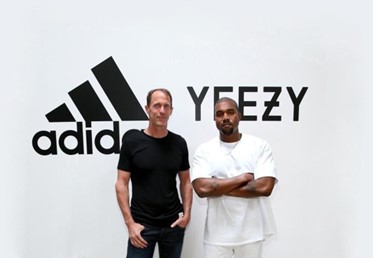
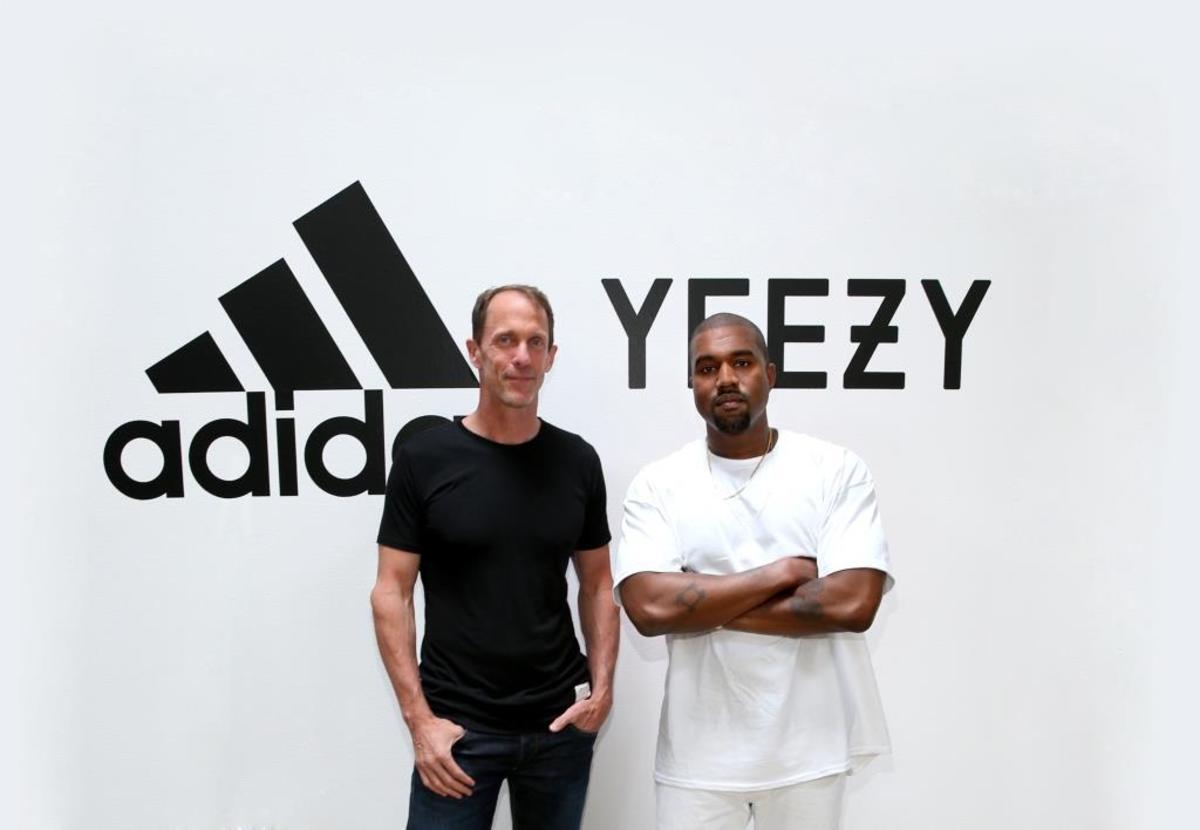
Adidas CMO Eric Liedtke and Kanye West. Photo: Adidas

https://fashionista.com/2016/06/adidas-kanye-west-expansion

Another week, another news update on Kayne West. This time, however, it is his former business partners Adidas who are creating headlines. As it is known, Kanye has been dropped by many of his former sponsors and business partners in the past months based on some comments and statements West has made publicly. These comments were what made Adidas decide to terminate their partnership with Kayne and his Yeezy brand together. While the public image is important, Adidas has recently said that if they can not offload inventory from the Yeezy line they could stand to lose at least $1.07 billion. The initial estimate believed this move would cost the company a mere $533 million in operating profit. Why is this move such a big deal for Adidas? Kanye and Yeezy generated nearly $2 billion worth of business for Adidas. The line made up 10% of the company’s total revenue. Meaning that by dropping Kanye they are losing money and market share to competitors. As mentioned above, his remarks have cost him other deals as well. Since October companies such as Gap, Balenciaga, Footlocker and TJ Maxx have all terminated deals with the superstar. While these moves are significant, none of them hurt more than Adidas. There have been talks of Adidas repurposing the line and just not using the name Yeezy, but this could be met with some backlash from consumers. Regardless of what your ideas of the man are, most people are going to want to buy something from his line to wear instead of wearing a knockoff version of the same shoe. In addition to the $1.07 billion they lost; they could stand to lose another $213 million in one-off costs. Adidas CEO Bjorn Gulden made a recent statement to NBC News about their 2022 performance when he said, “The numbers speak for themselves. We are currently not performing the way we should… 2023 will be a year of transition to set the base to again be a growing and profitable company.” As sort of the icing on the cake, Adidas stock dropped 11% on the German Stock Exchange on Friday alone. While I won’t get into the politics behind the issues let’s look at what Adidas stands to lose. They will lose large amounts of revenue, future market share, and more costs by continuing in a different direction. The company has its values and I respect that. I am interested to see if they will decide to partner with another big-name artist in order to get back some of that lost revenue in 2023. They need to make a decision quickly because other organizations in their sector are growing at an alarming rate and will be urgent to jump on that new market share. Lululemon for example is a company looking to capitalize on this. For the first time in its 20-year history, outselling Under Armour last year. This is a trend they will look to continue this year and make a dent in the positions of companies like Adidas and Nike who hold a larger portion of the market. I will be following what Adidas does with the one-off line in the coming months. As for Kanye, losing these deals will hurt his pockets. I will too be following what he does in the fashion industry in the coming months. Plus let’s not forget a big thing here. He made “Graduation.”

Premier League Soccer team accused of breaching financial rules

Business

Jorden McVeagh, Editor 

A logo on a blue surface

Description automatically generated with low confidence

https://www.zettapic.com/2021/03/18-manchester-city-logo-wallpaper-png.html

One of the top soccer leagues announced today that one of their clubs had a major violation of their league’s financial rules. I am speaking of the Premier League and one of their most well-known teams, Manchester City. The league opened Monday with the announcement the club had misrepresented the club’s current financial situation, and that it doesn’t provide a “true and fair view of the club’s financial position.” All of this relates back to their revenues from the 2009-10 up to the 2017-18 seasons. This was not the only lagging factor in their reports. It was also stated that Man City had failed in their duty to provide both manager and player pay for the 2009-2012 seasons and 2010-2016 seasons respectively. As if this wasn’t enough, they also failed to help or assist the legal investigations in this matter over the past four years which breaches the Club Licensing and Financial Fair Play Regulations between 2013 to 2018 under the Union of European Football Associations. As a result of the allegations there will be a private commission appointed by the chair of the Premier League. According to a statement the club gave the BBC, they are surprised over the current issues that the allegations are accusing them of breaking given what the club has turned over to the rules committee thus far. However, this is not indicative of the ruling of the case. Throughout history we have seen multiple people and companies in the same position who have said things like Man City. They also said that they are welcoming the idea of a private commission reviewing the materials they provided for review. Once again, something countless people and companies have said before. Now that all the legislative stuff is out of the way, what could this mean for the team and the Premier League? Man City has worn the crown in the Premier League in four of the past five seasons making them one of the most popular clubs in the world, not that they weren’t already. They are also carrying some of the most popular players in the world in Erling Haaland and Jack Grealish. The pairing of these two would mean a tremendous amount of revenue being generated by the club in both ticket sales, championship merchandise and regular team merchandise. It will be interesting to see what happens to these numbers as the findings of the committee come out in due time. If I were to throw my two senses in I don’t think either will be negatively impacted. Man City is a historic organization with a diehard group of fans. I would have a hard time believing they would lose fans through these allegations or findings, but you never know. What sets one person over the edge and what sets someone else over the edge are two different tipping points, so it is hard to tell what will happen regarding sales of tickets and jerseys

Bad news for the EV industry as companies continue to cut prices

Business

Jorden McVeagh, Editor 

https://www.motorbiscuit.com/wp-content/uploads/2021/12/2022-ford-mustang-mach-e-ice-white-edition.jpeg

The electric vehicle industry has been on the rise as consumers look to shift to a more sustainable and environmentally friendly mode of transportation. Tesla was the industry leader in terms of their design, pricing and distribution as we all saw its cars popping up all over the place in the last year or two. Companies have been following their lead and creating their lines of electric vehicles. Whether this is due to the creation of vehicle lines or an extension of already existing models, they are becoming a far more popular option than they were in the past. The problem with the industry is that it is still new, so product design, safety and pricing are still metrics that are being played around with from the manufacturer. Ford is one of the companies doing this today. They released a product called the Mach-E which was created to be one of the top competitors for Tesla’s Model Y. Last week, Ford announced that it would be cutting the price of their car after Tesla announced a price reduction for the Model Y in early January. For Ford, the price reduction fluctuates between $600 up to $5,900. This is not as much as Tesla’s $13,000 price cut, but at the same time, the price of Ford’s model is not as expensive as Tesla’s. Most of the time, when we hear about the price reduction of a product, it is usually associated with a negative impact. This may not hold true in this case. Wall Street investors are applauding these cuts as they can be used to drive up demand and sales of the product. As we inch closer and closer to a recession, consumers are tightening their wallets and a high-priced electric car may not be what people want to be spending money on right now. Tesla is acting as a regulator in the current market. If the industry leader cuts their prices, other companies will follow. Not many people would pay for another brand when Tesla is the lowest in terms of cost. When you pair this with the brand image Tesla has generated up to this point, other companies need to cut prices to stay competitive. The expected increase in sales will reflect Ford’s vehicle output. The quantity produced of the Ford Mach-E is expected to jump from 78,000 to 130,000 units annually produced. The Mach-E is the second-best selling EV in the US behind Tesla. Ford’s model comes in between the prices of $46,000 and goes all the way up to $64,000 while Tesla averages between $53,500 to $57,000. Tesla however outsold Ford with more than 522,000 units sold just in the US alone in 2022. To increase production, Ford has moved outside the US for the mass construction of their vehicles. They have a plant in Mexico that is currently under construction for upgrades but will be operational in the coming months. It will be interesting to see how these price cuts benefit those in the industry. Will they see an increase in revenue? Drop in sales still? Time will tell, but as more consumers shift to EV, this will surely increase their appetite to buy in the current trending economic conditions.

Bed bath and beyond defaults on credit line, closing more stores.

Business

Jason Ryan, Staff

https://www.axios.com/2023/01/30/bed-bath-beyond-closing-stores-2023

Bed Bath & Beyond said Thursday it does not have enough cash to pay down its debts and it has defaulted on its credit line with JPMorgan, warning once again of a potential bankruptcy. Shares of Bed Bath plunged Thursday afternoon, prompting brief trading halts. The stock closed 22% down with a market cap of about $295 million, although it traded slightly higher Friday morning.  

In a securities filing, Bed Bath & Beyond said it “does not have sufficient resources to repay the amounts under the Credit Facilities and this will lead the Company to consider all strategic alternatives, including restructuring its debt under the U.S. Bankruptcy Code.” Bed Bath is attempting to cut costs by lowering capital expenditures, closing stores, and negotiating lease deals with its landlords but personally warned “these measures may not be successful”.

Bed Bath’s debt load also includes $1.2 billion in unsecured notes, which have maturity dates spread across 2024, 2034 and 2044, and have been trading at extremely distressed levels. The company said previously it was not able to refinance portions of that debt less than a month after it told investors it planned to take out more credit to pay down its obligations. The company has been burning through cash in recent quarters. It used $890 million in cash during the nine months ended Nov. 26, the company reported Thursday. As of that date, Bed Bath said it had $225.7 million remaining in cash.

As of late November, the company had 949 stores, including 762 Bed Bath & Beyond stores, 137 buybuy Baby stores and 50 stores under the names Harmon, Harmon Face Values or Face Values. In September, the company announced only 56 Bed Bath & Beyond stores would be closing; however, earlier this month, the company posted a list with 62 Bed Bath closures, six buybuy Baby and two Harmon stores. The original closings announced in September were also on the list.

This news comes only a few months after the CFO of Bed Bath & Beyond leapt to his death from a Manhattan skyscraper where he had faced pump and dump allegations less that two weeks earlier. 

All and all, Bed Bath & Beyond has been distressed for years, having failed to reinvent itself in the digital age despite efforts to declutter its stores and remake its coupon strategy. The company will likely end in liquidation if it does not find a buyer soon.

ryanj21@lasalle.edu

Streaming services band together to fight slowing growth

Business

Jorden McVeagh, Editor 

A picture containing text, electronics

Description automatically generatedhttps://www.forbes.com/sites/siladityaray/2022/08/12/heres-how-much-more-you-have-to-pay-for-streaming-services-compared-to-last-year/?sh=223777796dfe

Streaming services have grown immensely since the start of the pandemic and even in the years leading up to COVID-19. As a result of this, it has left companies such as Netflix, Disney+, Hulu, and many more fighting over viewers and precious market share in order to get their share of the pie. As we are slowly coming out of the other side of the pandemic and seem to be entering an economic recession in the coming months, this war may turn into a partnership to keep their companies afloat. Last year marked the first time ever that Netflix’s number of subscribers dropped, with their share price falling by over 60%. They were not the only ones either. As the world turns more to streaming services companies did what they do and adapted to this new method of entertainment. Most companies that did so saw a decrease in their stock price over the past year. With this happening, we may see something that is uncommon in the modern business world. We may see competitors team up to slow and reverse the current trend. According to their most recent quarterly reports, Netflix added 7.7 million new subscribers in the fourth quarter of 2022 with the stock price rising 6%. In the past, news like this would be deadly for competing companies, however, not this time. Netflix competitors also saw a slight increase in their share price after the reports were published. It will be interesting to see what happens in the coming months as Netflix will soon implement a fee for password sharing. According to Netflix, they expect first quarter numbers to be lower than the fourth of 2022 as a result. On the other hand they expect numbers to increase again going into the second quarter as more customers sign up for the service. As we recently flipped the page into 2023, it will all be about banding together in order to fight subscriber fatigue. As the world goes more and more digital by the day companies will be in a constant fight to keep up with the times, and streaming services will be at the forefront of that fight. The number of services has increased drastically over the past couple of years and has saturated the market giving the consumer the option to choose who they want. I myself am interested to see what the services working together will look like. If they can work together in order to keep the market in good standing, then it will be of great benefit to the consumer over time. They can’t get into a pricing war because at the end of the day the consumer will go with what may be cheaper, especially with a recession looming.