President Trump launches ‘Truth Social’ investment accounts 

Business

Hailey Whitlock, Staff Writer 

On Apr. 15, 2025, the Trump Media and Technology Group, the social media company President Trump founded following his first four years in office, announced the decision to join with Yorkville American Equities and Index Technologies Group to launch Truth Social advertised as Separately Managed Accounts. This choice to join two investment banks in selling investment accounts under the Truth Social name has been heavily scrutinized. While some, such as the CEO of Yorkville American Equities and a managing partner of ITG praised the move, others criticized it and cited a conflict of interest. 

Nevertheless, before reviewing the arguments for and against the investment accounts, it is essential to understand what they are. As stated by Barrons, these investment accounts are focused on, “Offering investors access to curated, thematic investment strategies rooted in American values and priorities.” Some of these priorities include faith and values, liberty and security, energy independence and made in America. Per Barrons, the Trump Media and Technology Group’s CEO Devin Nunes stated, “We’re moving forward with a series of America First investment products that meet investors’ demand to support a wide range of outstanding, non-woke, and innovative companies across sectors of the U.S. economy.” 

Further, the executives at Yorkville American Equities and Index Technology Group weighed in on the proposed investment accounts. As reported by Markets Insider, the CEO of Yorkville American Equities, Troy Rillo, said of the launch, “Yorkville American Equities, TMTG, and ITG bring together deep expertise in asset management, media and technology to develop a distinctive investment offering that meets the evolving needs of today’s investors. These investment strategies are designed to provide exclusive access to American innovation, aligning capital with companies that reflect the values and future of this country.” 

John DuPrau, managing partner at ITG, echoes this sentiment. Newsweek reports that DuPrau made a statement addressing the shift which is as follows: “At a time when the foundations of American prosperity are shifting, it’s critical that our investment strategies reflect the values that define us. Made in America is more than just a theme – it’s a declaration of support for businesses essential to our economy, national security and enduring freedoms. These strategies allow investors to align their portfolios with patriotic and ethical convictions.” 
However, not everyone agrees with the assessment that these new investment accounts will prompt positive, ethical action. The key argument against these accounts is that President Trump owns over 50% of the Trump Media and Technology Group. In selling these investment accounts, a tremendous conflict of interest is encountered; the president is encouraged to use private information and/or make economic decisions in our government that align with these investment accounts in an endeavor to maximize profit. More importantly, as the president, he has the power to do so, a feat illustrated by the recent tariffs. A quote that keenly sums up the stance that these investment accounts are morally bankrupt is found in Raw Story. As reported, independent journalist Judd Legum postulated, “Trump, as President, will also be able to significantly influence the performance of these assets through tariffs and other policies. It is a jaw-dropping conflict of interest for actively managed investment accounts to be marketed under the president’s name through a company that is majority-owned by the president.”

Truth Social logo via WikiCommons

President Trump announces heightened tariffs 

Business

Hailey Whitlock, Staff Writer 

During a joint session of Congress in March, President Trump emphasized his desire to prioritize tariffs in the coming months. He explained that April would be a key time, with many new tariffs implemented with the goal of bringing jobs back to America. Jesting that the media would criticize his efforts if made on April Fool’s Day, the president elected to announce the tariffs on Apr. 2, 2025, a day he deemed “Liberation Day.” During his speech, Trump focused on how he feels America has been taken advantage of, and how the nation must shift manufacturing to be done more domestically. According to CBS News, the president said, “Trade deficits are no longer merely an economic problem. They are a national emergency that threatens our security and our very way of life. It’s a very great threat to our country. For these reasons, starting tomorrow, the United States will implement reciprocal tariffs on other nations.” 

To begin, the president announced a universal 10% tariff on all goods imported into the United States. In addition, higher reciprocal tariffs were declared for certain nations as a means of “penalizing them for their trade barriers,” as reported by NPR. Some key reciprocal tariffs announced throughout the speech are 34% tariffs in China (plus the 20% tariff already in place), 24% tariffs in Japan and 20% tariffs on the European Union.

However, instituting tariffs is not without risk. Consumers often face higher prices as the tariff costs are passed to consumers, the stock market may fare poorly due to uncertainty and reciprocal tariffs may be announced by countries upset with the new policy. For example, China responded to the 34% tariff by announcing a reciprocal tariff on the US of 34%. In response to this, President Trump indicated his willingness to substantially increase the tariffs on China. He threatened an extra 50% tariff which, when combined with the recently declared 34% tariff and already in place 20% tariff, leads to a 104% tariff to be implemented against China beginning on Apr. 9, 2025. As reported by USA Today, White House press secretary Karoline Leavitt told reporters on Apr. 8, 2025, “It was a mistake for China to retaliate. When America is punched, (Trump) punches back harder, and that’s why there will be 104% tariffs going into effect on China tonight at midnight.” 

The stock market also responded poorly to the initial tariff announcement with the Dow Jones Industrial Average dropping by more than 1,600 points on Apr. 3, 2025, according to AP News. As reported by USA Today, the market began turning around on Apr. 8, 2025, only for a sharp reversal of fortunes to occur after the additional 50% tariff on China. Yet, the president remains relatively unconcerned about the present state of the market. When asked about the market’s reaction, according to yahoo!news, President Trump stated, “What’s going to happen with the market, I can’t tell you. But I can tell you, our country has gotten a lot stronger. And eventually it will be a country like no other. It will be the most dominant country, economically in the world. I think your question is so stupid, I don’t want anything to go down, but sometimes you have to take the medicine to fix something.” 

Many question how the current tariffs could potentially influence the 2026 midterm elections. When speaking at the National Republican Congressional Committee Dinner on Wednesday, Apr. 8, 2025, only hours before many import duties are set to take effect, NBC News states that the president believes the Republicans will win the 2026 midterm elections in a “thundering landslide.” He elaborated, “I really think we’re helped a lot by the tariff situation that’s going on, which is a good situation. It’s great. It’s going to be legendary.” 
As to what the president is planning for the future, the answer remains: more tariffs. He plans to begin adding tariffs to pharmaceutical products in the near future. The Wall Street Journal features a quote by President Trump which states, “We’re going to tariff our pharmaceuticals and once we do that, they’re going to come rushing back into our country because we’re the big market. So we’re going to be announcing very shortly a major tariff on pharmaceuticals and when they hear that, they will leave China, they will leave other places because they have to – most of their product is sold here and they’re going to be opening up their plants all over our country.”

Note: this article was written on Apr. 8 and may not contain the most up to date information on tariffs

Trump speaking at a rally in 2016 via WikiCommons

President Trump shifts student loan management from the Department of Education to the Small Business Administration 

Business

Hailey Whitlock, Staff Writer 

On Mar. 21, 2025, President Trump announced that the management of student loans will be transferred from the Department of Education to the Small Business Administration. This statement came a day after the president signed an executive order to begin the process of dismantling the Department of Education. According to Fox News, the president said the following at a White House event celebrating the new order: “I will sign an executive order to begin eliminating the federal Department of Education once and for all.” 

However, the process of minimizing the Department of Education is not a simple one; the tasks assigned to the department must be reallocated among other agencies, many of which are slashing staff in an attempt to decrease costs. In addition, many question if such an action is even legal. When questioned about the president’s authority to substantially restructure the Department of Education, according to NPR, the White House press secretary, Karoline Leavitt, stated, “The President has always said Congress has a role to play in this effort, and we expect them to help the President deliver.” 

In an effort to address the concerns about the allocation of duties, the president released a statement on Friday regarding delegation of tasks. As recorded by MarketLine, President Trump said, “I’ve decided that the SBA, the Small Business Administration, headed by Kelly Loeffler, who is a terrific person, will handle all of the student-loan portfolio. We have a portfolio that is very large, lots of loans, tens of thousands of loans, pretty complicated deal. That’s coming out of the Department of Education immediately.”

A separate statement issued by Loeffler on the same day reaffirmed the Small Business Administration’s dedication to reducing staff in line with the new Department of Government Efficiency, headed by Elon Musk. According to AP News, Loeffler asserted, “By eliminating non-mission-critical positions and consolidating functions, we will revert to the staffing levels of the last Trump administration.” As part of reorganization, the Small Business Administration plans to cut its workforce by 43%, laying off approximately 2,700 workers. The timing of this announcement is troubling as the administration is making such cuts while taking on the new burden of managing the complex student loan portfolio, prompting questions of why the agency is not increasing hires to ease the transition instead of dramatically cutting the department. 

In regard to students with disabilities, President Trump enlists this portion of responsibility to Robert F. Kennedy, declaring as reported by Fox News, “And also Bobby Kennedy, the Health and Human Services [secretary] will be handling special needs and all of the nutrition programs and everything else rather complex.” Continuing, the president said, “So I think that will work out very well. Those two elements will be taken out of the Department of Education, and then all we have to do is get the students to get guidance from the people that love and cherish them, including their parents… It’s going to be great. It’s going to be a great situation.” 
However, many disagree with the reduction in the Department of Education, such as James Kvaal, a man who worked in senior roles in both the Obama and Biden administrations. He said in a statement to ABC News, “We’re at a point now where millions of borrowers are late on their loans. For the department to be focused on laying off half its staff and going through a fundamental reorganization of how it administers these programs, you know, in really critical weeks for borrowers who are trying to get into repayment plans or get loan forgiveness, I think it’s very dangerous and puts a risk that millions of borrowers of going into default on their loans.”

U.S. Department of Agriculture invests up to $1 billion to combat avian flu

Business

Hailey Whitlock, Staff Writer 

On Feb. 26, 2025, the U.S. Secretary of Agriculture Brooke Rollins announced a comprehensive plan to mitigate the impact of avian bird flu in an effort to drive down egg prices. In an article Rollins penned for the Wall Street Journal, she stated, “In many cases, families are seeing prices of $6, $7, $10 or more [per dozen of eggs]. This is due in part to continuing outbreaks of highly pathogenic avian influenza, which has devastated American poultry farmers and slashed the egg supply over the last two years.” 

As the egg supply has dwindled, prices have soared for this common necessity, prompting growing concerns about the affordability of this staple. According to AP News, the most recent consumer price index reported the average price of a dozen Grade A eggs in U.S. cities to be $4.95 in January 2025, more than double the $2.04 cost in August 2023. 

With consumers struggling under these hefty price tags, Rollins announced a five-prong strategy to address the issue. According to the U.S. Department of Agriculture, the plan involves spending up to $1 billion dollars on the crisis, allocating $500 million towards aiding U.S. poultry producers in implementing gold-standard biosecurity measures. The plan also calls for $400 million in financial relief to the farmers whose flocks have been affected by the avian flu and the dedication of $100 million to researching vaccines and therapeutics. 

Beyond funding commitments to tackle this issue, Rollins outlined plans to remove what she deemed “unnecessary regulatory burdens on the chicken and egg industry” in an effort to increase supply. As recorded in the Wall Street Journal, she referenced California’s Proposition 12 which established minimum space requirements for egg-laying hens, indicating her displeasure with the average egg price per dozen in California being $9.68. She claims a desire to help protect egg producers from these exacting guidelines, while also supporting initiatives to prompt families to raise their own backyard chickens. 

The fifth part of the plan includes relying more heavily on importing eggs in the short-term. According to USA Today, Turkey, one of the world’s largest exporters of eggs, predicts that they will supply the U.S. with approximately 420 million eggs, a steep increase from the previous year in which only 70 million eggs were supplied. As per USA Today, Rollins stated, “We will proceed with imports only if the eggs meet stringent U.S. safety standards and if we determine that doing so won’t jeopardize American farmers’ access to markets in the future.” 
As mentioned in the Wall Street Journal, Rollins indicated, “This five-point strategy won’t erase the problem overnight, but we’re confident that it will restore stability to the egg market over the next three to six months. This approach will also ensure stability over the next four years and beyond. American farmers need relief, and American consumers need affordable food. To every family struggling to buy eggs: We hear you, we’re fighting for you, and help is on the way.”

Coca-Cola may shift to increased plastic use in light of aluminum tariffs 

Business

Hailey Whitlock, Staff Writer 

On Feb. 10, 2025, President Trump signed a pair of executive orders to impose 25% tariffs on imported steel and aluminum. As stated in the Washington Post, White House senior counselor for trade and manufacturing Peter Navarro said of the orders, “This isn’t just about trade. It’s about ensuring that America never has to rely on foreign nations for critical industries like steel and aluminum.” On an earnings call the next day, Coca-Cola CEO James Quincy weighed in on his perspective of how this order could impact Coca-Cola. 

Quincy elucidated that the company’s reliance on importing aluminum from Canada could pose a problem, leading to the packaging for canned soda to become more expensive. In response to this price spike, the CEO contemplated a shift to packaging that relies primarily on plastic bottles despite the negative environmental effects. According to CBS, Quincy said on the earnings call, “as it relates to our strategies around ensuring affordability and ensuring consumer demand, if one package suffers some increase in input costs, we continue to have other packaging offerings that will allow us to compete in the affordability space. For example, if aluminum cans become more expensive, we can put more emphasis on PET [plastic] bottles, et cetera.” 

However, this shift to increased plastic use does not work well for environmentalists. As mentioned in the Washington Post, a study carried out in April revealed that Coca-Cola accounts for 11% of branded plastic pollution in the world. Further, in December, Coca-Cola retracted many of its goals towards plastic reduction, instead prioritizing using recycled materials. This deviation, coupled with the company’s new stance towards increasing plastic bottle production, was met with distaste from environmentalists such as Emma Priestland, the global corporate campaigns coordinator for the advocacy group Break Free from Plastic. As reported in the Washington Post, she announced, “Any increase in Coca-Cola’s plastic bottle use will directly harm the environment – as well as the health of their customers.” 

Due to these concerns, Priestland encourages Coca-Cola to focus their efforts on reusable glass bottles to combat increased aluminum costs, stating as said in the Washington Post, “Coca-Cola operates successful reusable packaging systems around the world – this is what they should be doubling down on, not expanding plastic use.” 

Nevertheless, Quincy attempted to calm concerns about the impact the tariffs could have. Fortune reports Quincy stating, “I think we’re in danger of exaggerating the impact of the 25% increase in the aluminum price relative to the total system. It’s not insignificant, but it’s not going to radically change a multi-billion dollar US business.” Despite these comments, the tariffs are likely to increase prices for aluminum, shifting Coca-Cola’s packaging process to cope with these increasing costs while attempting to stabilize prices. As stated in the Washington Post, Quincy said, “Between mitigation of supply chain, sourcing, weights of cans, price increase of the cans at some level potentially, a switch to PET, it’s a manageable problem in the context of the total US business. It’s a cost. It will have to be managed.”

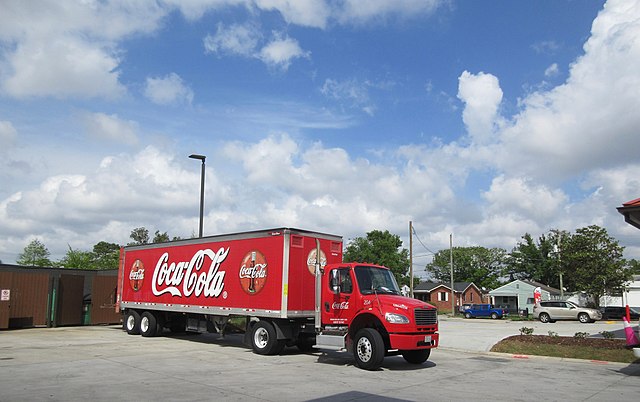
Coca-Cola Truck via WikiCommons

Tensions rise between the Federal Reserve and Executive branch 

Business

Hailey Whitlock, Staff Writer 

On Jan. 29, 2025, the Federal Reserve refrained from lowering interest rates in an attempt to curb inflation. According to the Wall Street Journal, the Federal Reserve lowered interest rates by a full percentage point over the last three meetings of 2024, leading to the unanimous decision to keep the benchmark rate of 4.25% to 4.5% to come under question by President Trump. 

On the same day as the decision, as stated in the Wall Street Journal, President Trump posted on his social media platform, “Because Jay Powell and the Fed failed to stop the problem they created with inflation, I will do it.”

Powell, the current chair of the Federal Reserve, was appointed by President Trump to the position in 2017, and reappointed by President Biden in 2021. Powell has been critiqued by President Trump in the past due to not cutting interest rates at a swift enough pace to align with his endeavors. 

As reported by Forbes, his term as the head of the Federal Reserve will expire in May 2026 with his term on the Federal Reserve set to expire in 2028. 

In response to the critical statement by President Trump, as referenced by NPR, Powell stated, “I’m not going to have any response or comment whatsoever on what the president said. The public should be confident that we will continue to do our work as we always have.”

This statement ties back to a core tenet of the Federal Reserve: political independence. The Federal Reserve was created to function independent of the sitting president, emphasized by the fact that appointments to the Federal Reserve are 14 years on a rotating basis so that a new member is chosen once every two years; by the time one president could nominate enough members to compose a majority, they would be leaving office, even with a two term presidency. 

Indeed, the true level of independence the Federal Reserve has is debated as President Trump places increasing pressure on Powell and the Federal Reserve to cut rates. 

In the past, as documented by CNBC, President Trump stated, “I’ll demand that interest rates drop immediately.” He also indicated a belief that the president should have a say in regard to interest rates and that the Federal Reserve should listen to him on the matter (CNBC). 

Powell remains insistent that changes should be made due to the statistics as opposed to dictates by the president, however. 

As mentioned in the Wall Street Journal, Peter Conti-Brown, a Federal Reserve historian at the University of Pennsylvania stated, “In the poker game he might be playing with Donald Trump, there are places where Jay Powell is willing to fold, and there are places where he is not. Subordinating the FOMC to the whims of a sitting president is not something Jay Powell will do.” 

Speculation exists that the decision to keep interest rates stable was in response to President Trump’s favored policies, which may lead to a rise in inflation. However, Powell dismissed these concerns, stating such a motive as premature. 
According to NPR, when questioned about how President Trump’s potential policies will influence the Federal Reserve’s decisions, Powell said, “We don’t know what will happen with tariffs, with immigration, with fiscal policy and with regulatory policy. We’re going to be watching carefully as we always do.”

Spirit Airlines files for bankruptcy 

Business

Hailey Whitlock, Staff Writer 

On Nov. 18, 2024, Spirit Airlines filed for bankruptcy among heaping debt and increased competition within the budget-friendly air travel space. As documented by the Wall Street Journal, the airline filed a chapter 11 petition in the U.S. Bankruptcy Court for the Southern District of New York in which the company sought to restructure much of their debt to bondholders. 

Spirit Airplane via WikiCommons

Previous indicators have illuminated select reasons for this decision, such as financial problems in the wake of COVID-19. In fact, according to AP News, Spirit has lost more than $2.5 billion since the start of 2020, as well as accruing increasingly high debt. As referenced by CNN, Spirit reported operating losses of $360 million for the first half of 2024, approximately four times the losses reported over this time period in 2023. A further sign of trouble for the airline came when Spirit announced plans to cut its schedule for flights from October through December by nearly 20% in comparison to the same period last year, as stated by AP News. This adjustment comes in a peak flying season for airlines as travel spikes during these winter months. 

However, before understanding a clear picture of Spirit’s struggles, it is essential to truly comprehend the space in flying they thrive in. Spirit is known as a budget-friendly way to fly, with low base fares that increase with add-ons such as carry-on bags. As mentioned by CNN, the average domestic round-trip economy fare for this year (thus far) is $136 before taxes and fees according to data from Cirium, an analytics firm which specializes in aviation. This is 61% lower than the U.S. industry’s average. With increased competition in the no-frills inexpensive travel department, Spirit has struggled to succeed financially. 

Nevertheless, declaring bankruptcy is not necessarily the end for the popular flight service; bankruptcy is a common problem that failing airlines face. As discussed by AP News in the past 25 years most major U.S. airlines, particularly the three largest – American Airlines, United and Delta – have declared bankruptcy in the past 25 years. The Wall Street Journal postulates that these bankruptcies spiked dramatically following 9/11 as customers began to worry about the safety of air travel. However, Spirit is the first major passenger airline to declare a chapter 11 bankruptcy since 2011 when American Airlines did so, the Wall Street Journal reports. 

Spirit has stated that while the bankruptcy process is ongoing, the use of rewards points and booked flights will continue to operate unchanged. While Spirit has committed to making the process as uninterrupted as possible, Sarah Foss, the global head of legal and financial services company, Debtwire, warns that this may not be enough. In a quote sourced from AP News, Foss questions, “If you’re someone that’s booking your holiday December travel… are you going to book Spirit which is in bankruptcy? Or are you going to choose maybe Southwest or Delta – or something else that you view as potentially being more stable?” She states that while loyalty programs should remain untouched, the consumer response to the bankruptcy news could hurt the company. With approximately 34.3 billion frequent flyer miles worth about $105 million currently unredeemed, she cautions that customers may panic and rush to use these benefits. She states, “A rush to use these miles or otherwise have its customers choose another airline to travel for the holidays could be disastrous for the airline’s reorganization efforts.” 
In light of these concerns, Spirit has looked into possible mergers over the past few years. According to the Wall Street Journal, it was contemplating a deal with Frontier Airlines in 2022, until a more profitable offer was made by JetBlue. However, in January a federal judge banned this potential acquisition, citing that it could raise airline costs for the budget focused traveler at an alarming rate. Following this, Spirit attempted to renegotiate with Frontier who were no longer interested in the company. The future of the airline will be in the hands of upper management, as they attempt to cut costs, regain consumer loyalty and potentially merge with another airline.

The Times of Tariffs 

Business

Hailey Whitlock, Writer 

As a cause of great debate, tariffs have been featured heavily in the rhetoric surrounding the 2024 presidential election. However, this brings to mind the questions: what exactly is a tariff and how do they operate? A tariff is a tax imposed by the government on imported goods. While tariffs are legally levied against foreign importers, the rise in the cost to sell products across borders often leads to an increased price for consumers.

According to Forbes, Douglas Irwin, a leading historian of American trade, postulated that “trade policy affects prices in the domestic market, shaping the allocation of a nation’s resources.” Oftentimes, companies that import goods are faced with the difficult decision of whether to inflate consumer prices to cover the higher cost of importing goods, or accept a reduction in profits to keep price points competitive.

Faced with these two undesirable options, consumers and retailers shift away from products besieged by tariffs in favor of less expensive domestic goods. Thus, this introduces the two primary functions of tariffs: to act as a revenue source for the government and to serve as a means of protecting domestic industries.

Tariffs have been a central part of American history prior to the start of the nation; as recorded by Smithsonian Magazine, tension regarding “taxation without representation” extended to the tariffs imposed by the Townshend Acts. As such, when the Articles of Confederation were established, the federal government lacked the power to tax the citizens of the new nation.

It was quickly discovered that this model would not be maintainable, prompting the drafting of the Constitution. In fact, according to Forbes, the second law ever passed by Congress was a tariff law – a method by which the federal government could raise revenue without directly taxing citizens.

Tariffs have remained a point of politics ever since, and prior to the Civil War, a heated dispute erupted between the North and South regarding the appropriate role of tariffs. Those in the North typically favored higher tariffs as a form of protection against foreign competition. Conversely, the South, a primarily agrarian economy that relied heavily on imported goods, strongly objected to the imposition of further tariffs as these duties increased the cost of everyday necessities.

These arguments came to a head when South Carolina refused to honor newly passed tariffs. When President Jackson threatened to use military force to enforce these tariffs, South Carolina stated thoughts on withdrawing from the Union. A compromise was reached, but when the South did withdraw from the Union, Northern lawmakers were able to impose hefty tariffs.

These high tariffs remained until the time of President Franklin Roosevelt who encouraged relaxing trade restrictions to open wider foreign trade. Since then, the trend has been low tariffs, instead relying on taxes for government revenue. However, President-elect Donald Trump’s re-election calls into question the impact tariffs could have on the national economy. 

A central point to the 2024 Trump presidential campaign was an increase in tariffs. According to USA Today, his campaign boasted plans to impose 60% tariffs on Chinese goods as well as a universal tariff up to 20% on imports from other nations. This aggressive approach to tariffs is considered with the goal of bettering domestic production and manufacturing.

By passing tariffs, the price of common goods will increase, positioning foreign-made products at a more expensive price point. In doing so, American goods may appear more appealing to consumers, bolstering domestic goods. At a speech in Georgia in September, President-elect Trump stated, “When they have to pay tariffs to come in, but they have incentive to build here, they’re going to come roaring back.”

However, tariffs come with an extremely high price. USA Today references a study by the Peterson Institute for International Economics, a nonpartisan think tank, that claims that the passage of these tariffs will cost the average American household more than $2,600 a year. Tariffs incite higher inflation and interest rates, a combination which has many economists skeptical about the steep tariff rates.

Schlossberg from the Wells Fargo Investment Institute stated, “Most of us feel the tariff proposals are detrimental to the economy as a whole, even though they may benefit certain types of manufacturing at least for a time.”

Overall, the high tariffs suggested by president-elect Trump usher in a new era of aggressive tariff policy, prompting concern of a shift away from foreign products at the cost of American consumer prices. 

Starbucks introduces “Back to Starbucks” plan with hopes of countering disappointing sales 

Business, Uncategorized

Hailey Whitlock, Writer

As featured in CNN, Starbucks’ sales fell for the third consecutive quarter as the preliminary sales report for the fourth quarter and fiscal year were published for the popular coffee chain. As explained by Chief Financial Officer (CFO) Rachel Marie Ruggeri in an investor call addressing the 2024 fiscal year, the quarter 4 consolidated revenue fell 3% from the prior year to 9.1 billion dollars. US stores saw a 6% decline in comparable store sales and a 10% decline in comparable transactions; however, a 4% increase in the average ticket (mainly through pricing) counterbalances part of this decline. In fact, in a move that worried investors, the company announced that guidance will be suspended for the full 2025 fiscal year.

In light of recent financial challenges for the coffee chain, Starbucks appointed Brian Niccol as the new Chief Executive Officer (CEO), who began on Sept. 9, 2024. According to a statement released by Starbucks, Niccol said in relation to his new position, “I am excited to join Starbucks and grateful for the opportunity to help steward this incredible company, alongside hundreds of thousands of devoted partners. I have long-admired Starbucks’ iconic brand, unique culture and commitment to enhancing human connections around the globe. As I embark upon this journey, I am energized by the tremendous potential to drive growth and further enhance the Starbucks experience for our customers and partners, while staying true to our mission and values.” 

While disappointed by the low quarter four metrics, Niccol is no stranger to struggling companies. According to CNN, Niccol is known for changing the trajectory of floundering businesses after working as the CEO of Chipotle following its E. coli outbreaks in 2015. As attested by Starbucks, since Niccol became the CEO of Chipotle in 2018, revenue has almost doubled, profits increased seven-fold and stock prices for the company have increased by approximately 800%. In doing so, the culture of the company was strengthened, with increased wages for workers and better benefits. As such, Niccol was welcomed as Starbucks new CEO with the goal of fixing the company’s financial challenges. 

A Starbucks storefront via wikiCommons

When questioned about these lackluster results in a conference call addressing the Quarter 4 earnings, Niccol stated, “it is clear we need to fundamentally change our strategy to win back customers and return to growth. ‘Back to Starbucks’ is that fundamental change. We have to get back to what has always set Starbucks apart, a welcoming coffee house where people gather and where we serve the finest coffee, handcrafted by our skilled baristas.” 

Niccol advocates for focusing on the separation between to-go and in store purchases. He aims to improve the in-store experience by adding more comfortable furniture and ceramic mugs to encourage customers to enjoy their purchases within Starbucks. Further, the company is striving to provide drinks to patrons within a four minute time frame. As a result, the complex Starbucks menu will be simplified. 

Another adjustment emphasized by Niccol is bringing back condiment coffee bars in all Starbucks cafes by early 2025 to dually improve the speed of service and the customer experience. In an effort to make prices more competitive, as elucidated by NPR as of Nov. 7, 2024, there will no longer be an upcharge for non-dairy milk substitutes in North American cafes. The company also stated its plan to keep prices consistent throughout the 2025 fiscal year. 

However, the coffee chain did mention that to carry out these initiatives, discount-driven offers will be reduced because they often overburden baristas, are time consuming and offer only minimal benefits. 

Overall, Starbucks is shifting to a platform that simplifies the coffee chain we know today to what it once was: a cafe to quickly receive quality drinks to enjoy in a comfortable, relaxing environment.

Federal Trade Commission passes “Click-to-Cancel” rule 

Business

Hailey Whitlock, Staff Writer 

On Oct. 16, 2024, the Federal Trade Commission (FTC) announced the final version of the “Click-to-Cancel” subscription rule which was first formally proposed by the Federal Trade Commission in March of 2023. The rule seeks to change the difficulty consumers experience with canceling subscription services. Often, consumers lament the current subscription business model due to the fact that companies are often misleading in the information they provide and make canceling a subscription much harder than joining one. In an interview conducted by NPR, Sam Levine, the head of the Consumer Protection Bureau at the Federal Trade Commission explained of the companies, “They know exactly what they’re doing. They’re using some of the most sophisticated design techniques available to trap people in these subscriptions and manipulate them.” 

When questioned about the need for such a rule, the Federal Trade Commission Chair Lina Kahn summarized the call for change as follows: “Too often, businesses make people jump through endless hoops just to cancel a subscription. The FTC’s rule will end these tricks and traps, saving Americans time and money. Nobody should be stuck paying for a service they no longer want.” This motivation led to the regulation being passed in a sharply contested 3-2 vote consistent with party lines.

The “Click-to-Cancel rule” mandates that companies provide a cancellation method that is “easy to find when the consumer seeks to cancel,” although there was not a clear explanation of what this cancellation method would look like. According to the FTC, the rule also states that if the consumer signs up online for the subscription there must be a click to cancel option; if the consumer signs up in person, the company must provide the option to either cancel online or over the phone. For consumers required to cancel over the phone, representatives from the company must be available during normal business hours to process the request. As stated by the Wall Street Journal , consumers may no longer be forced to speak to either a live representative or chat box to cancel these memberships unless they consented to this step upon signing up for the subscription. Finally, consumers must agree before being charged and be informed if the company uses subscriptions that auto renew, prompting companies to stop automatically rolling over free trial subscriptions to paying memberships. 


Further, the policies that will primarily go into effect 180 days after the passing of the rule, attest that those in violation of the above rules and the much more ambiguous directive to avoid misrepresenting any subscription product may result in redress and civil penalties. Due to this addition, as elucidated in the Wall Street Journal, many companies are in vehement opposition to this new rule as it could be used to target marketing attempts of companies that utilize subscription services; even marketing attempts that do not relate to the methods for signing up and canceling a subscription. Consequently, this allows the Federal Trade Commission to pursue legal action against such entities, an addition that critics feel is outside the authority of the FTC.