On Jan. 29, 2025, the Federal Reserve refrained from lowering interest rates in an attempt to curb inflation. According to the Wall Street Journal, the Federal Reserve lowered interest rates by a full percentage point over the last three meetings of 2024, leading to the unanimous decision to keep the benchmark rate of 4.25% to 4.5% to come under question by President Trump.
On the same day as the decision, as stated in the Wall Street Journal, President Trump posted on his social media platform, “Because Jay Powell and the Fed failed to stop the problem they created with inflation, I will do it.”
Powell, the current chair of the Federal Reserve, was appointed by President Trump to the position in 2017, and reappointed by President Biden in 2021. Powell has been critiqued by President Trump in the past due to not cutting interest rates at a swift enough pace to align with his endeavors.
As reported by Forbes, his term as the head of the Federal Reserve will expire in May 2026 with his term on the Federal Reserve set to expire in 2028.
In response to the critical statement by President Trump, as referenced by NPR, Powell stated, “I’m not going to have any response or comment whatsoever on what the president said. The public should be confident that we will continue to do our work as we always have.”
This statement ties back to a core tenet of the Federal Reserve: political independence. The Federal Reserve was created to function independent of the sitting president, emphasized by the fact that appointments to the Federal Reserve are 14 years on a rotating basis so that a new member is chosen once every two years; by the time one president could nominate enough members to compose a majority, they would be leaving office, even with a two term presidency.
Indeed, the true level of independence the Federal Reserve has is debated as President Trump places increasing pressure on Powell and the Federal Reserve to cut rates.
In the past, as documented by CNBC, President Trump stated, “I’ll demand that interest rates drop immediately.” He also indicated a belief that the president should have a say in regard to interest rates and that the Federal Reserve should listen to him on the matter (CNBC).
Powell remains insistent that changes should be made due to the statistics as opposed to dictates by the president, however.
As mentioned in the Wall Street Journal, Peter Conti-Brown, a Federal Reserve historian at the University of Pennsylvania stated, “In the poker game he might be playing with Donald Trump, there are places where Jay Powell is willing to fold, and there are places where he is not. Subordinating the FOMC to the whims of a sitting president is not something Jay Powell will do.”
Speculation exists that the decision to keep interest rates stable was in response to President Trump’s favored policies, which may lead to a rise in inflation. However, Powell dismissed these concerns, stating such a motive as premature. According to NPR, when questioned about how President Trump’s potential policies will influence the Federal Reserve’s decisions, Powell said, “We don’t know what will happen with tariffs, with immigration, with fiscal policy and with regulatory policy. We’re going to be watching carefully as we always do.”
On Nov. 18, 2024, Spirit Airlines filed for bankruptcy among heaping debt and increased competition within the budget-friendly air travel space. As documented by the Wall Street Journal, the airline filed a chapter 11 petition in the U.S. Bankruptcy Court for the Southern District of New York in which the company sought to restructure much of their debt to bondholders.
Spirit Airplane via WikiCommons
Previous indicators have illuminated select reasons for this decision, such as financial problems in the wake of COVID-19. In fact, according to AP News, Spirit has lost more than $2.5 billion since the start of 2020, as well as accruing increasingly high debt. As referenced by CNN, Spirit reported operating losses of $360 million for the first half of 2024, approximately four times the losses reported over this time period in 2023. A further sign of trouble for the airline came when Spirit announced plans to cut its schedule for flights from October through December by nearly 20% in comparison to the same period last year, as stated by AP News. This adjustment comes in a peak flying season for airlines as travel spikes during these winter months.
However, before understanding a clear picture of Spirit’s struggles, it is essential to truly comprehend the space in flying they thrive in. Spirit is known as a budget-friendly way to fly, with low base fares that increase with add-ons such as carry-on bags. As mentioned by CNN, the average domestic round-trip economy fare for this year (thus far) is $136 before taxes and fees according to data from Cirium, an analytics firm which specializes in aviation. This is 61% lower than the U.S. industry’s average. With increased competition in the no-frills inexpensive travel department, Spirit has struggled to succeed financially.
Nevertheless, declaring bankruptcy is not necessarily the end for the popular flight service; bankruptcy is a common problem that failing airlines face. As discussed by AP News in the past 25 years most major U.S. airlines, particularly the three largest – American Airlines, United and Delta – have declared bankruptcy in the past 25 years. The Wall Street Journal postulates that these bankruptcies spiked dramatically following 9/11 as customers began to worry about the safety of air travel. However, Spirit is the first major passenger airline to declare a chapter 11 bankruptcy since 2011 when American Airlines did so, the Wall Street Journal reports.
Spirit has stated that while the bankruptcy process is ongoing, the use of rewards points and booked flights will continue to operate unchanged. While Spirit has committed to making the process as uninterrupted as possible, Sarah Foss, the global head of legal and financial services company, Debtwire, warns that this may not be enough. In a quote sourced from AP News, Foss questions, “If you’re someone that’s booking your holiday December travel… are you going to book Spirit which is in bankruptcy? Or are you going to choose maybe Southwest or Delta – or something else that you view as potentially being more stable?” She states that while loyalty programs should remain untouched, the consumer response to the bankruptcy news could hurt the company. With approximately 34.3 billion frequent flyer miles worth about $105 million currently unredeemed, she cautions that customers may panic and rush to use these benefits. She states, “A rush to use these miles or otherwise have its customers choose another airline to travel for the holidays could be disastrous for the airline’s reorganization efforts.” In light of these concerns, Spirit has looked into possible mergers over the past few years. According to the Wall Street Journal, it was contemplating a deal with Frontier Airlines in 2022, until a more profitable offer was made by JetBlue. However, in January a federal judge banned this potential acquisition, citing that it could raise airline costs for the budget focused traveler at an alarming rate. Following this, Spirit attempted to renegotiate with Frontier who were no longer interested in the company. The future of the airline will be in the hands of upper management, as they attempt to cut costs, regain consumer loyalty and potentially merge with another airline.
As a cause of great debate, tariffs have been featured heavily in the rhetoric surrounding the 2024 presidential election. However, this brings to mind the questions: what exactly is a tariff and how do they operate? A tariff is a tax imposed by the government on imported goods. While tariffs are legally levied against foreign importers, the rise in the cost to sell products across borders often leads to an increased price for consumers.
According to Forbes, Douglas Irwin, a leading historian of American trade, postulated that “trade policy affects prices in the domestic market, shaping the allocation of a nation’s resources.” Oftentimes, companies that import goods are faced with the difficult decision of whether to inflate consumer prices to cover the higher cost of importing goods, or accept a reduction in profits to keep price points competitive.
Faced with these two undesirable options, consumers and retailers shift away from products besieged by tariffs in favor of less expensive domestic goods. Thus, this introduces the two primary functions of tariffs: to act as a revenue source for the government and to serve as a means of protecting domestic industries.
Tariffs have been a central part of American history prior to the start of the nation; as recorded by Smithsonian Magazine, tension regarding “taxation without representation” extended to the tariffs imposed by the Townshend Acts. As such, when the Articles of Confederation were established, the federal government lacked the power to tax the citizens of the new nation.
It was quickly discovered that this model would not be maintainable, prompting the drafting of the Constitution. In fact, according to Forbes, the second law ever passed by Congress was a tariff law – a method by which the federal government could raise revenue without directly taxing citizens.
Tariffs have remained a point of politics ever since, and prior to the Civil War, a heated dispute erupted between the North and South regarding the appropriate role of tariffs. Those in the North typically favored higher tariffs as a form of protection against foreign competition. Conversely, the South, a primarily agrarian economy that relied heavily on imported goods, strongly objected to the imposition of further tariffs as these duties increased the cost of everyday necessities.
These arguments came to a head when South Carolina refused to honor newly passed tariffs. When President Jackson threatened to use military force to enforce these tariffs, South Carolina stated thoughts on withdrawing from the Union. A compromise was reached, but when the South did withdraw from the Union, Northern lawmakers were able to impose hefty tariffs.
These high tariffs remained until the time of President Franklin Roosevelt who encouraged relaxing trade restrictions to open wider foreign trade. Since then, the trend has been low tariffs, instead relying on taxes for government revenue. However, President-elect Donald Trump’s re-election calls into question the impact tariffs could have on the national economy.
A central point to the 2024 Trump presidential campaign was an increase in tariffs. According to USA Today, his campaign boasted plans to impose 60% tariffs on Chinese goods as well as a universal tariff up to 20% on imports from other nations. This aggressive approach to tariffs is considered with the goal of bettering domestic production and manufacturing.
By passing tariffs, the price of common goods will increase, positioning foreign-made products at a more expensive price point. In doing so, American goods may appear more appealing to consumers, bolstering domestic goods. At a speech in Georgia in September, President-elect Trump stated, “When they have to pay tariffs to come in, but they have incentive to build here, they’re going to come roaring back.”
However, tariffs come with an extremely high price. USA Today references a study by the Peterson Institute for International Economics, a nonpartisan think tank, that claims that the passage of these tariffs will cost the average American household more than $2,600 a year. Tariffs incite higher inflation and interest rates, a combination which has many economists skeptical about the steep tariff rates.
Schlossberg from the Wells Fargo Investment Institute stated, “Most of us feel the tariff proposals are detrimental to the economy as a whole, even though they may benefit certain types of manufacturing at least for a time.”
Overall, the high tariffs suggested by president-elect Trump usher in a new era of aggressive tariff policy, prompting concern of a shift away from foreign products at the cost of American consumer prices.
As featured in CNN, Starbucks’ sales fell for the third consecutive quarter as the preliminary sales report for the fourth quarter and fiscal year were published for the popular coffee chain. As explained by Chief Financial Officer (CFO) Rachel Marie Ruggeri in an investor call addressing the 2024 fiscal year, the quarter 4 consolidated revenue fell 3% from the prior year to 9.1 billion dollars. US stores saw a 6% decline in comparable store sales and a 10% decline in comparable transactions; however, a 4% increase in the average ticket (mainly through pricing) counterbalances part of this decline. In fact, in a move that worried investors, the company announced that guidance will be suspended for the full 2025 fiscal year.
In light of recent financial challenges for the coffee chain, Starbucks appointed Brian Niccol as the new Chief Executive Officer (CEO), who began on Sept. 9, 2024. According to a statement released by Starbucks, Niccol said in relation to his new position, “I am excited to join Starbucks and grateful for the opportunity to help steward this incredible company, alongside hundreds of thousands of devoted partners. I have long-admired Starbucks’ iconic brand, unique culture and commitment to enhancing human connections around the globe. As I embark upon this journey, I am energized by the tremendous potential to drive growth and further enhance the Starbucks experience for our customers and partners, while staying true to our mission and values.”
While disappointed by the low quarter four metrics, Niccol is no stranger to struggling companies. According to CNN, Niccol is known for changing the trajectory of floundering businesses after working as the CEO of Chipotle following its E. coli outbreaks in 2015. As attested by Starbucks, since Niccol became the CEO of Chipotle in 2018, revenue has almost doubled, profits increased seven-fold and stock prices for the company have increased by approximately 800%. In doing so, the culture of the company was strengthened, with increased wages for workers and better benefits. As such, Niccol was welcomed as Starbucks new CEO with the goal of fixing the company’s financial challenges.
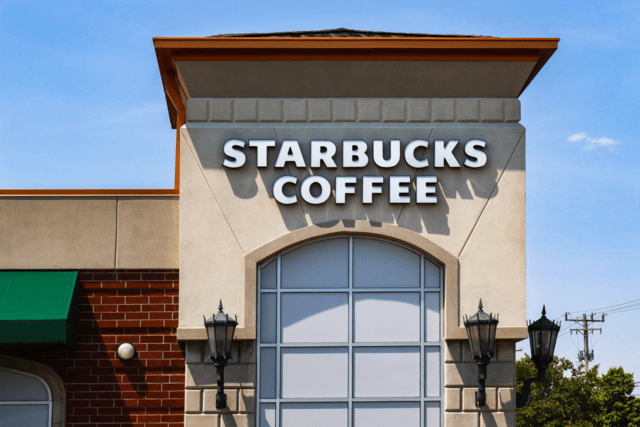
A Starbucks storefront via wikiCommons
When questioned about these lackluster results in a conference call addressing the Quarter 4 earnings, Niccol stated, “it is clear we need to fundamentally change our strategy to win back customers and return to growth. ‘Back to Starbucks’ is that fundamental change. We have to get back to what has always set Starbucks apart, a welcoming coffee house where people gather and where we serve the finest coffee, handcrafted by our skilled baristas.”
Niccol advocates for focusing on the separation between to-go and in store purchases. He aims to improve the in-store experience by adding more comfortable furniture and ceramic mugs to encourage customers to enjoy their purchases within Starbucks. Further, the company is striving to provide drinks to patrons within a four minute time frame. As a result, the complex Starbucks menu will be simplified.
Another adjustment emphasized by Niccol is bringing back condiment coffee bars in all Starbucks cafes by early 2025 to dually improve the speed of service and the customer experience. In an effort to make prices more competitive, as elucidated by NPR as of Nov. 7, 2024, there will no longer be an upcharge for non-dairy milk substitutes in North American cafes. The company also stated its plan to keep prices consistent throughout the 2025 fiscal year.
However, the coffee chain did mention that to carry out these initiatives, discount-driven offers will be reduced because they often overburden baristas, are time consuming and offer only minimal benefits.
Overall, Starbucks is shifting to a platform that simplifies the coffee chain we know today to what it once was: a cafe to quickly receive quality drinks to enjoy in a comfortable, relaxing environment.
On Oct. 16, 2024, the Federal Trade Commission (FTC) announced the final version of the “Click-to-Cancel” subscription rule which was first formally proposed by the Federal Trade Commission in March of 2023. The rule seeks to change the difficulty consumers experience with canceling subscription services. Often, consumers lament the current subscription business model due to the fact that companies are often misleading in the information they provide and make canceling a subscription much harder than joining one. In an interview conducted by NPR, Sam Levine, the head of the Consumer Protection Bureau at the Federal Trade Commission explained of the companies, “They know exactly what they’re doing. They’re using some of the most sophisticated design techniques available to trap people in these subscriptions and manipulate them.”
When questioned about the need for such a rule, the Federal Trade Commission Chair Lina Kahn summarized the call for change as follows: “Too often, businesses make people jump through endless hoops just to cancel a subscription. The FTC’s rule will end these tricks and traps, saving Americans time and money. Nobody should be stuck paying for a service they no longer want.” This motivation led to the regulation being passed in a sharply contested 3-2 vote consistent with party lines.
The “Click-to-Cancel rule” mandates that companies provide a cancellation method that is “easy to find when the consumer seeks to cancel,” although there was not a clear explanation of what this cancellation method would look like. According to the FTC, the rule also states that if the consumer signs up online for the subscription there must be a click to cancel option; if the consumer signs up in person, the company must provide the option to either cancel online or over the phone. For consumers required to cancel over the phone, representatives from the company must be available during normal business hours to process the request. As stated by the Wall Street Journal , consumers may no longer be forced to speak to either a live representative or chat box to cancel these memberships unless they consented to this step upon signing up for the subscription. Finally, consumers must agree before being charged and be informed if the company uses subscriptions that auto renew, prompting companies to stop automatically rolling over free trial subscriptions to paying memberships.
Further, the policies that will primarily go into effect 180 days after the passing of the rule, attest that those in violation of the above rules and the much more ambiguous directive to avoid misrepresenting any subscription product may result in redress and civil penalties. Due to this addition, as elucidated in the Wall Street Journal, many companies are in vehement opposition to this new rule as it could be used to target marketing attempts of companies that utilize subscription services; even marketing attempts that do not relate to the methods for signing up and canceling a subscription. Consequently, this allows the Federal Trade Commission to pursue legal action against such entities, an addition that critics feel is outside the authority of the FTC.
For 57 years, the 76ers have called one location their home. Philadelphia’s professional basketball team made their debut on Oct. 18, 1967, playing at The Spectrum in the iconic South Philadelphia Sports Complex. Over time, The Spectrum showed its age and would later be replaced with current arena, The Wells Fargo Center. That might all change if a groundbreaking decision is reached by the Philadelphia City Council.
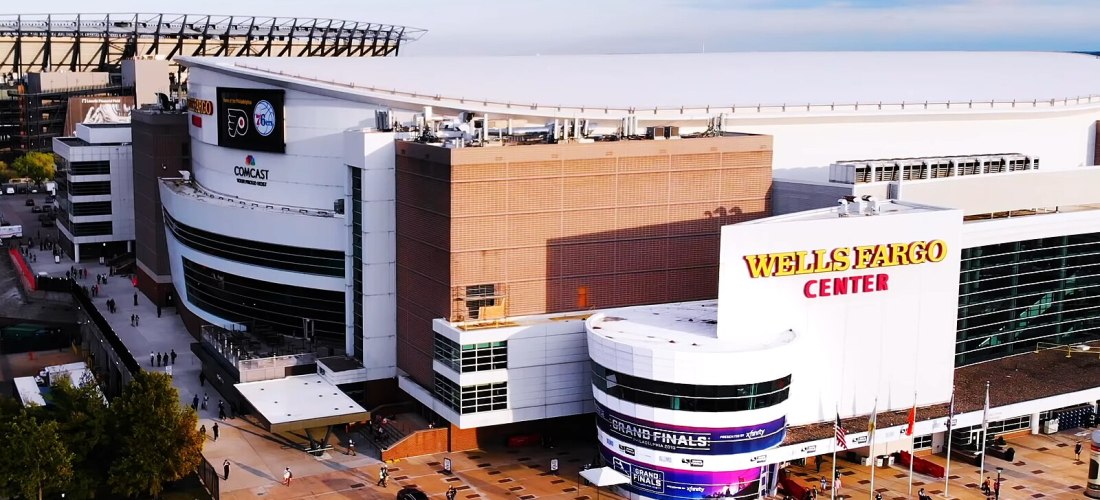
Wells Fargo Center via WikiCommons
In September, legislation became accessible to the public about the prospective 76ers stadium dubbed “76Place,” creating a whirlwind of responses from legislators, public figures and leading members of the community. Each response has showcased a difference in opinion on the issue and has overall dominated the sports scene in Philadelphia since it became available.
I had a chance to sit down with Philadelphia Councilmember Mark Squilla (D-1st dist.) to discuss his own opinions about the prospective stadium. Squilla explained the origin of the proposal and its recent developments, saying, “This process was started a little over two years ago when the proposal was made by the 76 Development Corporation to put an arena at the 10th and 11th and Market Street…since then we have been meeting with community stakeholders including Chinatown, Washington Square West, Jefferson Hospital, Septa, Center City District, Midtown Village, people who have a perspective on or may have be impacted by this proposal.”
He also explained that after the proposal was delivered to the city, the developers were asked to pay for a study that would address the concerns of the community. It would also help inform stakeholders and the council themselves about the pros and cons of this project.
Councilman Squilla remains loyal to his role as a supporter of the community saying, “My stance all along was let’s see what all these concerns are, let’s see what the challenges are, let’s look at the positive and the negative and then what safeguards we could put in place if this project can move forward, and I said that I could possibly support it if I believe we’ve put enough protections in place for the communities most impacted.”
In more recent weeks since the discussion of the stadium has resurfaced, communities including Chinatown and the Gayborhood have hosted protests and received backing from “City Councilmember Nicholas O’Rourke, state Reps. Rick Krajewski and Chris Rabb and state Sen. Nikil Saval [who] spoke against the arena proposal…” according to a WHYY article.
In an interview for The Daily Pennsylvanian, a founder of the Asian Americans United, Debbie Wei, gave her thoughts on the stadium saying, “Gentrification has hit Chinatown hard. A lot of folks have been moving up toward the northeast of Philadelphia because they can’t find affordable housing.” Both Chinatown and the Gayborhood have expressed their worries that building the stadium will disrupt ongoing efforts to keep their neighborhoods preserved and diverse. In fact, a recent study conducted by the Save Chinatown Coalition found in the city of Philadelphia “…56% of respondents are against the $1.55 billion project and only 18% support it,” according to a recent WHYY article.
Former Philadelphia Eagles center, Jason Kelce made his voice and opinion known on the matter. Using Twitter, Kelce said “…I would absolutely support the Sixers building their own arena in South Philadelphia. The renting thing isn’t fair to them, I just hate the strong arming of the city to force an inevitable move into an arena that the local residents, and vast majority of Philadelphians don’t prefer be in center city.”
While a great thought, one that many Philadelphians would love and support, it doesn’t seem like that is in the cards for the 76ers now or in the future. Squilla even says “…I would support an arena down in South Philadelphia but there’s no proposal of that and they don’t have the ability to do that because that land is controlled by Comcast Spectacor… so they would have to work out a deal with them and I think part of the reason why they can’t is because they want to be on their own.”
With the assumption that an additional stadium will not be added in the foreseeable future, we must turn to the other side of the issue. What positive contributions could the stadium potentially have for the city?
To help answer that question, I had the pleasure to sit down with Business Manager for the International Alliance of Theatrical Stage Employees & Motion Picture Industry (IATSE), Local 8, Trisha Barnes Vargo. Vargo shared her opinions of the stadium, saying, “…The new 76ers stadium that’s proposed to be built I think… will bring a financial economic boost to the city during the building of it for the building trades which IATSE locally is a part of, the Philadelphia Building Trades. It will [also] bring work; economic value to the people who live in the area and work in the area. I believe it will be a three to four year build and it’ll involve from the ground up carpenters, electricians, masons, and then once the building becomes into effect it would involve the Local 8 to go in with the IT division of it… I think it would be a very generous boost to the economy in Center City where we have still seen a fallout from Covid.”
The recent “2024 State of Center City Philadelphia” report said “…The fact remains that the vacancy added to the market since the pandemic is nearly 4 million square feet, or approximately four Comcast Centers worth of empty space.”
A stadium that could host the 76ers, family-oriented shows, concerts, etc. could help influence more developers to invest in building new enterprises, which would create a new wave of business, jobs and revenue for the city.
Vargo also says “…Anything that we build in Philadelphia that brings people in helps the community. There are two sides to this, I know we have an issue with the local people that live in the area and the Asian community but on a broader aspect and looking at it a building of that nature being in that area along with [the] Pennsylvania Convention Center and other properties will have people driving into that area or commuting into that area to see the game; so we’re looking at a hospitality industry boost [and] a restaurant industry boost and they’ll bring people into the Center City area.”
Still, even with the help of people who could influence a decision in the matter, there are many questions left unanswered that frankly can’t be answered until it’s too late. Can Comcast survive on only the Wells Fargo Center receiving income from Flyers games? How will the city of Philadelphia decide which venue will host events? Will the potential stadium be able to create enough revenue to offset the costs that it will take to build it? Does the stadium pose realistic expectations in regard to the transportation to and from the stadium? But perhaps the biggest question: How does one truly know and make a correct decision when it comes to building the stadium?
In the next few months there is sure to be more news in the media covering this issue in intricate detail as well as receiving more attention from legislators of all statutes to discuss their opinions. But for now, citizens on both sides must rely solely on their own voices to convey a message that will affect millions living in Philadelphia and the surrounding areas. However, one thing is for certain, the Philadelphia 76ers will remain in Philadelphia.
For the first time since 1977, the International Longshoremen’s Association called for a port strike along the East and Gulf Coast beginning on Oct. 1, 2024. In response to the expiration of the previously determined six-year contract, the union called for higher wages for port workers and guarantees against automation at the ports to protect against layoffs. The strike had the ability to cause severe economic damage to the nation as the closure of key ports adversely impacted the ability to transport products, leaving businesses on edge. According to JPMorgan Chase & Co., for every day of the shut down, economic loss will total between $3.8 and $4.5 billion dollars.
The strike involved the closure of 36 ports ranging from Maine to Texas, halting the transfer of goods ranging from food products to manufacturing parts necessary to keep American employees able to work. According to AP News, approximately 45,000 dock workers took part in the strike, refusing to work until demands for wages were met. A key point of contention is the lack of increase in wages for port workers following the pandemic, even as, according to NPR, some ocean carriers saw an 800% increase in profit during this time period. The United States Maritime Alliance offered an almost 50% wage increase over the next six-year period. However, this did not align with the union’s goal of a 77% wage increase within six years and a complete ban on automation at ports.
The union had been willing to court the idea of a $4-per-hour wage increase for the next year. However, when the United States Maritime Alliance countered with a $3-per-hour wage increase, Harold Dagget, a leader of the International Longshoremen’s Association, refused the offer very strongly, prompting the strike. In a Facebook post, Daggett asserted, “We are prepared to fight as long as necessary, to stay out on strike for whatever period of time it takes.”
When faced with the economic disaster of the strike, NPR stated that every day over $2 billion dollars worth of goods go through the ports affected by the strike, President Biden refused to use executive authority to halt the strike. The Taft-Hartley Act, which was passed in 1947, allows the president to exercise powers to keep the ports open and employees working. When questioned if Biden would consider utilizing this act to end the port strike, Biden replied to CNN reporters, “No because it’s collective bargaining, and I don’t believe in Taft-Hartley.” The generally pro-union president later wrote, “It’s only fair that workers, who put themselves at risk during the pandemic to keep ports open, see a meaningful increase in their wages as well.” Without government intervention and the increasing loss of profits, the United States Maritime Alliance agreed to a $4-an-hour wage increase on top of a base pay of $39, allowing an immediate raise of 10%, according to CNN. Further, union members will receive a $4 wage increase for each year of the six-year contract, amounting to a $24 wage increase by 2030 and a 62% wage increase. Following this offer, the strike was called out after three days. Nevertheless, the issue of port workers is not yet settled as leaders are less than pleased with the increased automation in the industry. According to CNN, Daggett stated, “Since Covid, they’re making billions and billions of dollars. But they don’t want to share it. They’d rather see a fully automated terminal right here on the East Coast so they can make more money.” The two parties have agreed to end the strike, extending the current contract until Jan. 15, 2025 to negotiate further issues.
On Sept. 18, 2024, the Federal Reserve, the department responsible for setting federal interest rates as the central bank of the United States, announced an anticipated interest rate cut. This cut, the first since March of 2020, comes after a long period of deliberation from the board’s members regarding the current economy. A rather dramatic choice, the Federal Reserve’s decision to cut interest rates by 50 basis points, as opposed to the more gradual 25, has been widely debated prior to Wednesday’s announcement.
The 50 basis point cut, an interest rate decrease of half a percent, brings federal interest rates from 4.75% to 5.25%. The decision was made in relation to both the inflation and unemployment rates in the United States. For the last four years, the Federal Reserve has operated utilizing interest rate increases in an effort to tame intense inflation. However, a reduction in interest rates suggests an optimistic outlook regarding inflation in the future. Jerome Powell, the chairmen of the Federal Reserve, insists that such a move is feasible due to the fact that inflation is stabilizing and moving towards the Federal Reserve’s 2% goal. In fact, according to NPR, inflation fell to 2.5% this month, a sharp contrast to the inflation peak in June of 2022 at 9.1%.
A decrease in interest rates is also connected to the job market. According to the Bureau of Labor Statistics, in July the unemployment rate reached its highest point since October of 2021 at 4.3%. In August, unemployment remained relatively stable at 4.2%. Generally at such rates, unemployment rates continue to climb. However, according to Global News, it is noted that unemployment rises in the United States as of late have been driven primarily by an influx of job seekers, as opposed to widespread layoffs. The decision to cut interest rates encourages growth in the economy. By reducing interest rates, more consumers are encouraged to buy which in turn entices companies to expand. This effect often leads to the creation of new jobs which has the potential to decrease unemployment rates.
Despite the rather forceful cut, economists believe that further interest rate cuts will be incoming within the next two years. According to NPR, members of the Federal Reserve Committee believe that a second cut by a half percentage point will be carried out prior to year’s end, while reductions of one percent will be completed by the end of next year.
When questioned about the impact of such a crucial decision only months prior to the presidential election, Powell insists that the Federal Reserve seeks to adjust the economy to the benefit of Americans, as opposed to advocating a political agenda. According to Fortune, when prompted about the politics behind the decision, Powell stated, “We’re always going into the meeting and asking, ‘What’s the right thing to do for the people we serve?’ We do that and we make a decision as a group and then we announce it. That’s always what it is, it’s never about anything else. Nothing else is discussed.”
The Federal Reserve’s decision to cut interest rates by half a percentage point elucidates a perceived success over rampant inflation, turning resources to strengthen the economy and tackle the problem of unemployment. This cut is only one of the string of interest cuts anticipated over the next two years, indicating further adjustments in the near future.
Last week, from Jan. 22 to Jan. 26, the world observed Data Privacy Week, an international initiative led by the National Cybersecurity Alliance. This week-long campaign represents a collective effort to equip individuals with the tools and knowledge necessary to protect their data and foster trust in an increasingly digital world.
Originally designated as Data Privacy Day, the event expanded into a week-long series of activities and presentations in 2022, reflecting the growing importance of data privacy in our daily lives. This year, the focus remained steadfast on educating individuals about the significance of safeguarding their personal information.
A key highlight of this year’s Data Privacy Week was the diverse array of presenters from various organizations who shared insights and expertise on data privacy concerns. Among them were Jennifer Mahoney from Optiv and Lissa Plaggeimier, the Director of the National Cybersecurity Council. Together, they underscored the critical importance of understanding how data is collected, shared and utilized, particularly in the context of online tracking mechanisms like cookies.
Cookies, while commonly used by websites to enhance user experiences and tailor content, sometimes raise concerns about data privacy. These small pieces of data enable marketers to glean insights into user behavior and preferences, often without explicit consent or understanding from users themselves. However, recent trends indicate a shift towards cookie-less browsing experiences as more websites prioritize privacy and user consent.
In response to mounting privacy concerns, international privacy laws such as the General Data Protection Regulation (GDPR) have imposed stringent requirements on organizations to uphold individual data rights and transparency. It is incumbent upon users to remain vigilant and proactive in monitoring changes to terms and conditions, as well as exercising control over their personal data.
Furthermore, Data Privacy Week addressed the pervasive issue of data brokers – entities that aggregate and monetize personal information without direct user consent. Don Marti, one of the presenters, offered valuable insights on mitigating the risk of unwittingly sharing sensitive data with such entities. By empowering users to exercise greater control over their digital footprint, individuals can minimize their exposure to data exploitation and manipulation.
Considering recent developments, including the removal of non-compliant applications from digital marketplaces, there is a growing recognition of the need for enhanced data hygiene practices. Users are encouraged to leverage tools and features that afford greater visibility and control over their data, such as global privacy controls and auto-request permissions.
As we navigate an increasingly interconnected digital landscape, the imperative to prioritize data privacy has never been more pressing. Data Privacy Week serves as a reminder of our collective responsibility to safeguard personal information and preserve digital trust in an era defined by rapid technological advancement.
The insights shared during Data Privacy Week underscore the need for continued collaboration and education in promoting a culture of privacy and accountability. By empowering individuals with knowledge and resources, we can forge a more secure and equitable digital future for all.
Following suit with the Writers Guild of America this past summer, the United Auto Workers (UAW) has escalated its strike actions with their employers on Sept. 22, as they have struggled to reach a deal with Ford, General Motors, and Stellantis. America is coming to what could be one of the biggest labor conflicts of the century between the “big three” automobile companies.
The auto industry is a big piece of the US economy. Being the largest manufacturing sector and employing 150,000 UAW workers wanting higher wages, the union is striking all three companies at the same time, which has never happened before.
After decades of back-and-forth conflict with the union, once again their autoworkers need resources to invest in electric vehicles in order to have a chance to fight the competition they have against the global market. If negotiation does not take place, automakers may be facing a loss of billions of dollars worth of revenue and profit, along with the consequence of local economies brought to a standstill.
Over the weekend, it has been an uphill battle for Ford and the UAW, making arrangements with their financial crisis and putting a stop to the strike; with GM and Stellantis, the union has expanded its strike to 38 additional locations.
Thankfully, the striking UAW workers received some support from US Senator. Dick Derbin on Monday morning. “Nobody wants a strike, but nobody wants conditions to remain the same and not change. They want these workers to have a fighting chance for a decent living in the future and building on the American dream,” Durbin said.
While negotiating with the big three, the union is observing the automakers’ profits in comparison to its CEO’s pay, as it displays an increase in wages of around 36%. The companies have offered just shy of half that amount to make a change and have their employees come back to work.
The union has responded saying they cannot take the wage increase proposal because they need to invest in the appropriate profits needed, in accordance with the big change of working on gas-powered vehicles to electric vehicles. Many of them have even turned away from the suggestion of being paid for five-day work weeks while only working four-day work weeks, which is a significant increase in payment.
US Presidents and senators often show up at the scenes of strikes to try to mediate the situation or show their solidarity with their workers, however President Joe Biden has been very open about being on the side of the laborers. Biden has joined the UAW picket line as of Tuesday morning, appearing in Detroit on the strike’s twelfth day.
“I think the UAW gave up an incredible amount back when the automobile industry was going under. They gave everything from their pensions on, and they saved the automobile industry,” Biden stated at the White House. The Biden administration has no role or association with the negotiations.