April is Black Women’s History Month

national politics, Politics

Maya Martin, Editor

Many people are aware of Black History Month in February and Women’s History Month in March, but what many people do not know is that April is Black Women’s History Month.

“Sha Battle established April as International Black Women’s History Month in 2016 in the city of Atlanta to uplift and support the achievements of Black and minority women,” according to The History Center in Tompkins County.

It is celebrated by people all over the world and meant “to recognize that the contributions of Black women to American society are so significant and multifaceted that they cannot be contained within a single month,” according to the NAACP Vancouver Branch.

Black Women’s History Month tends to be overshadowed by Women’s History Month and Black History Month. Both months occur before Black Women’s History Month and receive much more publicity and attention. Additionally, both months were established long before Black Women’s History Month in 2016. However, it is important to recognize and distinguish the accomplishments and history of Black Women in particular.

“[The month] highlights the intersectionality of race and gender, and recognizes the unique challenges that Black women have faced throughout history,” stated the NAACP Vancouver Branch. “It is an opportunity to honor the contributions of Black women who have been instrumental in shaping American society, and to recognize their struggles and achievements.”

This year’s theme for Black Women’s History Month is Black Women: Uplifting Each Other, Telling Our Stories, Honoring Our Legacies. The colors of the month this year are bright yellow and hot pink. These colors were chosen because “bright yellow is considered to generate the happiest and most uplifting feelings [and] hot pink is associated with boldness and excitement,” according to the month’s official website.

There are many ways in which to celebrate the month including acknowledging and honoring contributions, educating and informing others, supporting Black women-owned businesses and celebrating diversity. Although the month is still growing in recognition and does not have many widespread in-person events, hopefully over time enough people will learn about the month and it can be as prominent as other history months.

To give Black Women’s History Month the support and spotlight it deserves, we must participate in the group effort of informing others and advocating. Although there is Black History Month and Women’s History Month, Black women deserve to have their groundbreaking accomplishments and contributions celebrated in their own month.
If you would like to learn more about the month and how you can get involved in celebrating, visit the official International Black Women’s History website.

Barron Trump is the newest member of Too Hot To Handle season six

Foolegian, national politics, Politics

Jya Marshall, Staff Writer

Coming to the beaches near you is the newest, the hottest, the drama-est season of Too Hot To Handle yet with special guest star – Barron Trump.

For those who have lived under a rock since 2020, you not only missed a global pandemic but also missed out on Netflix’s epidemic of infamous reality dating shows, including Too Hot To Handle (THTH). Created by Laura Gibson, the show revolves around a group of the hottest singles, who primarily entertain meaningless flings and have been unsuccessful in forming long-lasting relationships. Contestants are placed in a house together for four weeks and must go through several workshops all while prohibited from any sexual or intimate activities with themselves or others. If the cast members engage in these acts, they are breaking the rules and risk the reduction of the monetary prize fund.

Early last week, the producers of Too Hot To Handle released the cast list in anticipation of its sixth season coming this summer. Beyond the show changing continents, traveling from Europe to North America, fans were even more surprised to see the son of the former U.S. president heading to the Hamptons.

Set to graduate from Oxbridge Academy High School in June of this year, the 6-foot-seven, dark-haired, American-Solvenian has attracted the eyes of many now that he has turned 18, making him the youngest, most eligible bachelor, according to THTH.

Continuing his father’s legacy on the screen, Donald Trump reportedly stated in an interview with Lana, the show’s virtual assistant, that he will always “support [his] son’s endeavors,” and has increased the pot of money to 2 million dollars. Critics of the former president and New York City Judge Arthur Engoron, who imposed a nearly half-billion dollar judgment against Trump, were outraged, arguing that Donald Trump is “full of it” and has the funds to settle his bond, especially if he just financed a reality show for his son.

However, many people on both sides of the political spectrum have shared their excitement for this season and bonded over their love for Barron. Further, news channels like CNN and Fox also recently declared that the show will “heal the partisan divide in the U.S.,” according to a study conducted by Instagram University, which showed use of the hashtag, #barronishot by both democrats and republicans. The notorious TikTok community has also weighed in on the debacle. Yet, they are less concerned about Donald Trump and political partisanship and more curious about which cast member Barron will fancy.

Although Barron has not openly commented about his involvement on the show, fans are ecstatically awaiting his emergence into the public eye after being hidden for so long by his father. Some extreme Too Hot Too Handle fans have even gone as far as applying to be on the show, as this season will be the first time in show history that there will be an open casting call.

So, keep refreshing your social media feeds and scrolling through Netflix because this summer, Barron Trump is too hot to handle! 

TikTok is turning into a dating website

Foolegian, Politics

Maya Martin, Editor

As many are aware, TikTok has been under fire for quite some time because of security concerns. The United States House of Representatives recently voted to pass a law that could have made a possible end to the app.

The law would force “the app to be sold by its Chinese parent company or face a stateside ban,” according to CBS News.

Fortunately for TikTok users, however, the app was already bought out by another company and plans to remain for years to come. There will be major changes to the app as we know it.

The company that bought out TikTok is Match Group, which is an online dating service company that owns Tinder, Hinge, Match.com and other dating websites. Match Group plans to turn TikTok into what it’s calling “a new and innovative dating website in which users will create and post videos to match online,” said CEO Bernard Kim.

Users will film videos talking about themselves and who they are. These videos will appear on the For You Pages (FYP) of other users, and like Tinder, you can swipe left or right to match or not. If a user swipes right on someone, they will be taken to the person’s TikTok account in which they can browse their account, interact with their content and send DMs.

“The plan is to change the app name from TikTok to TikTok Love,” said Kim. “We are projecting that TikTok Love will be the most successful dating app to go down in history.”

Along with all of the new features of TikTok Love, Kim and other members of Match Group are aware of potential issues with younger users. In the United States, minors “are prohibited from having profiles on dating apps and services if they are under 18,” according to the National Cybersecurity Alliance

Because of age restrictions, TikTok Love will only be available for users 18 and older. Any current TikTok users under the age of 18 will be removed from the app before it completes its transition to TikTok Love.

“While we understand the frustrations younger TikTok users may have, we must protect the safety of all,” said Kim. “Hopefully when younger users turn 18, they will feel inclined to rejoin the app and find a romantic connection of their own.”

With this upcoming transition, many are asking when and how this will happen. The transition from TikTok to TikTok Love is set to occur later this year, sometime in October. Match Group will be working in the meantime on all of the logistics.

The United States government and President Joe Biden heavily approve this transition into TikTok Love. Because TikTok was bought out by Match Group, an American owned and operated company, they feel safer in terms of security concerns and data breaches.

“TikTok Love is the change we need,” said President Biden. “And hey, who knows, maybe I will even get my grandkids to join the app.”

In addition to alleviating security concerns, TikTok Love will help with minor safety. The government and many parents in the United States have been worried about the effects that TikTok has on young users. Now that TikTok Love users must be 18 or older, that problem will be eliminated.

In the meantime until October, users can still enjoy the same amenities and features TikTok has to offer. Kim and other members of the Match Group company “hope TikTok users have enjoyed their time on the app and are excited to see the future of what is to come with TikTok Love.”

Trump and Biden each clinch nominations in battle for the White House

national politics, Politics

Cole Welsh, Staff

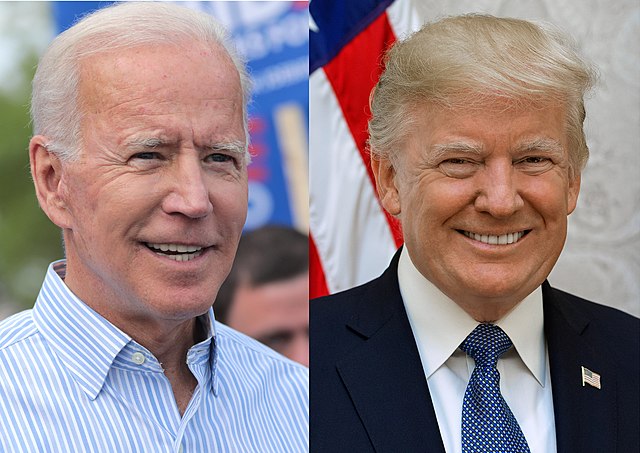
Following a string of primary election victories, Donald Trump and Joe Biden have each secured the nominations for their individual parties, meaning both candidates are poised for a general election rematch.

Last Tuesday, Trump and Biden won their parties’ presidential primaries in Georgia, Mississippi and Washington, with Trump also winning the Republican caucuses in Hawaii.

This shorter series of elections comes a week after Super Tuesday, when both candidates dominated with victories across the country.

With the exception of Vermont, Trump won all of the night’s GOP contests, with his strongest performances coming from Alabama and California. Following her disappointing Super Tuesday performance that only resulted in a narrow victory in Vermont, Trump’s last remaining challenger, former United Nations Ambassador Nikki Haley, dropped out of the race.

Biden and Trump via WikiCommons

With a few exceptions, Biden similarly dominated in the Democratic election contests of the night. However, the incumbent lost his party’s caucuses in American Samoa, which were won by little-known challenger Jason Palmer. In a similar fashion to Haley, Biden’s main challenger, U.S. Congressman Dean Phillips, suspended his presidential campaign.

Despite the rematch that some believe will mirror the 2020 presidential election, both candidates face potential and unique challenges in their respective campaigns.

For Trump, there remains a great deal of uncertainty regarding his various criminal trials. However, there does appear to be a bright spot for Trump emerging, as a Georgia judge overseeing his election interference case recently dismissed some of the charges against him and compelled the special prosecutor overseeing his case to resign. In another victory for Trump, his hush money trial in New York City was recently delayed to at least mid-April.

For Biden, much of his challenges stem from his low approval ratings, which have persisted for months. Additionally, some fear that his age and mental condition may deter voters from backing the incumbent in the November election.

Biden faces a series of domestic and international issues. At home, Biden will need to convince voters that he is the best candidate to tackle the rises in crime, illegal immigration and inflation, which have all occurred under his presidency. Abroad, Biden will have to deal with both the Russia-Ukraine War and the Israel-Hamas War.

The conflict between Israel and Hamas is proving to be particularly problematic for Biden, as there is a growing movement for Muslim and progressive voters to vote “uncommitted” in Democratic primaries and caucuses over Biden’s perceived support for Israel. For example, in Michigan, a vital swing state, over 100,000 Michiganders (13.2%) voted “uncommitted” in the state’s Democratic primary election. Similarly, on Super Tuesday, Biden only earned 70.7% of the vote in Minnesota, with a significant share of the state’s Muslim and progressive voters selecting “uncommitted” at the ballot box.

Regardless, as polling still predicts a close race in some swing states, it remains to be seen how the general election will play out. With the election further complicated by Robert F. Kennedy Jr.’s independent presidential campaign, one can only speculate as to who will occupy the White House come January 20, 2025.

Drunken tirade causes chaos in Northeast Philly State House Election

local politics, Politics

Cole Welsh, Staff

In response to a viral video filmed at a local bar, the race in Northeast Philadelphia’s 172nd Legislative District has changed dramatically.

The three-minute video, which was filmed at Gaul & Co. Malt House in Rockledge, depicts a heated argument in which State Representative Kevin Boyle, a Democrat from Philadelphia, verbally berates female bartenders as he sits at the bar.

After he is repeatedly urged by the bartenders to leave, Boyle calls people at the restaurant “f—— idiots and f—— morons.”

Despite none of them actually serving in the military, Boyle, who is believed to be under the influence of alcohol or another substance, informs bartenders that he will block their promotions in the military.

Eventually, the video ends with Boyle yelling, “do you know who the f—— I am?” and “this bar is done.”

In response to the video, which went viral with both local and national media sources, Rockledge Police Chief John Gallagher issued a press release explaining that a police officer responded to the establishment at 12:18 a.m. on February 8 following a 911 call from the bouncer. The officer, who found Boyle outside of the bar, was informed by employees that Boyle had left but returned before stepping outside again. Eventually, Boyle left on foot.

Due to the incident, the lawmaker has been banned from the Montgomery County bar and restaurant, which sits just outside the city limits of Philadelphia.

While the female employees ultimately declined to press charges against the lawmaker, Gallagher reiterated that the investigation is ongoing and that “appropriate action will be taken at its conclusion.”

While Boyle, who has served in his elected position since 2011, has yet to release a statement, Democratic leaders in Harrisburg described the video as “disturbing” and urged their colleague to “seek help.”

Prior to the fallout from the video, Boyle, who is the younger brother of Northeast Philadelphia’s US Congressman Brendan Boyle, was expected to go unopposed in the spring primary election and await the winner of the contested Republican primary. Now, Democrats have another candidate in the mix.

This means that Boyle, who won re-election with 57% of the vote against former Republican Philadelphia City Councilman Al Taubenberger in 2022, will now face Sean Dougherty in the April 23rd primary election. The district includes a variety of Northeast Philadelphia neighborhoods, including Rhawnhurst, Burholme, Fox Chase, Bustleton and a share of Somerton.

Dougherty, a former public defender, was encouraged to run by local Democratic ward leaders. Like Boyle, Dougherty himself is a member of a well known Philadelphia political family. He is the son of Pennsylvania Supreme Court Justice Kevin Dougherty and the nephew of recently convicted electricians’ union leader John Dougherty.

For the Republicans, Aizaz Gill, who recently managed the successful re-election campaign of Republican Philadelphia City Councilman Brian O’Neill, and Patrick Gushue, a veteran who served as an Army Ranger, are running in their own primary to hopefully challenge the Democratic nominee in the fall. Both released statements condemning Boyle’s actions and highlighting the need for new leadership in the district.

As of now, only one Republican, Martina White in the Far Northeast, represents Philadelphia in Harrisburg. As such, this race is largely seen as the best pick-up opportunity for Republicans in this overwhelmingly Democratic city. With Democrats possessing a razor-thin majority in the Pennsylvania House of Representatives, this race is further viewed as one of a select few that have the potential to determine which party controls the chamber moving forward.

TikTok is controlling your political views

Politics

Maya Martin, Editor

Have you ever scrolled through TikTok and had a very radical political video pop up on your For You Page? Did that video strongly correlate with your political views, or did that video contrast your political beliefs?

TikTok, a social media platform in which users can post and interact with videos, is changing how we perceive the political world. One of the number one ways it does so is through increasing political polarization.

Polarization, according to Merriam-Webster, is the “division of two sharply distinct opposites.” So, political polarization refers to the increasing division between political beliefs, specifically enhancing the ideological extremes.

La Salle senior David O’Brien has noticed this for himself while using TikTok. “I’ve found that with TikTok use, videos have become more radical over time,” said O’Brien. “There really is no moderate take when it comes to the internet.”

When scrolling through social media, especially TikTok, many users have found that any political videos that show up on their For You Page often contain extreme political views whether they align or contradict their own political beliefs. For example, there are many videos that include a display of racist, sexist or homophobic behaviors and receive a lot of attention because of how radical they are.

Often, videos like this are placed on the For You Pages of TikTok users who find this behavior offensive. This may compel the users to leave disapproving comments and interact with the post, which in turn, gives the video more viewership, landing itself on the For You Page of other TikTok users. Additionally, because the original viewers interacted and watched the video, the TikTok algorithm will continue to place similar radical videos on their For You Pages.

On the other end of the spectrum, many political TikToks often are placed on For You Pages that align with a viewer’s beliefs and even influence their ideals to be more extreme or radical. By doing this, TikTok tries to captivate viewers with similar beliefs as a video displays so that they will interact with the video and continue to receive similar content on their For You Page.

“TikTok has also become a powerful means of spreading a political message, especially for politicians and campaigns seeking to connect with younger constituents,” according to Politico. “Biden’s 2020 campaign leveraged “influencers” posting on TikTok to explore his record on race, and political organizations are working with influencers to target voter groups.”

No matter which path TikTok takes to enhance your political beliefs, it has been working and escalating as time goes on. While TikTok leads some viewers to more extreme beliefs, this means an increasing shift in political views. Both Democrat and Republican TikTok and social media users are becoming more extreme as we know it.

Another way TikTok has the ability to enhance political beliefs is through the spreading of false information. Anyone can make a video on TikTok and share any information they would like, so users need to ask themselves, is the information I’m viewing really trustworthy or reliable? 

La Salle alumna Kylie McGovern studied this issue and wrote about it in her research paper for a former political science course. She stated, “Social media brought about dangerous consequences like the rapid and unprecedented spread of false information online through several channels including but not limited to foreign interference, accidental posting and spread of false information, and purposeful domestic posting and spread of false information.”

There is a wide range of possible repercussions social media has on politics. It can threaten society as we know it because of the negative effects political polarization causes, including a decrease in unity, more hostility amongst parties, and gridlock. According to the International Catalan Institution for Peace, “Polarization affects individual perceptions and is hard to reverse once in place.”

Because of the difficulties of reversing political polarization, it is important that TikTok– and all social media users– become aware of the matter.

“Personally, I don’t use TikTok because it feels dystopian and more of a distraction from what’s actually happening,” said McGovern. “I hope La Salle students are wiser than to consume politics from TikTok. I’d recommend something like NPR. They have informative podcasts that are usually a quick listen.”

As for the future of political polarization, there are a lot of questions on how social media will continue to impact politics. For now, it is important to use trustworthy news sources and to fact check information seen online, especially on TikTok.

Busting myths about immigrants: Explorer Cafe

Politics

Maya Martin, Editor

European immigrants traveling via WikiCommons

On Jan. 30, 2024 at 12:30 p.m. La Salle’s Explorer Cafe Series shared another thought-provoking presentation with students. The Explorer Cafe Series is a program that allows students to learn and engage in different educational topics outside of the classroom. This series’ presenter was Professor Charles Gallagher of the sociology department.

The series was entitled “Our Nation of Immigrants: Demonized, Hated and Absolutely Essential to America’s Success.” The presentation described in depth how immigrants are not only alienated from society but also accused of falsehoods.

Professor Gallagher began by highlighting important quotes from American politicians that painted a detrimental picture of immigrants. Attached to the flier for this explorer series was also a quote from former-President Donald Trump which reads, “Immigrants are poisoning the blood of our country.” As Gallagher explained, Hitler used this same terminology when speaking of the mixing of races.

Gallagher spoke about the importance of language and how the terms “illegal” and “alien” force you to paint a negative picture in your head. When these phrases are repeated by politicians and Americans, it forces them to come to fruition. So, in order to promote a heightened understanding of immigrants, Gallagher highlighted and disproved four prominent myths about immigrants.

The first myth Gallagher discussed was that immigrants take away jobs from the native population and hinder the economy. In his presentation, Gallagher explained that it is economically proven that immigration has an overall positive impact on economic growth. He admited that the only workers who are slightly affected by immigrant workers are white and Black workers who do not have a high school education. These workers are only affected by a small percentage, in contrast to the massive immigrant economic problem many Americans believe in.

The second myth Gallagher confronted was that immigrants take social welfare services, abuse and overuse them. However, typical immigrants pay more in taxes than they consume in government services, according to the Cato Institute. To access the social welfare services America has to offer, one must have knowledge of the system to access it, and an extra layer of difficulty is added for non-English speakers. In addition to this, as Gallagher described, working undocumented immigrants are paying taxes, but it is not connected to their name. Therefore, they will not be able to collect this money later in life and the current taxes they pay go to American citizens.

The third myth discussed is that immigrants are more prone to crime than the general population. According to Gallagher, 73% of Americans think that “more immigrants cause more crime,” meanwhile in actuality immigrants have lower crime rates than the native-born. He hypothesized that many immigrants come from countries in which they need to flee. This could result in fear getting kicked out of America and in turn a higher focus on abiding by the law.

Finally, the fourth myth busted in the presentation was that immigrants do not learn English and assimilate. Gallagher explained that 72% of Americans feel it is essential that immigrants living in the United States learn to speak English. However, in the twentieth century, more than 75% of immigrants speak English within the first five years of living in America. Even immigrants who do not learn to speak English in America are able to strive in society.

Gallagher concluded the presentation by showing quotes from famous politicians and presidents including Roosevelt, Reagan and Obama on how immigration should truly be recognized. The idea of a “typical American” is fictitious, and proper education needs to be spread about the importance of immigrants to our economy, population and well-being.

Progressive District Attorney Larry Krasner loses authority to prosecute SEPTA crimes

local politics, Politics

Cole Welsh, Staff

In response to the culture of lawlessness that has engulfed Philadelphia, especially on mass transit, a bipartisan coalition of state lawmakers in Harrisburg voted to strip Philadelphia District Attorney Larry Krasner (D) of his jurisdiction to prosecute crimes on the city’s public transit system, known as the Southeastern Pennsylvania Transportation Authority (SEPTA).

SEPTA via WikiCommons

Labeled as Act 40, the new state law, which was signed into law by Governor Josh Shapiro (D) during last year’s legislative session, creates a new special prosecutor role that maintains the authority to investigate and prosecute crimes on public transportation in the city. It is slated to be active through 2026, when Krasner’s current term ends.

While Krasner and his progressive allies have called the new law an “attack on democracy,” Republican lawmakers, along with the dozens of Democrats who joined them, argue that the legislation is necessary to prosecute crimes that normally go unprosecuted under Krasner’s watch.

The legislation, sponsored by Republican State Senator Wayne Langerholc, requires Pennsylvania Attorney General Michelle Henry to appoint a special prosecutor with authority over any crimes that occur on—and, according to Krasner’s interpretation of the law, within 500 yards of—any SEPTA property in the city. However, as Act 40 only pertains to SEPTA property in Philadelphia, this special prosecutor would have no authority over crimes committed on or around SEPTA property in Philadelphia’s collar counties.

When the Senate approved the bill last session, Langerholc asserted that the special prosecutor would “ensure scofflaws answer for the crimes, since the current DA has a systemic record of failing to prosecute assaults on victims.”

While it is rare for state legislators to take away authority from local prosecutors, Act 40 is not the first time that Republican lawmakers have sought to limit Krasner’s jurisdiction.

In 2019, the General Assembly passed a bill creating concurrent jurisdiction for gun crimes in Philadelphia and allowing the Pennsylvania Attorney General’s Office to prosecute cases that the Philadelphia District Attorney’s Office did not. Then-Attorney General Shapiro did not utilize this new authority and even called for a repeal of the law, which received significant bipartisan support from both chambers to confront the city’s crime crisis.

Moreover, Republicans who led the House in 2022 voted to impeach Krasner, but a trial in the GOP-controlled Senate has been stonewalled while a lawsuit is considered by the Pennsylvania Supreme Court.

Recently, Krasner himself has filed a lawsuit in Commonwealth Court that raises several challenges to Act 40. The lawsuit asserts that the special transit prosecutor law is unconstitutional because the Pennsylvania Constitution does not directly allow for the appointment of a special prosecuting attorney to seize some of the authority of an elected district attorney. Krasner is also challenging the legislation on the grounds that the law is discriminatory as it would supersede the district attorney’s authority in Philadelphia but not the four suburban counties where the nation’s sixth-largest rapid transit system can also be found.

In response, Langerholc has dismissed arguments that the law would take any authority away from Krasner, asserting that the special prosecutor would be able to select what crimes to prosecute. Otherwise, these crimes would be left to the Philadelphia District Attorney’s Office.

Regardless, as Henry assumes that the law is constitutional and searches for someone to fill the new position, it remains to be seen if the law, along with Krasner’s impeachment process itself, will be permitted to continue following a review by the state court system.

Mayor-Elect Cherelle Parker taps Kevin Bethel to be Philadelphia’s next top cop

local politics, Politics

Cole Welsh, Staff

In her first personnel selection, Philadelphia Mayor-Elect Cherelle Parker selected longtime law enforcement official Kevin Bethel to be the next police commissioner of one of the nation’s largest police departments.

Bethel, who is 60 years old, currently serves as the chief of safety in the Philadelphia School District, where he has steered school safety officers away from strict discipline measures and toward mentoring students.

Prior to this, Bethel, a 29-year veteran of the Philadelphia Police Department (PPD), left the force as a deputy police commissioner. In this role, Bethel oversaw the department’s patrol operations, including the neighborhood services unit, school district police and the community relations unit. His lengthy resume also includes leading South Philadelphia’s 17th Police District, heading the regional operations command for South, Southwest and Center City Philadelphia, performing narcotics-related work and managing internal affairs investigations.

Bethel, who is set to assume his position once the new mayor is sworn in next year, will replace Interim Police Commissioner John Stanford, who himself became PPD’s leader after Danielle Outlaw’s resignation. Amid an increase in crime that has ravaged the city, both Parker and Bethel will immediately be confronted with the task of restoring law and order to the city.

In an interview with 6 ABC announcing the decision, Parker described Bethel as “a leader who is not afraid to make the tough decisions that we need to bring some order back to our city.”

Former Philadelphia Police Commissioner Charles Ramsey, who served on the search committee that interviewed Bethel, said Bethel “caught his attention” when he worked in the field as a cop. In addition to praising him as a hard worker who worked long hours, Ramsey also portrayed Bethel as someone who employs a data-driven approach to policing.

Likewise, many others in Philadelphia have portrayed their optimism for Bethel’s selection. Roosevelt Poplar, who recently became the interim leader of FOP Lodge 5, which is PPD’s labor union, conveyed that he is ready to work with the new mayoral administration and was “overwhelmed with joy” with Parker’s police commissioner pick.

Once the new mayoral administration begins, Bethel will lead a large but severely short-staffed police force that has been hit with morale problems and numerous officers having been wounded or killed in recent years. Upon assuming his new position, Bethel will have to grapple with these challenges and the city’s overwhelming lawlessness. When combined, these obstacles make the police commissioner’s job arguably one of the most difficult in the city. 

Freshman Philadelphia lawmaker pushes for aggressive policy toward drug epidemic

Politics

Cole Welsh, Staff

In response to the worsening drug problem that has taken over Philadelphia’s streets, Councilwoman Quetcy Lozada has begun calling for the Philadelphia Police Department to enforce already existing drug laws more aggressively.

Lozada, elected in a special election in November of 2022 to represent City Council District 7, serves much of Philadelphia’s Hispanic communities. Kensington, which is one of the neighborhoods she represents, is primarily considered to be one of the largest open-air drug markets in the world.

Describing the need for a holistic solution, Lozada is pushing for a policy that would see drug addicts being involuntarily committed to “stabilization centers,” where they would be compelled to choose between receiving long-term treatment or facing criminal charges. As such, she favors a much more robust law enforcement presence around Kensington Avenue that can be coupled with enhanced cleaning by sanitation workers.

This push comes amid a rapid increase in drug use in the city, which saw a record number of fatalities due to opioid overdoses in 2022. At the same time, crime in Kensington, which has been dubbed “ground zero” for Philadelphia’s drug crisis, has skyrocketed under self-described progressive prosecutor Larry Krasner.

However, this is not the first time that Lozada has embodied a “tough on drugs” stance. Shortly after the election victory, Lozada introduced a bill that would ban already controversial safe injection sites from opening up in her district. While she initially had the support of four of her city council colleagues, Lozada eventually won over an additional four members. After the legislative body voted to override Philadelphia Mayor Jim Kenney’s veto of Lozada’s legislation, her bill effectively banned these sites in approximately 90% of the city.

Her controversial stance, though, has put her at odds with those who favor less punitive approaches to the city’s drug problem, including Mayor Kenney and Philadelphia District Attorney Larry Krasner, who are both fellow Democrats. Kenney, like other progressive Democrats, has voiced support for additional solutions, such as safe injection sites. The plan to open up a safe injection site in South Philadelphia, which Kenney openly endorsed, was scrapped following intense pressure from neighbors, city council members and federal officials. Krasner, in his position as Philadelphia’s chief prosecutor, has vowed not to prosecute those who establish or use these sites.

Despite this, as a new mayor will be sworn into office at the start of next year, it remains to be seen if Lozada can win over the support of her colleagues in City Hall to enact this policy. With a new mayor and city council assuming office, one will have to wait and see if Lozada can form a coalition of Republican, moderate Democrat and less progressive Democrat elected officials to make this policy a reality.