Girl bosses for the economic win: The Barbie Movie, Renaissance and Eras Tours

Business

Emily Allgair, Staff Writer

Via Wikimedia Commons (https://commons.wikimedia.org/wiki/File:Taylor_Swift_The_Eras_Tour_Reputation_Era_Set_(53109434716).jpg

From Beyonce to Taylor Swift to the Barbie movie, the economy has felt a generous boost in revenue over the summer. Taylor Swift’s Eras Tour, which began in March of 2023 and ends domestically in November 2024, is currently on track to become the biggest concert tour in history, beating out Elton John’s farewell tour which began in September 2018 and ended in July 2023. Projected to generate $1 billion, people who went to the concerts likely bought extravagant outfits, friendship bracelet supplies, hotel rooms and plane tickets in addition to the tickets (which crashed Ticketmaster and were extremely expensive during resale). Jumping on the swiftie-bandwagon, many small businesses made products catered to the pop star’s fans. From dessert shops making Taylor-themed donuts to small museums opening exhibits based on her 17-year career. 

Starting in May 2023, Beyonce started her ninth concert tour, the Renaissance Tour. Similar to the Eras Tour, Beyonce’s is another world-famous musician hosting concerts without the (major) fear of spreading COVID-19. In Philadelphia the week of Beyonce’s performance on July 12th, restaurants, hotels, shopping (including arts and craft and fabric stores) and beauty services spiked, while nail technicians saw an increase of 193%. Similar trends are being seen in the cities across the nation that Beyonce is visiting. Some are even going as far as to predict that the Renaissance tour will surpass the Eras tour by the time it wraps in October. 

On July 21 Greta Gerwig released “Barbie” (read the review here). Gaining lots of hype before its release, “Barbie” became the highest-grossing movie at the 2023 domestic box office, even despite being released on the same day as “Oppenheimer.” Over its opening weekend, “Barbie” brought in $162 million, almost double what “Oppenheimer” brought in. Post-pandemic, this is one of the first movies that has brought a large crowd back into physical theaters, a trend that we hope will continue in the future.

The New York Times stated that some economists believe that these are examples of post-COVID “revenge spending” where people are focusing on buying experiences rather than tangible things – what people mostly bought during the pandemic. For both “Barbie” and the concerts, dressing up for events has come in strong since COVID-19, as, again, people are focused on the experience rather than the cost of the goods it takes to make that experience.

Bed bath & Beyond making last hope in an effort to survive bankruptcy.

Business

Jason Ryan, Staff

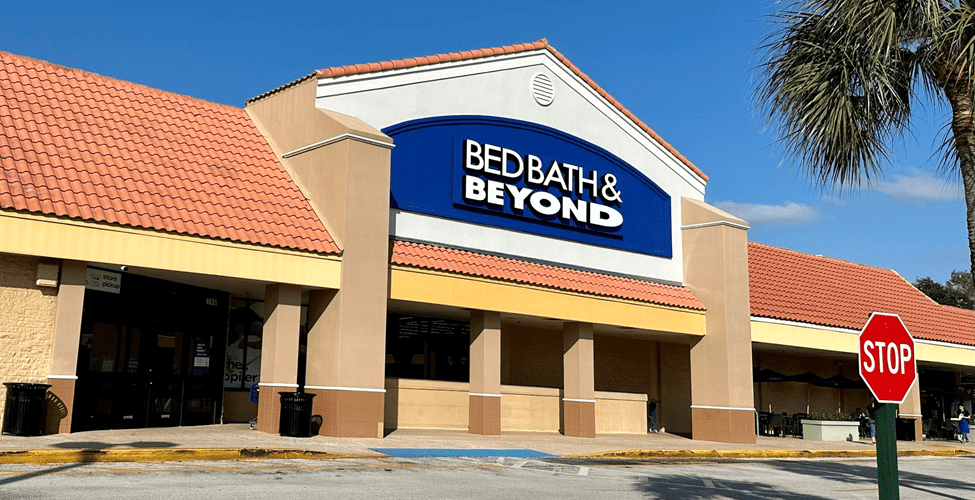
In an effort to keep from declaring bankruptcy, Bed Bath & Beyond is asking shareholders to approve a reverse stock split at a forthcoming special meeting, according to a regulatory filing made late Wednesday.  

To ensure that there are enough shares available to raise up to the $300 million in equity from a stock offering announced last week, the retailer’s board is urging shareholders to accept the reverse stock split at the May 9 meeting as Bed Bath & Beyond deeply needs cash to survive, again. 

The company has seen problems with the business before the pandemic hit, and its business has been experiencing declining trends. Despite an increase in online retail sales, Bed Bath & Beyond still didn’t generate the same number of sales in past years as other shops like Target. Due to poor performance, Bed Bath & Beyond fired Mark Tritton, its recently appointed CEO and former Target chief of merchandising. 

The declining stock price of Bed Bath & Beyond, which has been trading below $1 for the past two weeks, has made fundraising attempts extremely difficult. Bed Bath’s stock was trading at about 30 cents early on Thursday, giving it a market worth of only about $132 million. According to the company’s statement, if the plan isn’t carried out, it probably will not have enough equity to pay its debts and maintain operations. Leaving them no option but to file for bankruptcy. 

That being said, the struggling store announced that the reverse stock split would occur at a ratio between one for ten and one for twenty, to be overall decided by the board. If the split is granted, there will be a considerable decrease in the number of shares of common stock that are outstanding, enabling the company to issue enough shares to satisfy the requirements of the offering. The firm anticipates that the reverse split will increase Bed Bath’s share price per share, which will enhance investor perception of the company’s stock.

The stock offering will eventually dilute Bed Bath’s share price, even if the reverse split temporarily raises it. This is what happened after the business announced another stock offering in February. Since January, the home goods business has been issuing bankruptcy warnings after a string of poor quarters left it barely hanging on to life. For instance, it announced a $120 million lifeline on Wednesday from liquidator Hilco Global so it may replenish its inventory in a desperate attempt to boost sales.

On paper, Bed Bath & Beyond’s plans to streamline operations and stock fewer items may have made sense, but in fact, they have displeased customers and investors. Since fewer products were available, the “Beyond” division of the company struggled because many devoted customers were used to buying at the retailer before heading to rivals Target or Home Goods. Customers used to have a wide variety of brand alternatives, therefore they were disappointed by the alterations made after the structural cleaning of its aisles.  Bed Bath & Beyond has been distressed for years, having failed to reinvent itself in the digital age despite efforts to declutter its stores and remake its coupon strategy. I believe the company’s idea to push for a reverse stock split proves the company is on its last leg. If not approved, the company will likely end up in liquidation if it cannot find a buyer. 

ryanj21@lasalle.edu

Bed bath and beyond defaults on credit line, closing more stores.

Business

Jason Ryan, Staff

https://www.axios.com/2023/01/30/bed-bath-beyond-closing-stores-2023

Bed Bath & Beyond said Thursday it does not have enough cash to pay down its debts and it has defaulted on its credit line with JPMorgan, warning once again of a potential bankruptcy. Shares of Bed Bath plunged Thursday afternoon, prompting brief trading halts. The stock closed 22% down with a market cap of about $295 million, although it traded slightly higher Friday morning.  

In a securities filing, Bed Bath & Beyond said it “does not have sufficient resources to repay the amounts under the Credit Facilities and this will lead the Company to consider all strategic alternatives, including restructuring its debt under the U.S. Bankruptcy Code.” Bed Bath is attempting to cut costs by lowering capital expenditures, closing stores, and negotiating lease deals with its landlords but personally warned “these measures may not be successful”.

Bed Bath’s debt load also includes $1.2 billion in unsecured notes, which have maturity dates spread across 2024, 2034 and 2044, and have been trading at extremely distressed levels. The company said previously it was not able to refinance portions of that debt less than a month after it told investors it planned to take out more credit to pay down its obligations. The company has been burning through cash in recent quarters. It used $890 million in cash during the nine months ended Nov. 26, the company reported Thursday. As of that date, Bed Bath said it had $225.7 million remaining in cash.

As of late November, the company had 949 stores, including 762 Bed Bath & Beyond stores, 137 buybuy Baby stores and 50 stores under the names Harmon, Harmon Face Values or Face Values. In September, the company announced only 56 Bed Bath & Beyond stores would be closing; however, earlier this month, the company posted a list with 62 Bed Bath closures, six buybuy Baby and two Harmon stores. The original closings announced in September were also on the list.

This news comes only a few months after the CFO of Bed Bath & Beyond leapt to his death from a Manhattan skyscraper where he had faced pump and dump allegations less that two weeks earlier. 

All and all, Bed Bath & Beyond has been distressed for years, having failed to reinvent itself in the digital age despite efforts to declutter its stores and remake its coupon strategy. The company will likely end in liquidation if it does not find a buyer soon.

ryanj21@lasalle.edu

Elon Musk looks to rehire some of the staff he booted last week.

Business

Jason Ryan, Staff

Twitter Inc. is heading into its second full workweek under Elon Musk with half its workforce, mounting losses and a couple of expected reversals to its plans\

The social-media company, Twitter Inc. laid off close to 3,700 people on Friday, only to reach out soon thereafter to dozens of employees where it was decided they were either fired in error or are just too essential to the changes the billionaire businessman, Elon Musk, wanted to make. 

The layoffs hit across many divisions, including the engineering and machine learning units, the teams that manage content moderation and the sales and advertising departments.

These stroke events, as described by people familiar with the situation or in an internal company memo posted on Slack, follow Musk’s own acknowledgment in a tweet that the company he and wealthy partners bought for $44 billion is losing $4 million a day.

Twitter Inc. decided to go after its workforce  to trim costs following Musk’s acquisition, which finally closed in late October. Many employees learned they lost their job after their access to companywide systems, like email and Slack, were suddenly suspended. The sudden requests for employees to return to office demonstrate how rushed and disorganized the process was.

Some regions were hit harder than others. For example, the company fired more than 90% of its staff in India over the weekend, severely depleting its engineering and product staff. The job cuts left the company with a little over a dozen staff in the growth market.

That being said, Twitter is rolling out new features such as its Twitter Blue subscription plan. To elaborate, Twitter will issue the new blue verification check marks to users who pay $7.99 a month for the service starting on Nov. 9. The company had previously planned to roll out the subscription feature Nov. 7, the day before the election; however, one of Musk’s early goals for the company is  delayed until Wednesday to avoid potential chaos during the U.S. midterm elections.

The company received internal and external feedback that the verification process for its Twitter Blue subscription program could be prepared for abuse. This has raised concerns that candidates and other political figures might be impersonated on site in the days before the US election. 

Late Sunday, Musk said Twitter would ban accounts that impersonate others, after several high-profile users changed their names and pictures to match the billionaire. Any name change at all will cause a temporary loss of a verified check mark.

Though the company needs some technical staff to return, the platform is not likely to be forgotten about. They surely need to figure out a way to get out of this mess and control Musk’s short temper.

  ryanj21@lasalle.edu

Trump Organization Tax Fraud Trial to Begin on Monday

Business

Ian Krysztofiak, Staff

The Trump Organization is to begin trial on Monday, Oct. 24, involving tax fraud regarding compensation for the company’s Chief Financial Officer. Jury selection begins as the prosecutor argues that executives were paid in cars, private school tuition, apartments and cash. While the Trump Organization has been the subject of legal scrutiny, this is one of the first criminal trials that the company has faced. The Trump Organization faces criminal counts of conspiracy, criminal tax fraud and falsifying business records. The company could face fines of $1.6 million under New York state law if convicted. 

The Manhattan district attorney’s office says that the Trump Organization kept two sets of books, internal records review that chief financial officer Allen Weisselberg received compensation through Mercedes-Benz cars and private school tuition for his grandchild. Weisselberg argues that the company didn’t report these benefits to tax authorities.  The Trump Organization is expected to say that the incident was an isolated practice of Mr. Weisselberg and another employee. Mr. Weisselberg is expected to take a plea deal to fully testify against the Trump Organization. 

Along with Mr. Weisselberg, Donald Bender, a partner at accounting firm Mazars USA LLP, will be another witness who prepares the company’s tax returns. Mazars said earlier this year that it would drop the Trump Organization as one of its clients and that it does not stand by its prior financial statements. 

Even though Mr. Trump and his family were not charged, the indictment says that the former president signed checks for private-school tuition. This trial follows a multiyear investigation by Manhattan’s district attorney’s office into the Trump Organization’s unethical conduct involving hush money payments to adult film actress Stormy Daniels among their many other civil lawsuits. The New York Attorney General, Letitia James, brought a civil suit against Mr. Trump, his three children, and his company last month for the misrepresentation of the company’s assets to its lenders and insurers. However, this trial is only regarding the company’s payroll practices. 

Ocean freights rates are dropping; ships being canceled amid low demand inflation concerns

Business

Jason Ryan, Staff

Cargo companies are canceling some sailings amid low demand for imported products due to rising inflation.

A significant consumer pullback is showing up in ocean shipping, with logistics managers and specialists stating they have seen a 20% drop in ocean freight orders for the months of September and October. The decline in demand cuts across products, including machinery, housing, industrial and some apparel. 

Ocean carriers have been canceling dozens of sailings on the busiest routes during their peak season, the most recent sign of the economic whiplash touching firms as inflation weighs on global trade and consumer spending.

For the first two weeks of October, a total of about forty scheduled sailings to the U.S. West Coast from Asia and 21 sailings to the East Coast from Asia have already been scrapped. Typically, during this time of the year, an average of two to four sailings in a week are blanked, the industrial term for canceled sailings.

The cancellations in October 2022 are a sharp reversal from months back when the scarce shipping space pushed the freight rates higher, and the carriers’ profits touched record levels. In October 2021, firms like Walmart and Home Depot were chartering their ships to get around the bottlenecks at major ports to satisfy a surge in demand for imports, this is just not the case now. 

Moreover, Trans-Pacific shipping rates have plummeted about 75% from levels seen a year ago. The transportation industry has been grappling with weaker demands as giant retailers cancel orders with vendors and step up their efforts to cut inventories.

The impact of Hurricane Ian can also be a reason for the cancellations. For example, this CNBC Supply Chain Heat Map demonstrates how vessel congestion on the east coast continues and how the impact of Hurricane Ian will delay the clearing out of vessel congestion.

To elaborate, during the period of Sept. 12-18, the Port of Savannah, a major U.S. seaport, reached the highest number of weekly average days waiting at anchor and cancellations since April 2022. Because of Hurricane Ian, zero vessel calls have been recorded at the Port of Savannah since Sept. 29. There is no question this new disruption by Ian will increase the existing congestion even more. 

  ryanj21@lasalle.edu

The Pound Tumbles as Britain Announces New Tax Cuts to Fight Inflation

Business

Ian Krysztofiak, Staff

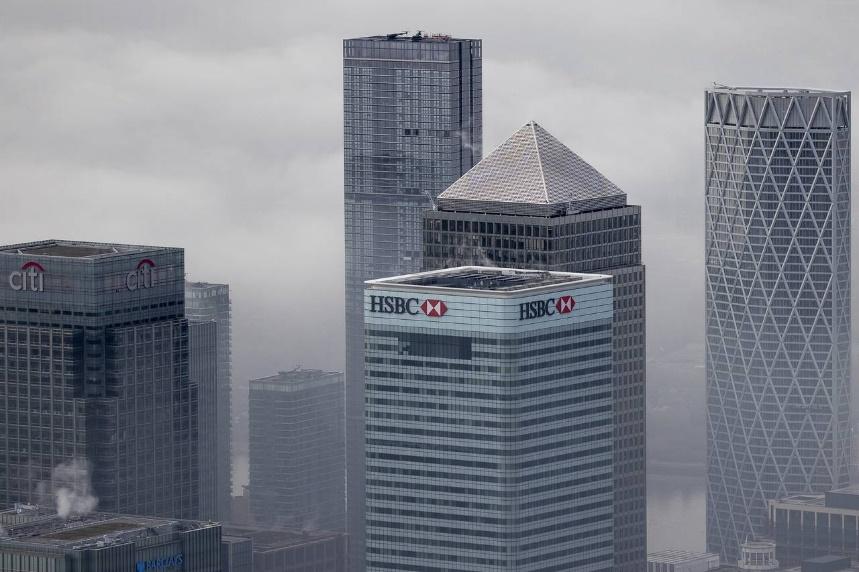
https://www.bloomberg.com/opinion/articles/2022-08-17/hsbc-citigroup-and-the-end-of-global-banking

The British pound hit a record low of $1.0349 when compared to the dollar during Asian trading hours on Monday, surpassing 1985’s previous record low. This comes after the British government unveiled tax cut programs on Friday. These plans include canceling the proposed plan of a 25% corporate tax hike, and a reduction on income and bonus taxes. These tax cuts come after a rise in energy prices from Russia’s cut in energy exports. The tax cuts will hopefully shield businesses and households from surging energy prices. It has been 50 years since Britain has seen tax cuts of this scale. 

Resulting in a low pound against the dollar, imports, oil and gas, and other commodities priced in dollars will now be more costly, which puts more economic stress on England. A low pound also affects yields on ten-year UK government bonds, which ultimately makes government borrowing more expensive. The ten-year UK government bond yield is currently at 4.12%. 

Recently, currency exchange markets have been hit hard; the Turkish Lira has also hit a record low against the dollar. And China has recently announced that it will make it harder to bet against the Yuan by introducing a 20% risk-reserve ratio for any financial institutions that sell foreign exchange forward contracts. This will make it costlier for banks and their clients to sell Yuan to buy Dollars in the derivatives market. The Euro has also fallen to a 20-year-low against the dollar. 

Critics see the falling pound as a potential debt problem for the U.K., as they recently borrowed 11.8 billion pounds in August, a 5.3 billion difference from what they borrowed in 2019. These tax cuts by the U.K. are a gamble, using the cuts to both fight inflation, and high energy prices are accelerating worries of a recession. With inflation at a 40-year high of 9.9 percent, this is a bold strategy from Kwasi Kwarteng, the Chancellor of the Exchequer. Unfortunately, these tax cuts will most likely only benefit the wealthy more than the middle class.

Goldman Sachs Prepares for Layoffs as Deal-Making slows

Business

Jason Ryan, Staff

Courtesy of Financial Times

Goldman Sachs is a leading American multinational investment bank and financial services company headquartered in New York City. The company provides a wide range of services to a substantial and diversified client base that includes corporations, financial institutions, governments, and individuals. 

Goldman Sachs is preparing for a round of layoffs that could come as soon as next week due to low deal-making. At the end of June, Goldman had about 47,000 employees across investment banking, trading, asset and wealth management, consumer banking and operational functions. The job cuts can greatly affect employees across the company. 

Deal-making in the United States so far this year has totaled about $1.2 billion, compared with $2 billion a year ago in 2021, according to the data firm Dealogic. Initial public offerings raised about 95 percent less through the first half of the year than the first half of last year, according to EY, an advisory firm. With this, the number of deals has fallen about 73 percent.

Goldman typically revisits its headcount every year, letting go of employees based on performance and to match the bank’s needs. It had paused that program during the pandemic, which also coincided with a record period for deal-making, when bankers complained of being overworked. The program typically lays off 1 to 5 percent of workers; this round of layoffs is likely to be at the mid of that range. 

Goldman’s Chief Financial Officer, Denis Coleman, told analysts in July that the bank was “probably reinstating our annual performance review of our employee base at the end of the year.”

The move comes as the Federal Reserve’s effort to tame inflation by raising rates has somewhat cooled deal-making and raised concerns that the U.S. economy will tip into recession. The war in Ukraine has added further uncertainty to the mix.

With this however, Goldman reported in July that its second-quarter profit had dropped nearly 50 percent from a year earlier, to just under $3 billion. Revenue from Goldman’s investment banking division fell 41 percent from the same period in 2021. At that time, the bank said hiring for the rest of the year would slow.

Still, for executives across Wall Street, assessing the requisite size for layoffs can be difficult. This is a milestone as something like this has not formally existed in the past two years. Although it may be just a modest decrease over the company, it will still cause anxiety among employees. It will be interesting to see what Goldman Sachs’ headcount is at the end of the year. These layoffs are crucial to see if other job cuts on Wall Street go ahead with this trend. 

  ryanj21@lasalle.edu

Credit Suisse prepares for senior management changes after a year of crisis

Business

Ian Krysztofiak, Staff

Header Image: CNBC
Credit Suisse building in Zurich Switzerland.

The Swiss investment bank Credit Suisse (NYSE: CS) reportedly has plans to replace some of its senior management positions in the coming months after the chief financial officer, general counsel and Asia-Pacific head are set to step down. Chairman of the board, Axel Lehmann, is hoping to put the bank back on stable ground after recent losses and scandals. Credit Suisse was founded in the 1800s to fund the Swiss railway system, but has since grown into a double digit billion dollar holding company with reaches into nearly every international market.

Credit Suisse is planning to replace Chief Financial Officer David Mathers, Chief Legal Officer Romeo Cerutti and the CEO of the Asia-Pacific region Helman Sitohang. Mathers has been in this role since 2010 and Cerutti has been the bank’s top lawyer since 2009. The board has yet to make any decisions. 

Credit Suisse is expected to take a loss in the first quarter of 2022 after recent litigation provisions and losses on loans through Russia’s invasion of Ukraine. Credit Suisse is looking to scale back its investment banking division and sharpen its focus on wealth management. They are also looking “to stabilize the bank through cultural and strategic changes,” said chairman Axel Lehmann.

Lehmann has only been at the helm of the board since January, as the former chairman Antonio Horta-Osorio resigned due to breaking COVID-19 quarantine requirements by attending football and tennis matches. Hort-Orsorio was at Credit Suisse for less than a year before he resigned from the board. 

Credit Suisse reported a net loss of 1.57 billion Swiss francs ($1.7 billion) for 2021. This comes after a 5.5 billion loss resulting from its risky exposure to the hedge fund Archegos Capital, which resulted in the firing of nine executives and disciplinary action against another 24 executives. They also suffered fines of $475 million for their role in the “tuna bond” scandal in the Republic of Mozambique. The firm helped arrange loans to Mozambique that were said to be used for a state owned tuna fishery and maritime commerce and security projects, but were aware that portions of he money would be used for military projects. Credit Suisse received $50 million worth of kickbacks for their bankers in exchange for better loan terms, while Mozambique officials used the funds to finance military expansion instead of the promised fishing fleet. 

Credit Suisse was unable to make a profit in 2021 during the most profitable years for financial institutions. Though with an increased focus on cultural changes, decreased investment banking activities and new management changes, only time will tell if they can rebound from their calamities.

Elon Musk buys Twitter for a whopping $44 billion

Business

Jason Ryan, Staff

Shortly after becoming a majority shareholder with a 9.2 percent stake in the social media platform, Elon Musk has bought Twitter for $44 billion. Source: NPR

On Monday, Elon Musk, CEO of Tesla, Inc. and founder of SpaceX, purchased social media platform Twitter for $44 billion. Musk, the outspoken CEO, and the richest man on Earth, according to Forbes, plans to take the social media company private, and has said that he wishes for Twitter to adhere more closely to the principles of free speech, which, in a statement, Musk called, “the bedrock of a functioning democracy.” 

This deal caps off a hasty episode in which the billionaire became one of Twitter’s largest shareholders, buying a 9.2 percent stake of the company. Afterwards, Musk was offered and turned down a seat on its board and decided to bid to buy the entire company all in less than a month.

Under the terms of the deal, shareholders will receive $54.20 in cash for each share of Twitter stock they own, matching Musk’s original offer and marking a 38 percent premium over the stock price the day before Musk revealed his stake in the company.

The offer became more concrete once Musk announced in a Securities and Exchange Commission filing that he received commitments for $46.5 billion to help finance the potential deal. This included about $25.5 billion in debt financing from Morgan Stanley Senior Funding and other firms. He said he committed about $21 billion in equity financing.

Though Musk has indicated that his primary interest in Twitter has to do with what he views as the company’s censorship of free speech, Musk’s critics are concerned that the billionaire’s control over the platform could result in the silencing of their voices and others with whom he may disagree, given that he’s often blocked critics from his personal account.It is too premature to say what Musk is to do with Twitter, but it is obvious he clearly intends to make his presence felt and heard around the social media platform. Musk has repeatedly stressed in recent days that his goal is to bolster free speech on the platform and work to “unlock” Twitter’s “extraordinary potential.” We will be following this story in the coming week if there are any major updates.