Why is La Salle hiding “The Hideaway” ?

Commentary

Peyton Harris, Editor

It’s been a long three months since the news rocked campus about the closure of La Salle’s Starbucks location, based in the Union building. Students were rightfully outraged at the news, which seemed to come at the very last moment before the end of the fall semester. What was the reason? Where was the student input? Questions the La Salle community is still asking.

Members of university administration have said it was quote-unquote ‘based on discussion and feedback from the student body’; but from who, exactly? The Student Government Association (SGA) was not aware prior, nor were many student leaders. Student employees were sworn to secrecy when they were told in September. The only hope after the news of Starbucks’ impending closure was the replacement the university promised would ‘elevate our campus experience.’ So, the question remains: where is it?

If you’ve set foot inside the Union this semester, you’ve likely seen the brown-papered, covered-up windows of the former Starbucks space. A poster for the proposed venue, renamed “The Hideaway” has been hung for months, with no update or expected opening date given to students. Perhaps foolishly, students expected the new space to be open by the beginning of the semester. As midterms approach, we’re still waiting for answers.

“So many students relied on Starbucks for a multitude of reasons,” said junior Cassidy McGonigle. “It was a place to get breakfast, or to study and it’s unfair that we don’t have somewhere to go anymore. We have been told it would be open when we got back to school, and now it won’t be open until after spring break. How long are we going to have to keep waiting for a place for us to get coffee?”

It is worth mentioning that there is a coffee spot on campus: Founder’s Brew, located in Founders’ Hall. However, this spot is inconvenient–some argue inaccessible–for most students. Founders’ Hall is one of the furthest buildings from the central area of La Salle’s campus, which was a selling point for Starbucks. Its centralized location within the Union provided equal access to students coming from all ends of campus, as well as being within easy walking distance to the majority of dorms and other academic halls.

“Most students do not spend their time anywhere near Founders’, so it is very out of the way to go all the way to Founders’ to get a drink. We should be able to walk into the Union and have a place to sit, study, and have coffee and refreshments. It’s unbelievable that we don’t have anything besides Founder’s Brew,” said McGonigle.

Lack of communication is a large part of students’ concerns. Sophomore Claire Herquet shared that sentiment, saying: “We’ve gotten little update about the construction and specific changes being implemented in the space. Of course, Starbucks being gone has made so much of our campus community upset, but seeing that there hasn’t been much work done to the area and no social media posts or emails asking us for our feedback shows more neglect.”

“I know a lot of it has to do with funding and doing what is financially smart, and we as students understand that. Yet since something we loved and relied on was taken from us, we deserve more communication from those who made that decision,” said Herquet.

The university’s current solution while the student body anxiously awaits this new space? Coffee pots and one or two flavored creamers. Each day, a pot of coffee is placed on a folding table outside the former Starbucks, still-not-open Hideaway, with some cups and different creamers available for students to take. While the sentiment is appreciated, it’s also a bit of a slap in the face. ‘Here, take this free cup of instant coffee, and maybe you’ll forget about what’s going on back there.’

Students and faculty alike are frustrated at the lack of updates provided by the university. Multiple posts on Fizz social app continue to share these frustrations, each often garnering hundreds of upvotes. And rightfully so, as Starbucks was a staple on campus for years. People came to rely on it for many different reasons: as a study space, hangout spot or simply as a place to get your caffeine fix. We have a right as a community to be upset, even angry.

I will be the first to admit that I run on caffeine, day in and out. I remember touring La Salle as a transfer student, seeing the Starbucks on campus and thinking, ‘Great! I have my go-to place.’ When I first heard the news–through Fizz, as the university did not say anything until the student body discovered the news ourselves–I was upset, but wanted to give the university the benefit of the doubt. Maybe this new venue would actually be better. Maybe we would have better choices, options and opportunities. However, my concern and frustration has only increased as time has gone on. Why is La Salle not providing updates about The Hideaway? Will it even be open this semester at this point? What is going on?

This doesn’t mean that we don’t want this new space to succeed; I feel I speak for a lot of us when I say that any new spot to replace Starbucks would be an improvement after the past few months without. Lasallians deserve timely updates from our administrators. When I first co-wrote an article about the closure last semester, we rhetorically asked the university what their reasoning was for taking away and updating this campus institution. Unfortunately, that question remains unanswered. And now, three months on, we deserve to know more. So once again, La Salle administrators, let me end again with this: “Many Explorers feel angry and blindsided, while others simply want answers on why.”
The coyotes of Vegas

Commentary

Nate Tramdaks, Staff Writer

Las Vegas was built on mafia money, but today it’s expanding on the money wagered by frat guys. What was once an oasis for high rollers, a city of smoky card rooms, cocktails and Rat Pack sets, has now turned into a digital trap for degeneracy. All of the novelties of Vegas have been replaced with push notifications, deposit bonuses and endless parlays.

Today, the house doesn’t just win, it lives in your pocket, and its primary target is young men. They are lured in through the slick marketing, the illusion of skill and delusion of turning a $10 12-leg parlay into a semester’s tuition. The game is rigged and the pitfalls are not just financial, they’re psychological, social and systemic. The sportsbooks are preying on young men and setting them up for failure. 

So, why are young men predisposed to sports gambling and gambling in general?  It simply boils down to the egotistical nature of 20-year olds, as well as their naivety. 18-25 year old men are the demographic that got really into day-trading during the pandemic, and what day-trading and sports betting have in common is that they both require good information to be successful in. 

This is where their egotistical nature comes in. They all think that their sport knowledge gives them an edge, like they know more than the books. These young bettors make themselves believe that they are exploiting inefficiencies within the books, but they themselves are the inefficiency.

The books build their lines and spread off of public perception, like the stock market, so in the long-run, bettors are betting on negative margins. The sportsbooks rely on these bettors. A key concern for the sportsbooks when manufacturing lines and odds is the betting habits of their customers, and less the accuracy of the actual line.

An example of this in recent memory comes from Super Bowl 59. The Chiefs opened at 2.5 point favorites, and the line closed around the same number. This was a mind-blowing line because if you just compared the Eagles and Chiefs teams from this season, it was pretty evident the Eagles were the better team, as they showed. But the sentiment leading up to the Super Bowl was that one cannot bet against Patrick Mahomes. The books knew this and set the line accordingly. They didn’t make a line for accuracy, they made a line to exploit bettors’ biases. 

The sportsbooks don’t just rely on overconfidence and public perception, they actively design their systems to maximize bettor mistakes while making it seem like losses are just bad luck. This mirrors the drip loss effect in slot machines, where casinos ensure players lose money gradually rather than all at once. The longer a player stays in the game, the more they’ll bet. 

Sportsbooks have adapted this concept through the near-miss effect, with parlays serving as their most profitable trap. Parlays offer flashy, high-payout potential that lures bettors into making statistically doomed wagers. More often than not, a bettor will hit four out of six, or five out of six legs, reinforcing the illusion that they were close to a massive win. But in reality, they were never close at all, the odds were stacked against them from the start. These near-misses don’t discourage betting; they encourage it. They convince players that the next bet is the one that will hit, when in reality, it’s just another step in the slow bleed of their bankroll.

The near-miss effect is a more passive tactic, but these retail sportsbooks are data-driven machines that have more aggressive and predatory tactics. The most common tactic is the no-sweat bet or a deposit match. These are how the books reel in bettors to the apps.

You think you are getting spending power with no strings attached, but in reality, there are tons of stipulations that come with the “perks”. Once they get bettors in, it is non-stop with the promo offers, the free-play, and the VIP treatment. The books know when you like to bet, who you like to bet on, and your bet sizings. You are targeted specifically on these things. 

For many young men, it starts as just a ‘fun’ bet during the game. But over time, the losses pile up, and suddenly, it’s not about winning anymore, it’s about getting back what was lost. That’s exactly how the sportsbooks want it. What was supposed to be a fun way to enjoy sports quickly turns into a stress-inducing cycle.

The sportsbooks don’t just take money, they take mental real estate, making sure young men are always one bet away from ‘getting even.’ Gambling has become so normalized that young men don’t even see it as a problem. Losing money is just part of the game, and walking away feels like quitting. But in reality, the sportsbooks aren’t competing against bettors, they’re farming them.

Kendrick Lamar’s Super Bowl halftime show – explained 

Commentary

Claire Herquet, Editor 

Kendrick Lamar’s Super Bowl LIX halftime show was a cultural and outspoken performance, with messages about racial inequality, the U.S. government and Black empowerment. With a discography of over 150 songs, Kendrick Lamar continues to be one of the deepest and most intelligent musical artists in the rap world, resulting in an exciting and thought-provoking halftime performance. In case you’ve missed the symbolism shown throughout, let’s break down and discuss some of the hidden meanings within his 13-minute show. 

Starting from the beginning, we are introduced to Mr. Samuel L. Jackson dressed as Uncle Sam. Uncle Sam, used in the early 19th century to personify America, has always represented American pride and patriotism, but has also been used for propaganda on the subject of war. When it comes to accuracy, Lamar could have chosen a white man to embody this character and narrate the performance, as Uncle Sam is white. Instead, however, he chose to dive deeper and use a perspective held by Uncle Sam that black men are obedient and uphold white supremacy. And so, Samuel L. Jackson being dressed in an all-American uniform gives a clear demonstration that it does not matter what your skin tone is. 

Before Lamar’s first song is introduced, Jackson says, “And this is the great American game.” This statement is a double entendre because of course viewers know they are watching the Super Bowl, but Jackson is actually referring to the game that is America- living under the U.S. government’s rules and being black in this country.  

To start his first freestyle/piece, Lamar is standing on top of a 1987 Buick Grand National GNX, which is also the name of his most recent album released in Nov. 2024, “GNX.” Not only is this a representation of his album, but it also serves as a testament to his upbringing in Compton, California, since GNXs are a part of the car culture there. 

At the end of his freestyle Lamar states, “The revolution is about to be televised.” This is a play on words from Jill Scott Haran’s “The Revolution Will Not Be Televised” song, which was a critique on the American media because she felt that they only focused on propaganda, consumerism and entertainment. 

However, for real change to be made for the greater good of society, people had to step out of their homes for liberation and protest for their freedom. This means you have to be actively involved to fight against injustice. Lamar then saying, “You picked the wrong guy” is an implication that he was chosen as the perfect person for this performance. Thus, the people dressed in red on stage alongside Lamar announce, “Someone better squabble up.” This statement not only is said to introduce his song “squabble up,” but tells the audience that we should be resilient and unapologetically dominant. 

Before the piece “squabble up” is even finished, the camera cuts to Samuel L. Jackson spectating as he demands, “No no no, too loud…too reckless…too ghetto. Mr. Lamar, do you really know how to play the game? Then tighten up!” This is clear conditioning within white supremacy and our country- that black people should obey, be quiet and be grateful for what they have. Lamar responds to and disregards Jackson’s order by transitioning to his song “Humble,” spreading the themes of self-awareness and the tension between authenticity while also “getting to the top” to reach your goals. His dancers are dressed and in formation as the American flag, with a division right in the middle (where Lamar is standing) that represents the clear division among Americans today.  

After performing “DNA,” Kendrick gets into “euphoria,” which is one of his diss tracks against pop artist Drake. At this point of his performance, many viewers began asking about Lamar’s silver “A” necklace and what it could mean. Although there is no solid explanation for it in the media quite yet, many are speculating that it could mean “A minor,” as he says in his “Not Like Us” song. Others speculate that the necklace could also be the logo for his website and brand PgLang.  

Lamar begins performing “man at the garden,” where he is seen underneath a streetlight and surrounded by men (his homeboys). We see a dancer on top of the lamppost, as they are in the tarot card pose of The Hanged Man to represent being sacrificed for the greater good. After the song, Samuel Jackson walks into the setting and view of the camera saying, “You brought your homeboys with you! The old culture cheat code! Scorekeeper, deduct one life.” When he says to deduct one life, he is asserting that Lamar is not playing by his rules and wants to get rid of him, or another black cultural leader. He is possibly hinting at black cultural leaders such as Martin Luther King, Malcolm X, Fred Hampton and more – all of whom were human rights activists and have since been assassinated.  

After performing “peekaboo,” Lamar is seen walking up to his four backup dancers saying, “I want to play their favorite song, but you know they love to sue.” Fans immediately understood this nod to Drake because while a small cut of “Not Like Us” plays in the background, he is insinuating that if he sings the song, Drake will sue him for defamation. Lamar cuts to his calmer songs such as “luther” and “All The Stars,” featuring R&B singer SZA. 

Our ringleader, Jackson, comes out onto the stage and says, “Yes! That’s what I’m talking about! That’s what America wants! Nice, calm. Don’t mess this up.” Again, back to the ideas of black men “needing” to be calm and quiet and complying to his rules of “how to play the game.” Lamar disregards him again, however, and begins with “40 acres and a mule, this is bigger than the music.” 40 acres and a mule was a promise that was made to free slaves from the government, saying that they now have governance and ownership of land and resources. The follow through for the promise was never made, so the meaning behind this statement by Lamar is that the systemic injustices and broken promises made to black Americans continue to resonate and impact their lives beyond this era of slavery, especially in light of our current political situation.  

“They tried to rid the game, but you can’t break influence,” Lamar says, shedding light on the fact that black culture is important and influential. From here, Lamar’s hit song “Not Like Us” begins, and his dancers drop to the ground, laying out on the stage under streetlights like dead bodies, representing those that have been killed by police brutality. 

From here, Kendrick continues to flame Drake with “Not Like Us,”  dancing on one of the largest stages in the world. Shoutout to professional tennis player and Drake’s ex-girl, Serena Williams, who was seen crip walking in two small clips before the performance wrapped. DJ and record producer Mustard was also brought on stage for his last song, “tv off,” which challenged viewers to not only consume his entertainment, but to let his words and actions resonate with us.  

Kendrick Lamar’s show will always be known as the most daring. The performance, ranking as the highest rated in history, was seen by an average of 133.5 million viewers across TV and streaming platforms, surpassing Michael Jackson’s Super Bowl XXVII performance as the most viewed halftime show in the U.S. With over 74 million views on YouTube, Lamar continues to be one of the most talked about musical artists in the industry right now, and for all the right reasons. He deserves all the recognition he has worked for, as he is always intelligent and deliberate with meaning, symbolism and visuals in his music and videos. The world hasn’t seen the best of him yet.

The top five worst songs of 2024

Commentary

Chude Uzoka-Anofienem, Staff Writer

5. Nicki Minaj- “Big Foot”

Everyone knows about the Kendrick Lamar vs. Drake feud (more on that later). But before that, there was a minor spat between Nicki Minaj and Megan Thee Stallion that most people have probably forgotten. Nicki’s contribution to the drama? This abysmal track.

The song’s title references Megan’s height and the fact that she was shot at by her ex-boyfriend, rapper Tory Lanez, requiring foot surgery. Lanez ultimately went to prison for 10 years on various gun charges. Nicki, for some reason, chooses to side with a man who nearly killed his girlfriend, which is certainly a… choice.

4. Sexyy Redd feat. Drake – “U My Everything”

Sexyy Redd is just not for me—her lack of technical skill doesn’t really make up for how blatantly reckless she is. GloRilla is a stronger, more ambitious songwriter; Megan Thee Stallion has way more presence; Doechii is funnier, and CupcakKe is all of the above. And thankfully, we’re long past the days of relying solely on Nicki Minaj to carry the torch for women in rap. 

This track dropped after “Not Like Us,” and it was clearly designed to give Drake another summer hit—but it completely flopped. That should’ve been obvious from the jump. Tay Keith’s metallic, skeletal beat already felt hollow, and Sexyy Red trying to sing on-key (which is not her strong suit) only made it worse. And on top of that, you don’t even get her usual over-the-top raunchiness or any believable energy. At this point, is she permanently offbeat just because of contractual obligation? Then Drake slides in… and no, you’re not bullying anything—you got bullied. Maybe that’s why you thought lines like “I’ll turn librarian for you, I’m booking that s***” were clever, or why you felt the need to rap about a girl slipping, tripping, and falling onto you. And let’s not even get started on those cringeworthy university bars. 

But the most telling part? He tries to reclaim “BBL Drizzy” by bragging about how many female plastic surgeries he’s paid for—all while conveniently ignoring his own. The moment he tried to flip the joke in his favor, the vibe completely died. 

There were plenty of moments that made it clear Drake lost this beef. The back-to-back features on Camila Cabello’s album were one, “Wah Gwan Delilah” was another, but this? This was straight-up pathetic. They say the worst thing you can tell a guy is that he’s not as funny as he thinks he is—this was that moment. The culture has moved on and it might be time for him to go back, mend some bridges and start from the bottom again. 

3. (¥$) Kanye West and Ty Dolla $ign feat. Rich the Kid and Playboi Carti – “CARNIVAL” 

It’s a shame that such a great instrumental is wasted on such worthless lyrics. Lazy sexual innuendos are nothing new for me to complain about. The wordplay here is straight-up nonexistent. You don’t ride a carnival—you ride rides at a carnival. Basic logic clearly wasn’t a priority. 

After comparing himself to Jesus (lots of Christian values in this song by the way), Ye says that his kids are in a “fake school,” seemingly unaware of the fact that he opened an actual fake school. The Donda Academy, an unaccredited Christian private school, in which two teachers claimed they forced children to eat off the floor, had no janitorial staff and didn’t have classes on the second floor because Ye had a phobia of stairs. The man is an absolute lunatic. The song should be called ‘circus’ because you don’t tend to see a lot of clowns at a carnival.

2. Drake – “THE HEART PART 6”

I’ll give Drake some credit—if someone accuses you of being a predator in one of the biggest songs of the year, you have to respond. The issue? His response couldn’t have made him sound more suspicious.

“Only f**kin’ with Whitneys, not Millie Bobby Browns, I’d never look twice at no teenager.”

Why even mention her—the one person caught on video proof seemingly slipping up about your weirdly close relationship? Every time Drake tries to defend himself, it just gets weaker.

“This Epstein angle was the s** I expected / TikTok videos you collected and dissected” *
“If I was f**ing young girls, I promise I’d have been arrested”*
“I’m way too famous for this sh* you just suggested”*

Saying you’re too famous to be part of a child trafficking ring, right after name-dropping Jeffrey Epstein—the man who catered to rich and powerful predators—has got to be one of the most poorly thought-out defenses imaginable. And the disjointed nature of these bars makes me wonder if he had multiple ghostwriters scrambling to craft a rebuttal, only for them to just shove all their ideas in at once with no cohesion.

Oh, and the irony? Drake brings up streaming data in this very song… the same Drake who sued UMG over alleged sales inflation for Kendrick. Funny how much he suddenly cares when the numbers don’t favor him

1. Ice Spice – “Think U The S*** (Fart)”

Oh, where do I even begin? 

First off, the title alone is a masterpiece of lyrical depth. Who wouldn’t want to proudly proclaim that they’re the “fart” in the equation? Truly groundbreaking. And, of course, the chorus: “Think you the sh**, b****? You not even the fart.”

It’s almost as if Ice Spice is telling us she’s too good for basic insults. Instead, she’s like, “I’m not calling you garbage; I’m calling you… flatulence.” Real subtle. The wordplay? Genius. Really, who needs complex metaphors or clever punchlines when you can reduce everything to bodily functions? It’s like she’s trying to turn rap into the most juvenile version of itself, but hey, at least it’s catchy, right? 

Although, calling this number one material is honestly baffling. A fart joke? And let’s talk about the production: a minimalist beat with the vocal delivery that can only be described as “so nonchalant it’s practically asleep.” It’s as if Ice Spice didn’t even bother trying to make an effort but still ended up topping charts. Now that’s a flex… but not in the way you’d expect. 

So, yeah, it’s awful. But I guess, when you can convince the masses that fart jokes and lazily thrown-together rhymes are the height of musical art, you’ve truly achieved something… or maybe we’ve all just collectively lost our minds.

The top five best songs of 2024

Commentary

Chude Uzoka-Anofienem, Staff Writer

5. Kendrick Lamar – “Not Like Us”

Kendrick Lamar’s “Not Like Us” is more than just a song—it’s a cultural moment, an undeniable statement that redefines what it means to clash in the rap game. The track’s intensity comes from Kendrick’s ability to address beef head-on while weaving it into a broader narrative about dominance in hip-hop. The song is rooted in a deep sense of rivalry, calling out an unnamed target with sharp, deliberate lines. But it’s not just about throwing shade; it’s about Kendrick positioning himself as the one who’s standing tall and confident in his spot at the top. 

The beef with Drake looms large over this track, and it’s clear that Kendrick is taking shots that are both personal and public. When he says, “Say, Drake, I hear you like ‘em young,” it’s not just a throwaway line—it’s an attack on Drake’s past controversies, particularly his alleged predilection for younger women. Kendrick doesn’t shy away from addressing issues head-on, making sure that every jab lands with precision. 

The reference to “cell block one” is a pointed reminder of the drama and the accusations that have dogged Drake, something Kendrick is all too willing to bring into the conversation. This isn’t just about beef for the sake of beef, though. Kendrick’s verses serve as a commentary on the state of rap, making it clear that while others may get bogged down in the drama, he’s focused on the bigger picture. There’s a certain arrogance in Kendrick’s delivery, but it’s earned arrogance, based on a legacy he’s spent years building.

The underlying power of “Not Like Us” is that it frames this beef as more than just a personal conflict—it’s about hip-hop culture itself. Kendrick’s delivery on this track is a testament to how he’s not just a player in the game, but a force that shapes the rules. He’s calling out his competitors, but in doing so, he elevates the entire genre. Kendrick’s confrontation with Drake isn’t just a one-on-one—it’s a broader commentary on what it means to be a true artist in a saturated industry.

It’s the kind of song that’ll be remembered long after the beef fades into history, a snapshot of a pivotal moment in the evolution of hip-hop. This might’ve been the song of the year, or maybe next year after the Super Bowl performance. Also, I love that Drake was making fun of Kendrick for having no bangers, only for Kendrick to drop an album of bangers that tied Drake’s commercial records and had a meme bigger than anything Drake has had in years. Let that sink in.

4. Shaboozey – “A Bar Song (Tipsy)”

The success of a track like “A Bar Song (Tipsy)” feels like a perfect example of how an artist can blend genres in ways that feel fresh and authentic. It’s hard not to draw parallels to other genre-bending moments, like when Lil Nas X first made waves. But even though Shaboozey’s trajectory might not have been as initially explosive, it still feels just as important. 

The odds may not be in his favor for another crossover hit, and it’s a tough pill to swallow considering how deserving he is of more recognition. His breakout album this year was excellent, and it’s frustrating that it didn’t get the attention it deserved from a broader audience. If there’s any silver lining, it’s that his music is still gaining traction, even if it’s within smaller circles. 

Tracks like “Good News” are starting to catch on, and if that momentum builds, there’s still a chance Shaboozey could have another moment. The fact that his label situation seems complicated is unfortunate because his sound and style should have made him a household name by now. The combination of country and rap, especially on “A Bar Song (Tipsy),” could have been a novelty, but Shaboozey managed to turn it into something more. 

His take on J-Kwon’s “Tipsy” was nostalgic, but with a twist that didn’t feel like a gimmick. The country spin with fiddles and live instruments gave it a unique flair, and that’s what made it stand out in a good way. It may have had a little of that Postmodern Jukebox vibe, but that’s not a criticism—it’s an example of genre-blending done right. What makes Shaboozey truly stand out, though, is how much respect he shows for both hip-hop and country. Shaboozey has the potential to be a lasting, positive influence on both genres, even if mainstream success doesn’t always follow the way we hope.

3. Tyler, The Creator ft. GloRilla, Sexyy Redd & Lil Wayne – “Sticky”

Tyler, the Creator’s “Sticky” is a track that perfectly embodies the unpredictable genius of Tyler’s evolution in the rap game. While I never thought I’d be talking about Tyler as a mainstream hitmaker, here we are. And let’s be clear, Tyler’s “Sticky” doesn’t fit the mold of what you’d typically expect from a top 10 radio hit. It’s messy, complex and full of beat changes that, on paper, shouldn’t work, but somehow, Tyler makes it feel seamless. 

The track starts off with GloRilla’s unmistakable energy, and from there, it builds. GloRilla and Sexyy Red bring their A-game, creating an all-star ensemble with Lil Wayne coming through with a verse that reminds you why he’s still one of the best in the game, a veteran whose guest verses feel like clockwork. The whole vibe of “Sticky” is one of carefree chaos, with Tyler pulling off this wild balancing act of blending genres, defying expectations and still creating something that somehow fits into the wider radio landscape. 

Tyler’s line “B****, I am the better me” is like a personal manifesto for an artist who’s been at the top of his game for years now. He’s claiming his space in the rap world and asserting his dominance. And yet, despite that cocky energy, there’s also a hint of self-awareness in it—Tyler knows he’s not just another rapper; he’s a full-on force, a chameleon who can mold his sound to whatever the moment calls for.

Tyler’s evolution as an artist has been something to watch, and with “Sticky,” it feels like he’s finally cracked the formula for a hit song that has everything you love about his style but still appeals to the mainstream. It’s bold, it’s loud and it’s unapologetically Tyler— no wonder it’s become one of the most memorable tracks of the year. “Sticky” isn’t just a radio-friendly banger; it’s a declaration of Tyler’s place in the rap game, and it feels like the culmination of everything he’s worked towards, culminating in a track that’s impossible to ignore.

2. Kendrick Lamar – “euphoria” 

Sure, “Not Like Us” was what the culture was feeling, and it made for one hell of a party; but it’s the kind of party that leaves a weird feeling in my gut afterward. “Meet the Grahams” falls into a similar category for me—it has some of the most brutal moments of the entire beef, especially in the final verse, but the third verse hasn’t aged as well. Since it wasn’t technically a hit, it doesn’t qualify, and even though I respect how dark and replayable it is, it’s on the fence. But  “euphoria?” That’s a different story. 

This was the Kendrick Lamar diss I was waiting for—proof that when he steps up, he doesn’t just deliver, he dominates. He tore through his opponent without sacrificing an ounce of artistic precision. Cardo’s production is masterful, from the Teddy Pendergrass sample that kicks things off to the bold horns in the second half, all the way to that menacing beat switch that slams down like a hammer. And lyrically? This is the first rap song in years that I’ve memorized start to finish, which says a lot. The entire beef had its share of iconic moments, but “euphoria” was different—it felt powerful, sharp and undeniable. 

Kendrick packed it with quotable lines, showcased his razor-sharp wit and delivered the kind of intensity that made people rethink what a diss track could be. It was a reminder that battle rap isn’t just about skill—it’s about strategy, presence and knowing when to strike. And as someone who believes that technical ability alone isn’t enough to win a rap feud, seeing Kendrick go to war and prove every doubter wrong was exhilarating.

I could go on for hours about the layered punchlines, triple meanings and the battle rap finesse on display. And that’s not even getting into the street references—though as a Toronto resident, I know better than to spell those out. But the moment I really knew “euphoria” had shifted the culture? The night after it dropped, I went to karaoke, and someone picked a Drake song. The DJ immediately started roasting them, calling out “euphoria,” and the entire room laughed. I watched the shift happen in real time, and that’s something we might never see again. If there’s one diss track that deserves to be in the hall of fame, it’s “euphoria” —and it was so close to being my favorite hit of 2024.

1. Vince Staples – “Étouffée”

If I had to pick a number one favorite, it would be something from Vince Staples… but Étouffée is on another level. It’s the kind of song where I get why it wasn’t a mainstream crossover hit, but it still feels wrong that it wasn’t. The beat is stripped-down and ominous, built around a sparse knock and eerie synth wobbles, setting the stage after the sound of barking dogs and what could be either fireworks or gunshots—the fact that you can’t tell the difference is part of the point. 

Then it all locks into a killer groove, with a hook that grabs you instantly and only gets more addictive the more you hear it—whether it’s summer or winter, because Vince’s music transcends seasons, even with the New Orleans bounce breakdown near the end.

It’s a dark track, unsettling in a way that feels both personal and eerily prophetic. It’s deeply rooted in place, immersed in an environment filled with violence, yet it’s home—Vince knows exactly what he can and can’t change. The line “finding beauty in the darkness like Rembrandt” is one of those classical art references that hit you with the realization that Vince is almost always the smartest guy in the room, even when he keeps things understated. 

And while the song has a celebratory energy, danger lurks around every corner. He knows he could’ve easily ended up on a t-shirt, just another lost name, but he also sees the bigger systemic nightmare. One of the most striking lines is “the ghetto is a mismatch”—he loves the trap that raised him, but living there is as bleak as the hell he fears he’s bound for, especially when corporate interests profit from it while never actually understanding it. 

His label never got Big Fish Theory, but Vince stuck to his vision… at least until the system inevitably comes to tear it all down. There’s a metatextual edge to it too—Vince has always mocked the white fans who show up to his concerts without ever grasping the deeper layers of the oppression they’re complicit in. Still, he knows what it takes to survive. “Riding the stick like witchcraft” is a ridiculously clever bar, especially within the album’s themes of women and how the history of witch persecution is deeply tied to racist oppression. 

But the bigger question he poses is: when this reality starts hitting everyone, what are you going to do about it? I’ll admit that in some years, my number one pick felt like an obvious, undeniable choice. This wasn’t one of those years. And yet, in 2024, I couldn’t imagine anything else in this spot.

The love of the water

Commentary

Sovereign Brown, Staff Writer

As I sat playing with the sand, I saw so many people having fun in the water. Going inside the ocean used to frighten me as a little girl. One day this all changed. Instead of being frightened by the water, I instead never wanted to leave it. I recall my mom having to pick me up after I had thrown a temper tantrum because I had to leave my new found love–the water. Little did I know that this experience was going to turn me into not only a swimmer but shape me into the person I am today.

From a young age, the pool has always been a comfortable environment for me, and looking back, I still feel the same way. I started competitive swimming at the age of 12. Although I was not familiar with the competitive world of swimming, I continued to do meets and in return saw improvements. I lost a year of competitive swimming due to the COVID-19 pandemic and did not get back into competing until my sophomore year. 

My sophomore year everything changed. I lost my cousin who I honestly called my sister and who I was close to. My world crumbled apart, and I no longer had the motivation to swim. I started falling behind, and I would purposely not put all of my effort into practice and meets. I did not get a wake-up call until my coach spoke to me and told me to get it together. Deep down, I knew I could not stop my world because of how much I was grieving. I was passionate about swimming, and although my cousin’s death affected me profoundly, I did what I knew how to do: keep going. 

Whatever tears I needed to cry, I cried along the way, but more importantly, I picked myself up and I did not quit. Being a swimmer has changed my life for the better. It has given me confidence that I lacked, to not only be able to stand up for myself, but to carry myself with respect. Swimming has shown me how strong I truly am and has helped me realize that whenever I am confronted with something difficult, I can conquer it. It has also shown me how determined I am when I set my mind towards something, and most importantly, how I do not give up. Swimming has made me into the person I am today, and who I am today is not who I was three years ago. 

I am confident, outgoing and an incredibly determined woman. Because of my passion for swimming and its deeply profound impact on my life, I knew I wanted to help others have the same skills that I have. For that reason, I decided to become a swim coach. My goal in becoming a coach was to help kids develop confidence within themselves, in and out of the water. While I am aware that my life is not always filled with sunshine and rainbows, the personal skills that I have gained from swimming have allowed me to apply them in my everyday life.

Sacred traditions: celebrating the Italian American way

Commentary

Isabella Teti, Editor

What do Lady Gaga, Robert De Niro and Sylvester Stallone have in common? Yes, they are all actors, but they are also all Italian Americans! Italian American culture is filled with rich history and known for its loud, fun events and occasions. For me, growing up as an Italian American has brought many wonderful traditions and an abundance of love and happiness to my life, especially during the busy holiday season.


Every year my family partakes in many significant traditions that I have always looked forward to, and it has made the Christmas holiday season as special as it is. First, on Christmas Eve my family cooks the Feast of the Seven Fishes. This feast is traditionally an Italian American event that is believed to be linked to the meaning of the number seven in the Catholic Church. The number seven in the Church, with a wide array of importance, could represent the seven Sacraments of the faith, the seven Gifts of the Holy Spirit, or the Seventh Day of the week, commonly known as The Lord’s Day. 

While there are many different ideas of how and why the Feast of the Seven Fishes came to be, it is still an annual staple in many households. While my family’s menu changes every year, we usually have a mix between seven fish and seafood dishes. This year we will be having baccalà (salted cod), scallops, clams, mussels and linguine, shrimp, crab cakes and tilapia. We try to incorporate all of my family members’ favorite dishes as well as keep some of the seafood dishes, such as baccalà, which would be considered more traditional, a main item for dinner.

After our Christmas Eve meal, my entire family will go to Midnight Mass at our local parish. Growing up Catholic, especially attending Catholic school, it was always a tradition to attend mass on Christmas Eve, but as my younger brother and I started to get older, we started to attend Midnight Mass. This part is not for everyone, as by the end of Christmas Eve, mostly everyone is tired and ready for bed; but I always enjoyed going with my family to mass. For me, it is a special experience to be awake for the early hours of Christmas Day with my family and celebrate the real meaning of the holiday season as a community. 

Fast forward a few weeks after Christmas, on Jan. 5, Epiphany Eve, my family grew up with the folktale of “La Befana,” or the Italian witch. La Befana is an Italian witch who was a kind, old woman who brought little gifts, such as toys, candy or other small items, to the children who had behaved that year. Every Epiphany Eve, I would leave my shoes outside and wake up the next morning to small items in my shoes. I was always taught that La Befana was up at night rewarding the good children and spreading the news that Jesus was the Messiah who would save us all, keeping with the traditional Epiphany teaching. 

Perhaps I have outgrown some traditions, but each of them has created memories that have impacted my holiday season and allowed me to fully appreciate my culture and family. I am grateful for all of the sacrifices that generations of my family endured so that I may be able to celebrate accomplishments and achievements that were simply dreams to my ancestors. I love my Italian American heritage, and while not everyone celebrates exactly the same around the country or even in Italy, it’s what I have grown up with and am proud to celebrate!

Closure of Starbucks on Campus

Commentary

Claire Herquet & Peyton Harris, Editors

Imagine a morning on campus without the hum of espresso machines, the smell of fresh coffee and matcha lattes, or a reliable spot on main campus to refuel between classes and sit with our colleagues. With the imminent closure of Starbucks in our Student Union, this is the reality we are facing. In an email released to the student body, Dr. Gaby shared that Starbucks will soon be replaced with a “vibrant space featuring new dining and beverage options designed to elevate your campus experience.”

On Wednesday, Nov. 20, the news of Starbucks’ impending closure spread rapidly across campus and its neighboring communities. Students woke up to several posts on Instagram and Fizz social app sharing details about the store’s contract termination at La Salle. As a result, it is expected to close before the start of our Spring 2025 semester. Student workers at Starbucks, speaking under anonymity, told Collegian staff that they were originally informed of the planned closure in September.

The Student Government Association (SGA) met Wednesday evening, with the news of the closure on their agenda. “The school is ending the contract because over the years there has not been any expected financial benefit from Starbucks. So, they will have a replacement which we do not know yet (but it might be ready made coffee),” says an anonymous member of SGA relaying information to the Collegian staff.

“Since prices have been going up, I think their [Starbucks] sales might have gone down sadly. I hope that maybe the students can convince the school to keep Starbucks open since we all love it,” says an anonymous student worker at Founders Brew.

Starbucks is located on the main campus, arguably where most students are during the school day. It has always been accessible and familiar; since it is a branded food and drink option, most customers know what they’re getting and can stop quickly between classes, athletics, meetings or other commitments during the week. Without it, there will be a noticeable gap, given the lack of other branded choices on campus, making the closure all the more disappointing for busy students and faculty alike.

We spoke to various students today asking them what they think about the news. “This morning I found out from some of the Starbucks employees that they are planning to close in December. I am furious,” said a student who wishes to remain anonymous.

“I’m actually very upset about it closing,” said junior Cassidy McGonigle. “It’s a big place where people study. Although we have the library, if you go into Starbucks, you’ll always see students and professors studying and doing partner work. It’s not gonna be the same.”

There is a petition on change.org regarding its closure, written by an anonymous student. The bio states: “While the replacement is unknown, it’s highly unlikely whatever it is will have the same variety and quality of drink and food that Starbucks offers.” So far, there have been 329 verified signatures and several comments asserting that they do not want Starbucks to go. The number of endorsers for this petition continues to climb.

In key features to the new space in the email, the administration shared that La Colombe Coffee Roasters will be served. They will feature rotating menu options and will be accepting Meal Exchange all-day. Possibly the largest change from the current Starbucks space will be “expanded evening hours with a twist (top)—beer on tap and various cans available at designated times.”

The University community remains shocked at the sudden news. “With the revelations that student workers were told as far back as September, students have a right to feel angry at the hidden nature of this news. Why would something so iconic to campus, specifically the Union – something directly pointed out to prospective students on their tours – be taken away without input from the broader university community?” says an anonymous transfer student at La Salle. 

“It’s a great time to be an Explorer—we can’t wait for you to come back for the spring semester to enjoy this new, fun, and exciting dining experience and raise a glass (or a coffee cup) to celebrate”, the administration shared. The future of coffee (and beer) on this campus remains uncertain with less than three weeks before finals and students returning home for the break. However, one thing is for certain– the outpour of sadness Explorers are facing. Many Explorers feel angry and blindsided while others simply want answers on why.

Paul vs. Tyson: Disappointing? Rigged? Why even?

Commentary

Chude Uzoka-Anofienem, Staff Writer

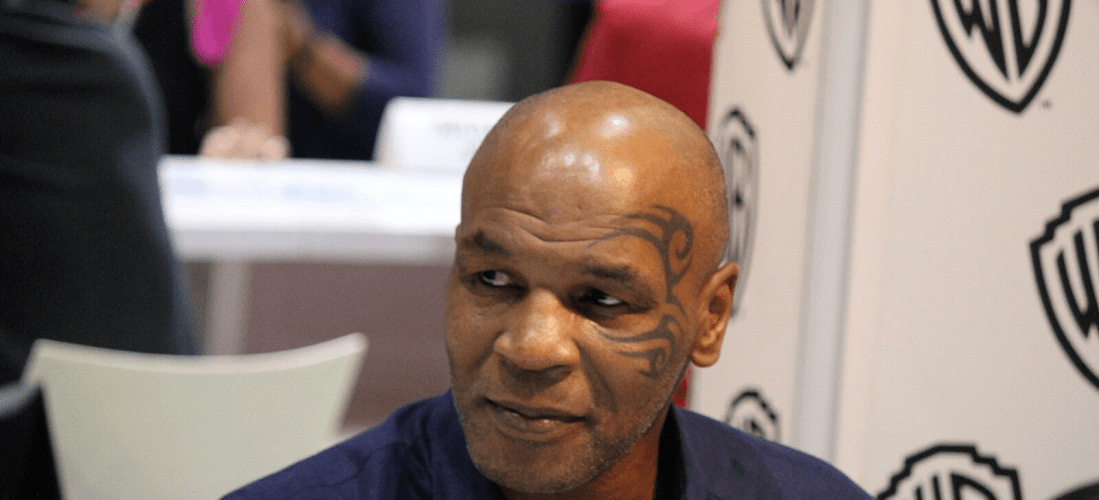
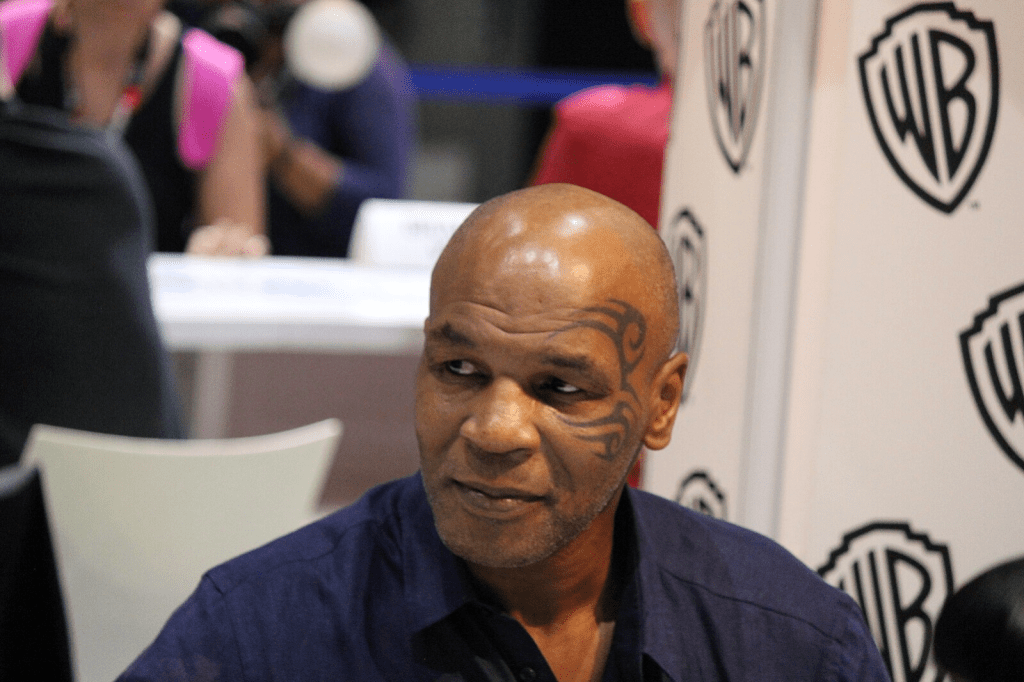
After a four-month delay, tons of hype and a three-episode Netflix docuseries leading up to the event, Jake Paul and Mike Tyson finally stepped up to each other one-on-one in the ring in gloved glory. If you were expecting fireworks, you’re left with a wet Roman candle sputtering two sparks before malfunctioning. Nobody was satisfied. Those who were looking forward to seeing Mike Tyson turn back the clock and knock ‘Fake’ Paul’s head clean off, didn’t end up getting what they wanted, as Tyson landed about 18 punches in total over the course of eight rounds.

The few, and I mean very few, who wanted to see Paul knock out Tyson, didn’t get their wish either, as Paul tapped away at an old man and didn’t exert much force beyond that. Of course, provided you were even able to watch the event live. The Netflix broadcast suffered from all sorts of technical difficulties and buffering problems. At some points, the broadcast turned into a near-slideshow. The livestream was so shoddy, a Florida man is taking Netflix to court over it. 

The response from many people who watched eight, two-minute rounds of two people basically staring at each other, is that the fight was rigged. In the corrupt world of professional boxing, that claim isn’t too far fetched and the sport has a history of fixed fights. Many people believe the results of two bouts between Muhammad Ali (Cassius Clay as he was then known) and Sonny Liston, which spawned one of the most iconic photos in the entire history of the sport, were fixed. More to the point, I don’t think this fight was rigged. At least, not in the way some people are claiming. Many Tyson fans believe that he was simply holding back, throwing fewer punches and missing many opportunities to knock out Paul. 

We’re talking about a 58-year-old man who is way past his prime. From what I can recall, the last performance Tyson gave where he was truly dominant was back in 2003, when he was 36 and still past his prime then. It had been nearly 28 years since he last held a world title since losing the WBA Heavyweight belt to Evander Holyfield in 1996. Not only that, but the medical emergency he suffered that delayed the fight in July, he says nearly killed him. Every boxer is different, but for a slugger like Tyson, his power is generated from rotation and extension of his rear leg, hip rotation, arm extension and the stiffening of his fist upon impact. 

Years before Mike Tyson was the heavyweight champion, the legendary Cus D’Amato began training him for punching power when Mike was just 13 years old, honing his natural quickness to maximize the force behind his punches. He also focused on enhancing Mike’s already formidable natural strength. Tyson, especially during his heyday, became known for his ability to unleash rapid combinations of punches, delivering them with exceptional speed and precision. 

The faster something moves, the more forceful the impact, and Mike’s hand speed was extraordinary for a heavyweight—rivaled by only a rare few in the sport’s history. Tyson at 58 simply can’t replicate this anymore, especially after years of not training and being sick. Tyson looked great in those training videos that we saw in the years leading up to this fight, but that was back when Tyson was healthier and not struggling to do what used to come naturally.

If any part of this was rigged, it would be Jake Paul admitting he was holding back in the fight, saying that he “wanted to give the fans a show, but I didn’t want to hurt someone that didn’t need to be hurt.” I ultimately think Netflix suffered the biggest blow to its reputation, not Tyson or Paul. Sure, they raked in loads of money for what was the most-streamed global sporting event ever with 65 million live concurrent streams and 108 million total live viewers around the world, according to the Netflix release, but by all accounts, it was simply a huge disappointment that hardly anybody will ever want to go back to. Imagine if this fight was a pay-per-view (PPV) and you paid $50-$75 just to watch these two standing around doing nothing. I’d be feeling pretty ripped off, wouldn’t you? If this were scripted or staged, why not script a few knockouts to make it more interesting?

I have a theory as to why people think this fight was staged. Many people just can’t come to grips with the fact that as you age, you become a shell of your former self. I bet any Gen X or older millennial who watched that fight thinks they can beat Jake Paul or any other fighter around the same age as him. They start to become like Balboa in “Rocky VI.” Worry about your skills deteriorating with age, and then take a load-off on that Posturepedic mattress.

Mike Tyson via WikiCommons