Cole Welsh, Editor
After marathon talks between the United States and Iran failed to produce a truce, President Trump ordered a naval blockade of the Strait of Hormuz as its war with Iran drags on. The weekend talks, which were brokered by Pakistan, were aimed at reopening the strait for sea travel and resuming the unfettered flow of oil through it.
In a pair of Truth Social posts, Trump stated that the US military would begin blockading ships entering or leaving the strait and would also intercept any vessel that paid tolls to Iran.
He also emphasized that any Iranian militants who fire on US military or otherwise peaceful ships will be “BLOWN TO HELL.” As the regime relies heavily on oil exports for funding, Trump is hoping that blocking ships as they go to and from Iranian ports will put economic pressure on Iran and encourage them to make a deal.
With China heavily reliant on Iran’s oil exports, Washington also anticipates that such reliance may compel them to intervene in the conflict and encourage their ally to negotiate.
According to US Central Command, which oversees American military forces in the Middle East, the blockade thus far has been successful and insisted “no ships made it past” the American blockade. Six merchant ships were forced to turn around and re-enter an Iranian port on the Gulf of Oman within its first 24 hours.
For now, the Iranian military response has been relatively nonexistent. To the surprise of many, there have been no reports of the Islamic Revolutionary Guard Corps responding in the form of launching drones or deploying fast boats.
The American plan is to interdict vessels as they enter the Gulf of Oman following passage through the Strait of Hormuz. Claiming it is a blockade of Iranian ports and not necessarily the strait itself, the Navy has avoided stopping ships for just passing through.
To identify vessels leaving Iranian ports, the military is relying upon surveillance aircraft, manned aircraft and sea-based surveillance apparatus. Once identified, a radio transmission will be sent notifying any noncompliant ships that they are violating the blockade.
So far, no ships have refused. However, naval forces maintain a wide array of options to respond in cases of noncompliance, including using fighter aircraft and ship-based weapons.
On the diplomatic front, in-person talks between the United States and Iran could resume as early as this week. Trump has been unwavering in his demand for Iran to relinquish its nuclear ambitions entirely, a clear sticking point for the autocratic regime. Other American demands include ending all uranium enrichment, ending funding for all proxy terrorist groups, and fully opening the strait without charging tolls.
However, Iran has shown very little interest in ending the war, having previously threatened “crushing” attacks on the United States and Israel.
With the war entering its second month, the costs have been steep, particularly for Iran. Estimates suggest that Iran has seen over 3,000 people killed since US-Israeli strikes began in February. Thirteen American service members have also been killed, with two more dying of noncombat causes.
Although fighting has temporarily ceased, the two-week ceasefire between the two countries is set to end next week.
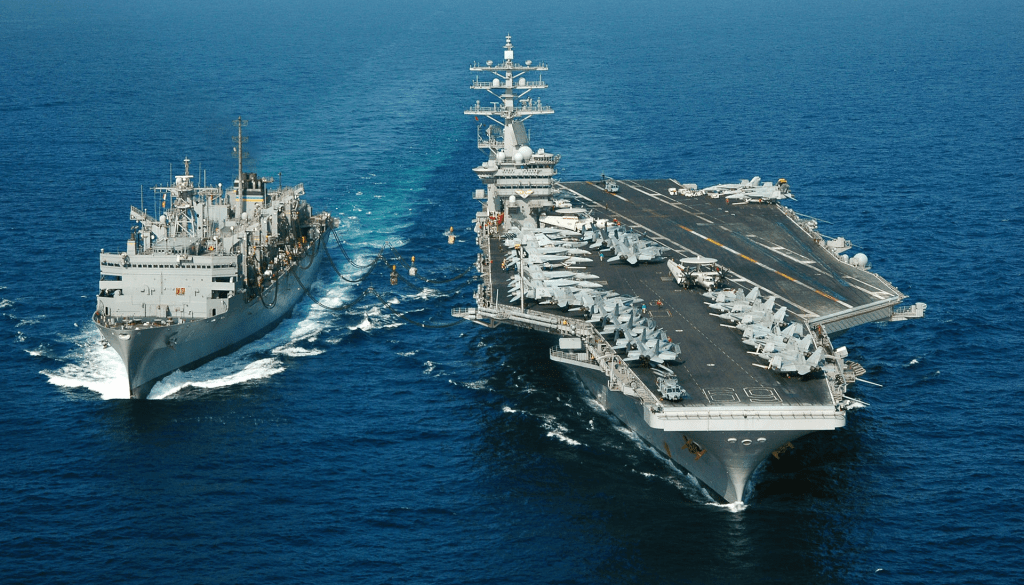
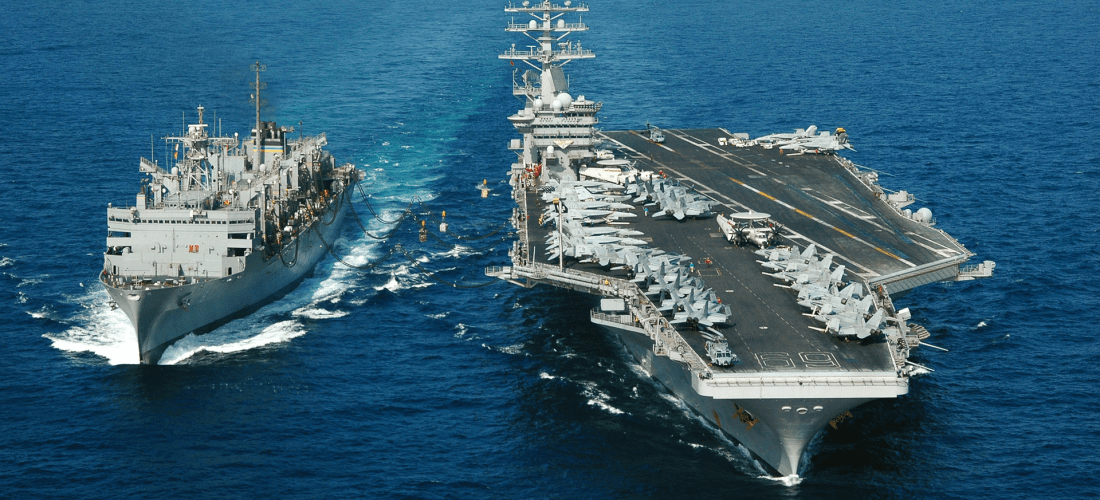
Refusing to back down, the United States maintains a daunting military presence in the region. Along with littoral combat ships and submarines equipped with Tomahawk missiles, 11 destroyers are also deployed in the region. In addition to air bases in countries such as Saudi Arabia and Qatar, two carrier strike groups, the USS Abraham Lincoln and the USS Gerald R. Ford, are also at the ready and able to strike at a moment’s notice if so ordered.
The world will just have to wait and see.