
Michael D’Angelo, Staff

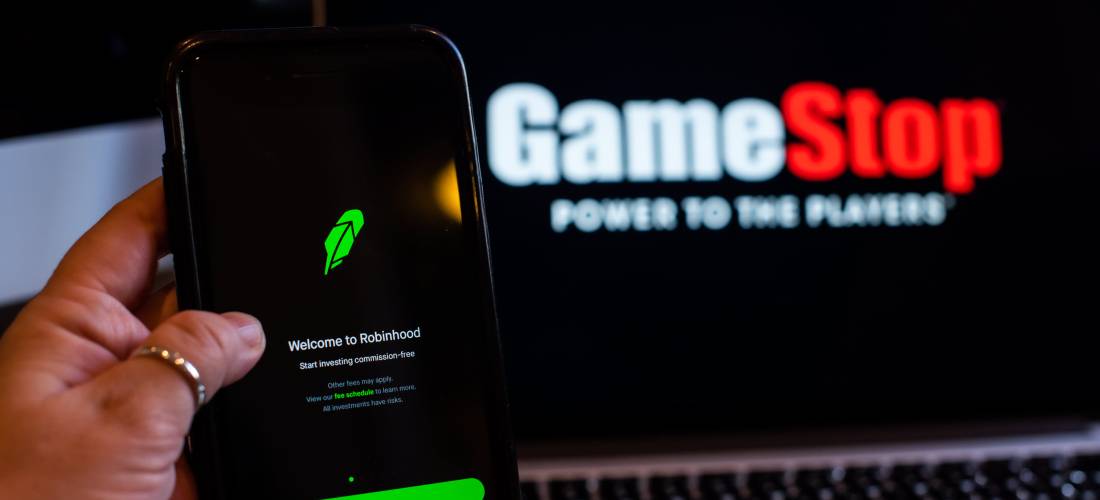
Robinhood can be accessed by retail investors anywhere from their mobile phone. Robinhood boasts giving investors autonomy over their finances with low barriers to entry and nonexistent brokerage fees.
The old English tale of Robinhood has been passed down for generations and describes a story of populism where a legion of men equipped with bow and arrow take from the rich and give to the poor. Fast forward to the 21st century and Robinhood is known as a discount brokerage firm used by many new investors and retail traders. You may have heard in the past few weeks that Robinhood was at the center of the GameStop saga or you caught their Superbowl ad during the game, chances are you have heard of the investing app. The news certainly is filled with Robinhood headlines lately.
Introduced in March 2015, the platform gained popularity with their approach of having no commission fee investing. The story of Robinhood began with Stanford roommates Baiju Bhatt and Vlad Tenev. Both worked on Wall Street for a period of time, designing software, until the two decided they needed a change. They founded Robinhood with the purpose of eliminating barriers for the little guy and democratizing investing. Since Robinhood’s inception, the app now boasts well over 10 million users, but the company has been struggling with a public relations nightmare since the start of the year.
When the pandemic began in March, many people with strong gambling tendencies turned to both the stock market and the internet. They chose Robinhood as their choice of brokerage and they flocked to a reddit forum known as Reddit Wall Street Bets (WSB). Headlines popped up from the Wall Street Journal, Forbes, and, most notably, the Collegian about some of these traders and their impact on the financial markets. Robinhood was picking up some negative publicity at the time with complaints of slow software, minimal customer service support and hidden fees. They were even threatened with a lawsuit surrounding high frequency trading data and hedge funds. In addition, a Robinhood user committed suicide after an in-app glitch showed he was in the red for over $700k. Currently, Robinhood is faced with a pending lawsuit from the individual’s family.
But things went from bad to worse at the start of 2021. Users from Reddit WSB saw that hedge funds were heavily shorting GameStop (GME). Retail investors flocked to reddit and called for many to buy shares into GME. As many bought shares and GME’s stock price flew over $300 a share, Robinhood entered a cash crisis. They ran out of cash to clear trades with the Depository Trust Clearing Corporation (DTCC) and Robinhood changed orders of GME to sell only, after only a few days the stock price declined heavily. In that short period of trading, they were forced to raise $3.4 billion.
The world erupted and many were livid. They took to social media websites like Instagram, Reddit and Tik Tok preaching that Robinhood violated their rights to trade. The Federal Trade Commission (FTC) received more than 100 Robinhood related complaints between Jan. 24th to Feb 2nd and in response to the criticism, Robinhood issued a statement. They described a DTCC clearing issue and then aired a commercial during the Super Bowl promoting their slogan, “We are all investors.” The commercial did very little to help the company and many continued to complain over social media.
With a public relations nightmare on their hands, the company might be forced to postpone their plans to go public in the second quarter, but, as of now, Robinhood is in full swing to go public this year. They are currently valued at $20 billion or more. With the public’s frustration, Robinhood’s future is in question. If Robinhood is to continue on, they must update their customer service, apologize to the angry masses, and make right to achieve change in the financial sector.
dangelom2@lasalle.edu

 The La Salle Collegian