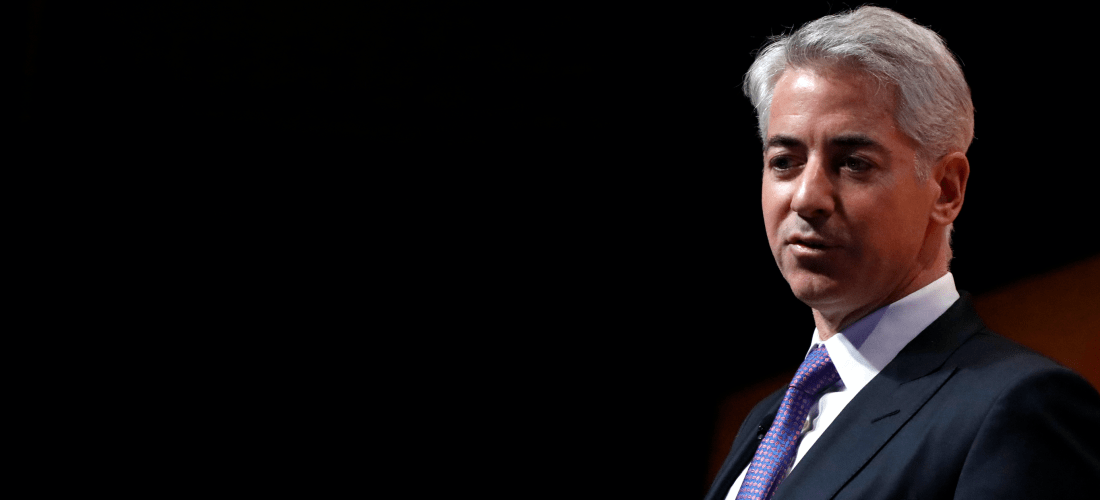
Bill Ackman: famed hedge fund founder and investor, now a SPAC behemoth

Business

Bill O’Brien, Editor

businessinsider

Ackman was ridiculed for turning a $27 million hedge position against markets into $2.6 billion. Just a week before, he had been interviewing on media outlets warning that “Hell is coming” amid COVID-19 concerns.

Few figures have stirred as much buzz in the financial services industry as Bill Ackman. The self-proclaimed activist investor, or contrarian investor as known by others, has been a leader in financial services since 1992 when he founded the hedge fund, Gotham Partners. It was the same year he received his MBA from Harvard Business School. Although Gotham Partners did not pan out as Ackman had probably hoped, his career in asset management would continue to flourish with Pershing Square Holdings, the hedge fund he founded in 2003 and currently manages.

Ackman is currently the CEO and founder of Pershing Square Capital Management, a New York-based hedge fund which, according to SEC filings, boasts private funds with minimum subscriptions between $1 million and $5 million. He’s had a lot of success in the hedge fund industry with a highly profitable and publicized market exit from Wendy’s that netted his investors billions in returns. More recently, Ackman opened hedge positions against financial markets leading up to the COVID-19 pandemic. Ackman closed out the hedge positions for over $2 billion on March 23rd, 2020 following steep market downturns.  The position originally cost a little less than $30 million to take on.

The success of the hedge fund manager has come with a lot of notoriety. Ackman was heavily criticized for a failed short position and a negative media campaign that landed him in hot water with regulators. Pershing Square Holdings also garnered huge losses over a 6-year period until he finally closed out the position in 2018 following an unbridled rise in Herbalife shares. The failed short resulted in losses for investors, but was heavily scrutinized for the negative media campaign Ackman waged against Herbalife that many saw as a means to manipulate the share price of the stock, an issue that has recently been at the forefront of Wall Street criticisms today.

In spite of great shortcomings and even greater successes, Ackman is as active as ever in financial markets and has recently decided to try his hand with SPACs or “Special Purpose Acquisition Companies.” The Collegian covered the upward trend in SPACs in its Sep 23 issue, and they have continued to be on the rise since. SPACs are somewhat known as “blank check companies” because they raise funds on the public markets without having any operational costs and expenses to start with. Their value is derived from investors anticipating the SPAC to merge with or acquire a privately-held company (target company) using the capital it raised from public markets, inherently bringing the target company to public markets in the process. 

Bill Ackman’s Pershing Square Tontine Holdings (NYSE: PSTH) has had the most valuable SPAC initial public offering to date, raising $4 billion from public markets and an additional $1 billion from Ackman’s Pershing Square funds. That $5 billion in available capital to make acquisitions can potentially mean approximately $25 billion in acquisition capital for the SPAC depending on how aggressive a leveraged buyout strategy Ackman chooses to employ.

Pershing  Square Tontine Holdings identifies its target company parameters on their website, “We will prefer targets that have low sensitivity to macroeconomic factors, with minimal commodity exposure and/or cyclical risk. We are willing to accept a high degree of situational, legal, and/or capital structure complexity in a business combination if we believe that the potential for reward justifies this additional complexity, particularly if these issues can be resolved in connection with and as a result of a combination with us.” Also notable, among other parameters, in their acquisition criteria for a target company is “formidable barriers to entry” or “‘wide moats” around their business and “low risks of disruption due to competition, innovation or new entrants.”

The goals of Ackman’s SPAC are nothing short of ambitious, but investors continue to put their faith in Ackman. After pricing at $20 per share during its IPO, Pershing Square Tontine Holdings, still without a business combination, is trading at $29.91 in secondary markets, yielding investors 49.55% since IPO. The premium can be partially accredited to recent buzz surrounding the SPAC potentially finding a target company, market speculation that has not been confirmed yet. Ackman has defended PSTH trading at a premium in Pershing Square’s 2020 semiannual report to shareholders “PSTH trades at a premium to its cash NAV because the market believes that it is probable that we will find an attractive merger candidate and complete a transaction that creates significant shareholder value.”

All of this may be true, but one can be certain PSTH will not be able to retain its value without an acquisition target. Speculation around an impending deal has risen significantly, and some are expecting an announcement when PSTH’s parent company, Pershing Square Holdings, holds its annual investors presentation on Feb 18 at 9:00AM. Market watchers will certainly be keeping their ear to the ground for the next eight days to see what direction Ackman takes his SPAC, if any.

obrienw4@lasalle.edu
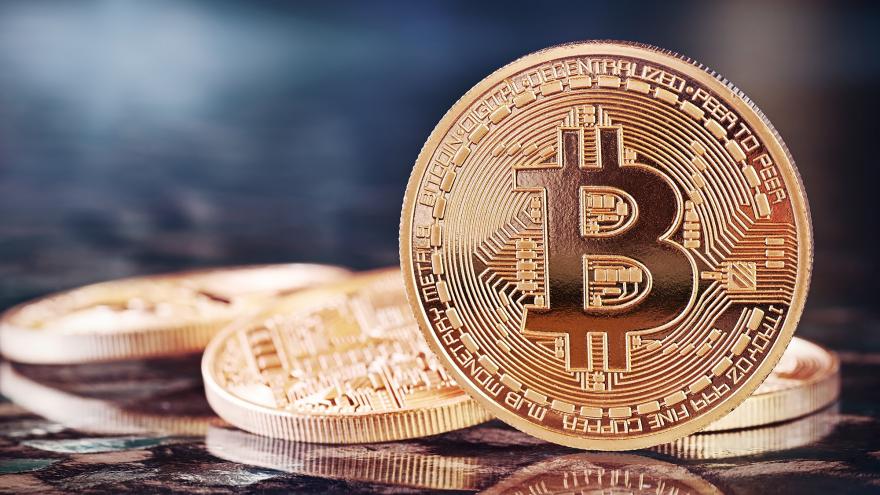
Making Sense of Bitcoin: a Beacon or a Bubble for Investors?

Business

Michael D’Angelo, Staff

ABC7

Bitcoin’s meteoric rise coupled with uncertainty around where its value derives from as an asset has some analysts referring to it as a “faith-based” asset.

Bitcoin has maintained a strong presence in recent financial headlines. Some popular headlines mention an individual who lost his password to access millions of dollars’ worth of the cryptocurrency, bitcoin surging to an all-time high past $35,000 or financial pundits declaring bitcoin as the “next gold.” Certainly, if you are a retail or an institutional investor, the asset’s massive gains have certainly caught your attention.  

Bitcoin is a cryptocurrency which currently has the highest market value of any alternative coins. Bitcoin has an increasingly volatile trading history since its original inception and Bitcoin was created in 2008 by a mysterious figure known as Satoshi Nakamoto. Bitcoin operates as a cryptocurrency and the original goal was for individuals to make online purchases without a paper trail, much like if one uses physical cash in the real world to purchase something. Nakamoto designed the idea of bitcoin as a decentralized digital currency that anyone in the world can store on their computer with a public ledger of transactions. 

In the beginning, bitcoin was utilized for people to make illegal transactions online via the dark web. As the price gradually increased and then declined over the years, many speculators have jumped on the coin. Many bitcoin bulls view the coin as an alternative to gold and the coin serves as a hedge against inflation. 

The first Bitcoin transaction occurred in 2009 and Bitcoin was used shortly in 2010 for a real-world transaction when an individual utilized 10,000 Bitcoins to buy two pizzas in the state of Florida. Bitcoin’s price has fluctuated widely and since its inception the coin has grown over 8,500 percent. Bitcoin experienced a major bubble burst in 2017. Many professionals attribute this burst to an insurgence of billions of alternate coins flooding the cryptocurrency market. These new coins, known as the Initial Coin Offerings (ICOs), shaked the market. As of recent, many institutional investors entered the market. Square and MicroStrategy purchased Bitcoin while Fidelity and PayPal allowed the consumer to buy cryptocurrency on their websites. 

In addition to Bitcoin’s appeal to various investors, American financial regulators have taken an interest in the coin. Joe Biden’s Treasury nominee, Janet Yellen, stated on Tuesday that cryptocurrency transactions were used mainly for illicit financing. She is highly concerned with the relationship of Bitcoin and terrorism financing. 

As more and more people jump into Bitcoin and institutional investors dive in as well, they are only fueling a potential bubble just waiting to burst. Bitcoin is a classic example of the greater fool theory at play. The greater fool theory states that it is possible to make money by purchasing an asset then selling at a later date to another individual known as a “greater fool.” Retail investors are just diving into bitcoin to not miss the price increase. As the price grows, many do not want to be left out from the gains achieved in the past.

The current value of Bitcoin has no intrinsic value. Bitcoin is backed by nothing. In comparison to the American dollar, the dollar is backed by the full faith and credit of the American government. Bitcoin can also be debated on the grounds of inflation. Many will argue that the American dollar is becoming weaker and the Fed has allowed “too much money-printing.” This argument has been around for close to three decades and is not based in any factual evidence. Inflation is not a true primary concern amongst economists. For example, the Consumer Price Index (CPI), which is an average of a basket of prices for consumer goods and services, has not exceeded more than 5.6 percent since 2000 for all items. Since 2010, the CPI has not exceeded 4 percent for all items

As the price of Bitcoin will only increase, investors with all types of financial assets need to take a back seat and question the future of cryptocurrency and the potential of a bubble just waiting to burst. After all, they do say history repeats itself.

dangelom2@lasalle.edu

Special Purpose Acquisition Corporations: Innovation in IPO Markets

Business, Uncategorized

Bill O’Brien, Editor

pitchbook

Special Purpose Acquisition Companies (SPACs) have been fueling IPO markets in recent months, generating buzz around the investment vehicles that have been around since the 1980’s.

There are sharks in the water in today’s markets, and no, I don’t mean that there are savvy investors with gills making trades from coves below sea level. In recent years, SPACs, or special purpose acquisition companies have taken on a much larger role in market participation and the initial public offering (IPO) scene than they have in previous years. SPACs themselves are actually quite an intriguing investment vehicle. Special purpose acquisition companies, essentially, pool money from investors, whether it’s from institutions or the general public, and use that pooled capital to acquire a stake within a company and bring it to the public market through a merger. SPACs provide companies with an alternate and “fast-tracked” means of gaining access to public funds.

Investment bank Goldman Sachs has had a lot to say about SPACs in recent months. Olympia McNerney, a member of Goldman’s equity capital Markets and alternative capital markets group in New York, spoke on the bank’s podcast, “Exchanges at Goldman Sachs” to talk about the trend. “Right now there are about 100-plus SPACs that are on the hunt for acquisition and to frame that in terms of dollars, that’s about $30 billion dollars of capital on the hunt to bring companies to bring companies into the public market.” That figure is further amplified by SPACs proclivity to make leveraged acquisitions so, in Olympia’s words, “that $30 billion, think of it as probably $150 of market cap that SPACs are on the hunt for, so a very very large number.” In discussing what is driving SPAC popularity with investors, Olympia discusses a number of reasons.

Evolution in the “profile” of the investment vehicle over “not just the last 2 to 3 years” but even over the last “6 to 12 months,” growing comfortability among institutional investors in understanding the economics of SPACs and SPAC economics becoming “more friendly” for the market makers invested in them and the companies looking to merge with them are just a few. Also discussed in Goldman’s podcast were the unique pros to working with a SPAC instead of having an IPO for a company. A potentially faster path to public markets, potentially more certain valuations around the company, and potentially more proceeds than an IPO could deliver, especially in today’s climate are pros Olympia cited as well

To Olympia’s point, SPACs are gaining traction in the world of high finance. Bill Ackman, founder of hedge fund Pershing Square Capital Management and notorious Valeant Pharmaceuticals investor, founded his own SPAC this year, Pershing Square Tontine Holdings. It is currently the largest SPAC ever founded at $4 billion. The popularity is not surprising, as the IPO market experienced a lull due to pandemic-related market volatility, and we are not out of COVID-19 waters yet. SPACs are inherently more resilient to broad market sentiment considering the investors they attract, so they can create great opportunities for corporations looking to go public during an economic downturn.

Special purpose acquisition companies are becoming more popular in the investment community and are innovative instruments in the IPO market. What were once transactions that were exclusive to private equity funds are now open to the general public, along with the prospect of the lucrative returns they can bring. In a world with increasingly suppressed yield fixed income markets and high price-to-earnings equity markets, these kinds of instruments will likely become more popular to both the institutional investor and retail investor alike.

obrienw4@lasalle.edu