Testing the mettle: banks to undergo arduous stress tests by Federal Reserve

Business

Elizabeth McLaughlin, Staff

ft.com

The Federal Reserve is subjecting large banks to routine stress tests in order to measure their ability to cope with a worsening recession.

On Friday, Feb. 12, the Federal Reserve Board released scenarios for its 2021 bank stress tests. The tests are designed to measure the resilience of large banks by estimating their loan losses and capital levels. Last year, banks performed relatively well under the stress tests, and the Fed ultimately placed restrictions on bank payouts to preserve the strength of the banking sector. Large banks are subject to the stress test and some smaller banks have the option to opt-in to the test over a longer period of time. The banks that are required to take part in the upcoming stress test are Capital One Financial (COF), Citigroup (NYSE:C), Credit Suisse (NYSE:CS) Holdings USA, DB USA (NYSE:DB), Goldman Sachs (NYSE:GS), HSBC (NYSE:HSBC) North America Holdings, JPMorgan Chase (NYSE:JPM), Morgan Stanley (NYSE:MS), Northern Trust (NASDAQ:NTRS), PNC Financial (NYSE:PNC), State Street (NYSE:STT), TD Group (NYSE:TD) US Holdings, Truist Financial (NYSE:TFC), UBS Americas (NYSE:UBS), U.S. Bancorp (NYSE:USB) and Wells Fargo (WFC). This upcoming test will be the third stress test in the last 12 months.

The test comes in two parts. The first is the Dodd-Frank Act Stress Test, which analyzes a bank’s balance sheet performance under hypothetical scenarios using a standard capital management plan. The second part is the Comprehensive Capital Analysis and review, which subjects the bank to the same hypothetical scenario, but this time, under their own capital management plan. The test lasts nine consecutive quarters.

The hypothetical recession scenario begins in the first quarter of 2021 and places significant strains on commercial real estate and corporate debt. There will be a severe commercial real estate price decline in this stress test compared to the past three tests. There is also a global market shock component that evaluates banks’ abilities to trade under pressure. Moreover, the unemployment rate will rise by four percent, reaching a peak of 10.75 percent in Q3 2022. This year, the stress test is more severe than usual, given the COVID-19 pandemic and its harrowing effects on the economy. The 2020 stress tests featured a decline in GDP by 9.9 percent and 5.9 percent, as well as peak unemployment rates of 10.0 percent and 12.5 percent. The results of the stress test will be announced by the Federal Reserve on their website by June 30.

mclaughline7@lasalle.edu
Ant Group’s world record-setting IPO in Shanghai and Hong Kong put on halt by Chinese regulators

Business

Bill O’Brien, Editor

“There’s a saying in China: ‘The tallest nail gets hammered down,'” said Duncan Clark, author of “Alibaba: The House that Jack Ma Built” and founder of investment advisory firm BDA China.

India Today

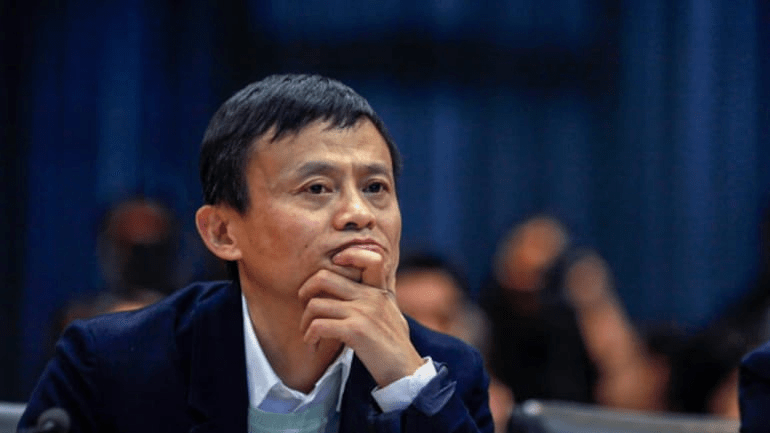
Jack Ma, pictured above, is not formally associated with the fintech company, Ant Group, but is the company’s controlling shareholder. Analysts are putting blame on the ecommerce mogul for recent statements criticizing Chinese regulators.

As U.S. markets whipsawed for the last 24 hours amid Election Day chaos, a leading fintech company in China experienced a ‘day of reckoning’ of sorts. The unicorn fintech company, Ant Group, was on track to set a record in raising capital from public markets with a $34.5 billion dollar IPO. Ant Group offers numerous services to its consumers, which include mobile payments services, wealth management, a third-party credit rating system and a mutual aid platform which “provides a basic health plan to protect participants against 100 kinds of critical illnesses.”

The company has made strides outside of the country into Europe as well. Ant Group’s mobile payment platform, Alipay, has existing relationships with numerous European digital wallets apps in Finland, Norway, Spain, Portugal and Austria. The fintech company has made headway in Britain as well, acquiring international money transfer services provider, WorldFirst, for $700 million in 2019 and reaching an agreement with Barlcaycard that enabled British retailers to accept Alipay in their stores.

The fintech company has been making incredible progress, which is why it is unsurprising that Chinese regulators yanking their IPO sent Alibaba, one-third shareholder of Ant Group, reeling. Alibaba, trading off a high of $310.73 early Monday evening (4:00P EST), fell 7.8 percent to $286.31 amid the news before rebounding to around $298.40 this Wednesday afternoon.

Analysts are pointing fingers at the controlling shareholder of the company and founder of Alibaba, Jack Ma, who recently gave a speech criticizing Chinese regulators for their risk aversion. “What we need is to build a healthy financial system, not systematic financial risks,” the Ant Group co-founder said at a conference in Shanghai. “To innovate without risks is to kill innovation. There’s no innovation without risks in the world.” He also highlighted the need for systemic reform in China’s financial sector, describing it as “a legacy of the Industrial Age.” Ma continued, saying, “we must set up a new one for the next generation and young people. We must reform the current system.”

Chinese regulators responded shortly after as if Ma had spit in their face, bringing Ant Group executives and Ma in for “regulatory interviews” which resulted in regulators deciding to suspend the fintech company’s initial public offerings in Shanghai and Hong Kong and prompting Ant Group to release the following statement to investors:

“Ant Group Co., Ltd. (the “Company”) announces that it was notified by the relevant regulators in the PRC today that its proposed A Share listing on the STAR Market is suspended as the Company may not meet listing qualifications or disclosure requirements due to material matters relating to the regulatory interview of our ultimate controller, our executive chairman and our chief executive officer by the relevant regulators and the recent changes in the Fintech regulatory environment. Consequently, the concurrent proposed H Share listing on the Main Board of The Stock Exchange of Hong Kong Limited shall also be suspended. Further details relating to the suspension of the H Share listing and the refund of the application monies will be made as soon as possible.” (ANT GROUP CO., LTD.)

Ant Group has made it clear it still intends to launch an IPO, preferably before the Chinese New Year, but analysts suspect they may need to do so under stricter capital requirements that will be set by the Chinese regulatory authorities or that it may need to sell its microlending business to do so.