SPAC markets erase 2021 gains amid possible regulatory headwinds

Business

Bill O’Brien, Editor

“There may be advantages to providing greater clarity on the scope of the safe harbor in the PSLRA (Private Securities Litigation Reform Act). Congress could not have predicted the wave of SPACs in which we find ourselves. It may be time to revisit these issues.” – Jon Coates, Acting Director, Division of Corporation Finance (SEC)

Coindesk

The SEC’s Acting Director of Corporation Finance, Jon Coates, has called on Congress to reign in SPACs and tighten regulatory disclosure requirements on the “blank check” companies.

What used to be a niche investment vehicle that served as an alternative for privately-held companies to enter public markets is now regarded as a market craze, a change that has taken place amid the historic, pandemic-induced 2020 market crash. Companies looking to go public partnered with SPACs to take advantage of markets flush with capital but volatile amid the backdrop of the coronavirus pandemic. Unfortunately though, SPAC moguls, like Bill Ackman, who the Collegian covered in its Feb 10 issue, are learning that, like all good things, the SPAC craze must too come to an end. 

SPAC markets have taken a sharp downturn in recent months, and even more trouble is on the horizon due, in large part, to heightened regulatory scrutiny for the investment vehicle. John Coates, the SEC’s Acting Director, Division of Corporation Finance, released a statement on the Securities and Exchange Commission’s (SEC) website sounding alarms on the SPAC surge. The SEC’s statement, SPACs, IPOs and Liability Risk under the Securities Laws, contained verbiage that has likely contributed to the recent downturn in SPAC markets. The SEC is now eyeing SPACs for the potential they have to mislead investors as they have significantly less disclosure requirements than a traditional IPO would have.

  In the statement, Coates discusses how 25 years ago, the path to public markets for a company was fairly simple and one-tracked and, with the innovations markets have today, there should be regulation to follow along with it. “With all these changes, the appeal of understanding and developing law around economic substance over form may be greater than ever.” Coates talks about how initial public offerings are a “distinct and challenging moment for disclosure” for companies undergoing them for good reason. “An IPO is where the protections of the federal security laws are typically most needed to overcome the information asymmetries between a new investment opportunity and investors in the newly public company,” says Coates.

Coates ends the statement by calling for legislative bodies to consider imposing tighter requirements that would target the second phase of a SPAC transaction, otherwise known as the “de-SPAC,” where a target company is acquired and original investors in the SPAC typically unload their shares into the secondary market. Coates calls on authorities to treat the de-SPAC transaction as the “real IPO.” “It is the de-SPAC as much as any other element of the process on which we should focus the full panoply of federal securities law protections — including those that apply to traditional IPOs.” Heightened regulatory pressures have further depressed SPAC markets that have already been reeling in recent months. The proposed regulation could increase disclosure costs for the blank-check companies which already face tough competition from private equity firms when hunting for target companies.

A SPAC index across 210 different companies, made up of 60 percent public companies derived from SPACs and 40 percent pre-IPO SPACs, “Indxx SPAC & NextGen IPO Index,” has fallen 24.87 percent since the SPAC market’s February highs. New accounting guidelines issued by Jon Coates and Acting Chief Accountant of the SEC, Paul Munter, have helped to grind SPAC markets to a halt as well. The statement, which read, “OCA (Office of the Chief Accountant) staff concluded that – the tender offer provision would require the warrants to be classified as a liability measured at fair value, with changes in fair value reported each period in earnings,” has the potential to impact newly issued SPACs and companies that have already gone public through a SPAC transaction. Proponents of the investment vehicle are eyeing financial regulators to see what moves they will make to tighten regulations around the investment vehicle. Eyes will surely be on the SEC in the coming months to see how they choose to advance their agenda as laid out by John Coates.

Testing the mettle: banks to undergo arduous stress tests by Federal Reserve

Business

Elizabeth McLaughlin, Staff

ft.com

The Federal Reserve is subjecting large banks to routine stress tests in order to measure their ability to cope with a worsening recession.

On Friday, Feb. 12, the Federal Reserve Board released scenarios for its 2021 bank stress tests. The tests are designed to measure the resilience of large banks by estimating their loan losses and capital levels. Last year, banks performed relatively well under the stress tests, and the Fed ultimately placed restrictions on bank payouts to preserve the strength of the banking sector. Large banks are subject to the stress test and some smaller banks have the option to opt-in to the test over a longer period of time. The banks that are required to take part in the upcoming stress test are Capital One Financial (COF), Citigroup (NYSE:C), Credit Suisse (NYSE:CS) Holdings USA, DB USA (NYSE:DB), Goldman Sachs (NYSE:GS), HSBC (NYSE:HSBC) North America Holdings, JPMorgan Chase (NYSE:JPM), Morgan Stanley (NYSE:MS), Northern Trust (NASDAQ:NTRS), PNC Financial (NYSE:PNC), State Street (NYSE:STT), TD Group (NYSE:TD) US Holdings, Truist Financial (NYSE:TFC), UBS Americas (NYSE:UBS), U.S. Bancorp (NYSE:USB) and Wells Fargo (WFC). This upcoming test will be the third stress test in the last 12 months.

The test comes in two parts. The first is the Dodd-Frank Act Stress Test, which analyzes a bank’s balance sheet performance under hypothetical scenarios using a standard capital management plan. The second part is the Comprehensive Capital Analysis and review, which subjects the bank to the same hypothetical scenario, but this time, under their own capital management plan. The test lasts nine consecutive quarters.

The hypothetical recession scenario begins in the first quarter of 2021 and places significant strains on commercial real estate and corporate debt. There will be a severe commercial real estate price decline in this stress test compared to the past three tests. There is also a global market shock component that evaluates banks’ abilities to trade under pressure. Moreover, the unemployment rate will rise by four percent, reaching a peak of 10.75 percent in Q3 2022. This year, the stress test is more severe than usual, given the COVID-19 pandemic and its harrowing effects on the economy. The 2020 stress tests featured a decline in GDP by 9.9 percent and 5.9 percent, as well as peak unemployment rates of 10.0 percent and 12.5 percent. The results of the stress test will be announced by the Federal Reserve on their website by June 30.

mclaughline7@lasalle.edu

GameStop and Robinhood: Power to the investors

Business

Elizabeth McLaughlin, Staff

CNBC

GameStop stock reached an all-time high of $492.02/share on Jan. 28, 2021, putting Wall Street investors at risk of losing millions on shorts.

In January of 2019, GameStop (GME) was trading at $15. By January 2020, less than $5 per share. Shorting the stock of a company that becomes increasingly obsolete as we continue to redefine the digital age is widely regarded as a smart investment; that is why a lot of Wall Street investors felt confident in shorting GME. But on Jan. 28, 2021, GameStop reached an all-time high of $492.02—and those investors were taking on hemorrhaging losses. Who do they have to blame for initiating their downfall? Users from a Reddit forum called r/WallStreetBets.

These users conspired to drive up share prices of fledgling companies, yielding them significant profits while simultaneously stealing profit from Wall Street investors. When put that way, it sounds Robin Hood-esque. It then follows that these users waged their war via the online trading platform, Robinhood. This app aims to “democratize finance” by enabling anyone to buy and sell stocks and other securities. It was developed by two Stanford grads who built their own finance companies where they sold trading software to hedge funds. The app, which is designed to incentivize trading, makes trading simpler than ever. Robinhood transplants the stock market from the stuffy, befuddling environment of a traditional brokerage firm to your own personal smartphone. When a user makes a trade, an animation of confetti congratulates them, nudging them to keep trading. Robinhood’s design and objectives, combined with the economic effects of the pandemic, have prompted nascent investors to try their hand at the stock market. In the first quarter of 2020, Charles Schwab, TD Ameritrade, Etrade and Robinhood — the major online brokers — saw new accounts grow as much as 170 percent. The ease at which one can trade stocks is what allowed a group of Reddit users to wage an expensive attack on Wall Street.

Those on r/WallStreetBets started a trading frenzy, driving GME up 134 percent. On Jan. 11, GameStop announced three new directors to its board whose goals were to reposition GameStop in the modern video game retail environment; to save it from going under. For this reason, GME stock began to rise modestly. But once Redditors got a hold of it, its price rose so rapidly that they triggered automatic trading halts designed to stem market volatility.

Wide price swings and heavy volume fluctuations should prompt self-regulating organizations like the Nasdaq to take certain precautionary measures. But a bunch of lower-to middle-class citizens who decide to capitalize on financial literacy in any way they can — through a free subreddit rather than a pricey stock broker, for example — deserve access to the free market. Is this a battle between populists and institutions? Some of these “populists” have criticized those in the financial sector who have profited off of the coronavirus pandemic. The phrase “eat the rich” is quickly becoming a defining cultural statement; a memetic imitation of the frustration regarding 21st-century wealth inequality. Robinhood’s decision to restrict trading, effectively siphoning off profits from the everyman in favor of Wall Street hedge funds, is controversial.

Robinhood faces criticism on their trading restrictions not only from slighted day traders on Reddit, but also from Democratic and Republican politicians as well as the Securities and Exchange Commission (SEC). On Jan. 29, the commission released a statement that they will be investigating the situation with GameStop and that it will “closely review actions taken by regulated entities that may disadvantage investors or otherwise unduly inhibit their ability to trade certain securities.” Despite this, the Fed is not likely to get involved in the frenzy. For one thing, market fluctuations associated with GME, AMC and other similar stocks are not likely to impact the broader market. David Beckworth, an economist at George Mason University, said that fallout from GME means that “people would lose equity, but it wouldn’t lead to the problems of homes financed with mortgages and exotic mortgage securities.” In other words, the Fed has bigger fish to fry. Additionally, raising interest rates to change people’s expectations about the market would yield “a very high likelihood of causing a recession,” says Adam Posen, economics of the Peterson Institute for International Economics. “On the other hand, if you raise interest rates quite a bit, you are not by any means assured that you would pop the bubble.” 

The SEC promises to investigate Robinhood’s actions; politicians continue to tweet angrily at Robinhood executives and their cohorts; the Fed can’t and likely won’t do much. So what can be done? The SEC could evaluate its leverage and reporting requirements on firms like Robinhood. Doing so would protect retail investors who serve as the app’s product, not its users. Robinhood employs an order flow payment model — they sell accumulated trading histories of retail clients to earn a substantial amount of its revenue in lieu of commissions. “On top of that, trades are executed in dark pools, which lack transparency and regulatory oversight,” said a representative from the International Financial Law Review. If their goal is really to empower “the next generation of investors to take charge of their financial futures,” then it should allow those who use it to execute the trades they want, even if Wall Street hedge funds lose some money and have to reevaluate their trading strategies. On the evening of Feb. 1, Robinhood released a statement saying that they “didn’t want to stop people from buying stocks and [they] certainly weren’t trying to help hedge funds.” Whether or not that is true, one thing remains clear: these disgruntled Wall Street investors simply have to learn how to adapt.

mclaughline7@lasalle.edu

Janet Yellen Confirmed as Next United States Treasury Secretary

Business

Elizabeth McLaughlin, Staff

The Washington Post

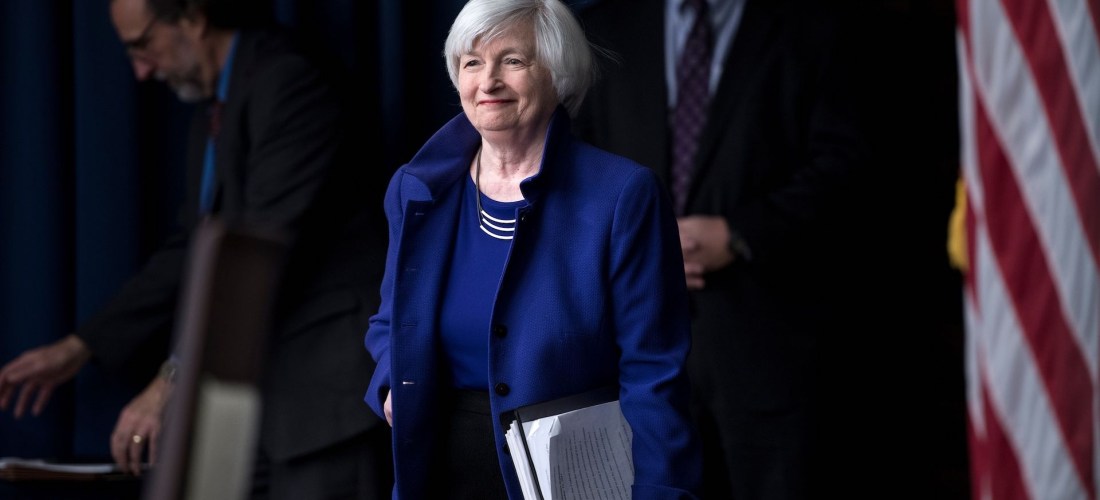
Janet Yellen, pictured above, was recently confirmed by the Senate in a bipartisan, 84-15 vote, making her the 78th Secretary of the US Treasury and first woman to hold the position.

She got her undergraduate degree in Economics from Brown University and then a PhD in the same field from Yale. From there, she taught economics as a professor at Harvard. After that, she researched international monetary policy as an economist with the Federal Reserve’s Board of Governors. She taught at London School of Economics and University of California, Berkeley. She was confirmed unanimously by the Senate to chair the Council of Economic Advisers under Bill Clinton. Then, she became the president and CEO of the Federal Reserve Bank of San Francisco, as well as a voting member of the Federal Open Market Committee. From there, she graduated to the vice chair of the Federal Reserve Board of Governors and eventually the chair of the Federal Reserve — the first female to hold that position. As if that weren’t enough, she became a distinguished fellow in residence at the Brookings Institution. She holds nine honorary degrees ranging from a doctorate in science to a doctorate in philosophy. Her name is Janet Yellen, and her most recent accomplishment to be added to an already long list is being confirmed as the newest secretary of the United States Department of the Treasury.

Janet Yellen is the first female treasury secretary and the first person ever to lead the three most powerful economic bodies in the United States government: the Treasury Department, the Federal Reserve, and the White House Council of Economic Advisers. She was confirmed by the Senate on Jan. 25 in a bipartisan vote of  84-15. In her role as Fed chair, Yellen was well-liked by both Democrats and Republicans. Her ability to appeal to both sides of the aisle will likely bode well for the Biden administration, which begins amidst unprecedented partisan tension.

Yellen is a Keynesian economist and considered by many to be a dove, which is another way of saying she is generally more concerned with unemployment than with inflation. She received criticism for keeping interest rates too low for too long in her capacity as chair of the Federal Reserve. Some of her opponents admit that she can act more as a hawk by hiking interest rates if necessary.

As Yellen steps into her role as treasury secretary, she inherits a hefty to-do list: propose and pass another fiscal stimulus bill, advise President Biden on carbon tax policy, maintain the dollar as the world’s international reserve currency, provide insight on long-term economic recovery post-Covid-19…the list goes on. Some of these issues may appear more immediately pressing than others — Americans have been waiting months for much-needed and adequate stimulus. Regardless, Yellen will play a key role in bolstering a floundering economy.

On Jan. 20, Yellen appeared before the United States Senate Committee on Finance to persuade lawmakers to pass President Biden’s $1.9-trillion Covid-19 relief plan. The plan includes increasing the minimum wage and expanding family and medical leave — two policies that do not have strong Republican support. Yellen believes that “we have a long way to go before our economy recovers,” so Congress must “act big” to support millions of struggling American families.

Another item on Yellen’s agenda is climate action. For years, Yellen has opined that climate change poses a risk to global financial stability indicating that she will “act big” on climate action in her role as treasury secretary. Her support for a carbon tax goes all the way back to her time as chair of the White House Council of Economic Advisers under President Bill Clinton. In addition, she co-founded a nonpartisan, international think tank called the Climate Leadership Council (CLC), which advocates for a carbon tax of around $40 a ton and increases 5 percent each year. In turn, this tax would filter back into American pockets in order to offset the costs of increased energy prices. Moreover, the CLC advocates for penalties on carbon-intensive products in the form of border-adjustable taxes on imports. The plan has drawn some criticism from progressive climate activists and groups and, perhaps deservingly so; ExxonMobil and Shell were quick to sign on as “founding corporate members” of the plan. Beyond that, Yellen plans on pushing for emissions reductions. She does not believe that a carbon tax alone is enough to address climate change and ensure global financial stability. In her capacity as treasury secretary, Yellen could establish a national green bank to encourage investment in sustainable infrastructure. She could also pressure international financial institutions to divest from fossil fuels.

Yellen’s bipartisan confirmation by the Senate represents a marked shift in the political and economic cultures we have grown accustomed to for the past four years. An exceptionally qualified expert with a robust resume has been appointed to a cabinet-level position with support from both parties. Her appointment is uncontroversial, expected, and comforting; three adjectives we could all use a little more of these days. The only thing lengthier than her impressive curriculum vitae? Her to-do list.

mclaughline7@lasalle.edu