Making Sense of Bitcoin: a Beacon or a Bubble for Investors?

Business

Michael D’Angelo, Staff

ABC7

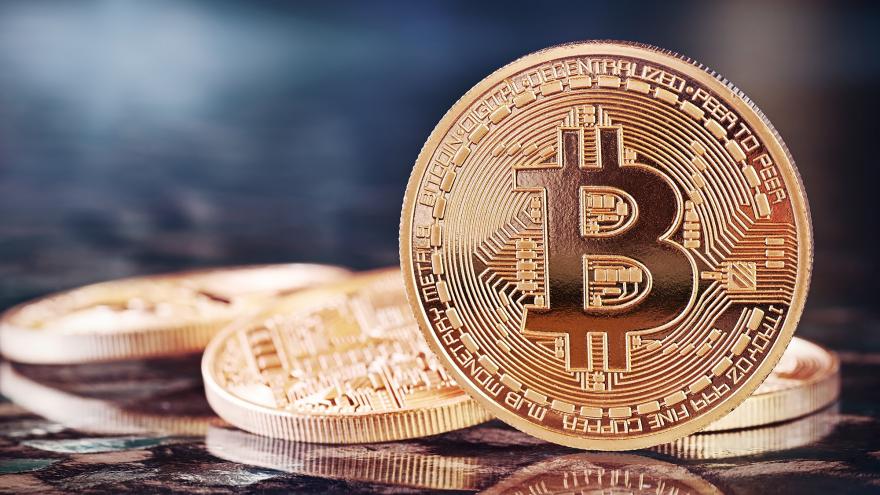
Bitcoin’s meteoric rise coupled with uncertainty around where its value derives from as an asset has some analysts referring to it as a “faith-based” asset.

Bitcoin has maintained a strong presence in recent financial headlines. Some popular headlines mention an individual who lost his password to access millions of dollars’ worth of the cryptocurrency, bitcoin surging to an all-time high past $35,000 or financial pundits declaring bitcoin as the “next gold.” Certainly, if you are a retail or an institutional investor, the asset’s massive gains have certainly caught your attention.  

Bitcoin is a cryptocurrency which currently has the highest market value of any alternative coins. Bitcoin has an increasingly volatile trading history since its original inception and Bitcoin was created in 2008 by a mysterious figure known as Satoshi Nakamoto. Bitcoin operates as a cryptocurrency and the original goal was for individuals to make online purchases without a paper trail, much like if one uses physical cash in the real world to purchase something. Nakamoto designed the idea of bitcoin as a decentralized digital currency that anyone in the world can store on their computer with a public ledger of transactions. 

In the beginning, bitcoin was utilized for people to make illegal transactions online via the dark web. As the price gradually increased and then declined over the years, many speculators have jumped on the coin. Many bitcoin bulls view the coin as an alternative to gold and the coin serves as a hedge against inflation. 

The first Bitcoin transaction occurred in 2009 and Bitcoin was used shortly in 2010 for a real-world transaction when an individual utilized 10,000 Bitcoins to buy two pizzas in the state of Florida. Bitcoin’s price has fluctuated widely and since its inception the coin has grown over 8,500 percent. Bitcoin experienced a major bubble burst in 2017. Many professionals attribute this burst to an insurgence of billions of alternate coins flooding the cryptocurrency market. These new coins, known as the Initial Coin Offerings (ICOs), shaked the market. As of recent, many institutional investors entered the market. Square and MicroStrategy purchased Bitcoin while Fidelity and PayPal allowed the consumer to buy cryptocurrency on their websites. 

In addition to Bitcoin’s appeal to various investors, American financial regulators have taken an interest in the coin. Joe Biden’s Treasury nominee, Janet Yellen, stated on Tuesday that cryptocurrency transactions were used mainly for illicit financing. She is highly concerned with the relationship of Bitcoin and terrorism financing. 

As more and more people jump into Bitcoin and institutional investors dive in as well, they are only fueling a potential bubble just waiting to burst. Bitcoin is a classic example of the greater fool theory at play. The greater fool theory states that it is possible to make money by purchasing an asset then selling at a later date to another individual known as a “greater fool.” Retail investors are just diving into bitcoin to not miss the price increase. As the price grows, many do not want to be left out from the gains achieved in the past.

The current value of Bitcoin has no intrinsic value. Bitcoin is backed by nothing. In comparison to the American dollar, the dollar is backed by the full faith and credit of the American government. Bitcoin can also be debated on the grounds of inflation. Many will argue that the American dollar is becoming weaker and the Fed has allowed “too much money-printing.” This argument has been around for close to three decades and is not based in any factual evidence. Inflation is not a true primary concern amongst economists. For example, the Consumer Price Index (CPI), which is an average of a basket of prices for consumer goods and services, has not exceeded more than 5.6 percent since 2000 for all items. Since 2010, the CPI has not exceeded 4 percent for all items

As the price of Bitcoin will only increase, investors with all types of financial assets need to take a back seat and question the future of cryptocurrency and the potential of a bubble just waiting to burst. After all, they do say history repeats itself.

dangelom2@lasalle.edu
Ant Group’s world record-setting IPO in Shanghai and Hong Kong put on halt by Chinese regulators

Business

Bill O’Brien, Editor

“There’s a saying in China: ‘The tallest nail gets hammered down,'” said Duncan Clark, author of “Alibaba: The House that Jack Ma Built” and founder of investment advisory firm BDA China.

India Today

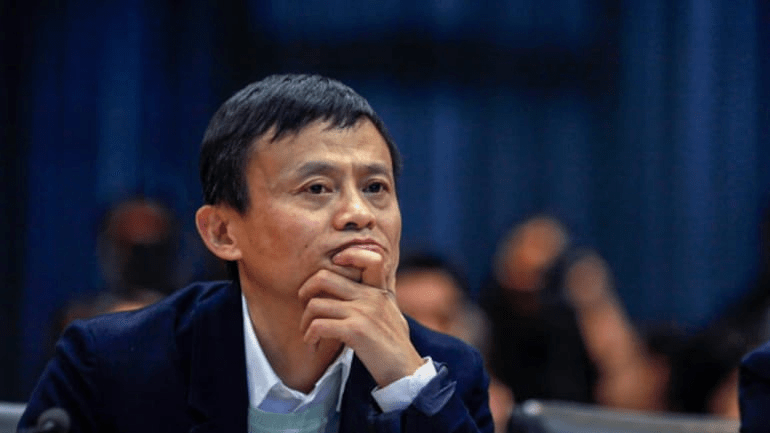
Jack Ma, pictured above, is not formally associated with the fintech company, Ant Group, but is the company’s controlling shareholder. Analysts are putting blame on the ecommerce mogul for recent statements criticizing Chinese regulators.

As U.S. markets whipsawed for the last 24 hours amid Election Day chaos, a leading fintech company in China experienced a ‘day of reckoning’ of sorts. The unicorn fintech company, Ant Group, was on track to set a record in raising capital from public markets with a $34.5 billion dollar IPO. Ant Group offers numerous services to its consumers, which include mobile payments services, wealth management, a third-party credit rating system and a mutual aid platform which “provides a basic health plan to protect participants against 100 kinds of critical illnesses.”

The company has made strides outside of the country into Europe as well. Ant Group’s mobile payment platform, Alipay, has existing relationships with numerous European digital wallets apps in Finland, Norway, Spain, Portugal and Austria. The fintech company has made headway in Britain as well, acquiring international money transfer services provider, WorldFirst, for $700 million in 2019 and reaching an agreement with Barlcaycard that enabled British retailers to accept Alipay in their stores.

The fintech company has been making incredible progress, which is why it is unsurprising that Chinese regulators yanking their IPO sent Alibaba, one-third shareholder of Ant Group, reeling. Alibaba, trading off a high of $310.73 early Monday evening (4:00P EST), fell 7.8 percent to $286.31 amid the news before rebounding to around $298.40 this Wednesday afternoon.

Analysts are pointing fingers at the controlling shareholder of the company and founder of Alibaba, Jack Ma, who recently gave a speech criticizing Chinese regulators for their risk aversion. “What we need is to build a healthy financial system, not systematic financial risks,” the Ant Group co-founder said at a conference in Shanghai. “To innovate without risks is to kill innovation. There’s no innovation without risks in the world.” He also highlighted the need for systemic reform in China’s financial sector, describing it as “a legacy of the Industrial Age.” Ma continued, saying, “we must set up a new one for the next generation and young people. We must reform the current system.”

Chinese regulators responded shortly after as if Ma had spit in their face, bringing Ant Group executives and Ma in for “regulatory interviews” which resulted in regulators deciding to suspend the fintech company’s initial public offerings in Shanghai and Hong Kong and prompting Ant Group to release the following statement to investors:

“Ant Group Co., Ltd. (the “Company”) announces that it was notified by the relevant regulators in the PRC today that its proposed A Share listing on the STAR Market is suspended as the Company may not meet listing qualifications or disclosure requirements due to material matters relating to the regulatory interview of our ultimate controller, our executive chairman and our chief executive officer by the relevant regulators and the recent changes in the Fintech regulatory environment. Consequently, the concurrent proposed H Share listing on the Main Board of The Stock Exchange of Hong Kong Limited shall also be suspended. Further details relating to the suspension of the H Share listing and the refund of the application monies will be made as soon as possible.” (ANT GROUP CO., LTD.)

Ant Group has made it clear it still intends to launch an IPO, preferably before the Chinese New Year, but analysts suspect they may need to do so under stricter capital requirements that will be set by the Chinese regulatory authorities or that it may need to sell its microlending business to do so.

Zambia a proving ground in Africa’s debt crisis

Business

Bill O’Brien, Editor

The Economist

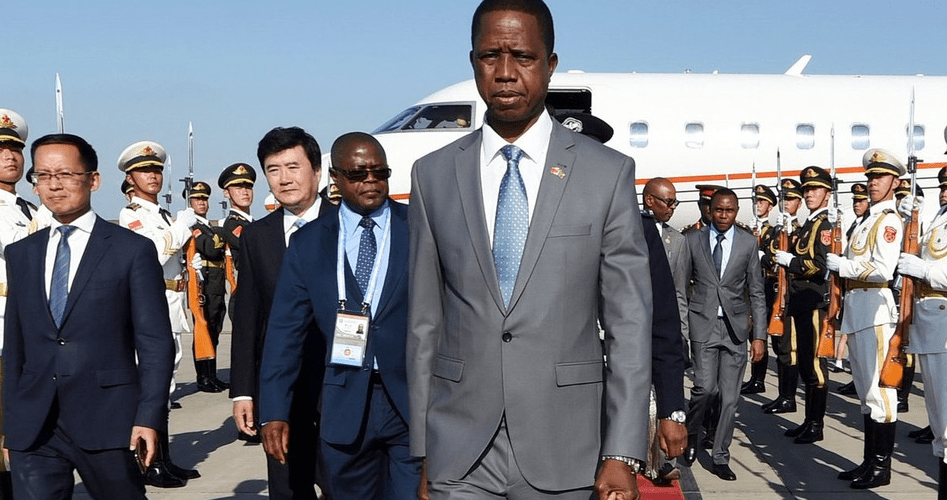
Zambia’s debt negotiations with China have largely been behind closed doors, garnering distrust among Zambia’s retail investors.

Last week the Collegian covered the ongoing debt crisis in Africa that has been fueled by Chinese loans, which make up about a third of debt loads in numerous key struggling countries. Chinese lending practices have been judged differently across the board, with U.S. officials calling out the Chinese government for a practice called “debt-trap diplomacy,” a foreign policy strategy in which a lending nation uses looming default on debt to seize strategic assets from the borrowing nation as collateral. Others reject that theory, citing that China lacks a history for seizing assets over debt defaults but rather provides relief and restructuring options to the nations they lent to. For some nations, that debt crisis is coming to a heel. Zambia, a nation that owes a third of its debt to China, is currently in talks with holders of $3 billion worth of Zambian eurobonds. Zambia has already stated that, unless it is granted an interest payment holiday, a request that will be voted on next week by its eurobond holders, it will not be able to service its bonds. A core group of the eurobond holders have already rejected the proposal.

Owing a third of its debt to China, Zambia will undoubtedly have to address how it is going to service its loans from the economic superpower. With about a dozen other nations in talks with China for debt relief, Zambia will be a testing ground, setting a precedent for how future debt negotiations may go. A key part of Zambia’s debt management strategy is to garner relief from the World Bank and the IMF, organizations that have already begun working to stabilize the African debt crisis but fear their efforts may not be enough. The World Bank has already called for an additional $25 billion in relief funding for the world’s poorest nations on top of a debt-relief initiative the Group of 20 just renewed.

To make matters worse, Zambia has been running into roadblocks earning the good faith of their eurobond holders. They have isolated their talks with China, and conducted negotiations with the People’s Republic behind closed doors, spurring distrust of its retail lenders. Its eurobond holders and retail investors are concerned that China is seeking to gain more favorable loan restructuring terms in closed negotiations and have expressed extreme caution in coming to terms with a deal until China comes to the table with them.

In the next couple of months, Zambia will be heavily reliant on relief coming from organizations like the G20, World Bank and the IMF, and they will have to strike a deal with their debt holders before their inevitable default. Conducting transparent talks with China will be key to earning the good faith of their retail bondholders, including the eurobond holders that vote next week on whether to give Zambia an interest payment holiday.

obrienw4@lasalle.edu

Special Purpose Acquisition Corporations: Innovation in IPO Markets

Business, Uncategorized

Bill O’Brien, Editor

pitchbook

Special Purpose Acquisition Companies (SPACs) have been fueling IPO markets in recent months, generating buzz around the investment vehicles that have been around since the 1980’s.

There are sharks in the water in today’s markets, and no, I don’t mean that there are savvy investors with gills making trades from coves below sea level. In recent years, SPACs, or special purpose acquisition companies have taken on a much larger role in market participation and the initial public offering (IPO) scene than they have in previous years. SPACs themselves are actually quite an intriguing investment vehicle. Special purpose acquisition companies, essentially, pool money from investors, whether it’s from institutions or the general public, and use that pooled capital to acquire a stake within a company and bring it to the public market through a merger. SPACs provide companies with an alternate and “fast-tracked” means of gaining access to public funds.

Investment bank Goldman Sachs has had a lot to say about SPACs in recent months. Olympia McNerney, a member of Goldman’s equity capital Markets and alternative capital markets group in New York, spoke on the bank’s podcast, “Exchanges at Goldman Sachs” to talk about the trend. “Right now there are about 100-plus SPACs that are on the hunt for acquisition and to frame that in terms of dollars, that’s about $30 billion dollars of capital on the hunt to bring companies to bring companies into the public market.” That figure is further amplified by SPACs proclivity to make leveraged acquisitions so, in Olympia’s words, “that $30 billion, think of it as probably $150 of market cap that SPACs are on the hunt for, so a very very large number.” In discussing what is driving SPAC popularity with investors, Olympia discusses a number of reasons.

Evolution in the “profile” of the investment vehicle over “not just the last 2 to 3 years” but even over the last “6 to 12 months,” growing comfortability among institutional investors in understanding the economics of SPACs and SPAC economics becoming “more friendly” for the market makers invested in them and the companies looking to merge with them are just a few. Also discussed in Goldman’s podcast were the unique pros to working with a SPAC instead of having an IPO for a company. A potentially faster path to public markets, potentially more certain valuations around the company, and potentially more proceeds than an IPO could deliver, especially in today’s climate are pros Olympia cited as well

To Olympia’s point, SPACs are gaining traction in the world of high finance. Bill Ackman, founder of hedge fund Pershing Square Capital Management and notorious Valeant Pharmaceuticals investor, founded his own SPAC this year, Pershing Square Tontine Holdings. It is currently the largest SPAC ever founded at $4 billion. The popularity is not surprising, as the IPO market experienced a lull due to pandemic-related market volatility, and we are not out of COVID-19 waters yet. SPACs are inherently more resilient to broad market sentiment considering the investors they attract, so they can create great opportunities for corporations looking to go public during an economic downturn.

Special purpose acquisition companies are becoming more popular in the investment community and are innovative instruments in the IPO market. What were once transactions that were exclusive to private equity funds are now open to the general public, along with the prospect of the lucrative returns they can bring. In a world with increasingly suppressed yield fixed income markets and high price-to-earnings equity markets, these kinds of instruments will likely become more popular to both the institutional investor and retail investor alike.

obrienw4@lasalle.edu

ESG investing: a path to a resilient portfolio

Business

Bill O’Brien, Editor

Goldman Sachs

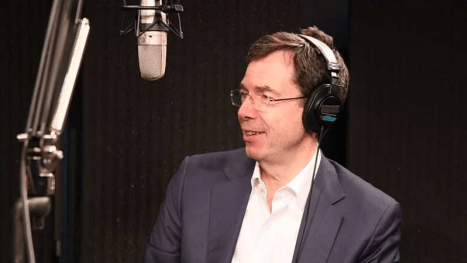
Photographed above is Goldman Sachs Senior Advisor Steve Strongin. As the former head of Goldman’s Global Investment Research Division, Strongin has lead Goldman’s research efforts on ESG investing.

Markets are rapidly evolving in nature, especially in today’s climate as they continue to reel in volatility amid a global pandemic. No one can deny that COVID-19 has been a catalyst for drastic change in society and markets, but it is important for investors and people to see that it can catalyze positive change as well. One trend we are looking at moving forward is how investors embrace environmental, sustainability and governance (ESG) investing. Wall Street’s sentiment on ESG investing ranges from stark pragmatism to optimism and hopefulness depending on what financial institution you are asking. 

Earlier this summer, Goldman Sachs covered the topic on their podcast, “Exchanges at Goldman Sachs,” where they cover trends shaping markets. The episode, titled “Sustainable ESG Investing: Turning Promises into Performance,” featured Steve Strongin, a senior advisor at Goldman and former head of its Global Investment Research division. Strongin outlines a report he and his team drew up on ESG investing, outlining a pragmatic viewpoint on how investors should shape their ESG investment strategies. One of the first points he makes is how investors need to think long-term in regards to generating return from ESG-centric strategies. The key idea behind ESG investing is when companies care about the environment, diversity and, overall, how their company is governed, then they will be able to take advantage of greater opportunities in the future and the seizing of those greater opportunities is what garners return in the long haul. Strongin specified that investors should expect a liability of no less than three years, with the possibility of needing to extend that liability based on market conditions. 

Perhaps the most interesting point Strongin made is that people mistake ESG as more of a “bumper sticker” than an investment style, in that they do not view it pragmatically enough: “[People think that] as long it’s on the right side of history, it’s supposed to be a good investment — the world isn’t that kind.” Instead, he brought up carbon as an example of how investors should view ESG as a style of investing. According to Strongin, someday, within the next 5 to 10 years, we will end up with a price of carbon, within the regulations, that will set the “efficient frontier” for addressing climate change. Opportunities investors should look out for are investments that can help companies operate in regulatory environments that are more focused on climate change; for example, a tech company that helps automakers decrease the carbon emissions of their vehicles. 

BlackRock’s “The Bid” lends a different perspective on how sustainability should be factored into investment decision-making in a post-COVID world. Host Mary-Catherine Lader, in the episode titled “Can sustainability accelerate economic recovery?”, brings together some of the brightest minds in the ESG investment space to discuss how ESG investing can spur an economic recovery after the pandemic, which caused massive economic contractions across the globe. Globally, $12 trillion dollars is being injected into the global economy and, as a society, we can use that money to shape markets around sustainability or revert them back to a “business-as-usual, highly fossil fuel driven economy.” Guests on the show made it clear that there is a great opportunity ahead, in large part due to COVID-19, to change course toward sustainability. Guest on the show, Fiona Reynolds, CEO of Principles for Responsible Investment, discussed how people are now beginning to understand how interconnected issues are throughout the world — “if you don’t have healthy people, and you don’t have a healthy planet, then you can’t possibly have a healthy economy. The three things go together.” What this should mean for the investment industry is clear: ESG, or lack thereof, poses risk to markets and participants investing in them. Peter Bakker, CEO and President of World Business Council for Sustainable Development (WBCSD), echoed this sentiment and took it a step further, stating that investors need to begin factoring in companies’ performance in sustainability into its cost of capital.

It sounds far-fetched, but his rationale is based on the assumption that Steve Strongin of Goldman Sachs spoke about: companies that care about the environment, diversity and, overall, how their company is governed, will see higher returns in the long-run and, if we accept this to be correct as it is becoming the overwhelming consensus, we should find ways to price companies based off of their performance in ESG. Financial institutions are beginning to see this as reality more and more but, as guests on “The Bid” later discuss, convincing individuals has been the latest hurdle in convincing the world that ESG investing is an incredible investment opportunity and not just an obligation that must be fulfilled on behalf of all mankind. Guests on the show all agreed that acting as soon as possible is imperative to avoiding the costs that will be incurred for not paying mind to sustainability in our environment and our society. They suggest that, in order to convince policymakers to jump in on that action, the data we use to measure sustainability impact still needs to come a long way. The reality is the more case studies that can be used to demonstrate where sustainability created a value add-on for a portfolio and for markets, the more likely individuals of our society will jump onto the ESG train and pressure their elected officials and other policymakers to do the same.