
Danielle O’Brien, Editor
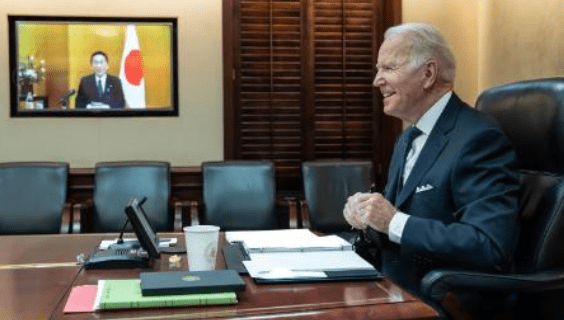
An estimated 100,000 Russian troops are currently poised at the Ukrainian border, ready to invade the country. Tensions are high as the threat of Russian invasion in Ukraine comes only less than a month into the new year. Vladimir Putin denies allegations that Russia will in fact move in on Ukraine, however, the mass of soldiers at Ukraine’s border tells otherwise. The threat of invasion comes just a month after President Biden and Putin met via video call to discuss the repercussions Russia can expect if it does invade Ukraine.
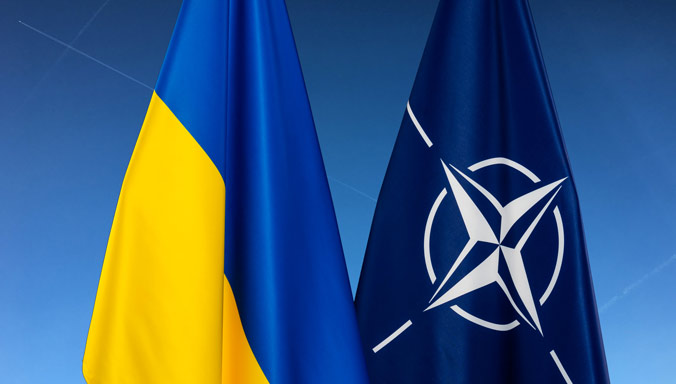
The threat is due in part to the refusal of Russian demands for the pulling of NATO from Ukraine, and to avow never to admit Ukraine into joining the organization. NATO’s refusal to do so is sparking Putin’s outrage. Instead of the intended purpose of placing Russian troops at the border to pressure NATO in retracting its presence in Ukraine, it has had the rather opposite effect. In fact, aside from the arms and troops already placed in Ukraine, NATO is reported as sending more military support such as ships and fighter jets to Ukraine. The U.S. plans to contribute 8,500 American troops to Ukraine which is currently on standby for deployment. It is important to note, however, that this was not the desired outcome for President Biden.
In his meeting with the Kremlin in December, Biden took a more diplomatic path to resolve the issue, warning that harsh sanctions from the U.S. towards Russia will be put in place to deter Russia from invading. Sanctions, however, may be an unfulfilling threat towards Russia. President Biden is familiar with the effect of U.S. sanctions against Russia, considering he witnessed the invasion of Ukraine by Russia in 2014 while he was vice president, where sanctions against Russia had been put in place with little effect. One of the more promising things threatened to be sanctioned which may have a larger effect on the Russian economy is the Nord Stream 2, a natural gas pipeline between Russia and Germany. In this way, Germany’s sanction of this economic powerhouse for the two countries might encourage Russia to rethink its next steps.
Russian influence has remained apparent in Ukraine considering it was once a part of the Soviet Union. Since its removal from the Soviet Union, Ukraine has had the freedom to make great democratic leaps. In 2016 it joined in agreement with the European Union, Georgia and Moldova to create the Deep and Comprehensive Free Trade Areas (DCFTA). DCFTA established the three countries as common grounds of free trade. Furthermore, in 2019, Ukraine amended its constitution, putting it on track to becoming a formal member of the EU. Unfortunately, however, the credible organization for measuring democracy since 1941, Freedom House, would establish that there is still much improvement to be made in Ukraine as it is not even considered a full democracy. According to Freedom House’s 2021 democracy scores, Ukraine received a 39 out of 100, establishing it as a Transitional or Hybrid Regime. This scoring is due in part to the submission of the Ukrainian government to the aggression witnessed by the Russian government in threats of military invasions such as the one we are witnessing now. A La Salle professor in the political science department with a special interest in Ukraine, Dr. Mark Thomas, provided a statement on the situation. Thomas has an impressive background in many high-profile jobs including experience as an operations specialist for the U.S army in Eastern European countries as well as receiving a NATO medal for Kosovo Forces in 2014.
Thomas stated, “The situation at the border is undoubtedly one of concern. Putin’s demands that NATO pledge in writing not to allow Ukraine to accede is one which NATO cannot make given it opened Pandora’s box when it admitted former Warsaw Pact members into NATO in the 1990s, which violates a verbal promise by then-Secretary of State Jim Baker to Eduard Schevardnadze. It was never put in writing and the U.S. and NATO relied on a statement in the Helsinki Accords which stated every country had the right to choose which alliance to belong to. Putin’s second demand for NATO to withdraw its forces from the NATO members on Russian borders places NATO at risk of undermining its alliance commitments and causing members to lose their faith in NATO. I warned my NATO bosses in 2016 that placing troops in the Baltics and Poland was the first step in walking NATO into a direct confrontation with Russia. NATO expansion and placing troops, even on a rotating basis as done through the NATO Assurance Measures, go against the basic Russian strategic objective to avoid encirclement by a hostile power. So I understand the fears Putin is using to justify the confrontation. That said, Ukraine poses no significant military threat to Russia. Ukraine poses an existential threat. Having another democratic country on its borders, especially one which has such historical, cultural, and linguistic ties to Russia risks a potential contagion effect on the Russian populace. Every authoritarian leader is looking over his/her shoulder for threats to his control. There is one Russian strategic concern that mitigates against a full-fledged invasion: Prevent destruction of the homeland and avoid Russian casualties.
A full-fledged invasion of Ukraine would be costly in terms of casualties. Even with its involvement in Donetsk and Luhansk and Crimea, Putin has avoided putting ethnic Russians in significant harm’s way. He and his generals have in the back of their minds what happened in their invasion of Afghanistan in the 1980s and what happened in Chechnya in the 1990s. Both had a significant toll on support for the regimes.
In practical terms, the former Ukrainian defense minister from 2019 to 2020, Andrii Zahorodniuk, made an astute observation that he does not believe Putin will invade Ukraine. Amidst the 120,000 troops on the Ukraine/Russia border, there is not the logistics, notably not the medical supplies to support an invasion.
Also, China does not want Russia to steal the spotlight in the coming month. China, as Russia’s closest ally, wants the world focused on the Winter Olympics. Xi made a comment early this week that power is more than using force to accomplish influence. This was as much oriented at Biden as it was at Putin.
All that said, Russia and the U.S. are playing a game of brinkmanship to see who blinks first. Both are likely seeking a way out without a confrontation. It is possible Russia will seize a zone between the Donbas and Crimea so Crimea has access to freshwater, which comes from either Russia or historically from Ukraine. The U.S./NATO response could be less than what Biden said would be serious sanctions”.
Following Dr. Thomas’s analysis, it is clear that Russia, following the dissolution of the Soviet Union, is clinging to any ties it still has in countries such as Ukraine. Russia dreams to recover its lost ground in reunifying former Soviet countries back into a communist power to challenge the democratic ideals of the West. Whether the United States and Europe will allow Russia’s dream to come true, however, remains up to time to tell.

 The La Salle Collegian