Robinhood’s Long Nightmare Ahead

Business

Michael D’Angelo, Staff

cnbc

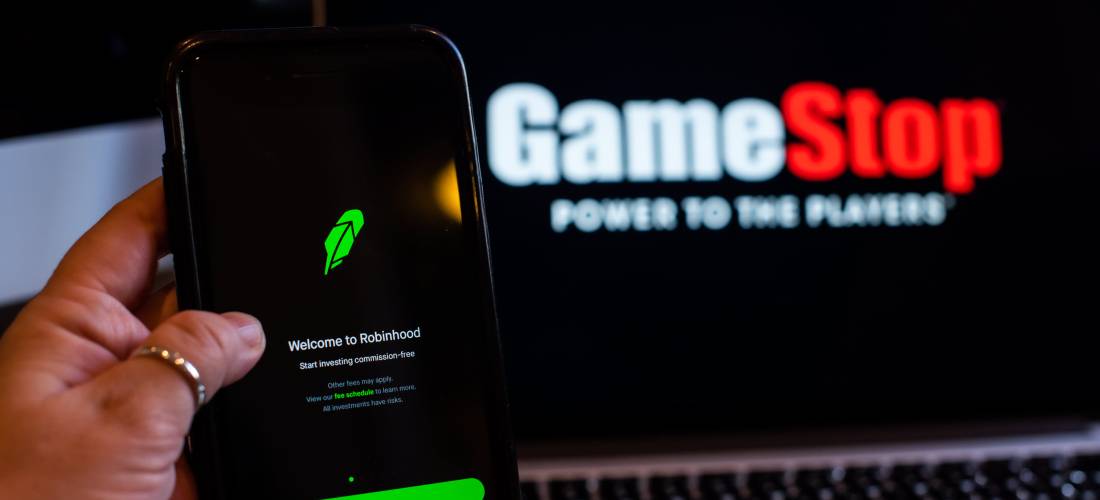
Robinhood can be accessed by retail investors anywhere from their mobile phone. Robinhood boasts giving investors autonomy over their finances with low barriers to entry and nonexistent brokerage fees.

The old English tale of Robinhood has been passed down for generations and describes a story of populism where a legion of men equipped with bow and arrow take from the rich and give to the poor. Fast forward to the 21st century and Robinhood is known as a discount brokerage firm used by many new investors and retail traders. You may have heard in the past few weeks that Robinhood was at the center of the GameStop saga or you caught their Superbowl ad during the game, chances are you have heard of the investing app. The news certainly is filled with Robinhood headlines lately. 

            Introduced in March 2015, the platform gained popularity with their approach of having no commission fee investing. The story of Robinhood began with Stanford roommates Baiju Bhatt and Vlad Tenev. Both worked on Wall Street for a period of time, designing software, until the two decided they needed a change. They founded Robinhood with the purpose of eliminating barriers for the little guy and democratizing investing. Since Robinhood’s inception, the app now boasts well over 10 million users, but the company has been struggling with a public relations nightmare since the start of the year. 

            When the pandemic began in March, many people with strong gambling tendencies turned to both the stock market and the internet. They chose Robinhood as their choice of brokerage and they flocked to a reddit forum known as Reddit Wall Street Bets (WSB). Headlines popped up from the Wall Street Journal, Forbes, and, most notably,  the Collegian about some of these traders and their impact on the financial markets. Robinhood was picking up some negative publicity at the time with complaints of slow software, minimal customer service support and hidden fees. They were even threatened with a lawsuit surrounding high frequency trading data and hedge funds. In addition, a Robinhood user committed suicide after an in-app glitch showed he was in the red for over $700k. Currently, Robinhood is faced with a pending lawsuit from the individual’s family. 

            But things went from bad to worse at the start of 2021. Users from Reddit WSB saw that hedge funds were heavily shorting GameStop (GME). Retail investors flocked to reddit and called for many to buy shares into GME. As many bought shares and GME’s stock price flew over $300 a share, Robinhood entered a cash crisis. They ran out of cash to clear trades with the Depository Trust Clearing Corporation (DTCC) and Robinhood changed orders of GME to sell only, after only a few days the stock price declined heavily. In that short period of trading, they were forced to raise $3.4 billion. 

            The world erupted and many were livid. They took to social media websites like Instagram, Reddit and Tik Tok preaching that Robinhood violated their rights to trade. The Federal Trade Commission (FTC) received more than 100 Robinhood related complaints between Jan. 24th to Feb 2nd and in response to the criticism, Robinhood issued a statement. They described a DTCC clearing issue and then aired a commercial during the Super Bowl promoting their slogan, “We are all investors.” The commercial did very little to help the company and many continued to complain over social media. 

            With a public relations nightmare on their hands, the company might be forced to postpone their plans to go public in the second quarter, but, as of now, Robinhood is in full swing to go public this year. They are currently valued at $20 billion or more. With the public’s frustration, Robinhood’s future is in question. If Robinhood is to continue on, they must update their customer service, apologize to the angry masses, and make right to achieve change in the financial sector.

dangelom2@lasalle.edu 
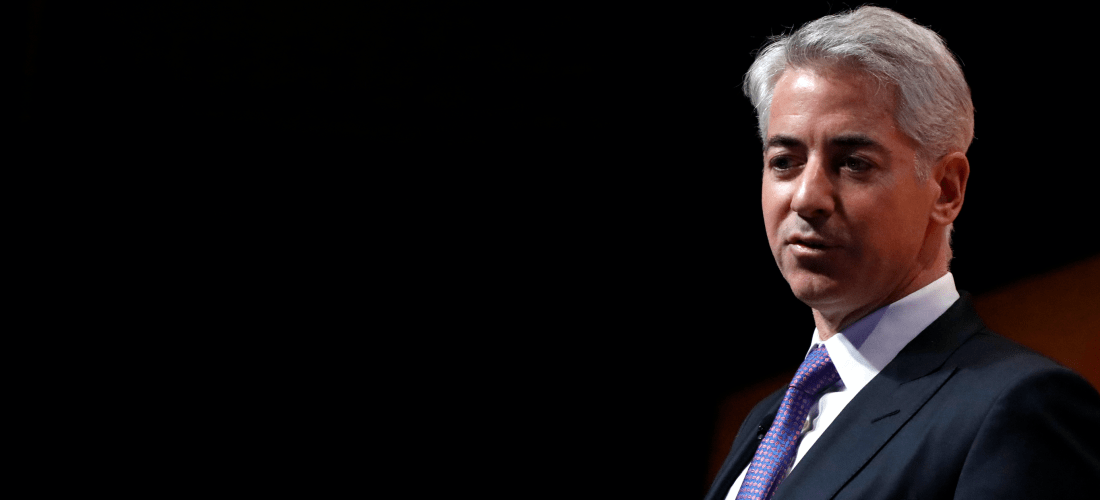
Bill Ackman: famed hedge fund founder and investor, now a SPAC behemoth

Business

Bill O’Brien, Editor

businessinsider

Ackman was ridiculed for turning a $27 million hedge position against markets into $2.6 billion. Just a week before, he had been interviewing on media outlets warning that “Hell is coming” amid COVID-19 concerns.

Few figures have stirred as much buzz in the financial services industry as Bill Ackman. The self-proclaimed activist investor, or contrarian investor as known by others, has been a leader in financial services since 1992 when he founded the hedge fund, Gotham Partners. It was the same year he received his MBA from Harvard Business School. Although Gotham Partners did not pan out as Ackman had probably hoped, his career in asset management would continue to flourish with Pershing Square Holdings, the hedge fund he founded in 2003 and currently manages.

Ackman is currently the CEO and founder of Pershing Square Capital Management, a New York-based hedge fund which, according to SEC filings, boasts private funds with minimum subscriptions between $1 million and $5 million. He’s had a lot of success in the hedge fund industry with a highly profitable and publicized market exit from Wendy’s that netted his investors billions in returns. More recently, Ackman opened hedge positions against financial markets leading up to the COVID-19 pandemic. Ackman closed out the hedge positions for over $2 billion on March 23rd, 2020 following steep market downturns.  The position originally cost a little less than $30 million to take on.

The success of the hedge fund manager has come with a lot of notoriety. Ackman was heavily criticized for a failed short position and a negative media campaign that landed him in hot water with regulators. Pershing Square Holdings also garnered huge losses over a 6-year period until he finally closed out the position in 2018 following an unbridled rise in Herbalife shares. The failed short resulted in losses for investors, but was heavily scrutinized for the negative media campaign Ackman waged against Herbalife that many saw as a means to manipulate the share price of the stock, an issue that has recently been at the forefront of Wall Street criticisms today.

In spite of great shortcomings and even greater successes, Ackman is as active as ever in financial markets and has recently decided to try his hand with SPACs or “Special Purpose Acquisition Companies.” The Collegian covered the upward trend in SPACs in its Sep 23 issue, and they have continued to be on the rise since. SPACs are somewhat known as “blank check companies” because they raise funds on the public markets without having any operational costs and expenses to start with. Their value is derived from investors anticipating the SPAC to merge with or acquire a privately-held company (target company) using the capital it raised from public markets, inherently bringing the target company to public markets in the process. 

Bill Ackman’s Pershing Square Tontine Holdings (NYSE: PSTH) has had the most valuable SPAC initial public offering to date, raising $4 billion from public markets and an additional $1 billion from Ackman’s Pershing Square funds. That $5 billion in available capital to make acquisitions can potentially mean approximately $25 billion in acquisition capital for the SPAC depending on how aggressive a leveraged buyout strategy Ackman chooses to employ.

Pershing  Square Tontine Holdings identifies its target company parameters on their website, “We will prefer targets that have low sensitivity to macroeconomic factors, with minimal commodity exposure and/or cyclical risk. We are willing to accept a high degree of situational, legal, and/or capital structure complexity in a business combination if we believe that the potential for reward justifies this additional complexity, particularly if these issues can be resolved in connection with and as a result of a combination with us.” Also notable, among other parameters, in their acquisition criteria for a target company is “formidable barriers to entry” or “‘wide moats” around their business and “low risks of disruption due to competition, innovation or new entrants.”

The goals of Ackman’s SPAC are nothing short of ambitious, but investors continue to put their faith in Ackman. After pricing at $20 per share during its IPO, Pershing Square Tontine Holdings, still without a business combination, is trading at $29.91 in secondary markets, yielding investors 49.55% since IPO. The premium can be partially accredited to recent buzz surrounding the SPAC potentially finding a target company, market speculation that has not been confirmed yet. Ackman has defended PSTH trading at a premium in Pershing Square’s 2020 semiannual report to shareholders “PSTH trades at a premium to its cash NAV because the market believes that it is probable that we will find an attractive merger candidate and complete a transaction that creates significant shareholder value.”

All of this may be true, but one can be certain PSTH will not be able to retain its value without an acquisition target. Speculation around an impending deal has risen significantly, and some are expecting an announcement when PSTH’s parent company, Pershing Square Holdings, holds its annual investors presentation on Feb 18 at 9:00AM. Market watchers will certainly be keeping their ear to the ground for the next eight days to see what direction Ackman takes his SPAC, if any.

obrienw4@lasalle.edu