Currency of the future or tulip bulb of the past: will crypto continue to boom or will it bust?

Business

Michael D’Angelo, Staff

Gadgets 360

Pictured above is Tesla CEO, Elon Musk. In late March, Musk announced via Twitter that Tesla cars may be bought with bitcoin and any bitcoin Tesla receives as revenue will not be converted to fiat currency.

All the recent rage in the financial markets is related to cryptocurrency. It appears almost daily one can see a crypto-related news headline. Just two weeks ago a “meme” cryptocurrency known as dogecoin reached an all-time high, netting some traders thousands of dollars. In addition, just yesterday, Tesla announced they sold $272 million worth of bitcoin (BTC) during the first quarter. 

Cryptocurrency is defined as an unregulated digital currency that uses an online ledger to track ownership to buy and sell goods. An idea of unregulated digital currency drives the enthusiasm behind crypto and many investors view the currency as digital cash that cannot be traced. The most popular cryptocurrency is Bitcoin. Bitcoin utilizes complex blockchain technology to track ownership and manage trading. Some investors see Bitcoin as a store of value and an alternative to physical gold while others view it solely as currency to buy and sell goods. 

Bitcoin has grown tremendously since its inception in 2009 and has experienced widespread interest since last March when the pandemic and stay-at-home orders forced millions into lockdown. Much of Bitcoin’s rise is attributed to retail investors, but institutional investors are involved with the commodity. Big-name financial companies and fintech players like Square and MicroStrategy have used cash to purchase bitcoin. Even asset management fund Fidelity has jumped in and intends to release an ETF to track BTC benchmarks. Bitcoin’s market cap is currently valued at over $1 trillion. 

Tesla’s CEO, Elon Musk, has spoken countless times about cryptocurrency and his company’s offer to accept Bitcoin as payment for their cars. In February of 2021, Tesla bought $1.5 billion of Bitcoin. They stated in SEC filings that the purpose of the purchase was to gain a better return on their cash, but they did warn investors of the price volatility involved with the purchase. According to Tesla’s Q1 earnings report, total revenue grew year-over-year by 74 percent. Tesla’s GAAP net income reached $438 million while non-GAAP net income was over $1 billion. Also, Tesla reported more deliveries of their car products. Musk made the Bitcoin purchase to emphasize the liquidity involved with the coin. 

As cryptocurrency becomes more widespread, regulators and government officials are left scratching their heads. They must decide how to regulate the crypto market. India had a ban on cryptocurrency which has been reversed in March of this year. Turkey has banned cryptocurrency. Back home in the United States, Bitcoin faces some regulation by organizations like the SEC, the Fed and the CFTC. The IRS taxes Bitcoin and other cryptocurrencies as property. Janet Yellen, the current Treasury Secretary, believes Bitcoin is an “extremely inefficient” way to conduct monetary transactions. Overall, many regulators are going to have to find an agreement and decide how to regulate the coin. 

As Bitcoin grows in popularity and many people look to the future, we must be cautious of the recent rapid rise in its price and remember the history of financial booms and busts. Bitcoin and the cryptocurrency market have the potential to fully take over our lives. Bitcoin can be as useful as the American dollar in the next few decades or can be remembered like the tulip bulb of 1637.
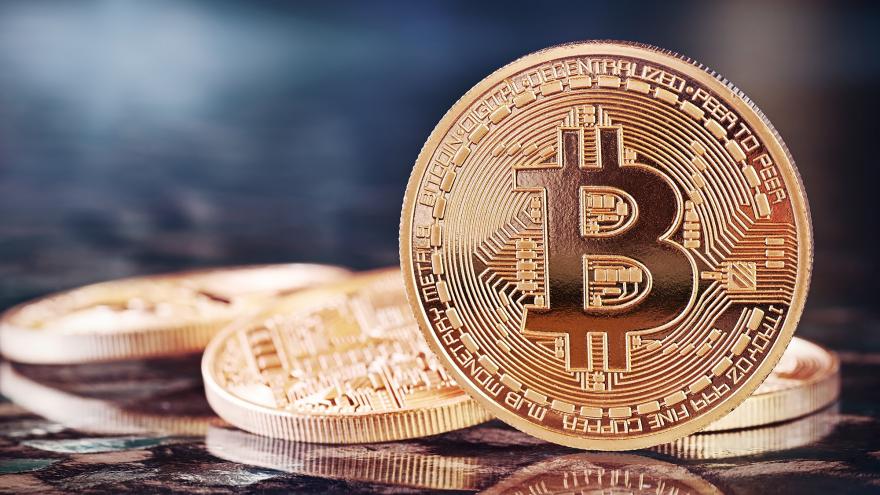
Making Sense of Bitcoin: a Beacon or a Bubble for Investors?

Business

Michael D’Angelo, Staff

ABC7

Bitcoin’s meteoric rise coupled with uncertainty around where its value derives from as an asset has some analysts referring to it as a “faith-based” asset.

Bitcoin has maintained a strong presence in recent financial headlines. Some popular headlines mention an individual who lost his password to access millions of dollars’ worth of the cryptocurrency, bitcoin surging to an all-time high past $35,000 or financial pundits declaring bitcoin as the “next gold.” Certainly, if you are a retail or an institutional investor, the asset’s massive gains have certainly caught your attention.  

Bitcoin is a cryptocurrency which currently has the highest market value of any alternative coins. Bitcoin has an increasingly volatile trading history since its original inception and Bitcoin was created in 2008 by a mysterious figure known as Satoshi Nakamoto. Bitcoin operates as a cryptocurrency and the original goal was for individuals to make online purchases without a paper trail, much like if one uses physical cash in the real world to purchase something. Nakamoto designed the idea of bitcoin as a decentralized digital currency that anyone in the world can store on their computer with a public ledger of transactions. 

In the beginning, bitcoin was utilized for people to make illegal transactions online via the dark web. As the price gradually increased and then declined over the years, many speculators have jumped on the coin. Many bitcoin bulls view the coin as an alternative to gold and the coin serves as a hedge against inflation. 

The first Bitcoin transaction occurred in 2009 and Bitcoin was used shortly in 2010 for a real-world transaction when an individual utilized 10,000 Bitcoins to buy two pizzas in the state of Florida. Bitcoin’s price has fluctuated widely and since its inception the coin has grown over 8,500 percent. Bitcoin experienced a major bubble burst in 2017. Many professionals attribute this burst to an insurgence of billions of alternate coins flooding the cryptocurrency market. These new coins, known as the Initial Coin Offerings (ICOs), shaked the market. As of recent, many institutional investors entered the market. Square and MicroStrategy purchased Bitcoin while Fidelity and PayPal allowed the consumer to buy cryptocurrency on their websites. 

In addition to Bitcoin’s appeal to various investors, American financial regulators have taken an interest in the coin. Joe Biden’s Treasury nominee, Janet Yellen, stated on Tuesday that cryptocurrency transactions were used mainly for illicit financing. She is highly concerned with the relationship of Bitcoin and terrorism financing. 

As more and more people jump into Bitcoin and institutional investors dive in as well, they are only fueling a potential bubble just waiting to burst. Bitcoin is a classic example of the greater fool theory at play. The greater fool theory states that it is possible to make money by purchasing an asset then selling at a later date to another individual known as a “greater fool.” Retail investors are just diving into bitcoin to not miss the price increase. As the price grows, many do not want to be left out from the gains achieved in the past.

The current value of Bitcoin has no intrinsic value. Bitcoin is backed by nothing. In comparison to the American dollar, the dollar is backed by the full faith and credit of the American government. Bitcoin can also be debated on the grounds of inflation. Many will argue that the American dollar is becoming weaker and the Fed has allowed “too much money-printing.” This argument has been around for close to three decades and is not based in any factual evidence. Inflation is not a true primary concern amongst economists. For example, the Consumer Price Index (CPI), which is an average of a basket of prices for consumer goods and services, has not exceeded more than 5.6 percent since 2000 for all items. Since 2010, the CPI has not exceeded 4 percent for all items

As the price of Bitcoin will only increase, investors with all types of financial assets need to take a back seat and question the future of cryptocurrency and the potential of a bubble just waiting to burst. After all, they do say history repeats itself.

dangelom2@lasalle.edu