La Salle alumni changing the field of fintech

Business

Michael D’Angelo, Staff

IBM.com

The website, financialprofessional.com, a platform developed by two La Salle University alumni, is a new and upcoming company in the financial technology industry.

Here at the Collegian, we love stories which highlight the success of La Salle alumni and how they make a difference in the world around them. Two La Salle alumni, Alan Angeloni, ‘18, and current graduate student Nicholas Dingler, ‘20, are shaking up the financial technology (fintech) industry with their new website.

Angeloni was a finance major at La Salle with a focus in investment analysis and served as vice president of the Investment Club for two years. As an undergrad, Dingler was an integrated science, business and technology major and is currently pursuing an MBA in finance. The website includes various articles and tools centered around personal finance and investing. I had the privilege to catch up with Alan and Nick, where I asked them some questions centering around FinPro, the fintech industry and the financial markets.  Catch the full interview below below. 

Collegian: How did you both come up with the idea for FinPro? 

We started FinPro in 2018 — Alan’s senior year and Nick’s sophomore year of college — as we were in the same fraternity. At the time, we just wanted to spread financial literacy and share what we had been learning at school, in our free time about the markets on social media. We soon came to the realization that these social platforms were here to stay and were replacing traditional media outlets at a rapid pace. We wanted to be where the attention was and where there would be in a future.

We saw that financial firms at the time were avoiding growing audiences on social media due to compliance issues. So, we moved aggressively into social media. We currently have an Instagram page with over 800,000 followers, a TikTok page with over 16,000 followers, and since the launch of our investment marketplace in December, we have matched over 1000 people with investment firms and have over 50,000 monthly readers on our website. 

Collegian: What is the future of the FinTech industry and the financial services industry in your opinion?

Simplicity and accessibility are everything for the technology industry. Traditional institutions are struggling to keep up with the rapid growth of neobanks (online or digital banks), robo-advisors and payment processors, given how fast tech-enabled companies can pivot and add new features on the fly. 

Collegian: What is FinPro’s mission and culture? 

Our mission is to find the right investment for our users. Our culture fosters innovation and creative thinking. We love having an open dialog with all of our team members. If you don’t like something, speak up. We’re here to offer the best product and services for our users. Our stakeholders should be comfortable enough saying to either of us, “This looks terrible, we should be doing this, why aren’t we doing this, have you thought about this,” etc.

How do you think FinPro can change the financial sector?

By fostering transparency, accessibility, and knowledge. One big issue with the financial services industry is that there isn’t a whole lot of transparency on what exactly these firms are doing with your money, how they are profiting with your money and what risks are involved. We strive to make all of these points clear while also showcasing the opportunities that people have access to. We seek to further educate them on these financial products, so that there is no room for misconception.

Collegian: What is the future of FinPro and what do the both of you have in mind? 

We plan to increase our suite of financial tools to help individuals make financial decisions and boost our content production efforts to further spread financial literacy.

Collegian: What do you think about the market right now? Are equities overvalued or undervalued?

It really comes down to each specific sector, but it can be quite difficult to justify some valuations in certain industries. We currently see an abundance of opportunities in the alternative space given the vast attention the equities market has received over the past year. Luckily, the Robinhood effect is occurring within the alternatives industry and it’s never been easier to get exposure to alternative assets. We are currently living in a time where regulations are being lifted to give retail investors access to the same opportunities institutional investors have received for decades. 

dangelom2@lasalle.edu

Testing the mettle: banks to undergo arduous stress tests by Federal Reserve

Business

Elizabeth McLaughlin, Staff

ft.com

The Federal Reserve is subjecting large banks to routine stress tests in order to measure their ability to cope with a worsening recession.

On Friday, Feb. 12, the Federal Reserve Board released scenarios for its 2021 bank stress tests. The tests are designed to measure the resilience of large banks by estimating their loan losses and capital levels. Last year, banks performed relatively well under the stress tests, and the Fed ultimately placed restrictions on bank payouts to preserve the strength of the banking sector. Large banks are subject to the stress test and some smaller banks have the option to opt-in to the test over a longer period of time. The banks that are required to take part in the upcoming stress test are Capital One Financial (COF), Citigroup (NYSE:C), Credit Suisse (NYSE:CS) Holdings USA, DB USA (NYSE:DB), Goldman Sachs (NYSE:GS), HSBC (NYSE:HSBC) North America Holdings, JPMorgan Chase (NYSE:JPM), Morgan Stanley (NYSE:MS), Northern Trust (NASDAQ:NTRS), PNC Financial (NYSE:PNC), State Street (NYSE:STT), TD Group (NYSE:TD) US Holdings, Truist Financial (NYSE:TFC), UBS Americas (NYSE:UBS), U.S. Bancorp (NYSE:USB) and Wells Fargo (WFC). This upcoming test will be the third stress test in the last 12 months.

The test comes in two parts. The first is the Dodd-Frank Act Stress Test, which analyzes a bank’s balance sheet performance under hypothetical scenarios using a standard capital management plan. The second part is the Comprehensive Capital Analysis and review, which subjects the bank to the same hypothetical scenario, but this time, under their own capital management plan. The test lasts nine consecutive quarters.

The hypothetical recession scenario begins in the first quarter of 2021 and places significant strains on commercial real estate and corporate debt. There will be a severe commercial real estate price decline in this stress test compared to the past three tests. There is also a global market shock component that evaluates banks’ abilities to trade under pressure. Moreover, the unemployment rate will rise by four percent, reaching a peak of 10.75 percent in Q3 2022. This year, the stress test is more severe than usual, given the COVID-19 pandemic and its harrowing effects on the economy. The 2020 stress tests featured a decline in GDP by 9.9 percent and 5.9 percent, as well as peak unemployment rates of 10.0 percent and 12.5 percent. The results of the stress test will be announced by the Federal Reserve on their website by June 30.

mclaughline7@lasalle.edu

Robinhood’s Long Nightmare Ahead

Business

Michael D’Angelo, Staff

cnbc

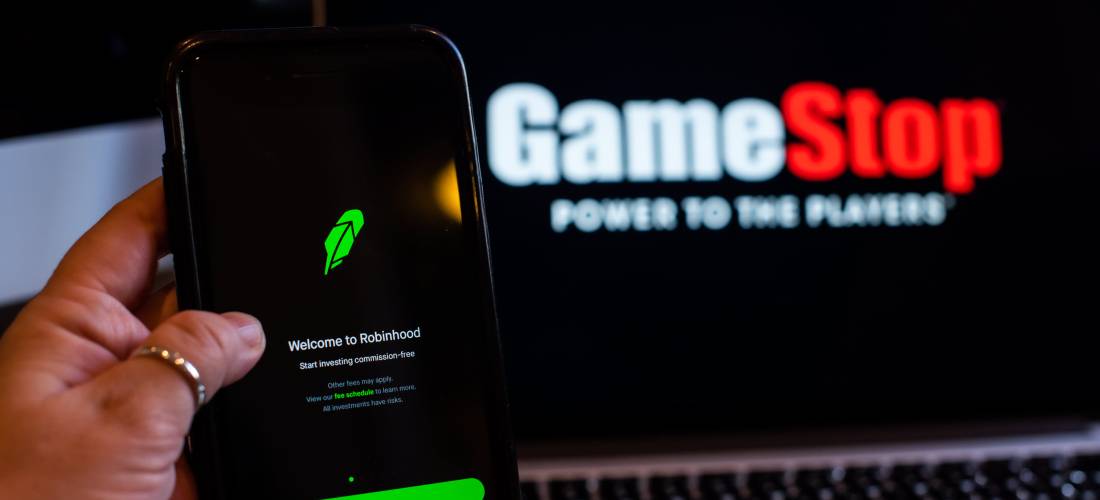
Robinhood can be accessed by retail investors anywhere from their mobile phone. Robinhood boasts giving investors autonomy over their finances with low barriers to entry and nonexistent brokerage fees.

The old English tale of Robinhood has been passed down for generations and describes a story of populism where a legion of men equipped with bow and arrow take from the rich and give to the poor. Fast forward to the 21st century and Robinhood is known as a discount brokerage firm used by many new investors and retail traders. You may have heard in the past few weeks that Robinhood was at the center of the GameStop saga or you caught their Superbowl ad during the game, chances are you have heard of the investing app. The news certainly is filled with Robinhood headlines lately. 

            Introduced in March 2015, the platform gained popularity with their approach of having no commission fee investing. The story of Robinhood began with Stanford roommates Baiju Bhatt and Vlad Tenev. Both worked on Wall Street for a period of time, designing software, until the two decided they needed a change. They founded Robinhood with the purpose of eliminating barriers for the little guy and democratizing investing. Since Robinhood’s inception, the app now boasts well over 10 million users, but the company has been struggling with a public relations nightmare since the start of the year. 

            When the pandemic began in March, many people with strong gambling tendencies turned to both the stock market and the internet. They chose Robinhood as their choice of brokerage and they flocked to a reddit forum known as Reddit Wall Street Bets (WSB). Headlines popped up from the Wall Street Journal, Forbes, and, most notably,  the Collegian about some of these traders and their impact on the financial markets. Robinhood was picking up some negative publicity at the time with complaints of slow software, minimal customer service support and hidden fees. They were even threatened with a lawsuit surrounding high frequency trading data and hedge funds. In addition, a Robinhood user committed suicide after an in-app glitch showed he was in the red for over $700k. Currently, Robinhood is faced with a pending lawsuit from the individual’s family. 

            But things went from bad to worse at the start of 2021. Users from Reddit WSB saw that hedge funds were heavily shorting GameStop (GME). Retail investors flocked to reddit and called for many to buy shares into GME. As many bought shares and GME’s stock price flew over $300 a share, Robinhood entered a cash crisis. They ran out of cash to clear trades with the Depository Trust Clearing Corporation (DTCC) and Robinhood changed orders of GME to sell only, after only a few days the stock price declined heavily. In that short period of trading, they were forced to raise $3.4 billion. 

            The world erupted and many were livid. They took to social media websites like Instagram, Reddit and Tik Tok preaching that Robinhood violated their rights to trade. The Federal Trade Commission (FTC) received more than 100 Robinhood related complaints between Jan. 24th to Feb 2nd and in response to the criticism, Robinhood issued a statement. They described a DTCC clearing issue and then aired a commercial during the Super Bowl promoting their slogan, “We are all investors.” The commercial did very little to help the company and many continued to complain over social media. 

            With a public relations nightmare on their hands, the company might be forced to postpone their plans to go public in the second quarter, but, as of now, Robinhood is in full swing to go public this year. They are currently valued at $20 billion or more. With the public’s frustration, Robinhood’s future is in question. If Robinhood is to continue on, they must update their customer service, apologize to the angry masses, and make right to achieve change in the financial sector.

dangelom2@lasalle.edu 
Bill Ackman: famed hedge fund founder and investor, now a SPAC behemoth

Business

Bill O’Brien, Editor

businessinsider

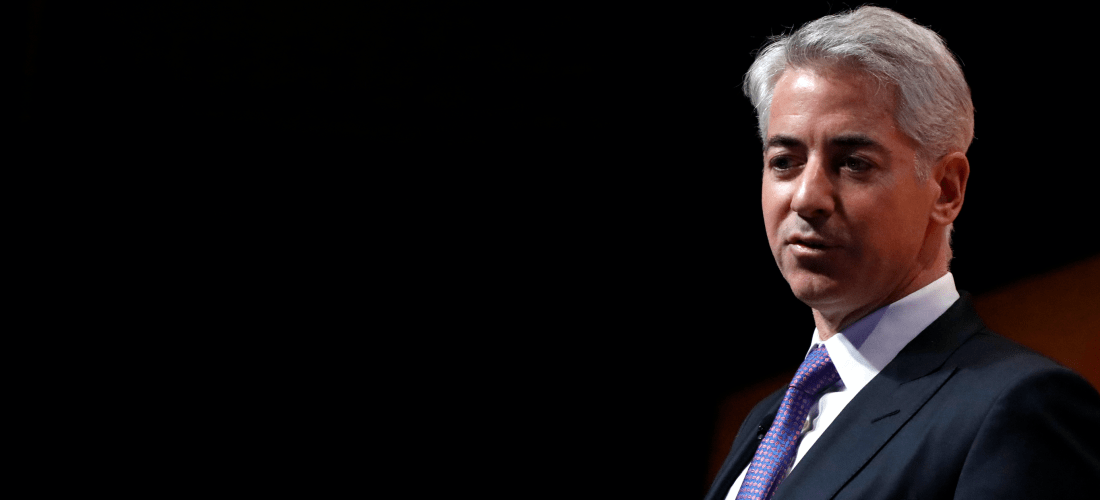
Ackman was ridiculed for turning a $27 million hedge position against markets into $2.6 billion. Just a week before, he had been interviewing on media outlets warning that “Hell is coming” amid COVID-19 concerns.

Few figures have stirred as much buzz in the financial services industry as Bill Ackman. The self-proclaimed activist investor, or contrarian investor as known by others, has been a leader in financial services since 1992 when he founded the hedge fund, Gotham Partners. It was the same year he received his MBA from Harvard Business School. Although Gotham Partners did not pan out as Ackman had probably hoped, his career in asset management would continue to flourish with Pershing Square Holdings, the hedge fund he founded in 2003 and currently manages.

Ackman is currently the CEO and founder of Pershing Square Capital Management, a New York-based hedge fund which, according to SEC filings, boasts private funds with minimum subscriptions between $1 million and $5 million. He’s had a lot of success in the hedge fund industry with a highly profitable and publicized market exit from Wendy’s that netted his investors billions in returns. More recently, Ackman opened hedge positions against financial markets leading up to the COVID-19 pandemic. Ackman closed out the hedge positions for over $2 billion on March 23rd, 2020 following steep market downturns.  The position originally cost a little less than $30 million to take on.

The success of the hedge fund manager has come with a lot of notoriety. Ackman was heavily criticized for a failed short position and a negative media campaign that landed him in hot water with regulators. Pershing Square Holdings also garnered huge losses over a 6-year period until he finally closed out the position in 2018 following an unbridled rise in Herbalife shares. The failed short resulted in losses for investors, but was heavily scrutinized for the negative media campaign Ackman waged against Herbalife that many saw as a means to manipulate the share price of the stock, an issue that has recently been at the forefront of Wall Street criticisms today.

In spite of great shortcomings and even greater successes, Ackman is as active as ever in financial markets and has recently decided to try his hand with SPACs or “Special Purpose Acquisition Companies.” The Collegian covered the upward trend in SPACs in its Sep 23 issue, and they have continued to be on the rise since. SPACs are somewhat known as “blank check companies” because they raise funds on the public markets without having any operational costs and expenses to start with. Their value is derived from investors anticipating the SPAC to merge with or acquire a privately-held company (target company) using the capital it raised from public markets, inherently bringing the target company to public markets in the process. 

Bill Ackman’s Pershing Square Tontine Holdings (NYSE: PSTH) has had the most valuable SPAC initial public offering to date, raising $4 billion from public markets and an additional $1 billion from Ackman’s Pershing Square funds. That $5 billion in available capital to make acquisitions can potentially mean approximately $25 billion in acquisition capital for the SPAC depending on how aggressive a leveraged buyout strategy Ackman chooses to employ.

Pershing  Square Tontine Holdings identifies its target company parameters on their website, “We will prefer targets that have low sensitivity to macroeconomic factors, with minimal commodity exposure and/or cyclical risk. We are willing to accept a high degree of situational, legal, and/or capital structure complexity in a business combination if we believe that the potential for reward justifies this additional complexity, particularly if these issues can be resolved in connection with and as a result of a combination with us.” Also notable, among other parameters, in their acquisition criteria for a target company is “formidable barriers to entry” or “‘wide moats” around their business and “low risks of disruption due to competition, innovation or new entrants.”

The goals of Ackman’s SPAC are nothing short of ambitious, but investors continue to put their faith in Ackman. After pricing at $20 per share during its IPO, Pershing Square Tontine Holdings, still without a business combination, is trading at $29.91 in secondary markets, yielding investors 49.55% since IPO. The premium can be partially accredited to recent buzz surrounding the SPAC potentially finding a target company, market speculation that has not been confirmed yet. Ackman has defended PSTH trading at a premium in Pershing Square’s 2020 semiannual report to shareholders “PSTH trades at a premium to its cash NAV because the market believes that it is probable that we will find an attractive merger candidate and complete a transaction that creates significant shareholder value.”

All of this may be true, but one can be certain PSTH will not be able to retain its value without an acquisition target. Speculation around an impending deal has risen significantly, and some are expecting an announcement when PSTH’s parent company, Pershing Square Holdings, holds its annual investors presentation on Feb 18 at 9:00AM. Market watchers will certainly be keeping their ear to the ground for the next eight days to see what direction Ackman takes his SPAC, if any.

obrienw4@lasalle.edu

GameStop and Robinhood: Power to the investors

Business

Elizabeth McLaughlin, Staff

CNBC

GameStop stock reached an all-time high of $492.02/share on Jan. 28, 2021, putting Wall Street investors at risk of losing millions on shorts.

In January of 2019, GameStop (GME) was trading at $15. By January 2020, less than $5 per share. Shorting the stock of a company that becomes increasingly obsolete as we continue to redefine the digital age is widely regarded as a smart investment; that is why a lot of Wall Street investors felt confident in shorting GME. But on Jan. 28, 2021, GameStop reached an all-time high of $492.02—and those investors were taking on hemorrhaging losses. Who do they have to blame for initiating their downfall? Users from a Reddit forum called r/WallStreetBets.

These users conspired to drive up share prices of fledgling companies, yielding them significant profits while simultaneously stealing profit from Wall Street investors. When put that way, it sounds Robin Hood-esque. It then follows that these users waged their war via the online trading platform, Robinhood. This app aims to “democratize finance” by enabling anyone to buy and sell stocks and other securities. It was developed by two Stanford grads who built their own finance companies where they sold trading software to hedge funds. The app, which is designed to incentivize trading, makes trading simpler than ever. Robinhood transplants the stock market from the stuffy, befuddling environment of a traditional brokerage firm to your own personal smartphone. When a user makes a trade, an animation of confetti congratulates them, nudging them to keep trading. Robinhood’s design and objectives, combined with the economic effects of the pandemic, have prompted nascent investors to try their hand at the stock market. In the first quarter of 2020, Charles Schwab, TD Ameritrade, Etrade and Robinhood — the major online brokers — saw new accounts grow as much as 170 percent. The ease at which one can trade stocks is what allowed a group of Reddit users to wage an expensive attack on Wall Street.

Those on r/WallStreetBets started a trading frenzy, driving GME up 134 percent. On Jan. 11, GameStop announced three new directors to its board whose goals were to reposition GameStop in the modern video game retail environment; to save it from going under. For this reason, GME stock began to rise modestly. But once Redditors got a hold of it, its price rose so rapidly that they triggered automatic trading halts designed to stem market volatility.

Wide price swings and heavy volume fluctuations should prompt self-regulating organizations like the Nasdaq to take certain precautionary measures. But a bunch of lower-to middle-class citizens who decide to capitalize on financial literacy in any way they can — through a free subreddit rather than a pricey stock broker, for example — deserve access to the free market. Is this a battle between populists and institutions? Some of these “populists” have criticized those in the financial sector who have profited off of the coronavirus pandemic. The phrase “eat the rich” is quickly becoming a defining cultural statement; a memetic imitation of the frustration regarding 21st-century wealth inequality. Robinhood’s decision to restrict trading, effectively siphoning off profits from the everyman in favor of Wall Street hedge funds, is controversial.

Robinhood faces criticism on their trading restrictions not only from slighted day traders on Reddit, but also from Democratic and Republican politicians as well as the Securities and Exchange Commission (SEC). On Jan. 29, the commission released a statement that they will be investigating the situation with GameStop and that it will “closely review actions taken by regulated entities that may disadvantage investors or otherwise unduly inhibit their ability to trade certain securities.” Despite this, the Fed is not likely to get involved in the frenzy. For one thing, market fluctuations associated with GME, AMC and other similar stocks are not likely to impact the broader market. David Beckworth, an economist at George Mason University, said that fallout from GME means that “people would lose equity, but it wouldn’t lead to the problems of homes financed with mortgages and exotic mortgage securities.” In other words, the Fed has bigger fish to fry. Additionally, raising interest rates to change people’s expectations about the market would yield “a very high likelihood of causing a recession,” says Adam Posen, economics of the Peterson Institute for International Economics. “On the other hand, if you raise interest rates quite a bit, you are not by any means assured that you would pop the bubble.” 

The SEC promises to investigate Robinhood’s actions; politicians continue to tweet angrily at Robinhood executives and their cohorts; the Fed can’t and likely won’t do much. So what can be done? The SEC could evaluate its leverage and reporting requirements on firms like Robinhood. Doing so would protect retail investors who serve as the app’s product, not its users. Robinhood employs an order flow payment model — they sell accumulated trading histories of retail clients to earn a substantial amount of its revenue in lieu of commissions. “On top of that, trades are executed in dark pools, which lack transparency and regulatory oversight,” said a representative from the International Financial Law Review. If their goal is really to empower “the next generation of investors to take charge of their financial futures,” then it should allow those who use it to execute the trades they want, even if Wall Street hedge funds lose some money and have to reevaluate their trading strategies. On the evening of Feb. 1, Robinhood released a statement saying that they “didn’t want to stop people from buying stocks and [they] certainly weren’t trying to help hedge funds.” Whether or not that is true, one thing remains clear: these disgruntled Wall Street investors simply have to learn how to adapt.

mclaughline7@lasalle.edu

Amazon’s Founder, Jeff Bezos, to pass reins and step down as CEO

Business

Michael D’Angelo, Staff

BBC

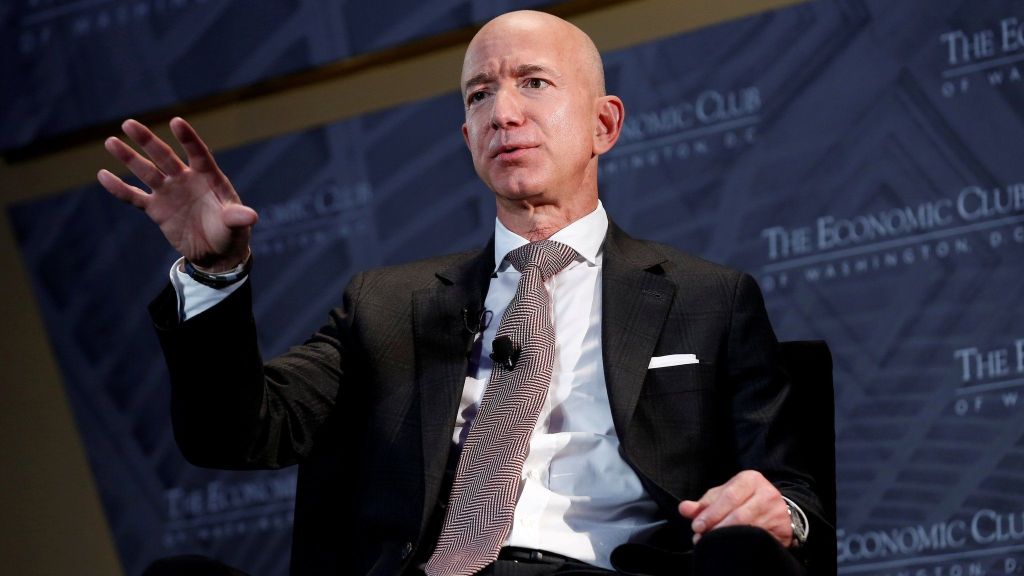
Pictured above is former Amazon CEO Jeff Bezos delivering a speech discussing Amazon’s future to investors in 2019.

The infamous Jeff Bezos is stepping down from his position as CEO at e-commerce giant Amazon Inc. and will move into the role of executive chair starting in the third quarter. He is the richest man in the world with a net worth over $180 billion. He is a majority shareholder of Amazon and also owns the Washington Post and space company Blue Origin. Bezos will be replaced by Andy Jassy. 

Bezos is a Princeton alumni and began his career on Wall Street. He quit his job checking out balance sheets and investments in 1994 and opened Amazon.com in 1995. The company originally sold books on their website in the U.S. and other countries. Amazon went public in 1997 with an IPO price of $18 per share. The conglomerate has grown from a simple website selling books to a massive corporation that manages a video production segment, owns the Kindle reader, manages Amazon web services and owns Whole Foods. Amazon has plenty of room for potential growth in the future, and the stock price closed on Tuesday, Feb. 3, 2021 for $3,380 a share. The future is bright for Amazon and many consumers, from young college students to retirees, who love to purchase items on the site. 

Bezos is reportedly stepping down to focus on other business prospects and devote more time to Blue Origin, the Washington Post, Day 1 Fund and his Earth Fund. If you are wondering if you can buy stock in Blue Origin to chase earnings like Amazon, you are out of luck. The company was founded in 2000, is privately held and the business intends to transform space travel. Many rumors have circulated online that Bezos will compete with Elon Musk for space travel objectives. The Washington Post is a major news organization and Bezos bought the company in 2013 for $250 million. The Day 1 fund is Bezos philanthropic approach to life and the fund intends to create preschools for underdeveloped communities. Bezos’s earth fund is dedicated to providing grants to people who fight and provide solutions for climate change. As Bezos will leave Amazon to focus on other prospects, he will pass the reins onto Andy Jassy. 

Andy Jassy has been with Amazon for years and he assisted in developing Amazon Web Services (AWS) in 2003. He became CEO of AWS in 2016. Jassy, who is Harvard educated, came onto the scene with Amazon in 1997. AWS represents 10 percent of Amazon’s total revenue and they mainly compete with both Google and Microsoft. For the fourth quarter of 2020, AWS reported a 28 percent growth in sales but fell short of many expectations. Jassy would like to propel Amazon and grow the company. 

The future is looking exceptionally strong for Amazon; the company has the opportunity to continue as a highly profitable business for shareholders. In addition, time will only be able to tell the legacy of Jeff Bezos, as he strives to push human innovation further by pushing the limit of space travel with Blue Origin.  

dangelom2@lasalle.edu

Cathie Wood and ARK Innovation: the Newest Tech Bulls

Business

Michael D’Angelo, Staff

charlierose

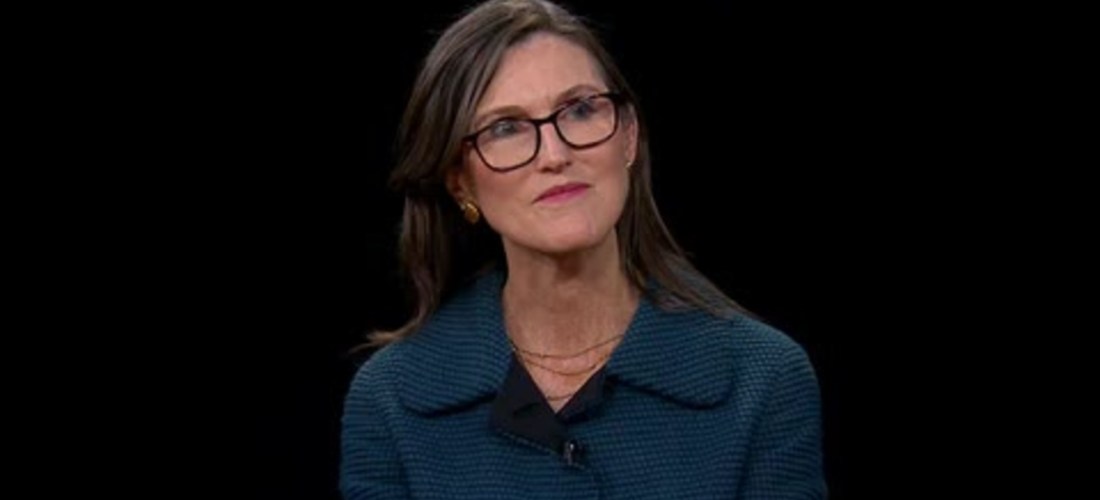
Founder, Chief Executive Officer and Chief Investment Officer of ARK Invest, Cathie Wood (pictured above), is known on the street as a star stock-picker.

Chances are if you are a retail or an institutional investor you probably hold long positions in exchange traded funds (ETFs) or equities relating to the technology industry. Many investors want to chase the next hot technology company that is going to change the world while, preferably, garnering high returns. Some retail investors do not have the time, knowledge, energy and/or skill to pick their own individual stocks. Instead of picking stocks by themselves, investors turn to institutional fund managers to pick heavy stocks for them. Investors will purchase ETFs and mutual funds which track tech companies’ performance.

Many institutional fund managers create ETFs dedicated to following tech companies. A major ETF which tracks the tech heavy NASDAQ composite, QQQ is managed by Invesco. Vanguard manages VGT which focuses on information technology and State Street manages multiple funds dedicated to tracking various tech stocks’ market performance. 

The newest fund manager from the street to popularize tech fund management is Cathie Wood at Ark Investment Management, LLC. Wood is the real deal with managing portfolios. She holds the title of CEO and CIO of Ark Investment Management LLC. In the past, Wood worked as an assistant economist with the Capital Group in the late 70s, then as a managing director for Jennison Associates LLC and then as a limited partner for Tupelo Capital Services. Later she worked as a Chief Investment Officer at Alliance Bernstein. Wood joined ARK investment Management in 2014 and, as mentioned above, she holds the title of CEO and CIO. Wood certainly has plenty of experience in the industry and her fund returns are impressive. 

Wood managed the largest actively managed ETF in 2020 which is the Ark Innovation ETF. The ticker symbol of the ETF is ARKK. ARKK’s objective is to seek an increase in long-term capital growth by investing at least 65% of the company’s assets in American and foreign tech equities that will change the world around us. Ark calls world-changing equities, a “disruptive innovation.” 

Wood has been crushing the game since 2016 with the Ark Innovation ETF. A quick look at the prospectus for ARKK reveals the ETF returned at market value 66.47% for the year ended on July 31st, 2020. In 2019, the total market return was 12.27%, 52.38% in 2018, 43.72% in 2017, 4.9% in 2016 and from October 31st, 2014 to August 31st, 2015, the return was 0.50%.  As of December 31st, 2020, ARKK’s top 10 holdings were Tesla (10.8%), Roku (6.9%), CRISPR Therapeutics (5.5%), Square (5.3%), Teladoc Health (4.4%), Invitae Corp (4.1%), Zillow (3.1%), Pure Storage (2.8%), Proto Labs (2.8%) and Spotify (2.7%). ARKK closed January 26th at $141.38.

Ark maintains other actively managed ETFs like Ark Next Generation Internet ETF (ARKW), ARK Fintech Innovation ETF (ARKF), ARK Genomic Revolution ETF (ARKG), ARK Autonomous Technology and Robotics ETF (ARKQ), the 3D Printing ETF (PRNT) and ARK Israel Innovative Tech ETF (IZRL). All of these ETFs are dedicated to finding innovative companies with the objective of changing their respective industry and the world. 

Wood still has time to prove her stock picking skills and to return more money to her shareholders. Wood has expressed interest in creating a bitcoin ETF after bitcoin hits a $2 trillion market capitalization, and she has further expressed intent on creating an ETF dedicated to following space companies. The future is looking bright for both ARK and Wood. Time will only be able to tell the success of these companies and the bullish tech attitude of their founder.

dangelom2@lasalle.edu

Janet Yellen Confirmed as Next United States Treasury Secretary

Business

Elizabeth McLaughlin, Staff

The Washington Post

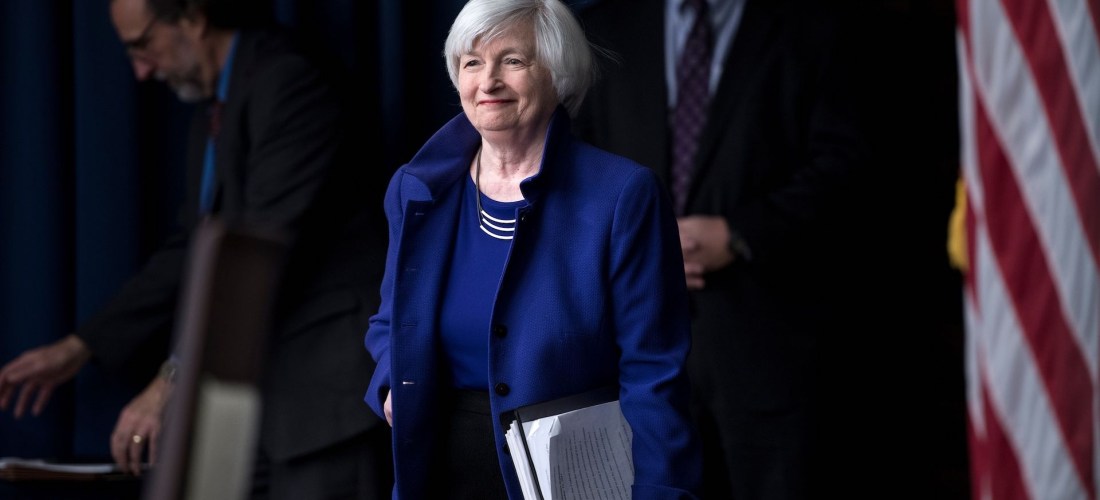
Janet Yellen, pictured above, was recently confirmed by the Senate in a bipartisan, 84-15 vote, making her the 78th Secretary of the US Treasury and first woman to hold the position.

She got her undergraduate degree in Economics from Brown University and then a PhD in the same field from Yale. From there, she taught economics as a professor at Harvard. After that, she researched international monetary policy as an economist with the Federal Reserve’s Board of Governors. She taught at London School of Economics and University of California, Berkeley. She was confirmed unanimously by the Senate to chair the Council of Economic Advisers under Bill Clinton. Then, she became the president and CEO of the Federal Reserve Bank of San Francisco, as well as a voting member of the Federal Open Market Committee. From there, she graduated to the vice chair of the Federal Reserve Board of Governors and eventually the chair of the Federal Reserve — the first female to hold that position. As if that weren’t enough, she became a distinguished fellow in residence at the Brookings Institution. She holds nine honorary degrees ranging from a doctorate in science to a doctorate in philosophy. Her name is Janet Yellen, and her most recent accomplishment to be added to an already long list is being confirmed as the newest secretary of the United States Department of the Treasury.

Janet Yellen is the first female treasury secretary and the first person ever to lead the three most powerful economic bodies in the United States government: the Treasury Department, the Federal Reserve, and the White House Council of Economic Advisers. She was confirmed by the Senate on Jan. 25 in a bipartisan vote of  84-15. In her role as Fed chair, Yellen was well-liked by both Democrats and Republicans. Her ability to appeal to both sides of the aisle will likely bode well for the Biden administration, which begins amidst unprecedented partisan tension.

Yellen is a Keynesian economist and considered by many to be a dove, which is another way of saying she is generally more concerned with unemployment than with inflation. She received criticism for keeping interest rates too low for too long in her capacity as chair of the Federal Reserve. Some of her opponents admit that she can act more as a hawk by hiking interest rates if necessary.

As Yellen steps into her role as treasury secretary, she inherits a hefty to-do list: propose and pass another fiscal stimulus bill, advise President Biden on carbon tax policy, maintain the dollar as the world’s international reserve currency, provide insight on long-term economic recovery post-Covid-19…the list goes on. Some of these issues may appear more immediately pressing than others — Americans have been waiting months for much-needed and adequate stimulus. Regardless, Yellen will play a key role in bolstering a floundering economy.

On Jan. 20, Yellen appeared before the United States Senate Committee on Finance to persuade lawmakers to pass President Biden’s $1.9-trillion Covid-19 relief plan. The plan includes increasing the minimum wage and expanding family and medical leave — two policies that do not have strong Republican support. Yellen believes that “we have a long way to go before our economy recovers,” so Congress must “act big” to support millions of struggling American families.

Another item on Yellen’s agenda is climate action. For years, Yellen has opined that climate change poses a risk to global financial stability indicating that she will “act big” on climate action in her role as treasury secretary. Her support for a carbon tax goes all the way back to her time as chair of the White House Council of Economic Advisers under President Bill Clinton. In addition, she co-founded a nonpartisan, international think tank called the Climate Leadership Council (CLC), which advocates for a carbon tax of around $40 a ton and increases 5 percent each year. In turn, this tax would filter back into American pockets in order to offset the costs of increased energy prices. Moreover, the CLC advocates for penalties on carbon-intensive products in the form of border-adjustable taxes on imports. The plan has drawn some criticism from progressive climate activists and groups and, perhaps deservingly so; ExxonMobil and Shell were quick to sign on as “founding corporate members” of the plan. Beyond that, Yellen plans on pushing for emissions reductions. She does not believe that a carbon tax alone is enough to address climate change and ensure global financial stability. In her capacity as treasury secretary, Yellen could establish a national green bank to encourage investment in sustainable infrastructure. She could also pressure international financial institutions to divest from fossil fuels.

Yellen’s bipartisan confirmation by the Senate represents a marked shift in the political and economic cultures we have grown accustomed to for the past four years. An exceptionally qualified expert with a robust resume has been appointed to a cabinet-level position with support from both parties. Her appointment is uncontroversial, expected, and comforting; three adjectives we could all use a little more of these days. The only thing lengthier than her impressive curriculum vitae? Her to-do list.

mclaughline7@lasalle.edu

Making Sense of Bitcoin: a Beacon or a Bubble for Investors?

Business

Michael D’Angelo, Staff

ABC7

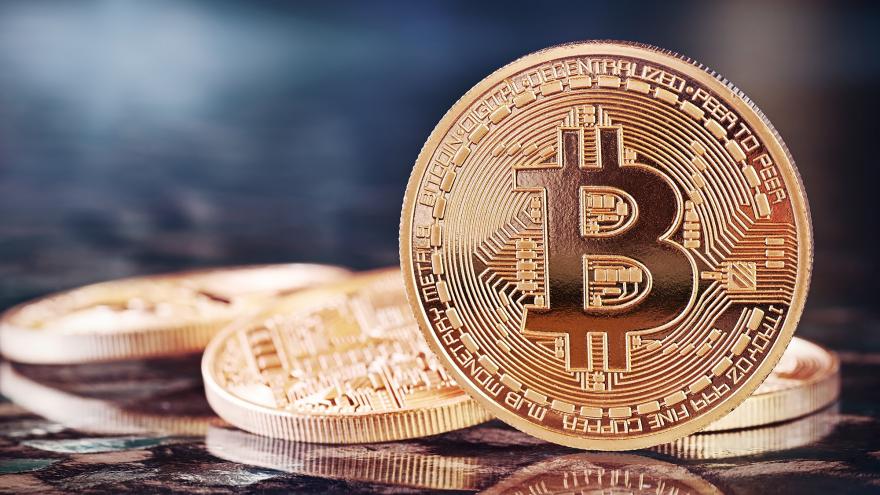
Bitcoin’s meteoric rise coupled with uncertainty around where its value derives from as an asset has some analysts referring to it as a “faith-based” asset.

Bitcoin has maintained a strong presence in recent financial headlines. Some popular headlines mention an individual who lost his password to access millions of dollars’ worth of the cryptocurrency, bitcoin surging to an all-time high past $35,000 or financial pundits declaring bitcoin as the “next gold.” Certainly, if you are a retail or an institutional investor, the asset’s massive gains have certainly caught your attention.  

Bitcoin is a cryptocurrency which currently has the highest market value of any alternative coins. Bitcoin has an increasingly volatile trading history since its original inception and Bitcoin was created in 2008 by a mysterious figure known as Satoshi Nakamoto. Bitcoin operates as a cryptocurrency and the original goal was for individuals to make online purchases without a paper trail, much like if one uses physical cash in the real world to purchase something. Nakamoto designed the idea of bitcoin as a decentralized digital currency that anyone in the world can store on their computer with a public ledger of transactions. 

In the beginning, bitcoin was utilized for people to make illegal transactions online via the dark web. As the price gradually increased and then declined over the years, many speculators have jumped on the coin. Many bitcoin bulls view the coin as an alternative to gold and the coin serves as a hedge against inflation. 

The first Bitcoin transaction occurred in 2009 and Bitcoin was used shortly in 2010 for a real-world transaction when an individual utilized 10,000 Bitcoins to buy two pizzas in the state of Florida. Bitcoin’s price has fluctuated widely and since its inception the coin has grown over 8,500 percent. Bitcoin experienced a major bubble burst in 2017. Many professionals attribute this burst to an insurgence of billions of alternate coins flooding the cryptocurrency market. These new coins, known as the Initial Coin Offerings (ICOs), shaked the market. As of recent, many institutional investors entered the market. Square and MicroStrategy purchased Bitcoin while Fidelity and PayPal allowed the consumer to buy cryptocurrency on their websites. 

In addition to Bitcoin’s appeal to various investors, American financial regulators have taken an interest in the coin. Joe Biden’s Treasury nominee, Janet Yellen, stated on Tuesday that cryptocurrency transactions were used mainly for illicit financing. She is highly concerned with the relationship of Bitcoin and terrorism financing. 

As more and more people jump into Bitcoin and institutional investors dive in as well, they are only fueling a potential bubble just waiting to burst. Bitcoin is a classic example of the greater fool theory at play. The greater fool theory states that it is possible to make money by purchasing an asset then selling at a later date to another individual known as a “greater fool.” Retail investors are just diving into bitcoin to not miss the price increase. As the price grows, many do not want to be left out from the gains achieved in the past.

The current value of Bitcoin has no intrinsic value. Bitcoin is backed by nothing. In comparison to the American dollar, the dollar is backed by the full faith and credit of the American government. Bitcoin can also be debated on the grounds of inflation. Many will argue that the American dollar is becoming weaker and the Fed has allowed “too much money-printing.” This argument has been around for close to three decades and is not based in any factual evidence. Inflation is not a true primary concern amongst economists. For example, the Consumer Price Index (CPI), which is an average of a basket of prices for consumer goods and services, has not exceeded more than 5.6 percent since 2000 for all items. Since 2010, the CPI has not exceeded 4 percent for all items

As the price of Bitcoin will only increase, investors with all types of financial assets need to take a back seat and question the future of cryptocurrency and the potential of a bubble just waiting to burst. After all, they do say history repeats itself.

dangelom2@lasalle.edu

Ant Group’s world record-setting IPO in Shanghai and Hong Kong put on halt by Chinese regulators

Business

Bill O’Brien, Editor

“There’s a saying in China: ‘The tallest nail gets hammered down,'” said Duncan Clark, author of “Alibaba: The House that Jack Ma Built” and founder of investment advisory firm BDA China.

India Today

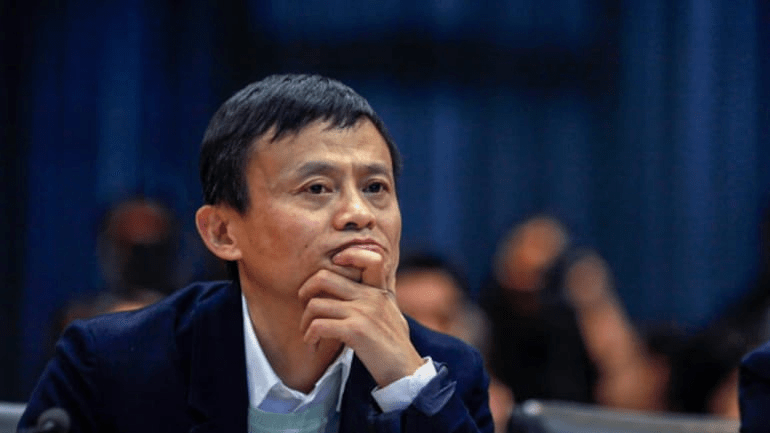
Jack Ma, pictured above, is not formally associated with the fintech company, Ant Group, but is the company’s controlling shareholder. Analysts are putting blame on the ecommerce mogul for recent statements criticizing Chinese regulators.

As U.S. markets whipsawed for the last 24 hours amid Election Day chaos, a leading fintech company in China experienced a ‘day of reckoning’ of sorts. The unicorn fintech company, Ant Group, was on track to set a record in raising capital from public markets with a $34.5 billion dollar IPO. Ant Group offers numerous services to its consumers, which include mobile payments services, wealth management, a third-party credit rating system and a mutual aid platform which “provides a basic health plan to protect participants against 100 kinds of critical illnesses.”

The company has made strides outside of the country into Europe as well. Ant Group’s mobile payment platform, Alipay, has existing relationships with numerous European digital wallets apps in Finland, Norway, Spain, Portugal and Austria. The fintech company has made headway in Britain as well, acquiring international money transfer services provider, WorldFirst, for $700 million in 2019 and reaching an agreement with Barlcaycard that enabled British retailers to accept Alipay in their stores.

The fintech company has been making incredible progress, which is why it is unsurprising that Chinese regulators yanking their IPO sent Alibaba, one-third shareholder of Ant Group, reeling. Alibaba, trading off a high of $310.73 early Monday evening (4:00P EST), fell 7.8 percent to $286.31 amid the news before rebounding to around $298.40 this Wednesday afternoon.

Analysts are pointing fingers at the controlling shareholder of the company and founder of Alibaba, Jack Ma, who recently gave a speech criticizing Chinese regulators for their risk aversion. “What we need is to build a healthy financial system, not systematic financial risks,” the Ant Group co-founder said at a conference in Shanghai. “To innovate without risks is to kill innovation. There’s no innovation without risks in the world.” He also highlighted the need for systemic reform in China’s financial sector, describing it as “a legacy of the Industrial Age.” Ma continued, saying, “we must set up a new one for the next generation and young people. We must reform the current system.”

Chinese regulators responded shortly after as if Ma had spit in their face, bringing Ant Group executives and Ma in for “regulatory interviews” which resulted in regulators deciding to suspend the fintech company’s initial public offerings in Shanghai and Hong Kong and prompting Ant Group to release the following statement to investors:

“Ant Group Co., Ltd. (the “Company”) announces that it was notified by the relevant regulators in the PRC today that its proposed A Share listing on the STAR Market is suspended as the Company may not meet listing qualifications or disclosure requirements due to material matters relating to the regulatory interview of our ultimate controller, our executive chairman and our chief executive officer by the relevant regulators and the recent changes in the Fintech regulatory environment. Consequently, the concurrent proposed H Share listing on the Main Board of The Stock Exchange of Hong Kong Limited shall also be suspended. Further details relating to the suspension of the H Share listing and the refund of the application monies will be made as soon as possible.” (ANT GROUP CO., LTD.)

Ant Group has made it clear it still intends to launch an IPO, preferably before the Chinese New Year, but analysts suspect they may need to do so under stricter capital requirements that will be set by the Chinese regulatory authorities or that it may need to sell its microlending business to do so.