The Trump Administration and gender ideology

Politics

Jessica Perez-Salinas, Writer

During the 2024 election, Delaware voted Sarah McBride into Congress, making her the first openly transgender congressperson . Later that month, legislation was introduced that banned trans women from using bathrooms and other similar facilities that did not align with their biological sex. This was not a coincidence, and McBride was cited as the main reason for this change. Trans rights have been and continue to be threatened. Current challenges include cutting federal funding for gender-affirming care, eliminating gender options on federal IDs and removing federal protections for transgender individuals.

Although only composing around 1.6% of the U.S. population, transgender and nonbinary individuals have become part of a highly contentious issue around “gender ideology.” Gender ideology is a term that conservative groups and President Donald Trump have defined as the idea that gender is not binary. Other groups including the American Medical Association have supported trans individuals and acknowledge the differences that arise when solely comparing biological sex. However, gender ideology has been seen as an intrusion on women’s spaces but also a threat to children. Within his first month in office, President Trump has issued an executive order that directly targeted “gender ideology” and trans rights. Government agencies have 30 days as of Jan. 20h to address the demands in the executive order. 

One major change listed in the executive order is the administration’s decision to use only biological sex as sex markers. Federal agencies had allowed trans and nonbinary individuals to indicate their preferred gender, providing the option “x” on federal IDs. Now, federal agencies and IDs must only use either male or female and agencies cannot renew passports or federal documents unless it will align with biological sex. This has already begun to impact transgender individuals, with some reporting that federal agencies have refused to give back documents when they tried to request a name change and marked their gender as “x”. Documents included birth certificates, state IDs and other federally recognized identification. Furthermore, federal employees have been required to remove pronouns or any details that support “gender ideology” from their work profiles or email signature blocks. 

Trans medical rights will also see major pushback in the coming presidency. The issue of transgender healthcare has been highly debated even among democrats, with many people opposing healthcare for trans youth. A 2022 report by the Pew Research Center found that although over half of Americans support trans rights, fewer support federal funding being used for trans medical care. Much of that debate has focused on whether or not children should be receiving puberty blockers, gender-reassignment surgeries and more. 

Although the Biden administration had expanded on trans rights in healthcare, in 2024, Biden signed a bill that banned health coverage for trans medical treatments for the children of military families. In Trump’s executive order, he has banned any use of federal funding for gender affirming care for those below the age of 19. Many argue that this will have a significant impact on the mental health of trans youth and make it harder to transition after puberty. Furthermore, gender affirming care for trans youth is rare and has not presented significant challenges that require this degree of federal regulation.

In addition, Trump has furthered bans on gendered facilities impacting prisons. Trans individuals already belong to a vulnerable population and are at a higher risk of sexual violence by prisoner/staff and disease while in prison. This could be exacerbated if they are forced to be in prisons that do not match their preferred gender. The executive order requires that individuals must stop receiving any gender affirming care while in prison and that inmates must be moved to a prison that aligns with the biological sex.

Finally, trans military personnel are banned from openly serving as transgender, as well as from receiving gender-affirming care. Trump argued that trans individuals and their beliefs do not align with the values and rigorous requirements that are needed to serve in the military. He also argued that providing gender affirming care would cost the U.S. too much money, although it is a very small portion, especially when compared to other forms of health service provided.  

Although these executive orders are just beginning and many are expected to be challenged in court, this presents a dangerous landscape for trans individuals and LGBTQ+ rights in the following years.  

Trump chooses Kash Patel to lead FBI

Politics

Cole Welsh, Editor

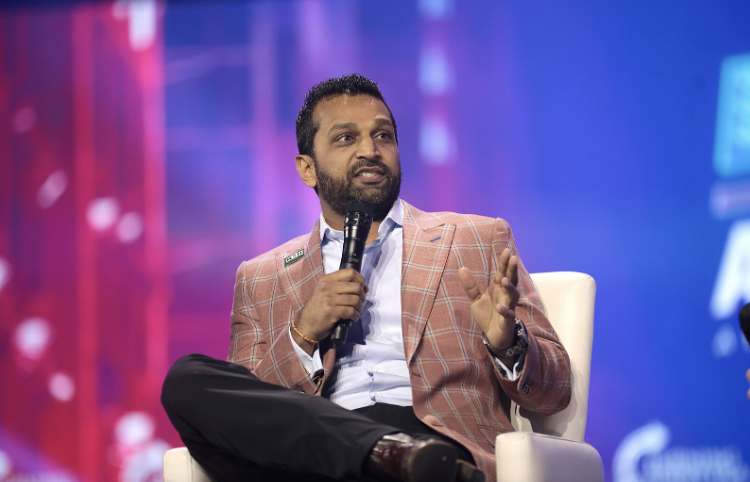
Following several weeks of high-profile cabinet and personnel announcements, President-elect Donald Trump selected former federal prosecutor Kash Patel to lead America’s Federal Bureau of Investigation (FBI).

Although the outside-of-the-box pick has been met with both praise and scrutiny, Trump’s nomination of Patel is very much in line with Trump’s promise of reforming the FBI.

Patel, 44, is an attorney and the son of Indian immigrants.

While Patel is best known for his loyalty to Trump and conservative credentials, his history of government service in the legal and national security fields is extensive.

After graduating from law school, Patel moved to Florida and spent eight years as a public defender, trying a multitude of complex cases at trial, ranging from international drug trafficking to financial crimes.

In 2014, Patel joined the US Department of Justice as a terrorism prosecutor, overseeing the investigations and prosecutions of criminals aligned with al-Qaeda, ISIS and other terrorist groups. He simultaneously served as a legal liaison to the Joint Special Operations Command, working with America’s elite counterterrorism units to conduct global operations against high-value terrorism targets.

After a stint as a staffer on the House Permanent Select Committee on Intelligence, Patel was hired to work in President Trump’s National Security Council and eventually became the senior director for counterterrorism. In addition to coordinating the safe return of numerous Americans held hostage abroad, Patel implemented Trump’s counterterrorism priorities, including the killing of ISIS leader Abu Bakr al-Baghdadi in Syria.

Following his role as the deputy director of national intelligence, where he oversaw the operations of all 17 intelligence agencies and administered the President’s Daily Briefing, Patel served in the Department of Defense as the chief of staff to the acting secretary.

While Patel has faced criticism from Democrats and the media for his unwavering loyalty to the president-elect, Patel’s nomination is not surprising given Trump’s displeasure with the current director, Christopher Wray, who he appointed back in 2017 during his first term in the White House. 

Wray, a Republican, has invoked Trump’s ire over what Trump views as political investigations against him, including the FBI raid on Mar-a-Lago in 2022.

As Wray has three years remaining in his ten-year term, the current FBI chief would have to resign or be fired for Patel to assume the position.

On the campaign trail, Trump repeatedly promised to end the weaponization of the FBI, including the targeting of traditional Catholics and pro-life activists in recent years.

A relentless critic of corruption and the “deep state,” Patel is widely seen as someone who will implement Trump’s desired reforms at the bureau.

In addition to putting more special agents in the field to “chase down criminals,” Patel has expressed an interest in targeting federal employees and other individuals who leak sensitive information to reporters and instituting major surveillance reform.

Assuming Wray resigns or is fired, it remains to be seen if Patel will be confirmed by the US Senate, where Republicans gained a three-seat majority in the November election.

If confirmed, Patel would lead the FBI in tackling a wide variety of challenges, including America’s violent crime epidemic, terrorism concerns and the overall threats posed by China and Iran.

Kash Patel via Wikicommons

Protests in Islamabad

Politics

Jessica Perez-Salinas, Staff Writer

The Events

On Nov. 25, around a thousand protestors headed towards Islamabad, the capital city of Pakistan. These protestors were led by Bushra Bibi, the wife of former Prime Minister, Imran Khan. Protestors called for the release of Khan, who has been imprisoned since last year, a move he believes has been politically motivated. Protestors rallied at the capital for two days, defying a two-month state ban on public gatherings. There have been conflicting reports about casualties and injuries sustained by both parties. The government has reported that six soldiers were killed, claiming they occurred while encountering protesters. The government has called these protests an act of extreme terrorism and argued that the protestors have used excessive force that led to the death of the soldiers. The protestors have claimed two casualties and over 30 injured. However, reports vary, and many news outlets have been unable to gather a true count of casualties. Al Jazeera and Reuters have both reiterated the claims that two protestors were killed. Violent force was used by the Pakistani government including tear gas and live ammunition to settle the protests. The protestors allege that they were preparing for a sit-in and intended to peacefully protest until the government fired back at them. 

How it Started

The man at the center of this and one of Pakistan’s most controversial figures is Imran Khan. Khan served as the Prime Minister of Pakistan between 2018-2022, before being removed through a vote of no-confidence. In 1996, Khan founded the political party Pakistan Tehree-e-Insaf (PTI), which is a center-right party that aimed to focus on corruption and the establishment of an Islamic Welfare State. Many of his supporters are among the younger generation and those who were dissatisfied with the other major parties. 

During his term as Prime Minister, Khan was tasked with solving extreme economic challenges such as Pakistan’s severe debt, which only worsened with the COVID-19 pandemic. He instituted various austerity policies that restricted government spending but led to increased savings in the Pakistani economy. However, economic hardship plagued many Pakistanis as inflation continued to rise and essentials became more difficult to purchase. Furthermore, Khan and the military had a strained relationship that worsened due to conflicting opinions on foreign policy. All these factors further fueled the growing sentiment that his government was failing. As a result, former allies and oppositional parties decided to hold a vote of no confidence that removed him from office. Since then, political turmoil has risen between his supporters and the opposition. 

In August 2023, Khan was arrested and charged with various counts including corruption and for selling state possessions. He has also since been charged with anti-terrorism as a result of the protests that erupted after his arrest. His wife was also arrested and jailed for eight months under similar charges of corruption and was recently released on bail this past October. Khan has argued that his imprisonment has been politically motivated and has urged supporters to rally behind bars.

Now

Arrest warrants have been issued for dozens of protestors including many prominent leaders in the PTI and Bibi. This protest follows three other major protests, all calling for the release of Khan and have questioned the validity of the recent election. In February, the general elections were held where Nawaz Sharif won as Prime Minister, a member of one of the leading opposition parties. The PTI won the plurality of the votes but did not garner a majority. The PTI has claimed that this was due to government interference which included not allowing them to run with their party logo and restrictions on media leading up to the election. Khan has expressed his support for protestors and for his wife through X, who has yet to reappear since the protests were dissolved. For now, the future remains unclear. These protests have put a strain on Pakistanis and there are doubts arising within the party about the effectiveness of these protests. Despite this, many supporters believe that Khan’s release is essential to the establishment of democracy in Pakistan.

“An Underdog is a Hungry Dog”

Politics

Isabella Teti, Editor

After months of endless political ads, social media’s forced political content and election anxiety—everyone had some of it—the election has finally come to an end. While some of us are experiencing a mixture of feelings on the Presidential election results, in the Philadelphia region, many citizens have missed perhaps one of the biggest political upsets that happened in their own backyard.

Millennial born, but a new figurehead for young Gen Z adults is the 29-year-old State Senate-elect Joseph Picozzi. He describes himself on his campaign page as a Philadelphia native who is a “…son of a Philadelphia firefighter and a special educator…” and “a fourth and fifth generation son of Irish, Italian and Russian immigrants…,” whose familial legacy encouraged and inspired his interest in the government. Additionally, his biography explains that throughout his adolescence and young adult years he was appointed by Councilman Brian O’Neill to serve on the Philadelphia Youth Commission and earned the distinguished rank of Eagle Scout. His education includes graduating from Holy Ghost Prep and the prestigious Georgetown University. Moreover, he has “…worked for the U.S. House of Representatives and in public policy, where he focused on solutions to restore our cities.” Picozzi seemed to demonstrate the makings of a politician having both the education and experience to take on this daunting task, and the people in Northeast Philadelphia agreed.

The Republican candidate, according to an article for The Philadelphia Inquirer, ran an interesting campaign saying, “…Picozzi’s candidacy is unusual in that he does not come endorsed by the Republican Party of Philadelphia, stirring confusion among some GOP ward leaders who see the race as competitive.” The article explains further that Gianni Matteo, the spokesperson for Picozzi’s campaign said, “Often people think that Republicans are people arguing about culture war issues…constantly looking back in time…Part of Joe Picozzi’s run for state Senate is the fact that it’s this new, dynamic brand of conservatism that values urban areas. They’re foundries of the future.”

Joe Picozzi took full advantage of his underdog status, winning the district with a very slight lead over incumbent Senator Jimmy Dillon. This is explained in a subsequent Philadelphia Inquirer article that said, “Dillon was first elected in 2022 during a special election to fill the remainder of John Sabatina Jr.’s term, after he was elected as a judge.” Since 2001 the 5th district has been controlled by the Democratic Party and according to the Philadelphia City Commissioners website, reports show that Picozzi received the majority of 50.35% (50,534 votes) over his opponent Dillion receiving 49.52% (49,696 votes).

While a close race, Picozzi’s methods used are quite admirable, as they seem to retreat to “old school” practices. As stated on his campaign page, he planned a meet and greet event the past month where those who wanted to attend were able to “…hang out with Joe, learn about his campaign, share your ideas, and enjoy some dinner with members of the community.” It was small events such as these that allowed him to connect with the community in Philadelphia. 

Starting this campaign, Picozzi acknowledges he didn’t have much to begin his campaign, saying in a Q&A in a City & State article that, “When we started, we had absolutely no money. It was my Bitcoin bond, and from friends and family, small checks.” Further, he mentions he used what he could afford, basic clean up supplies, to host trash cleanups in the city. Yet, perhaps the most impressive part of his campaign was his “face to face” campaign devolving a personal connection to each resident. Furthermore, the article explains that “He claims to have knocked on 70,000 doors and, famously, exploited the social media that is his generation’s modus operandi from TikTok to Instagram.” He combined the old and new-generation campaign techniques to create election results that will hopefully benefit Northeast Philadelphia.

While every election is important in our country, driving our citizens to uphold their civic duty, this Philadelphian election’s key takeaway is perhaps one that could influence any future leader in politics: a dream, vision, and hardwork can triumph over any odds presented.

How Elon Musk reshaped the 2024 election

Politics

Nate Tramdaks, Staff Writer

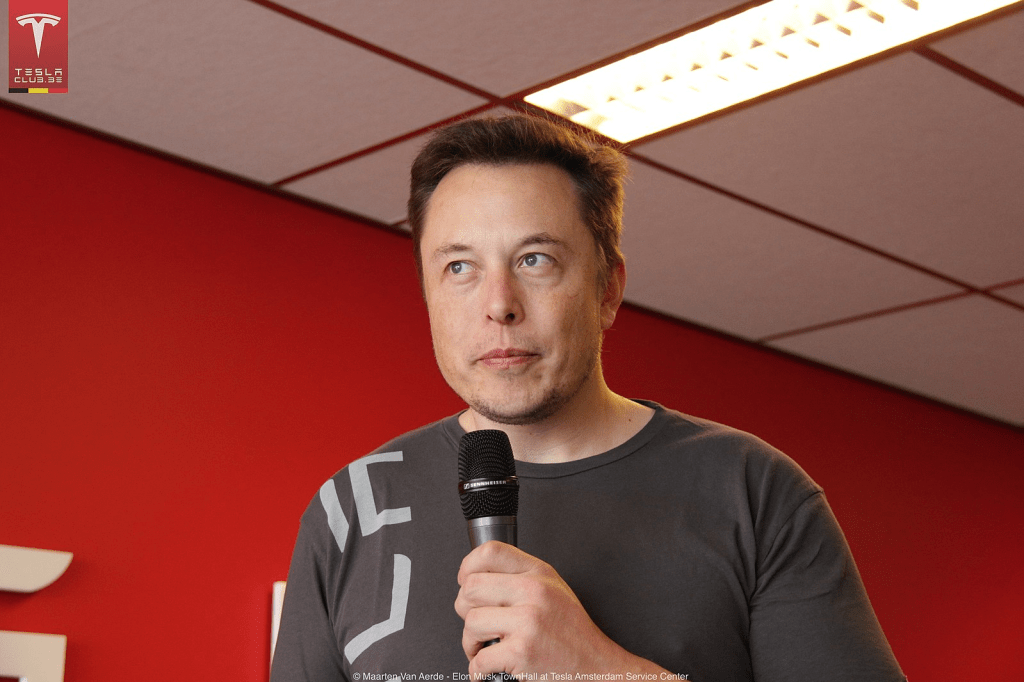
During the four to five months leading up to the election, Elon Musk, the CEO of Tesla, SpaceX and X, played a crucial part in Donald Trump’s election victory. Particularly through the use of his social media platform, X (formerly Twitter), his establishment of the America PAC, and his targeted efforts in the key battleground state of Pennsylvania. 

Elon’s acquisition of X allowed him to reshape the platform as a hub for his brand of free speech absolutism, allowing for political discourse on both sides. Under this brand he unbanned and welcomed Donald Trump back to the site, along with anyone else who was banned off of the site for speech-related reasons including people banned due to their involvement on January 6th, like Nick Fuentes.

This platform became a very powerful tool for political influence. Through X, he promoted pro-Trump content, disseminated partisan messages and engaged with influential figures. Notably, Musk’s interactions with podcaster Joe Rogan were instrumental in engaging and mobilizing young-male voters, a crucial demographic for Trump.

Joe Rogan released a podcast episode featuring Elon Musk the day of the election. Rogan also endorsed Trump the day before the election. Young men (ages 18-29) swung heavily for Trump this election as 56% voted for him. This highlights a massive leap from the 42% that Trump received from the same demographic in the 2020 election. 

In May 2024, Musk established America PAC, a super political action committee dedicated to supporting Trump’s presidential bid. By mid-October, Musk contributed nearly $118.5 million to the PAC, which spent $137.5 million by that time on initiatives to bolster the Trump campaign. 

One of the PAC’s controversial strategies was to give away a daily $1 million to registered voters in swing states, most notably in Pennsylvania. Participants had to sign petitions supporting the first and second amendments, essentially serving as mode of data collection for targeted voter outreach.

This faced legal scrutiny under allegations of an unlawful lottery and potential violations of federal laws prohibiting payments for voter registration. The legal pursuits failed and the giveaways continued, enhancing voter outreach in the key swing states. Trump went on to win seven out of seven key swing states, completely flipping the “blue wall” (Michigan, Wisconsin and Pennsylvania) that voted for Biden in 2020, as well as Georgia, Arizona and Nevada.

There was a targeted effort by Musk in the state of Pennsylvania, the most crucial state of all of the swing states, carrying 19 electoral votes, the highest of the seven states. Elon spoke at a Trump rally for the first time in Trump’s return rally to Butler, Pennsylvania, the same exact place where his first assaination attempt took place.

During his speech at the rally, Musk repeated Trump’s, “fight, fight, fight.” Musk later made an appearance at Trump’s rally in MSG, a week before the election. Trump won Pennsylvania by a very narrow margin of almost 2%, getting 50.43% of the vote to Harris’s 48.57%. Flipping key counties like Erie and Northhamptom helped Trump secure the win in Pennsylvania.

Following his election win, Trump has appointed Musk to his cabinet. Musk, along with Vivek Ramaswamy, will be running the Department of Government Efficiency (D.O.G.E.).

Elon Musk via WikiCommons

Trump picks combat veteran and Fox News personality Pete Hegseth to serve as secretary of defense

Politics

Cole Welsh, Editor

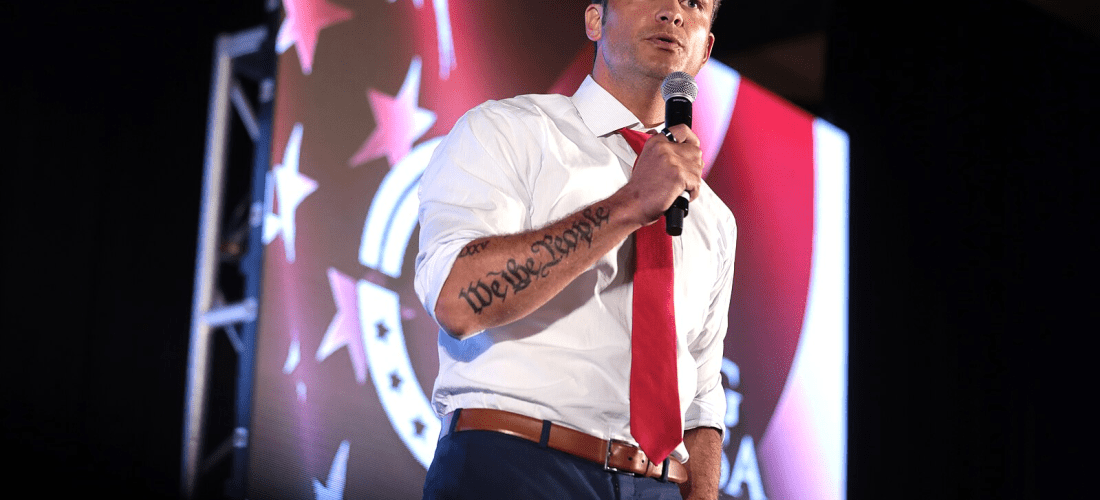
In one of his first personnel selections since winning the election, President-elect Donald Trump selected Fox News Channel host Pete Hegseth to lead America’s Defense Department.

Shocking many in the defense and political establishment, Trump’s pick of Hegseth is an unconventional choice that speaks to Trump’s promise of rebuilding and transforming the military.

Hegseth, 44, is a political commentator for Fox News and most recently was the weekend co-host of “Fox & Friends.”

While Hegseth is best known for his television career, his history of military service is extensive.

A decorated Army veteran, Hegseth was commissioned as an infantry officer in the Minnesota Army National Guard in 2003. In 2004, his unit was called to Guantanamo Bay, where he was awarded the Army Commendation Medal. After returning from Cuba, Hegseth volunteered to deploy to Iraq, where he served as an infantryman and was awarded the Bronze Star. In 2012, he returned to activity duty, deploying to Afghanistan as a counterinsurgency instructor.

Even when not deployed, Hegseth has been a steady advocate for America’s service members and veterans.

A Princeton graduate, Hegseth was the executive director of Concerned Veterans for America, an organization that advocated for greater privatization of the Department of Veteran Affairs.

In 2019, Hegseth urged Trump to pardon American soldiers who had been accused of war crimes. In particular, he championed the case of a former Green Beret set to stand trial in the killing of a suspected Afghan bomb-maker. The effort was successful, with Trump pardoning Major Mathew Golsteyn and other servicemen.

The pick is a significant departure from Trump’s Pentagon picks in his first term, when he chose James Mattis, a retired four-star general, and Mark Esper, an Army secretary, to lead the Defense Department.

However, Hegseth’s military and conservative credentials, when paired with his loyalty to Trump, have certainly attracted the interest of the president-elect and his transition team.

While other Republicans were more critical of the New York billionaire, Hegseth was an early backer of Trump when he ran for president in 2016.

He was a serious contender to run the Department of Veterans Affairs in Trump’s first term, although Trump ultimately chose medical doctor David Shulkin for the role.

On many issues, Hegseth and Trump appear to be in line.

After Trump ordered the killing of Iranian General Qasem Soleimani in January 2020, Hegseth supported the decision, denouncing Iran as an “evil regime.”

Hegseth has also said that he wants to “clean house” at the Pentagon.

Specifically, he wants to purge the military of “woke” generals and civilian leaders who have left the military dangerously weak by prioritizing diversity, equity and inclusion over combat readiness.

Like Trump, he is also critical of NATO allies who are not spending enough on defense, believing that these countries have not lived up to their commitments to the transatlantic alliance.

While this pick is undoubtedly a “shot across the bow” for the military establishment, it remains to be seen if the former television host will survive a confirmation battle in the Senate.

If confirmed, Hegseth would lead the Pentagon with volatile conflicts on multiple fronts, including the Israel-Hamas War, the Russia-Ukraine War and the overall threats posed by China and Iran.

Pete Hegseth via WikiCommons

The Washington Post’s Endorsement 

Politics

Jessica Perez-Salinas, Staff Writer

On Oct. 25, the Washington Post released a statement announcing their decision not to endorse a presidential candidate in the 2024 presidential election. This decision will also apply to future presidential elections. Written by William Lewis, publisher and chief executive officer at the Post, the statement described the decision as an effort to go back to their roots and reestablish themselves as independent media. This decision has been met with strong criticism from within the paper and by readers.

Beginning with Jimmy Carter, the Post has endorsed a presidential candidate in every election. Now, the Post aims to establish itself as an unbiased and non-partisan news source. This is reflected in their statement, “Our job as the newspaper of the capital city of the most important country in the world is to be independent.” This sentiment is common in journalism. Journalists have been known to refrain from announcing their vote as part of their code of ethics. However, many within and outside the newspaper believe that non-partisanship is not the deciding factor behind this decision.

Jeff Bezos is the founder of Amazon and Blue Origin, alongside being the Post’s owner. Blue Origin is an aerospace company that holds a 10 billion dollar contract with the United States government. This contract had been allegedly blocked by the Trump Administration for criticisms expressed in the Post towards Donald Trump. Many, including those in the company, believe the non-endorsement was made to keep good terms with Trump if he wins the election. 

This theory was further fueled by a TikTok video on the Post’s account which suggested that Bezos is afraid of retaliation if the Post endorses Kamala Harris. Bezos has argued against those claims and stated that this decision was to establish an unbiased press. Bezos has protected the Post from criticism under the Trump administration, however, this decision went against many of those at the Post. Multiple editors and staff at the Post have expressed criticism, stating that a non-endorsement is silence as Trump poses a looming threat to the free press.

It is important to note that the editorial section of the newspaper had an endorsement for Harris prepared, but stated that Jeff Bezos blocked them from releasing it.

David Hoffman, one of the staff that left the editorial board, talked about his decision to leave arguing that Trump presents the threat of autocracy telling CNN, “I don’t want the Post to be silent about it, and the fact that we’re not going to endorse is a degree of silence I can’t stand.” In an interview with CNN, former editor at large, Roger Kagan, talked about his decision to leave the Post. He further claimed that Trump will retaliate against the free press and that Bezos’ decision was made as a response to that. To him, Trump represents a threat to democracy. These claims are not completely unfounded. An article by  NPR states that Trump has threatened to retaliate against news sources and take control of the Federal Communications Commission (FCC).

Since this change, the Post has lost an estimated 250,000 subscribers – roughly 10% of their total subscribers, according to sources through NPR and the AP. Prior to this, the Post had been experiencing positive growth in subscribers since the 2016 election. The Post has confirmed that they have lost a significant portion of subscribers but will not give out exact figures. It is difficult to predict how this will impact them in the long run. Some readers may return after the election, while others who have paid a yearly subscription still could be compelled to come back.

The Post has served as an important outlet for American media. They are one of the few major news sources that continues to provide high quality news and can conduct major investigations. In the digital age, the loss of revenue from these subscriptions is dire. News companies are struggling daily as they combat falling subscriptions due to the increased presence of the internet. The Post’s staff will also be affected by these decisions as this could provide the looming presence of layoffs. The impact will not be known for some time, but it does reveal a concerning image of the future of the free press. 

Republicans dominate on Election Day amid high voter turnout

Politics

Cole Welsh, Editor

On Tuesday, Americans went to the polls to cast their ballots in what was already expected to be a high turnout election.

In the most closely watched race of the night, Donald Trump defeated Kamala Harris to become the next president of the United States.

Providing him with the 270 Electoral College votes needed to emerge victorious, Trump won the Rust Belt states of Pennsylvania, Wisconsin and Michigan. Trump also notched decisive victories in the key swing states of Georgia and North Carolina.

At the time of this article’s publication, the swing states of Arizona and Nevada have yet to be called for either candidate, although Trump possesses a sizable lead in both states.

Additionally, Trump became the first Republican presidential candidate to win the popular vote since George Bush’s victory in 2004.

In the battle for the U.S. Senate, Republicans won a handful of races, flipping the chamber to the GOP.

In West Virginia, Republican Governor Jim Justice won the race to replace outgoing Senator Joe Manchin, a centrist Democrat.

In Ohio, Republican businessman Bernie Moreno defeated longtime incumbent Sherrod Brown.

In Montana, Democrat John Tester lost re-election to 38-year-old former Navy SEAL Tim Sheehy.

In Pennsylvania, Republican combat veteran Dave McCormick narrowly defeated three-term incumbent Bob Casey.

For the Democrats, incumbent Senator Tammy Baldwin won reelection to retain her seat in Wisconsin.

The race for Arizona’s Senate open seat has yet to be called, although Democrat Ruben Gallego maintains a small lead over Republican Kari Lake.

Likewise, the Senate matchup in Nevada has also not been called, as incumbent Senator Jacky Rosen maintains a slim lead over Republican challenger Sam Brown.

With a razor-thin margin of victory, Democrat Elissa Slotkin, a current congresswoman and former Central Intelligence Agency analyst, bested Republican Mike Rogers to represent Michigan in the U.S. Senate.

In regard to the other chamber of Congress, it is currently too early to determine which party will win control of the US House, as a plethora of competitive congressional seats have yet to be called.

That being said, Republican victories were not just an occurrence at the federal level.

In Pennsylvania, Republicans won the state attorney general’s race and kept the other two statewide row offices. Dave Sunday, a Navy veteran and the current district attorney of York County, defeated Democrat Eugene DePasquale to become PA’s top prosecutor after running on a tough-on-crime platform. Republicans Tim DeFoor and Stacy Garrity won their reelection contests for auditor general and state treasurer, respectively.

As it pertains to the state legislature in Pennsylvania, Republicans are projected to retain control of the State Senate.

In the contest for PA’s 5th Senatorial District, which covers most of Northeast Philadelphia, 29-year-old Republican Joe Picozzi unseated Democratic incumbent Jimmy Dillon. In doing so, Picozzi will become the first Republican state senator to represent Philadelphia in more than two decades.

State House races in Pennsylvania were no less competitive. Currently, Democrats maintain a one-seat majority in the chamber. Due to several close races having yet to be called, control of the State House could still be won by either party.

While Tuesday was certainly a great night for Republicans up and down the ballot, Americans will get a better idea of the election results once the remainder of the votes in several states are counted. However, it is clear that the GOP’s message resonated with voters, as the party made inroads with voters across all demographics and geographical areas.

2024 Philadelphia general election voter guide

Politics

Cole Welsh, Editor

In less than two weeks, Americans will go to the polls and cast ballots in what is expected to be a high-turnout election.

This general election will be on Nov. 5, 2024. Polls will be open from 7 a.m. to 8 p.m. in Pennsylvania.

While the presidential election has certainly attracted the most attention, contests will also be held for a variety of down-ballot races.

Vote via Wikicommons

In the presidential race, Vice President Kamala Harris will face off against Donald Trump, who previously occupied the White House. Due to the Electoral College system that determines the winner of the election, a small number of swing states will decide the election, with Pennsylvania arguably being the most notable.

In what many see as a battleground race to determine which party controls the U.S. Senate, Democrat Bob Casey, the incumbent, is seeking a fourth term to represent Pennsylvania and is running against Republican Dave McCormick, a businessman and combat veteran.

There are also several statewide races on the ballot.

For the open office of attorney general, Democrat Eugene DePasquale, the former auditor general of Pennsylvania, will face off against Republican Dave Sunday, who currently serves as the district attorney of York County. The incumbent, Michelle Henry, declined to run after being appointed to the position by Governor Josh Shapiro.

In the race for auditor general, incumbent Tim DeFoor, a Republican, is being challenged by State Representative Malcolm Kenyatta, a Democrat.

In yet another statewide race, Republican State Treasurer Stacy Garrity, who served in the US Army Reserve, will face a challenge from Democrat Erin McClelland, a former small business owner from Allegheny County.

There will also be races for Philadelphia’s U.S. House of Representatives seats.

In the race to represent Pennsylvania’s 2nd Congressional District, which covers all of Northeast Philadelphia and the River Wards, incumbent Democrat Brendan Boyle is being challenged by Republican Aaron Bashir, an accountant.

For the 3rd Congressional District, which covers much of Northwest and West Philadelphia, no Republican will appear on the ballot, meaning that incumbent Dwight Evans is virtually guaranteed to win reelection as a Democrat.

For the 5th Congressional District, which contains a sliver of South and Southwest Philadelphia, incumbent Democrat Mary Gay Scanlon will face off against Republican Alfeia Goodwin, a retired Philadelphia police officer.

In regard to Philadelphia’s representation in the PA Senate, incumbent Democrats Nikil Saval (1st District), Sharif Street (3rd District) and Vincent Hughes (7th District) are running unopposed in their general elections.

However, in the 5th District, which contains much of Northeast Philadelphia, candidates from both parties will appear on the ballot in what many expect to be a competitive race. Democrat Jimmy Dillon, the incumbent, will face off against Republican Joe Picozzi, who previously worked on Capitol Hill.

For the PA House, incumbent Democrats Amen Brown, Pat Gallagher, Ed Neilson, MaryLouise Isaacson, Joe Hohenstein, Jason Dawkins, Jose Giral, Malcolm Kenyatta, Ben Waxman, Elizabeth Fiedler, Regina Young, Jordan Harris, Rick Krajewski, Roni Green, Joanna McClinton, Morgan Cephas, Tarik Khan, Keith Harris, Danilo Burgos, Darisha Parker, Chris Rabb, Andre Carroll, Jared Solomon and Anthony Bellmon are all running unopposed.

Republican State Representative Martina White of Northeast Philadelphia will also be unopposed in the election for her district.

However, there is one race in Northeast Philadelphia that is extremely competitive and could even determine which party controls the PA House of Representatives. Democrat Sean Dougherty, a former assistant public defender, is running against Republican Aizaz Gill, who recently managed the successful re-election campaign of Republican Philadelphia City Councilman Brian O’Neill.

With issues such as the economy, illegal immigration, crime and abortion dominating this election, it remains to be seen how Americans, including Philadelphians, will vote in this election. This being said, a handful of races, including that for president, are surely expected to be competitive and may come down to just a small number of votes.

Voter fraud: Fact or fiction in Pennsylvania’s election laws

local politics, Politics

Lilly Geneva Billarrial, Staff Writer

PHILADELPHIA — Is this your first time voting? Have you recently moved to Philadelphia and are unsure of the process? Do you know your rights as a first-time voter?

Safe and secure elections are a fundamental pillar of democracy in the United States. As a swing state, Pennsylvania often finds itself in the national spotlight during presidential elections. For first-time voters, understanding your rights and distinguishing fact from fiction is crucial to ensuring your vote counts.

What is Voter Fraud?

Voter fraud refers to illegal interference with the election process, such as tampering with results, casting fraudulent votes or coercing someone to vote for a particular candidate or party. However, cases of voter fraud are extremely rare. Pennsylvania has strong measures in place to safeguard the integrity of its elections.

How Does Voter Fraud Affect Our Democracy?

“Voter fraud undermines trust in the electoral process,” said Madison Jane Griffin, a member of the Class of 2025. “The principle is one person, one vote, but when fraud occurs, it clouds what should be a positive experience. I also believe it fosters distrust in communities. Voter fraud does happen, but it’s on a much smaller scale than people think. The real danger is the perception of widespread fraud, which puts election workers—many of whom are volunteers—at incredible risk. I’ve witnessed election workers falsely accused of discarding ballots, which is never the case. Voter fraud is real, but the exaggerated view of it is more dangerous.”

First-Time Voters: Know Your Rights in Pennsylvania

According to Pennsylvania’s official website, no state or local government can deny a person the right to vote based on race, ethnicity, or national origin. Your right to vote can only be challenged if a poll worker or observer questions your residency in the precinct. Additionally, it is illegal for anyone to intimidate or coerce you into voting a certain way.

Voter Protections in Pennsylvania

Pennsylvania’s election laws provide specific protections for vulnerable groups:

Language Rights: Under federal law, counties must provide language assistance when a certain percentage of the voting-age population speaks a specific language. Pennsylvania offers voter registration forms in Spanish, Simplified Chinese, Traditional Chinese and Vietnamese.

Disability Rights: Polling places must be ADA-accessible, ensuring that voters with disabilities can cast their ballots independently and privately.

If you encounter issues or suspect voter fraud, report them by calling 1-877-VOTESPA.

Important Note for La Salle Students

Only authorized organizations, such as La Salle Votes and Democracy Matters La Salle Chapter, are allowed to register La Salle students to vote in the upcoming election. Volunteers from these groups will wear red buttons that say “Democracy Matters.” If someone without this button asks for your personal information, do not sign anything. Unauthorized individuals are not permitted on campus for voter registration. If you see any suspicious activity, contact La Salle Public Safety at (215) 951-1300 immediately.