Voter fraud: Fact or fiction in Pennsylvania’s election laws

local politics, Politics

Lilly Geneva Billarrial, Staff Writer

PHILADELPHIA — Is this your first time voting? Have you recently moved to Philadelphia and are unsure of the process? Do you know your rights as a first-time voter?

Safe and secure elections are a fundamental pillar of democracy in the United States. As a swing state, Pennsylvania often finds itself in the national spotlight during presidential elections. For first-time voters, understanding your rights and distinguishing fact from fiction is crucial to ensuring your vote counts.

What is Voter Fraud?

Voter fraud refers to illegal interference with the election process, such as tampering with results, casting fraudulent votes or coercing someone to vote for a particular candidate or party. However, cases of voter fraud are extremely rare. Pennsylvania has strong measures in place to safeguard the integrity of its elections.

How Does Voter Fraud Affect Our Democracy?

“Voter fraud undermines trust in the electoral process,” said Madison Jane Griffin, a member of the Class of 2025. “The principle is one person, one vote, but when fraud occurs, it clouds what should be a positive experience. I also believe it fosters distrust in communities. Voter fraud does happen, but it’s on a much smaller scale than people think. The real danger is the perception of widespread fraud, which puts election workers—many of whom are volunteers—at incredible risk. I’ve witnessed election workers falsely accused of discarding ballots, which is never the case. Voter fraud is real, but the exaggerated view of it is more dangerous.”

First-Time Voters: Know Your Rights in Pennsylvania

According to Pennsylvania’s official website, no state or local government can deny a person the right to vote based on race, ethnicity, or national origin. Your right to vote can only be challenged if a poll worker or observer questions your residency in the precinct. Additionally, it is illegal for anyone to intimidate or coerce you into voting a certain way.

Voter Protections in Pennsylvania

Pennsylvania’s election laws provide specific protections for vulnerable groups:

Language Rights: Under federal law, counties must provide language assistance when a certain percentage of the voting-age population speaks a specific language. Pennsylvania offers voter registration forms in Spanish, Simplified Chinese, Traditional Chinese and Vietnamese.

Disability Rights: Polling places must be ADA-accessible, ensuring that voters with disabilities can cast their ballots independently and privately.

If you encounter issues or suspect voter fraud, report them by calling 1-877-VOTESPA.

Important Note for La Salle Students

Only authorized organizations, such as La Salle Votes and Democracy Matters La Salle Chapter, are allowed to register La Salle students to vote in the upcoming election. Volunteers from these groups will wear red buttons that say “Democracy Matters.” If someone without this button asks for your personal information, do not sign anything. Unauthorized individuals are not permitted on campus for voter registration. If you see any suspicious activity, contact La Salle Public Safety at (215) 951-1300 immediately.

2024 Philadelphia Primary Election results

local politics, Politics

Cole Welsh, Staff Writer

Last Tuesday, Democrats and Republicans went to the polls and cast their ballots in Pennsylvania’s primary election.

In addition to those for the highly anticipated presidential election, primary contests were also held for a variety of federal and state races.

For the Democrats, Joe Biden, the incumbent, easily won Pennsylvania with approximately 88% of the vote. US Congressman Dean Phillips, who dropped out of the race in March, earned roughly 6.5% of the vote. Additionally, approximately 60,000 Democrats, which translates to roughly 5.3% of the total vote, chose to cast a write-in vote instead. In the weeks leading up to the election, Uncommitted PA, a coalition of individuals and groups opposed to Biden’s perceived support for Israel in its war against Hamas, urged Democrats to write “uncommitted” as a protest vote.

For the Republicans, Donald Trump, who is hoping to return to the White House, earned approximately 83% of the vote in his primary contest. Former United Nations Ambassador Nikki Haley, who dropped out of the race in March, received approximately 16% of the vote.

In what many see as a battleground race to determine which party controls the US Senate, Democrat Bob Casey, the incumbent, and Republican Dave McCormick each won the nominations for their respective parties and will face each other in November.

At the state level, former PA Auditor General Eugene DePasquale won the Democratic contest to be his party’s nominee for attorney general. DePasquale earned approximately 35% of the vote, with much of his support coming from Central and Western Pennsylvania. Delaware County District Attorney Jack Stollsteimer (who performed well in the suburbs of Philadelphia), received about 20% of the vote. Joe Khan, Keir Bradford-Grey and Jared Solomon each earned less than 17% of the vote statewide but individually did well in Philadelphia.

In the Republican contest for attorney general, York County District Attorney Dave Sunday decisively defeated State Representative Craig Williams by winning every county but one. Sunday earned approximately 70% of the vote and is set to face Democrat DePasquale in the general election.

In another statewide race, Auditor General Tim DeFoor, who is seeking a second term, won the Republican primary election without any opposition. State Representative Malcolm Kenyatta of Philadelphia, who ran with the endorsement of the PA Democratic Party, bested Lehigh County Controller Mark Pinsley with about 64.5% of the vote. DeFoor and Kenyatta will both appear on November’s ballot.

In yet another statewide race, State Treasurer Stacy Garrity, who is seeking a second term, won the Republican primary contest without any opposition. In what many consider to be an upset victory, Erin McClelland, a former small business owner from Allegheny County, defeated State Representative Ryan Bizzarro by a margin of about 8%, despite Bizzarro receiving the PA Democratic Party’s endorsement in the race. Garrity and McClelland will face off on the November ballot.

There were also primary elections on the ballot for Philadelphia’s US House of Representatives seats. In the race to represent Pennsylvania’s 2nd Congressional District, which covers all of Northeast Philadelphia and the River Wards, Democratic incumbent Brendan Boyle and Republican challenger Aaron Bashir were both unopposed in their respective primaries and will face each other in the general election. For the 3rd Congressional District, which covers much of Northwest and West Philadelphia, incumbent Dwight Evans handedly won the Democratic nomination over former Philadelphia Register of Wills Tracey Gordon with about 87% of the vote. With no Republican filing to run in this race, Evans is virtually guaranteed to win another term. For the 5th Congressional District, which contains a sliver of South and Southwest Philadelphia, Democratic incumbent Mary Gay Scanlon and Republican challenger Alfeia Goodwin were both unopposed in their respective primaries and will face each other in November.

In regard to Philadelphia’s representation in the PA Senate, incumbent Democrats Nikil Saval (1st District), Sharif Street (3rd District), and Vincent Hughes (7th District) were all unopposed in their primary contests and will not face Republican challengers in November. However, in the 5th District, which contains much of Northeast Philadelphia, Democratic incumbent Jimmy Dillon and Republican challenger Joe Picozzi were both unopposed in their respective primaries and will face off in the general election.

For the PA House, incumbent Democrats Pat Gallagher, Ed Neilson, Mary Louise Isaacson, Joe Hohenstein, Jason Dawkins, Jose Giral, Ben Waxman, Elizabeth Fiedler, Regina Young, Jordan Harris, Joanna McClinton, Morgan Cephas, Tarik Khan, Donna Bullock, Danilo Burgos, Darisha Parker, Chris Rabb, Jared Solomon and Anthony Bellmon were all unopposed in their primary contests and will not face Republican challengers in November. Similarly, Republican State Representative Martina White of Northeast Philadelphia, who was unopposed in her primary contest, will not have a Democratic challenger in November and is slated to win re-election.

In the 10th Legislative District, which is based in West Philadelphia, Amen Brown, a relatively moderate Democrat who has championed tough-on-crime policies and supported charter schools, narrowly defeated fellow Democrat Cass Green by a margin of about 50 votes. Sajda Blackwell received roughly 20% of the vote. As no Republican is running for the seat, Brown is expected to win the general election in November.

In the 172nd Legislative District, which contains parts of Northeast Philadelphia, Sean Dougherty, a former assistant public defender, defeated incumbent Kevin Boyle to clinch the Democratic nomination for the seat. In the week prior to the election, a warrant was issued for Boyle’s arrest after he allegedly violated a protection from abuse order after contacting his ex-wife. However, on the day before the primary election, Philadelphia District Attorney Larry Krasner said his office withdrew the warrant after law enforcement learned that the protection from abuse order had expired. Earlier this year, Boyle also made headlines after going on a drunken tirade and threatening employees at a local bar. For the Republicans, Aizaz Gill, who recently managed the successful re-election campaign of Republican Philadelphia City Councilman Brian O’Neill, defeated Patrick Gushue with roughly 65% of the vote. In a race that many consider could determine which party controls the chamber, Dougherty and Gill will face each other in what is set to be a competitive general election.

In North Philadelphia’s 181st Legislative District, incumbent Malcolm Kenyatta defeated challengers Lewis Nash and Naderah Griffin in the Democratic contest. In West Philadelphia’s 188th Legislative District, incumbent Rick Krajewski handedly defeated fellow Democrat Tony King. In West Philadelphia’s 190th Legislative District, incumbent Roni Green easily beat James Love Jackson in the Democratic primary for the seat. In the 201st Legislative District, which is based in Northwest Philadelphia, Andre Carroll won the Democratic contest without any opposition to succeed retiring incumbent Stephen Kinsey.

Voters also selected delegates to attend their respective parties’ national convention this summer.

Additionally, the sole question on the ballot passed with almost 67% of the vote. As a result, the Philadelphia Home Rule Charter will be amended to require the municipal government to help registered communization organizations pay the costs of lawsuits.

Drunken tirade causes chaos in Northeast Philly State House Election

local politics, Politics

Cole Welsh, Staff

In response to a viral video filmed at a local bar, the race in Northeast Philadelphia’s 172nd Legislative District has changed dramatically.

The three-minute video, which was filmed at Gaul & Co. Malt House in Rockledge, depicts a heated argument in which State Representative Kevin Boyle, a Democrat from Philadelphia, verbally berates female bartenders as he sits at the bar.

After he is repeatedly urged by the bartenders to leave, Boyle calls people at the restaurant “f—— idiots and f—— morons.”

Despite none of them actually serving in the military, Boyle, who is believed to be under the influence of alcohol or another substance, informs bartenders that he will block their promotions in the military.

Eventually, the video ends with Boyle yelling, “do you know who the f—— I am?” and “this bar is done.”

In response to the video, which went viral with both local and national media sources, Rockledge Police Chief John Gallagher issued a press release explaining that a police officer responded to the establishment at 12:18 a.m. on February 8 following a 911 call from the bouncer. The officer, who found Boyle outside of the bar, was informed by employees that Boyle had left but returned before stepping outside again. Eventually, Boyle left on foot.

Due to the incident, the lawmaker has been banned from the Montgomery County bar and restaurant, which sits just outside the city limits of Philadelphia.

While the female employees ultimately declined to press charges against the lawmaker, Gallagher reiterated that the investigation is ongoing and that “appropriate action will be taken at its conclusion.”

While Boyle, who has served in his elected position since 2011, has yet to release a statement, Democratic leaders in Harrisburg described the video as “disturbing” and urged their colleague to “seek help.”

Prior to the fallout from the video, Boyle, who is the younger brother of Northeast Philadelphia’s US Congressman Brendan Boyle, was expected to go unopposed in the spring primary election and await the winner of the contested Republican primary. Now, Democrats have another candidate in the mix.

This means that Boyle, who won re-election with 57% of the vote against former Republican Philadelphia City Councilman Al Taubenberger in 2022, will now face Sean Dougherty in the April 23rd primary election. The district includes a variety of Northeast Philadelphia neighborhoods, including Rhawnhurst, Burholme, Fox Chase, Bustleton and a share of Somerton.

Dougherty, a former public defender, was encouraged to run by local Democratic ward leaders. Like Boyle, Dougherty himself is a member of a well known Philadelphia political family. He is the son of Pennsylvania Supreme Court Justice Kevin Dougherty and the nephew of recently convicted electricians’ union leader John Dougherty.

For the Republicans, Aizaz Gill, who recently managed the successful re-election campaign of Republican Philadelphia City Councilman Brian O’Neill, and Patrick Gushue, a veteran who served as an Army Ranger, are running in their own primary to hopefully challenge the Democratic nominee in the fall. Both released statements condemning Boyle’s actions and highlighting the need for new leadership in the district.

As of now, only one Republican, Martina White in the Far Northeast, represents Philadelphia in Harrisburg. As such, this race is largely seen as the best pick-up opportunity for Republicans in this overwhelmingly Democratic city. With Democrats possessing a razor-thin majority in the Pennsylvania House of Representatives, this race is further viewed as one of a select few that have the potential to determine which party controls the chamber moving forward.

Progressive District Attorney Larry Krasner loses authority to prosecute SEPTA crimes

local politics, Politics

Cole Welsh, Staff

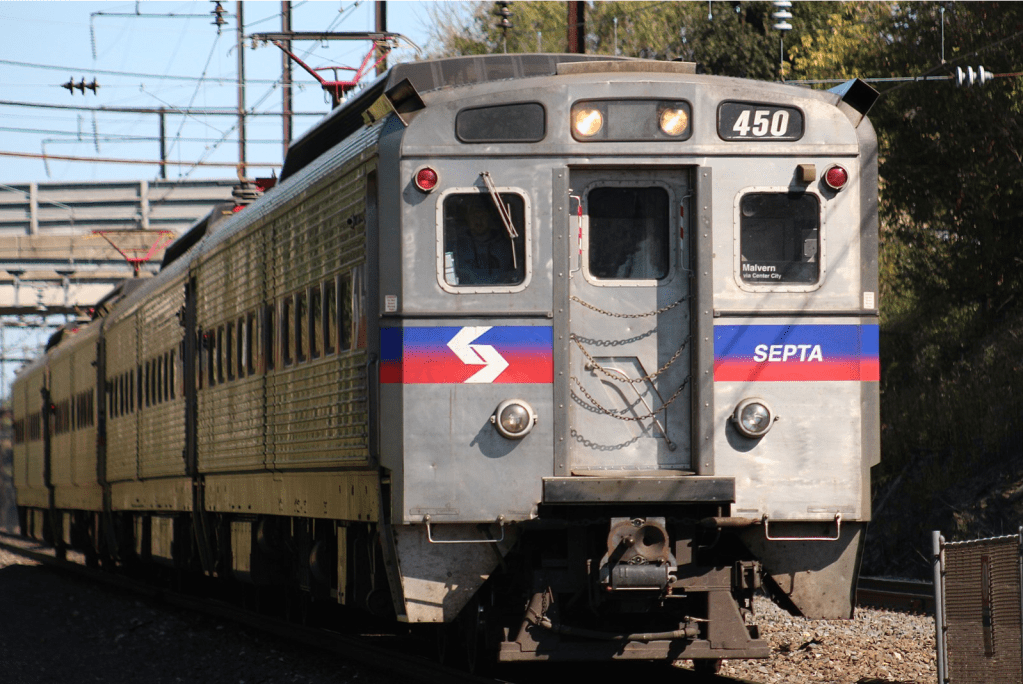
In response to the culture of lawlessness that has engulfed Philadelphia, especially on mass transit, a bipartisan coalition of state lawmakers in Harrisburg voted to strip Philadelphia District Attorney Larry Krasner (D) of his jurisdiction to prosecute crimes on the city’s public transit system, known as the Southeastern Pennsylvania Transportation Authority (SEPTA).

SEPTA via WikiCommons

Labeled as Act 40, the new state law, which was signed into law by Governor Josh Shapiro (D) during last year’s legislative session, creates a new special prosecutor role that maintains the authority to investigate and prosecute crimes on public transportation in the city. It is slated to be active through 2026, when Krasner’s current term ends.

While Krasner and his progressive allies have called the new law an “attack on democracy,” Republican lawmakers, along with the dozens of Democrats who joined them, argue that the legislation is necessary to prosecute crimes that normally go unprosecuted under Krasner’s watch.

The legislation, sponsored by Republican State Senator Wayne Langerholc, requires Pennsylvania Attorney General Michelle Henry to appoint a special prosecutor with authority over any crimes that occur on—and, according to Krasner’s interpretation of the law, within 500 yards of—any SEPTA property in the city. However, as Act 40 only pertains to SEPTA property in Philadelphia, this special prosecutor would have no authority over crimes committed on or around SEPTA property in Philadelphia’s collar counties.

When the Senate approved the bill last session, Langerholc asserted that the special prosecutor would “ensure scofflaws answer for the crimes, since the current DA has a systemic record of failing to prosecute assaults on victims.”

While it is rare for state legislators to take away authority from local prosecutors, Act 40 is not the first time that Republican lawmakers have sought to limit Krasner’s jurisdiction.

In 2019, the General Assembly passed a bill creating concurrent jurisdiction for gun crimes in Philadelphia and allowing the Pennsylvania Attorney General’s Office to prosecute cases that the Philadelphia District Attorney’s Office did not. Then-Attorney General Shapiro did not utilize this new authority and even called for a repeal of the law, which received significant bipartisan support from both chambers to confront the city’s crime crisis.

Moreover, Republicans who led the House in 2022 voted to impeach Krasner, but a trial in the GOP-controlled Senate has been stonewalled while a lawsuit is considered by the Pennsylvania Supreme Court.

Recently, Krasner himself has filed a lawsuit in Commonwealth Court that raises several challenges to Act 40. The lawsuit asserts that the special transit prosecutor law is unconstitutional because the Pennsylvania Constitution does not directly allow for the appointment of a special prosecuting attorney to seize some of the authority of an elected district attorney. Krasner is also challenging the legislation on the grounds that the law is discriminatory as it would supersede the district attorney’s authority in Philadelphia but not the four suburban counties where the nation’s sixth-largest rapid transit system can also be found.

In response, Langerholc has dismissed arguments that the law would take any authority away from Krasner, asserting that the special prosecutor would be able to select what crimes to prosecute. Otherwise, these crimes would be left to the Philadelphia District Attorney’s Office.

Regardless, as Henry assumes that the law is constitutional and searches for someone to fill the new position, it remains to be seen if the law, along with Krasner’s impeachment process itself, will be permitted to continue following a review by the state court system.

Mayor-Elect Cherelle Parker taps Kevin Bethel to be Philadelphia’s next top cop

local politics, Politics

Cole Welsh, Staff

In her first personnel selection, Philadelphia Mayor-Elect Cherelle Parker selected longtime law enforcement official Kevin Bethel to be the next police commissioner of one of the nation’s largest police departments.

Bethel, who is 60 years old, currently serves as the chief of safety in the Philadelphia School District, where he has steered school safety officers away from strict discipline measures and toward mentoring students.

Prior to this, Bethel, a 29-year veteran of the Philadelphia Police Department (PPD), left the force as a deputy police commissioner. In this role, Bethel oversaw the department’s patrol operations, including the neighborhood services unit, school district police and the community relations unit. His lengthy resume also includes leading South Philadelphia’s 17th Police District, heading the regional operations command for South, Southwest and Center City Philadelphia, performing narcotics-related work and managing internal affairs investigations.

Bethel, who is set to assume his position once the new mayor is sworn in next year, will replace Interim Police Commissioner John Stanford, who himself became PPD’s leader after Danielle Outlaw’s resignation. Amid an increase in crime that has ravaged the city, both Parker and Bethel will immediately be confronted with the task of restoring law and order to the city.

In an interview with 6 ABC announcing the decision, Parker described Bethel as “a leader who is not afraid to make the tough decisions that we need to bring some order back to our city.”

Former Philadelphia Police Commissioner Charles Ramsey, who served on the search committee that interviewed Bethel, said Bethel “caught his attention” when he worked in the field as a cop. In addition to praising him as a hard worker who worked long hours, Ramsey also portrayed Bethel as someone who employs a data-driven approach to policing.

Likewise, many others in Philadelphia have portrayed their optimism for Bethel’s selection. Roosevelt Poplar, who recently became the interim leader of FOP Lodge 5, which is PPD’s labor union, conveyed that he is ready to work with the new mayoral administration and was “overwhelmed with joy” with Parker’s police commissioner pick.

Once the new mayoral administration begins, Bethel will lead a large but severely short-staffed police force that has been hit with morale problems and numerous officers having been wounded or killed in recent years. Upon assuming his new position, Bethel will have to grapple with these challenges and the city’s overwhelming lawlessness. When combined, these obstacles make the police commissioner’s job arguably one of the most difficult in the city. 

2023 Philadelphia General Election Voter Guide

local politics, Politics

Cole Welsh, Staff

Pennsylvania’s next general election is on Nov. 7. To check your voter registration status visit vote.org. To see where to vote, visit the Committee of 70. For those who are registered to vote in Philadelphia, below is a guide on what your ballot may look like on election day:

For the Justice of the Supreme Court, citizens can vote for one candidate, either   Daniel McCaffery (D) or Carolyn Carluccio (R).

Voters can vote for no more than two for Judge of the Superior CourtJill Beck (D), Timika Lane (D), Maria Battista (R) and Harry Smail Jr. (R) are all running. 

Voters can select either Matt Wolf (D) or Megan Martin (R) for Judge of the Commonwealth Court. 

Citizens can vote for the Judge of the Court of Common Pleas, and vote for no more than 13 candidates. The following candidates are running for the position: Natasha Taylor-Smith (D), Tamika Washington (D), Samantha Willams (D), Kay Yu (D), John Padova (D), Chesley Lightsey (D), Brian McLaughlin (D), Damaris Garica (D), Caroline Turner (D), Jessica Brown (D), James Eisenhower (D), Elvin Ross (D) and Raj Sandher (D).

Barbara Thomson (D), Colleen McIntyre Osborne (D) and Rania Major (R) are all running for Judge of the Municipal Court. Voters can select no more than two candidates for this position.

For mayor, citizens can select either Cherelle Parker (D) or David Oh (R).

For City Commissioner, voters will select no more than two. The candidates for this position are Omar Sabir (D) (incumbent), Lisa Deeley (D) (incumbent) and Seth Bluestein (R) (incumbent).

For City Controller, Christy Brady (D) is running against Aaron Bashir (R), and voters can vote for only one candidate.

John Sabatina (D) is running against Linwood Holland (R) for Register of Wills, and citizens can vote for only one candidate.

Citizens will vote for only one candidate for Sheriff, either Rochelle Bilal (D)—the incumbent—or Mark LaVelle (R). 

Citizens will have the opportunity to vote for no more than 5 candidates running for City Council at Large,The following are running for City Council at Large:Isaiah Thomas (incumbent), Katherine Gilmore Richardson (incumbent), Rue Landau, Nina Ahmad and Jim Harrity (incumbent) are running as Democrats. Drew Murray and Jim Hasher are running as Republicans. Kendra Brooks (incumbent) and Nicolas O’Rourke are running as members of the Working Families Party.

Each district will elect a City Councilperson. In District 1 Mark Squilla (D), the incumbent councilman, is running unopposed. InDistrict 2 (vote for one): Kenyatta Johnson (D), the incumbent councilman, is running unopposed.District 3 has a race with  Jamie Gauthier (D), the incumbent councilwoman, is running against Jabari Jones (West is Best).Citizens in City Council District 4 has the option to  Curtis Jones Jr. (D), the incumbent councilman, is running unopposed. In District 5, Jeffery “Jay” Young (D) is running unopposed. Likewise, in District 6 Mike Driscoll (D), the incumbent councilman, is running unopposed. In City Council District 7, Quetcy Lozada (D), the incumbent councilwoman, is running unopposed. 

The incumbency theme continues, in City Council District 8 where Cindy Bass (D), the incumbent councilwoman, is running unopposed. The same goes for District 9, whereAnthony Phillips (D), the incumbent councilman, is running unopposed. Finally in District 10, Gary Masino (D) is running against Brian O’Neill (R), the incumbent councilman.

There is also a Ballot Question where voters will be given the option to vote either “yes” or “no” to the question“Should the Philadelphia Home Rule Charter be amended to create an Office for People with Disabilities to coordinate the City’s compliance with requirements to provide access for people with disabilities to City services and programs and to otherwise provide for incorporation of the Office into the City government?”

When voting for the Superior Court citizens can vote  either “yes” or “no” for each judge. Jack Panella and Victor Stabile are running for retention.
 

For the Court of Common Pleas citizens can citizens can vote either “yes” or “no” for each judge Jacqueline Allen, Giovanni Campbell, Anne Marie Coyle, Ramy Djerassi, Joe Fernandes, Holly Ford, Timika Lane, J. Scott O’Keefe, Paula Patrick, Sierra Thomas Street and Nina Wright Padilla are all running for retention.

Likewise, when electing the Municipal Court citizens will vote either “yes” or “no” for each judge.Marissa Brumbach, William Meehan, Brad Moss, David Shuter, Karen Yvette Simmons, Marvin Williams and Matt Wolf are all running for retention. 

Local school district ordered by judge to continue their mask mandate

local politics, Politics, state politics

Jada Urbaez, Staff

Since school districts have reopened, many parents and students have demonstrated and spoken out because they believe masks should not be worn in schools. More recently, COVID-19 cases have declined locally, and some people are becoming tired of taking precautions. Hence why Perkiomen Valley School District, located in Montgomery County, Pennsylvania, wanted to halt the mask mandate for their district. 

The school board voted at the beginning of 2022 to no longer require students to wear face coverings. Parents took this decision to court, arguing stopping the mandate would violate the Americans with Disabilities Act. Instated in 1990, this Act prohibits discrimination of the disabled and provides equal opportunity in public settings. Fighting to continue Perkiomen Valley’s mask mandate would ensure the disabled would be able to safely attend classes without complications or life-threatening risks. The plaintiffs, who were represented by Attorney Carmen De Gisi, claimed not wearing masks would put students who are immunocompromised or disabled at an unnecessary risk, which ultimately defies the 1990 Act. 

The opposing side argued that masks cause discomfort and difficulty for the children to learn the material taught in school. In addition, parents argue that some students have anxiety, and wearing masks exacerbates their anxious feelings. All in all, the parents who wish to cease the mask mandate argue they make students uncomfortable, cause an inconvenience and do more harm than good. The federal judge disagreed and ruled that the Perkiomen Valley School District must continue the mask mandate for students, faculty, and staff until further notice.

COVID-19 cases reached their all-time peak in Pennsylvania just a month ago, but have decreased expeditiously since then. On Jan. 8, 2022, Pennsylvania reported 33,650 new cases, which bumped the state’s seven-day average to 25,848. However, just about a month later, 2,794 new cases were reported on Feb. 6, which brought the weekly average to 6,207. This decrease in positive cases may cause other school boards to do what Perkiomen Valley did, but they also may get declined by a judge for violating the Americans with Disabilities Act of 1990.Editor’s Note: Help stop the spread of COVID-19 by getting vaccinated, boosted, and tested.

Dr. Oz — the Politician?

local politics, Politics

Jada Urbaez, Staff

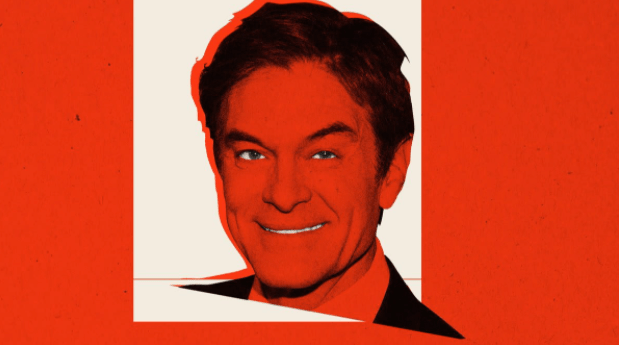
When someone mentions Dr. Oz, does the Pennsylvania Senate come to mind? Probably not, since Dr. Oz is popularly known for his 13-season health show that began in 2009. 

The Dr. Oz Show was a daytime television talk show first aired in 2009 and the last episode was just under two weeks ago, Jan. 14, 2022. The show discussed health issues and the Dr. Oz gave explanations and sometimes advice. The sudden shift to politics may raise eyebrows due to his popular background of medicine. 

Dr. Mehmet Oz announced in Nov. 2021 that he plans on running for the open Republican seat for the PA Senate. Until recently, Dr. Oz’s political views were mostly unknown since the TV personality did not profess his opinions publicly. However, FOX News has recently hosted Dr. Oz on their show numerous times, including once where the physician shared his opinion on COVID-19 closings and precautions. 

As many schools have switched to online instruction, there is a divide within communities on whether it would be best to keep the schools closed to prevent the spread of COVID-19, or to reopen them. Some may argue it is safe, effective and ideal to have students attend school virtually to prevent infection and possibly death. Others think attending school in person has many benefits that outweigh the risks of spreading the coronavirus disease. 

Restaurants, arenas, stores, and malls were also closed due to the health crisis and caused distress to the public. Similar to the closing of schools, people had opposing and passionate opinions about when and how to resume everyday activities. In 2020, Dr. Oz expressed on FOX News that he thinks some facilities should reopen and can be done without “getting into a lot of trouble.” At the time of this interview, schools around the United States had been recently closed for about three weeks. Dr. Oz continued by saying that opening schools would likely result in a 2-3 percent mortality rate, which “might be a trade-off some folks would consider.” 

After his FOX interview, many people criticized Dr. Oz for his comments, some taking offense and strongly disagreeing. Due to his comments causing controversy, Dr. Oz published an apology video to Twitter, admitting his choice of words may have “upset people” and he had “misspoke”. The general election takes place on Nov. 8, 2022 while the primary election falls on May 8, 2022. Registered voters in Pennsylvania will elect a member of the United States Senate, and every vote counts. Make sure to register to vote, as PA does not engage in automatic voter registration.