US Embassy in the Solomon Islands Signals Focus on the South Pacific

international politics, Politics

Elizabeth Boyle, Staff 

Header Image: YourBigSky

On Feb. 12, during a tour starting in Australia and ending in Fiji, Secretary of State Anthony Blinken announced the U.S. will open an embassy in the Solomon Islands. The Solomon Islands are located in the Southwestern Pacific Ocean. Blinken explained the reason for this new embassy is to increase the U.S. presence in the South Pacific Ocean as China becomes “strongly embedded.” The State Department said that, although the United States and the Solomon Islands have a good history dating back to World War II, China is “aggressively seek[ing] to engage” with the businessmen and politicians in the Solomon Islands. China is allegedly making promises concerning infrastructure loans and debt levels while trying to strike business deals in the Solomon Islands.

While Blinken talked about the embassy “enhancing the political, economic and commercial relationship” within the islands, setting up an embassy there will be quite pricey. It is estimated the initial setup will cost $12.4 million. The embassy will be located in the capital of the Solomon Islands, Honiara. The first steps of the process would be leasing the space for the embassy and having two U.S. employees and five local personnel to staff the embassy. To further increase U.S. presence in the Solomon Islands, the State Department talked about the Peace Corps reopening their office and moving volunteers back to the Solomon Islands.

While in Fiji, Blinken spoke with the Fijian acting Prime Minister Aiyaz Sayed-Khaiyum and other Pacific leaders. This was the first visit of the U.S. Secretary of State to Fiji in 36 years. The topics of their meeting included the potential threat of China, climate change and rising tensions between Ukraine and Russia. Sayed-Khaiyum welcomed Blinken, “Mr. Secretary, your being here shows that promise was more than words. We have just held the most historic and comprehensive meeting ever between Fiji and the U.S.A. and a wider meeting with our fellow Pacific leaders. We believe that both mark the start of more direct partnership between Fiji and the U.S.A., and a new era for America in the blue frontier of the Pacific.” He expressed that the islands in this Pacific region felt very left out and overlooked by the major countries. He said he felt the islands were, “small dots spotted from plane windows of leaders en route to meetings where they spoke about us rather than with us, if they spoke of us at all.” 

Blinken met with leaders from Australia, India, Fiji and Japan. These four nations form a group of Indo-Pacific democracies called “The Quad” created to counter the influence of China. Blinken shows support for The Quad by saying, “You can see the strength of that commitment to the Indo-Pacific throughout the past year.  Just look at some of the key markers on our calendar, from President Biden being the first U.S. president to address the Pacific Islands Forum to our increasing engagement with The Quad, whose ministers I just met with in Melbourne, to deepening our cooperation on a range of security and defense priorities through AUKUS.”

As the U.S. increases ties in the Pacific, China continues to try to increase political and military ties in the Solomon Islands. The Solomon Islands sent shockwaves through the South Pacific regions when they decided to pull their support from Taiwan and support China in 2019. This essentially started a divide within the country that continued through Dec. 2021 when Prime Minister Manasseh Sogavare survived a no-confidence motion against him in parliament. 

Russia and NATO aerial interaction

international politics, Politics

Elizabeth Boyle, Staff

While Russia has recently gathered a global audience by deploying troops to Ukraine’s border, they have also gathered the attention of the United Kingdom while attempting to fly near U.K.  airspace unannounced. 

            On Feb. 2, 2022, Russia attempted to fly four military-strategic bomber aircraft near U.K. airspace. When the British Royal Air Force determined the Russian planes had a projected course of flying over U.K. airspace, the air force quickly had jets take off from the nearest military base in Lossiemouth located in northeast Scotland. Because they were unsure if this situation would be hostile, the jets launched were Typhoon jets. A Typhoon FGR.Mk 4 is a combat jet that is agile and can do a wide range of air operations including high-intensity conflict. At the same time, Oxfordshire, England launched a Voyager air-to-refueling tanker which can use pods located under the wings to quickly refuel jets. The report from the U.K. states that the bombers were “intercepted and escorted [out of the airway].” 

            This group has been called to intercept other aircraft that approach the U.K.’s controlled airspace. It is called the “U.K. area of interest” and is international airspace policed by the U.K. This time and during a similar Russian near incursion in November 2021, the Russian bombers did not enter U.K. airspace. The U.K. believes that when the “U. K. area of interest” airspace is entered without an invitation there are two potential issues. First, the Russian jets navigate without communication with the U.K.’s air traffic control system, thus endangering civilian aircraft in the area. Secondly, entering these airspaces unannounced could be a national security threat to the U.K. and its citizens. 

            Russia’s actions of unpredictable and potentially provocative air routes could provoke the North Atlantic Treaty Organization (NATO) to take action. A report produced by NATO in December of 2021 states that 290 NATO missions were flown in 2021 due to Russian aircraft posing potential threats. A school of thought is emerging globally that Vladimir Putin, Russia’s president, may be using provocative military aircraft flights to gauge NATO responsiveness to potential military threats. Putin, according to some observers, also highlights to his domestic audience that NATO’s responses to the Russian flights are an indication that NATO does not respect Russia’s right to free access to the international airspace. After all, an interception by NATO aircraft has often taken place over international waters. As the situation on the Ukrainian border continues to stress the international community concerned with a potential Russian attack into Ukraine, aerial interactions elsewhere in Europe highlight the contentious relationship between Russia and NATO and the potential for miscalculation in an atmosphere of increasing distrust.

Tensions and preparations increase in the Russia-Ukraine situation

international politics, Politics

Elizabeth Boyle, Staff

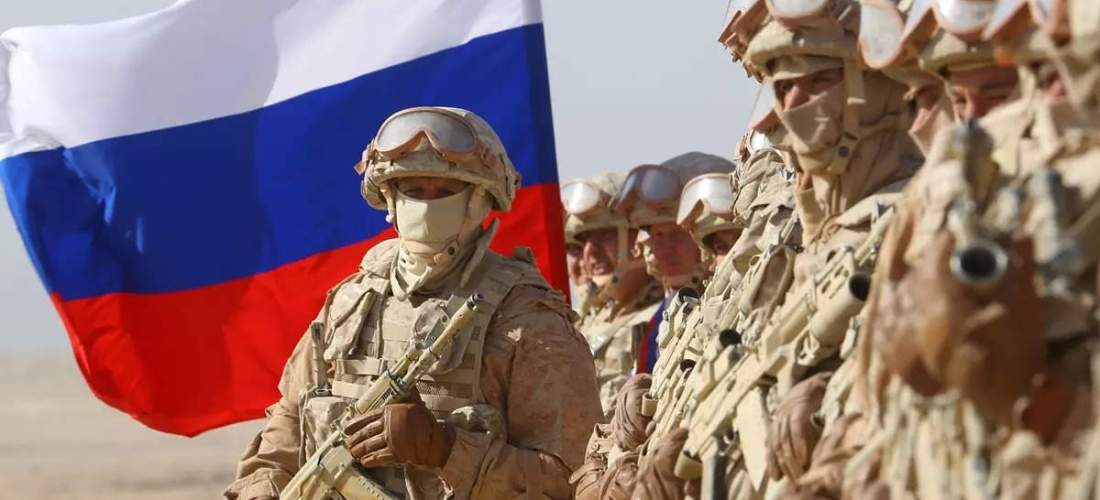
The movement of troops and rising tensions between Russia and Ukraine have recently gained a broad global audience. Currently, there are 100,000 Russian troops sitting outside the Ukrainian border, and President Joe Biden has raised concerns about an invasion in the near future. 

The United Nations Security Council had a meeting on Jan. 31 to discuss the security concerns. During the meeting, the U.S. and Russia went back and forth with each country accusing the other of provoking violence and raising tensions. President Biden spoke in full support of the meeting, saying, “[the meeting] was a critical step in rallying the world to speak out in one voice.” Putin was not supportive of the meeting and described it as a “PR stunt.”

Russian Ambassador to the United Nations Vasily Nebenzya argued that, by the U.S. speaking out about and preparing for Russia to invade Ukraine, the U.S. caused the situation to escalate. He believed it was the U.S.’s goal to provoke Russia. Nebenzya said, “our Western colleagues are talking about the need for de-escalation. However, first and foremost, they themselves are whipping up tensions and rhetoric and are provoking escalation. The discussions about a threat of war are provocative in and of themselves.” 

The U.S. Ambassador to the U.N., Linda Thomas-Greenfield, then accused Russia of providing false information with the goal of portraying Ukraine and the West as a threat to Russia. Thomas-Greenfield accused Russia of “attempting, without any factual basis, to paint Ukraine and Western countries as the aggressors to fabricate a pretext for attack.” She then mentioned the 100,000 troops currently positioned at Ukraine’s border.

President Biden has met with Tamim Bin Hamas Al Thani, the ruling Sheikh of Qatar. They discussed global energy supplies in case Europe needs energy if supplies are damaged by a Russian attack on Ukraine and the use of natural gas as a blackmail tool against Western Europe. Russia provides 40 percent of the natural gas used in Europe. The gas is currently transported from Russia through Ukraine to the rest of the continent, and, with a potential invasion, these lines could be disrupted. This disruption could also cause the prices of energy to rise globally.

Poland has been communicating with Ukraine and trying to help Ukraine as much as possible. Polish President Andrzej Duda met with Ukrainian President Volodymyr Zelenskyy and President Biden to talk about potential options in the situation. Duda offered thousands of rounds of ammunition to Ukraine for use in its defense. Ukraine has not yet replied to the offer.

Ukrainian citizens are also concerned about the potential of a Russian attack. Civilians have begun any type of training they can get in order to prepare themselves for self-defense. Many citizens are working on guerilla-style fighting techniques. The far-right group known as Azov worked with the National Corps to give military training to volunteers teaching them self-defense. The group has adopted the slogan “Do not panic, get ready!”

The commander of the Azov Battalion, Maxim Zhorn, said in an interview, “today, we are talking about the Russian Federation’s plan for a new attack against Ukrainian territories, and at the same time we are talking about the absolute ineffective actions of the [Ukrainian] government and that is why we took it upon ourselves to start training the civilian population.”

Hundreds of people showed up hoping to receive training. A similar group, run by Svetlana Putilina, trains women, predominantly Muslim women, in Kharkiv, on proper handling and use of military equipment. The women work on aiming, loading and firing various types of weapons including automatic rifles. The city of Kharkiv is only 25 miles from the border with Russia and the citizens there are concerned they could be one of the first targets. 

Canadian vehicle protest, “Freedom Convoy,” blocks essential U.S.-Canadian port over Canadian vaccine mandates

international politics, Politics

Ceara Grady, Staff

Header Image: Rebel News

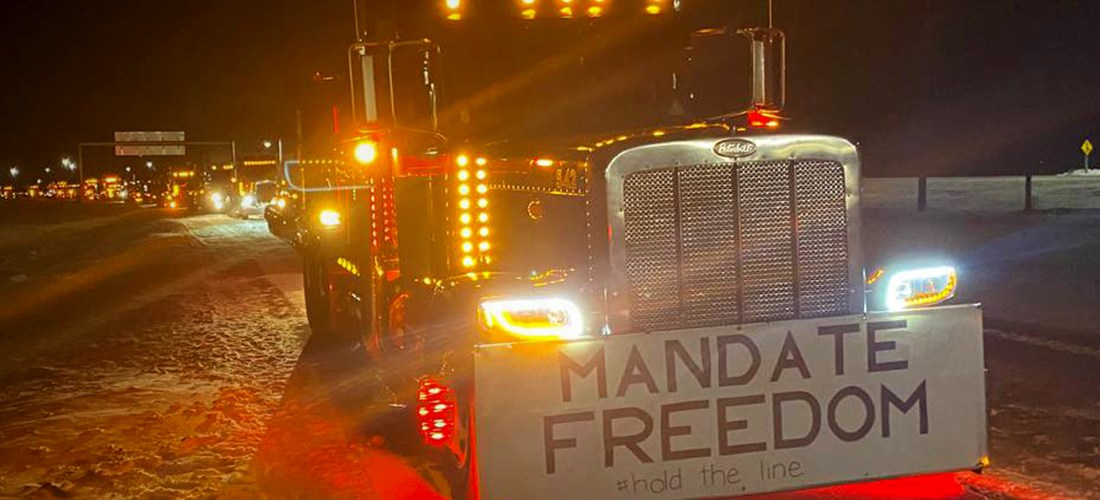
A vehicle blockade has been built at one of the busiest ports of entry between the United States and Canada in support of what has come to be known as the Freedom Convoy.  The Freedom Convoy started as an assembly of Canadian truckers protesting a new Canadian COVID-19 mandate that requires unvaccinated truckers to quarantine and be tested after returning from any trips to the United States.

Since then, the movement has evolved to protest all of Canada’s vaccine mandates and other COVID-related restrictions. Prime Minister Justin Trudeau has said that he has no plans to engage or comply with the Freedom Convoy and their demands, saying, “my focus is standing with Canadians and getting through this pandemic”.

Additionally, a change in Canadian policy wouldn’t resolve the protestors’ objections, because the United States made vaccinations mandatory for Canadian truckers entering the United States at the end of January. Meanwhile, the blockade extends for miles from the entry port along the main highway, even extending into surrounding neighborhoods. The disruption of the line-up of trucks in these neighborhoods has blocked residents’ access to necessities like the grocery store and has even impacted services like postal delivery and school bus routes. 

On the United States’ side of the port in Montana, officials have started to turn away people trying to cross into Canada. The Freedom Convoy also protested outside of Canada’s Parliament in a massive but relatively peaceful demonstration. Despite this, there are concerns that the protests could turn violent and become more invasive. Such fears have caused Prime Minister Trudeau and his family to leave their official residence out of an abundance of caution, though he has and continues to emphasize that this coalition of truckers represents a small minority, as 90 percent of Canadian truckers are vaccinated. 

The Freedom Convoy has raised over $7 million through its GoFundMe campaign, which officials are taking as a sign that the protesters don’t plan to disband soon. Additionally, influential United States public figures like former President Donald Trump and Elon Musk have come out in support of the Freedom Convoy and its mission. There have also been reports that a similar group of protestors could make a cross-country trip, from California to Washington D.C., to protest similar COVID-19 vaccination rules for American truckers. 

Among safety and public health concerns, officials are also worried about the impact this blockade will have on both the Canadian and American economies, particularly as both are still working to recover from the height of the pandemic. Supply chain issues have been plaguing both economies due to complications in starting industries back up after reduced COVID-19 restrictions, but this blockade at the border and strike of truckers will continue to exacerbate those issues. 

NATO on standby as Russia places troops on Ukrainian border

international politics, Politics

Danielle O’Brien, Editor

An estimated 100,000 Russian troops are currently poised at the Ukrainian border, ready to invade the country. Tensions are high as the threat of Russian invasion in Ukraine comes only less than a month into the new year. Vladimir Putin denies allegations that Russia will in fact move in on Ukraine, however, the mass of soldiers at Ukraine’s border tells otherwise. The threat of invasion comes just a month after President Biden and Putin met via video call to discuss the repercussions Russia can expect if it does invade Ukraine. 

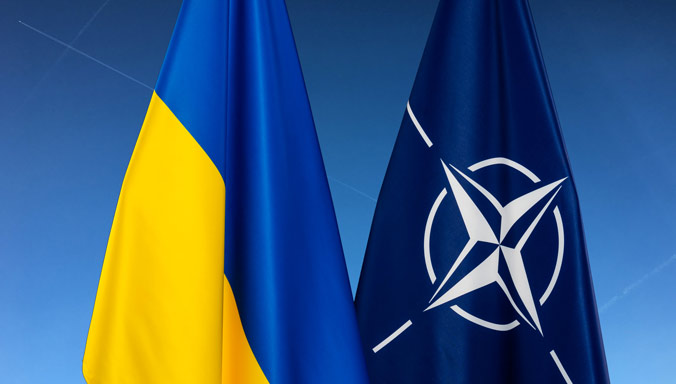
The threat is due in part to the refusal of Russian demands for the pulling of NATO from Ukraine, and to avow never to admit Ukraine into joining the organization. NATO’s refusal to do so is sparking Putin’s outrage. Instead of the intended purpose of placing Russian troops at the border to pressure NATO in retracting its presence in Ukraine, it has had the rather opposite effect. In fact, aside from the arms and troops already placed in Ukraine, NATO is reported as sending more military support such as ships and fighter jets to Ukraine. The U.S. plans to contribute 8,500 American troops to Ukraine which is currently on standby for deployment. It is important to note, however, that this was not the desired outcome for President Biden. 

In his meeting with the Kremlin in December, Biden took a more diplomatic path to resolve the issue, warning that harsh sanctions from the U.S. towards Russia will be put in place to deter Russia from invading. Sanctions, however, may be an unfulfilling threat towards Russia. President Biden is familiar with the effect of U.S. sanctions against Russia, considering he witnessed the invasion of Ukraine by Russia in 2014 while he was vice president, where sanctions against Russia had been put in place with little effect. One of the more promising things threatened to be sanctioned which may have a larger effect on the Russian economy is the Nord Stream 2, a natural gas pipeline between Russia and Germany. In this way, Germany’s sanction of this economic powerhouse for the two countries might encourage Russia to rethink its next steps.  

Russian influence has remained apparent in Ukraine considering it was once a part of the Soviet Union. Since its removal from the Soviet Union, Ukraine has had the freedom to make great democratic leaps. In 2016 it joined in agreement with the European Union, Georgia and Moldova to create the Deep and Comprehensive Free Trade Areas (DCFTA). DCFTA established the three countries as common grounds of free trade. Furthermore, in 2019, Ukraine amended its constitution, putting it on track to becoming a formal member of the EU. Unfortunately, however, the credible organization for measuring democracy since 1941, Freedom House, would establish that there is still much improvement to be made in Ukraine as it is not even considered a full democracy. According to Freedom House’s 2021 democracy scores, Ukraine received a 39 out of 100, establishing it as a Transitional or Hybrid Regime. This scoring is due in part to the submission of the Ukrainian government to the aggression witnessed by the Russian government in threats of military invasions such as the one we are witnessing now. A La Salle professor in the political science department with a special interest in Ukraine, Dr. Mark Thomas, provided a statement on the situation. Thomas has an impressive background in many high-profile jobs including experience as an operations specialist for the U.S army in Eastern European countries as well as receiving a NATO medal for Kosovo Forces in 2014. 

Thomas stated, “The situation at the border is undoubtedly one of concern. Putin’s demands that NATO pledge in writing not to allow Ukraine to accede is one which NATO cannot make given it opened Pandora’s box when it admitted former Warsaw Pact members into NATO in the 1990s, which violates a verbal promise by then-Secretary of State Jim Baker to Eduard Schevardnadze. It was never put in writing and the U.S. and NATO relied on a statement in the Helsinki Accords which stated every country had the right to choose which alliance to belong to. Putin’s second demand for NATO to withdraw its forces from the NATO members on Russian borders places NATO at risk of undermining its alliance commitments and causing members to lose their faith in NATO. I warned my NATO bosses in 2016 that placing troops in the Baltics and Poland was the first step in walking NATO into a direct confrontation with Russia. NATO expansion and placing troops, even on a rotating basis as done through the NATO Assurance Measures, go against the basic Russian strategic objective to avoid encirclement by a hostile power. So I understand the fears Putin is using to justify the confrontation. That said, Ukraine poses no significant military threat to Russia.  Ukraine poses an existential threat. Having another democratic country on its borders, especially one which has such historical, cultural, and linguistic ties to Russia risks a potential contagion effect on the Russian populace. Every authoritarian leader is looking over his/her shoulder for threats to his control.  There is one Russian strategic concern that mitigates against a full-fledged invasion: Prevent destruction of the homeland and avoid Russian casualties.  

A full-fledged invasion of Ukraine would be costly in terms of casualties. Even with its involvement in Donetsk and Luhansk and Crimea, Putin has avoided putting ethnic Russians in significant harm’s way.  He and his generals have in the back of their minds what happened in their invasion of Afghanistan in the 1980s and what happened in Chechnya in the 1990s. Both had a significant toll on support for the regimes.

In practical terms, the former Ukrainian defense minister from 2019 to 2020, Andrii Zahorodniuk, made an astute observation that he does not believe Putin will invade Ukraine.  Amidst the 120,000 troops on the Ukraine/Russia border, there is not the logistics, notably not the medical supplies to support an invasion.  

Also, China does not want Russia to steal the spotlight in the coming month.  China, as Russia’s closest ally, wants the world focused on the Winter Olympics.  Xi made a comment early this week that power is more than using force to accomplish influence.  This was as much oriented at Biden as it was at Putin.

All that said, Russia and the U.S. are playing a game of brinkmanship to see who blinks first. Both are likely seeking a way out without a confrontation. It is possible Russia will seize a zone between the Donbas and Crimea so Crimea has access to freshwater, which comes from either Russia or historically from Ukraine. The U.S./NATO response could be less than what Biden said would be serious sanctions”.

Following Dr. Thomas’s analysis, it is clear that Russia, following the dissolution of the Soviet Union, is clinging to any ties it still has in countries such as Ukraine. Russia dreams to recover its lost ground in reunifying former Soviet countries back into a communist power to challenge the democratic ideals of the West. Whether the United States and Europe will allow Russia’s dream to come true, however, remains up to time to tell.

Tensions rising in Asia, Biden meets with Tokyo Prime Minster

international politics, Politics

Elizabeth Boyle, staff

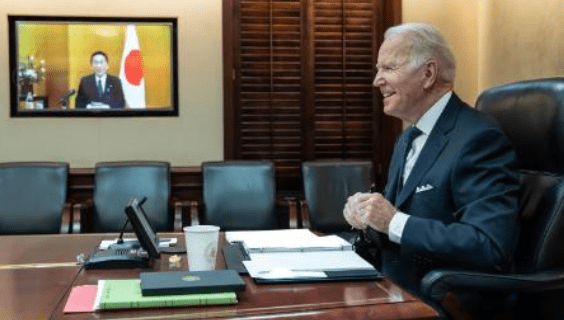
On Jan. 21, 2022, President Joe Biden talked virtually with Japanese Prime Minister, Fumio Kishida, who was in Tokyo. They discussed two major concerns: China’s growing presence in the South China Sea: and, the rising tension between China and Taiwan. 

The South China Sea is a well-traveled commercial route and as such, it is patrolled by Naval ships from multiple countries including the U.S and China. Chinese Foreign Ministry spokesman Wang Wenbin reiterated on Jan. 13, 2022, that China believes it has the right to complete sovereignty of the South China Sea. Wang said, “China has historical rights in the South China Sea. China’s Sovereignty and related rights and interests in the South China Sea have been established in a long period of history and are consistent with international law.” 

The U.S. does not have an official position concerning China’s claims but has long held that is has the right to operate its Navy in the waters because they are classified as international. After Wenbin spoke, the U.S. replied saying China was not allowed to claim maritime zones by trying to label an island group as its territory and extending its national waters beyond the island as it is “not permitted by international law.” The U.S. has military bases in South Korea, Japan, and Guam which provides a large military presence in the region. A presence which China as, the self-considered dominant Asian power, resents and wants to undermine and scale back. For its part, Japan wants to continue a robust U S naval presence in the South China Sea and has expressed interest in enhancing its own naval presence in the area to accentuate its commitment to encumbered commercial shipping throughout the area.

China’s military incursions into Taiwan’s airspace have also drawn Japanese and US concern. Because China wishes to have complete control over the South China Sea that would include Taiwan, China has built military facilities on man-made islands In the South China Sea in order to extend its operational reach and put pressure on Taiwan. Taiwan has been made uncomfortable by Chinese warplanes flying through Taiwan’s air defense identification zone. In October of 2021, the flights hit a record of 149 total flights in just four days. 

The U.S. regularly holds military exercises in the South China Sea to demonstrate the military presence and practice military techniques. The U.S. does not have bases in Taiwan, but U.S. military forces including Navy, Marine, Army, and special forces train with Taiwan’s forces on a regular basis. The U.S. has extended military support for Taiwan “based on an assessment of Taiwan’s defense needs and the threat posed by” China, said Pentagon spokesman John Supple, but the U.S. does not have a formal treaty that commits it to defend Taiwan.

What prompted the need for communication between Tokyo and Washington, beyond the tension with China which has been an ongoing issue, was news from North Korea that they may be resuming long-range nuclear missile testing. This news was disconcerting because North Korea had halted missile testing for the past three years. Kim Jong Un was in a Politburo meeting this past week for the ruling Workers’ Party. The goal of the meeting, as stated by North Koreans was to discuss increasing their military capabilities because of the recent “hostile moves” by the U.S.

President Biden assured Prime Minster Kishida that the U.S. would be in contact with South Korea to address the rising threat. Biden accepted Kishida’s Invitation to the Quad Summit, which is a meeting between the U.S., Japan, Australia, and India. Biden has also promised to share more information about North Korean missile testing with the American people in the days to come.