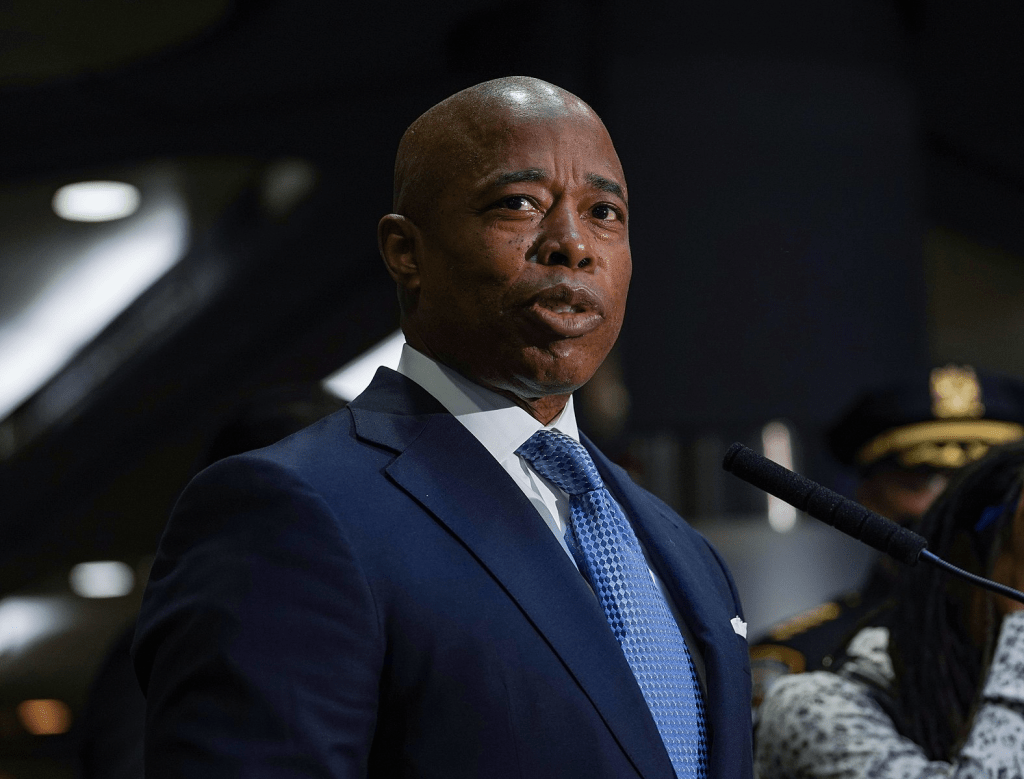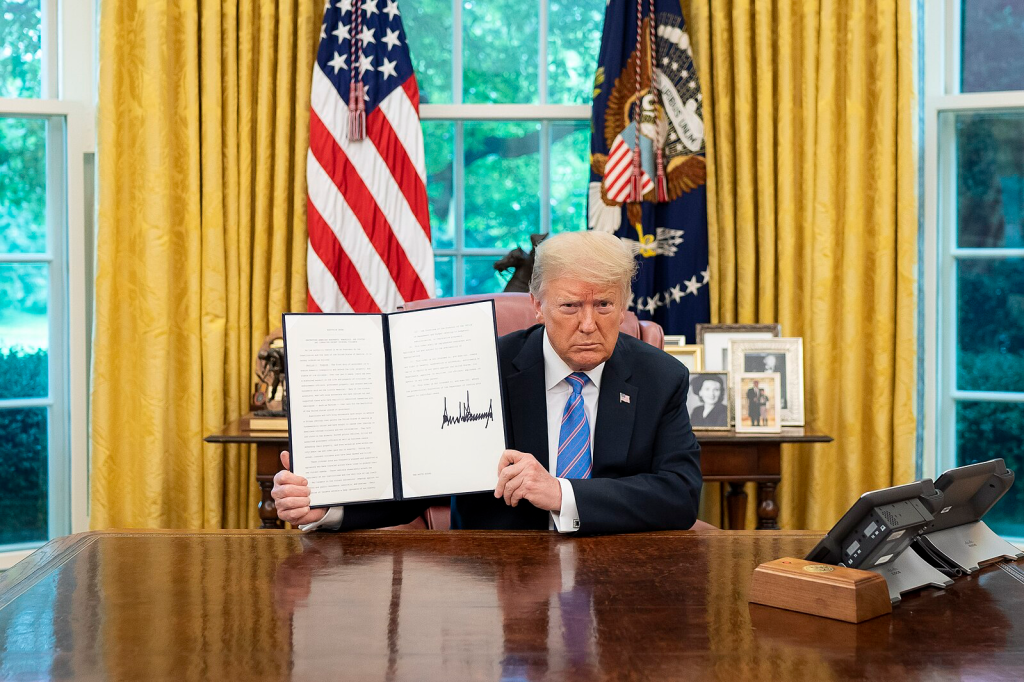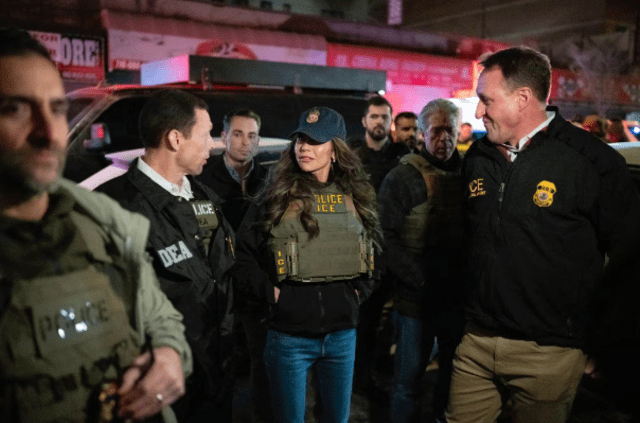
Democratic Socialist Mamdani wins New York City mayoral race

Politics

Cole Welsh, Editor

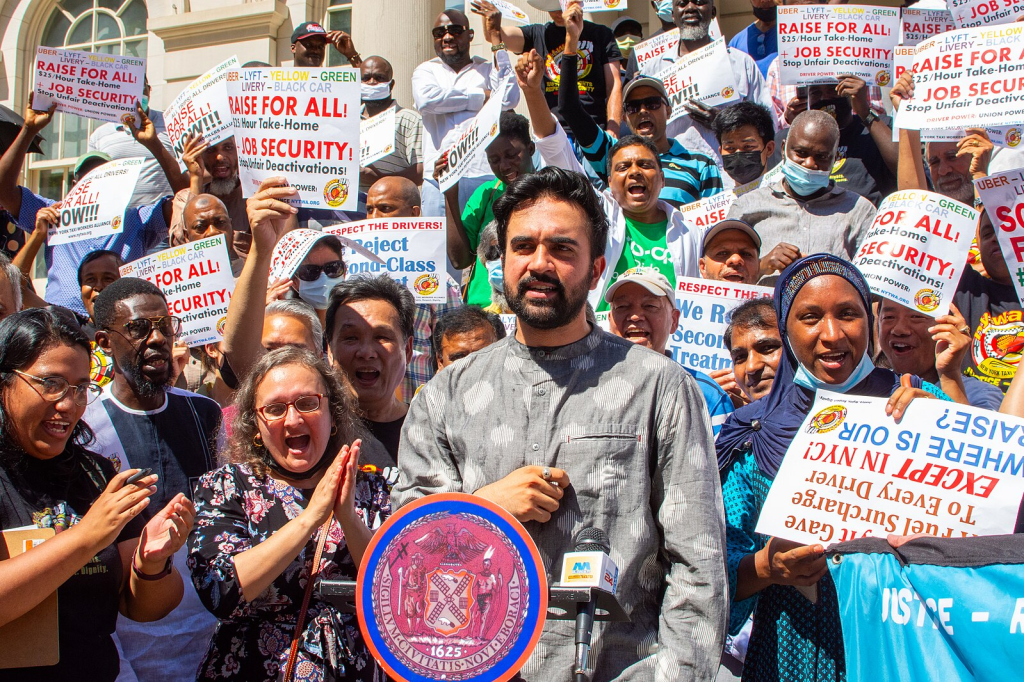
In a historic victory for the progressive wing of the Democratic Party, New York State Assemblyman Zohran Mamdani will become the next mayor of the Big Apple.

The Ugandan-born Democratic Socialist beat former New York Governor Andrew Cuomo, who ran as an independent, and Republican Curtis Sliwa last Tuesday.

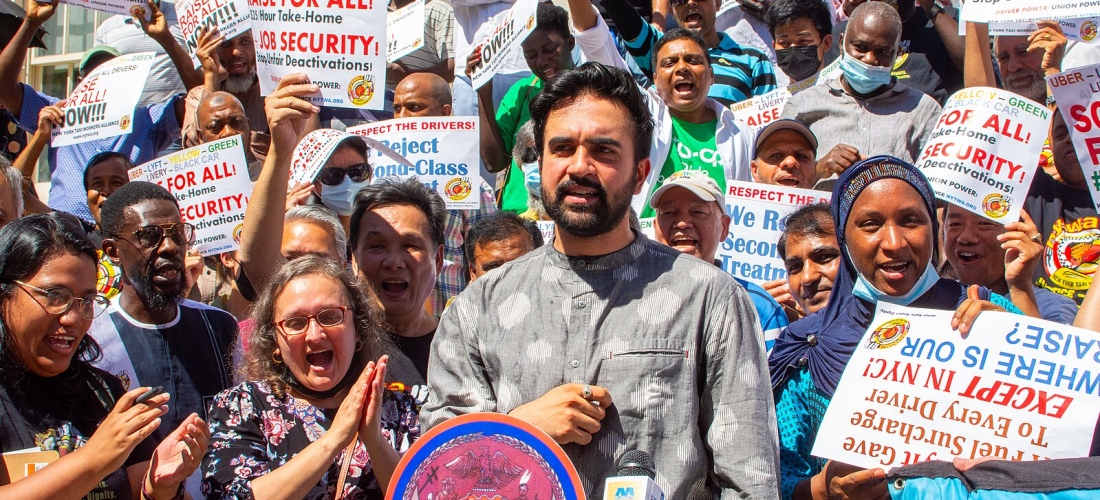
Defeating his opponents with approximately 50% of the vote, Mamdani will become the city’s first Muslim mayor and the first of South Asian descent. At 34 years old, Mamdani will also become New York City’s youngest mayor in more than a century when he takes office on Jan. 1.

On Election Day, voters came out in large numbers, with more than 2 million voters casting ballots for the first time since 1969.

While younger, more progressive voters backed Mamdani in large numbers, Republicans, moderates and older Democrats largely backed Cuomo.

Mamdani, who campaigned on a progressive economic platform to make the city affordable, became the front-runner after clinching the Democratic primary in June. Since then, the Queens resident has notched key endorsements from politicians such as former Vice President Kamala Harris and Governor Kathy Hochul.

Some of his main campaign promises include making the city’s buses fare-free, freezing stabilized rents, raising taxes on the wealthy, establishing city-owned grocery stores and reassigning some of the duties of police officers to social workers.

However, the mayor-elect has also faced backlash over the feasibility of his proposals and his controversial views on issues such as policing.

On the campaign trail, Mamdani was criticized by both Cuomo and Sliwa for his past comments referring to law enforcement as racist and calling for defunding the police.

His candidacy was also met with trepidation by many Jewish New Yorkers, who have taken issue with his steadfast support for Palestine and his criticism of Israeli Prime Minister Benjamin Netanyahu.

Last month, Mamdani drew outrage when he posted a smiling photo with Imam Siraj Wahhaj, a Brooklyn Muslim cleric who defended the mastermind of the 1993 World Trade Center bombing and other convicted terrorists.

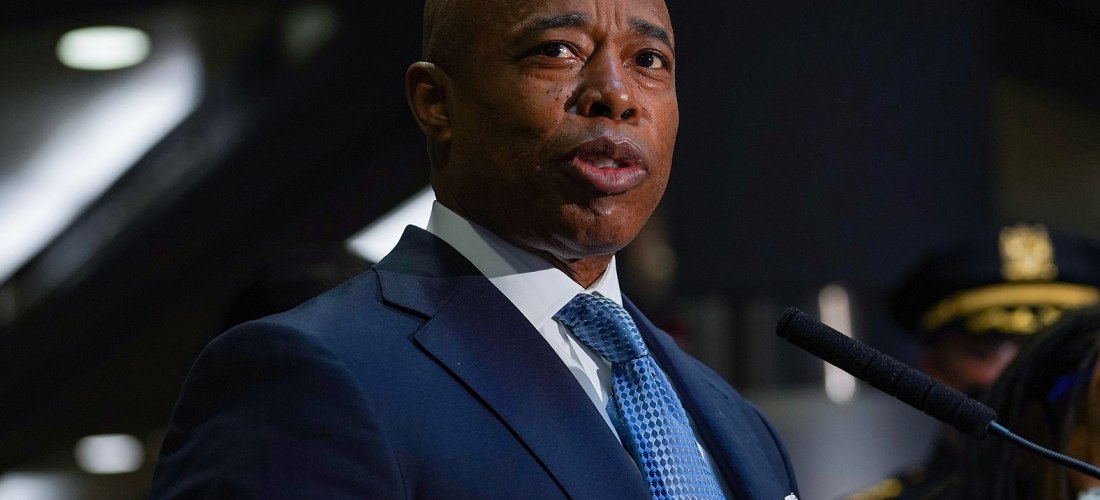
Incumbent Mayor Eric Adams, a more moderate Democrat, initially ran for a second term, despite a scandal-plagued first term. After President Trump’s Justice Department dropped the corruption case against him, he announced his reelection bid in June as an independent. However, he dropped out in late September after failing to gain traction in the polls and secure enough campaign dollars.

In less than a week after his victory, Mamdani has hit the ground running with several key personnel selections. He announced that Dean Fuleihan, a City Hall veteran who has worked in government for nearly five decades, will be his first deputy mayor. For chief of staff, Mamadani tapped his campaign manager, fellow Democratic socialist Elle Bisgaard-Church.

Ultimately, the biggest question is whether or not NYPD Commissioner Jessica Tisch, who has overseen a decrease in crime and built support among rank-and-file officers, will remain in her position. While Mamdani has publicly suggested that he will keep Tisch, there is no guarantee that she would even accept such an offer. Some speculate that the policy differences between the two might be too large to overcome.

FDNY Commissioner Robert Tucker, who also happens to be Jewish, announced his resignation just hours after Mamdani was declared the winner of the mayoral race, pointing to ideological differences with the mayor-elect.

As there are many more personnel and policy decisions ahead, it remains to be seen what Mamdani’s mayorship will look like. However, since America’s biggest city is now set to have a socialist mayor, the eyes of the country and the world will surely be on New York City come 2026.

Trump ramps up pressure on Latin American drug cartels and Venezuela

Politics

Cole Welsh, Editor

In just the last few weeks, the White House has turned up the heat on both Latin American drug trafficking organizations and Venezuela. Last week, Defense Secretary Pete Hegseth ordered the USS Gerald R. Ford carrier strike group to the Caribbean Sea. Along with other Navy warships that accompany an aircraft carrier, this move brings dozens more fighter and surveillance aircraft to bolster America’s military strikes on drug traffickers.

On Monday, the military carried out three strikes on four vessels in the eastern Pacific Ocean, killing 14 drug smugglers. The Pentagon first launched strikes against alleged drug trafficking boats in the international waters off Venezuela in September.

Since then, the military has killed at least 50 drug traffickers, expanding its operations to both the Caribbean Sea and Pacific Ocean. The White House has described the people manning the vessels as “narco-terrorists,” linking them to Venezuelan and Colombian cartels that Trump previously designated as foreign terrorist organizations. Like many issues, this unprecedented use of American lethal force against drug boats has divided Congress.

Democrats have largely condemned the strikes as illegal and called on the Trump administration to provide more information. Some have even suggested that Congress needs to approve them under the War Powers Act, an assertion that the White House strongly rejects. Rand Paul, a libertarian Republican from Kentucky and occasional Trump critic, has referred to the strikes as “extrajudicial killings.”

While the explicit goal of these strikes is to stop the flow of deadly drugs into the United States, some have speculated that the unprecedented show of military force is part of a larger effort to enact regime change in Venezuela. Led by President Nicolás Maduro, Venezuela has maintained an adversarial relationship with the United States for much of the last two decades.

Since his first term, Trump has remained a staunch critic of Maduro and his government, repeatedly referring to him as an “illegitimate ruler” and a “dictator.” Trump has even described Maduro as a key player in the drug trade and a friend to the cartels, pointing to his 2020 federal indictment on narco-terrorism and drug trafficking charges.

Maduro himself has been highly critical of the deployment of American military assets off the coast of Venezuela, arguing that such a show of military might is part of a larger attempt to remove him from power. Where regime change may not be the current objective, the White House appears to be considering all options in dealing with the Latin American country.

In a nontraditional public announcement, Trump recently said he authorized the Central Intelligence Agency (CIA) to conduct covert action in Venezuela. Unlike the FBI or the DEA, which are federal law enforcement agencies, the CIA can gather information in ways law enforcement cannot without fear of prosecution or having to justify their actions in court.

While the legality of the exact purpose of this military action remains up for debate, it is clear that these strikes fulfill President Trump’s campaign promise of taking on the drug cartels. In the leadup to the 2024 presidential election, Trump promised to “wage war” on the cartels, citing in part the high death toll from fentanyl in the United States.

On the first day of his second term, Trump signed an executive order designating a handful of drug cartels and gangs, including Venezuela’s Tren de Aragua, as foreign terrorist organizations. While previous administrations relied on federal law enforcement to investigate these cartels as part of the War on Drugs, Trump has instead reoriented the federal government’s strategy to one of counterterrorism. In similarity to operations targeting ISIS and other terrorist groups in the Middle East, Trump is now applying America’s counterterrorism playbook to the cartels.

With the power of the American military now joining the fight, the War on Drugs has entered what many consider a new chapter. While Venezuela’s authoritarian government could become a direct target as well, this military activity is undoubtedly an extension of the Trump administration’s hardline stance against the drug trade, transforming it from a serious crime to a transnational security threat.

Municipal Election

Politics

Kelsey McGovern, Writer

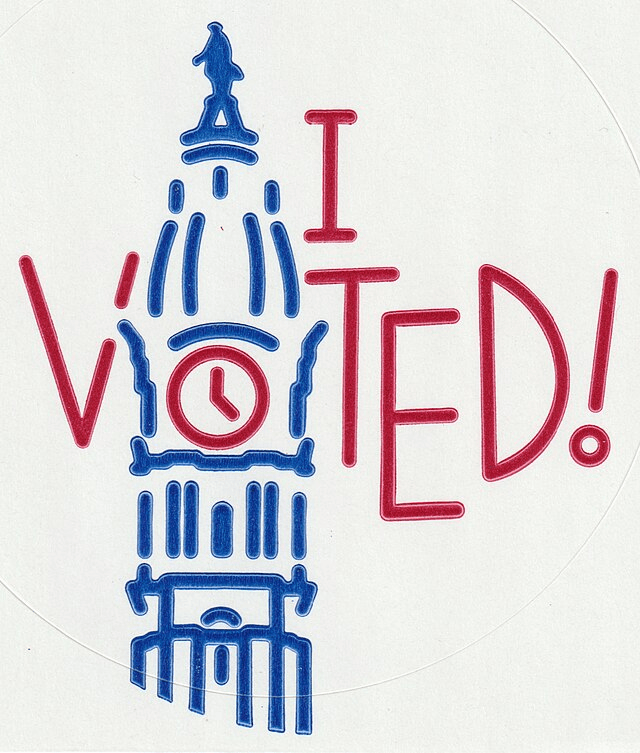
Many people do not pay attention to elections other than the presidential election every four years. However, voters have a lot of impact within other local or primary elections. The municipal election is on Nov. 4. To register to vote in this election, Pennsylvanians must register to vote by Oct. 20. To apply for a mail-in ballot, voters must do so by Oct. 28.

What Does the Municipal Election Entail?

Registered Pennsylvania voters will be voting for local government representatives on committees such as the borough and city council and township supervisors.

What Am I Voting On?

Voters will be deciding on district attorney, city controller, Pennsylvania Supreme Court judicial retention, judge of the Supreme Court, judge of the Commonwealth Court, judge of the Court of Common Pleas and judge of the Municipal Court.

The district attorney handles investigations and criminal cases, determining who to prosecute. They decide on criminal appeals, criminal charges, and jail and court resources. Voting on the district attorney is important to ensure there is someone to represent how the voter views prosecution. Taxes are also involved because if the resources used here are more expensive, taxpayers will be paying more. The way the voter views public safety and justice reform is also an important reason to vote.

The city controller is responsible for making sure taxpayer money is being used properly, handling financial corruption, approving funds and managing debt. Voting for the city controller is important so voters can trust someone to be honest while making financial decisions so tax dollars are not wasted.

The Pennsylvania Supreme Court judicial retention vote allows the voter to decide if a judge should be retained for another term. Supreme Court judges are responsible for upholding constitutional rights, determining criminal cases and more. If the voter believes a judge is underperforming, they can vote to end their term. If judges are voted out, voters will later choose a new judge.

The judge of the Commonwealth Court handles policy issues within state and local governments. This court makes decisions based on government lawsuits and checks state agencies’ actions. This can affect many areas voters should be aware of, like voting laws and workers’ rights.

The judge of the Court of Common Pleas handles more serious criminal cases. This affects how fast cases are solved, bail amounts, custody within families and more.

The judge of the Municipal Court covers minor cases. This court is often the only court that hears an appeal if it does not get passed on to the next level. The voter is responsible for electing someone who upholds justice.

In voting in this election, voters will be able to make a difference on the local stage. Voting in local elections is very important so laws are interpreted in the manner the voter wants. When only focusing on the presidential election, changes that citizens want will not be completely reflected in daily life. By learning about candidates, the voter will understand what each candidate stands for and whether that aligns with their beliefs.

Kimmel’s in the clear, but is the First Amendment?

Politics

Jack Wagner, Editor

Late-night talk show host Jimmy Kimmel returned last week after a six-day suspension that raised concerns about free speech and the current administration’s stance on First Amendment rights.

ABC, the network that has aired Kimmel’s show “Jimmy Kimmel Live!” since 2003, suspended him indefinitely on Sep. 17 after pressure from Federal Communications Commission (FCC) Chair Brendan Carr over statements the late-night host made about the assassination of right-wing political activist Charlie Kirk.

During his monologue on Monday, Sep. 15, Kimmel commented “The MAGA Gang [is] desperately trying to characterize this kid who murdered Charlie Kirk as anything other than one of them and doing everything they can to score political points from it,” prompting backlash from Carr.

During his appearance on a conservative podcast, Carr said the FCC had ways to punish Kimmel. “We can do this the easy way or the hard way. These companies can find ways to change conduct, to take action, frankly, on Kimmel, or there is going to be additional work for the FCC ahead.” Carr also suggested the FCC could pursue news distortion cases against station licensees over airing Kimmel’s comments. Hours later, ABC announced his suspension.

Two of the largest station owners in the country, Nexstar Media Group and Sinclair Broadcast Group, said they were removing Kimmel’s show from all of their affiliates beyond ABC’s suspension. Sinclair published a statement saying, “Sinclair will not lift the suspension of ‘Jimmy Kimmel Live!’ on our stations until formal discussions are held with ABC regarding the network’s commitment to professionalism and accountability.”

President Trump also commented on Kimmel’s suspension. “They should have fired him a long time ago, so you know, you can call that free speech or not. He was fired for lack of talent,” said Trump during a meeting with UK Prime Minister Keir Starmer.

Kimmel’s suspension and Carr’s actions drew pushback from both politicians and citizens. Senator Rand Paul, R-Ky, said in an interview, “You have to sell sponsorships. You have to sell commercials, and if you’re losing money, you can be fired. But the government’s got no business in it, and the FCC was wrong to weigh in,” and Senator Ted Cruz, R-Tx, said Carr was acting like “a mafioso.”

Disney, ABC’s parent company, reportedly lost 1.7 million paid subscribers during the week of Kimmel’s suspension across all of its services, which include Disney+, Hulu and ESPN+, with many claiming the company’s actions regarding Kimmel as their reason.

Disney officially lifted the suspension on Sep. 22, saying that Kimmel would be back on ABC’s schedule Sep. 23. During his first show back, Kimmel thanked many people for their support, including fellow late-night hosts and the politicians who spoke out against his suspension, and commented on how dangerous the actions taken by Carr were for free speech, saying, “our government cannot be allowed to control what we do and do not say on television, and that we have to stand up to it.” 

Nexstar and Sinclair reinstated his show several days later, claiming that they were “committed to protecting the First Amendment” and they were responding to “thoughtful feedback from viewers, advertisers and community leaders,” respectively.

President Trump was less pleased, posting on Truth Social, “I can’t believe ABC Fake News gave Jimmy Kimmel his job back. The White House was told by ABC that his Show was cancelled! Something happened between then and now because his audience is GONE, and his ‘talent’ was never there.”

Trump also appeared to go on and threaten ABC with some kind of lawsuit, writing, “I think we’re going to test ABC out on this. Let’s see how we do. Last time I went after them, they gave me $16 Million Dollars. This one sounds even more lucrative.”

The whole affair raised some questions about the safeguards in place to protect First Amendment rights and media freedoms in America. The Kimmel situation appears to be settled, but it already comes after fellow late-night host Stephen Colbert had his show cancelled by CBS, supposedly due to “financial decisions,” but is suspected by many to be politically motivated. One way or another, the media landscape for late-night hosts looks rough for the near future.

Jimmy Kimmel Live! Logo via Wikicommons

Eric Adams suspends re-election bid for New York City mayor

Politics

Cole Welsh, Editor

Just weeks away from the closely watched New York City mayoral election, Mayor Eric Adams announced he is ending his re-election campaign.

The incumbent mayor announced his decision Sunday in a video posted on X, citing media speculation and the withholding of public matching funds.

As the deadline for his name to be removed from the ballot already passed, Adam’s name will still appear on the ballot.

Adams, running as an independent, had previously resisted calls to drop out of the race.

Rivals of Democratic nominee Zohran Mamdani had long sought for Adams to withdraw, concerned that he and independent candidate Andrew Cuomo would split the vote.

In the past several weeks, Adams had been polling behind Mamdani, Cuomo and Republican nominee Curtis Sliwa.

As a retired NYPD captain and former Brooklyn borough president, Adams was elected in 2021 on a platform prioritizing public safety and economic recovery. Defeating several candidates to his left in that year’s Democratic primary, his campaign’s focus on reducing crime delivered a broad coalition that spanned across the city’s five boroughs.

However, the mayor and his administration soon became embroiled in numerous corruption scandals involving his inner circle and members of his administration.

In 2024, Adams himself was indicted on a slew of crimes, including bribery, conspiracy and campaign finance violations. Then-U.S. Attorney Damian Williams alleged that Adams abused his current position, along with his past role as borough president, to take bribes and solicit illegal campaign contributions.

However, the charges against the mayor were dropped in April in what his critics described as a quid pro quo with the Trump administration.

Both Adams and the Justice Department have denied that any quid pro quo took place.

Shortly after the corruption case against him was dismissed, Adams opted out of the Democratic primary to run as an independent in the general election.

This election, Adams was hoping to galvanize support from across racial and political lines.

Over the summer, Adams picked up endorsements from multiple law enforcement labor unions, including those representing the city’s detectives, sergeants, lieutenants and captains.

He also earned the support of the New York Post’s editorial board and Republican businessman John Catsimatidis.

While Adams failed to break single digits in the polls, his withdrawal from the race could still make a difference.

Many political pundits speculate that political moderates who previously supported Adams will shift their support to Cuomo in a head-to-head matchup against self-described democratic socialist Zohran Mamdani.

Republican Curt Sliwa, who has achieved around 15% in most polls, remains in the race and has rejected calls to drop out.

While Assemblyman Mamdani appears to still be the favorite in the three-way race, it remains to be seen how exactly Adams’ withdrawal will change the race.

With a competitive mayoral race well underway that could serve as a litmus test for national political trends, all eyes will be on New York City come November.

Eric Adams via Wikimedia Commons

Trump designates several drug cartels and gangs as foreign terrorist organizations

Politics

Cole Welsh, Editor

Fulfilling a key campaign promise, President Trump formally designated eight Latin American crime organizations as “foreign terrorist organizations.”

The move, carrying out an executive order signed by Trump on his first day in office, labels Tren de Aragua in Venezuela and La Mara Salvatrucha (MS-13) in El Salvador, among others, as terrorist groups.

Such a designation requires showing that an organization is foreign, engages in terrorist activity and threatens American national security. 

The “foreign terrorist organization” label for drug cartels is certainly unconventional, as the designation has traditionally been reserved for groups that use violence for political gains, including the Islamic State and Hezbollah.

While American authorities have previously labeled organizations such as the Taliban and al-Qaeda as “narco-terrorists,” the difference is that these were existing terrorist organizations that used drug profits to fund their activities.

Latin American cartels, which primarily traffic drugs for monetary purposes, have not historically received this designation.

However, the Trump administration, which has taken a hardline approach to the drug epidemic, argues that the international connections and operations of the cartels warrant the designation.

They cite the involvement of these cartels in the illicit drug trade, human trafficking and violent campaigns to extend their territory. 

For Trump, these cartels are a top concern, flooding the United States with deadly drugs, violent criminals and vicious gangs.

While Republicans and law enforcement have generally embraced the order, others have criticized the move as potentially harmful to diplomatic and trade relations. In particular, cartels play a key role in the Mexican economy, dealing in not only drug trafficking but also the multibillion-dollar avocado industry.

Regardless, this designation should come as no surprise. Running on a law and order message, Trump has made securing the U.S.- Mexico border one of his chief priorities, vowing to carry out mass deportations and sending active duty troops to the border.

With this label, the cartels have gained new adversaries.

In the past, federal law enforcement, mainly the FBI and the DEA, largely investigated these cartels as part of the War on Drugs. Following Trump’s executive order, these agencies will continue their operations with additional support.

Along with other intelligence agencies, the CIA can now play a role, gathering information in ways law enforcement cannot without fear of prosecution or having to justify their actions in court.

Similarly, the military could also be utilized to neutralize the heavily armed and violent cartels outside of the United States. This could take the form of drone strikes or even the deployment of special operators, although concerns regarding Mexico’s sovereignty might deter such action.

For law enforcement, this order will impact almost every aspect of counter-narcotics policing. From local officers on patrol to state and federal agencies, law enforcement now has additional integrated resources at their fingertips.

With increased cooperation between police, intelligence agencies and the military now a possibility, the War on Drugs has entered what many consider a new stage.

Although exact details still need to be provided by federal officials, this designation potentially transforms America’s rules of engagement with organized drug trafficking, elevating it from a crime to a national security threat.

Trump signing an executive order via WikiCommons

FBI surges resources to Indian Country amid violent crime epidemic

Politics

Cole Welsh, Editor

Last week, the Department of Justice announced that it will serve assets across America to address unsolved violent crime and missing person cases on tribal lands.

To address this uptick in violent crime, the Federal Bureau of Investigation (FBI) will send 60 special agents to Indian reservations all over the country as part of Operation Not Forgotten.

Working on 90-day temporary duty assignments over a six-month period, these agents will support field offices in Albuquerque, Denver, Jackson (MS), Minneapolis, Oklahoma City, Phoenix, Portland (OR), Seattle and Salt Lake City.

While local police departments and sheriffs traditionally do not have jurisdiction on Indian reservations, the FBI has special jurisdiction to commit crimes on about 200 reservations nationwide, as outlined in the General Crimes Act and the Major Crimes Act.

FBI personnel will work with the Bureau of Indian Affairs Missing and Murdered Unit to utilize the latest forensic evidence and technology to solve open cases. In particular, there will be a priority placed on cases involving violence against women and children.

According to FBI Director Kash Patel, the FBI will “manhunt violent criminals on all lands” and also “find those who have gone missing.”

As the goal is to both reduce violent crime and prosecute those victimizing the innocent, the FBI will work with federal prosecutors to ensure a seamless prosecution.

In fact, Attorney General Pam Bondi, who has gained a reputation for her tough-on-crime philosophy, has instructed US Attorney’s Offices to aggressively prosecute case referrals, which is in line with her numerous tough-on-crime policies.

This deployment, which will be the longest and most intensive one to date, comes amid surging crime rates in American Indian and Alaska Native communities.

At the beginning of Fiscal Year 2025, the FBI had roughly 4,300 open investigations, including 900 death investigations and 1,000 child abuse investigations.

In New Mexico, the FBI plans to focus its efforts on the Navajo Nation, which sees a disproportionate number of violent crimes against women and children.

Operation Not Forgotten, an initiative that launched in 2023, revamps efforts begun during President Trump’s first term under Executive Order 13898, Establishing the Task Force on Missing and Murdered American Indians and Alaska Natives.

This latest deployment is the third one under Operation Not Forgotten, which has provided investigative assistance to over 500 cases in the past two years.

Combined, the first two deployments resulted in the rescue of 10 child victims, 52 arrests and 25 indictments.

Although the success of this new deployment has yet to be determined, it is clear that this operation will be the longest and most intensive national deployment of FBI agents to date. Thus, Native American communities and law enforcement alike remain optimistic that this renewed focus on tribal crime will help tackle the decades-long crisis.

Kenyan Peacekeepers in Haiti

international politics, Politics

Jessica Perez-Salinas, Staff Writer

Among the countries that have led global efforts to combat the growing crisis in Haiti is a country that lies 8,800 miles away. Kenya, a growing nation in Africa, has taken a leading role in managing the security crisis in a country that has been overtaken by gangs and faces many underlying challenges. 

Haiti is a small nation on the island of Hispaniola and borders the Dominican Republic. In 1804, Haiti became the first colony to become independent after a lengthy and brutal war against France. Despite being rich in natural resources and having a vibrant culture, Haiti faced many troubles as a new nation. Western nations refused to recognize Haiti as a sovereign nation, halting trade, which led to a staggering debt owed to France that they were not able to pay off until 1947. In the 20th Century, Dominican-Haiti relations became tense under the dictatorship of Rafael Trujillo, in which thousands of Haitian immigrants were mass murdered or imprisoned in what became known as the Parsley Massacre. In addition, Haiti has continued to face several setbacks that have halted economic development in the country. In 2010, the Caribbean was hit by a high-magnitude earthquake that devastated Haiti. Over a million people were displaced, infrastructure was destroyed and it led to a major humanitarian crisis. 

In 2017, Jovenel Moise was sworn into office as the next president following the 2016 Presidential elections. The win followed with the emergence of protesters who argued that the election should be annulled because of low voter turnout and claims of voter fraud. By 2018, protests were firing up and opposition leaders were calling for a coup d’etat. These protests were not only motivated by opposition to the president, but also widespread political corruption, rising economic costs and lack of resources. Things became increasingly turbulent when Moise was assassinated in 2021 and by 2022, leading to a complete breakdown. At the same time, gangs began to seize major ports around the country, including the capital of Port-au-Prince, effectively blocking any economic activity. The gangs have been responsible for many severe human rights violations against women and children, while also opposing foreign intervention in the area. The gangs have also been tied with many politicians and police officials, which has only further embedded mistrust of the government. Since then, establishing national security and a legitimate government have been two of the biggest priorities and challenges for Haiti.

In 2020, Kenya gained a seat at the United Nations Security Council as a non-permanent member. As part of this council, they decided to lead a peacekeeping mission in Haiti, a country that they felt they had a historical tie to. The Multinational Security Mission (MSS) in Haiti has focused on securing the capital and controlling gang activity in the area. As of February 2025, Kenya sent around 700 peacekeepers to help combat gang violence in Haiti. These peacekeepers are tasked with training the Haitian National Police, guarding schools and residential areas and helping restore peace in gang-controlled areas. They have successfully helped transition children into going back into school and secured many parts of the capital. However, Kenya has not been able to send all the forces necessary due to lack of funding. 

By 2026, Kenya hopes to establish a network for free and fair presidential elections to be held and thus start the process towards democratization. Still, the crisis in Haiti requires international cooperation and Kenya can only do so much. Among other nations providing aid are Guatemala, El Salvador, Canada and the United States. Peacekeeping efforts by Kenya will conclude within the next year. However, many fear that it will not be enough time to reverse the intense damage the country has faced. The crisis in Haiti has become increasingly dire, but countries such as Kenya are standing up and helping to establish control in the region. 

Trump signs executive order seeking to ban biological men from participating in girls’ and women’s sports

Politics

Cole Welsh, Editor

During his first few weeks in office, President Donald Trump signed an executive order designed to bar biological males from competing in girls’ and women’s sports.

The order, labeled “Keeping Men Out of Women’s Sports,” directs federal agencies to ensure entities receiving federal funding comply with the White House’s view of Title IX, which interprets sex as the gender someone was assigned at birth.

Declaring that the war on women’s sports is over, Trump signed the executive order during a ceremony in the East Room that included lawmakers and female athletes who have come out in support of a ban, including collegiate swimmer Riley Gaines.

Coinciding with National Girls and Women in Sports Day, the issuance of the order offers some clarity in regard to transgender athletes. 

While an executive order cannot override federal laws and statutes, such a directive can still manage the operations of the federal government.

Most prominently, it authorizes the Education Department to discipline schools that allow biological males to compete in female sports, pointing to noncompliance with Title IX.

Title IX, which was passed as part of the Educational Amendments Act of 1972, protects students from sex-based discrimination in educational programs or other activities that receive federal funding.

Following the executive order’s signing, the National Collegiate Athletic Association (NCAA) updated its policy, barring student-athletes assigned male at birth from competing for an NCAA women’s team.

The Pennsylvania Interscholastic Athletic Association (PIAA), which governs high school athletics in Pennsylvania, similarly ended a policy that permitted transgender athletes, replacing references to gender with sex.

However, some states and school districts have been less compliant.

Recently, the U.S. Department of Education launched an investigation into Maine’s Department of Education based on allegations that Maine is violating federal antidiscrimination law by allowing biological males to compete in girls’ sports.

Simultaneously, Attorney General Pam Bondi issued a letter to officials in California, Maine and Minnesota warning them to comply with federal discrimination laws.

Ignoring Trump’s executive order, the Philadelphia School District will also still allow transgender athletes to play in sports matching their gender identity.

While such opposition may be seen as an outright act of political defiance, it is no secret that elected officials have interpreted Title IX in different ways.

In Trump’s interpretation, biological females must be protected from discrimination, which includes being forced to compete against biological males.

According to Maine and other liberal states, however, transgender athletes must be protected from discrimination, meaning that they can compete against whichever sex they prefer.

While the issue is litigated in the courts, it remains to be seen what recourse, if any, Trump has to punish states that fail to comply.

When Governor Janet Mills of Maine, a Democrat, promised to continue allowing transgender athletes to compete in sports regardless of their biological sex, Trump threatened to withhold federal funding.

While Title IX’s language may be unclear for some, it is clear that many states and school districts rely on federal funds. This means that federal funding for noncompliance, if deemed lawful, may prove to be an effective strategy.

Without federal funding, many public schools may be forced to make budget cuts or eliminate entire programs altogether.

As a result, states may ultimately have to decide between allowing biological males in female sports and risking federal funding or complying with the federal government.

President Trump’s Cabinet

Politics

Jessica Perez-Salinas, Staff Writer

The Cabinet is made up of appointees to the nation’s highest positions regarding defense, treasury and more. The president’s nominees are questioned by committee hearings based on separate positions. These confirmation hearings will provide the Senate with the necessary information to approve the political appointees. As of Feb. 18, 17 out of 22 combined nominees have been confirmed by the Senate. 

Department of State


Marco Rubio was confirmed as Secretary of State on Jan. 21. He has served as a Senator representing  Florida and will be the first person of Hispanic descent to hold this position. The role of the Secretary of State is to handle U.S. foreign affairs and his confirmation hearing focused on NATO, Russian relations and China. Although Rubio has promised to follow President Trump’s lead, Rubio has previously expressed opposing views on foreign affairs. He has also been strongly against a ceasefire in Gaza.

Department of the Treasury


Scott Bessent was confirmed as Secretary of the Treasury on Jan. 28. Bessent will be tasked with carrying out Trump’s economic plans which include tax reform, creating job opportunities for Americans and increasing tariffs against many U.S. trading partners including Mexico and Canada. Outside of this position, Bessent has served as part of many global hedge funds including his own Key Square Capital Management. Bessent has pushed back against claims that Trump’s economic plan will hurt the U.S. economy, seeing many of these changes as long needed.

Department of Defense

Pete Hegseth was confirmed as Secretary of Defense on Jan. 24. Hegseth will now handle defense spending and policy. He will oversee all current active-duty service members and advise the President on military affairs. The former Fox News presenter was a controversial pick, facing allegations of sexual assault in 2017. Hegseth has denied the claims but revealed that he paid the alleged victim $50,000. Charges were never filed, as the District Attorney’s office could not find proof beyond a reasonable doubt, but did not confirm that the allegations were false.

Department of Justice


Attorney General Pam Bondi was confirmed on Feb. 5. She will oversee primary legal matters in the U.S. This would include enforcing state and federal laws, providing legal advice to the president and representing the U.S. in legal matters. She served as the Attorney General for Florida between 2011-2019. Bondi was also Trump’s attorney during his impeachment trial and has supported his claims that the 2020 presidential election was tampered with. 


Department of Agriculture


Brooke Rollins was confirmed on Feb. 13 as Secretary of Agriculture, a position that will include taking charge of the U.S. agriculture and rural development. Rollins will be coming in at a critical time as egg shortages have deeply affected many across the nation due to the outbreak of the Avian flu. Rollins has served as a public policy analyst and has stated her commitment to protecting farmers amidst fears of labor shortages with Trump’s immigration policy.
 
Department of Commerce


On Feb. 18 Howard Lutnick was confirmed as Commerce Secretary, a position that will have him oversee American businesses and managing the U.S. Census Bureau. During his hearing, he was questioned on Trump’s tariff policy, but expressed his support and argued that the tariffs would lead to less barriers on American goods.  

Department of Labor


Lori Chavez DeRemer is Trump’s nominee for labor secretary, a position that will impact labor unions across the United States and will be tasked with regulating workplace and business issues. DeRemer has positioned herself as a pro-Union member and has recently served as a U.S. representative for Oregon.

Department of Health and Human Services

Robert F. Kennedy Jr. was confirmed as Health Secretary on Feb. 13 and had been seen as one of Trump’s most controversial picks. As Health Secretary he would be tasked with overseeing public health issues, managing Medicare and Medicaid services and overseeing various health agencies including the Centers for Disease Control (CDC) and the Food and Drug Administration (FDA). Kennedy Jr. has served as an environmental activist and has spread dangerous conspiracy theories surrounding vaccines. He also relayed false claims stating COVID has targeted specific ethnic groups.


Department of Housing and Urban Development


Scott Turner was confirmed as the Secretary of the Department of Housing and Urban Development. This position will oversee American housing programs and home ownership. 


Department of Transportation


Sean Duffy was confirmed as the Secretary of the Department of Transportation on Jan. 28 with bipartisan support on a 77-22 vote in the Senate. He previously served as Congressman from Wisconsin’s 7th District in Congress for ten years on the House Financial Services Committee. The Department of Transportation oversees the nation’s highways, railroads and airspace, and sets safety standards for trains, cars and trucks. Duffy vowed to “restore global confidence” in Boeing and hire more air traffic controllers. He also vowed to cut DEI programs at DOT and create federal rules for self-driving cars rather than leaving that to state regulations. Another one of his main focuses would be to reduce the overly restrictive fuel standards that drive up automotive costs, in an effort to push back against the Green New Deal “agenda.” This position is overall responsible for overseeing national and international transportation policies and regulating United States highways, railroads and airlines.
 
Department of Energy


Chris Wright was confirmed as the Secretary of the Department of Energy on Feb. 3 on a 59-38 vote, which included the support of Democrats despite opposition to his nomination from environmental groups and the party’s leadership in the Senate, of whom criticized his opinions on climate change. Wright spent his career building on fracking technologies that helped revolutionize the oil and gas sector and helped promote the United States as a producer of energy resources. The three immediate tasks he pledged to focus on are: unleashing American energy at home and abroad, pursuing innovation and technology breakthroughs and cutting red tape for energy and infrastructure projects.
 
Department of Education


Linda McMahon was nominated as secretary of Education; a position that will have her oversee student financial aid programs and K-12 Education. She has served as CEO for the World Wrestling Entertainment but has also served on Connecticut’s State Board of Education. Trump has proposed dismantling the Department of Education and during her hearing, McMahon stated that she would present a plan that would help the new agency run more efficiently. She has also expressed her support for strengthening public schools while also expressing support for access to private school vouchers.

Department of Veterans Affairs


Doug Collins was confirmed as Secretary of Veteran Affairs on Feb. 4 and will be in charge of managing veteran benefits and social services. He has served as part of the Air Force and as an attorney. Collins has been handling fears of Elon Musk’s probe into veteran affairs by the Department of Government Efficiency (DOGE).

Department of Homeland Security

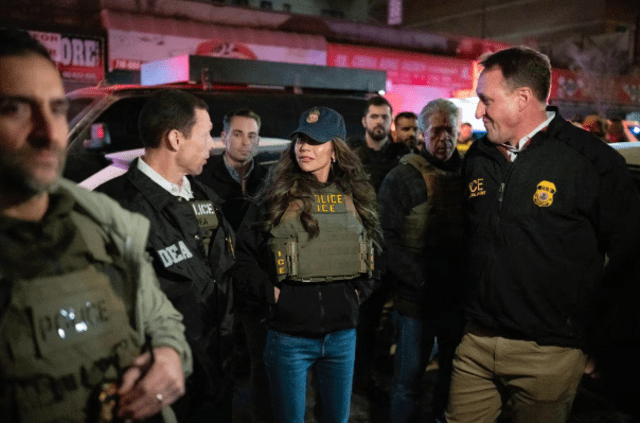
Kristi Noem was confirmed as the Secretary of Homeland Security, a position that will have her overseeing Trump’s mass deportation plans. Homeland Security was established to serve as an agency for public safety which includes the Federal Emergency Management Agency (FEMA), Custom and Borders Protection and U.S. Immigration and Customs Enforcements. She has expressed strong support for Trump’s immigration plans but has expressed concern on cutting emergency aid from California in response to their immigration policy.

Department of the Interior

Doug Burgum was confirmed by the Senate on Jan. 30 by a vote of 79-18, with all Republicans voting for Burgum. He served two terms as governor of North Dakota and even launched a presidential campaign in 2023, but quickly dropped it to endorse President Trump. This department oversees the country’s public lands, national parks, minerals and wildlife refuges. It also protects the country’s natural resources and cultural heritage by upholding federal trust responsibilities to Native American tribes and Native Alaskans. Additionally, the Department of Interior is responsible for endangered species conservation and other environmental conservation efforts.