What we can do as Lasallians to help Ukraine — Editorial

Editorial

Jakob Eiseman, Editor-in-Chief

Header Image: CEPA

Editor’s note: If you are reading this the morning of March 3, 2022,  there is a faculty session being held by the political science and history departments at 12:30 p.m. that will provide some more context to the Lasallian community on Russia’s goals in Ukraine and how other nations have responded to their invasion. More details can be found here.

In the global Lasallian community, March is known as Mission and Heritage month, and in a note to the university community, Brother Ernest Miller explained what this means for La Salle University. Within this letter, he quoted the very poignant line from Lasallian Reflection Six, “The Lasallian vision is seeing abundance where others see scarcity and bringing nourishment where there is none.” While Miller’s letter was setting up the community for a very important time for the university that includes the Day of Giving and other university-centric events related to the mission, this quote stood out to me particularly in relation to the situation the global community finds itself in. The war in Ukraine is difficult to unpack, and we have covered it in-depth in our politics section and will continue to cover it as more developments progress. But, I think it is particularly important that we take this time to realize that as a Lasallian community, it is our duty and our mission to support those in need, especially those in Ukraine who are in many cases losing everything.

Interim President Tim O’Shaughnessy addressed the university community about Ukraine on Feb. 25, and the sentiment was well heard. “Together and by association, we must unite in prayer,” said O’Shaughnessy, “lifting up those who are directly impacted by these traumatic acts of aggression and calling for an immediate end to this invasion of Ukraine.” This was what this address centered around: prayer. Yes, we are a Catholic institution, and the Brothers of the Christian Schools are a deeply religious organization. However, we need to do more than pray. Many members of our Lasallian community are not prayerful individuals or even religious at all. The mission of the brothers, and of St. John Baptiste De La Salle, however, goes beyond religion and prayer. The desire to want to help others and support the needy through education and mission is not exclusively a religious desire, and we need to acknowledge that there are ways for us to help outside of thoughts and prayers. And, whether you are religious or not, by entering into the Lasallian community, you chose to be a part of a group that makes helping others their main personality trait.

There are several ways to help the cause in Ukraine from 20th and Olney, including several ways that do not involve any monetary contribution. The group that falls most in line with the Lasallaian mission is refugees that have fled the war-torn nation that are seeking shelter, not just in neighboring countries like Poland, Romania and Germany, but globally, including right here in Philadelphia as families of Ukrainian descent open their doors to relatives forced to flee their homes. However, the standing military and current large influx of enlistments in the Ukrainian military need financial help in any way they can receive it. We will be providing some options to support medical foundations and the providing of medical aid for soldiers defending their homeland. Below, you will find a list of several charities and foundations with a small description of who they are and how supporting them will benefit Ukrainian refugees, civilians and soldiers:

Revived Soldiers Ukraine

Revived Soldiers Ukraine

“Revived Soldiers Ukraine is a non-profit organization dedicated to providing aid to the people of Ukraine so that they may fulfill fundamental rights and freedoms such as right to life, right to appropriate and affordable medical care, freedom of belief and freedom for an adequate standard of living.” Money donated to RSU will go directly to medical aid and living supplies to soldiers in Ukraine.

Razom for Ukraine

Razom for Ukraine

Razom means “together” in Ukrainian, and was established as a non-profit seeking to “unlock the potential of Ukraine.” Since the 2014 invasion of Crimea by Russia, Razom has been supporting refugees and volunteer groups to better the lives of those whose lives were upended by Russia. Now, they have been continuing this mission by assisting families who are choosing to stay in Ukraine, as well as those that were forced to flee.

UNICEF

UNICEF

United Nations Children’s Fund (UNICEF) was created in 1946 as an effort from the U.N. to assist children who were orphaned, injured or displaced as a result of World War II. UNICEF is the leading children’s aid charity in the world, and in 1965 was awarded the Nobel Peace Prize. Any money donated to UNICEF will go toward supporting children across the world, with a particular campaign being put forth right now to help youth in Ukraine.

Doctors Without Borders

Doctors Without Borders

Doctors Without Borders is a world renowned non-profit that provides medical assistance to those in war-torn nations across the world. Currently, the organization has a special effort in Ukraine in which they are setting up emergency response teams in Poland, Moldova, Hungary, Romania and Slovakia in order to assist refugees.

Non-monetary aid

Sky News

Obviously these organizations are currently in need of money, and this is the most effective way to support them. But, alongside praying and educating yourself on the situation, sharing any fundraising effort on social media will put eyes on it that were not there before. Any of the organizations listed above are good ones to share to your stories or pages, and here is a list of some others you may want to get behind. Also on social media, there are posts going up every minute containing misinformation or blatant propaganda related to this situation. Rather than just ignore this or the infamous “Russian bots,” if you see something, say something. Use Twitter, Instagram, Reddit and other sources to your advantage by educating others in the comments and using the built in reporting system to eliminate misinformation. Always follow trusted sources, and be sure to verify reports regarding developments in Ukraine from multiple sources before sharing it to social media. I know not everyone can contribute financially, but we also know it may seem frustrating to feel like you cannot help in any way. But, we as a community can contribute to aid efforts like Ukraine aid through the transfer of knowledge, which is just as important as funds when done properly. Everyone can contribute in some small way, and this is your charge to do so. Live up to the La Salle name. Help Ukraine.
Making progress: The Collegian’s history of reinvention — Editorial

Editorial

The Editorial Board

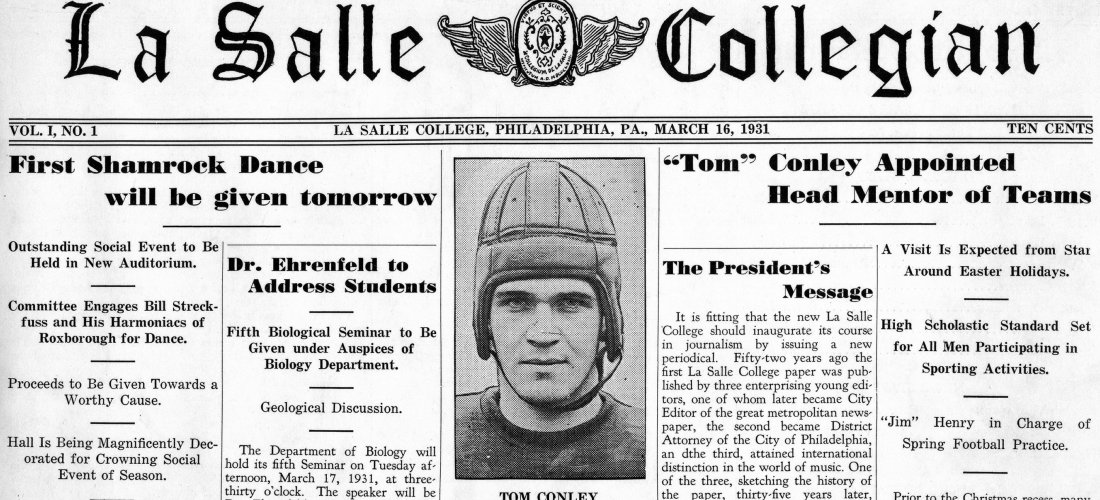
Header Image: The Collegian’s first issue

The Collegian took a major step forward this week as a student publication, and while it doesn’t seem like a major change, it has been in the works for a long time, and we as a news outlet are going to continue growing and changing at a rapid pace as a result. We are now hosted on thelasallecollegian.com and are in possession of the domain itself. While a website name change is not a major change, the abilities we now possess as an outlet have increased exponentially. Here’s why it’s important:

The Collegian started as an all-print, all-student newspaper in the ‘30s that would report on everything from hard hitting university politics to school dances. We ran horribly ignorant advertisements in order to stay afloat, with branding for cigarettes and local bars promoting sexist, and even racist stereotypes. But, like any newspaper, we matured, we found our way and we changed the way we presented ourselves. Many, many changes washed over the Collegian since its founding in the ‘30s, including ways in which we were allowed to present information, the addition and removal of major sections, the addition and removal of military participation reporting from the La Salle community and many shocking changes regarding the editorial staff. As a student-run paper, the staff turnover is expectedly sky high. But, it’s the legacy that past editors, editors-in-chief and writers leave behind that keeps the vibe, tradition and customs of the Collegian consistent despite constantly moving in fresh faces.

It could be argued that in 2020, when the Collegian transitioned completely away from printing on news stock to publishing on a database, the paper underwent its most major change to date. Our editorial staff at the time, led by Jacob Garwood, ‘20, worked incredibly hard to make the transition acceptable. The style, software, workflow, design choices and presentation of the paper had to be completely upended, and we needed a way to get the news out to the community. A few members of the staff took on a majority of the formatting work, while the rest of the editors had to adapt to an asynchronous editing style that limited interactivity and creativity. Overall, everyone on the staff was put up against a wall, but we continued to publish, and never missed a beat. The following year, our editorial staff, led by Bianca Abbate, ‘21, had a tough choice to make: When we return to campus, do we print again?

LSUCollegian via Twitter
Throwback to when the Collegian frontpage was in yellow.

Well, luckily, the pandemic made that choice for us, as printing costs shot up to unfathomable rates and the students’ activities fee was chopped. So, it looked like we would be staying online for a while. In January 2021, this website went up, and we have had the exact same style, visual look and method of editing/distribution since. That was largely because we have been operating on $0 of spending, and have been using a free-to-use website template to present the news to the community. 

Now that we have secured more funding and have been able to acquire thelasallecollegian.com and upgrade our site, we might be going through another one of those major changes. Perhaps the most important aspect of this is that our stories will now be securely archived. Almost every issue of the Collegian as far back as the ‘40s is securely archived both on paper and digitally through the Connelly Library, Learning Commons and held within the Collegian’s office. This was simple enough to do on paper, but now that all of our stories are presented digitally, there was worry that one day this website would lapse or we would expend our data limit and all of our current history would vanish. 

Another major development is that we can now customize our presentation with a lot more freedom. Currently, we are working with a student from the digital arts program at La Salle to completely overhaul our branding, and will move into the next academic year touting a new look, and will be able to stand next to the Drexel Triangle and the Temple News for the first time in years, and not seem behind-the-times visually.

For the time being, we are staying in a completely online format, which we know might upset some of our longtime readers, particularly those who were at one point members of the Collegian staff. While having a print paper is nostalgic and stylish, being able to publish online regularly means we can reach the La Salle community far beyond 20th and Olney. We have readers from multiple states, even multiple countries, who are able to read on a weekly basis. We also have the ability to incorporate multimedia elements like videos, the podcast and graphics in ways that previous Collegian staff never could. Now that we have our own web address and upgraded customization options, the quality of this multimedia will continue to rise, and we will continue to add new and fresh elements to our stories that make the lack of printing worthwhile. We hope that is a reasonable compromise.

As well as a number of managerial and editing changes — which we will not bore you with — on a top level, this site upgrade means we are easier to market and advertise, both in terms of audience, but also with writers and potential editors. Because of that mass turnover mentioned earlier, the Collegian is constantly fighting a battle on two fronts: making sure that content is excellent while we are here, and also trying to find the best the La Salle’s student body has to offer to continue that excellence after we graduate. Now that we have a secure footing, a real website and far more potential for creativity, we will be able to bring in many more students to our staff to hopefully continue our legacy. 

In the coming weeks, we will begin experimenting with dynamic changes on the thelasallecollegian.com, as well as start the recruiting process for current and future staff. We ask that, in this time of change, if you know anyone in the Lasallian community that might be interested in writing for any of our sections, or on any topic we don’t currently boast, that you send them our way. Now is the perfect time to begin working with us. We are currently looking to expand our staff into different programs such as those within the schools of nursing and business to better represent the full breadth of the school community, and always, are inviting alumni, graduate students, faculty and staff to write or submit letters to the editor. We are starting the next chapter now, and we can use all the help we can get to ensure our success. Thank you for sticking with us.

Blue and Gold dining troubles: There must be a better way — Editorial

Editorial

David O’Brien, Managing Editor

Header Image: USA Restaurants

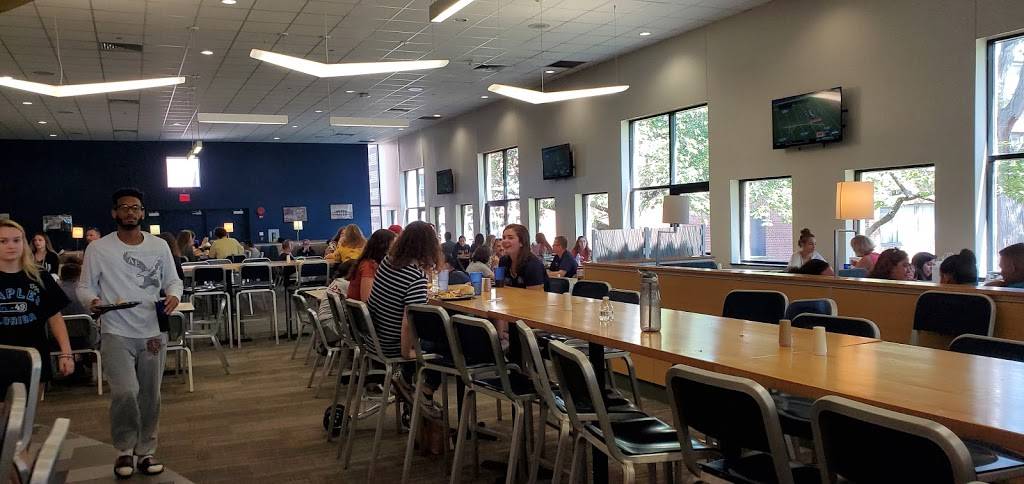
After a few weeks of tackling major university changes and the internal politics of the institution, the editorial staff has decided to take a step back this week and discuss something very near and dear to our hearts, and the hearts of the student body: food. La Salle’s on campus population is large and while it does not represent our entire readership, it represents nearly all of our editorial staff, so please allow us to vent this week about the slop La Salle passes as food.

One of the most often-heard complaints around La Salle’s campus revolves around the dining hall. This week the editorial will attempt to address what problems La Salle faces surrounding dining and some possible solutions that will allow the University to resolve them. 

The decline

At the beginning of last semester, it was said by many students that the Blue and Gold Dining Commons was better than ever. No more crusty, run down Beeg, but rather something new, something that had quality. The conveyor belt was fixed, there were no longer rats running around and the food was amazing. Yet, it seemed that this fame was short-lived. Weeks after, the quality of the food significantly went down. Rather than providing high-quality meals, Beeg started pushing out low-quality, mass-produced food that had very little to no taste and had often been sitting for hours. While Beeg is better able to manage the dinner time rush, the quality of the food (including taste) has been greatly sacrificed. The removal of condiment stations, the constant breakdown of drink machines and a general lack of quality have all become trademarks of B&G. For those reading this that aren’t on campus students, B&G is currently the only available traditional university dining hall option at La Salle after the conversion of TreeTops Cafe into a COVID testing site.

One of the major problems with La Salle dining is the constant use of food products that are bound to have poor quality in any dining hall setting. B&G should not have a fish option, end of story. Students do not expect food at La Salle to be great quality, they are not asking for organic grass fed beef or fish flown in from the coast. However, there are certain foods, like fish, that need to be good quality in order to be consumed safely. Since the fish at B&G is typically of low quality, many students are fearful of getting sick from it, and it might as well not be served. This editor does not think any student would or does complain if and when there is not a fish option being served.

Now, time for nitpicks

La Salle dining should not push these bizarre meal combinations. There is no reason for there to be hamburger patties on rye while chicken sandwiches are on hamburger buns. That simply does not make any sense whatsoever. People like both chili and pasta, this does not mean they like them together. People may like to experiment, but overall, students like simplistic meals. 

The majority of the time, the person running the burrito station is unable to properly wrap the burrito. It is not too much to ask that the person working this station learn how to properly wrap a burrito so it does not all fall out immediately. This very basic idea that is not too much to ask would drastically improve the quality of B&G dining.

Throughout the 2021-2022 school year, B&G has progressively removed amenities, two of which include ice cream and condiments. While removing ice cream is somewhat understandable due to the weather, many students have found this incredibly frustrating because ice cream is a very predictable dessert which the consumer knows what they are getting every meal. At the beginning of the fall semester, B and G had a plethora of condiments to choose from, but now the options are often only ketchup, mustard and maybe mayo. There is no obvious reason for this shift. The students miss hot sauce, buffalo sauce, honey mustard and other options that have been taken away. Condiments are not very expensive and go a long way when it comes to the dining experience. B&G should bring back ice cream and condiments because they radically improve both the bland and more erratically bizarre meals served in the dining hall.

Why it’s important

According to a study from the American Psychological Association 41.6 percent of college students suffer from anxiety disorders. Additionally, sources ranging from Harvard University to BBC News have stated that poor nutrition is a primary cause for stress. So, while this may seem like a petty callout, we genuinely mean it when we say that this editorial needs to be put out there just to show the student body that they need to speak up to get better, predictable food options, not just to be more comfortable, but to take one more stressor off their plates in this time where stress comes from seemingly every corner. We know students who will actively skip meals if B&G is their only option, particularly during exam season, which is just unacceptable. If B&G was improved, not only would college students be healthier and better fed, but campus-wide mental health issues could also decrease. 

The University should not only improve B&G for the sake of students’ diets and nutrition, but also for their mental health. We are not asking for La Salle to change its budget to give us more expensive foods. We are not even asking for wider varieties of foods. We are just asking for basic changes that would drastically improve the quality of life for the students both physically and mentally. A proper diet is necessary for good health. It is hard enough to maintain one with all of the stressors of the post-COVID world — the least the school can do is provide food that is actually edible for the students of La Salle.

New community reactions to La Salle’s new president — Editorial

Editorial

Now that the dust has settled on the announcement, what is the general perception of Dr. Daniel J. Allen?

The Editorial Board

Header Image: La Salle University

Last Tuesday, Feb. 1, 2022, the La Salle community received an announcement that the Board of Trustees, with cooperation from the Presidential Search Committee (PSC), had chosen La Salle’s 30th president to be Dr. Daniel J. Allen of DePaul University. For full details on Allen’s announcement and career, please see last week’s editorial and news sections.

As last week’s issue of the Collegian was coming together, the announcement was still fresh, and the Editorial Board had just come off of a short discussion with Allen regarding his intentions at La Salle and reactions to the announcement, but now that a week has passed, many more students, faculty and members of the university community have gotten a chance to share their reactions and thoughts on the subject.

Students

Before we share some official statements and comments from students on social media and La Salle’s forums, allow a member of the Editorial Board to share some anecdotes that are somewhat telling of how the current La Salle student body has reacted to the announcement:

“I was seated in a classroom filled with honors seniors, and when the topic of President-elect Allen came up, I was shocked that more than a handful of students responded with ‘Who?’ or ‘We have a new president?’ It seems like some of the students in the room were out of the loop with the announcement, which shocked me as someone who had spent the whole last week reporting on it and discussing it with fellow students. Beyond this, though, many students who were aware of the announcement were either indifferent or were unaware of many details of Allen’s career and reasons for being chosen. To be honest, a majority of people in the room didn’t even know his name. Of the few who were dialed in, the general consensus was that we were all cautiously optimistic about Allen’s abilities, and hope to see some improvements over former President Dr. Colleen Hanycz’s previous plans and initiatives. I wish this was the consensus with everyone on campus, but even at lunch in the Union or in classes with people I don’t know that well, many, many students appear to be unaware that we have a new president incoming, or are only familiar with the fact that we do, but none of the details about him.” – Jakob Eiseman, Editor-in-Chief for the Editorial Board.

We have seen some mixed reactions online, with some positive comments about Allen being publicized by the university, including one from a student member of the PSC, senior Aaron Srinivasan, who said, “I envision that Dr. Allen will work closely with the student body, amplifying our voices. He is someone who will inspire enthusiasm from students and faculty alike with a collaborative and bold vision for the future of La Salle that sticks to its historic roots.”

Senior Isabelle Pope, president of La Salle’s Student Government Association, said, “his overall values and vision align with what La Salle is and is striving to be. Though I will be graduating in May, I am looking forward to seeing positive changes that Dr. Allen brings to our community.” 

The Collegian’s News Editor Kylie McGovern said “I think that Dr. Allen is a good fit for La Salle and I am looking forward to him hopefully bettering the school.”

Generally, student opinion of Allen seems to us to be somewhere between indifferent and very high. While many students might not be closely following the situation, even those that are only tangentially aware of Allen seem to be hopeful. Perhaps this is a product of the dramatic periods of change the student body had to go to as Hanycz left and under Interim President Tim O’Shaughnessy, or perhaps students are that trusting of the Board of Trustees. We hope to see opinion on Allen rise as time goes on, and will continue to see student opinion on him fluctuate, particularly as he comes to La Salle in April 2022.

Faculty and Staff

Br. Robert Schaefer, FSC, said, “Dr. Allen’s understanding of our Lasallian identity was forged during his time at Lewis University, and his years at the Vincentian-inspired DePaul University has deepened his passion for the transformative power of Catholic higher education. I look forward to working with Dr. Allen to ensure a vibrant future for La Salle University.” Schaefer is not only a lifelong Lasallian, having studied at La Salle College High School and La Salle University, but serving as the principal of Pittsburgh Central Catholic and currently serving in the Christian Brothers’ elected position of Provincial or Brother Visitor for DENA. Schaefer’s comments about Allen’s commitment to mission and optimism for Allen’s role is reassuring, as this is someone who has committed their life to the Lasallian mission and who can be trusted on the subject.

“I was impressed by his ability to thoughtfully and analytically evaluate potential strategies and opportunities with a keen business acumen, while maintaining his prioritized focus on students,” said TiRease Holmes, director of La Salle Residence Life. “His shared insight spoke to the current state of La Salle and the need to lead with bold ambition to tackle the critical work of taking this great institution’s trajectory toward perpetual growth. I look forward to his leadership,” continued Holmes. This expresses the same focus that we had previously mentioned in our previous two editorial columns: that La Salle needs money, badly, but that does not mean we need a president who is focused only on creating revenue plans but cares little for their students and little for the mission of the school. Holmes’ comments, coming from someone who is highly dialed into student affairs, are reason for us to believe that Allen might be the person we were describing.

One quote that was specifically unique and interesting is from Vice Chair AmyLynn Flood of La Salle University’s Board of Trustees. Flood has this to say on Allen’s selection: “In his service to DePaul’s student body, which is strikingly similar to ours, as well as his familiarity with the Lasallian mission and demonstrated commitment to cultivating principles of justice, equity, diversity, and inclusion, we concluded that Dr. Allen was an ideal candidate to lead La Salle University into its important next chapter.” Flood, although a partner of PricewaterhouseCoopers, one of the world’s largest accounting firms, did not make a single mention of money, fundraising or growth when she described Allen’s selection. She specifically highlighted that Allen was chosen because his work at DePaul demonstrated the Lasallian mission, and then lists specific fields which it did, including diversity, justice and equity, which are three key points that we have been looking for in a new president and that are vitally important to his success as a Lasallian leader.

Hopefully, as Allen makes visits to the university in the ramp-up to his coming to office in April, and as the university continues to circulate messaging regarding Allen’s goals and plans, students will gain a deeper understanding and general appreciation for the fact that a new president is coming and that means big changes will likely follow. Faculty have been unexpectedly positive about the announcement, but it doesn’t take a super sleuth to find members of the staff that were decidedly against the Hanycz agenda and want to see changes from it. Public criticism toward Allen from professors and staff, while definitely there, is not at a mass degree, which shows that Allen may share a lot of the La Salle community’s positive mindshare. That will make his transition to power much easier.

Our discussion with La Salle’s new president-elect

Editorial

The Editorial Board

On Tuesday morning, the university announced to the La Salle community that the 30th president of La Salle University had been decided, voted on unanimously by the La Salle Board of Trustees. Dr. Daniel J. Allen of DePaul University in Chicago has been chosen to take up the mantle. Allen is an Illinois native who has spent most of his life in Cathlolic education, most recently serving as vice president of DePaul University, the largest Catholic university in the United States. Allen is known for his fundraising talent and the work he has done to raise money through the COVID-19 pandemic, which is one of the reasons he was chosen for La Salle.

This decision comes after months of deliberation and process conducted by the Presidential Search Committee and Board of Trustees. After the announcement of Allen as president-elect of La Salle University, the Editorial Board combed through the previously published position profile from the Presidential Search Committee, which is now unavailable to the public, and has determined that based on Allen’s history, he fits the profile very well. One of the key requirements listed on the profile was a leader who can hit various metrics in revenue and enrollment, and also a person who follows the Lasallian mission.

Last week, our editorial was a plea to the Presidential Search Committee to focus on diversity, mission and social justice, but a majority of the highlights cited by major outlets and releases so far have been about Allen’s commitment to revenue and fundraising. However, Allen is highly qualified academically, having studied higher education and postsecondary education for low-income students. 

In a conversation with the Philadelphia Inquirer, Allen said “I’m a big fan of what happens in cities.” He continued, “that really stirs my blood, what happens in urban communities and universities… that are so tightly knit within those communities.” Our current Interim President Tim O’Shaughnessy said that Allen shows “commitment to our Lasallian values and principles,” and that he is “confident in [Allen’s] ability to lead La Salle into the future.” 

What is clear from this decision is that La Salle University is likely in even more dire straits than was believed. Several members of the Board of Trustees have highlighted Allen’s skills in fundraising as a major choice in his selection, with William Matthews, a member of the Board, stating in the Inquirer piece, “we recognize that one of the pieces of the puzzle that allows La Salle University to flourish is to be able to raise capital that allows you to fund the operations of the school.” Additionally, the first of Allen’s skills listed on his official president page on lasalle.edu are “fundraising, alumni relations and advancement communications strategies.”

La Salle’s co-chair of marketing, Swee-Lim Chia, said in a release from La Salle, “I can’t wait for the larger community at La Salle, especially my faculty and staff colleagues, to meet him and to hear his plans to bring the necessary resources to support our mission and academic priorities in continuing our legacy for delivering a transformative education for our students and their families.”

In addition, Allen himself has even hinted at his financial goals, saying to the Inquirer, “the message was if we don’t raise as much as we did last year, it sure as hell isn’t going to be because we didn’t try.” We believe Allen is branding himself as a fighter and a city coordinator who is trying to pull the university out of the pandemic slump in terms of finances and enrollment.

President-elect Allen sat down with members of the Collegian’s editorial board shortly after the announcement and answered some of our questions about his plans for, and feelings on, La Salle. For more information on Allen and some of the answers from this interview, please check out this week’s news section.

When asked about his commitment to the Lasallian mission, diversity and community service in the university community, Allen was quick to point out that he has been a member of the Lasallian community before at Lewis University, a Lasallian university in Romeoville, Illinois. Allen served as Vice President of Advancement at Lewis, and worked on his doctoral dissertation on “access to higher education for first-generation students, students of color and low-income students,” according to a release from La Salle. 

He stated in our discussion that “the work we did at Lewis helped me select my doctoral dissertation’s focus.” “[It was] a special part of my personal journey,” stated Allen. He clearly knows the mission of community service laid out by John Baptiste De La Salle, but his answer of diversity largely leaned on his doctoral work. 

His background in Lasallian values and academics certainly make him the right man for the presidential position. However, it may take more than that for him to prove himself. Allen does have a strong background academically and is personally connected to the Lasallian mission through his past, and he certainly seems to be the man to save the school on paper, but only a naive optimist would believe that a good resume is “enough to bring La Salle out of the proverbially gutter.” 

What was reassuring during our talk with Allen was his commitment to hearing student voices, and voices from various parts of the La Salle community, both from the student body, but also from specific faculty groups. Allen said that a priority of his will be to take time to meet with students both formally, in meetings and forums, and informally, through grabbing a cup of coffee in the Union and seeing how clubs and sports teams are operated from the inside. We hope that through this process, he will evaluate what student organizations need to be expanded to help improve student life. 

While Allen could not commit to any immediate plan for the school, he certainly demonstrates a great deal of promise. Allen said that he wants La Salle to feel “as robust and as challenging” as it can be, and he wants “students to feel like their time at La Salle was vibrant.” While these goals can be achieved without student feedback, Allen was adamant about his commitment to hearing student voices and is looking forward to visiting the campus community soon to get to know some of the students.

While Allen’s idea of making the University “the best La Salle University it can be” could be put forward by any person taking up the role of president, Allen appears to have been selected both for his ability in the financial sector of higher education but also his dedication to access of education and importance of community. 

Much of the information Allen could give us at this time was reasonably vague, as he will have to meet with the university’s governing bodies before formal plans and changes are developed, but, going off the sum of his releases and interviews on the subject thus far, hopes that Allen will be able to pull us out of that aforementioned financial trouble should be high. While we should be very cautiously optimistic about his intentions regarding community and diversity, the Presidential Search Committee and Board of Trustees appear to be very hopeful. Based on Allen’s resume and experience with the Lasallian mission, we’d say that we are also hopeful, and look forward to seeing how he fits in with our university and what changes he can make to better this historic institution.

What we have seen of Dr. Allen so far is very impressive. He may certainly be the man to save La Salle from crumbling, however, it is hard to make a true assessment of him before the rubber hits the road and he proves himself as the president La Salle needs in its time of crisis. We will look toward his early actions as president when he formally takes up the position in April, and will continue to report on university changes and developments as this time comes.

Our final appeal to the Presidential Search Committee

Editorial

As the selection deadline approaches, let’s take a look at what we actually know about the future university leader.

Header Image: Christian Brothers Conference

If you have been following the Collegian at least for a few months now, you know that this board is not one to often speculate on what the university is planning and how they plan to act. As far as we are concerned as the staff of this publication, which is first and foremost for and by the student body, if the university wanted us to have information, we would have it, and digging into the internal politics of the Board and university leadership groups will only lead to further speculation and frustration on certain issues.

This, though, is a different case.

It has only been about eight months since the Lasallian community received word that Tim O’Shaughnessy, ’85, would be taking over as interim president when Dr. Colleen Hanycz booked her one way trip out of dodge. 

This publication has been clear in the past that we respect Dr. Hanycz efforts during the early phases of the COVID-19 pandemic and also respect her decision to leave the university, even at such a turbulent time. But, the fact still stands that La Salle was in a shaky place before she left, and since Hanycz, and a surprisingly large number of her supporters within the university, left without a trace, students have been left with a shell of an administration that lacks in both transparency and focus.

Momentum 2022 is coming to a close, and the main tenets of the plan — mission, branding, affordability and leaps in enrollment — have all but fizzled out, and plans have already been drawn up for the next Momentum plan, but no significant updates or statistics have been provided on the conclusion of the 2022 plan or the steps toward the next plan since Hanycz’s departure. Not to mention Project Compass has been all but buried under layers of talk since March 2020.

All of these events have led to wild speculation in the student body. Why did so much of the administration jump ship at the same time? Why did we decide to cut so many sports programs, and what alternatives were ignored? What is going on behind the scenes and is it something to be worried about? Only time will answer these questions, but, what we can answer now is that the next president of this university will have to be the one to re-orient the Lasallian community, provide transparency as to the happenings of the school’s administration and point the managerial compass toward a reachable goal.

In the eight months that the Presidential Search Committee has been publicly active, the student body has received 11 updates, with the most recent being published on Jan. 11, 2022. The first was quite important, as it laid out the plans to form the committee and what would be done by them, the second listed many members of the committee, one announced the committee’s partnerships, one asked for student feedback, one discussed the committee’s commitment to diversity in short order and all the rest were vague messages that did not benefit anyone outside of the committee except to say “we’re still working on it.”

In the position profile, which is publicly available, most objectives laid out in the leadership opportunity section are entirely based on enrollment, financial enrichment and making the university more appealing. Just two small sections even mention the Lasallian mission and social justice. Word salad and public relations language are used to disguise it, and while we don’t believe the committee is acting maliciously or shadily by hiding their true intent, the position profile is a coded attempt at letting those interested know: “we need a president who will make us money.” That is their main focus.

Private institutions are businesses in and outside of capitalist societies, and no more true is this than in America, but when earning money, spending money wisely and increasing revenue streams is the bulk of a plan laid out by those determining the future of a long, historied university known for its mission, community, service to others and helping the marginalized and those in need, have we fallen off the path laid out by the founder? It appears that explorers might sometimes be lost, and that this university community may be entering into a dreary, money-desperate future.

We say all this not to muckrake or demean any members of the Presidential Search Committee, nor any presidential candidates, but rather to grab their attention and make a final appeal to those who determine the future of this great institution to please not lose sight of what makes La Salle what it is: its mission, commitment to service, inclusion and the support of diversity. We know that commitment to these pillars is written in your plans, we can see it on public documents and several of your members have expressed this at listening sessions and in private conversations with our staff. But words don’t mean anything without action. 

Please, keep diversity in mind when selecting La Salle’s 30th president. We need to maintain a solid dedication to making students of all ethnicities, genders and cultures feel welcome. We need a president who will actually help La Salle take the place in the community they always claim to be in: one that helps and supports those around us and abroad through financial and educational support, and one that lives out John Baptiste de La Salle’s mission of supporting the needy. Please, if only for a moment when voting or determining candidates, try to see a future for the university that provides us wealth: both in culture as well as finance, not just the latter.

We look forward to hearing your decision in the coming months.

— The Editorial Board.

Finals and retention: Exams are not one-size-fits-all

Editorial

Jake Eiseman, Editor-in-Chief


Header Image: The College Post

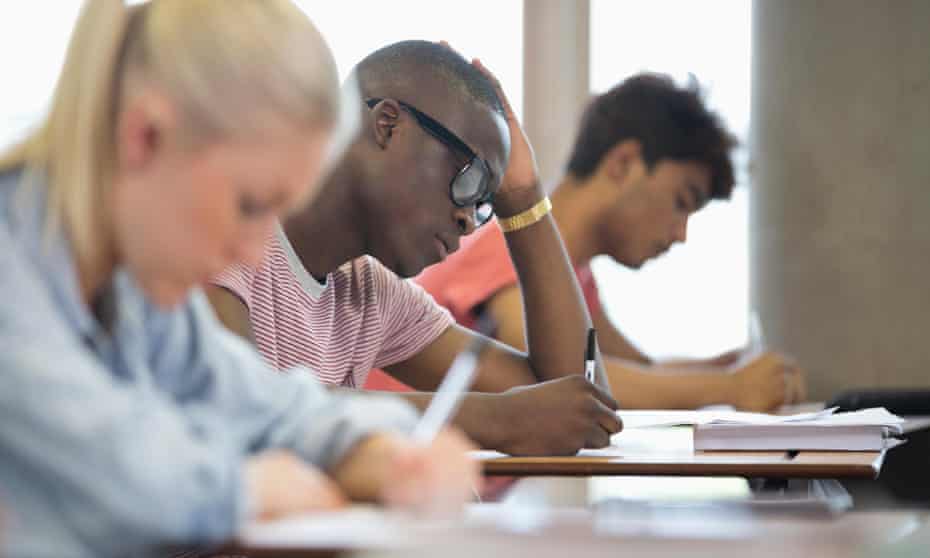
Every year — every semester even —  the Collegian publishes something about final exams, discussing the infamous stress and crunch that comes with them as well as ways to cope with that stress and succeed. Because we detail this topic so often in a variety of ways, we considered not running a piece regarding it this semester. But, after some discussion, it became apparent that the reason we continually write about the same themes around finals season is that there has been no meaningful change or improvements that would lead to another perspective.

Is there not some way to appreciate exams without causing hundreds of students to feel like their future depends on one two-hour memorization assignment?

Almost all exams, even the most complex and broad, are just efforts in memorization. No matter how much application is necessary to succeed, or how broadly the content from the course is used to fulfill the exam goals, students will continue to stow content into their working memory for the allotted time of the exam, but simply do not have the emotional or physiological bandwidth to encode much, if any, of that information to their long-term memory as a result of the mass workload of finals week. For example, in order to recall those psychology terms, I had to go back to my notes from Psy 155 course rather than remember it despite taking several exams on the subject. I know this is a personal example, but if you don’t believe me, let’s look to some experts.

A 2013 experiment performed by MIT neuroscientists showed that even young students who achieved very high test scores, or sharp increases in test scores, did not show any increase in cognitive ability or ability to reason surrounding abstract thoughts. As we are trained to prepare for testing at a middle school age, and continue to be tested throughout academia, these results are concerning. 

The Guardian

An undergraduate level experiment was also performed at Rutgers University which showed that only about 79 percent of information from a final exam was remembered by students five months after the exam was administered, and only 67 percent was retained from prior exams. In just five months, on average, students completely lost more than 20 percent of what was learned, and as time increases, so does the knowledge that is forgotten. What happens after years?

University of Georgia professor Kathrin Stanger-Hall found through testing that multiple choice format exams severely limit critical thinking and encourage students to memorize rather than learn, think linearly rather than critically and reduce their cognitive ability.

The body of research regarding testing, retention and performance still needs to be expanded, but in order to put this into a perspective that can be applicable to La Salle, I believe that providing some testing alternatives could go a long way to increasing the performance and academic abilities of students of all majors. 

As a result of the remote modality of the spring and fall 2020 semesters, many professors at La Salle shifted their examinations to “take home exams” or asynchronous open-book exams that tasked students with applying knowledge from their courses in very detailed situations or complex combinations of theories and tools. These types of exams not only significantly reduce levels of stress due to the long period of time they can be worked on, but also negate the effects of memorization and loss of retention because in order to answer the questions students have to truly understand and think critically about their responses in essay format rather than memorize and quickly recall answers. 

Many professors have opted to switch their final exams entirely over to essays or projects, which many students have found helpful in alleviating exam crunch, as these projects normally take place over longer spans of time and can be completed at one’s own pace. Additionally, final essays are often cumulative, and task students to apply and synthesize knowledge from throughout the semester, while also incorporating independent research, which shows critical thinking skills and ability to relate the content to situations outside of the course.

Verywell Mind

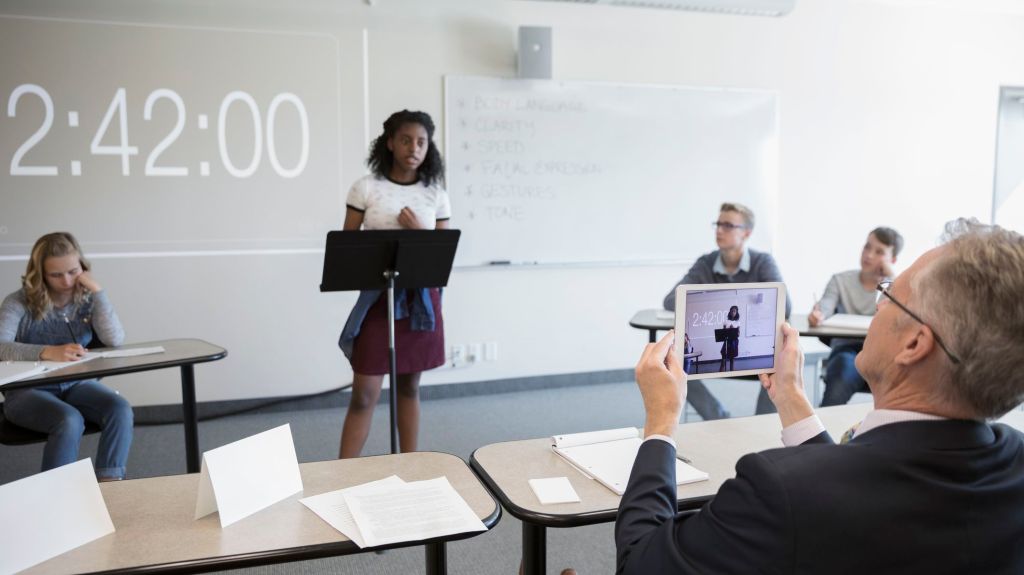
Finally, a somewhat uncommon alternative to final exams that I would like to propose is the academic presentation and research report. There are numerous reports and findings, particularly in the business, training and psychology fields which imply that by teaching others, we are better able to not only understand the content, but retain the knowledge over longer periods of time, even after leaving higher education to enter the job market. Learning-by-teaching methods are a great way to provide students with an alternative to testing and bring in unique concepts and perspectives to a course, because students can be graded on their ability to master a subject and effectively present it to and teach others. This can be done through presentations, study group sessions, independent research between small groups and a variety of other, flexible methods.

We highly suggest that Lasallian professors at least consider some of these alternatives when planning their courses in the future. Obviously there is a large body of evidence that supports that exams and testing are beneficial in many cases. But, no matter how it’s cut, when a student has five heavily-weighted final exams all within three days of each other, mastery, understanding and knowledge retention cannot be expected. So, if any instructors feel they may be at least interested in incorporating an alternative final, we at the Collegian would highly encourage it, and look forward to a potential shift away from the finals crunch in the future.

Back 2 La Salle: Another successful explorers’ Homecoming — Editorial

Editorial

Jakob Eiseman, Editor-in-Chief

Header Image: La Salle University

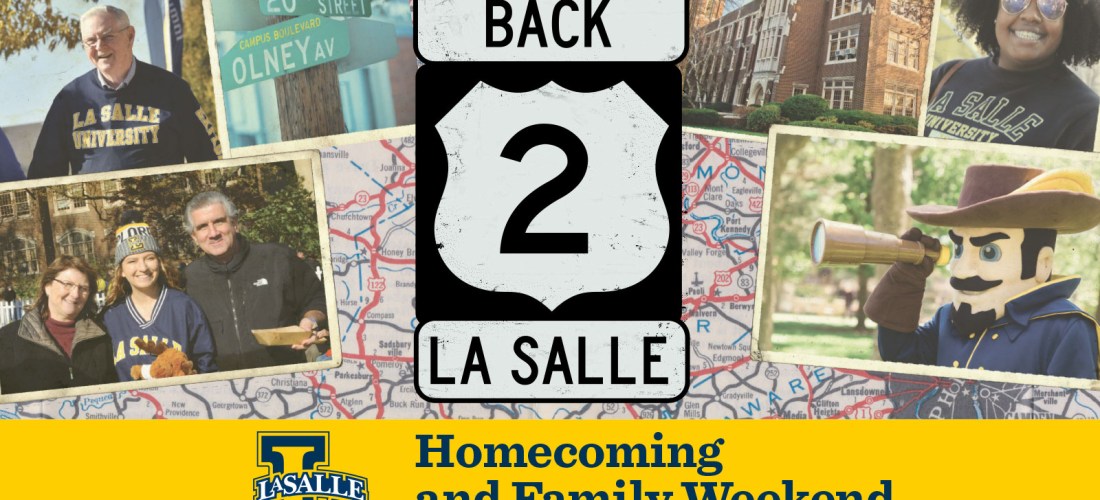
“No matter how far Explorers travel they can always find their way back home.” “Explorers are never lost.” “Not all who wander are lost.” However you want to say it, it’s kind of our thing as La Salle Explorers, and never is there a time when that is more true than the annual Homecoming weekend. Every year, hundreds gather on La Salle’s campus to remember long-lasting memories from their time with the university and to celebrate the school’s culture. With the addition of Family Weekend to the mix, Homecoming weekend has become an overall great experience for our extended community. 

Starting on Friday evening we had the Alumni Awards Dinner where the Catholic Social Services of the Archdiocese of Philadelphia received the Signum Fidei Medal. The award which means “Sign of Faith” in English is awarded annually to the group which has made the most noteworthy contributions to humanitarian involvement. Diego Calderin ‘83 also received the John J. Finley Award which is given out annually to a La Salle alum who provided a great service to the university that year. In addition to these awards, 30 students were inducted into the Alpha Epsilon Alumni Honors Society. These awards served as an excuse for many alumni to gather and catch up, as well as to celebrate La Salle culture. Many alumni, even those from as recent as the class of 2020 made appearances in the Union ballroom and made the event one to remember.

La Salle University

Then, the Masque of La Salle made their return to theater production on Friday night with their production of “Mavericks.” The Masque’s dedication to theater even in spite of losing several of their shows to the pandemic era is inspiring, and the quality of stories written and created independently through the artistic mind of the students is inspiring. For a full writeup of the stories included in the Mavericks, please consider reading our preview from last week’s issue. 

Friday was already buzzing, but Saturday is when things really picked up with a double Explorer’s victory in the Tom Gola Arena. The women’s basketball team made a dramatic first impression at home, taking the game to overtime and coming out on top over the Rider Broncs. The team opened up the Family Weekend celebrations and the excitement never really stopped. The festival on the quad upped its game from previous years and provided a great place for families to meet up with La Salle students and celebrate. Then, the men’s basketball team had a great redemption from last Tuesday’s overtime loss, beating out UAlbany in a packed house filled with endearing Explorers fans. The energy in the crowd was electric, and streamers notwithstanding, it was a great reminder of what it’s like to be a Lasallian sports fan.

La Salle Alumni Association

The La Salle community has always been tight knit, and Homecoming is a great reason to reunite with alumni, old friends, family and everyone that we find important to us in this community. While this was the last Homecoming for many of us as students, the event has always been a major annual happening on campus, and we will be able to participate for years to come as alumni. Thank you to everyone who made Homecoming weekend special yet again.

COVID-19 at La Salle is trending down, but let’s not get complacent

Editorial

Good job La Salle. Seriously.

News went out to the student body yesterday afternoon that residential students can now “host enrolled non-residential (commuter) students” in their on-campus housing. Is this a great idea immediately following La Salle Halloweekend? Updated COVID numbers next week will have to answer that. But is it a breath of fresh air for much of the community? Absolutely.

Over 1,400 students in the La Salle community live at home or off campus, and finally being able to sit down to connect with their peers is a major get for the commuter community, but this is a sign of something bigger.

According to La Salle’s COVID-19 Dashboard, the La Salle community, including on-campus students, off-campus students and employees, has had less than 10 cases of COVID-19 identified weekly for the entire month of October. At the time of writing, there are nine confirmed cases of COVID-19 at La Salle with 100 percent of quarantine housing available. We are doing extremely well.

There have been no significant outbreaks or case spikes in the La Salle community since the first weeks of in-person instruction, which was effectively controlled and mitigated by the transition to online learning for one week. In fact, since said outbreak, the largest spike in cases has been 10 cases that popped between Sept. 9 and Sept. 14. We think the La Salle University COVID Response Team, Contact Tracing Team and other student health and wellness groups that have been collaborating to keep us safe deserve a pat on the back, and want to thank them for allowing us a return to some form of normalcy.

A full return to how things used to be pre-pandemic is still incredibly far away, make no mistake about that, but things are trending in a good direction.

With that said…

We cannot begin to lapse in our care of pandemic-related protocols. We have seen an increased number of students, faculty and professors playing fast and loose with the rules regarding mask wearing and social distancing in the classrooms and we have seen people attending large, maskless social gatherings with strangers that may or may not be COVID safe.

The La Salle community is around 94 percent in terms of full vaccination, but as is known all too well now from outbreaks all around Philadelphia, a vaccination card does not double as a get out of jail free card. While the Halloween Reminders for Students video published by the university to help mitigate Halloween spread was attempting to appeal to the general campus audience, those who were already planning to wear a mask and social distance did not need to hear it again. 

While it is important to reinforce safe practices in the Lasallians that care about the health and wellbeing of others, we need even more importantly to change the attitudes and behaviors of those that might not care so much. Most important of these: professors. If a student who may feel negatively about mask-wearing sees their professor wearing their mask below their nose or not at all, that is all the go ahead they need to stop caring completely.

Make sure to maintain your convictions on keeping the community healthy. If you see someone, even a professor or faculty member, breaking COVID regulations that make you feel unsafe, make sure to tell them, or tell someone else. As Lasallians we are meant to have respect for all persons, and simply asking someone to put their mask on is not a sign of disrespect, but refusing to acknowledge the discomfort of others in this stressful time is absolutely unacceptable.

We all see the milestones ahead of us: non-student visitors coming in, St. Basil’s opening back up for housing, Treetops Cafe reopening, fully in-person instruction, and eventually, saying goodbye to masks. We all know that it will take a long time to finally reach these milestones, but the fact that we are where we are now fills us at the Collegian with hope that if we all keep up our efforts and keep these goals in mind, we will get there with ease.

—— The Editorial Board

This Halloween, let’s talk about what’s really scary: La Salle’s bottlenecking problem — Editorial

Editorial

Halloween is the best time to be a student: everything on campus gets decked out in spooky vibes, the whole month is an excuse to watch scary movies with your friends (COVID safe of course), even if you don’t normally have much time to sit down for a film, the changing leaves make for a relaxing environment for studying and planning college costumes is the one time a year you can be applauded for being cheap and creative. Halloweekend is one of the biggest times of the year for blowing off steam and relaxing, and sure, that might be motivated by simply having an excuse to get together for a few days and have a good time, but there is a deeper, much more sinister reason for the annual Halloweekend blowout: crunch.

It is no surprise that college students are among the most stressed populations in the United States. We are being trained to be workaholics before we even step foot into the workforce. But, what people don’t realize is that universities themselves enter into a massive crunch period starting with midterm exams that lasts until the semester ends. The stress for students peaks during the exam period, but from then on, the stress and anxiety level does not decline linearly, and that is because the university structure and those that operate it, similar to the miasmic and mysterious villain of your favorite horror movie, are always looming over students, but infrequently break their tension.

Cutting the Halloween metaphor, what we mean is that universities like La Salle simply do not have enough mental bandwidth to go around, and the midterm crunch pits all students in an uphill battle for time and attention that the faculty, staff and administration simply cannot provide.

Professors and instructors, the lifeblood of the university and students’ main way on interfacing with La Salle, are placed far behind the starting line of the second half of the semester as a result of the extra grading they have to do and the constant requests by students at this stage to check in, reconsider grades, offer extra credit or provide support external to the course after students get a look at their midterm grades. Beyond this, many courses at La Salle are bottom-heavy, meaning projects and major final preparations will begin in mid-October, increasing the number of emails, meetings and files coming in and out that professors have to deal with.

For organizations and clubs, October signals the beginning of fundraising and event season which, admittedly, is being dampened by the pandemic, but the sentiment still stands. Every student organization has about three to four outlets for communication with the university, many of which are already overworked and are understaffed. Whether it be discussing budgets, which still haven’t gone out to some clubs like the Collegian, upcoming events like the Masque’s annual performance or major fundraisers like Explorathon, communication with the powers that be at La Salle slow to a crawl. If these people who are our main sources of communication with La Salle will not respond to our emails because they have too many obligations put on them by the administration, student organizations are suffering and students are missing out on the much-needed relief these events can provide.

Finally, perhaps the most pressing and frightening effect of this situation is the impossibility of contacting the many offices of La Salle that are vital for our on-campus or financial endeavors. For many students, the lack of staffing in these offices equates to a direct trade-off of grades and comfortable living, a choice which every university should strive to avoid placing on their students at all costs. For the sake of explanation here is an example fully grounded in the reality of several of our staff members:

There are 24 hours in a day. On a day when a student has three classes, that’s nearly four hours of class time, around two hours of work, and between one and two hours of reading. Assuming that the student should strive for the CDC recommended seven hours of sleep and 1.5 hours of mealtime per day, that leaves seven hours a day for free time, chores and actually being social. That’s all well and good, and while plenty of people will say that this is more than enough time to squeeze in a trip to the parking office, financial aid office or counseling center, it isn’t when those offices have strict schedules and the workload is magnified. Toward the second half of the semester, fall break and Thanksgiving break notwithstanding, that amount of free time is reduced to nearly five hours or less per day, and that’s assuming the student is still getting enough sleep, which is unlikely. These are not unsubstantiated numbers, these are based on real schedules.

After factoring in time sinks like clubs, office meetings with professors, time to commute to and from campus and other such factors, as well as understanding that some of these hours will take place after campus services have already closed for the evening, asynchronous communication with these services becomes the best — and only — option. As so many students could attest, especially toward this time of the semester, emails become a lifeline, and emails are not returned. Again, this situation is not a result of the workers of campus services ignoring students, but there is not enough staff to handle all of the needs of the students, especially after the pandemic era dwindled the staff overall.

While it is true that stress inspires motivation, it is also directly tied to burnout. We do not take a “students first” approach to this problem, and acknowledge that this stress epidemic affects us all: students, professors, staff, advisors and all of us that keep this academic wonder rolling. 

Some say never to highlight a problem without providing a solid solution, and while it would be simple for us to say the solution to releasing this bottleneck would be to hire more workers, we also understand that that is completely unreasonable and vague for a university of our size. However, we are expressing this concern to the university population in an effort to help people take a step back and realize that this crunch we are experiencing is not unique to any one person in particular, and it is not something to blame an office worker for; it is something we all need to acknowledge as a reality, and simply work through as a side effect of the university structure.

Perhaps this situation is a symptom of an error at La Salle, likely, it is a symptom of expectations put on colleges by Americans and perhaps it is something far too ingrained to change, but just like any problem we find paramount, hundreds have dealt with the same in the past and came out successful on the other side. So keep your head up this Halloween, continue to practice self-care and try not to get spooked by all that is stacked against you.

–The Editorial Board